
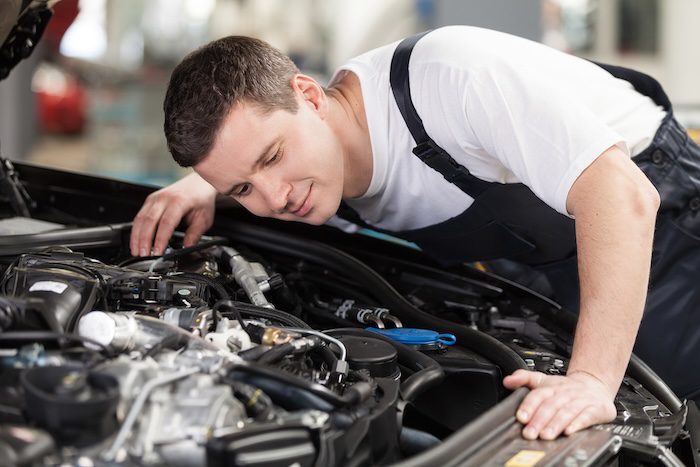

An engine knocking noise doesn’t automatically mean you’re staring down an expensive rebuild. In many cold-start cases, the sound is the engine’s way of telling you, “I’m cold, my clearances and lubrication haven’t stabilized yet.” Cold temperatures slow down oil flow, tighten or loosen component clearances depending on materials, and delay the moment when moving parts reach their ideal operating fit. In other cases, the knock-like noise comes from combustion itself; often because the air-fuel mixture in the combustion chamber isn’t balanced the way the engine computer expects, or because the engine is reacting to fuel quality or sensor inputs.
There are also scenarios where the noise shows up after maintenance changes. For example, an engine can take time to “settle” after switching to a heavier motor oil or after an oil change; especially if the new oil behaves differently at low temperatures. And yes, sometimes a knock is more serious, such as piston slap from a worn engine, or a misaligned piston in the cylinder due to age-related clearance growth. The key is learning to interpret the noise: when it happens, how it changes with RPM and temperature, and whether it comes with other warning signs like smoke, low oil pressure, misfires, or power loss.
In this guide, we’ll walk through why engines often knock more in cold weather, how to distinguish common cold-start noises, and how to address them logically without overspending. We’ll also cover the situations where “just let it warm up” is perfectly reasonable; and the situations where continuing to drive can turn a minor issue into major engine damage.
Why engines knock in cold weather
Several factors can cause an engine to produce a knocking noise. One primary reason these sudden sounds appear (or get louder) is the cold weather experienced during winter months. Cold doesn’t “create” all engine problems from scratch; it tends to magnify weak points; especially in lubrication, clearances, and combustion stability.
These issues might exist during warmer months, but cold winter temperatures often make them more obvious. That’s particularly true in older vehicles, high-mileage engines, and engines that are overdue for maintenance. On cold mornings, oil thickens, battery voltage dips under load, sensors need a moment to stabilize, and the engine computer uses cold-start strategies that can slightly change combustion behavior.
It’s also crucial to recognize that “knocking” is not a single noise type. Drivers often describe any unfamiliar engine sound as a knock. But a true metallic knock from internal engine load is different from a lifter tick, different from piston slap, and different from detonation (spark knock/ping). Each has its own sound signature and its own risk level.
Knocking noises from an engine don’t point to one single issue. They are indicators of different underlying problems. Your goal is to determine which category your noise falls into so you can respond correctly.
Below are some common reasons your engine might be making a knocking noise.
- Cold temperatures are slowing down certain engine components.
- The vehicle has over 200,000 miles, causing the piston to misalign in the cylinder.
- The engine has switched from light to heavier motor oil.
- The knocking sound isn’t from the engine but from worn parts needing repair or replacement.
- The air and fuel mixture in the combustion chamber is not at optimal levels.
- The motor oil hasn’t been changed recently.
- Sticky valve lifters are causing the noise.
These are the most frequent causes of engine knocking during cold weather. However, because “knock” can mean different things, let’s add expert context to the list so you can connect the cause to real symptoms.
Cold temperatures slowing down components: This typically relates to oil viscosity and how quickly oil reaches the top end of the engine (camshaft, lifters, rockers). Until oil pressure stabilizes, you can hear brief tapping/knocking that fades within seconds to a few minutes.
High mileage piston misalignment: Many engines develop increased piston-to-cylinder clearance with age. When cold, the piston can rock slightly in the bore until it expands with heat. This is commonly described as “piston slap,” often loudest during the first minute or two after startup.
Switching oil weight: Heavier oil can be slower to flow in cold temperatures. That can delay lubrication to tight clearances and make lifter tick or other mechanical noises more noticeable until the oil warms.
Noise from worn external parts: Sometimes what sounds like internal engine knock is actually an accessory belt tensioner, idler pulley, worn serpentine belt, heat shield rattle, exhaust manifold leak tick, or loose mount. Cold can change metal contraction and make rattles louder.
Air-fuel imbalance: Cold starts require different fueling (richer mixture, different ignition timing) and rely on sensors like MAF/MAP, coolant temp sensor, and oxygen sensors. If the system can’t deliver the correct mixture, combustion can become uneven, sometimes producing ping/knock-like sounds.
Old motor oil: Dirty oil can thicken, lose protective film strength, and reduce hydraulic lifter performance. Cold weather amplifies this because thick oil moves slower.
Sticky lifters: Lifters that don’t fill properly (or that bleed down when parked) can tick/knock until oil pressure refills them; especially after long sitting or infrequent oil changes.
Knock vs Tick vs Ping: Why Naming the Sound Correctly Matters
Before you try to “fix” an engine knock, you need to identify what you’re hearing. Many expensive mistakes happen when drivers treat a harmless cold-start tick like a rod knock; or, worse, treat a serious knock like a harmless cold-start noise.
Here’s a practical way to categorize common engine sounds:
- Ticking (top-end tick): usually lighter, faster, and often tied to RPM. Commonly valve lifters, injectors, or slight exhaust leaks. Often improves as oil warms.
- Piston slap: a hollow, skirt-slap knock often loudest at cold start and fades as the engine warms. Can be normal on high mileage engines, but must be monitored.
- Detonation/ping (spark knock): a metallic rattling sound under load (accelerating uphill, passing, towing). Often tied to fuel quality, timing, carbon buildup, or sensor issues. Not always present at idle.
- Rod knock / bearing knock: deeper, heavier knock that often gets louder with RPM or load, can persist when warm, and is a serious warning sign.
Cold-weather clue: If the noise is worst at cold start and fades as the engine warms, you are more likely dealing with oil flow/viscosity, lifter behavior, or piston slap rather than true bearing failure. If the noise persists warm or worsens under load, you should stop guessing and investigate immediately.
Why Cold Weather Magnifies Engine Noise (The Mechanics Behind It)
Cold weather changes the physical environment inside your engine in a few important ways:
- Oil thickens: viscosity rises as temperature drops, which can delay lubrication to upper components and reduce hydraulic lifter response.
- Metal contracts: piston-to-cylinder clearance, bearing clearances, and valve train geometry change until heat expansion restores normal fit.
- Battery output drops: cold batteries deliver less current, causing slower cranking and lower voltage, which can temporarily affect sensor readings and engine control behavior.
- Combustion strategy changes: engines run richer at cold start and ignition timing can be adjusted for stability and emissions; if something is marginal, it can sound worse in the cold.
These factors can cause brief noise on startup that disappears as the engine warms. In many cases, that’s normal wear and cold behavior; not a sign your engine will fail tomorrow. Still, you should always be alert for “red flag” symptoms: blue smoke, low oil pressure warnings, loud knocking that does not fade, misfires, or dramatic loss of power.
Addressing engine knocking noises
Solving an engine knocking noise depends entirely on the cause. The most effective approach is evidence-based: identify when the noise happens (cold only vs warm), where it seems to come from (top end vs bottom end), how it reacts to RPM and load, and whether it comes with other symptoms.
Ideally, visit a mechanic who can use diagnostic tools to pinpoint issues within your engine system. A professional may use:
- A scan tool to check for misfire codes, lean/rich conditions, sensor faults, and timing-related issues
- A mechanic’s stethoscope to localize noise (top end vs bottom end)
- Oil pressure testing to confirm lubrication performance
- Compression/leak-down testing if internal wear is suspected
But even before you get to a shop, you can make smart decisions based on the likely cause. Below are the most common causes from the earlier list, along with professional-grade interpretation and practical next steps.
Piston slap issues
If piston slap is causing the knocking, it often improves (or disappears entirely) once the engine warms up. In many older engines, piston slap is essentially the sound of clearance: the piston skirt rocks slightly in the cylinder bore until thermal expansion reduces the gap. In that case, simply letting the engine reach full operating temperature can be enough, and no mechanic is needed immediately; especially if the noise is mild and short-lived.
However, piston slap should not be dismissed blindly. The key questions are: How long does it last? How loud is it? and Is it getting worse over time? A faint slap for 10–30 seconds on a 200,000-mile engine may be “normal aging.” A loud slap that lasts 10 minutes can be a sign of significant wear or lubrication issues.
However, if blue smoke accompanies the piston slap, it could indicate a serious problem that can progress toward engine failure if ignored. What does blue smoke signify here?
Blue smoke suggests oil is leaking past the piston rings into the combustion chamber. That oil burns during combustion and exits the exhaust as a blue haze. If you notice blue smoke from the exhaust, you should treat it as urgent: inspect oil consumption, check spark plug fouling, and consider repair. Replacing the piston and its rings (and addressing cylinder condition) may be required depending on severity.
Failing to act quickly may cause damage to spread to other engine components, leading to expensive repairs. Oil burning can also damage catalytic converters and oxygen sensors over time; so even if the engine “still runs,” the emissions system and overall reliability may deteriorate.
Expert tip for differentiating piston slap from rod knock: Piston slap is usually loudest at cold start and fades with warm-up. Rod knock often persists warm and can get louder under load. If you suspect rod knock, do not keep driving long distances; get professional confirmation.
What you can do to reduce piston slap risk: Maintain oil level, use the correct oil viscosity for your climate, and avoid hard acceleration until the engine is warm. Cold engines have higher wear risk; aggressive throttle before oil circulation stabilizes accelerates wear.
Aging engine issues
To reduce knocking in an older engine, let the vehicle warm up completely before driving. As engines age, clearances expand, seals harden, and oil control becomes less precise. Some knock-like noises in winter are simply a byproduct of reduced mechanical “tightness.”
Little can be done to eliminate all knocking in an old engine. The realistic goal is to keep the noise from worsening and to avoid the conditions that accelerate wear. Regular checkups and cleaning out dirty motor oil when it accumulates are essential.
Expert maintenance approach for aging engines in winter:
- Use oil suitable for cold starts: the manufacturer’s recommended winter viscosity matters more in cold climates than many owners realize.
- Keep oil level correct: low oil level reduces lubrication and increases noise risk.
- Address small leaks: slow oil leaks can become a major problem in winter if you fall behind on oil level checks.
- Warm up intelligently: idle briefly to stabilize oil pressure, then drive gently; light load warms the engine faster than long idling and can be healthier for many engines.
Important reality: If an aging engine develops deep knocking that persists warm, worsens rapidly, or accompanies oil pressure warnings, “old engine” isn’t the explanation anymore; you may be facing bearing wear or other internal failures. At that point, continuing to drive can turn a repairable issue into catastrophic damage.
Sticky valve lifters
Valve lifters are critical to the engine’s valve-train operation. Depending on engine design, they help maintain proper valve lash and timing. When lifters become sticky, the result is often a tick or light knock at startup that improves as oil pressure builds and varnish softens with heat.
Sticky lifters are commonly caused by:
- Infrequent vehicle use (oil sits, moisture accumulates, varnish develops)
- Overdue oil changes (oil additives break down, sludge/varnish forms)
- Using oil that doesn’t meet engine requirements for detergency/viscosity
Special cleaning products can sometimes address sticky valve lifters, especially if the problem is varnish-related rather than mechanical wear. However, don’t treat additives as magic. If a lifter is physically worn, collapsed, or damaged, cleaning products may not resolve it.
Expert best practice: Start with the basics before additives: ensure the oil is fresh, the correct viscosity is used, and the oil filter is high quality. If the lifter noise remains, then consider a cleaning product as a measured step. If noise persists despite fresh oil and cleaning attempts, a mechanical repair may be required.
When lifter noise is most concerning: If it gets worse as the engine warms (rather than better), or if the noise is paired with misfires, rough idle, or performance drop, you may be dealing with more than sticky lifters. A scan for misfire codes and a mechanical inspection becomes important.
Using heavier motor oil
An engine may need time to adapt to heavier motor oil. Warming up the vehicle fully allows the oil to heat and coat engine parts effectively. Heavier oil flows more slowly when cold, and that delay can make certain noises more noticeable during the first moments of startup.
Though the engine typically uses lighter oil, it can adjust. Heavier oil won’t necessarily be too thick or sludgy once warm, and it can still lubricate effectively. But in cold weather, viscosity differences become more dramatic. That’s why many manufacturers specify multi-viscosity oils (like 0W-20, 5W-30, etc.); the “W” rating indicates winter/cold-flow behavior.
Expert caution: While heavier oil can sometimes reduce certain noises in high-mileage engines (because it can slightly increase oil film thickness), it can also create cold-start lubrication delays if it’s outside the manufacturer’s spec for your climate. If your engine knock began immediately after switching oil grades, that correlation matters. At minimum, verify you used the correct oil grade and correct oil specification for your engine (modern engines often require specific standards, not just viscosity).
Best practice if you suspect oil-related noise: Check the oil level, confirm the oil grade, confirm the filter is installed correctly, and allow the engine to warm fully. If the noise disappears warm and does not worsen, you may simply be hearing cold viscosity behavior. If it persists or worsens, investigate further.
Common post-oil-change causes of knock-like noise:
- Oil level too low (underfilled)
- Oil level too high (overfilled), causing aeration/foaming
- Incorrect oil filter (wrong bypass valve setting or poor flow)
- Wrong viscosity for winter conditions
These errors can all create abnormal noises, especially at cold start, because oil pressure behavior changes. If you’re unsure, verify the service was done correctly before assuming internal engine damage.
Imbalanced air-fuel mix
Knocking can occur if the air and fuel mixture in the combustion chamber is off. This may point to faulty sensors, injectors, vacuum leaks, or even carbon buildup that changes combustion dynamics. In this category, the “knock” may actually be detonation/ping; combustion occurring too aggressively or at the wrong time.
If sensors fail to detect proper air and fuel levels, a mechanic; or you; can check the vehicle’s diagnostic system for details. A scan tool can reveal whether the engine is running lean, misfiring, or seeing abnormal readings from sensors such as:
- MAF (mass air flow) sensor
- MAP (manifold absolute pressure) sensor (on some engines)
- Oxygen sensors (upstream/downstream)
- Coolant temperature sensor (critical for cold-start fueling strategy)
Cold weather link: Cold air is denser. If a sensor is already marginal (dirty MAF, small vacuum leak), cold conditions can push it over the edge and cause the mixture to drift outside optimal range. That’s why you might hear knocking in winter but not in summer.
Fuel quality matters here: If you hear pinging/knocking under acceleration, especially when cold, consider whether the fuel octane meets the engine requirement. Some engines are tuned for higher octane under certain loads. Low octane can increase knock tendency, and the engine control system will try to compensate; sometimes by pulling timing. If it can’t manage it fully, you’ll hear it.
When to stop driving: If you hear heavy pinging under load combined with a check engine light, misfires, or sudden power loss, stop pushing the engine and get it diagnosed. Continuous detonation is damaging; it can harm pistons and valves over time.
Old motor oil
If dirty, old oil is causing the knocking, an engine flush may be needed. Dirty oil can hinder both small and large engine components by reducing lubrication quality, increasing varnish formation, and slowing hydraulic responses (such as lifters and variable valve timing mechanisms in many modern engines). An engine flush should be performed every 12,000 to 15,000 miles.
Expert perspective on oil cleanliness: Oil doesn’t only lubricate; it carries heat away and suspends contaminants for removal by the filter. When oil is overdue, contaminants build up. In cold weather, thickened and contaminated oil flows even more slowly, which can make noisy lifters, variable valve timing actuators, and other components more audible.
Be strategic with engine flushes: Engine flushes can help in some cases, especially when sludge and varnish are causing lifter tick. However, in heavily sludged engines, aggressive flushing can dislodge sludge and cause clogging. The safest approach is to follow best practices: regular oil changes, correct oil grade, and appropriate maintenance intervals. If you suspect sludge, consult a trusted mechanic for a plan rather than applying aggressive cleaners blindly.
Cold-weather oil maintenance habits that reduce knocking:
- Change oil on schedule (or slightly earlier if you drive short trips in winter)
- Use the correct oil viscosity for your climate
- Use a quality oil filter that meets OEM standards
- Check oil level more often in winter (cold leaks can worsen)
DIY diagnosis checklist (before you spend money)
You don’t need a full workshop to collect useful evidence. Before booking repairs, you can narrow down the cause by observing how the sound behaves. Here’s a practical checklist you can do safely:
- Time the noise: Does it last 5 seconds, 30 seconds, 3 minutes, or all day?
- Warm-up test: Does it fade as coolant temperature reaches normal?
- RPM behavior: Does the noise speed up with RPM or get louder under load?
- Location: Can you tell if it’s top end (near valve cover) or lower end (near oil pan)?
- Check fluids: Verify oil level and coolant level. Low oil is a common knock trigger.
- Look for smoke: Blue smoke suggests oil burning; white smoke may indicate coolant concerns; black smoke suggests rich running.
- Check engine light: If it’s on or flashing, scan codes; don’t ignore it.
- Fuel quality check: If pinging occurs under load, consider whether fuel octane is correct.
Expert note: “No check engine light” does not guarantee the engine is healthy. Some mechanical issues (like piston slap) may not trigger a code. Likewise, mild detonation may not trigger a code until it becomes severe. But codes can still be extremely helpful for air-fuel imbalance diagnosis.
When to stop driving and get help immediately
Some cold-start noises are harmless. Others are urgent. Use these red flags as your decision point:
- Knock persists after warm-up and gets louder with RPM or load (possible bearing knock).
- Blue smoke accompanied by knocking (possible ring/piston wear with oil consumption).
- Oil pressure warning light or low oil pressure message appears.
- Check engine light flashes (often indicates a misfire severe enough to damage the catalytic converter).
- Loss of power, rough running, or stalling alongside the knocking noise.
- Metallic grinding or harsh banging that appears suddenly and doesn’t change with temperature (could indicate a severe mechanical event).
If you see these symptoms, don’t keep experimenting. Have the vehicle inspected by a qualified mechanic. Continuing to drive can turn a repair into an engine replacement.
Preventing cold-weather engine knocking (best practices)
Prevention is often cheaper than repair. Whether you drive a high-mileage engine or a newer car, winter demands a bit of extra discipline. These habits reduce cold-start wear and the noises that come with it:
- Use the correct oil viscosity for winter: follow the owner’s manual; cold-flow matters.
- Keep up with oil changes: dirty oil is slower and less protective in cold starts.
- Warm up responsibly: idle briefly to stabilize oil pressure, then drive gently until warm.
- Maintain battery health: weak batteries cause slow starts and low voltage behavior that can affect sensors.
- Use quality fuel: especially if your engine is sensitive to knock under load.
- Fix small issues early: a minor vacuum leak or dirty sensor can become worse in winter.
Expert perspective: Cold-start noise is not always a sign of failure; it’s often a sign of “aging + winter physics.” But if you keep oil clean, keep viscosity correct, and avoid stressing the engine cold, you reduce both noise and wear.
Final thoughts
Engines may produce knocking noises in winter for various reasons. To identify the exact issue, have a mechanic inspect your vehicle; especially if the sound persists beyond warm-up or is accompanied by smoke, warning lights, or performance problems. An incorrect air-fuel mixture might indicate sensor or injector problems, while cold-start piston slap can be a normal wear signature in high-mileage engines.
If dirty oil is circulating in the engine, an engine flush may be necessary. Dirty oil can restrict or delay lubrication to small and large engine components, and the problem becomes more obvious in cold weather. For sticky valve lifters causing the noise, specialized cleaning products can help; especially when the issue is varnish-related rather than mechanical damage.
Older vehicles with aging engines often knock in winter due to reduced efficiency and expanded clearances. Regular maintenance is the best way to keep an older car running smoothly: correct oil, correct intervals, proper warm-up habits, and prompt diagnosis when symptoms change. In cold weather, it’s normal for the engine to be a little louder at first; but it’s never normal to ignore a noise that gets worse, lasts longer, or comes with blue smoke and warning lights.