
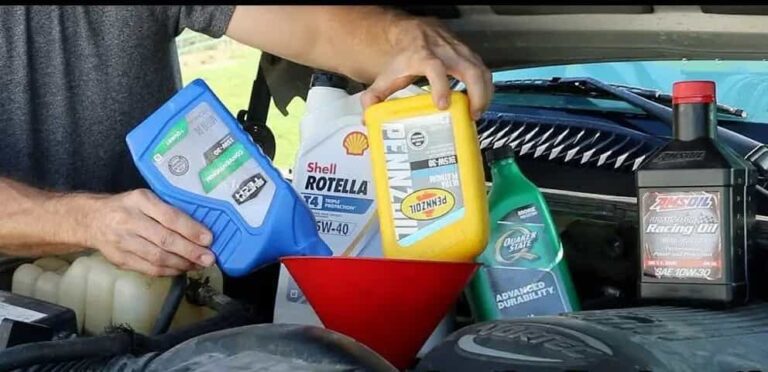
Walk into any auto parts store and you are immediately hit with a wall of options. Conventional, full synthetic, synthetic blend, high-mileage, different viscosities, different brands, each one promising something slightly different on the label. It is genuinely overwhelming, even for people who have been driving for years.
Then comes the moment that almost every driver eventually faces. You check the dipstick and the oil is low. Maybe you are two hundred miles from home. Maybe the store near you only carries one brand and it is not exactly what your car normally runs on. Or maybe you have got half a bottle of 5W-30 sitting in your garage from six months ago and you are wondering if you can top it off with the 0W-20 you just bought.
The question that comes next is completely understandable:
Can you safely mix engine oils?
The short answer is yes, sometimes. But here is the thing — the longer answer is what actually matters. Mixing the wrong oils together can quietly cause problems ranging from reduced lubrication performance all the way to sludge buildup and accelerated engine wear. And that kind of damage does not always announce itself right away.
There is also a ton of misinformation floating around on forums and social media. Some people swear that mixing oils will immediately destroy your engine. Others say all oils are basically the same and it does not matter at all. Neither of those is completely accurate. The truth is somewhere in between, and understanding where exactly can save you a serious repair bill.
This guide breaks it all down — what actually happens when you mix engine oils, which combinations are relatively safe, which ones you should avoid at all costs, and what every car owner should understand before pouring a different oil into their engine.
Why Engine Oil Does a Lot More Than You Think
Before we get into the mixing question, let us talk about what engine oil is actually doing inside your engine. Most people assume it just keeps metal parts from rubbing together. That is true, but it barely scratches the surface.
Modern engine oil is doing several critical jobs simultaneously, every single second your engine is running. Here is what it is actually responsible for:
- Reducing friction between moving metal parts
- Preventing excessive engine wear
- Pulling heat away from critical components
- Keeping internal engine surfaces clean
- Preventing sludge and carbon buildup
- Protecting against rust and corrosion
- Helping maintain proper oil pressure throughout the system
- Sealing gaps between piston rings and cylinder walls
Without proper lubrication, an engine would destroy itself remarkably fast. We are talking minutes in severe cases, not hours.
Think about what is going on inside a running engine. Bearings, pistons, camshafts, crankshafts, timing chains, and valve train components are all moving at extremely high speeds, often with very tight clearances between them. The only thing preventing direct metal-on-metal contact is a thin film of oil. When that film breaks down or loses its protective properties, wear accelerates rapidly.
That is why using the correct oil matters so much. Modern engines are engineered with extremely tight tolerances. The wrong oil — whether it is the wrong viscosity, the wrong type, or a poorly mixed combination — can affect performance, fuel economy, engine temperature, emissions system behavior, and long-term reliability in ways that may not show up immediately but will catch up with you eventually.
The 4 Types of Engine Oil You Will See on Store Shelves
One reason people get confused about mixing oil is because there are several major oil categories available, and they are not all created equal. Each one behaves differently and is formulated for specific purposes. Before you can understand what happens when you mix them, you need to understand what each one actually is.
1. Conventional Oil
Conventional oil is the original petroleum-based engine oil that has been used in vehicles for decades. It is refined directly from crude oil and contains additive packages designed to improve lubrication and protect the engine under normal operating conditions.
The biggest appeal of conventional oil is price. It is generally the cheapest option on the shelf, which makes it attractive for older vehicles or drivers who are watching their maintenance budget closely.
But there is a real trade-off. Conventional oil breaks down faster under heat and stress compared to synthetic options. It also tends to leave behind more deposits over time, which is one reason older engines that have run on conventional oil for years sometimes develop sludge problems. That said, for older, simpler engines that were designed around conventional oil, it can work perfectly fine.
2. Synthetic Oil
Synthetic oil is engineered in a laboratory using chemically modified base oils and highly refined additive packages. It does not come directly out of the ground the way conventional oil does. The entire product is purpose-built to perform at a higher level.
That engineering difference gives synthetic oil some real advantages:
- Better resistance to heat breakdown
- Improved cold-weather flow, meaning better protection during those first few seconds after startup
- Longer service life between oil changes
- Cleaner engine operation with less deposit formation
- Better protection under high-stress conditions like towing or spirited driving
- Significantly reduced sludge formation over time
Most modern turbocharged engines strongly benefit from synthetic oil because turbochargers generate enormous heat. In many cases, the turbo keeps spinning and generating heat for a few minutes even after the engine shuts off. Synthetic oil handles that thermal stress far better than conventional oil does.
Many newer vehicles actually require full synthetic oil to maintain warranty coverage. If your owner’s manual says full synthetic, that is not just a suggestion.
3. Synthetic Blend Oil
Synthetic blend oil is exactly what it sounds like. It combines conventional oil with synthetic oil in a single formulation. The idea is to deliver some of the performance advantages of synthetic oil while keeping the price point lower than a full synthetic product.
You commonly see synthetic blends used in:
- Pickup trucks used for light to moderate towing
- SUVs and crossovers
- Daily commuter vehicles that see a lot of stop-and-go traffic
Synthetic blends generally offer meaningfully improved protection compared to straight conventional oil, without the premium price tag of a full synthetic. For many drivers, they represent a solid middle-ground choice.
4. High-Mileage Oil
High-mileage oils are specifically designed for engines that have seen significant use, typically over 75,000 miles. These oils contain specialized additives that address the unique challenges of older, higher-wear engines.
Those additives are designed to:
- Reduce oil leaks by conditioning aging seals and gaskets
- Minimize oil consumption, which tends to increase in older engines
- Reduce internal engine wear in components that are no longer factory fresh
- Help older engines run more smoothly and quietly
As engines age, seals can shrink slightly, tolerances open up, and wear patterns develop in ways that were not present when the engine was new. High-mileage oils attempt to compensate for those changes through their specialized additive chemistry. If you are driving a vehicle with over 100,000 miles and you have been noticing slight oil seepage or increased consumption, switching to a high-mileage formula is often worth trying.

So Can You Actually Mix Engine Oils Safely?
Now to the question most drivers actually came here for.
Technically, yes. Most modern engine oils are compatible enough that mixing them in an emergency will not instantly destroy your engine. But compatibility and ideal performance are two very different things, and that distinction matters a lot more than most people realize.
There is a clear difference between these two scenarios:
- Topping off critically low oil in an emergency using what is available
- Routinely and carelessly mixing different oil types over thousands of miles
The first scenario is generally acceptable. Engines need oil to run, and running with low oil is actively dangerous. In that situation, getting some oil in there quickly is the right call.
The second scenario is where problems tend to develop. Consistently using an inconsistent mixture of oils, especially incompatible types, is a maintenance habit that will eventually catch up with your engine in ways that range from annoying to expensive.
What Happens When You Mix Different Brands of the Same Oil?
Let us start with the most common real-world version of this question. You run Mobil 1 in your car but the only store nearby has Castrol. Or you have been using Valvoline but you find a bottle of Pennzoil in the back of your garage. What happens if you mix them?
In most cases, mixing different brands of the same oil type and same viscosity is generally safe. Modern engine oils sold in major markets are required to meet specific industry standards and certifications set by organizations like the American Petroleum Institute (API) and the International Lubricants Standardization and Approval Committee (ILSAC). That means a 5W-30 full synthetic from Brand A and a 5W-30 full synthetic from Brand B have both cleared many of the same performance benchmarks.
That said, there are still differences under the hood of those formulas.
Different manufacturers use different combinations of:
- Detergent packages
- Anti-wear additives
- Friction modifiers
- Corrosion inhibitors
- Viscosity index improvers
Mixing oils can slightly alter how those additives interact with each other. In theory, some additives from different formulas could counteract each other or reduce overall effectiveness. In practice, though, occasional mixing of reputable brands with the same viscosity and type rarely causes noticeable problems. Your engine is unlikely to notice the difference for a short period.
Just do not make a habit of it. Get back to your correct oil at the next change.
The Bigger Risk: Mixing Different Oil Types or Viscosities
Here is where things start to get genuinely problematic. The real danger with mixing oils is not usually about brand differences. It is about mixing fundamentally different oil categories or significantly different viscosities.
Think about situations like:
- Pouring conventional oil into a full synthetic system
- Combining 0W-20 with 20W-50
- Mixing diesel engine oil with gasoline engine oil
- Blending racing oils with standard street formulas
These combinations can create a range of issues. Some show up quickly. Others build up silently over time. Here is what you are actually risking.
Reduced Lubrication Performance
Different oils are engineered to perform under specific conditions. When you mix two very different formulas, the resulting blend may no longer provide the exact viscosity characteristics or protective film strength the engine was designed around. That gap in protection translates directly into increased wear on bearings, camshafts, and other precision components. You may not notice it on Monday, but your engine will notice it over tens of thousands of miles.
Sludge Formation That Will Cost You
Some additive packages simply do not play well together. Over time, incompatible additives can interact in ways that accelerate sludge formation. Sludge is basically thickened, degraded oil mixed with carbon deposits and other contaminants. Once it starts building up, it restricts oil flow through the tiny passages inside your engine.
When oil cannot flow freely, parts that depend on pressurized lubrication start running dry. That is the kind of damage that turns into a very expensive repair conversation. Sludge-related engine problems can easily cost thousands of dollars to address properly, assuming the damage has not already gone too far.
Noticeable Drop in Fuel Economy
Modern engines are optimized around very specific oil viscosities. Automakers spend enormous resources fine-tuning their engines to work efficiently with a particular oil specification. When the viscosity changes because you mixed two oils with different grades, the internal resistance inside the engine shifts as well. Too thick means the engine is working harder than it needs to. Too thin means critical surfaces are not getting the full protection they need at high temperatures. Either way, fuel economy typically suffers.
Turbocharger Damage That Adds Up Fast
Turbocharged engines are especially sensitive to oil quality, and turbos are everywhere now. Nearly every new vehicle with a four-cylinder or small six-cylinder engine is turbocharged. Turbochargers spin at tens of thousands of RPM and operate at temperatures that can exceed 1,000 degrees Fahrenheit. The only thing protecting those bearings is oil.
If you mix a lower-quality conventional oil into a turbocharged engine that requires full synthetic, the oil you are now running is less resistant to the heat the turbo generates. Over time, that leads to carbon deposits forming on the turbo shaft bearings. Once those deposits build up, turbo performance drops and eventually fails entirely. Turbo replacement is not cheap. Depending on the vehicle, you are looking at anywhere from $1,000 to $4,000 or more.
Is Mixing Synthetic and Conventional Oil Actually Dangerous?
This is probably the single most common oil-mixing question, so let us deal with it directly.
Mixing synthetic and conventional oil will not instantly ruin your engine. That is an important fact to establish up front because there is a lot of fear-based advice online that overstates the risk. In fact, synthetic blend oils that you buy off the shelf already combine the two. So the basic chemistry is not inherently explosive or dangerous.
But here is the thing. Adding conventional oil to a full synthetic system does dilute the performance of the synthetic. You no longer have a fully synthetic lubrication system. What you have is something closer to a synthetic blend of uncertain and inconsistent proportions. That brings real downsides:
- Reduced heat resistance compared to a full synthetic system
- Reduced cold-weather flow performance during cold starts
- Shorter effective oil life, meaning you need to change it sooner
- Increased deposit formation over time
Think of it this way. If you have a bottle of premium filtered water and you pour tap water into it, you still have drinkable water. But you no longer have premium filtered water. The engine equivalent of that is true here too. The oil still functions. It just does not perform at the level the synthetic was designed to deliver. For a short-term emergency situation, that trade-off is acceptable. As a long-term approach, it is not.
Can Mixing Oil Void Your Warranty?
This is a question that a lot of people overlook, and it is an important one if your vehicle is still under a manufacturer’s warranty or an extended service contract.
The short answer is yes, it potentially can. Many manufacturers specify exact oil requirements in the owner’s manual. Those requirements typically include:
- Specific viscosity grades like 0W-20 or 5W-30
- Synthetic-only requirements for certain engine families
- API or ILSAC certification levels
- Manufacturer-specific approvals such as BMW Longlife, Mercedes-Benz 229.5, or Dexos1 Gen 3 for GM vehicles
If engine damage occurs and the manufacturer can determine that incorrect oil contributed to that failure, warranty coverage could be denied. That is not a hypothetical. It happens.
This risk is especially real for:
- Turbocharged engines, which are common in nearly all modern vehicles now
- High-performance vehicles with tight oil tolerances
- Diesel engines, which have very different additive requirements than gasoline engines
- Hybrid powertrains, which often have specific lubrication needs due to their unique operating cycles
Before experimenting with different oil types in a newer vehicle, take five minutes and read what the owner’s manual actually says. It is the most reliable source for this information, not forums, not the guy at the parts counter, not YouTube comment sections.
Mixing Different Viscosities: How Bad Is It Really?
Viscosity deserves its own discussion because it is just as important as oil type when it comes to mixing.
The viscosity rating on your oil bottle, something like 5W-30 or 0W-20, describes how the oil flows at different temperatures. The first number with the W (which stands for winter) describes cold-weather flow. The second number describes high-temperature viscosity. Modern engines are calibrated to function correctly within a specific viscosity range.
When you mix two oils with significantly different viscosity ratings, the blend lands somewhere in between. That sounds harmless, but the consequences can be real.
Oil that ends up too thick can:
- Reduce fuel economy noticeably
- Slow oil circulation during cold starts, leaving parts momentarily unprotected
- Increase internal resistance and drag on the engine
- Stress the oil pump as it works harder to push thicker oil through small passages
Oil that ends up too thin can:
- Reduce overall oil pressure throughout the engine
- Decrease the protective film strength on bearings and other critical surfaces
- Increase oil consumption as thinner oil burns off more easily
- Reduce high-temperature protection when the engine is working hard
Here is a quick comparison to put viscosity mixing in perspective:
| Mixing Scenario | Risk Level | Notes |
|---|---|---|
| 5W-30 + 5W-20 | Low | Very close in grade; acceptable short-term top-off |
| 5W-30 + 10W-30 | Low to Moderate | Warm-weather viscosity similar; cold-start may vary |
| 0W-20 + 5W-40 | Moderate | Noticeable viscosity difference; short-term only |
| 0W-20 + 20W-50 | High | Major mismatch; avoid except in extreme emergency |
| Diesel oil + Gasoline engine oil | High | Completely different additive packages; avoid |
| Racing oil + Street oil | High | Racing oils often lack emissions-related additives |
If you absolutely must mix viscosities in an emergency, the goal is to stay as close as possible to the manufacturer’s specification. A small step away is manageable temporarily. A large jump in either direction is a problem you want to resolve as quickly as possible.
A Real-World Scenario: What Would an Actual Mechanic Do?
Here is a practical situation that illustrates how this plays out in the real world.
Say you are driving home from a long road trip. You are 180 miles from your house, it is late, and the low oil pressure warning light comes on. You pull over at the nearest gas station and check the dipstick. The oil is way down, well below the minimum mark. The only oil available at the gas station is a generic brand conventional 10W-30, and your car normally takes full synthetic 0W-20.
What do you do?
You add the 10W-30. You drive home carefully. The next morning, you book an oil change and get the correct full synthetic back in there with a fresh filter.
That is the right call. Running an engine with critically low oil is an immediate, serious threat to the engine. A few hours of running on a non-ideal oil mixture is a manageable, temporary situation. The key word is temporary.
What you do not do is top it off with the wrong oil and then drive another 5,000 miles before your next oil change without addressing it. That is where the cumulative damage happens.
What About Diesel Engine Oil in a Gas Engine or Vice Versa?
This is a mistake that does occasionally happen, especially when someone grabs the wrong bottle in a hurry. Diesel engine oils and gasoline engine oils look almost identical on the shelf. But they are formulated very differently.
Diesel engine oils typically contain higher levels of certain additives, particularly those designed to handle the higher levels of soot and combustion byproducts that diesel engines produce. They also have different levels of anti-wear additives like ZDDP (zinc dialkyldithiophosphate) and different detergent levels.
Using diesel oil in a gasoline engine for a short period is unlikely to cause catastrophic damage. But it is not ideal, and it can affect how the oil interacts with the catalytic converter and other emissions components in a gasoline engine. Prolonged use of diesel oil in a gasoline engine is not recommended.
Going the other direction, putting gasoline engine oil in a diesel engine, is more problematic. Gasoline engine oils are not formulated to handle the combustion conditions inside a diesel engine. If you discover this mistake, address it promptly and do a complete oil change with the correct diesel-spec oil.
What About Adding Oil Additives or Engine Treatments to the Mix?
While we are talking about mixing things into your oil, it is worth addressing the aftermarket additive products you see on store shelves. Products that claim to reduce friction, stop leaks, extend engine life, or improve performance.
The reality is more complicated than the marketing makes it sound. Modern engine oils already contain carefully balanced additive packages. Adding a third-party product to that system can disrupt the balance.
Some of these products contain compounds that are incompatible with the seals and gaskets used in modern engines. Others contain high concentrations of additives that are already present in the oil in carefully measured amounts. Adding more of an additive that is already there does not always improve performance and can sometimes make things worse.
If your vehicle is running on the correct oil, changed at the proper intervals, the honest answer is that you do not need aftermarket additives. If it is genuinely not performing well, the right solution is to diagnose the actual problem, not pour something into the oil fill cap and hope for the best.
How to Handle a Forced Oil-Mixing Situation Properly
Sometimes mixing oil is unavoidable. It happens. If you find yourself in a situation where you have to use a different oil than your car normally takes, here are the guidelines that minimize the risk:
- Stay with the same viscosity whenever possible. If your car takes 5W-30, grab 5W-30 from a different brand rather than a completely different grade.
- Use the same oil type if you can. Synthetic to synthetic or conventional to conventional is always better than crossing categories.
- Choose a reputable brand. Known brands from major manufacturers meet API standards. Bargain-bin oil from an unknown source is a bigger risk than a well-known brand with a slightly different formula.
- Never mix diesel oil into a gasoline engine long-term, or vice versa.
- Do not mix racing oils with standard street oils. Racing formulas often lack certain additives needed for emissions systems and may not be compatible with your vehicle’s specifications.
- Schedule a proper oil change as soon as possible afterward. Get the mixed oil out and replace it with the correct specification at the earliest opportunity.
And the most important rule of all: never treat emergency oil mixing as a long-term maintenance strategy. It is a one-time solution for a specific situation, not a routine you should repeat.
Warning Signs That Mixed Oil May Be Causing Problems
If your engine starts behaving differently after a mixing situation, your job is to pay attention and act quickly. Engines often give you early warning signs before serious damage occurs. Do not ignore them.
Watch for these signals:
- Increased engine noise, particularly ticking or tapping sounds at idle or under load
- A noticeable drop in fuel economy that is not explained by driving conditions or weather
- Oil pressure warning lights coming on at idle or during normal operation
- Sluggish throttle response or reduced overall engine performance
- A burning oil smell from the engine bay or exhaust
- Visible sludge or thick, dark residue under the oil cap when you remove it for inspection
- Increased oil consumption, meaning you are having to add oil between changes more frequently than before
- Rough or slow cold starts that take longer than usual for the engine to stabilize
If any of these symptoms show up after a mixing situation, do not wait. Get the oil replaced immediately with the correct specification. The longer you run an engine on oil that is not doing its job properly, the more wear you are accumulating.
Understanding Oil Certifications and What They Actually Mean
One thing that can help you make smarter oil decisions, including in mixing situations, is understanding what the certifications on the bottle actually mean.
The API donut symbol on the back of most oil bottles tells you two things. The top half indicates the API service category (like SP for current gasoline engines). The bottom half indicates the viscosity grade. The center tells you whether the oil meets energy conserving standards.
The ILSAC starburst symbol on the front indicates the oil meets the current ILSAC GF standard, which is the most widely recognized specification for passenger car engine oil in North America. GF-6A and GF-6B are the current standards as of 2020 and beyond.
European vehicles often require oils that meet ACEA specifications or specific manufacturer approvals. These are not always interchangeable with API-spec oils. A BMW that requires BMW Longlife-04 approval is looking for something more specific than just “any full synthetic 5W-30.” Using an oil that does not carry the right approval can, in some cases, be problematic for long oil change intervals and emissions systems.
When you understand what these certifications mean, you can make more informed decisions about which oils are compatible in a pinch and which ones are too far apart in specification to mix safely.
How Often Should You Actually Change Your Oil?
No discussion of engine oil is complete without addressing oil change intervals, because this is another area where people get a lot of conflicting information.
The old rule of thumb was every 3,000 miles or every three months, whichever came first. That advice made sense decades ago when conventional oils were less refined and engines had wider tolerances. It is largely outdated for most modern vehicles.
Today, most manufacturers recommend oil changes somewhere between 5,000 and 10,000 miles for conventional or synthetic blend oil, and between 7,500 and 15,000 miles for full synthetic oil, depending on the engine and driving conditions.
But driving conditions matter a lot. These are considered severe driving conditions that require more frequent changes:
- Frequent short trips of under five miles, especially in cold weather
- Extended idling or low-speed driving in heavy traffic
- Towing or hauling heavy loads regularly
- Driving in extremely hot or dusty conditions
- Track days or other high-performance driving
Under severe conditions, even full synthetic oil may need to be changed more frequently than the maximum interval listed in the manual. The oil monitoring systems in many modern vehicles account for this. If your car has an oil life monitor, use it. It measures actual operating conditions, not just miles.
Why Skimping on Oil Quality Costs More in the Long Run
Let us talk money for a second, because this is where the real cost-benefit picture becomes clear.
A quart of full synthetic oil might cost three to four dollars more than a quart of conventional oil. Over the course of a year, the difference in oil cost between running conventional and synthetic is typically in the range of $20 to $40, depending on your vehicle and how often you change it.
Now compare that to what happens when the wrong oil contributes to real damage over time.
- Turbocharger replacement: $1,000 to $4,000 depending on the vehicle
- Engine sludge cleaning: $500 to $1,500 or more
- Timing chain or camshaft repair related to poor lubrication: $1,500 to $3,500
- Full engine replacement in severe cases: $4,000 to $10,000 or more
The math is not complicated. Spending a few extra dollars on the right oil is one of the highest-return maintenance decisions you can make as a vehicle owner. There is almost no other maintenance item where the cost of doing it right is so low compared to the cost of getting it wrong.
What the Owner’s Manual Actually Tells You (and Why You Should Read It)
Modern engines are designed around very specific lubrication requirements. The owner’s manual is not just a suggestion. It is the result of extensive engineering testing done specifically for your engine.
Manufacturers spend enormous resources testing:
- Oil viscosity performance across a range of temperatures and load conditions
- Additive compatibility with specific seal materials used in that engine
- Heat management across extreme operating conditions
- Cold-weather startup protection
- Fuel economy optimization around specific oil viscosities
- Emissions compliance over the full expected service life of the vehicle
Ignoring those specifications is not necessarily catastrophic in the short term. But over tens of thousands of miles, the cumulative effects of running the wrong oil add up in ways that shorten engine life, reduce efficiency, and create problems that are difficult and expensive to fix.
With modern engines becoming more technologically complex every year, tighter tolerances, direct injection systems, variable valve timing, cylinder deactivation, and turbocharging, correct oil selection matters more now than it did in the era of simpler carbureted engines.
A Quick Reference Guide: When Mixing Oil Is Acceptable and When It Is Not
| Situation | Is Mixing Acceptable? | What to Do Next |
|---|---|---|
| Emergency top-off, same viscosity, different brand | Yes, short-term | Change oil at next available opportunity |
| Emergency top-off, same type (synthetic), different brand | Yes, short-term | Change oil at next available opportunity |
| Adding conventional to a full synthetic system temporarily | Acceptable once, briefly | Change oil soon; do not repeat routinely |
| Mixing significantly different viscosity grades | Emergency only | Change oil immediately after reaching your destination |
| Mixing diesel oil into a gasoline engine | Not recommended | Change oil as soon as possible |
| Mixing racing oil with standard street oil | No | Drain and refill with correct oil immediately |
| Routine long-term mixing of different oil types | No | Establish a consistent oil program using the correct spec |
Common Myths About Mixing Engine Oil
Before wrapping up, let us address a few persistent myths that keep circulating in online discussions and at the parts counter.
Myth 1: Mixing oils will immediately destroy your engine.
Not true. A one-time emergency top-off with a reasonably compatible oil is unlikely to cause immediate catastrophic failure. The risk is cumulative and depends heavily on how incompatible the oils are and how long you run them together.
Myth 2: All motor oils are basically the same, so it does not matter what you mix.
Also not true. While all oils sold in major markets meet baseline standards, the differences in additive packages, base oil quality, and viscosity characteristics are real and meaningful, especially in modern high-performance or turbocharged engines.
Myth 3: Once you switch to synthetic, you can never go back to conventional.
This is a persistent myth with no real technical basis. You can switch between oil types if needed. The only time this becomes more complicated is in a very old engine with significant seal deterioration, where switching to a thinner synthetic could cause increased leaks. But that is a specific edge case, not a universal rule.
Myth 4: Expensive oil is always better oil.
Price is not the only measure of the right oil. The best oil for your vehicle is the one that meets the specifications your manufacturer requires. A high-priced premium oil that does not carry the right approval for your engine is a worse choice than a mid-priced oil that does meet the spec perfectly.
The Right Habit to Build Around Engine Oil
At the end of the day, engine oil management comes down to a few simple habits that any driver can follow:
- Know what oil your vehicle requires. Pull out the owner’s manual and look it up if you are not sure.
- Keep a quart of your correct oil specification in the trunk or garage so you always have the right thing available for a top-off.
- Check your oil level at least once a month. It takes less than two minutes and can prevent a situation where you are scrambling for whatever is available at a gas station.
- Change oil at the correct interval for your driving conditions, not just the calendar date.
- If you do have to mix in an emergency, address it at the next available opportunity. Do not let it become your new normal.
Your engine is the most expensive single component in your vehicle. The oil that runs through it costs a few dollars a quart. That math should make the choice obvious.
If you are not sure what oil your car needs, pull the owner’s manual out of the glove box right now. The answer is in there. And if you have been mixing oils without thinking too much about it, today is a good day to get back to the correct specification before your engine quietly starts paying the price.