
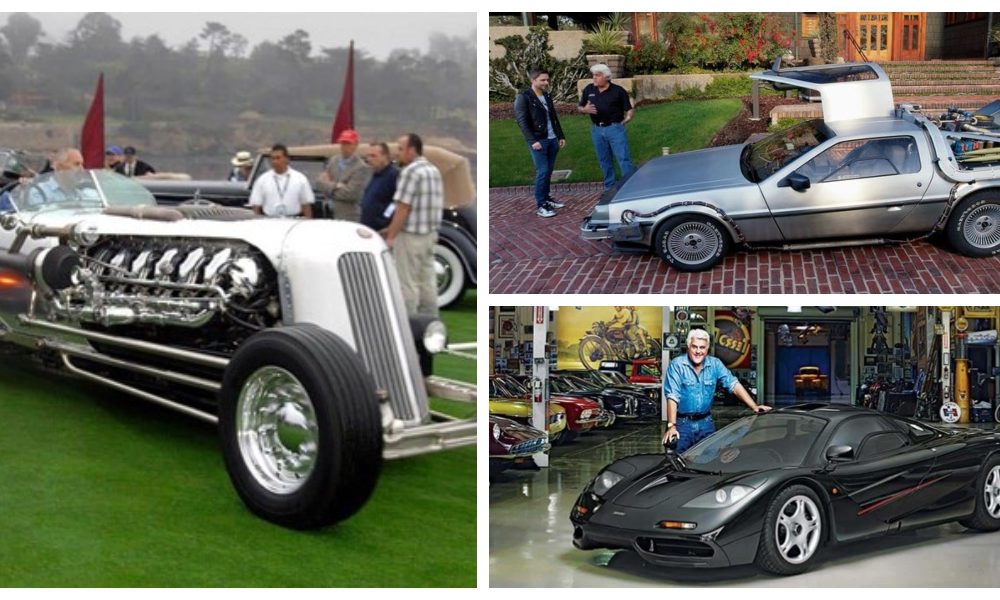
Jay Leno is one of the most recognizable television hosts of the modern era, and his career—spanning more than three decades—has covered almost every role you can attach to a multi-hyphenate entertainer: actor, TV host, producer, writer, comedian, and more. Yet through all the format changes, networks, and career chapters, one passion has remained remarkably consistent: Leno’s fascination with cool, unusual, historically important, and occasionally downright bizarre automobiles.
That passion isn’t a footnote—it’s a defining part of his public identity. Projects like Jay Leno’s Garage didn’t just give him a place to show off shiny metal; they gave him a platform to explain why certain cars matter, how they work, and what makes a vehicle special beyond the badge on the hood. It’s also why the headline number associated with his fleet never feels exaggerated: by many accounts, Jay Leno owns more than 275 cars. What makes that number more impressive is that the collection isn’t monotone. The vehicles vary wildly by brand, era, drivetrain, purpose, and engineering philosophy—and Leno is known to value them for those differences, not despite them.
Below is an expert-curated look at 40 standout vehicles often discussed as highlights of his impressive garage. To make the lineup easier to follow, the entries are rearranged into a more logical flow—starting with modern supercars and high-impact icons, then moving through classic exotics, experimental and turbine-powered curiosities, European grand tourers, American classics, and finally the early, pioneering machines that reveal how deep Leno’s automotive curiosity really goes. Each vehicle remains faithful to the original details, while adding context so the list is not just a set of names, but a comprehensible tour through automotive history.
Think of this less like a “celebrity car list” and more like a moving museum: one that just happens to be owned by a late-night legend who genuinely enjoys driving, wrenching, restoring, and preserving the machines that shaped the last 120+ years of motoring.
Modern Supercars & Contemporary Performance Icons
If you want to understand why Jay Leno’s garage matters beyond entertainment, start with the modern performance cars. These vehicles show that he isn’t trapped in nostalgia; he’s interested in the present and the future of performance engineering too—carbon structures, hybrid systems, limited allocation supercars, and the kind of obsessive design thinking that only exists at the top end of the market.
1994 McLaren F1
Imagine owning a car from 1994 and discovering it’s worth around $12 million. That’s the territory the McLaren F1 occupies, and Jay reportedly paid about that figure to acquire this rare icon. The F1 isn’t simply expensive because it’s rare; it’s expensive because it changed expectations—lightweight engineering, extreme performance, and a design that still feels ahead of its time decades later.
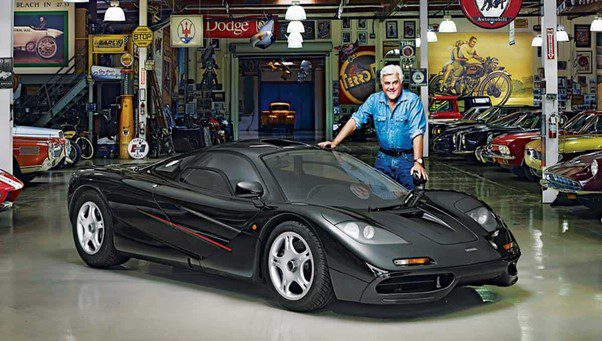
That’s why it makes perfect sense that Jay has said this would be the first car he’d save from his garage if something went wrong. When collectors talk about “crown jewels,” this is what they mean. And while we sincerely hope he never has to put that plan into action, the comment highlights what the car represents: not just value, but an irreplaceable moment in automotive engineering.
2017 Ford GT
The 2017 Ford GT is one of the newer cars on this list, but it earns its place because it reflects modern supercar scarcity and brand mythology done right. First shown at the Detroit Auto Show in 2015, it grabbed attention immediately—and Jay Leno reportedly fell in love with it on the spot. The GT’s appeal isn’t only speed; it’s the story: Ford returning to the global supercar conversation with a car that looks like a concept and behaves like a weapon.
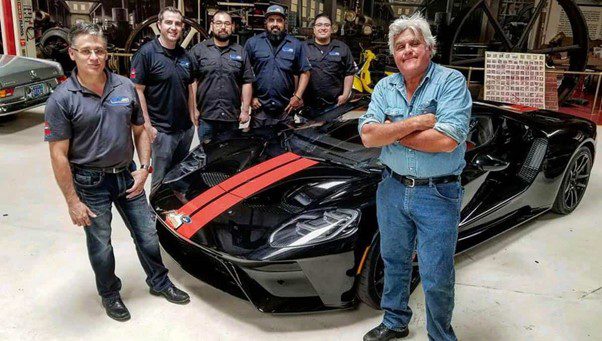
Buying one was not easy. Jay had to go through the same strict application process as other buyers, and even his long familiarity with Ford didn’t magically accelerate the process. From an expert perspective, that’s part of what makes the modern GT fascinating: it’s a performance car, but it’s also a controlled cultural asset—built in limited numbers and distributed carefully to shape the model’s legacy.
2017 Acura NSX
To keep a collection balanced, you need cars that represent major technical shifts—and the 2017 Acura NSX fits that role as a hybrid performance statement. Unlike many other cars on this list, it uses a hybrid engine, meaning part of the system runs on electricity and part on gasoline. This isn’t hybridization for fuel economy alone; it’s hybridization for performance, response, and traction.
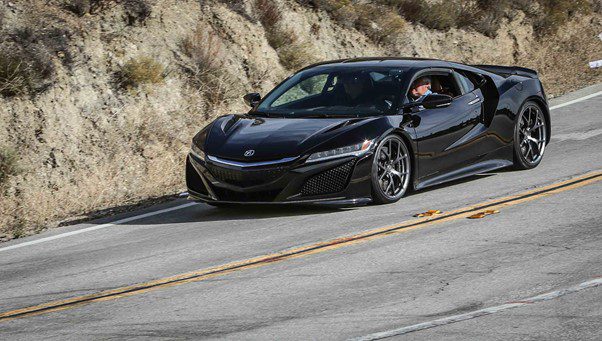
As described, the system produces 573 horsepower, and the car can control all four wheels. From a technical viewpoint, that all-wheel control adds a layer of composure and precision that older supercars often lacked. The NSX is a reminder that “modern performance” is no longer just about displacement; it’s about integration—software, torque delivery, and stability management working together as one system.
2017 Audi R8 Spyder
Although the Audi R8 Spyder is relatively recent, it still stands out because it represents modern exotic design that can actually be used without constant drama. This particular example is described as one-of-a-kind due to changes made during the build: the engine was switched to a V-10, and it was also changed to an automatic transmission. In other words, it isn’t just “an R8”—it’s an R8 with a complicated development path.
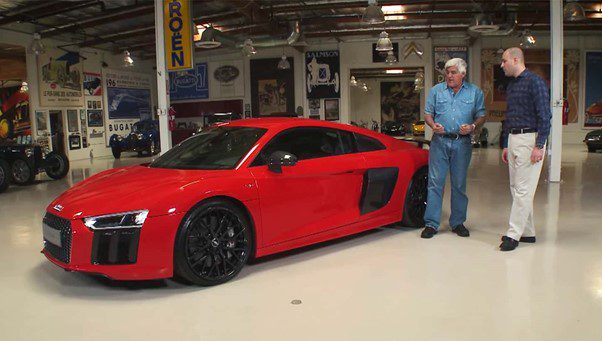
Those changes reportedly took two years, pushing release to 2017. And despite the delays and complications, Jay Leno was still determined to buy it and bring it into his garage. From an expert collector’s angle, that determination signals something important: he doesn’t only chase easy trophies—he’s interested in unusual specifications and the stories behind how a specific car came to exist.
2012 McLaren MP4-12C
McLaren’s MP4-12C marked a modern return to road-car seriousness, and it’s described here as one of Jay’s favorites. When he finally got the keys, he reportedly went completely crazy with excitement—so don’t be shocked if you picture him driving it around town with a grin that says, “yes, this is exactly what I wanted.” Enthusiasm like that is part of why Leno resonates with car people: he reacts like an owner, not like a distant celebrity.
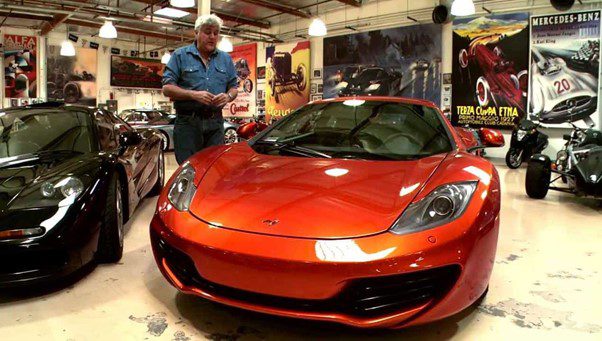
This car was made specifically for Jay, and he was able to test drive it in Britain. He took the chance, and the rest became history. From an expert standpoint, the fact that a manufacturer would tailor a car for a specific buyer reflects both Leno’s reputation and the relationship he’s built in the industry. It also underscores how modern exotics are often as much about customer experience and narrative as they are about engineering.
2015 BAC Mono
The BAC Mono is what happens when you strip the “sports car” idea down to its sharpest point: one seat, focused engineering, and an experience built almost entirely around driving for fun. The 2015 Mono was designed with Formula-style intent, meaning it prioritizes speed, response, and feedback over comfort. Yet it’s also the kind of machine that would look surprisingly at home on the road—like a street-legal track tool.
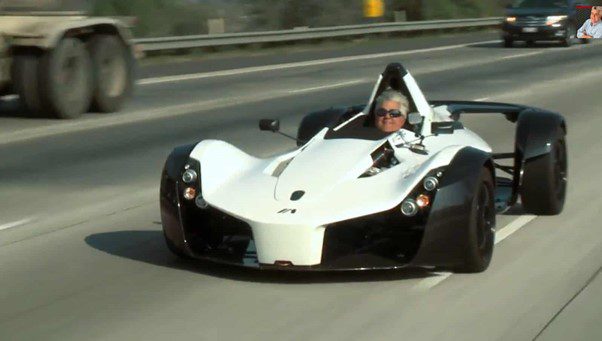
It features a carbon chassis and pushrod suspension, and those components contribute to its 280 horsepower output and highly focused handling. With only one seat, it’s not pretending to be a practical vehicle. It’s a joy machine—purpose-built for the person behind the wheel. From an expert collector viewpoint, owning a Mono makes sense in a museum-like garage because it represents the extreme end of “driver-first” design.
1981 DeLorean DMC-12
Some cars earn their fame through performance. Others earn it through pop culture. The DeLorean DMC-12 belongs to the second category, and it may be the most instantly recognizable car on this list thanks to Back to the Future. Even people who can’t name a single engine type can spot that stainless-steel silhouette and those iconic doors.
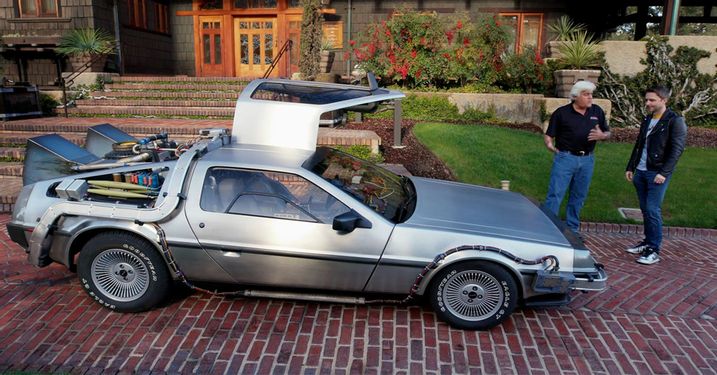
This is described as the original car used in the film, which naturally makes it extremely valuable. It’s not surprising Jay bought it—if most enthusiasts had that opportunity and the money, they’d do the same. From a collector’s perspective, this DeLorean isn’t just a car; it’s a cultural artifact that merges automotive design with cinematic history.
Classic Italian Exotics (Beauty, Drama, and Early “Supercar” DNA)
Italian exotics in Leno’s garage aren’t merely expensive toys. They function like design landmarks—cars that defined what beauty and performance could look like in their era. The Miura in particular is often credited as one of the first vehicles to embody the modern idea of a supercar.
1967 Miura P400
This Italian sports car has been celebrated for a long time, and Jay’s example comes with an extra layer of celebrity history. Before he owned it, it reportedly belonged to singer Dean Martin. When it was introduced, it was described as the only one of its kind—an appropriate way to frame just how disruptive the Miura felt when it arrived.
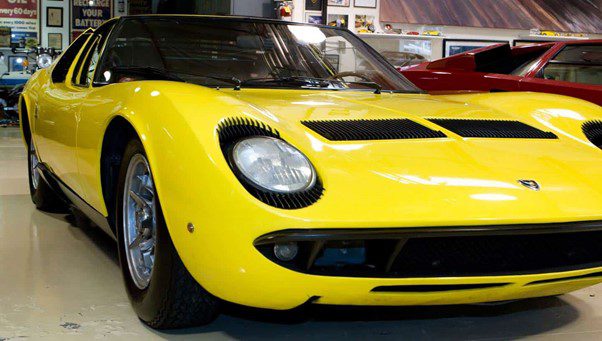
It became one of the first vehicles widely labeled a “supercar,” not only because it was fast, but because its features and overall concept felt far ahead of the market. That kind of leap forces competitors to evolve—exactly as the original text notes. In expert terms, cars like this don’t merely compete; they reset expectations for everyone else.
1969 Miura S
At a quick glance, the 1969 Miura S can look like “just another Italian exotic”—until you realize how much the design and engineering influenced everything that followed. It carries a four-liter engine producing up to 375 horsepower, and it’s widely regarded as one of the most beautiful cars ever made. That reputation isn’t accidental; it’s tied directly to the Bertone Design House, which is credited here as the source of its aesthetic magic.
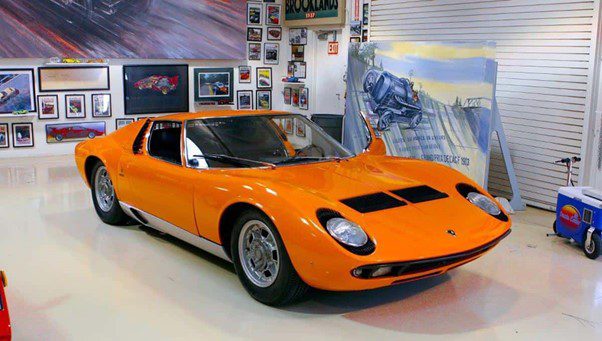
Even in bold shades—like the orange shown—it remains stunning. From an expert point of view, the Miura’s importance isn’t just the numbers. It’s the way its shape communicates speed even when standing still. It’s automotive sculpture that also happens to be a functioning machine, which is why collectors treat it like a crown piece rather than a casual weekend car.
1969 Lamborghini Espada
The Lamborghini Espada is important to Jay for reasons that go beyond design admiration. Yes, it’s a classic and it looks the part—but its uniqueness here comes from personal history. According to the description, when Jay first started driving, this was the only car he had. That makes it a sentimental cornerstone rather than a mere acquisition.
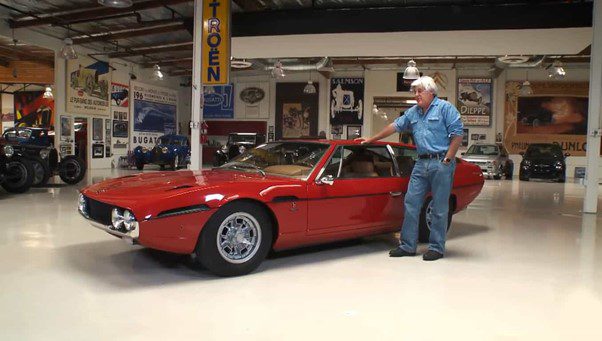
He has reportedly put a lot of miles on it and still takes pride in it. From an expert collector’s standpoint, this is one of the most honest reasons to keep a car: not because it’s the most valuable, but because it’s part of your origin story as a driver. In a garage full of rarities, “the one you started with” often carries a value that no auction can measure.
Experimental, Turbine, and “Only Jay Leno Would Own This” Engineering
Many collections focus on a single theme: muscle cars, European classics, or modern supercars. Leno’s garage is different. It includes experiments—machines that were ambitious, odd, sometimes commercially unsuccessful, and still historically significant because they show what engineers once thought the future might look like.
2006 GM EcoJet
When the GM EcoJet first appeared at a car show in Las Vegas, it drew attention because it wasn’t powered like a normal car. Its engine was a jet turbine, and it was said to be capable of reaching 150 miles per hour. Vehicles like this exist at the edge of what people consider “automotive,” and that edge is exactly where Leno’s curiosity often lives.
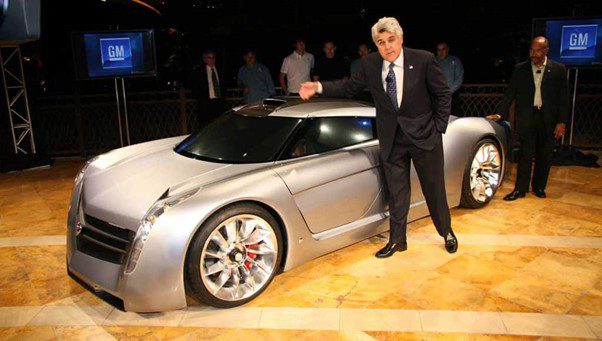
It didn’t catch on, and the public largely forgot about it. But collectors and enthusiasts—especially ones like Jay—keep these ideas alive because they’re markers of ambition. The EcoJet’s design language also “looks like the 2000s,” which makes it a time capsule of that era’s concept-car imagination.
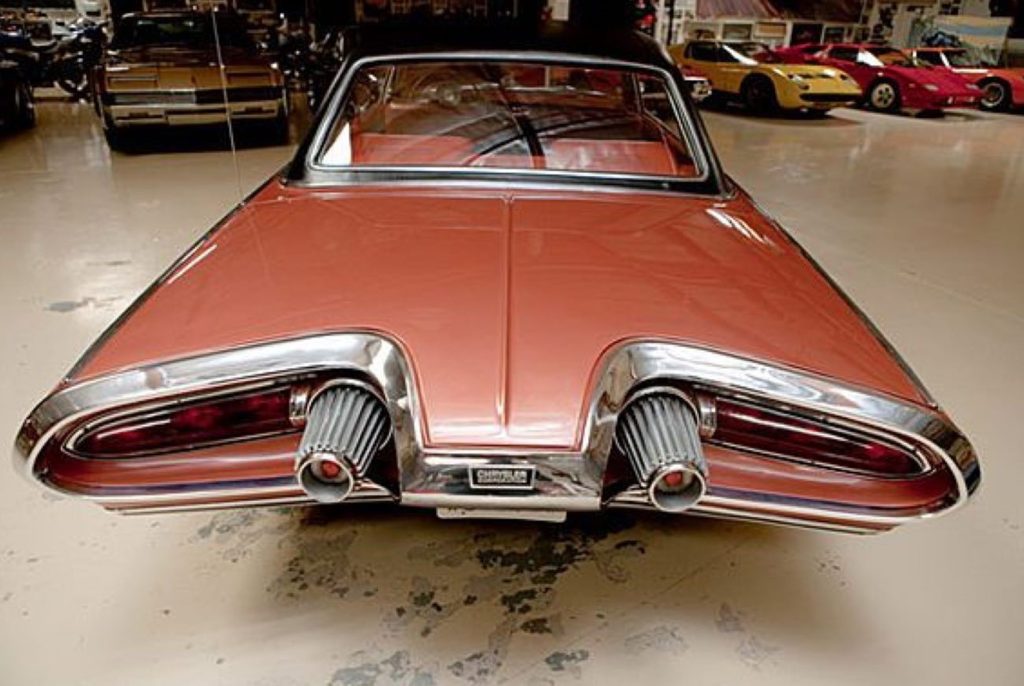
1963 Chrysler Turbine
The Chrysler Turbine is one of those experiments that still fascinates people decades later. When it was revealed to the public, it was so compelling that it appeared at the New York World’s Fair in 1964. It wasn’t without problems: the turbine was loud, and it required diesel, which made daily use less convenient at the time—especially since leaded gasoline was cheaper and easier to find.
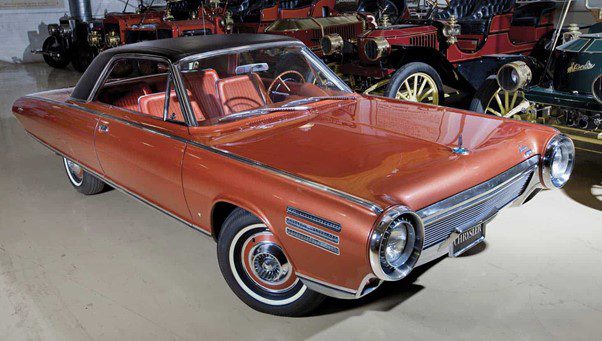
As noted, these practical limitations contributed to the car not performing commercially the way it “should have,” and many drivers chose not to buy it. From an expert standpoint, that’s precisely why it matters: it reveals how innovation can fail not because the idea is worthless, but because the supporting ecosystem (fuel availability, cost, usability) isn’t ready.
Jet-Mobile
The Jet-Mobile looks like it was designed by someone who started with an airplane sketch and refused to stop. The wing-like shape explains its name immediately. But as described, it isn’t the easiest machine to drive. That difficulty doesn’t reduce its appeal in a collection like Leno’s—it increases it, because it represents the “we built it because we could” side of automotive culture.
Given how much Jay loves unusual cars, it’s no surprise he couldn’t say no to something this strange. It may not be the best option for everyday driving, but it is undeniably interesting to look at—and that is often the point of concept-like machines in a collector’s space: they function as conversation starters and creative artifacts.
Blastolene Special
The Blastolene Special looks like it belongs in a world where safety regulations are optional and bravery is required. It wasn’t sold to the public because it was created for Randy Grubb, a well-known car enthusiast and builder. At 8,500 pounds, it’s heavy—and that mass alone tells you this isn’t a “normal” hot rod project.
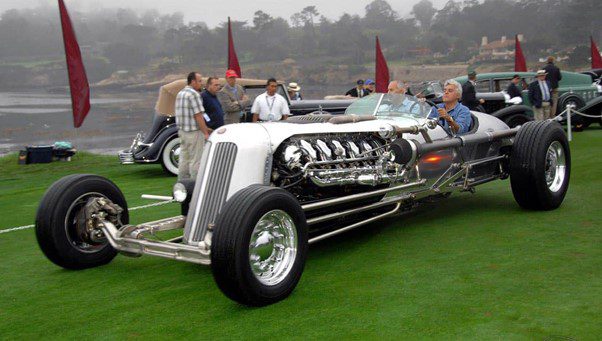
This is described as one of Jay’s favorites, and he may even drive it down the street. The car used to be an American military tank, and the engine is still from one. It’s an odd choice, but it makes perfect sense within Leno’s garage logic: he values machines that tell unusual engineering stories, even if they feel like they were built by someone with an appetite for chaos.
The Panthercar
If you’ve ever watched The Pink Panther on TV, this car might trigger instant recognition. It was built specifically for the show’s opening credits, which is an impressive—and expensive—piece of automotive theater. Creating a dedicated vehicle for a title sequence is the kind of indulgent craftsmanship that barely exists anymore.
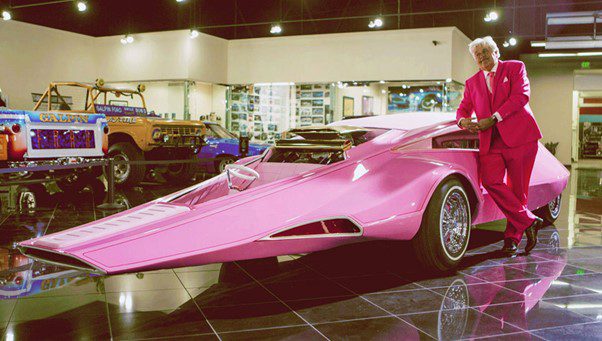
Ed Newton built it using the frame of an Oldsmobile Toronado, and the total cost was around $100,000. From an expert angle, that chassis choice matters because it shows how custom builders often rely on proven production foundations to create one-off fantasy vehicles. The Panthercar is part prop, part engineering project, and entirely a cultural artifact—exactly the kind of object that belongs in a collection built around both mechanics and storytelling.
European Legends: Grand Tourers, Luxury Experiments, and Classic Sports Cars
This is where the collection starts to resemble a curated encyclopedia of European automotive identity—cars that shaped luxury, introduced breakthrough features, or simply became timeless designs worth preserving at any cost in time or restoration effort.
1955 Mercedes 300SL
When the Mercedes-Benz 300SL first arrived, many people didn’t immediately grasp how groundbreaking it was. With gullwing doors, fuel injection, and an independent suspension system, it represented a leap in both design and engineering. Jay Leno reportedly couldn’t resist buying it—and it’s easy to see why. In collector culture, the 300SL isn’t simply “a classic”; it’s a cornerstone of postwar performance luxury.
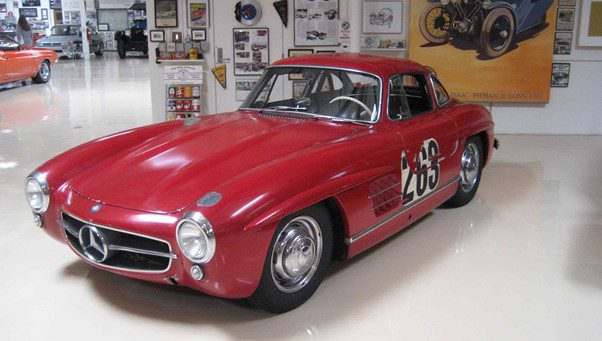
Jay made only a few changes, mostly related to the engine and modern usability, while keeping the rest of the car in seemingly untouched condition. From an expert perspective, that approach is exactly how you preserve an icon: improve what you must to drive safely and reliably, but protect the originality that makes the car historically valuable.
1972 Mercedes 600 Kompressor
In the Mercedes 600 Kompressor, hydraulics is the defining theme. The text notes that almost everything inside operates via hydraulics, including the windows—an innovation that was a major technical flex at the time. This car is described as an ancestor to modern icons like the S-Class, which tracks with the idea that it established a template for flagship engineering.
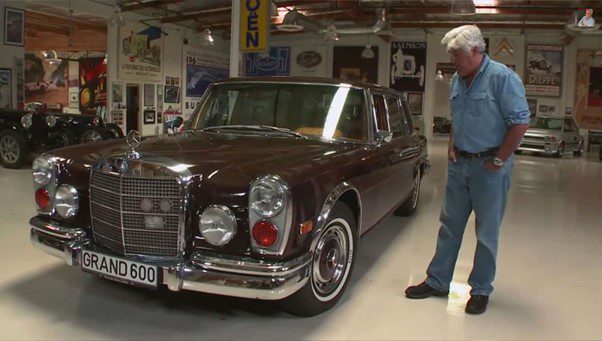
But the car is nowhere near as easy to maintain as modern luxury sedans; it requires significant work to keep running properly. From an expert viewpoint, this is a key theme in high-complexity classics: the very systems that made them advanced then can make them challenging now. Owning one is less about convenience and more about respecting engineering ambition.
1989 Bentley Turbo R
The Bentley Turbo R represents a specific flavor of 1980s luxury: heavy, powerful, refined, and built to deliver speed without sacrificing presence. First shown at the Geneva Auto Show in 1985, it took three more years before Americans could buy it. As the text suggests, those years were worth the wait for anyone who wanted a four-door luxury car capable of serious pace.
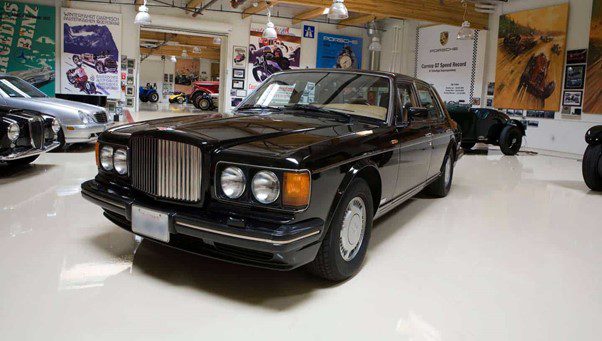
It can reach 145 miles per hour, and its engine is just under seven liters. From an expert collector standpoint, cars like this matter because they represent an era when luxury brands embraced brute force as part of refinement. You can see why Jay would want a “revolutionary” machine like this in a garage that celebrates engineering variety.
1963 Jaguar E-Type
Many vehicles in Jay Leno’s world are not simply purchased—they are rescued, rebuilt, and reintroduced to the road. The 1963 Jaguar E-Type is one of those restoration stories, taking a staggering 3,000 hours to bring back properly. That number alone tells you this wasn’t a casual project; it was a full-scale restoration commitment.
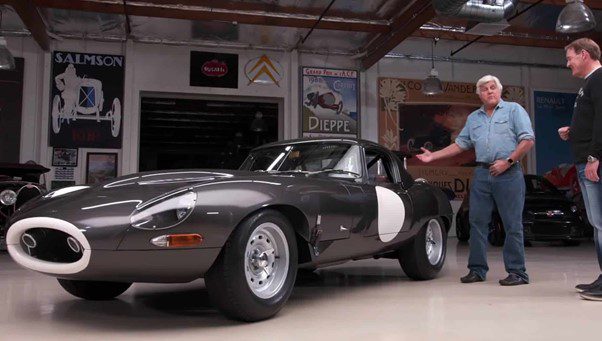
The result is worth it: the E-Type remains one of the most celebrated silhouettes in automotive history. Jay’s team replaced body metal with aluminum to reduce weight slightly. From an expert perspective, that choice also signals performance intent—lightness has always been part of what makes classic sports cars feel alive. In a collection full of extremes, the E-Type is the elegant athlete: sleek, classic, and still emotionally modern.
1962 Maserati 3500 GTi
Sometimes the best collector stories don’t begin at auctions—they begin in unexpected places, like storage lockers. Jay reportedly paid $25,000 for a storage unit while searching for a different car, only to end up acquiring this Maserati instead. The Maserati had 100,000 miles on it, but it was still in good condition, which made the purchase feel worthwhile even if it seemed expensive.
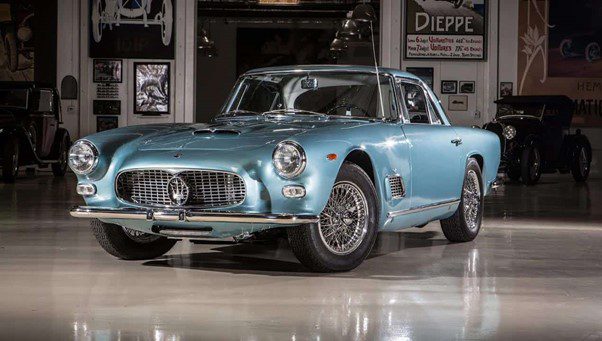
From an expert collector angle, this is what separates true enthusiasts from casual buyers: the willingness to recognize value beyond perfection. A car with miles can still be a treasure if the fundamentals are strong. That’s especially true for historically significant grand tourers, where originality and integrity often matter more than odometer numbers.
1950 Mercedes Transporter
Even if it might be considered one of the least “beautiful” vehicles on this list, Jay Leno loves the Mercedes Transporter—and that affection makes sense when you consider its purpose. Mercedes built it as a support vehicle for motorsport, intended to help tune up and service cars during racing events. In that context, looks were secondary to function.
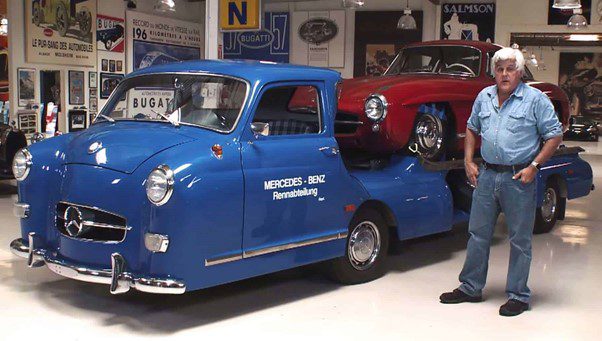
Surprisingly, it can go faster than 105 miles per hour. That speed makes practical sense: support vehicles need to keep up with the pace and schedule of the racing machines they serve. From an expert standpoint, this is a collector’s “infrastructure car”—a reminder that motorsport is not only the glamorous race car, but also the network of machines that make racing possible.
1969 Lotus Elan
When Jay first acquired this Lotus Elan, it was in terrible condition. The interior was a disaster, and the exterior was not only unattractive but dented. Yet, impressively, it was restored in just 18 months. That kind of turnaround suggests a clear vision and a skilled team willing to execute it properly.
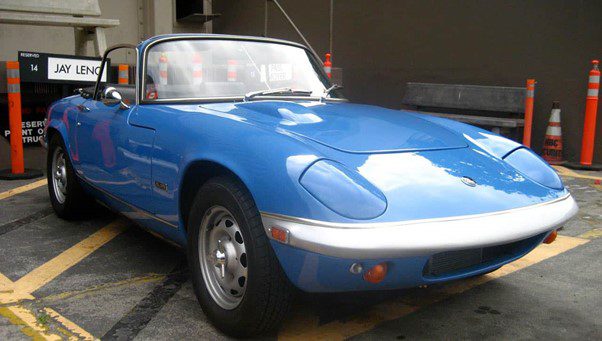
Jay described his goal as making it the “ultimate Lotus,” and the end result reportedly looks better than ever. From an expert perspective, the Lotus philosophy—lightweight, responsive, driver-centric engineering—aligns naturally with Leno’s broader taste. In a garage filled with horsepower monsters, a Lotus reminds you that performance can be achieved through finesse rather than brute force.
American Icons & Muscle: Big Engines, Big Stories, and Big Presence
Jay Leno’s collection would be incomplete without American classics. These cars represent a different national attitude: bold styling, large displacement, and a kind of confidence that makes even a parked vehicle feel like it’s taking up the entire street.
1966 Lincoln Continental
This Lincoln Continental may not be “perfect,” but it’s close enough that its minor marks read more like honest age than neglect. There are small imperfections that make it look slightly worn, and that can actually enhance its character—classic luxury cars often look best when they feel lived-in rather than sterile.
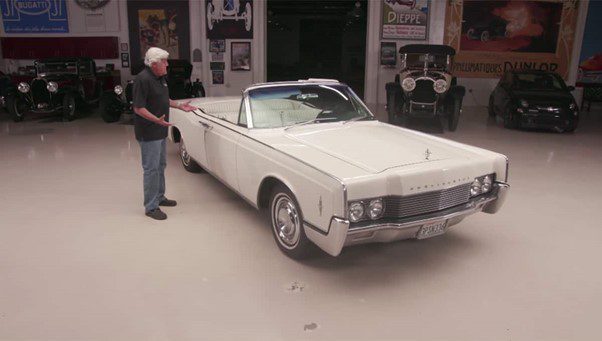
It’s also rare in production terms: only 21,347 were made. The mystery is why production was that limited, because the design remains classic and nearly perfect in proportion. From an expert perspective, Continentals are often valued for their presence—quiet, confident, and unmistakably American luxury.
427 Shelby Cobra
The 427 Shelby Cobra is one of those cars that feels like the definition of “icon.” Jay Leno is known to love it deeply, and it’s a vehicle you might actually see him driving—because it’s beautiful, raw, and unmistakable. The Cobra is also a reminder of a time when performance was less filtered: big engine, light body, direct connection to the road.
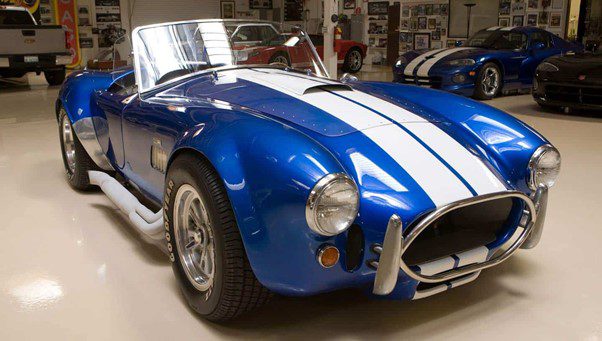
The text notes an interesting modern twist: this car has been redesigned and updated in a project to function as part of a fully electric Tesla vehicle. Even if you prefer the original design—and many do—the fact that the Cobra can be reinterpreted through electrification shows how strong its silhouette and cultural power remain. The classic form is so sleek that it continues to inspire reinterpretations decades later.
1963 Corvette Split-Window Coupe Fuelie
At first glance, this may look like “just a Corvette,” but sharp-eyed enthusiasts can spot that something is different—especially the split rear window, which immediately puts it in a highly desirable category. According to the description, this 1963 Corvette is the only one with these mirrors, wheel covers, screws, and a hood.
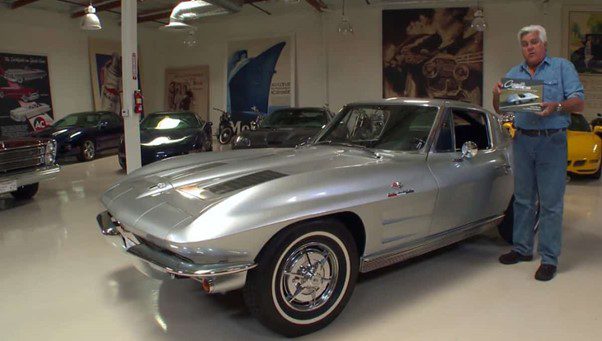
That uniqueness, combined with the split-window signature, makes it rare and visually unforgettable. From an expert perspective, this is the kind of car that sits at the intersection of American performance history and collector obsession—an example where small details create big value because they mark the car as a singular artifact rather than a typical production piece.
1966 Oldsmobile Toronado
This Toronado entry connects neatly to other items in the list because its chassis and engineering appear in other contexts as well. As described, it carries a 7-liter, eight-cylinder engine and can reach 135 mph. That’s serious capability for a car that also communicates comfort and mass-market boldness.
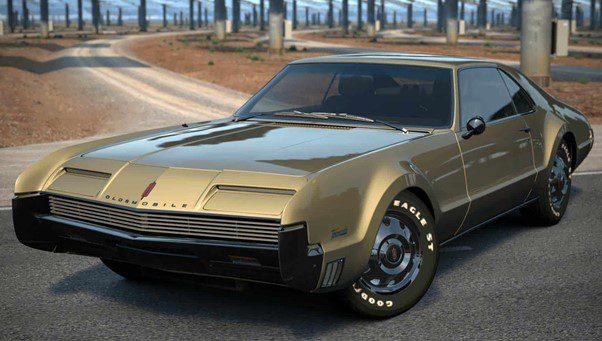
Jay also added more character by converting the front seats into bucket seats, creating enough room in the rear for the chassis tunnel. From an expert viewpoint, that kind of modification reflects Leno’s approach: preserve the spirit, but optimize the usability and experience. He doesn’t treat cars as untouchable statues—he treats them as machines meant to be enjoyed.
1959 Oldsmobile Super 88
Don’t let the name fool you—this Oldsmobile Super 88 is described as a beast under the hood. With 315 horsepower, it has the kind of presence that announces itself before you even see it. Loudness, in this context, isn’t a defect; it’s part of the era’s identity, a time when cars were expected to feel larger than life.
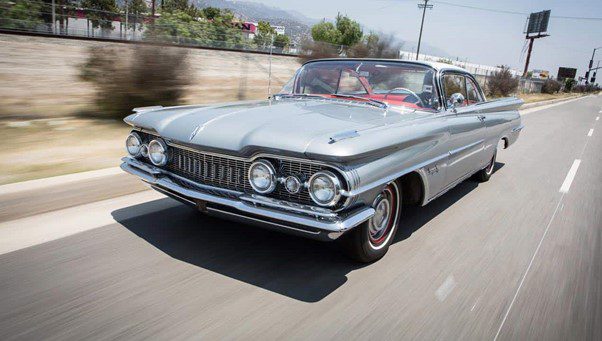
Beyond power, it also has a big trunk and bright lights—features that ensure attention on the road. From an expert perspective, this kind of car represents American confidence in its purest form: generous dimensions, dramatic styling, and an engine designed to make every drive feel like an event.
1941 Plymouth Special Deluxe Business Coupe
This car comes from an era when safety expectations were dramatically different. It lacks features we now take for granted, like power steering and power brakes, and that would have made it a demanding vehicle to drive—especially in modern traffic. Yet Jay still chose to include it in his collection, which signals a respect for history even when it isn’t convenient.
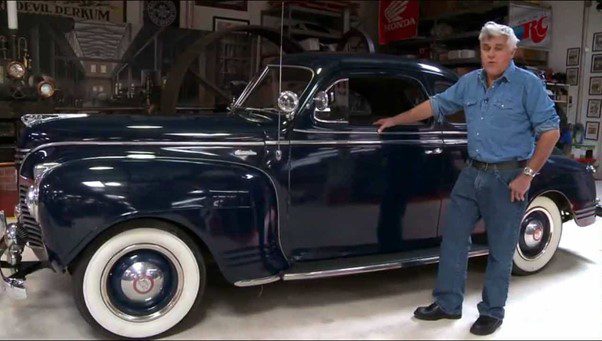
He reportedly brought it back to life with paint and new tires. Still, the text notes a sentiment most modern drivers would share: it’s probably not something you’d want to daily drive today. From an expert view, that’s exactly why it belongs in a serious collection—because it preserves what motoring used to be before comfort and safety became standard.
1950 Nash Ambassador
The 1950 Nash Ambassador is a great reminder that “innovation” didn’t begin with computers. Many features we consider standard today were cutting-edge in their time. The text points to two: a new type of air conditioning and the Ultramatic transmission, both praised when introduced. These details matter because they show how mainstream cars quietly pushed technology forward year by year.
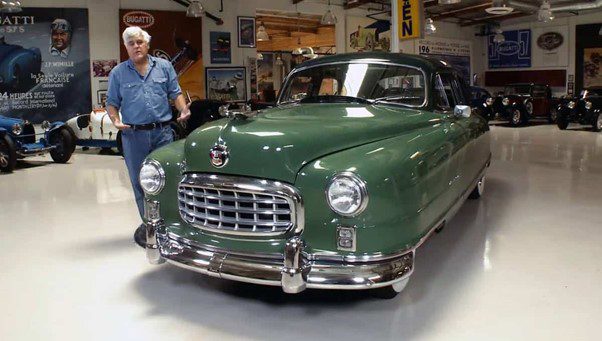
Jay didn’t modify it; he kept it looking as it did when he bought it, giving it only a good polish. From an expert standpoint, preservation-focused ownership is vital for cars like this. Not every vehicle needs to become a restomod. Some need to remain intact so future enthusiasts can see what “advanced” looked like in 1950.
Vintage Engineering and Early Motoring (Steam, Three Wheels, and Handmade Ingenuity)
This is where the Leno collection becomes undeniably museum-like. Early vehicles reveal how quickly mobility evolved—from steam to internal combustion, from handmade construction to standardized production, and from three-wheeled experiments to the four-wheeled norms we now consider obvious.
1906 Stanley Steamer Vanderbilt Cup Racer
This vehicle is more than 100 years old and powered solely by steam—a reminder that early automotive history included multiple competing power sources. In 2007, Jay decided to restore it and ran into many issues along the way. Restoring steam technology is not like restoring a typical gasoline-powered classic; it requires specialized knowledge and careful engineering because the systems operate under very different principles.
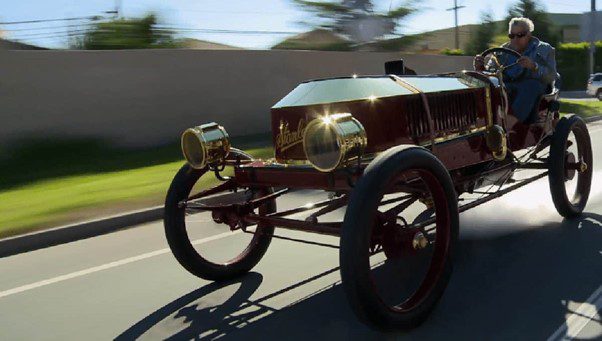
The problems were resolved, and Jay reassembled it, adding a few upgrades to make it easier to drive. Even so, it still looks dangerous—which is part of the honest charm of early racers. From an expert viewpoint, this car is valuable because it represents the experimental, fearless era when speed records and competition demanded radical solutions.
1932 Morgan
This is one of the older vehicles in Leno’s collection, and it stands out immediately because it has three wheels instead of four. That configuration alone makes it unusual by modern standards, but three-wheelers played a meaningful role in early automotive development, especially when manufacturers were still exploring what “efficient and stable” should look like.
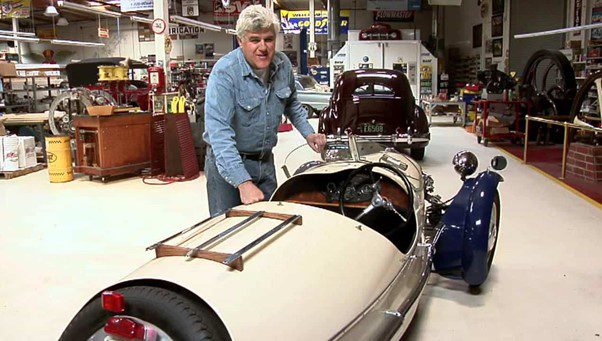
Its cooling system reportedly doesn’t use a fan, relying on water instead—a concept said to have influenced later vehicles like Ford’s Model T. Whether you view that as direct lineage or as parallel evolution, the point remains: early cars were full of creative problem-solving. It’s old, but still meaningful—a mechanical reminder that even “primitive” vehicles could shape what came next.
1928 Bugatti Type 37A
The Bugatti Type 37A is described as an absolute beast, and the most striking detail is that it can reach 100 miles per hour—despite being nearly 100 years old. Jay might even drive it on the highway, which, frankly, takes a certain level of confidence and respect for early engineering.
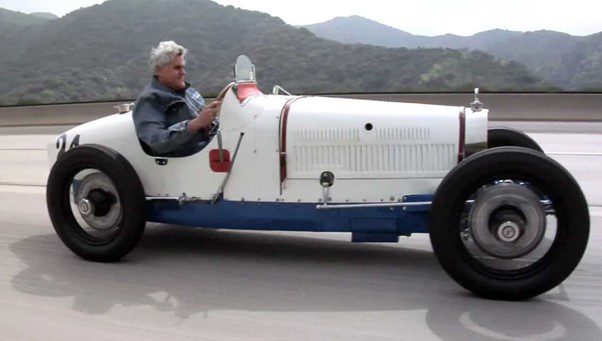
The car uses a driveshaft running from the flywheel to the gearbox, described as a key part of how it achieves its speed. From an expert perspective, early Bugattis are prized not only for performance, but for craftsmanship and racing spirit. They represent a period when elite engineering was visibly artisanal—and when “fast” meant something very different than it does today.
1913 Merce Raceabout
No, your eyes aren’t deceiving you—this is a car, not a tractor. The bright yellow color and the lack of an outer “shell” make it look strange by modern standards. But vehicles like this were part of the early sports-car world, when open mechanical layouts were normal and the idea of bodywork as a complete enclosure was still evolving.
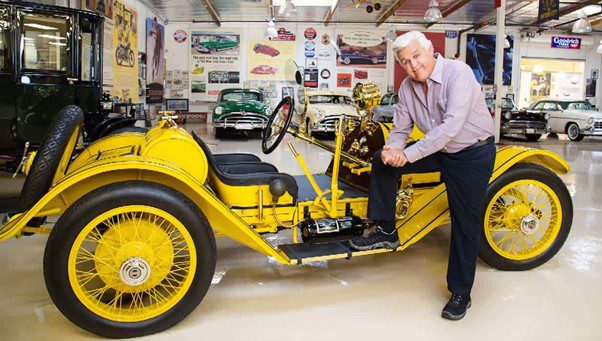
This isn’t something you could reasonably drive on public roads today, yet it was popular and among the earliest sports cars. If you’re lucky, it can reach around 100 miles per hour. From an expert point of view, cars like this preserve the raw foundations of performance culture—before comfort, safety, and refinement became priorities.
1918 Pierce-Arrow Model 66
This is another example that Jay chose not to restore heavily, keeping it looking close to its original form. The decision to retain the 14-liter engine is presented as deliberate, and it aligns with the idea that some cars should remain historically intact rather than modified for modern preferences.
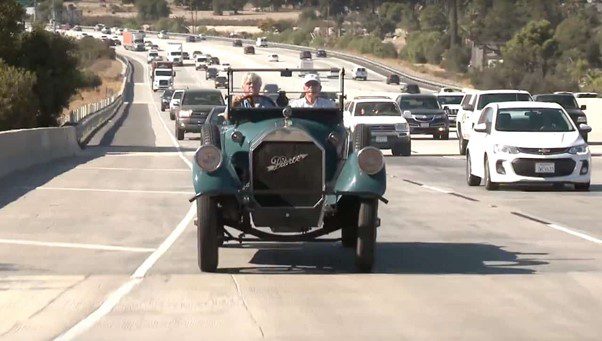
The car is described as one of the last made on the original line from 1916, which is why Jay wanted to keep it as close as possible to its original build. It did require cleaning and polishing—because preservation still involves care—but the overall philosophy is clear: protect history rather than rewrite it.
1931 Shotwell
What makes this vehicle impressive isn’t only age—it’s the fact that a 17-year-old boy built it, and that it has three wheels. Bob Shotwell made it in his garage using an Indian motorcycle engine. That detail gives the vehicle a special place in automotive culture: it represents the DIY spirit that has always pushed innovation forward from the grassroots level.
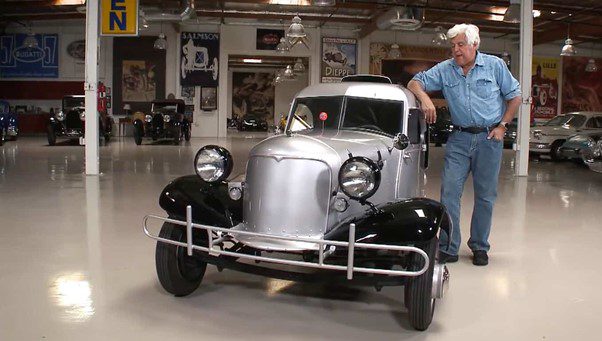
Jay made a few changes—adding a fuel pump and cooling system—to improve speed and usability. From an expert standpoint, this is a respectful form of enhancement: preserve the original concept while improving function enough to keep it alive. In a collection filled with factory legends, a homemade three-wheeler built by a teenager is proof that engineering passion exists at every level.
Oddballs, Bargains, and Collector Personality Pieces
One of the most telling things about Leno’s collection is that it includes cars that are not expensive at all—because the goal isn’t only to accumulate value. It’s to accumulate stories, engineering ideas, and cultural snapshots. This is where tiny cars, strange builds, and “why not?” purchases show up.
2012 Tato Nano
For someone as wealthy as Jay Leno, money might seem like it would never be a constraint. Yet he still buys vehicles like the Tato Nano, which at $3,400 is described as the “world’s cheapest car.” That choice reveals something important: he isn’t only interested in expensive machines. He’s interested in what cars represent at every level of the market.
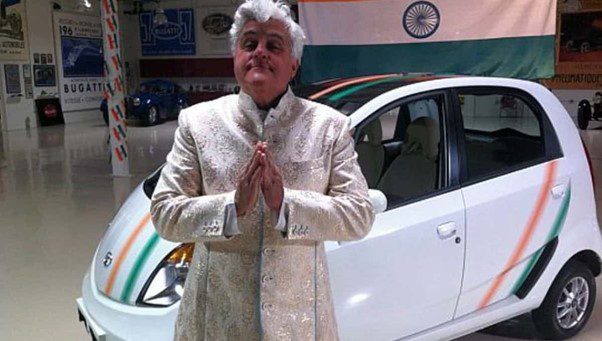
Even though it’s small, it has 38 horsepower. Jay reportedly improved it slightly with alloy wheels—because even a bargain car can benefit from a touch of personalization. And yes, once Jay touches a vehicle, it tends to gain cultural value simply because of the association. In collector terms, this is an “accessibility artifact”: proof that car history includes economy solutions, not only luxury dreams.
1964 Honda S600
The Honda S600 has the kind of classic look that can confuse modern drivers—especially when it appears on highways surrounded by SUVs. People might stare today, but according to the description, they did the same when it debuted. This was a small car in an era when many vehicles were enormous, which made it visually stand out even more.
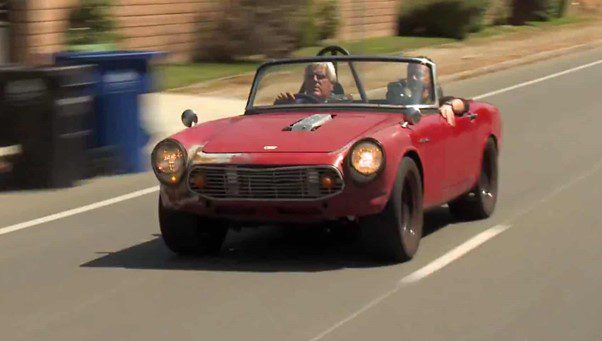
It has a small engine, and its size made it look even smaller next to the huge highway cars of the 1960s. The text also notes a practical limitation: it’s too small for grocery shopping. From an expert perspective, the S600 is valuable because it highlights how Japanese manufacturers entered the global conversation—with lightweight, efficient designs that contrasted sharply with Western norms.
1952 MG TD Hot Rod
At first glance, the MG TD Hot Rod looks like a standard 1950s vehicle—until you spot the rear. The back tires are dramatically larger than the front, a classic hot-rod visual cue that suggests the car is built for acceleration and attitude rather than factory balance.
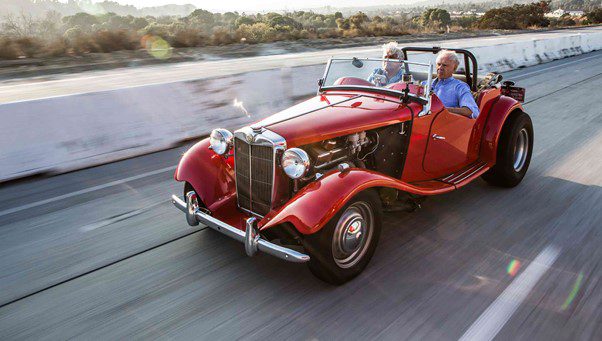
We don’t know exactly why the tires were made so large, but the implication is speed—and with 340 horsepower, it qualifies as very powerful. From an expert standpoint, hot rods like this represent American customization culture: taking a familiar platform and turning it into an expression of personal performance and style. It’s a different kind of automotive artistry, and it belongs in a collection that celebrates variety.
1993 LCC Rocket
The LCC Rocket is another example of a car Jay reportedly can’t resist driving around Los Angeles. Its name makes sense the moment you see it—its shape and proportions are pure “lightweight speed idea.” Comfort isn’t the priority. Efficiency of motion is.
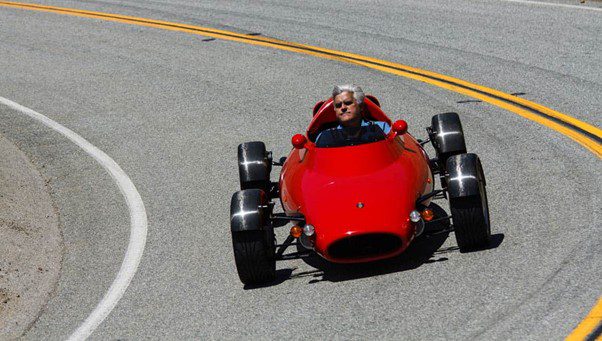
It weighs about 850 pounds and uses a Yamaha engine producing 165 horsepower, which helps explain its performance. From an expert perspective, this is a power-to-weight lesson on wheels. It’s not about enormous horsepower; it’s about minimal mass. Vehicles like the Rocket illustrate how “fast” can be achieved through smart design rather than sheer force.
1934 Rolls-Royce Phantom II
This entry stands out because it’s described as one of the most powerful vehicles on the list: 1,000 horsepower, powered by a Merlin V-12 engine. That output alone makes it a spectacle, and the claim becomes even more intense with the torque figure: more than 1,800 pounds of torque when driven. Whether you view this as a historically standard Phantom II or as a heavily modified interpretation, the key message remains the same—this is extreme, unconventional power in an old-world form.
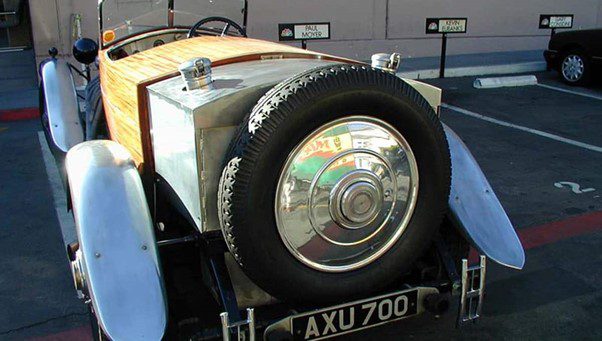
The text suggests it looks better in person than photos capture, and even proposes that with fresh paint and new wheels it could become a true beauty. From an expert collector’s point of view, this car embodies a specific collector impulse: to explore what happens when eras collide—classic luxury aesthetics paired with aircraft-grade or race-level power. It’s not subtle, but it’s unforgettable.
1963 Jaguar E-Type
(Yes, it’s so important it’s worth mentioning again in the context of restoration philosophy.) Leno’s garage is not just about owning; it’s about preserving—and a 3,000-hour restoration highlights how serious that preservation can be. Replacing body metal with aluminum also shows how performance considerations can live alongside authenticity, especially when the goal is to drive rather than merely display.
In a collection full of vehicles that can intimidate, the E-Type persuades. It convinces you with proportion and elegance. That’s why it remains an anchor for any serious collector who values design history as much as horsepower.
1966 Oldsmobile Toronado
(This one also deserves a second nod because of how it connects to the Panthercar build.) The Toronado’s chassis shows up in creative contexts, which is exactly what makes it interesting beyond the base car itself. When a production platform becomes the foundation for custom projects, it’s usually because the underlying engineering offered something valuable—structure, packaging, or drivetrain characteristics that builders trust.
That’s part of what separates an “old car” from a “historically influential car.” The Toronado was influential enough to be used as a foundation for a TV-famous custom build, and that kind of influence matters to collectors who think in engineering lineages.
Final Thoughts: Why Jay Leno’s Garage Matters
Jay Leno’s collection is impressive because of scale—more than 275 cars is an extraordinary number—but it’s more impressive because of intent. The vehicles listed above span steam-powered racers, turbine experiments, handcrafted oddities, pop-culture icons, American muscle, European luxury engineering, and modern supercars. That breadth communicates a curator’s mindset: the collection is designed to tell stories about how cars evolved, why certain ideas mattered, and how innovation often arrives through risk.
Just as importantly, Leno’s enthusiasm reads as authentic. He doesn’t talk about cars like they’re static trophies; he talks about them like they’re living machines with personalities. That approach makes his garage more than entertainment—it makes it one of the most publicly accessible “automotive classrooms” in celebrity culture.
And if there’s a single theme that ties these 40 entries together, it’s this: Jay Leno doesn’t just collect cars. He collects ideas—sometimes beautiful, sometimes strange, sometimes commercially unsuccessful, but almost always historically interesting. That’s what makes the collection worth studying, not merely admiring.

