
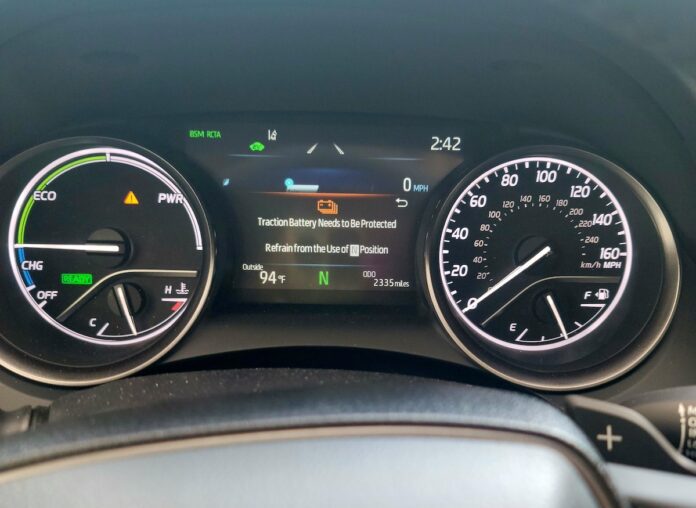

The flashing alert on your dashboard; “Traction battery needs to be protected“; might feel like an unwelcome interruption, but it’s actually your vehicle’s intelligent guardian springing into action. Far from a mere nuisance, this sophisticated warning serves as an early defense mechanism, shielding one of the most expensive and crucial parts of your electric or hybrid car from irreversible harm. By heeding these alerts, you’re not just avoiding inconvenience; you’re safeguarding thousands of dollars in potential repair costs and preserving the smooth, efficient performance you expect from modern electrified vehicles.
What Exactly Is a Traction Battery?
Imagine the heart of your electric or hybrid vehicle: that’s the traction battery. This isn’t your everyday 12-volt starter battery that handles lights, radio, and accessories. Instead, it’s a high-voltage powerhouse designed specifically to propel the vehicle forward.
Here are the key characteristics that set traction batteries apart:
- They operate at dramatically higher voltages, typically ranging from 200 to 800 volts, enabling powerful electric motor performance.
- They store vastly more energy, delivering the sustained power needed for propulsion over long distances.
- Replacement costs can be steep; often falling between $5,000 and $15,000 or more, depending on the model and market conditions.
- They directly drive the electric motors responsible for moving your vehicle, making them central to the entire driving experience.
In many modern EVs and hybrids, the traction battery accounts for roughly 30-40% of the vehicle’s total manufacturing cost. This substantial investment explains why automakers invest heavily in advanced safeguards to keep it healthy and operational for as long as possible.
Why Protection Is Non-Negotiable for Your Traction Battery
Traction batteries are remarkably durable engineering marvels, yet they remain vulnerable to several environmental and operational stresses that can accelerate wear, reduce efficiency, and shorten overall lifespan. Recognizing these vulnerabilities sheds light on why your dashboard occasionally lights up with urgent protective messages.
Battling Temperature Extremes
Temperature is perhaps the single biggest external factor influencing battery longevity.
- Excessive heat speeds up internal chemical reactions within the battery cells, dramatically hastening degradation. When ambient temperatures climb above 95°F (35°C), certain battery chemistries can age up to five times faster than under ideal conditions, leading to noticeable capacity loss over time.
- Extreme cold, on the other hand, hampers performance temporarily. Below freezing (32°F or 0°C), you might experience up to a 40% drop in available range as the battery struggles to deliver power efficiently and chemical processes slow.
To combat these challenges, virtually all modern electrified vehicles incorporate advanced thermal management systems; liquid cooling loops, heating elements, or sophisticated airflow designs; that work tirelessly to keep the battery within an optimal temperature window (typically around 68-86°F or 20-30°C). When conditions push beyond what these systems can handle; such as prolonged exposure to scorching sun or arctic blasts; the vehicle activates protective modes to limit damage.
Invisible Safeguard Zones: Charge Level Boundaries
Manufacturers build clever “buffer zones” into the battery’s usable capacity to prevent destructive overcharging or deep discharging.
Visualize the battery’s full capacity like this:
|—- Buffer Zone —-|————- Usable Range ———–|—- Buffer Zone —-|
(Roughly 10-13% of total) (Displayed as 0-100%) (Roughly 10% of total)
When your instrument cluster reads 0%, the battery actually retains about 10-13% of its true capacity. Likewise, a displayed 100% often corresponds to only around 90% of the physical maximum. This intentional cushioning explains why a battery advertised as “14 kWh usable” might have an underlying total capacity closer to 18 kWh.
These hidden reserves act as critical insurance policies: they stop overcharging from damaging cell structures and prevent full depletion that could cause irreversible chemical changes. By staying within these engineered limits, the vehicle dramatically extends the battery’s service life.
Everyday Situations That Trigger Protection Alerts
Real-world driving throws plenty of curveballs at your traction battery. Here are some of the most common scenarios where protection systems step in to intervene.
The Infamous “Neutral Position” Alert
One of the most commonly reported warnings appears during car washes or anytime the vehicle lingers in neutral for too long. The message often reads something like:
“Traction Battery Needs to be Protected. Refrain from the Use of N Position”
Why does this happen? In hybrids especially, the internal combustion engine can’t recharge the traction battery while the transmission is in neutral; no regenerative braking occurs, and the engine isn’t actively contributing power. Meanwhile, accessories like air conditioning, infotainment, or even basic electronics continue drawing energy. Over time, this passive drain risks pushing the battery dangerously low.
Practical fix: Whenever feasible, shift into Park. If you’re in an automatic car wash requiring neutral, make sure the battery starts with a healthy charge level (ideally above 50%). Limit accessory use during the wash to reduce unnecessary consumption.
Low-Charge Safeguards in Action
When the traction battery dips below roughly 40% capacity, built-in protections activate automatically to preserve what’s left:
- In hybrid models, the gasoline engine may fire up; even at a standstill; to generate electricity and replenish the pack.
- In pure EVs, the system might restrict acceleration to conserve energy and maintain safe operating margins.
- Climate control (heating or air conditioning) often runs at reduced power to prioritize propulsion needs.
These interventions aren’t annoyances; they’re smart strategies ensuring the battery doesn’t fall into harmful deep-discharge territory.
Temperature-Related Performance Limits
In blistering heat or bitter cold, you might see messages such as:
- “Limited power due to battery temperature”
- “Allow battery to warm up before driving”
- “Battery cooling active – charging speed reduced”
These alerts indicate the thermal management system is working overtime. Respect them: avoid aggressive driving until the battery stabilizes, and consider preconditioning (warming or cooling the battery while plugged in) before departure.
The Intricate Dance Between Traction and 12V Batteries
Your vehicle relies on a delicate partnership between the high-voltage traction battery and the conventional 12-volt auxiliary battery.
Key interdependencies include:
- The 12V battery powers the contactors; high-voltage relays; that safely connect the traction pack to the vehicle’s systems.
- During normal operation, the traction battery keeps the 12V battery topped up via a DC-DC converter.
- Failure in either battery can cascade into complete system shutdown.
To avoid draining the main pack unnecessarily, protection logic halts 12V charging under certain conditions:
- When traction battery state-of-charge falls below 20-30%.
- If the 12V battery requests charging too frequently (indicating potential faults).
- While the vehicle is plugged in but not actively charging the high-voltage pack.
This prioritization preserves range and protects the expensive traction battery, even if it means the 12V system temporarily relies on its own reserves.
Charge Mode: A Double-Edged Sword for Battery Health
Many plug-in hybrids offer a “Charge Mode” that uses the gasoline engine to actively replenish the traction battery; handy when public charging isn’t convenient.
However, this convenience comes at a cost:
- Standard hybrid operation might deliver around 39 MPG.
- Engaging Charge Mode often drops efficiency to roughly 29 MPG as the engine works harder.
On the highway at moderate speeds (around 65 mph), Charge Mode can restore about 11 kWh; roughly 80% of typical pack capacity; in about an hour. Use it judiciously: it’s great for extending electric-only range before a long trip, but frequent reliance reduces overall fuel economy.
Spotting Early Indicators of Traction Battery Trouble
Catching issues early can prevent minor problems from escalating into major expenses. Be vigilant for these telltale signs:
- Erratic fluctuations in the displayed state-of-charge reading
- Noticeably sluggish acceleration or reduced responsiveness
- Weaker-than-usual regenerative braking feel
- Declining fuel economy in hybrid models
- Increasing frequency of protection-related warnings
These clues often point to uneven cell or module performance within the battery pack. Modern packs contain hundreds or thousands of individual cells; when some degrade faster, the entire system suffers until balanced or repaired.
Meet the Battery Management System (BMS): Your Invisible Guardian
At the core of all protection strategies lies the Battery Management System; a highly advanced electronic brain that vigilantly oversees every aspect of battery health.
The BMS continuously:
- Tracks voltage and temperature across individual cells
- Actively balances charge levels to prevent imbalances
- Optimizes charging curves to reduce stress
- Computes precise state-of-charge and state-of-health estimates
- Directs thermal management systems (cooling/heating)
- Enforces protective limits when risks emerge
Thanks to the BMS, everyday driving rarely threatens the battery; most degradation happens gradually and predictably when these boundaries are respected.
Smart Habits to Maximize Your Traction Battery’s Lifespan
Small, consistent choices can dramatically extend battery life. Here’s a prioritized list of daily practices:
- Practice smooth, gentle acceleration and braking ; Avoid jackrabbit starts and harsh stops, which generate excessive heat and current spikes that stress cells.
- Choose shaded or covered parking whenever possible ; Especially in hot climates, this helps keep the battery closer to ideal temperatures.
- Aim to keep daily charge levels between 20-80% ; This “sweet spot” minimizes chemical strain; reserve full charges for trips requiring maximum range.
- Leverage preconditioning features ; Schedule departure times so the vehicle can warm or cool the battery while still plugged in, optimizing efficiency and longevity.
- Stay current with software updates ; Automakers regularly refine BMS algorithms, thermal strategies, and charging protocols via over-the-air improvements.
Special Preparations for Car Washes or Extended Neutral Use
Before any situation requiring neutral:
- Confirm the battery holds at least 50% charge.
- Turn off power-hungry accessories like climate control.
- Shift to Park immediately after the activity ends.
- Consult your owner’s manual for model-specific car wash recommendations.
Peering Into the Chemistry: Why Batteries Age Over Time
Modern traction batteries predominantly rely on lithium-ion technology. During charging and discharging, lithium ions shuttle between cathode and anode electrodes. Over thousands of cycles, several natural processes slowly erode capacity:
- Solid Electrolyte Interphase (SEI) Growth ; A protective layer forms on the anode, consuming small amounts of lithium and increasing internal resistance.
- Lithium Plating ; Rapid charging in cold conditions or at high rates can deposit metallic lithium on the anode surface instead of proper intercalation, reducing efficiency and posing safety risks.
- Active Material Degradation ; Repeated expansion/contraction cracks particles, isolating them electrically.
- Electrolyte Breakdown ; Heat accelerates decomposition of the liquid electrolyte, further hindering ion movement.
Sophisticated protection systems work around the clock to minimize these inevitable processes, keeping your battery performing closer to new for longer.
The Real Price of Disregarding Warnings
Repeatedly overriding or ignoring protection alerts can accelerate wear dramatically:
- Capacity might fade 2-3 times faster than designed.
- Power delivery and efficiency drop noticeably.
- Overall lifespan shortens by years.
- Replacement becomes necessary sooner, with bills easily reaching five figures.
- In rare extreme cases, severe damage raises safety concerns like thermal runaway.
Treating warnings as valuable advice rather than annoyances pays dividends in reliability and wallet savings.
Variations in Protection Strategies Across Brands
Different manufacturers tailor their approaches based on battery chemistry, vehicle design, and target audience:
- Tesla employs adaptive buffers that evolve with battery age and usage patterns, offering users some charge limit control.
- Toyota favors conservative, fixed buffers with proactive early warnings and limited user overrides for maximum reliability.
- Chevrolet prioritizes generous buffers and strong thermal focus, relying heavily on automatic safeguards.
- Hyundai/Kia integrates advanced cell-level monitoring and robust cooling, with moderate user customization options.
Understanding your specific model’s philosophy helps interpret messages more effectively.
Decoding Brand-Specific Warning Messages
Protection alerts vary by manufacturer:
- Toyota RAV4 Prime / Prius models ; “Traction Battery Needs to be Protected” (often neutral-related or low charge)
- Tesla Model 3/Y ; “Battery heating” or “Battery is being conditioned” (pre-conditioning in cold weather)
- Chevrolet Bolt ; “Propulsion power is reduced” (temperature or charge extremes)
- Ford Mustang Mach-E ; “Vehicle plugged in – Energy storage can’t be accessed” (12V maintenance priority)
Familiarity with your vehicle’s language turns mysterious alerts into actionable insights.
Inspiring Real-World Examples of Protection in Action
Countless owners have stories of protection systems averting disaster:
One driver noticed uneven module performance under load; the BMS flagged it early, enabling targeted module replacement instead of full-pack renewal, saving thousands.
Another faced fast-charging refusal during a sudden cold snap. Frustration turned to appreciation upon learning the system was preventing lithium plating damage that could have cost far more in repairs.
These anecdotes highlight a powerful truth: modern protection isn’t overcautious; it’s smart engineering delivering peace of mind.
By embracing rather than battling your vehicle’s protective instincts, you unlock longer battery life, consistent performance, and greater overall value. The next time “Traction battery needs to be protected” appears, view it as a helpful reminder: your car is actively working to protect your investment and keep your journeys smooth for years ahead.