
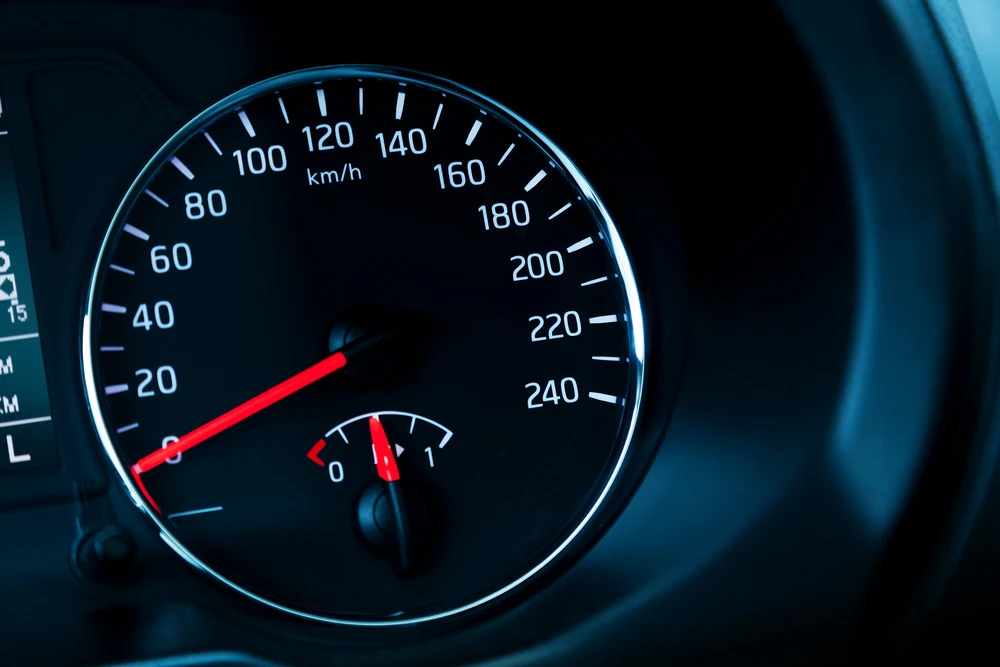

You walk out to your car on a cold morning, turn the key (or press the start button), and the engine fires up. But something feels off. The RPM needle is sitting way lower than it should be. The engine sounds like it is struggling, maybe even stumbling or shaking a little. You give it a minute, hoping it sorts itself out, but it just sits there, idling rough and low. Once the engine warms up, everything seems fine. So what is going on?
This is one of those problems that a lot of car owners brush off because it goes away after a few minutes of driving. But here is the thing: a low cold idle is not normal. Your engine is designed to idle higher when it is cold, typically somewhere around 1,000 to 1,500 RPM, depending on the vehicle. That elevated idle is intentional. The engine computer commands it because a cold engine needs more fuel and air to run smoothly until everything reaches operating temperature.
Table of Contents
When that cold idle drops too low, say down to 500 RPM or even lower, it means something in the system is not doing its job. The engine is not getting the right amount of air, or fuel, or both. And if you ignore it long enough, what starts as a mild annoyance can turn into stalling at intersections, failed emissions tests, or worse.
So let us break this down. We are going to walk through the most common causes of low idle RPM on a cold engine, explain exactly how each one messes things up, and then cover the diagnostic steps and fixes so you know what you are dealing with, whether you plan to tackle it yourself or take it to a shop.
What Normally Happens When You Cold-Start Your Engine
Before we get into what goes wrong, it helps to understand what is supposed to happen when you start a cold engine. Think of it like this: your engine is basically an air pump that mixes air with fuel and ignites it. When everything is at operating temperature (around 195 to 220 degrees Fahrenheit for most cars), the engine computer, also called the ECM or PCM, has a pretty easy job keeping the air-fuel mixture balanced.
But when the engine is cold, fuel does not vaporize as well. Liquid fuel does not burn efficiently, it needs to be in a fine mist. Cold metal surfaces inside the cylinders also absorb heat from combustion, which makes things even less efficient. To compensate for all of this, the ECM does a few things automatically:
- It richens the fuel mixture, injecting more fuel than it normally would.
- It raises the idle speed by allowing more air through the throttle body or idle air control circuit.
- It adjusts ignition timing slightly to help the engine run smoother while cold.
All of this depends on accurate sensor data. The ECM needs to know how cold the engine actually is, how much air is coming in, and whether the fuel pressure is where it should be. If any of those inputs are off, the whole cold-start strategy falls apart, and you end up with that sluggish, low idle that makes your engine feel like it is about to stall.
The 5 Most Common Causes of Low Cold Idle (Ranked by How Often They Show Up)
After years of seeing this issue across dozens of makes and models, these are the five causes that come up most often, listed from most likely to least likely:
- Faulty Engine Coolant Temperature (ECT) Sensor
- Sticking or Clogged Idle Air Control (IAC) Valve
- Vacuum Leaks (Intake Manifold, Gaskets, or Hoses)
- Dirty or Failing Mass Airflow (MAF) or Manifold Absolute Pressure (MAP) Sensor
- Weak Fuel Pressure (Fuel Pump, Regulator, or Filter)
Now, let us go through each one and explain exactly how it causes the problem.
How Each of These Failures Actually Causes Low Cold Idle
A Bad ECT Sensor Tricks Your Engine Into Thinking It Is Already Warm
The Engine Coolant Temperature sensor is a small, inexpensive part, but it has an outsized influence on how your engine runs when cold. This sensor sits in the coolant passage (usually near the thermostat housing or on the cylinder head) and measures the temperature of the engine coolant. It sends that reading to the ECM as a resistance value. The colder the coolant, the higher the resistance.
Here is where things go sideways. If the ECT sensor is faulty, corroded, or its internal resistor has drifted out of spec, it can send a signal that says the engine is warmer than it actually is. So on a freezing morning when the engine is sitting at 30 degrees Fahrenheit, the sensor might tell the ECM the coolant is at 150 degrees. The ECM, trusting that data, skips most of the cold-start enrichment. It does not add extra fuel. It does not raise the idle speed. And the engine stumbles along at a low RPM because it is not getting what it needs.
A real-world example: a 2008 Honda Accord came into a shop with a complaint of rough, low idle every morning. The owner said it would idle around 500 RPM and nearly stall when cold. The factory spec called for about 700 RPM during warm-up. A scan tool showed the ECT reading was about 40 degrees higher than the actual ambient temperature. The sensor had drifted. A $25 part and 15 minutes of labor fixed the whole issue.
What makes this one tricky is that a failing ECT sensor does not always throw a check engine light. If the reading is technically within the sensor’s possible range, the ECM might not flag it as an error. It just quietly adjusts its fuel strategy based on bad information.
A Gummed-Up IAC Valve Starves the Engine of Air
On many vehicles, especially those built before roughly 2010 to 2012, idle speed is controlled by an Idle Air Control valve. This valve sits on or near the throttle body and provides a bypass passage for air to flow around the closed throttle plate. When the engine is cold and your foot is off the gas pedal, the throttle plate is basically shut. The only air getting into the engine at idle comes through this bypass circuit, and the IAC valve controls how much.
Over time, carbon deposits from the PCV system and blow-by gases coat the inside of the IAC valve and the passages around it. Think of it like plaque building up in an artery. The valve gets sticky. It cannot open as far as it should. So when the ECM commands a higher idle speed on a cold start, the valve physically cannot let enough air through. The result? Low idle, rough running, and sometimes stalling.
A 2010 Toyota Camry is a good example. The owner reported that the car would start fine but idle rough and low for the first two or three minutes every morning. Once it warmed up, it ran perfectly. The mechanic pulled the IAC valve off and it was caked with black, oily carbon. A thorough cleaning with throttle body cleaner brought it back to life. In more severe cases, the valve itself might need to be replaced, especially if the motor inside has worn out or seized.
It is worth noting that newer vehicles with electronic throttle bodies (drive-by-wire systems) do not have a separate IAC valve. Instead, the throttle body itself adjusts to control idle speed. But those can develop carbon buildup too, which we will touch on later.
Vacuum Leaks Let in Air the Engine Cannot Account For
Your engine relies on a precise balance of air and fuel. The ECM meters fuel based on how much air it knows is entering the engine. But what happens when extra air sneaks in through a cracked hose, a worn gasket, or a loose connection somewhere on the intake side? That unmetered air dilutes the fuel mixture, making it leaner than the ECM intended.
This is a problem at any temperature, but it hits harder when the engine is cold. Why? Because the engine already needs a richer mixture to compensate for poor fuel vaporization in cold conditions. A vacuum leak on a warm engine might only cause a slight idle fluctuation. On a cold engine, that same leak can cause severe low idle or stalling because the mixture is just too lean to sustain smooth combustion.
Common leak points include:
- Cracked or deteriorated vacuum hoses (rubber gets brittle over time, especially in hot engine bays)
- Throttle body gaskets that have worn out or were not properly sealed during previous work
- Intake manifold gaskets, particularly on engines with plastic intake manifolds that expand and contract with temperature changes
- PCV valve hoses or connections
- Brake booster hose (a large vacuum hose that is often overlooked)
A 2012 Ford Escape with the 2.5L engine is a classic case. These are known for developing small cracks in the vacuum hoses and throttle body gasket area. Cold mornings would cause the idle to drop so low the car would stall at stop signs until the engine warmed up. Replacing the cracked hose and gasket solved it completely.
Vacuum leaks can also be temperature-sensitive in a sneaky way. A rubber hose might seal just fine when it is warm and pliable, but contract slightly when cold, opening up a small gap. That means the leak only shows up on cold starts and disappears as the engine bay heats up, which makes it even harder to track down.
A Dirty MAF or MAP Sensor Gives the ECM Bad Air Data
The Mass Airflow sensor (MAF) or Manifold Absolute Pressure sensor (MAP) is how your engine computer figures out how much air is entering the engine. This is one of the most important inputs for calculating fuel delivery. If the sensor is giving inaccurate readings, the fuel mixture will be off.
The MAF sensor works by measuring how much air flows past a heated wire or film element. As more air flows over it, it cools the element, and the sensor adjusts its signal accordingly. Over time, that sensing element can get contaminated with dirt, oil mist from the air filter (especially aftermarket oiled filters), or general grime. When this happens, the sensor underestimates the amount of air coming in. The ECM, thinking less air is present than there actually is, injects less fuel. The mixture goes lean, and idle quality suffers.
The MAP sensor works differently. It measures the vacuum (or pressure) inside the intake manifold and uses that to calculate engine load and airflow. A contaminated or failing MAP sensor can also cause the ECM to miscalculate fuel needs.
In either case, the problem tends to be worse when the engine is cold because the margin for error is smaller. A warm engine running with a slightly lean mixture might compensate through oxygen sensor feedback and fuel trim adjustments. A cold engine does not have that luxury because the oxygen sensors have not warmed up yet and are not providing closed-loop feedback. The ECM is essentially flying blind, relying on pre-programmed maps and sensor inputs. If the MAF or MAP data is wrong, the cold idle suffers.
Low Fuel Pressure Means the Engine Cannot Get Enough Fuel When It Needs It Most
This one is straightforward but often overlooked. Your fuel injectors need a certain pressure behind them to spray the correct amount of fuel. If the fuel pressure is low, the injectors cannot deliver enough fuel, even if the ECM is commanding the right pulse width.
Several things can cause low fuel pressure:
- A weak or failing fuel pump that cannot maintain adequate pressure, especially on startup
- A clogged fuel filter that restricts flow (on vehicles that still have a serviceable inline filter)
- A faulty fuel pressure regulator that allows pressure to bleed off
- Leaking fuel injectors that allow fuel to seep into the cylinders when the engine is off, reducing rail pressure on the next startup
Cold starts demand more fuel than a warm restart. The ECM compensates by holding the injectors open longer, but if the pressure behind those injectors is not up to spec, the actual fuel delivered falls short. The engine runs lean, idles low, and may stumble or hesitate.
This cause sits lower on the probability list because fuel system components tend to be fairly durable. But on higher-mileage vehicles (150,000 miles and up), it is definitely worth checking if the other causes have been ruled out.
How to Track Down the Problem: Step-by-Step Diagnostics
Now that you know what can go wrong, let us talk about how to figure out which one is actually causing your problem. You do not necessarily need a professional-grade scan tool or a fully equipped shop for some of these tests, though having the right tools makes things a lot easier.
Testing the ECT Sensor
This should be your first check because it is the most common culprit and one of the easiest to test.
With a scan tool: Connect an OBD-II scan tool and pull up the live data stream. Look for the engine coolant temperature reading. Do this when the car has been sitting overnight so the engine is fully cold. The ECT reading on the scan tool should be close to the ambient air temperature. If it is 35 degrees outside and the scan tool shows the engine coolant at 120 degrees, you have found your problem. The sensor is lying to the ECM.
With a multimeter: You can also test the sensor directly by measuring its resistance. Unplug the sensor connector and put your multimeter leads on the two terminals of the sensor itself. Compare the reading to the factory specifications for your vehicle. At around 50 degrees Fahrenheit, most ECT sensors should read somewhere between 2,000 and 3,000 ohms. At around 200 degrees Fahrenheit, that drops to a few hundred ohms. If your readings are way off from the spec, the sensor needs to go.
Inspecting the IAC Valve
If your vehicle has an IAC valve (check your repair manual or look on the throttle body for a small cylindrical component with an electrical connector), this is worth inspecting.
Visual inspection: Remove the IAC valve from the throttle body. On most vehicles, it is held in by two or three bolts and has an O-ring seal. Look at the pintle (the pointed tip that moves in and out) and the bore it sits in. If you see heavy black carbon buildup, that is your likely cause. Clean it thoroughly with throttle body cleaner and a soft brush.
Electrical test: With the IAC valve removed, you can apply 12 volts directly to the connector to see if the pintle moves smoothly in and out. If it is sluggish, jerky, or does not move at all, the valve is bad. You can also check the coil resistance with an ohmmeter. Most IAC valves should read between 7 and 15 ohms, but always check the spec for your specific vehicle.
While you have the IAC valve out, take a look inside the throttle body itself. If the bore and the area around the throttle plate are coated with carbon, clean that too. A dirty throttle body can restrict airflow just like a clogged IAC valve.
Finding Vacuum Leaks
Vacuum leaks can be tricky to find because the leak point might be small and hidden behind other components. Here are three methods, listed from simplest to most effective:
Visual and physical inspection: Start by looking at all the vacuum hoses you can see. Check for cracks, splits, or hoses that have popped off their fittings. Squeeze them. If they feel hard and crunchy instead of soft and pliable, they are due for replacement. Pay special attention to any hose connections around the intake manifold, throttle body, brake booster, and PCV system.
Propane enrichment test: With the engine running at idle, carefully direct a small stream of propane (from an unlit propane torch) around suspected leak areas. If the RPM changes when the propane hits a particular spot, you have found where unmetered air is getting in. The propane essentially acts as a temporary fuel source that compensates for the lean condition caused by the leak. Be careful with this method. You are working with a flammable gas near a running engine. Keep the flame off and have a fire extinguisher nearby.
Smoke machine test: This is the gold standard for vacuum leak detection. A smoke machine pumps artificial smoke into the intake system under low pressure. Any leak will show smoke escaping from the faulty area. Most professional shops have these, and they make finding even tiny leaks fast and easy. If you are a DIYer, you can rent one from some auto parts stores or build a basic version with a soldering iron and mineral oil, though the commercial units work much better.
Checking the MAF or MAP Sensor
Scan tool data: Pull up the MAF sensor reading on your scan tool’s live data screen. At idle, a typical 2.0L four-cylinder engine should show MAF readings somewhere around 2 to 7 grams per second. If the reading seems unusually low or erratic, the sensor may be contaminated or failing. Compare your readings to the factory specs in a repair database or your vehicle’s service manual.
Cleaning the MAF sensor: If you suspect contamination, you can try cleaning the sensor before replacing it. Use only a cleaner specifically designed for MAF sensors. Do not use throttle body cleaner, brake cleaner, or any other solvent, as these can damage the delicate sensing element. And never touch the wire or film element with your fingers or a rag. Spray the cleaner, let it dry completely, and reinstall.
For MAP sensors, you can test them with a vacuum pump and a multimeter. Apply a known vacuum to the sensor and compare the voltage output to the spec chart in your service manual. If the readings do not match, replace the sensor.
Testing Fuel Pressure
You will need a fuel pressure gauge for this test. Many auto parts stores will lend you one as part of a loaner tool program.
The test itself: Connect the gauge to the Schrader valve on the fuel rail (it looks like a tire valve stem). Turn the key to the “on” position without starting the engine. The fuel pump should pressurize the system. Most port-injected vehicles run between 35 and 45 psi, but check your vehicle’s factory spec because it varies. If the pressure is significantly below spec, you may have a weak fuel pump or a clogged filter.
The key-off test: After you note the initial pressure, turn the key off and watch the gauge. The pressure should hold relatively steady for at least several minutes. If it drops rapidly (say, losing 10 psi within a minute), something is leaking. That could be a faulty fuel pressure regulator, a leaking injector, or a check valve issue in the fuel pump itself. This kind of pressure bleed-off is a common reason for hard starts and low idle on the first start of the day because the fuel system has lost its prime overnight.
Fixing the Problem: What Each Repair Looks Like
Once you have identified the cause, the repair is usually straightforward. Here is what to expect for each:
Replacing the ECT Sensor
This is one of the simplest and cheapest fixes on the list. The sensor typically threads or clips into the coolant passage. Drain a little coolant to avoid a mess, unplug the connector, remove the old sensor, and install the new one. The part usually costs between $10 and $40, and labor is minimal.
One piece of advice: go with an OEM or OEM-equivalent sensor. Cheap aftermarket ECT sensors are notorious for being inaccurate right out of the box. You might install a brand-new sensor and still have the same problem because the resistance values do not match the factory calibration. Spend the extra few dollars on a quality part. It is worth it.
Cleaning or Replacing the IAC Valve
If carbon buildup is the issue, a good cleaning with throttle body cleaner and a toothbrush (yes, really) can often bring an IAC valve back to full function. Spray the cleaner generously into the bore and on the pintle, let it soak for a few minutes, scrub, and repeat until everything moves freely and the metal looks clean.
If the valve still does not move properly after cleaning, or if the resistance is out of spec, replace it. IAC valves typically run $50 to $150 depending on the vehicle. While you are at it, clean the throttle body too. The carbon that clogged the IAC valve probably came from the same source that is gunking up the throttle body.
Repairing Vacuum Leaks
The fix depends on where the leak is. Cracked vacuum hoses are cheap and easy to replace. Just make sure you use the right diameter and type of hose. Some vacuum lines are molded to follow specific routing paths, and using generic bulk hose might not fit correctly or could collapse under vacuum.
If the leak is at a gasket (throttle body gasket, intake manifold gasket), the repair involves removing the component, cleaning the mating surfaces, and installing a new gasket. For intake manifold gaskets, this can be a bigger job, especially on V6 or V8 engines where the manifold sits in the valley between the cylinder banks. Make sure you use a torque wrench and follow the factory torque sequence when reinstalling the manifold bolts. Uneven torque is a common cause of repeat gasket failures.
Cleaning or Replacing the MAF/MAP Sensor
As mentioned, try cleaning first. A can of MAF sensor cleaner costs about $8 to $12 and might save you the price of a new sensor (which can run $75 to $300 depending on the vehicle). If cleaning does not fix the readings, replacement is the answer.
For MAP sensors, replacement is usually quick and inexpensive. They are typically mounted on or near the intake manifold with one or two bolts and a single electrical connector.
Addressing Fuel Pressure Issues
If the fuel filter is clogged and your vehicle has a replaceable inline filter, start there. It is the cheapest and easiest fix in the fuel system. On many modern vehicles, however, the fuel filter is integrated into the fuel pump assembly inside the tank, which means you are looking at a bigger job if the filter is the problem.
A failing fuel pump is a more involved repair. The pump is located inside the fuel tank on most vehicles, so the tank either needs to be dropped or, if the vehicle has an access panel under the rear seat, you can get to it from inside the car. Fuel pump assemblies typically cost $100 to $400 for the part, and labor can add another $200 to $500 depending on the vehicle.
A leaking fuel pressure regulator is usually a separate component on the fuel rail. On some vehicles, it is vacuum-operated and can be tested by pulling off the vacuum line and checking for fuel inside the line (fuel in the vacuum line means the regulator’s diaphragm has ruptured).
Do Not Forget to Reset the ECM After Repairs
This is a step that a lot of people skip, and it can leave you scratching your head wondering why the car still does not feel right even after the repair.
Your ECM constantly adapts its fuel and air strategies based on sensor feedback. Over time, it builds up what are called adaptive fuel trims. These are small corrections the ECM makes to compensate for wear, aging sensors, or other gradual changes in engine performance. If you have been running with a bad ECT sensor or a vacuum leak for months, the ECM has been adjusting its fuel trims to try to compensate.
Once you fix the root cause, those old fuel trim values are no longer valid. The ECM needs to relearn. You can do this by clearing the codes and fuel trim data with a scan tool, or on some vehicles, simply disconnecting the battery for 15 to 30 minutes will reset the adaptive values. After the reset, drive the car through a few normal drive cycles (a mix of city and highway driving) so the ECM can recalibrate to the repaired system.
Common Misdiagnoses That Waste Your Time and Money
Before you start throwing parts at the problem, be aware of a few common rabbit holes that lead to wasted effort:
Blaming the Alternator or Battery
A weak battery or a failing alternator can definitely cause low RPM and rough running. But here is the key difference: electrical issues affect the engine all the time, not just when it is cold. If your idle is low only on cold starts and normalizes once the engine warms up, the battery and alternator are almost certainly not your problem.
That said, it is never a bad idea to check battery voltage (should be 12.4 to 12.6 volts with the engine off, 13.5 to 14.5 volts with the engine running) just to rule it out before moving on to other diagnostics.
Overlooking the Throttle Body
On vehicles with electronic throttle control (no separate IAC valve), a carbon-coated throttle body can cause the exact same symptoms as a stuck IAC valve. The ECM commands the throttle to open to a specific angle for cold idle, but if the bore is narrowed by carbon deposits, the actual airflow is less than intended. Many technicians jump straight to sensor diagnostics and overlook this simple mechanical issue. A $10 can of throttle body cleaner and 20 minutes of work could solve the problem.
Replacing O2 Sensors Unnecessarily
Oxygen sensors are important for long-term fuel trim correction, and a failing O2 sensor can cause all sorts of drivability issues. But here is the thing: O2 sensors are rarely the primary cause of a cold idle problem. Why? Because most O2 sensors do not start providing feedback to the ECM until they reach operating temperature, which takes 30 seconds to a couple of minutes after startup. During that initial cold period, the ECM is running in open-loop mode, relying on the ECT sensor, MAF/MAP sensor, and pre-programmed fuel maps rather than O2 sensor feedback.
If someone tells you to replace your O2 sensors to fix a cold idle issue without any scan data to support it, get a second opinion.
ECT Sensor Resistance Reference Table
If you are testing your ECT sensor with a multimeter, here is a general reference for typical NTC (Negative Temperature Coefficient) sensors. Keep in mind that exact values vary by manufacturer, so always check the factory service manual for your specific vehicle.
| Temperature (Fahrenheit) | Approximate Resistance (Ohms) |
|---|---|
| -40°F | 100,000+ |
| 32°F (Freezing) | 5,000 to 7,000 |
| 68°F (Room Temp) | 2,200 to 2,800 |
| 104°F | 1,000 to 1,500 |
| 176°F | 200 to 300 |
| 212°F (Boiling) | 150 to 200 |
As you can see, the resistance drops dramatically as temperature rises. Even a small shift in the sensor’s resistance curve at cold temperatures can make the ECM think the engine is 30 or 40 degrees warmer than it actually is, which is enough to cause noticeable cold idle problems.
A Few Extra Things Worth Mentioning
Cold Weather Makes Everything Worse
If you live in a climate where winter temperatures regularly drop below freezing, all of these issues are amplified. Rubber hoses contract more in extreme cold, making vacuum leaks worse. Oil thickens, increasing parasitic drag on the engine. Battery voltage drops, which can affect fuel pump speed and injector performance. A marginally failing component that works fine in September might cause real problems in January.
This is why a lot of cold idle complaints show up in the fall and winter. The underlying issue may have been developing for months, but it only becomes noticeable when the temperatures drop enough to push the system past its ability to compensate.
The Thermostat Connection
While a stuck-open thermostat is not typically listed as a direct cause of low cold idle, it can contribute. If your thermostat is stuck open, the engine takes much longer to reach operating temperature. That extended warm-up period means the ECM stays in its cold-enrichment mode longer than intended, and fuel trims may go out of range. More importantly, you may notice the engine never quite reaches normal operating temperature, the heater blows lukewarm air, and fuel economy drops. If your temperature gauge stays unusually low even after 10 to 15 minutes of driving, have the thermostat checked.
High-Mileage Engines Have More Culprits
On engines with 150,000 miles or more, you may be dealing with a combination of issues rather than a single root cause. Worn piston rings or valve seals can increase blow-by, which accelerates carbon buildup on the IAC valve and throttle body. Aging injectors may not spray as finely as they once did, leading to poor atomization in cold conditions. Even slightly worn spark plugs or ignition coils can struggle more when the mixture is less than ideal during cold starts.
For high-mileage vehicles, it often pays to do a comprehensive tune-up alongside the specific repair. Replace the spark plugs, clean the throttle body, inspect and replace any cracked vacuum hoses, and check the air filter. These maintenance items are cheap insurance against cold start problems and they improve overall engine performance too.
A Quick Diagnostic Checklist You Can Print Out
If you want a quick reference to work through this problem systematically, here is a checklist in the order I would recommend:
- Check the ECT sensor reading with a scan tool on a cold engine. Does it match ambient temperature? If not, test or replace the sensor.
- Inspect the IAC valve (if equipped) for carbon buildup. Clean or replace as needed.
- Look for vacuum leaks. Visual inspection first, then propane or smoke test if nothing obvious is found.
- Check MAF/MAP sensor readings against factory specs. Clean the MAF sensor with the proper cleaner.
- Test fuel pressure at the rail. Compare to spec and watch for pressure drop after key-off.
- Clean the throttle body while you are in there. It takes 15 minutes and can only help.
- Clear adaptive fuel trims after any repair and let the ECM relearn.
When to Just Take It to a Professional
Look, not everyone has a scan tool, a multimeter, and the patience to troubleshoot on a cold morning before work. And that is perfectly fine. If you are not comfortable doing these tests yourself, at least you now know what a mechanic should be checking. If someone tells you the fix is a new alternator or a set of O2 sensors without doing any of the diagnostics described above, you have good reason to question that diagnosis.
A good shop should be able to diagnose a cold idle issue in about 30 minutes to an hour using a scan tool and the tests we covered. The repair cost will depend on which component is at fault, but most of these fixes fall in the $50 to $300 range for parts and labor. That is far cheaper than ignoring it and dealing with stalling, rough running, or a failed emissions inspection down the road.
The Bottom Line on Cold Idle Problems
A low cold idle is your engine telling you something is off. It might be a $20 sensor, a dirty valve that needs cleaning, or a cracked hose that costs $5 to replace. Or it could be something a bit more involved like a weak fuel pump. Either way, the fix is almost always affordable if you catch it early.
The worst thing you can do is ignore it and hope it goes away. It will not. These problems only get worse with time, and they tend to show up at the most inconvenient moments, like stalling at a busy intersection on the coldest morning of the year.
So the next time your engine fires up and the RPM needle barely moves off the peg, do not just wait for it to warm up and forget about it. Start with the ECT sensor and work your way down the list. Chances are, the answer is simpler and cheaper than you think.