
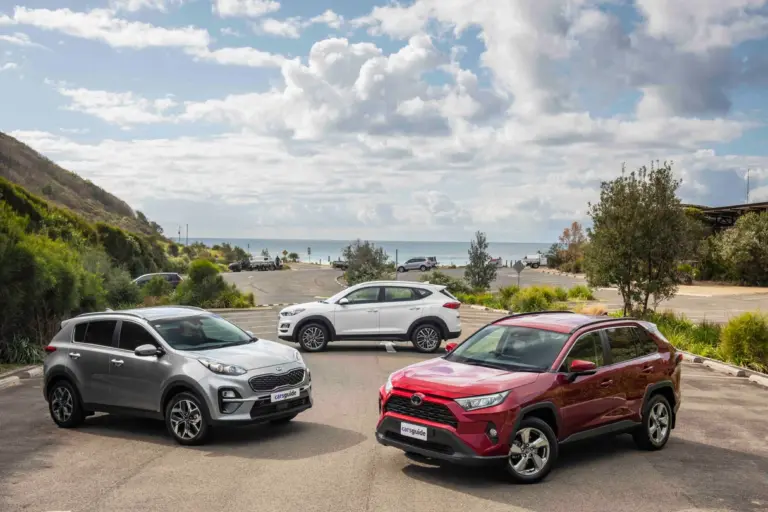
If you’re shopping for a compact SUV right now, there’s a good chance three names keep popping up on your list: the Hyundai Tucson, the Kia Sportage, and the Toyota RAV4. They’re all solid picks. But they’re not the same vehicle, and the differences between them matter more than you’d think.
Let’s break this down honestly so you can figure out which one actually fits your life.
The Quick Rundown: What Each SUV Does Best
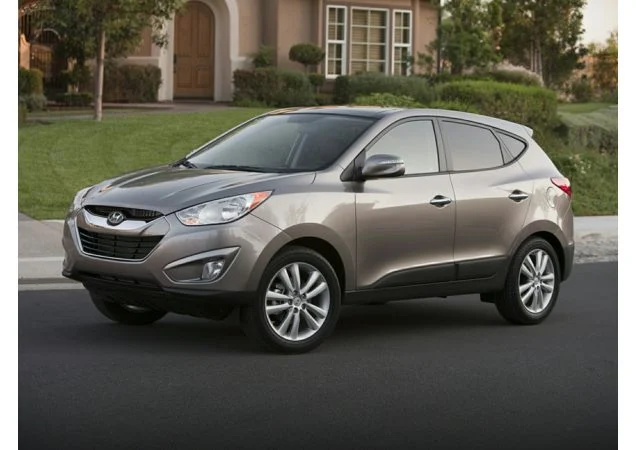
- Hyundai Tucson: Leads the pack on tech. You get a 10.25-inch touchscreen as standard equipment, a head-turning design, and plenty of features for the money. The trade-off? That turbo engine isn’t the most polished thing on the road.
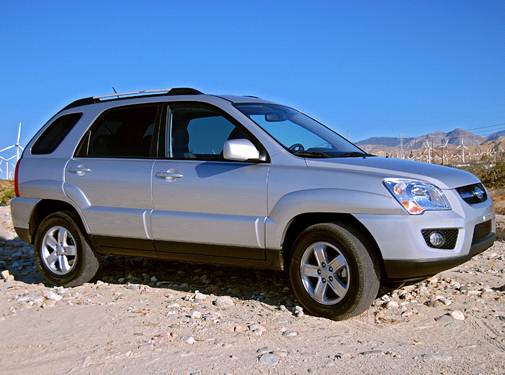
- Kia Sportage: Your wallet’s best friend. It starts at the lowest price, comes with a 10-year powertrain warranty, and has one of the most spacious cabins in the segment. On the downside, its hybrid can’t quite match the RAV4’s fuel economy numbers.
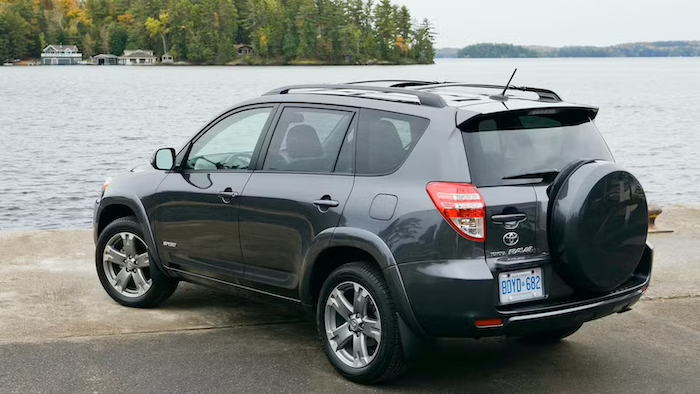
- Toyota RAV4: The long-game champion. Best-in-class hybrid fuel economy (41 MPG combined), bulletproof reliability reputation, and the strongest resale value. But here’s the thing: the base model feels a little bare-bones compared to its Korean competitors.
How They Stack Up Feature by Feature
Numbers don’t lie. Here’s what each SUV brings to the table when you compare them side by side.
| Category | Hyundai Tucson | Kia Sportage | Toyota RAV4 |
|---|---|---|---|
| Engine Options | 2.5L Gas (187HP) / 1.6L Turbo Hybrid (226HP) MPG: 26/33 (gas), 38/38 (hybrid) | 2.5L Gas (187HP) / 1.6L Turbo Hybrid (227HP) MPG: 25/32 (gas), 38/38 (hybrid) | 2.5L Gas (203HP) / Hybrid (219HP) MPG: 27/35 (gas), 41/38 (hybrid) |
| Cargo Space (seats up/down) | 38.7 cu ft / 74.8 cu ft | 39.6 cu ft / 74.1 cu ft | 37.6 cu ft / 69.8 cu ft |
| Tech Features | 10.25″ touchscreen (std), Wireless CarPlay, Bose audio (optional) | 12.3″ touchscreen (upper trims), Wireless CarPlay, Harman Kardon audio (optional) | 8″ touchscreen (std), Wireless CarPlay (limited trims), JBL audio (optional) |
| Safety | Hyundai SmartSense (std), IIHS Top Safety Pick | Kia Drive Wise (std), IIHS Top Safety Pick (headlights: Marginal) | Toyota Safety Sense 3.0 (std), IIHS Top Safety Pick+ |
| Price Range | $27,500 – $38,000 | $26,900 – $37,500 | $28,500 – $39,000 |
A couple of things jump out here. The Sportage has the most cargo room with the seats up (39.6 cu ft), while the Tucson wins when you fold everything down (74.8 cu ft). The RAV4 trails on both counts but makes up for it in ways that don’t show up in a cargo measurement.
On the tech front, the gap is real. Toyota’s base 8-inch screen feels small next to the Tucson’s 10.25-inch display. If you spend a lot of time interacting with your infotainment system, that difference is going to matter on a daily basis.
What They’re Actually Like to Drive
Specs are one thing. Living with a vehicle every day is something else entirely.
The Tucson feels quick off the line, especially with the turbocharged hybrid. It’ll merge onto the highway without any drama. The catch is that when you push it, the engine gets loud. Not unpleasant, exactly, but it reminds you it’s working hard. The ride leans more toward comfort than sport, which is fine for most buyers. Just don’t expect it to carve through canyon roads.
The Sportage is the quiet one of the group. Kia’s done a fantastic job with noise isolation, and the suspension soaks up bumps without feeling floaty. If you’re doing a lot of highway commuting, this is probably the most relaxing cabin to sit in. The hybrid powertrain is perfectly adequate. It won’t blow you away, but it won’t frustrate you either.
The RAV4 is where things get interesting for hybrid buyers. Toyota’s hybrid system is genuinely seamless. It transitions between electric and gas power so smoothly you barely notice. The ride is a touch firmer than the other two, which some people actually prefer because it feels more planted. The trade-off? Road noise. At highway speeds, you’ll hear more tire and wind noise than in the Tucson or Sportage. It’s not a dealbreaker, but it’s worth noting if a whisper-quiet cabin is high on your list.
The Real Cost of Owning Each One
The sticker price is just the beginning. What you spend over five years of ownership tells a much bigger story.
| Factor | Hyundai Tucson | Kia Sportage | Toyota RAV4 |
|---|---|---|---|
| Warranty | 5-year/60K miles bumper-to-bumper 10-year/100K miles powertrain | 5-year/60K miles bumper-to-bumper 10-year/100K miles powertrain | 3-year/36K miles bumper-to-bumper 5-year/60K miles powertrain |
| 5-Year Depreciation | ~35% | ~37% | ~30% (best in class) |
| Insurance Costs | $1,200/year (avg) | $1,250/year (avg) | $1,100/year (avg) |
This is where the RAV4 quietly pulls ahead. Toyota’s resale value is famously strong, and that roughly 30% depreciation over five years is the best in the class. Think about it this way: if you buy a $35,000 RAV4, it could still be worth around $24,500 after five years. A $35,000 Sportage? Closer to $22,000. Over time, that gap adds up.
On the flip side, look at the warranty situation. Hyundai and Kia both give you 10 years and 100,000 miles on the powertrain. Toyota’s coverage is half that. If the idea of having major components covered for a full decade gives you peace of mind, the Korean brands have a real edge here.
Insurance is close across all three, with the RAV4 coming in slightly cheaper on average at about $1,100 per year. Not a huge swing, but over five years, that’s a few hundred dollars in your pocket.
Which SUV Is Right for You?
Here’s where it really comes down to priorities. No single SUV is perfect for everyone, so ask yourself what matters most.
- You’re watching your budget: Go with the Kia Sportage. It starts at $26,900, and that industry-leading warranty means fewer surprise repair bills down the road. You’re getting a lot of SUV for the money.
- You want the best hybrid: The Toyota RAV4 Hybrid is the clear winner. Forty-one MPG combined isn’t just good for this class. It’s exceptional. Toyota’s had decades to refine this system, and it shows.
- You love tech and design: The Hyundai Tucson is your pick. That standard 10.25-inch screen, wireless connectivity out of the box, and a design that genuinely turns heads in parking lots. If infotainment and aesthetics matter to you, nothing else in this group comes close at the base level.
- You’re buying for a family: This one’s a toss-up between the RAV4 (best safety scores, lowest long-term costs) and the Sportage (more rear-seat room for growing kids). Either way, you can’t go wrong.
So, Which One Wins?
If we had to pick just one, it’s the Toyota RAV4. It strikes the best overall balance of fuel efficiency, safety, reliability, and resale value. It’s not the flashiest choice or the cheapest one, but over the full ownership experience, it consistently delivers.
That said, here’s how they shake out by category:
- Fuel Economy: RAV4 Hybrid (5/5)
- Tech and Features: Tucson (4.5/5)
- Warranty Coverage: Sportage (5/5)
- Safety: RAV4 (5/5, IIHS Top Safety Pick+)
Common Questions Buyers Ask
Which one has the smoothest ride?
The Kia Sportage. Its suspension tuning is the most forgiving of the three, and the cabin insulation keeps things remarkably quiet. If you’re sensitive to road imperfections, this is the one you want.
What if I want to go off-road occasionally?
Look at the RAV4 Adventure trim. It offers higher ground clearance and an optional AWD system that’s more capable than what the Tucson or Sportage offer for light trail use. It won’t replace a Wrangler, but for dirt roads and mild off-pavement adventures, it handles itself well.
Which SUV costs the least to maintain over time?
The RAV4, and it’s not particularly close. Toyota’s reliability reputation isn’t just marketing. Independent studies consistently show lower five-year ownership and maintenance costs compared to the Tucson and Sportage. When you combine that with the lowest insurance rates and best resale value in this comparison, the RAV4 is the cheapest to own over the long haul, even though it costs more upfront.
At the end of the day, all three of these SUVs are genuinely good vehicles. The real question isn’t which one is “best” in some abstract sense. It’s which one lines up with what you actually need, what you value, and how long you plan to keep it. Test-drive all three back to back in a single afternoon if you can. That hour behind the wheel will tell you more than any spec sheet ever could.