
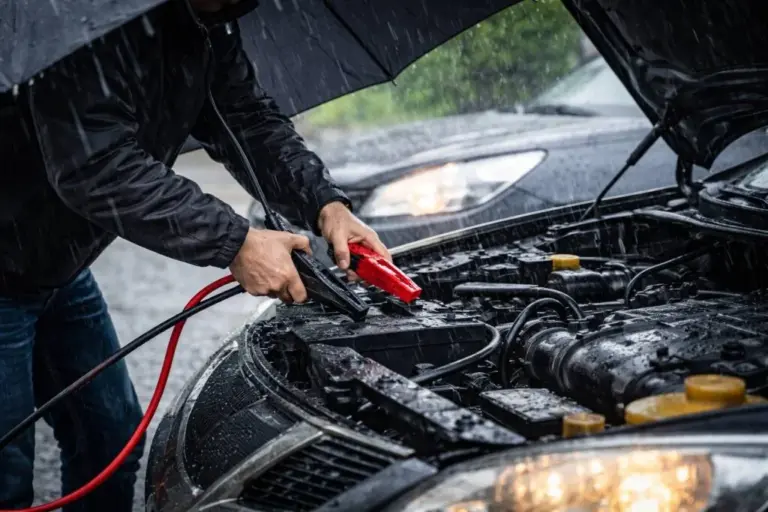
Few things are more frustrating than turning the key in your ignition and hearing nothing but a weak click. Your battery is dead, and you are going nowhere without a jump start. Now add rain to that scenario. You are stuck in a parking lot or on the side of the road, it is pouring, and you need to get your car running. The question running through your mind is simple: is it safe to jump start a car in the rain?
The idea of connecting metal clamps to a battery while standing in the rain might sound dangerous. After all, everyone knows that water and electricity do not mix well. But before you call a tow truck or resign yourself to waiting out the storm, you should know the facts about jump starting a car in wet conditions.
Let’s walk through everything you need to know about jump starting a car in the rain, including whether it is safe, what precautions you should take, and how to do it correctly so you can get back on the road without putting yourself at risk.
Is It Safe to Jump Start a Car in the Rain?
Yes, it is safe to jump start a car in the rain. You are not going to be electrocuted, and your car is not going to short out or explode. As long as you follow the proper procedure and take a few basic precautions, jump starting a car in wet weather is no more dangerous than doing it on a sunny day.
The reason comes down to voltage and how car electrical systems work. A car battery operates on 12 volts of direct current. That is a very low voltage compared to the household current in your home, which runs at 120 volts in the United States or 240 volts in many other countries. The amount of voltage in a car battery is simply not high enough to cause a fatal shock, even if you are standing in water.
To put it in perspective, static electricity from walking across a carpet and touching a doorknob can generate thousands of volts. It stings, but it does not cause serious harm because the amperage is extremely low. Similarly, while a car battery does produce a significant amount of current, the voltage is too low to be dangerous to humans under normal circumstances.
That said, you still need to be careful. Sparks can occur if you connect the jumper cables incorrectly, and batteries can release hydrogen gas, which is flammable. But the rain itself is not the hazard. The real risks come from improper technique, damaged cables, or careless handling of the battery terminals.
Why Water and Car Batteries Are Not as Dangerous as You Think
Car batteries are designed to operate in all kinds of weather. They sit under the hood, exposed to rain, snow, road spray, and humidity on a daily basis. The battery casing is sealed to keep water out, and the terminals are made from lead, which does not corrode easily when exposed to moisture.
When you jump start a car, you are connecting jumper cables to the battery terminals. Even if those terminals are wet, the connection you are making is direct metal-to-metal contact. The water on the surface is not going to interfere with the flow of electricity in any dangerous way.
What you do need to watch out for is water getting into damaged cables or creating a path between the positive and negative terminals. If the insulation on your jumper cables is cracked or worn away, exposed wire could short circuit if it comes into contact with water or metal. That is why inspecting your cables before using them is an important step, rain or shine.
Precautions to Take When Jump Starting in the Rain
While it is safe to jump start a car in the rain, there are a few precautions you should take to minimize risk and make the process go smoothly.
Inspect Your Jumper Cables First
Before you begin, take a close look at your jumper cables. Check the insulation for cracks, cuts, or exposed wire. If the rubber coating is damaged, water could come into contact with the metal wire inside, which increases the chance of a short circuit. If your cables are in bad shape, do not use them. Either borrow a better set or call for roadside assistance.
Keep the Engine Bay as Dry as Possible
If you have an umbrella, use it to shield yourself and the battery area from the rain. If you do not have an umbrella, try to position the hood so it blocks as much rain as possible from pouring directly onto the battery and engine components. While a little water will not hurt, you want to avoid flooding the engine bay, especially around sensitive electronics like the alternator, fuse box, and ignition components.
Wear Gloves if You Have Them
Rubber or insulated gloves provide an extra layer of protection and help you grip the cables better, especially if everything is wet and slippery. If you do not have gloves, just make sure your hands are as dry as possible before handling the cables.
Avoid Touching Both Terminals at the Same Time
Never touch the positive and negative battery terminals simultaneously with your bare hands or with metal tools. This can create a short circuit, which can cause sparks, burn your skin, or damage the battery. Always handle one terminal at a time and keep metal objects away from the battery while you are working.
Make Sure Both Cars Are Turned Off Before Connecting Cables
Before you attach any cables, turn off both vehicles completely. This includes the ignition, headlights, radio, air conditioning, and any other electrical accessories. Starting with everything off reduces the electrical load and minimizes the chance of a surge when you make the connection.
Step-by-Step Guide to Jump Starting a Car in the Rain
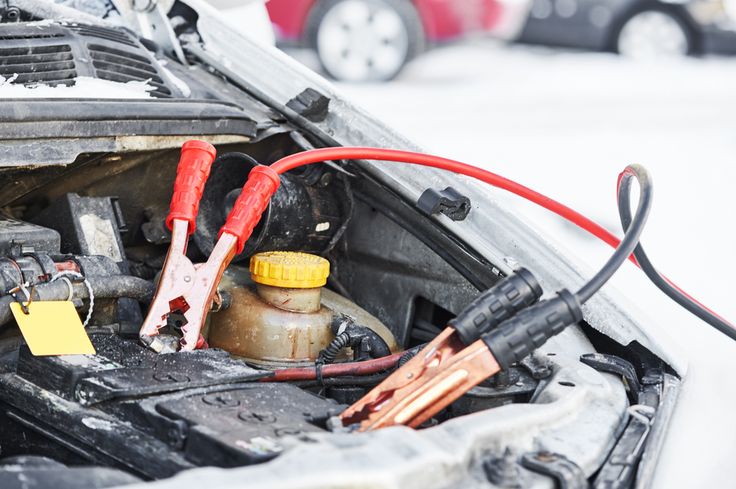
Jump starting a car is straightforward, but doing it correctly is important to avoid damaging the electrical system or causing injury. Here is the proper procedure to follow, whether it is raining or not.
Step 1: Position the Vehicles Close Together
Park the working vehicle close enough to the dead vehicle so the jumper cables can reach both batteries. The cars should not be touching each other. Turn off both engines and make sure both vehicles are in park or neutral with the parking brake engaged.
Step 2: Turn Off All Electrical Systems
Turn off the ignition, lights, radio, wipers, heater, and anything else that draws power in both vehicles. This reduces the electrical load and helps protect sensitive electronics from voltage spikes.
Step 3: Identify the Battery Terminals
Locate the positive and negative terminals on both batteries. The positive terminal is marked with a plus sign and is usually covered with a red cap or cable. The negative terminal is marked with a minus sign and is typically black. Make sure you know which is which before you start connecting cables.
Step 4: Connect the Positive Cable First
Take the red (positive) jumper cable and attach one clamp to the positive terminal of the dead battery. Then attach the other end of the red cable to the positive terminal of the good battery. Make sure the clamps are firmly attached and making good contact with the metal terminal.
Step 5: Connect the Negative Cable
Take the black (negative) jumper cable and attach one clamp to the negative terminal of the good battery. Here is where it gets important: do not attach the other end of the black cable to the negative terminal of the dead battery. Instead, attach it to an unpainted metal surface on the engine block or frame of the dead car, away from the battery.
This is called grounding the connection. It helps prevent sparks near the battery, which could ignite hydrogen gas that batteries sometimes release. Look for a solid metal bolt, bracket, or engine component that is not near fuel lines or moving parts.
Step 6: Start the Working Vehicle
Start the engine of the vehicle with the good battery and let it run for a few minutes. This allows the alternator to send a charge to the dead battery. You can rev the engine slightly to increase the charge, but do not overdo it.
Step 7: Try Starting the Dead Vehicle
After a few minutes, try starting the car with the dead battery. If it starts, great. If it does not start after a few attempts, wait a few more minutes and try again. If it still does not start after several tries, the battery may be too far gone or there may be another issue with the vehicle.
Step 8: Disconnect the Cables in Reverse Order
Once the dead car is running, carefully disconnect the jumper cables in the reverse order you connected them. Start by removing the black cable from the grounded metal surface on the dead car, then remove the black cable from the good battery. Next, remove the red cable from the good battery, and finally remove the red cable from the formerly dead battery.
Do not let the clamps touch each other or any metal surface while the cables are still connected to a battery.
Step 9: Let the Revived Car Run
Keep the revived car running for at least 20 to 30 minutes to allow the alternator to recharge the battery. Drive the car if possible rather than just letting it idle, as driving generates more power from the alternator and charges the battery more effectively.
What If You Do Not Have Jumper Cables?
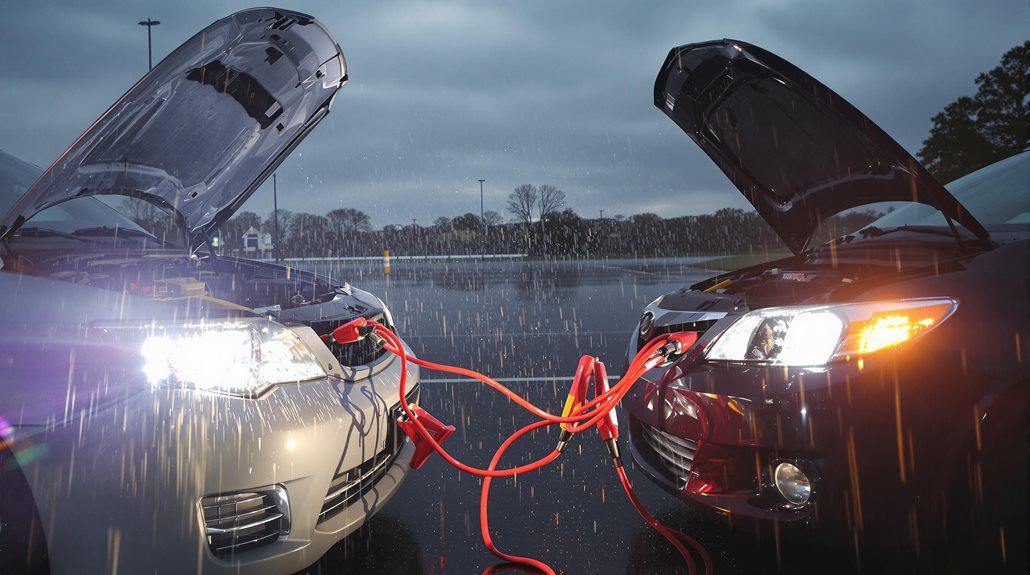
If you do not have jumper cables and you are stuck in the rain with a dead battery, you have a few options:
- Call roadside assistance. If you have a membership with AAA or a similar service, they can come out and jump start your car for you.
- Use a portable jump starter. These battery packs are compact, easy to use, and do not require another vehicle. If you do not own one, consider getting one for your trunk. They are lifesavers in situations like this.
- Ask a nearby driver for help. Most people are willing to lend a hand if you explain the situation. Just make sure they have jumper cables.
Will Rain Damage the Battery or Electrical System?
No, rain will not damage your car battery or electrical system. Batteries are built to be weather-resistant. They are sealed units designed to keep moisture out, and the terminals are made from materials that resist corrosion even when exposed to water.
That said, it is still a good idea to wipe off any excess water from the battery and surrounding components after you finish the jump start. Keeping things as dry as possible helps prevent long-term corrosion and keeps everything functioning smoothly.
Common Mistakes to Avoid When Jump Starting in the Rain
Even experienced drivers can make mistakes during a jump start, especially when rushed or distracted by bad weather. Here are a few common errors to watch out for:
- Connecting the cables in the wrong order. Always connect positive to positive first, then negative to ground. Reversing this can cause sparks and damage.
- Letting the cable clamps touch each other. This creates a short circuit and can damage the battery or cause a fire.
- Connecting the negative cable directly to the dead battery. Always ground the negative cable to a metal surface away from the battery to reduce the risk of sparks igniting hydrogen gas.
- Using damaged jumper cables. Frayed or cracked cables are a safety hazard. Inspect them before use and replace them if needed.
- Rushing the process. Take your time, even in the rain. A few extra seconds to double-check your connections can prevent costly damage or injury.
Do Not Let the Rain Stop You From Getting Back on the Road
A dead battery in the rain is inconvenient, uncomfortable, and stressful. But it is not dangerous as long as you know what you are doing. You are not going to get electrocuted, your car is not going to blow up, and the rain is not going to ruin your battery.
Follow the proper procedure, inspect your equipment, take basic precautions, and you will have your car running again in just a few minutes. Once the engine is going, drive for at least half an hour to give the alternator time to recharge the battery, and consider having the battery tested soon to make sure it is still holding a charge properly.
And if this happens to you more than once, it is probably time to replace the battery before it leaves you stranded again.