
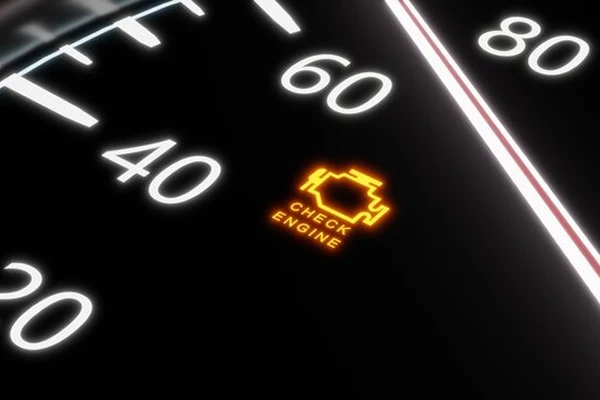
That little amber light on your dashboard shaped like an engine silhouette. Most drivers either panic the moment it comes on or flat-out ignore it and hope it goes away. Neither response is actually the right one. To handle it correctly, you first need to understand what that light is actually telling you and why it sometimes behaves in ways that seem almost random.
For the past two-plus decades, virtually every car sold has been equipped with a second-generation on-board diagnostic system called OBD-II. It is a standardized system, which means any compatible scan tool can read the data from any OBD-II vehicle, regardless of make or model. That was a huge step forward from the patchwork of proprietary systems that existed before it.
At the center of all of this is the Electronic Control Unit, commonly called the ECU or ECM. Think of it as your car’s brain. It monitors dozens of sensors and actuators across the engine, fuel system, exhaust, and beyond. When something falls outside of acceptable parameters, the ECU takes notice. It might detect an engine misfire, erratic fuel injector behavior, abnormal voltage from the ignition system, or a fuel pump that is not delivering consistent pressure. Whatever the issue, the ECU does not immediately throw up a warning. It tries to correct the problem first, or at minimum waits through several operating cycles to confirm the issue is real and not just a momentary blip.
If the problem persists and the ECU cannot fix it on its own, it stores a Diagnostic Trouble Code (DTC) in its memory and triggers the check engine light on your dashboard. That stored code is what you retrieve when you plug in an OBD scanner. It gives you a starting point for diagnosis, not always a definitive answer, but a starting point.
What Can Actually Cause the Check Engine Light to Come On?
Before getting into how the light behaves in different scenarios, it helps to know just how wide the net is. The check engine light is not reserved for catastrophic engine problems. It can be triggered by a surprisingly broad range of issues, some serious and some relatively minor.
- Engine wear or mechanical problems, including worn rings, valves, or timing components
- Fuel system faults, such as pressure that is too low or too high
- Bad fuel injectors, a failing fuel pressure regulator, or a weak fuel pump
- Elevated emissions caused by incomplete combustion or a failing emissions system
- Faulty oxygen sensors, a clogged EGR valve, EVAP system leaks, or a failing catalytic converter
- Vacuum leaks from cracked hoses, failing gaskets, or loose intake connections
- Sensors or actuators sending incorrect signals to the ECU
- ECU malfunctions, which are less common but do happen
- Short circuits in the vehicle’s wiring
- Corroded connectors, broken wires, or damaged wiring harnesses
- Clogged air or fuel filters caused by neglected maintenance
That is a long list. And it is exactly why the check engine light on its own does not tell you much without a scan tool to pull the stored code. The light just tells you something needs attention. The code tells you where to look.
The Check Engine Light Keeps Going On and Off: What That Usually Means
This is probably the most confusing behavior for most drivers. The light comes on during the commute, then disappears by the time you pull into the driveway. Next morning it is back. Then gone again. It feels almost like the car is messing with you.
What is actually happening is that the problem only exists under certain conditions. A classic example is a loose wiring connector or a wire that is partially broken inside its insulation. On a smooth road, the connection is fine. The light stays off. But every time the car goes over a pothole or a rough patch of pavement, the connector briefly loses contact, the ECU detects an abnormal signal, and the light flickers on. Once the road smooths out and the wire or connector settles back into position, the signal returns to normal and the light goes off.
It is tempting to dismiss this because the light keeps going away on its own. Do not. An intermittent electrical fault like this can eventually become a permanent one. And in some cases, the underlying cause is not a loose wire at all, it is a sensor that is starting to fail and only misbehaves when it gets hot, or only under heavy engine load, or only after the car has been sitting overnight.
The good news is that the ECU often stores a fault code even for intermittent issues. Connecting a scan tool can reveal a pending code that has not yet triggered a permanent fault, giving you a head start on diagnosis before the problem gets worse.
Check Engine Light Stays On Constantly: Should You Worry?
A check engine light that stays on and does not go away typically indicates a confirmed, ongoing fault. The ECU has seen the problem enough times across enough operating cycles to lock in a stored code and keep the light illuminated until the issue is resolved and the code is cleared.
Now, this does not automatically mean something catastrophic is happening. A steady check engine light could be triggered by something as straightforward as a dirty or failing mass airflow (MAF) sensor, misfiring spark plugs that are well past their service life, or even a gas cap that is not sealing properly. These are not cheap-to-ignore situations, but they are not engine-is-about-to-explode situations either.
That said, a steady light can also indicate genuinely serious problems. A failing catalytic converter, a stuck-open EGR valve dumping exhaust gases into the intake manifold, or a fuel trim that is running significantly rich or lean are all conditions that will cause a constant check engine light and, if left alone long enough, will lead to larger, more expensive damage.
The rule of thumb here is straightforward: if the light is solid and the car is driving normally without unusual noises, smells, or power loss, you have a little time to get it looked at but should not put it off for weeks. If the light is solid and the car is behaving differently than normal, get it checked promptly.
Flashing Check Engine Light: Do Not Drive, Pull Over Soon
A flashing or blinking check engine light is a completely different category from a steady one. If your check engine light is actively flashing while you are driving, that is the ECU telling you something is happening right now that is serious enough to cause immediate damage if you keep going.
The most common cause of a flashing check engine light is an active engine misfire. Here is why that matters so much. When a cylinder misfires, it means combustion did not complete properly. Raw, unburned fuel gets pushed out of the cylinder and into the exhaust manifold. That unburned fuel then travels down into the catalytic converter, which operates at extremely high temperatures. When unburned fuel hits those temperatures, it ignites inside the converter. This can destroy a catalytic converter in a very short time, and catalytic converters are expensive, often running into several hundred to over a thousand dollars to replace depending on the vehicle.
A flashing check engine light combined with a rough-running engine, loss of power, or an unusual smell from the exhaust means you should reduce speed, avoid hard acceleration, and get to a safe place to stop as soon as you reasonably can. Do not treat a flashing check engine light the same way you treat a steady one. They are not the same signal.
When the Check Engine Light Comes On and Then Turns Itself Off
This scenario trips people up the most. The light comes on, you start planning a trip to the shop, and then after a day or two it disappears on its own. Does that mean the problem fixed itself? Not necessarily.
What often happens is that the condition causing the fault is intermittent enough that after a certain number of clean operating cycles, the ECU reclassifies the fault as resolved and turns off the light. But the underlying cause is still there, waiting to trigger the code again. The fault code itself typically remains stored in memory as a historical code even after the light goes off, which is another reason why scanning the ECU even after the light disappears is worthwhile.
A faulty oxygen sensor is one of the most common culprits in this situation. Oxygen sensors can work fine when cold and start sending erratic signals once they reach operating temperature, or vice versa. The ECU detects the bad signal, stores a code, turns on the light, and then on the next cold start the sensor behaves normally long enough for the ECU to clear the active fault. A bad catalytic converter can behave similarly. So can dirty or clogged filters, aging gaskets, and deteriorating vacuum hoses that only leak under certain temperature or pressure conditions.
A light that turns itself off is not a light that fixed itself. It is just a light that has gone quiet for now.
How to Actually Diagnose an Intermittent Check Engine Light
Whether the light is on constantly, flashing, or going on and off, the diagnostic approach follows a logical sequence. Here is how to work through it without wasting time or money chasing the wrong things.
- Start with a visual inspection before plugging anything in. Check the obvious stuff first. Look over engine hoses for cracks, splits, or soft spots. Check the condition of gaskets where you can see them. Look at the spark plug wires or coil boots for signs of damage or burn marks. Check electrical connectors near sensors for corrosion or loose fits. Sometimes the problem is right in front of you.
- Check the gas cap. It sounds almost too simple, but a loose or cracked gas cap is one of the most common triggers for an EVAP system fault code. Tighten it fully until it clicks. If it is old and cracked, replace it. A new gas cap costs a few dollars. Ignoring it costs you nothing unless the fault code is pointing at something worse in the EVAP system.
- Scan the ECU for stored codes. This is the step that gives you real information. A quality OBD-II scanner will pull both active fault codes and pending codes, which are faults the ECU has noticed but has not yet confirmed as persistent. Both types of codes are useful.
- Pay particular attention to these components when investigating check engine codes, because they are among the most frequent triggers for intermittent or recurring check engine lights:
- Spark plugs and ignition coils
- Oxygen sensors (upstream and downstream)
- Mass airflow sensor
- Catalytic converter
- EGR valve
- EVAP system components
- Fuel injectors and fuel pressure regulator
- Vacuum hoses and intake gaskets
- Do not stop at reading the code. A code tells you which system or circuit has a fault, not exactly which part has failed. For example, an oxygen sensor code does not always mean the sensor itself needs replacing. It could mean the sensor is reading accurately but the actual problem is a vacuum leak causing a lean condition. Treat the code as a direction to look, not a parts shopping list.
Why Cheap OBD Scanners Can Lead You the Wrong Way
Here is something worth being direct about. Not all OBD-II scanners are equal, and the cheap generic ones from discount stores or online marketplaces have real limitations that can cost you money and time.
Entry-level scanners typically read generic OBD-II codes, which are the standardized codes that any vehicle must support. But modern cars also generate manufacturer-specific codes that go well beyond the generic set. These codes contain much more detailed information about exactly where in a system the fault was detected. A cheap scanner will miss them entirely, or worse, misread them.
Professional-grade scan tools and even mid-range consumer scanners from reputable brands will give you access to live sensor data alongside the fault codes. That live data is often what separates a quick, accurate diagnosis from an expensive guessing game. Being able to watch your oxygen sensor voltage in real time, or see your fuel trims fluctuating, tells you far more than a static code number ever can.
If you are not sure what scanner to use, most auto parts stores in the US offer free code reading as a service. It is not a substitute for a full professional diagnosis, but it is a reasonable starting point that will at least tell you which direction to look.
How to Reset the Check Engine Light the Right Way
Once the actual problem has been found and fixed, the stored fault code needs to be cleared from the ECU’s memory. Until it is cleared, the check engine light will stay on even though the fault is gone.
On older vehicles, the old-school method of disconnecting the battery for a minute or two would clear the codes and reset the light. It was crude but it worked. On modern vehicles, this approach creates more problems than it solves.
Disconnecting the battery on a newer car can erase a lot more than just fault codes. It can reset the ECU’s learned fuel trim and idle control settings, wipe out the transmission’s shift adaptation data, deactivate the radio if it has a security code, and reset the power window and sunroof position memory. In some cases, the engine will run noticeably rough or shift awkwardly for a period after the battery is reconnected while the ECU relearns its baseline settings. That is an inconvenience at best and a temporary driveability issue at worst.
What makes this even less effective than it used to be is that many modern ECUs can retain fault codes in non-volatile memory, meaning the code survives even without battery power for several days. So disconnecting the battery might not even clear the code you were trying to erase.
The correct approach on any vehicle newer than the mid-2000s is to use an OBD-II scan tool to clear the codes directly through the diagnostic port. It takes about thirty seconds, it only erases what needs to be erased, and it leaves everything else the ECU has learned completely intact.
A Quick Reference: Check Engine Light Behavior and What It Likely Means
| Light Behavior | Likely Meaning | Urgency Level |
|---|---|---|
| Goes on and off intermittently | Intermittent fault, often electrical or sensor-related | Moderate. Get it scanned soon |
| Stays on constantly | Confirmed ongoing fault stored in ECU | Moderate to high. Do not delay long |
| Flashing or blinking while driving | Active misfire or serious real-time fault | High. Reduce load and get it checked immediately |
| Comes on, then turns off on its own | Intermittent fault that cleared itself temporarily | Moderate. Scan for historical codes |
The ECU Is Powerful, But It Is Not Infallible
Modern ECUs are genuinely impressive. They monitor virtually every major electrical and electronic system on the vehicle continuously, reading inputs from dozens of sensors multiple times per second and adjusting fuel delivery, ignition timing, valve timing, and dozens of other parameters in real time. The level of control they have over engine operation is far beyond anything that was possible with older mechanical systems.
But that sophistication has a flip side. The more systems the ECU monitors, the more potential there is for false readings, conflicting signals, and misdiagnosis. A sensor that is reading slightly out of spec can cause the ECU to make incorrect adjustments that affect performance and trigger misleading fault codes. Two sensors that are both partially faulty can create a situation where the codes they generate seem to contradict each other, making diagnosis genuinely tricky even for experienced technicians.
The ECU is a tool for narrowing down problems, not an oracle that tells you exactly what to replace. Treating it as the final word rather than a starting point is one of the most common ways that otherwise straightforward repairs become expensive wild goose chases.
The check engine light deserves to be taken seriously in every form it takes. Whether it is flashing urgently, glowing steadily, or blinking in and out unpredictably, there is always a reason behind it. The drivers who come out ahead are the ones who scan the codes promptly, understand what they are looking at, and address the root cause rather than just clearing the light and hoping for the best. A check engine light that keeps coming back is the car’s way of telling you it still needs attention. At some point, it is worth listening.