
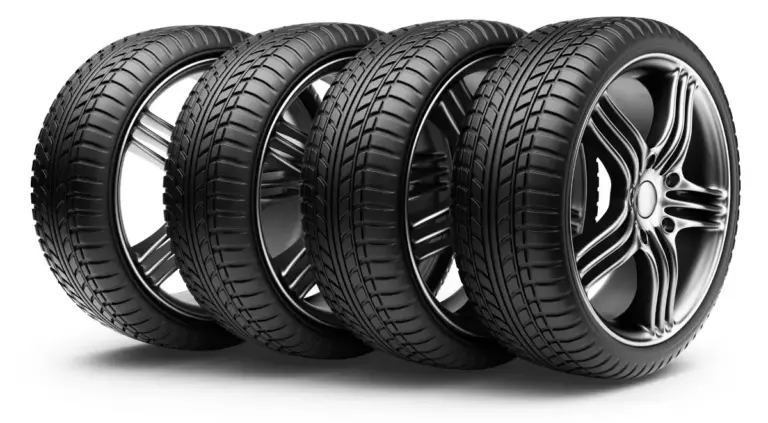
You are standing in a tire shop, staring at a wall of black rubber, and the guy behind the counter just asked you a question you were not expecting. “Do you want to stay with the 195, or do you want to bump up to a 205?”
Your brain does the math. That is a 10-millimeter difference in width. Less than half an inch. How could that possibly matter?
Here is the thing. It matters more than you would think. That small jump in width changes how much rubber sits on the pavement, how the car behaves in corners, how it responds in the rain, how much fuel you burn on your commute, and even how the steering feels in your hands. It is one of those modifications (or choices) that seems trivial on paper but becomes very real once you are driving on it every day.
Whether you are replacing worn tires, considering a size swap for better performance, or just trying to understand what those numbers on the sidewall actually mean, this is the guide that will give you a clear, honest answer. No tire salesman spin. No overly technical engineering jargon. Just the straight facts about what changes when you go from 195 to 205, and which one makes more sense for the way you actually drive.
What Those Numbers on Your Tire Sidewall Actually Mean
Before we can talk about the difference between 195 and 205, we need to make sure you understand what those numbers represent. If you have ever looked at the side of your tire and seen something like “P205/55R16” and thought it looked like a secret code, you are not alone. But once you know the formula, it is actually pretty simple.
Breaking Down the Tire Size Code
Let us use “P205/55R16” as our example and go through each piece:
- P stands for “Passenger.” This tells you the tire is designed for a passenger vehicle. You might also see “LT” for Light Truck on pickup trucks and larger SUVs.
- 205 is the section width of the tire in millimeters. This is the measurement from one sidewall to the other when the tire is mounted on a rim and properly inflated. It tells you how wide the tire is.
- 55 is the aspect ratio. This is a percentage that tells you how tall the sidewall is relative to the tire’s width. In this case, the sidewall height is 55 percent of 205 millimeters, which works out to about 112.75 millimeters of sidewall.
- R means radial construction. Nearly every passenger tire sold today is a radial tire. This refers to how the internal layers (plies) of the tire are arranged. You almost never see anything other than “R” on modern tires.
- 16 is the wheel diameter in inches. This tells you what size rim the tire is designed to fit. A tire marked “16” goes on a 16-inch wheel.
So when someone says they are comparing a “195 tire” to a “205 tire,” they are talking about that first number. The section width. One tire is 195 millimeters wide, and the other is 205 millimeters wide. Everything else (aspect ratio, construction type, and rim diameter) could be the same on both tires.
That 10-millimeter difference is the entire focus of this comparison. And while it might sound insignificant, it has a ripple effect that touches nearly every aspect of how the tire performs.
How Width, Aspect Ratio, and Rim Size Work Together
Tire size is not just about width. All three dimensions work together to determine how a tire performs and how it fits your vehicle.
- Width controls how much rubber touches the road surface. A wider tire puts more rubber down, which generally means more grip. But more rubber on the road also means more friction, which means more rolling resistance, which means more fuel consumption.
- Aspect ratio determines the height of the sidewall. A taller sidewall (higher aspect ratio number) is more flexible, which absorbs road bumps better but feels less precise in corners. A shorter sidewall (lower aspect ratio) is stiffer, which makes the car feel sharper in turns but transmits more road vibration into the cabin.
- Rim diameter affects the overall outer diameter of the tire and wheel combination. Going to a larger rim usually means a shorter sidewall to keep the overall diameter the same. This is why cars with big wheels often have very thin, low-profile tires.
When you change just the width (going from 195 to 205 while keeping the same aspect ratio and rim size), you are widening the tire but also slightly increasing its overall height. That is because the sidewall height is calculated as a percentage of the width. A 55-percent sidewall on a 205mm-wide tire is taller than a 55-percent sidewall on a 195mm-wide tire. This small change in overall diameter can affect your speedometer accuracy and your gear ratios, though in most cases the difference is minor enough that you will not notice it.
But here is where it gets interesting. That seemingly small change in width creates a meaningfully different driving experience. Let us get into the specifics.
The Contact Patch: Where the Rubber Actually Meets the Road
Everything about tire performance starts with one thing: the contact patch. This is the rectangle of rubber that is physically pressing against the pavement at any given moment. It is the only thing connecting your 3,000-plus-pound vehicle to the road surface. Every bit of grip you have for accelerating, braking, and turning comes from that patch of rubber.
How Big is the Difference?
On a standard passenger car with properly inflated tires, here is roughly what you are looking at:
- A 195 tire puts down approximately 12.4 square inches of rubber on the road.
- A 205 tire puts down approximately 14 square inches of rubber on the road.
That is about 1.6 square inches of additional contact area with the 205. Now, 1.6 square inches does not sound like it should matter. But when you multiply that difference across all four tires, and you consider that this is the difference between your car gripping the road and your car sliding, it adds up quickly.
Think of it this way. Press your whole palm flat against a table and try to slide your hand. Now lift your fingers so only your fingertips are touching, and try to slide your hand again. Same hand, same table, same pressure. But the one with more contact area is harder to move. That is exactly what happens with a wider tire. More rubber on the road means more friction, which means more grip.
What More Contact Area Actually Does for Your Driving
The larger contact patch of a 205 tire improves performance in several specific ways:
- Better acceleration traction. When you press the gas, the driving wheels need to grip the road to push the car forward. More rubber on the road means the tires are less likely to spin, especially from a stop.
- More cornering grip. When you turn the steering wheel, lateral forces push the tires sideways. A wider contact patch resists that sideways force more effectively, which means the car holds its line better through corners.
- Improved wet-weather performance. While it might seem counterintuitive (since a wider tire has to displace more water), modern tread designs on 205 tires are engineered to channel water efficiently. The result is generally better wet grip than a narrower 195, assuming both tires have similar tread patterns and compound quality.
But every benefit comes with a trade-off. That extra rubber on the road creates more friction, and more friction means the engine has to work harder to keep the car rolling. This is called rolling resistance, and it directly affects fuel economy. We will get into the numbers on that in a moment.
How 195 and 205 Tires Compare in the Real World
Enough theory. Let us talk about what you will actually feel when you are behind the wheel.
Cornering and Handling
If you enjoy driving on winding roads, take highway on-ramps with a little enthusiasm, or just want the car to feel more planted and confident, the 205 tire has a clear advantage.
That wider contact patch gives you noticeably more grip in corners. The car feels like it is sitting more firmly on the road. Turn-in response is a touch sharper because there is more rubber resisting the lateral forces that want to push the tire sideways. The steering feels more connected, more direct, like the car is doing exactly what you tell it to do.
| Characteristic | 195 Tire | 205 Tire |
|---|---|---|
| Cornering grip | Good | Better |
| Steering response | Adequate | Sharper |
| High-speed stability | Good | More planted |
| Road feel through steering | Moderate | More feedback |
| Confidence in curves | Comfortable | Noticeably higher |
The 195 is not a bad tire for handling. Not at all. Millions of cars run 195s every day and handle perfectly well. But if you drive both sizes back to back on the same car, on the same road, you will feel the difference. The 205 just grips harder and inspires more confidence, especially when you are pushing the car a little closer to its limits.
For pure commuting on straight highways and gentle suburban streets? You probably will not notice much difference in handling between the two. The advantage of the 205 really shows itself when the driving gets more dynamic.
Fuel Economy: The 195’s Biggest Win
Here is where the narrower 195 tire fights back. If fuel economy matters to you (and it should, given what gas costs these days), the 195 has a measurable advantage.
That extra 10 millimeters of width on the 205 means more rubber dragging on the road surface. More drag means higher rolling resistance. And higher rolling resistance means your engine has to burn more fuel to maintain the same speed.
How much more? Estimates vary depending on the specific tire model, the vehicle, and driving conditions, but a commonly cited figure is that 205 tires can use up to 10 percent more fuel than 195 tires in comparable driving scenarios. On a car that gets 30 miles per gallon with 195s, you might see that drop to around 27 MPG with 205s. Over a year of driving, that difference adds up.
Let us put some rough numbers to it. Say you drive 15,000 miles a year and gas costs $3.50 per gallon.
| Metric | 195 Tire (30 MPG) | 205 Tire (27 MPG) |
|---|---|---|
| Annual miles driven | 15,000 | 15,000 |
| Gallons of fuel used | 500 | 556 |
| Annual fuel cost at $3.50/gal | $1,750 | $1,944 |
| Difference | $194 more per year |
That is roughly $200 extra per year in fuel costs just from running a slightly wider tire. Over the life of a set of tires (typically three to five years), that could be $600 to $1,000 in additional fuel expense. It is not catastrophic, but it is real money that most people do not think about when they are standing in the tire shop choosing between sizes.
If you are driving a hybrid or an economy car where every MPG counts, the 195 is the smarter choice from a fuel-cost perspective. If you are driving a performance car or an SUV where fuel economy is less of a priority, the 205’s advantages in grip and stability might be worth the extra cost at the pump.
Ride Comfort: Not What You Might Expect
Here is a point that surprises a lot of people. You would think that the wider, heavier 205 tire would feel harsher on the road. But in many cases, the opposite is true.
A 205 tire, because of its wider footprint, tends to distribute road impacts across a larger surface area. This can actually result in a smoother ride over rough pavement, potholes, and expansion joints. The impacts are spread out instead of concentrated, so the bumps feel less sharp.
The 195 tire, with its narrower footprint, concentrates those same forces into a smaller area. You might notice more road vibration, more harshness over rough surfaces, and a generally firmer feel. This is not always the case (tire construction and tread design play a big role too), but as a general trend, the wider tire tends to be the more comfortable one.
That said, sidewall height matters here more than width. If you are comparing a 195/65R15 to a 205/55R16, the 205 has a much shorter sidewall because of the lower aspect ratio and larger wheel diameter. In that scenario, the 195 with its taller, more flexible sidewall would almost certainly ride more comfortably, even though it is narrower. When comparing ride comfort, make sure you are looking at the full tire size, not just the width.
Braking Distance: A Nuance Worth Understanding
This one is a bit counterintuitive. You might assume that more rubber on the road means shorter stopping distances. And in some conditions, that is true. In dry weather, a 205 tire generally stops in about the same distance or slightly shorter than a 195, because the larger contact patch provides more friction for the brakes to work against.
But in wet conditions, the picture gets more complex. A wider tire has to push more water out of the way to maintain contact with the road. If the tread design is not aggressive enough to handle that extra water, the wider tire can actually hydroplane more easily than a narrower one.
In practice, modern tire tread designs have gotten very good at managing water evacuation, even on wider tires. So on quality name-brand tires, the 205 usually performs as well or better than the 195 in wet braking. But if you are running budget tires with shallow or poorly designed tread patterns, going wider could actually make wet braking worse. The quality of the tire matters at least as much as the width.
One additional note on braking. The 205 tire is slightly heavier than the 195 because there is more rubber. That extra rotating mass takes slightly more energy to slow down. The difference is small (we are talking about fractions of a second over a full panic stop), but it exists. In a controlled test environment, you might measure a marginally longer braking distance with the heavier 205. In everyday driving, you will not notice it.
Road Noise
A wider tire puts more tread blocks in contact with the road at any given time. More tread blocks means more individual contact events per revolution, which can generate more noise. The 205 tends to be slightly louder on smooth highway surfaces compared to the 195.
Again, this varies significantly by tire brand and tread pattern. A premium touring tire in 205 might be quieter than a budget all-season in 195. But comparing apples to apples (same brand, same model, same tread pattern), the wider tire will usually be a touch noisier at highway speeds.
If cabin quietness is a high priority for you, the 195 has a slight edge. If you are the kind of person who drives with the radio on and never thinks about tire noise, this is probably a non-factor.
Can You Actually Swap Between 195 and 205 Without Problems?
Short answer: yes, in most cases you can swap between these two sizes. They are close enough in width that the swap is generally safe and practical. But “generally safe” comes with some conditions. Let us go through them.
Rim Width Compatibility
Every tire has a range of rim widths it can safely be mounted on. If the rim is too narrow for the tire, the tire will bulge outward and the contact patch will be distorted. If the rim is too wide, the tire will stretch and the sidewalls will be too flat.
Here are typical rim width ranges for these two sizes:
| Tire Width | Minimum Rim Width | Ideal Rim Width | Maximum Rim Width |
|---|---|---|---|
| 195 | 5.5 inches | 6.0 to 6.5 inches | 7.0 inches |
| 205 | 5.5 inches | 6.5 to 7.0 inches | 7.5 inches |
Notice the overlap. Both sizes can fit on rims in the 5.5 to 7.0 inch range. If your current rims are 6 or 6.5 inches wide, either size will fit without any issue. If your rims are 5.5 inches, you can technically run both, but the 195 will be a better fit. If your rims are 7.5 inches, you would want the 205.
Most passenger car rims fall in the 6 to 7 inch range, which means swapping between 195 and 205 is usually straightforward from a rim compatibility standpoint.
Fender Clearance and Rubbing
When you go wider, the tire extends farther toward the fender on the outside and farther toward the suspension components on the inside. On most vehicles, 10 millimeters of additional width (5mm on each side) is not enough to cause clearance problems. But there are exceptions.
If your vehicle already has tires that sit close to the fender lip, or if you have lowered the suspension, or if you have aftermarket wheels with a different offset than stock, adding 10mm of width could push the tire just far enough to rub against the fender during turns or over bumps.
Before swapping from 195 to 205, check the clearance on your current setup. Look at how much space exists between the tire and the fender at full steering lock (turned all the way to one side). If you have less than about 15mm of clearance, going wider could cause rubbing.
Also check the inside clearance. Look at the gap between the inner sidewall of the tire and the nearest suspension component (strut, control arm, or spring). If it is tight already, an extra 5mm of width might create contact.
On a stock vehicle with factory wheels and factory suspension height, going from 195 to 205 almost never causes rubbing. But if your car has been modified, do the visual check first.
Speedometer and Odometer Accuracy
When you change tire width while keeping the same aspect ratio, you slightly change the overall diameter of the tire. A 205/55R16 is marginally taller than a 195/55R16 because 55 percent of 205 is more than 55 percent of 195.
Let us do the math quickly:
- 195/55R16: Sidewall height = 195 x 0.55 = 107.25mm. Overall diameter = (107.25 x 2) + (16 x 25.4) = 214.5 + 406.4 = 620.9mm
- 205/55R16: Sidewall height = 205 x 0.55 = 112.75mm. Overall diameter = (112.75 x 2) + (16 x 25.4) = 225.5 + 406.4 = 631.9mm
That is a difference of about 11mm in overall diameter, or roughly 1.8 percent. A 1.8-percent change in tire diameter means your speedometer will read about 1.8 percent low when you switch to the larger 205. So when your speedometer says 60 mph, you are actually going about 61 mph.
Is this a big deal? For most people, no. A 1 to 2 percent speedometer error is within the margin that most factory speedometers already have built in (they tend to read slightly high from the factory anyway, so a slightly larger tire might actually bring the reading closer to true speed). But it is worth being aware of, especially if you drive in areas with strict speed enforcement or if you rely on your odometer for precise mileage tracking.
Mixing Sizes on the Same Vehicle
Here is a rule you should never break: do not mix 195 and 205 tires on the same axle. Running different widths on the left and right side of the same axle will cause the vehicle to pull to one side, wear unevenly, and potentially confuse the ABS and traction control systems.
Can you run 195s on the front and 205s on the rear (or vice versa)? On some vehicles, yes. This is called a staggered setup, and it is common on rear-wheel-drive performance cars. But on front-wheel-drive cars and all-wheel-drive cars, running different sizes front to rear can cause problems with the drivetrain, particularly the differential and the AWD system’s transfer case.
The safest approach is to run the same size on all four corners. If you are switching from 195 to 205, replace all four tires at the same time. If budget forces you to do two at a time, put the new pair on the same axle (preferably the rear, regardless of which wheels are driven, for safety reasons in wet weather).
Cost Differences: What the Swap Will Do to Your Wallet
Tires are not cheap, and the size difference between 195 and 205 does affect pricing. Let us look at what you can expect to pay.
Purchase Price
Generally speaking, 205 tires cost a bit more than 195 tires in the same brand and model line. The difference is usually in the range of $5 to $20 per tire, depending on the brand and the specific tire model.
On a set of four, that means the 205s might cost you $20 to $80 more than the equivalent 195s. Not a massive difference, but not nothing either, especially if you are shopping on a tight budget.
Premium tire brands like Michelin, Continental, and Bridgestone tend to have a slightly larger price gap between sizes compared to budget brands. If you are buying top-tier tires, expect to pay a noticeable premium for the wider size.
Tread Life and Replacement Frequency
This is a factor that most people overlook when comparing tire sizes. A wider tire, because it puts more rubber on the road, can wear more evenly and last longer in some cases. The weight of the vehicle is distributed across a larger area, which means each square inch of tread carries less load and potentially wears more slowly.
But the flip side is also true. A wider tire generates more heat because of its larger contact patch, and heat is the enemy of tread life. In hot climates or aggressive driving conditions, the 205 might wear faster because it runs hotter.
In practice, the tread life difference between 195 and 205 tires of the same brand and model is usually small. You might get 50,000 miles out of a 195 and 48,000 miles out of a 205, or vice versa. The bigger factor in tread life is tire quality, inflation pressure, alignment, and driving habits. Width is a secondary concern.
The Hidden Cost: Fuel Over the Life of the Tires
We already covered this in the fuel economy section, but it bears repeating because it is money that leaves your pocket gradually and invisibly. Over three to five years, the fuel cost difference between 195 and 205 tires can be $600 to $1,000. That is real money. Factor it into your decision.
Maintenance Considerations
Wider tires can be slightly more demanding on certain vehicle components. The extra rolling resistance puts a marginally higher load on the engine, which can translate to fractionally higher wear on the drivetrain over very high mileage. The extra weight at each corner also puts a bit more stress on the wheel bearings, brakes, and suspension components.
Are we talking about dramatic differences? No. A 205 tire is not going to destroy your wheel bearings or burn out your brakes. But over 100,000 miles, the cumulative effect of four slightly heavier, slightly wider tires doing slightly more work at every rotation is nonzero. If you are the kind of person who keeps a vehicle for 200,000 miles, this is worth thinking about.
You may also find that wider tires require slightly more frequent tire rotations and alignment checks to ensure even wear. The wider contact patch can amplify alignment issues that a narrower tire might tolerate better. A car that is slightly out of alignment might wear a 195 acceptably but show uneven wear patterns on a 205 more quickly.
Seasonal Considerations: Which Width Works Better in Different Conditions?
The time of year and the conditions you typically drive in should play a significant role in your tire width decision. The “right” width is not the same for someone in Phoenix as it is for someone in Minneapolis.
Summer and Dry Conditions
In warm, dry weather, the 205 is the better performer. More rubber on hot, dry pavement means more grip for accelerating, braking, and cornering. If you live in a climate where it rarely rains and the roads are consistently dry, the 205 gives you more of everything you want from a tire (except fuel economy).
Performance-oriented drivers who do canyon runs, track days, or spirited weekend driving will appreciate the extra grip the 205 provides on dry pavement. The difference is noticeable, especially in hard cornering.
Rain and Wet Conditions
Wet weather is where the comparison gets more nuanced. On one hand, the 205’s wider contact patch provides more total grip area, which is good. On the other hand, a wider tire has to displace more water to maintain contact with the road surface, which increases the risk of hydroplaning at high speeds.
In moderate rain on well-maintained roads, a quality 205 tire with a good tread pattern will generally outperform a 195 because the extra grip area outweighs the hydroplaning risk. But in heavy standing water, at highway speeds, with worn tread, the narrower 195 might actually be safer because it cuts through the water more easily.
The takeaway? If you drive in areas with frequent rain, make sure whatever size you choose has a tread design specifically engineered for wet performance. And keep your tread depth above 4/32 of an inch regardless of width. Tread depth matters far more than width when it comes to wet-weather safety.
Snow and Ice
Here is where the conventional wisdom might surprise you. In snow, narrower is generally better. A 195 tire cuts through snow and slush more effectively than a 205 because it concentrates the vehicle’s weight onto a smaller contact area. This higher pressure per square inch helps the tire dig down through the snow to the pavement underneath, rather than floating on top of the snow like a ski.
This is why dedicated winter tires are often narrower than summer tires. Many vehicle manufacturers even recommend going down a size for winter tire fitment. If you live in a region with significant snowfall and you are buying a set of winter tires, the 195 is usually the better choice.
On pure ice, width matters less than compound. A dedicated winter tire with a soft, cold-weather compound will outperform an all-season tire of any width on icy surfaces. If you are dealing with ice regularly, invest in proper winter tires regardless of whether you choose 195 or 205.
Which Vehicles Typically Run 195 vs. 205 Tires?
Understanding what types of vehicles come with each size from the factory can help you decide if a swap makes sense for your car.
Vehicles That Typically Come With 195 Tires
The 195 is a very common size for compact and subcompact cars. These vehicles are designed with fuel efficiency and affordability as primary goals, and the narrower 195 tire supports both of those priorities.
You will commonly find 195 tires on vehicles like:
- Honda Civic (base trims)
- Toyota Corolla (base and mid-level trims)
- Hyundai Elantra
- Mazda3 (base trims)
- Volkswagen Jetta (base trims)
- Nissan Sentra
- Kia Forte
- Various subcompact and economy vehicles
These are cars where the manufacturer has determined that 195mm of width provides enough grip for the vehicle’s weight, power output, and intended use, while maximizing fuel economy and keeping tire costs down for budget-conscious buyers.
Vehicles That Typically Come With 205 Tires
The 205 is common on slightly larger or more performance-oriented versions of compact cars, as well as on some midsize sedans and small SUVs. When a manufacturer wants to step up the handling characteristics or accommodate a heavier vehicle, 205 is a natural size to move to.
Common vehicles running 205 tires include:
- Honda Civic (sport and higher trims)
- Toyota Corolla (SE and XSE trims)
- Mazda3 (higher trims)
- Volkswagen Golf
- Subaru Impreza
- Toyota RAV4 (some trims)
- Honda CR-V (some model years)
- Hyundai Tucson (base trims)
Notice something interesting? Many of these vehicles are the same models that appear on the 195 list, just in higher trim levels. Automakers often use the tire size difference as a way to differentiate the driving experience between the base model and the sport or premium version. The Honda Civic is a perfect example. The base model might come with 195/65R15 tires for maximum comfort and economy, while the Sport trim gets 205/55R16 tires for a more engaging driving feel.
If your vehicle came with 195s from the factory and you are thinking about moving up to 205s, look at what tire size the sport or higher trim of your model uses. If the manufacturer already offers a 205 option on the same vehicle, that is a strong indication that the 205 will fit your car without any clearance or compatibility issues.
Making the Right Choice: A Decision Framework
By now you have a thorough understanding of how 195 and 205 tires differ in grip, fuel economy, ride quality, cost, and seasonal performance. But all that information is only useful if it helps you make a decision. So let us boil it down.
Choose 195 Tires If:
- Fuel economy is a top priority and you want to minimize your cost per mile.
- You do mostly highway commuting on straight, well-maintained roads.
- You live in a snowy climate and want better performance in winter conditions.
- Your vehicle is a compact or economy car where the manufacturer-specified size is 195.
- You are on a tight budget and want to save on both tire purchase price and fuel.
- You prefer a lighter tire that puts less stress on suspension and drivetrain components.
- Cabin noise at highway speeds matters to you.
Choose 205 Tires If:
- Handling and cornering grip are high on your list of priorities.
- You enjoy spirited driving on curvy roads or do occasional track days.
- You drive a vehicle that is heavier and needs the extra load capacity and stability.
- Wet-weather confidence is important to you (assuming quality tires with good tread design).
- Your vehicle’s higher trim already comes with 205s from the factory, confirming compatibility.
- You want the car to feel more planted and stable at highway speeds.
- You are willing to accept a modest increase in fuel consumption for improved driving dynamics.
A Hypothetical to Make It Real
Let us say you drive a 2020 Honda Civic LX. It came from the factory with 195/65R15 tires. You are happy with the ride and the fuel economy, but lately you have been noticing that the car feels a little floaty in corners and you wish it had a bit more grip in the rain.
Could you go to 205/55R16? Possibly, but that would also require new wheels (going from 15-inch to 16-inch rims). That is a bigger investment.
Could you go to 205/65R15? You would need to check rim width compatibility and fender clearance, and the overall diameter change would be larger, which could affect speedometer accuracy and potentially cause rubbing.
The easiest and most practical swap in this scenario would be 205/60R15, which keeps the same rim diameter, comes close to matching the original overall tire diameter, and gives you the wider contact patch you are looking for. A quick check of the rim width (the stock Civic LX uses 6-inch rims, which fall within the acceptable range for both 195 and 205 tires) confirms the swap would work.
This is the kind of thinking you should go through before buying. Do not just look at the width number in isolation. Consider the full tire size, your rim dimensions, and the overall diameter difference. Or, even simpler, ask a knowledgeable person at a reputable tire shop to verify compatibility before you order.
One More Thing: Tire Quality Matters More Than Tire Width
Before we wrap up, there is a point that needs to be made clearly because it gets lost in the 195-versus-205 debate. The quality of the tire you buy matters far more than whether it is 195 or 205.
A premium 195 tire from Michelin, Continental, or Bridgestone will outperform a budget 205 tire from an unknown brand in nearly every measurable category. Grip, braking, wet performance, tread life, noise, ride comfort. The engineering that goes into the rubber compound, the tread pattern, the internal construction, and the quality control during manufacturing has a much bigger impact on performance than 10 millimeters of extra width.
If your budget forces a choice between a cheap 205 and a quality 195, go with the quality 195 every time. You will get better performance, better safety, longer tread life, and a better overall experience. Width is one variable. Tire quality is a dozen variables rolled into one product.
So do your research on specific tire models. Read reviews from real drivers. Look at testing data from publications like Tire Rack, Consumer Reports, and various automotive magazines. Compare the actual performance metrics of the tires you are considering, not just the size stamped on the sidewall.
The Tire You Choose Should Match the Way You Actually Drive
At the end of the day, the choice between 195 and 205 is not about one being objectively better than the other. Both sizes exist for a reason, and both serve millions of drivers perfectly well every day.
The 195 is the efficient, practical, budget-friendly choice that prioritizes fuel economy, light weight, and everyday comfort. The 205 is the slightly more performance-oriented option that trades a bit of efficiency for better grip, more stability, and a more connected driving feel.
Neither choice is wrong. But one of them is probably a better fit for your vehicle, your driving habits, your climate, and your budget. The information in this guide gives you everything you need to make that call with confidence.
So next time you are standing in that tire shop and the guy behind the counter asks you which size you want, you will not be guessing. You will know exactly why you are choosing the one you choose.
What does your driving life actually demand from your tires?