
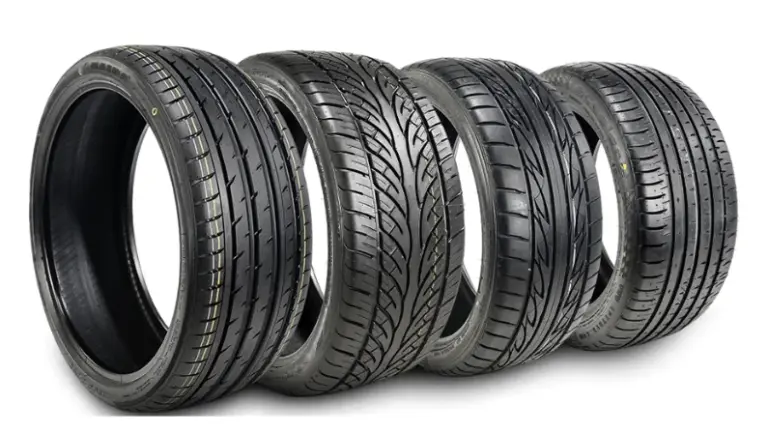
So you have been staring at two tire sizes on a screen, 175 and 185, wondering if that tiny 10mm difference really matters. Maybe you are chasing better grip for your daily commute. Maybe you want to save a few bucks at the pump. Or maybe your mechanic mentioned swapping sizes and now you are down a rabbit hole of tire specs you never planned on learning.
Here is the honest truth: that 10mm gap is not just a number on a sidewall. It changes how your car corners, how it feels over potholes, how it behaves in the rain, and yes, how often you are pulling into a gas station. The difference might look small on paper, but you will feel it behind the wheel.
Let us walk through everything you need to know before spending your money. No fluff, no jargon soup. Just straight answers so you can make a smart decision without second-guessing yourself at the tire shop.
The Quick Rundown: 175 vs. 185 at a Glance
Before we get into the weeds, here is the big picture. If you only have 60 seconds, these are the key takeaways:
- 175mm tires put less rubber on the pavement, which directly changes how much grip and traction you get, especially when you are turning or pushing through curves.
- That narrower footprint also means lower rolling resistance, which can nudge your fuel economy in the right direction over time.
- Before you buy anything, confirm the new size works with your vehicle specs, your wheel diameter, and your actual driving habits.
- Do not ignore the tread pattern. It plays a bigger role in wear, water displacement, and overall grip than most drivers realize.
That is the snapshot. But if you want to understand why these things matter and how they play out in the real world, keep reading. There is a lot more going on under the surface.
What Those Numbers on Your Tire Sidewall Actually Mean
If you have ever glanced at the side of your tire and seen something like “185/65R15” and thought it looked like a secret code, you are not alone. Most drivers never bother to decode it. But once you understand what those numbers represent, choosing the right tire becomes a whole lot easier.
These markings are standardized by the Tire and Rim Association, so they follow the same format no matter what brand you buy. Here is the breakdown:
The first number (like “175” or “185”) is the tire width in millimeters. This is measured from one sidewall edge to the other when the tire is properly mounted and inflated. It tells you how wide the tire sits on the road.
The second number (after the slash) is the aspect ratio. This is a percentage that describes the height of the sidewall relative to the width. So a “65” on a 185mm tire means the sidewall height is 65% of 185mm, which works out to about 120mm. A lower aspect ratio means a shorter, stubbier sidewall. A higher one means more cushion between the rim and the road.
The letter in the middle (almost always “R”) tells you the construction type. “R” stands for radial, which is the standard for pretty much every passenger car tire made today. You would have to go out of your way to find a non-radial tire in 2024.
The last number is the wheel diameter, measured in inches. A “15” means the tire is designed for a 15-inch wheel. Put a tire meant for a 15-inch rim on a 16-inch wheel and you are going to have a bad day.
But here is the thing people constantly overlook: the load index and speed rating. These are usually printed right after the size designation, and they matter just as much as the physical dimensions. The load index tells you the maximum weight each tire can support. The speed rating tells you the maximum sustained speed the tire is engineered to handle safely.
If either of those numbers falls short of your vehicle manufacturer’s specifications, you are setting yourself up for poor performance at best and a genuine safety hazard at worst. So do not just look at width. Look at the whole picture.
Why 10mm of Tire Width Changes More Than You Think
Ten millimeters. That is less than half an inch. Sounds like nothing, right? But when it comes to tires, even a small change in width ripples through your entire driving experience. Swap from a 185 to a 175 (or the other way around) and you will not have to wonder if something is different. You will feel it immediately.
Here is what actually shifts when you change tire width by just 10mm:
1. The Contact Patch Gets Smaller (or Bigger)
The contact patch is the area of rubber that is actually touching the pavement at any given moment. A 175mm tire has a narrower contact patch compared to a 185mm tire. That means less rubber meeting the road.
Why does this matter? Because grip depends heavily on how much tire is in contact with the surface. Less contact means less mechanical grip, especially when you are cornering hard, accelerating aggressively, or braking in an emergency. If you have ever noticed your car sliding a little in a fast turn, a narrower tire can amplify that feeling.
Think about it this way. Imagine walking on ice in dress shoes versus snow boots. The boots spread your weight over more surface area, giving you better traction. Wider tires work on a similar principle. They put more rubber down, which gives your car more to grab onto.
2. Sidewall Stiffness Changes the Ride Feel
Narrower tires tend to have stiffer sidewalls relative to their width. This stiffness makes the car feel more responsive. When you turn the steering wheel, the car reacts a bit quicker because the sidewall is not flexing as much before the tire responds.
That sounds like a win. And in some ways, it is. On a smooth highway, a stiffer sidewall gives you a crisper, more connected feeling to the road. You feel more in control.
But there is a trade-off. That same stiffness means the tire does not absorb road imperfections as well. Hit a pothole or drive over a rough stretch of asphalt and you are going to feel every bump transmit right up through the steering wheel and into your seat. If ride comfort is a priority for you, this is worth considering.
3. Tread Patterns Behave Differently at Different Widths
This one catches a lot of people off guard. The same tread design can perform differently depending on tire width. A narrower 175mm tire channels water differently than a 185mm tire, even if the tread pattern looks identical.
In wet conditions, the tire needs to push water out from under its contact patch fast enough to maintain grip. A narrower tire has a smaller area to clear, which can sometimes be an advantage in light rain. But the reduced contact patch also means less grip overall, so in heavy downpours, you might find a wider tire handles better because it can maintain contact even as water builds up.
The bottom line is that tread pattern and tire width work together. You cannot evaluate one without the other.
4. Rolling Resistance Drops with Narrower Tires
This is where the 175mm tire really earns its keep. Rolling resistance is the energy your engine has to spend just to keep the tires spinning. Less rubber on the road means less friction, which means your engine does not have to work as hard. The result? Better fuel economy.
Now, we are not talking about a night-and-day difference. You are not going to double your gas mileage by dropping 10mm of tire width. But over 10,000, 20,000, or 50,000 miles, those small savings compound. If you are the kind of driver who tracks your fuel expenses closely, you will notice.
The catch? You are trading grip to get those savings. It is always a balancing act.
How Tire Width Hits Your Gas Bill Over Time
Let us talk dollars and cents for a moment, because that is what a lot of drivers really care about. If fuel savings are what motivated you to look at narrower tires in the first place, here is what you should know.
A 175mm tire has less contact with the road surface compared to wider options. Less contact equals less rolling resistance. Less rolling resistance means your engine burns slightly less fuel to maintain the same speed. It is basic physics.
The savings per mile are small. We are talking maybe 1-3% improvement in fuel economy, depending on your car, driving habits, and road conditions. That does not sound like much. But let us do some quick math.
Say you drive 15,000 miles a year and your car gets about 30 miles per gallon. That is 500 gallons of gas per year. At $3.50 per gallon, you are spending $1,750 annually on fuel. A 2% improvement saves you about $35 a year. Over the life of a set of tires (say 40,000-50,000 miles), that adds up to roughly $90-$115.
Not life-changing money, but not nothing either. And if gas prices spike, those savings grow proportionally.
Here is a quick comparison of how rolling resistance and fuel economy shift across three common tire widths:
| Tire Width (mm) | Rolling Resistance | Fuel Economy Benefit |
|---|---|---|
| 175 | Low | High |
| 195 | Medium | Moderate |
| 215 | High | Low |
Think of it like running shoes. A lighter shoe with a thinner sole takes less effort to move in. You can run longer and faster with less energy. But you are giving up cushioning, support, and stability. The same trade-off applies to tires. Go narrower and you gain efficiency, but you sacrifice some grip and comfort in the process.
That said, fuel economy is not determined by tire width alone. Your driving style, tire pressure, alignment, and even the type of road surface all play a role. A set of narrow tires on an underinflated rim with bad alignment will perform worse than properly maintained wider tires. So do not treat tire width as a silver bullet for fuel savings.
What About Grip and Safety? The Real-World Trade-Off
Fuel economy is great, but it does not mean much if your car cannot stop or turn when it needs to. So let us talk about what narrower tires actually do to your safety margins.
A wider tire, like the 185, gives your car a larger contact patch. More rubber on the road means more friction. More friction means shorter braking distances, better cornering grip, and more stability at highway speeds. This is why performance cars and SUVs tend to come with wider tires from the factory. The engineers are prioritizing grip over efficiency.
When you go narrower, you are intentionally shrinking that safety margin. Not by a huge amount, and not to the point where the car becomes dangerous. But in an emergency situation, like slamming the brakes to avoid a stopped car on the highway, every millimeter of contact patch counts.
Here is a real-world example. Imagine you are driving on a wet highway and the car ahead of you suddenly stops. You hit the brakes hard. With a 185mm tire, you might stop in 120 feet. With a 175mm tire under identical conditions, that distance might stretch to 125 or 130 feet. Five to ten feet does not sound like much until you realize it is the difference between a close call and a fender bender.
This is not meant to scare you away from narrower tires. Plenty of cars come equipped with 175mm tires from the factory and perform perfectly well. The point is to understand the trade-off so you can make an informed decision based on how and where you actually drive.
If you spend most of your time on dry, well-maintained roads at moderate speeds, a 175mm tire will serve you just fine. If you regularly drive in heavy rain, on twisty mountain roads, or at higher speeds, the extra grip from a 185mm tire gives you a meaningful safety buffer.
Will 175 Tires Actually Fit Your Car? Here Is How to Check
All the fuel savings and performance discussions in the world do not matter if the tires do not fit your vehicle properly. And “fit” means more than just physically mounting the tire on the wheel. It means the tire works safely with your car’s suspension, braking system, and electronic controls.
Before you commit to 175mm tires, run through this checklist:
- Wheel diameter: This is the most basic compatibility check. Make sure the 175mm tire is designed for the same wheel diameter you are running. A 175/65R14 will not fit on a 15-inch wheel. Period. A mismatch here is not something you can work around. It is a hard no.
- Load index: Every tire has a load index that tells you the maximum weight it can safely support. Check your vehicle owner’s manual for the minimum required load index and make sure the 175mm tire meets or exceeds it. Running tires below their load rating puts excessive stress on the rubber and can lead to blowouts, especially when the car is fully loaded with passengers and cargo.
- Speed rating: This tells you the maximum sustained speed the tire can handle. If your car tops out at 130 mph and the tire is rated for 118 mph, you have a problem. Even if you never drive that fast, underrated tires generate more heat at highway speeds and can degrade faster.
- Sidewall height and overall diameter: When you change tire width, the aspect ratio often changes too. A different aspect ratio alters the overall tire diameter, which can throw off your speedometer reading, mess with your ABS and traction control systems, and even cause the tire to rub against the inside of your wheel well during turns or over bumps.
- Rim width compatibility: Tires are designed for specific rim width ranges. A 175mm tire might be rated for rims between 5 and 6 inches wide. If your rims are 6.5 inches, that 175 might technically mount, but it will sit too flat on the rim and wear unevenly. Always check the tire manufacturer’s recommended rim width range.
In the real world, most compact and subcompact cars can accommodate a 175mm tire without any issues. Mid-size sedans and crossovers that came with 185s or 195s might work with 175s, but you need to verify. A quick look at your owner’s manual or a conversation with your tire shop will save you from expensive headaches down the road.
One more thing. If your car has a tire pressure monitoring system (TPMS), a different tire size can affect the pressure readings. The system is calibrated for a specific tire volume, and changing width or aspect ratio alters that volume. You might get false warnings or, worse, no warnings when pressure is actually low. Some systems can be recalibrated, but it is worth asking about before you make the switch.
How to Pick the Right 175mm Tire for Your Driving Style
So you have confirmed that a 175mm tire fits your vehicle. Great. But not all 175mm tires are created equal. The width is just one piece of the puzzle. You still need to pick the right tire based on your driving conditions and habits.
Three factors matter most here: tread pattern, load index, and speed rating. Let us break each one down.
Tread Patterns: More Important Than You Think
The tread is the part of the tire that actually touches the road, and its design has a massive impact on performance. There are three main types of tread patterns, and each one is optimized for different conditions.
Symmetrical treads have the same pattern across the entire face of the tire. They wear evenly, they are quiet, and they are easy to rotate because any tire can go on any corner of the car. If you are a commuter who drives mostly on dry, paved roads, this is probably your best bet. They also tend to be the most affordable option.
Directional treads have a V-shaped pattern designed to channel water away from the center of the tire. They are purpose-built for wet weather performance. If you live somewhere that gets a lot of rain, or if you frequently drive on roads that flood, directional tires can dramatically reduce your risk of hydroplaning. The downside is that they can only be rotated front-to-back, not side-to-side, which limits your rotation options.
Asymmetrical treads split the difference. The inner portion of the tire is designed for wet grip, while the outer portion is optimized for dry cornering. These are the most versatile option and are commonly found on sport-oriented vehicles. They tend to cost more, but they deliver solid performance in a wider range of conditions.
Here is a comparison of how these tread types typically line up with load index and speed ratings in the 175mm size range:
| Tread Pattern | Load Index | Speed Rating | Best For |
|---|---|---|---|
| Symmetrical | 82 (475 kg) | T (190 km/h) | Daily commuting, highway cruising |
| Directional | 86 (530 kg) | H (210 km/h) | Wet roads, rainy climates |
| Asymmetrical | 88 (560 kg) | V (240 km/h) | Mixed conditions, spirited driving |
A quick note on those load index and speed rating numbers. These are typical examples, not universal specs. Different tire models within the same tread category can have different ratings. Always check the specific tire you are considering against your vehicle’s requirements.
Load Index: Do Not Guess on This One
The load index is a number that corresponds to the maximum weight each tire can carry. For a standard compact car, you are typically looking at load indexes in the 80-90 range. A load index of 82 means the tire can support 475 kilograms (about 1,047 pounds). An index of 88 supports 560 kilograms (about 1,235 pounds).
Why does this matter? Because your car has a gross vehicle weight rating (GVWR) that accounts for the weight of the car itself plus passengers, cargo, and fuel. Divide that number by four and you get the minimum load your tires need to handle. If you pick tires with a load index below that threshold, you are overloading them every time you drive. Overloaded tires run hotter, wear faster, and are far more likely to fail catastrophically.
Here is a hypothetical. Say your car weighs 3,000 pounds empty and the GVWR is 4,200 pounds. Divide by four and each tire needs to support at least 1,050 pounds (476 kg). A tire with a load index of 82 (475 kg) is cutting it dangerously close. You would want at least an 83 (487 kg) to have any margin of safety, and honestly, going higher is always smarter.
Speed Rating: Match It or Exceed It
Speed ratings are designated by letters. Here are the most common ones you will see on passenger tires:
- T = 190 km/h (118 mph)
- H = 210 km/h (130 mph)
- V = 240 km/h (149 mph)
- W = 270 km/h (168 mph)
- Y = 300 km/h (186 mph)
You might look at these numbers and think, “I never drive 149 mph, so why would I need a V-rated tire?” Fair question. But speed ratings are not just about top speed. They also indicate how well the tire handles heat buildup at sustained highway speeds. A higher-rated tire is engineered with better heat management, which means it will last longer and perform more consistently even at legal highway speeds.
The rule of thumb is simple: match the speed rating in your owner’s manual, or go higher. Never go lower. A tire that is underrated for your car might perform fine around town, but it could overheat and fail on a long highway stretch, especially in hot weather.
Narrower Tires in Winter: A Surprising Advantage
Here is something that surprises a lot of people. In certain winter conditions, narrower tires can actually outperform wider ones. It sounds counterintuitive, but there is solid reasoning behind it.
When you are driving on snow, a narrower tire concentrates the weight of the car over a smaller footprint. This increased pressure per square inch helps the tire cut through the snow and reach the firmer surface underneath. A wider tire, by contrast, tends to float on top of the snow, which reduces traction.
This is exactly why you see a lot of dedicated winter tires sold in narrower sizes. A car that runs 185mm all-season tires in the summer might benefit from dropping to 175mm winter tires when the snow flies. The narrower width, combined with a winter-specific tread compound and siping pattern, can give you significantly better grip on packed snow.
On ice, though, the story is different. Ice traction depends more on the tire compound and siping (those tiny slits in the tread blocks) than on width. So do not assume narrower is always better in cold weather. It depends on whether you are dealing with snow, ice, slush, or a mix of all three.
If you live in a region with serious winters, consider running two sets of tires: a wider set for summer and a narrower set for winter. It costs more upfront, but each set lasts longer because you are splitting the mileage between them. And you get optimized performance year-round instead of compromising in every season.
How Tire Width Affects Handling and Steering Response
If you enjoy driving, not just commuting, but actually enjoying the act of being behind the wheel, tire width is going to matter to you. The difference between a 175 and a 185 shows up clearly in how the car responds to your steering inputs.
With a 175mm tire, the car will feel lighter and more nimble. The reduced contact patch means less inertia in the steering, so the car changes direction more readily. For urban driving, parking, and tight maneuvers, this is a genuine advantage. The steering feels quicker and more alive.
With a 185mm tire, you get a more planted feel. The car resists direction changes a bit more, but it rewards you with greater confidence in corners. There is a reason track-oriented drivers generally prefer wider tires. The extra contact patch lets you carry more speed through turns without the rear end getting squirrely.
For most daily drivers, this difference is subtle. You are not going to feel like you are driving a completely different car. But if you pay attention, especially on your favorite back road or a highway on-ramp, you will notice the change in character. The 175 feels eager and light. The 185 feels stable and assured.
Neither is objectively better. It comes down to what you value more.
Tire Wear: Does Width Affect How Long Your Tires Last?
Yes. Tire width influences wear patterns, though it is not as straightforward as “wider lasts longer” or “narrower wears faster.”
A wider tire distributes your car’s weight over a larger surface area. In theory, this means each square millimeter of tread bears less load, which should lead to slower, more even wear. And in controlled conditions, that is generally what happens.
But in the real world, tire wear depends on a bunch of factors beyond just width:
- Tire pressure: Underinflated tires wear on the edges. Overinflated tires wear in the center. Both situations shorten tire life regardless of width.
- Alignment: If your wheels are not properly aligned, your tires will wear unevenly no matter what size they are. One shoulder of the tire eats through rubber while the other side barely touches the road.
- Driving habits: Hard braking, aggressive cornering, and rapid acceleration all increase tire wear. If you drive aggressively, you will chew through tires faster, period.
- Road conditions: Rough, poorly maintained roads eat tires alive. If your commute involves a lot of construction zones or potholed streets, expect shorter tire life.
- Tire compound: Softer compounds grip better but wear faster. Harder compounds last longer but offer less traction. The compound matters more than width for overall longevity.
In general, a well-maintained 175mm tire from a reputable brand will last just as long as a comparable 185mm tire if you keep it properly inflated, rotate it on schedule, and maintain good alignment. The width difference alone is not going to make or break your tire life.
Noise and Comfort: The Overlooked Factor
Most tire discussions focus on grip, fuel economy, and wear. But what about the stuff you actually notice every single day you drive? Like road noise and ride comfort.
Narrower tires tend to generate less road noise because there is less tread surface interacting with the pavement. If you have ever driven behind a big truck with wide tires and heard that loud humming, you have experienced this principle in action. Less rubber on the road means less noise.
That said, the tread pattern plays a bigger role in noise than width alone. A 175mm tire with an aggressive, blocky tread can be louder than a 185mm tire with a smooth, optimized pattern. So do not assume narrow equals quiet. Read reviews, listen to sample videos if you can find them, and ask your tire shop about noise levels for specific models.
On the comfort side, width and aspect ratio work together. A 175mm tire often comes with a taller sidewall (higher aspect ratio), which means more cushion between the rim and the road. This can actually result in a softer, more comfortable ride compared to a wider, low-profile tire. If ride comfort matters to you, pay attention to the overall tire profile, not just the width number.
The Cost Difference: Is Narrower Actually Cheaper?
Generally, yes. Narrower tires use less raw material, which often (but not always) translates to a lower price tag. A 175mm tire from the same brand and product line will typically cost less than the equivalent 185mm version.
But “cheaper” does not always mean “better value.” Here are a few things to consider:
- If the narrower tire wears faster because it is carrying more load per square inch of tread, you might end up replacing it sooner and spending more over time.
- If the narrower tire has a lower speed rating and you need to step up to a premium model to get the right rating, the cost advantage disappears.
- If you need new wheels to accommodate a different tire width, the cost of rims can dwarf the savings on the tires themselves.
Do the math for your specific situation. Look at the total cost of ownership, including tire price, expected tread life, fuel savings, and any additional parts or adjustments you might need. The cheapest tire on the shelf is rarely the best deal when you zoom out and look at the full picture.
Can You Mix 175 and 185 Tires on the Same Car?
Short answer: you should not. Longer answer: it depends on the configuration, but it is almost always a bad idea for daily driving.
Running different tire widths on the same axle (say, a 175 on the left and a 185 on the right) is dangerous. The tires will have different grip levels, which can cause the car to pull to one side under braking or in corners. Your ABS and stability control systems are calibrated assuming identical tires on each axle, and mixing widths throws those systems off.
What about different widths on different axles? Some cars do run staggered setups, with wider tires on the rear for better traction. But this is typically a factory-engineered configuration on rear-wheel-drive sports cars, and the difference is usually more than 10mm. On a front-wheel-drive commuter car, there is no benefit to running a staggered setup, and it can create handling problems.
The safest approach is to run the same tire size, brand, model, and tread depth on all four corners. If you must replace only two tires, put the new ones on the rear axle (yes, even on a front-wheel-drive car) to maintain rear stability. And make sure the two new tires match the two existing ones as closely as possible.
What Your Owner’s Manual Says (and Why You Should Listen)
Your vehicle manufacturer spent millions of dollars engineering and testing your car with a specific tire size. The recommended size in your owner’s manual is not a suggestion. It is the result of extensive testing for handling, braking, ride quality, fuel economy, speedometer accuracy, and compatibility with every electronic system in the car.
Can you deviate from the recommended size? Sure. People do it all the time. But understand that every deviation introduces a variable that the engineers did not account for. Sometimes that variable is harmless. Sometimes it creates a problem you will not notice until you are in a situation where it really matters, like an emergency lane change at 70 mph on a rainy night.
If your manual says 185 and you want to try 175, at minimum consult with a knowledgeable tire professional. Explain your goals, whether it is fuel savings, a softer ride, winter performance, or whatever. A good tire shop will tell you honestly whether the swap makes sense for your specific vehicle and driving conditions.
A Real-World Scenario: When Going Narrower Makes Sense
Let us paint a picture. You drive a small hatchback, something like a Honda Fit or a Toyota Yaris. The factory tires are 185/65R15. You mostly drive around town, rarely exceed 65 mph, and you live in a dry climate with mild winters.
In this case, dropping to 175/70R14 (assuming your car can run 14-inch wheels) could make a lot of sense. You would get slightly better fuel economy, lighter steering, and cheaper tires. The narrower width would not hurt you much in dry conditions, and the taller sidewall (70 vs. 65) would actually give you a more comfortable ride over rough roads.
You would need to verify that the overall tire diameter stays within about 3% of the original to keep your speedometer accurate. And you would want to make sure the load index and speed rating still meet your car’s requirements. But for a driver in this situation, the swap is reasonable and practical.
Another Real-World Scenario: When Going Wider Is the Smarter Move
Now picture a different driver. You own a mid-size sedan, something like a Mazda3 or a Volkswagen Jetta. You commute on a mix of city streets and highways, you drive in the rain regularly, and you occasionally take spirited drives on back roads. The factory tires are 185/65R15.
For this driver, staying with 185 or even bumping up to 195 makes more sense. The wider tire gives you better wet-weather grip, shorter braking distances, and more confidence in corners. Yes, you lose a fraction of fuel economy. But the performance and safety gains outweigh that small cost.
You would not want to go too wide, because at some point wider tires start to interfere with the wheel wells, add unnecessary weight, and actually hurt fuel economy more than they help handling. There is a sweet spot for every car, and your manufacturer’s specs are usually right in the middle of it.
The Bottom Line: Matching the Tire to Your Life
The 175 vs. 185 debate does not have a one-size-fits-all answer. It comes down to priorities.
If you want better fuel economy, a lighter steering feel, and lower tire costs, the 175 is worth considering, as long as it is compatible with your car and your driving conditions.
If you want more grip, shorter braking distances, and greater stability in wet weather, the 185 is the safer and more capable choice.
Either way, check your wheel wells, confirm your suspension geometry can accommodate the change, and never go below your manufacturer’s minimum specs for load index and speed rating. The “best” tire is not the one with the most impressive specs on paper. It is the one that matches your car, your roads, and the way you actually drive every single day.
Before you buy, ask yourself one honest question: what matters more to you right now, saving a few dollars per tank or having that extra margin of grip when the road gets slippery? Your answer will tell you exactly which tire to put on your car.