
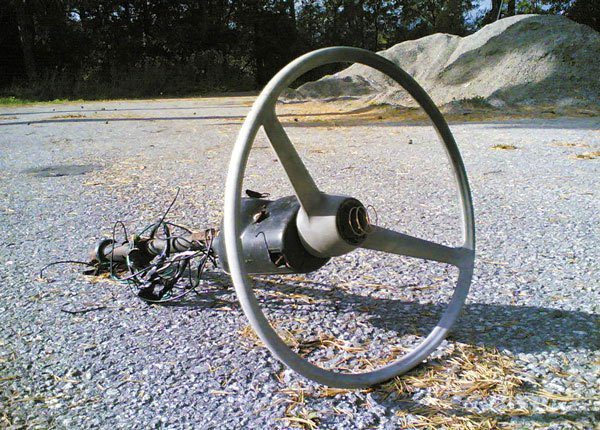
Try turning the steering wheel of a parked car with the engine off sometime. Go ahead, give it a real effort. You will notice right away that it takes a surprising amount of force to get those front wheels to move. Now imagine that same feeling, but at every single turn, every lane change, every parking maneuver, every time you drive. That is what driving without power steering feels like in a heavy vehicle.
Power steering changed the automotive world. Before it existed, turning a steering wheel, especially at low speeds or while stationary, was genuine physical labor. The heavier the vehicle, the harder you had to work. Truck drivers in particular dealt with arm-burning effort just to navigate city streets or back into a loading dock. Engineers recognized this problem and developed systems that use hydraulic pressure or electric motors to assist the driver, making the wheel feel light and responsive even in the heaviest vehicles.
The first power steering system hit the mass market in 1951, courtesy of Chrysler. It was an immediate hit. Drivers loved it. Within a decade, power steering went from being a luxury option to a near-universal feature. And over the following 70-plus years, the technology has been refined, redesigned, and improved to the point where modern drivers rarely give it a second thought. You turn the wheel, the car turns. Simple.
But here is something most people do not realize: not every car has power steering. Some cars were built without it on purpose. And a small number of those cars are not dusty relics from the 1950s. Some were sold as recently as the 2000s and beyond. A few were even designed without power steering as a deliberate performance choice.
So why would any car manufacturer skip power steering? Who actually wants to drive without it? And what does it feel like behind the wheel of a car that relies entirely on your arms to steer? Let us dig into all of that, look at some specific cars that came without power steering, and explore why this seemingly outdated approach still has its fans.
A Quick History: How Power Steering Became Standard
To appreciate why some cars did not have power steering, it helps to understand how and why it became standard in the first place.
In the early days of the automobile, cars were small and light. Steering without assistance was not a big deal because the front wheels did not weigh much and the tires were narrow. A strong pair of hands was all you needed. But as cars got bigger, heavier, and faster throughout the 1930s and 1940s, steering effort increased dramatically. Wider tires, which improved handling and safety, also made the steering heavier.
The problem was worst in trucks and large sedans. Military vehicles during World War II, particularly heavy armored cars and trucks, were notoriously difficult to steer. This actually spurred the development of hydraulic power steering for military applications, and after the war, engineers adapted the technology for civilian use.
Chrysler introduced the first commercially available power steering system in 1951 on the Chrysler Imperial. It used a hydraulic pump driven by the engine to provide steering assistance. The difference was night and day. Suddenly, a car that had required considerable effort to park could be maneuvered with one finger. Customers loved it, and other manufacturers scrambled to offer their own versions.
By the mid-1960s, power steering was standard or at least available as an option on most American cars. By the 1980s, it was nearly universal in North America, Europe, and Japan. The only holdouts were the cheapest economy cars, certain specialty vehicles, and some sports cars where the manufacturer made a deliberate choice to leave it out.
The technology itself evolved too. Early systems were all hydraulic, using a pump, fluid lines, and a steering gear or rack to provide assistance. These worked well but added weight, complexity, and parasitic drag on the engine (the pump runs constantly, whether you are turning the wheel or not). Starting in the late 1990s and accelerating through the 2000s, manufacturers began switching to electric power steering (EPS), which uses an electric motor to provide assistance. EPS is lighter, more fuel-efficient, and easier to integrate with modern driver-assistance systems like lane-keeping assist.
Today, virtually every new car sold has some form of power steering. Finding a brand-new car without it is essentially impossible. But rewind the clock just a couple of decades, and there were still a handful of cars rolling off assembly lines with nothing but a mechanical connection between the steering wheel and the front wheels.
Why Would Any Manufacturer Skip Power Steering?
It seems like a strange decision to leave out a feature that most people consider essential. But there were actually some legitimate reasons why certain cars were sold without power steering, even well into the modern era.
The Car Was Light Enough Not to Need It
Power steering was invented to solve a specific problem: heavy vehicles were hard to steer. If the car is light enough, the problem does not exist in the first place. A 2,000-pound economy car with narrow tires does not generate nearly the same steering effort as a 5,000-pound truck with wide all-terrain tires. At driving speeds, the steering on a light car feels perfectly manageable without any assistance. It only gets noticeably heavy at very low speeds, like during parking maneuvers.
For budget-oriented economy cars, especially in markets where cost was the primary selling point, leaving out power steering was a way to keep the price as low as possible while still delivering a car that was perfectly functional for daily driving. The steering was a little heavier at parking-lot speeds, sure, but once you were moving, most drivers did not notice much difference.
Cost Reduction Was a Priority
Every feature on a car costs money to engineer, manufacture, and install. A hydraulic power steering system adds a pump, hoses, a fluid reservoir, a steering gear or rack with an assist mechanism, and the associated brackets, fittings, and hardware. That all adds up. For a car that is being sold at the absolute lowest price point the manufacturer can manage, every dollar matters.
In some markets, particularly in developing countries and Eastern Europe, ultra-affordable cars were a massive segment. Buyers in those markets were making purchasing decisions based primarily on price, fuel economy, and basic reliability. They were willing to trade a heavier steering wheel for a lower sticker price. And in many cases, the buyers had grown up driving cars without power steering, so they did not miss what they had never had.
The Driver Wanted Direct Steering Feel
This is the more interesting reason, and it applies to sports cars and race cars rather than economy cars. Some driving enthusiasts and professional racers genuinely prefer steering without power assistance because of what it gives them: unfiltered feedback.
Power steering, by its nature, adds a layer of isolation between the driver and the road. The hydraulic or electric system absorbs some of the forces that would otherwise travel from the tires through the steering column to the driver’s hands. Most people consider that a good thing. It makes the steering smoother, quieter, and less tiring. But for a driver who wants to feel every bump, every texture change in the pavement, and every subtle shift in grip at the front tires, that isolation is a problem.
Without power steering, the connection between the steering wheel and the front wheels is entirely mechanical. Every force acting on the tires is transmitted directly to the driver’s hands. You can feel when the front tires are starting to lose grip. You can feel the difference between wet pavement and dry pavement. You can feel the camber of the road, the crown of a turn, and the moment the tires begin to slide. For a skilled driver on a racetrack, that information is invaluable.
This is why some lightweight sports cars and nearly all open-wheel race cars (like Formula cars and go-karts) do not have power steering. The cars are light enough that the steering effort is manageable, and the feedback advantage outweighs the convenience of assisted steering.
Cars That Were Sold Without Power Steering
Now let us look at some specific examples. These are real production cars that were sold to the public without power steering, spanning from the late 1990s to the 2010s. Each one had its own reasons for skipping this feature, and each one tells a slightly different story about automotive priorities.
The 1997 Ford Aspire: Budget Transportation at Its Most Basic
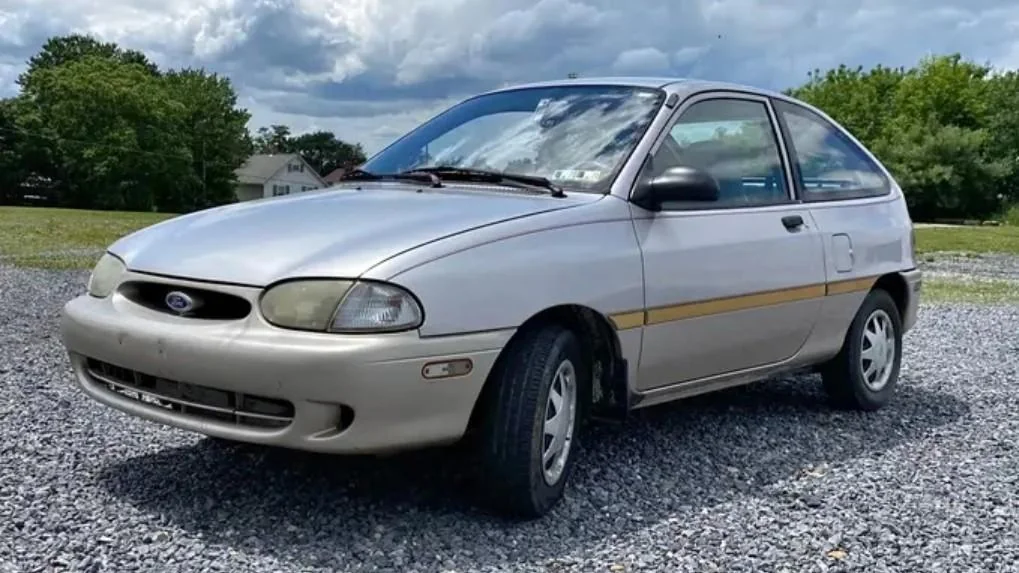
The Ford Aspire is about as no-frills as a car can get. Built as an ultra-affordable subcompact, this little sedan was designed for one purpose: getting people from point A to point B for as little money as possible. And it accomplished that mission with flying colors, even if the flying was more of a gentle cruise at moderate speeds.
Under the hood sat a tiny 1.3-liter four-cylinder engine producing 63 horsepower and 74 lb-ft of torque. By modern standards, those numbers are almost comically small. But the Aspire itself was a small, light car, so the little engine was adequate for daily driving. It was not going to win any drag races, but it would get you to work and back on a remarkably small amount of gasoline.
The transmission was a 5-speed manual, which was common for economy cars of the era. Front-wheel drive kept things simple. And the interior, while basic, offered decent space for the segment with about 37.8 inches of headroom and over 41 inches of legroom. Not bad for a car that could generously be described as “compact.”
What the Aspire did not offer was much in the way of modern safety or comfort features. There were no front airbags. No side airbags. And, relevant to our topic, no power steering. The base model came with a simple manual steering rack that relied entirely on the driver’s arm strength to turn the wheels.
In practice, this was not as bad as it sounds. The Aspire was light enough that the steering effort was manageable at driving speeds. Parking could require a bit more effort, especially in tight spaces, but once you were rolling at any meaningful speed, the steering felt direct and responsive. Some owners actually preferred it, saying it gave them a better sense of what the front tires were doing.
Today, you can find a used Ford Aspire for around $900 at a dealer, which gives you some idea of where this car sat in the market hierarchy. It was never meant to be aspirational (despite the name). It was meant to be cheap, reliable, and efficient. And for a lot of buyers in the late 1990s, that was exactly what they needed.
Key specs at a glance:
| Feature | Specification |
|---|---|
| Engine | 1.3L 4-cylinder |
| Horsepower | 63 hp |
| Torque | 74 lb-ft |
| Transmission | 5-speed manual |
| Drivetrain | Front-wheel drive |
| Power Steering | Not available (base model) |
| Airbags | None |
| Current Used Price | ~$900 |
The 2000 Honda Civic CX Hatchback: A Lightweight Legend
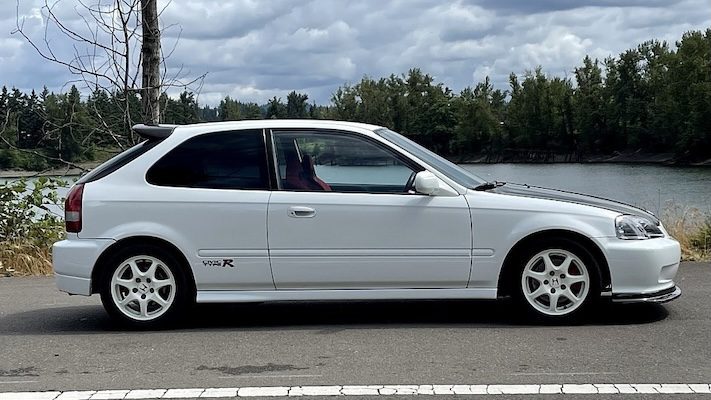
Honda has a long and well-deserved reputation for building cars that are reliable, efficient, and fun to drive. The Civic, in particular, has been one of the best-selling cars in the world for decades. But not every version of the Civic was loaded with features. The CX trim level of the sixth-generation Civic (1996 to 2000) was the stripped-down, lightweight model designed for buyers who wanted Honda quality without Honda option-package prices.
The 2000 Civic CX Hatchback came with a 1.6-liter four-cylinder engine producing 106 horsepower and 103 lb-ft of torque. That does not sound like much, but paired with the car’s low curb weight and a slick-shifting 5-speed manual transmission, it made for a surprisingly lively driving experience. Honda’s engines of this era were famous for their willingness to rev, and the Civic CX was no exception.
The car ran on unleaded gasoline and featured four inline cylinders, which was Honda’s bread and butter. The engine was simple, robust, and nearly bulletproof in terms of reliability. There are Civic CX models from this era still running today with well over 200,000 miles on the odometer, which says everything you need to know about Honda’s engineering during this period.
What the CX trim did not include was power steering. This was a deliberate choice to keep the car as light and affordable as possible. Honda understood that the Civic’s low weight meant the steering effort would be manageable without assistance, and they also knew that the CX buyer was someone who prioritized value over luxury. The target customer was a young professional, a college student, or a commuter who wanted reliable transportation and did not care about power windows, fancy stereos, or cushy steering feel.
There were also no airbags in the 2000 Civic CX, which is a notable omission by today’s standards but was less unusual for a base-model economy car at the turn of the millennium.
The lack of power steering actually made the Civic CX a favorite among driving enthusiasts and autocross competitors. The direct, unassisted steering gave the driver excellent feedback through the wheel, and the car’s light weight made it nimble and fun to throw around corners. Many owners who modified their Civics for performance use actually removed power steering from higher-trim models to save weight and improve steering feel, which tells you something about the appeal of the unassisted setup.
The current retail price for a 2000 Honda Civic CX in good condition is around $10,000, which is a testament to how well these cars have held their value. A 24-year-old economy car that still commands five figures in the used market is pretty remarkable. It speaks to both the car’s reliability and its cult following among enthusiasts.
Key specs at a glance:
| Feature | Specification |
|---|---|
| Engine | 1.6L 4-cylinder |
| Horsepower | 106 hp |
| Torque | 103 lb-ft |
| Transmission | 5-speed manual |
| Drivetrain | Front-wheel drive |
| Power Steering | Not available |
| Airbags | None |
| Current Used Price | ~$10,000 |
The 2007 Dacia Logan: Europe’s Cheapest New Car
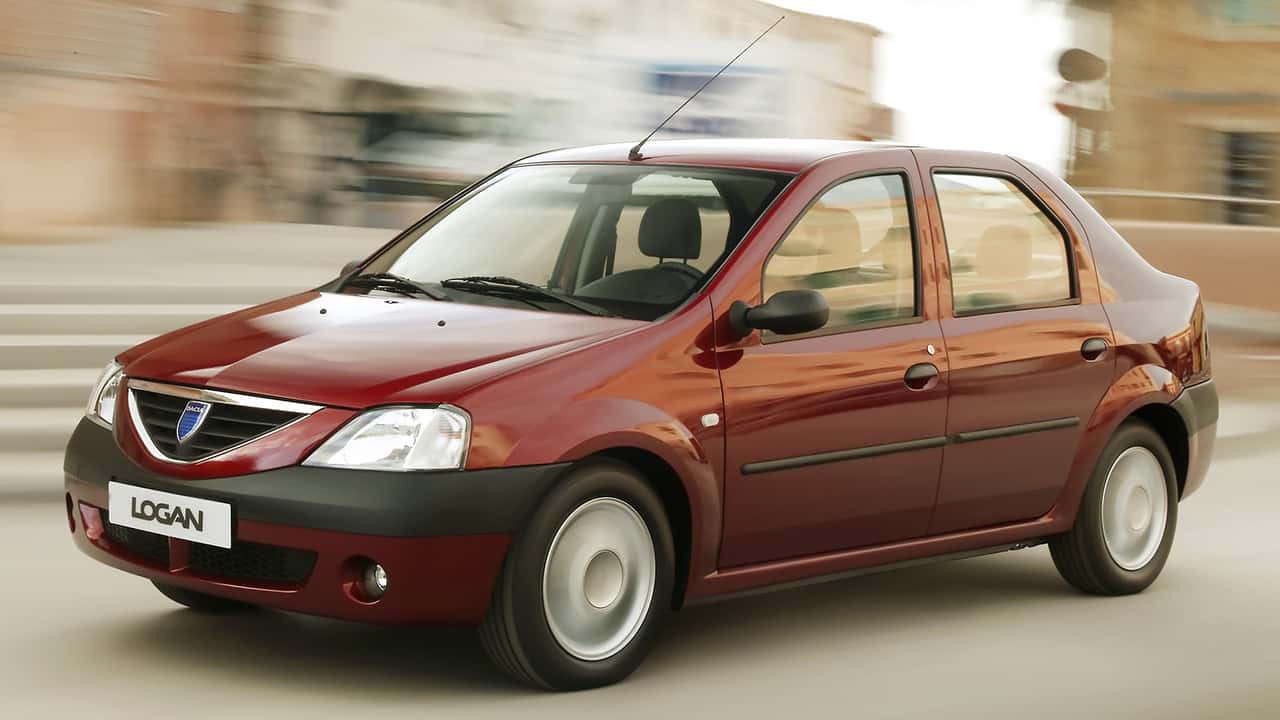
If you live in North America, you have probably never heard of Dacia. But in Europe, particularly in Eastern Europe, Dacia is a household name. The brand is a Romanian car manufacturer that has been owned by Renault since 1999. And their claim to fame is simple: they make cars that are absurdly affordable.
The Dacia Logan, produced starting in 2004, was a landmark car. It was designed from the ground up to be the cheapest new car available in Europe. Renault engineers were given a challenging brief: build a car that is reliable, practical, and safe enough to meet European regulations, but sell it for a price that undercuts everything else on the market by a significant margin.
They succeeded spectacularly. The base model Logan came with a 1.4-liter petrol engine producing 75 horsepower. It was a simple, no-nonsense sedan with a roomy interior, a usable trunk, and basically nothing else. The base trim had manual windows, no air conditioning, no radio, a bare-bones dashboard, and, you guessed it, no power steering.
The lack of power steering was part of the cost-cutting strategy. Every feature that was removed from the base model brought the price down a little further. And the result was a brand-new car that could be purchased for less than 5,000 euros in some markets. For comparison, the next cheapest new car in most European markets at the time was at least 7,000 to 8,000 euros. Dacia was not just cheaper; it was in a category by itself.
And buyers responded. The Logan sold in enormous numbers, far exceeding Renault’s initial projections. It became one of the best-selling cars in Romania, Morocco, Algeria, and several other markets. Even in Western Europe, where buyers had more options and higher expectations, the Logan found a loyal customer base among people who saw a car as basic transportation rather than a lifestyle statement.
The 1.4-liter engine proved to be remarkably reliable. It was not powerful, it was not fast, and it was not exciting. But it started every morning, it sipped fuel, and it kept running with minimal maintenance. For buyers who needed a car that just worked and did not cost much to own, the Logan was hard to beat.
You can still find Dacia Logans from this era on the streets in Romania and throughout Eastern Europe. They are workhorses. Many serve as taxi cabs, delivery vehicles, and family cars. Used examples from this period can be found for $800 to $900, which is remarkable for a car that is only about 17 to 20 years old. It just goes to show that when a car is designed purely for function and affordability, it does not need power steering, leather seats, or a touchscreen to earn a permanent place in people’s lives.
Higher trim levels of the Logan did offer power steering as an option, along with air conditioning and a basic stereo. But the base model’s lack of these features was a selling point, not a shortcoming, because it kept the price at a level that opened up new car ownership to people who might otherwise have been stuck buying older, less reliable used cars.
Key specs at a glance:
| Feature | Specification |
|---|---|
| Engine | 1.4L petrol |
| Horsepower | 75 hp |
| Transmission | 5-speed manual |
| Power Steering | Not available (base trim) |
| Production Years | 2004 to 2007 (first generation) |
| Current Used Price | ~$800 to $900 |
The Alfa Romeo 4C: No Power Steering by Design, Not by Budget
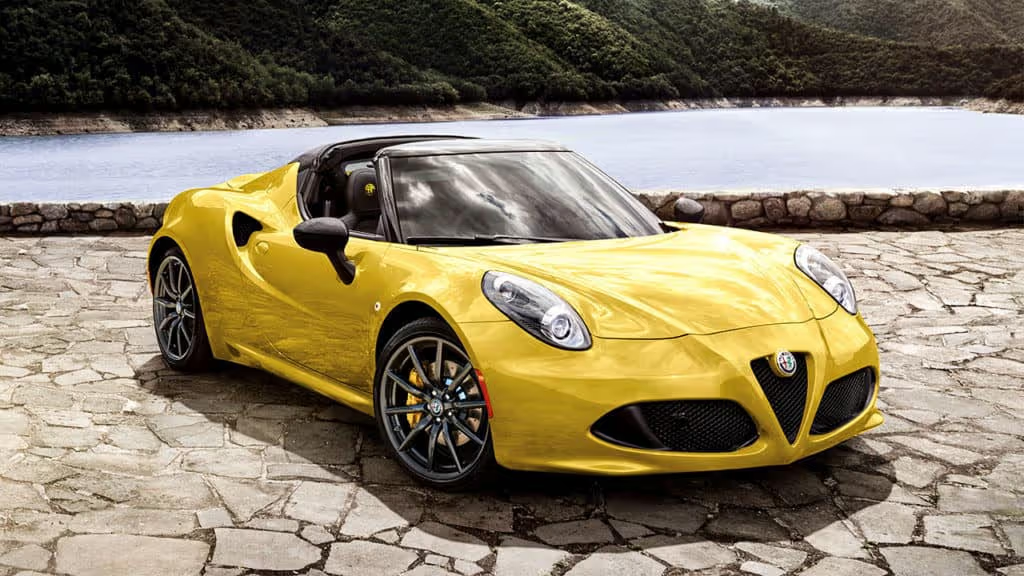
Now here is where the story gets really interesting. The three cars we just covered, the Ford Aspire, Honda Civic CX, and Dacia Logan, all lacked power steering because they were budget cars. The manufacturers left it out to save money and keep prices low. The Alfa Romeo 4C is an entirely different animal. It does not have power steering because Alfa Romeo’s engineers decided it did not need it. And the car costs around $68,000.
Let that sink in for a moment. A $68,000 sports car, built in the 2010s, with no power steering. That is not a cost-cutting measure. That is a philosophy.
The Alfa Romeo 4C was unveiled at the Geneva Motor Show in 2013, and it immediately turned heads. It is a mid-engine, rear-wheel-drive sports car with a carbon fiber monocoque chassis, which is the kind of construction you normally find on Formula 1 cars and million-dollar supercars, not on a sub-$70,000 sports car. The carbon fiber tub is the structural backbone of the car and is incredibly strong while being extraordinarily light.
And that light weight is the key to understanding why the 4C does not have power steering. The car weighs approximately 2,465 pounds in its standard configuration. That is astonishingly light for a modern car. For reference, a current Honda Civic weighs about 3,000 pounds, and a Toyota Camry weighs about 3,500 pounds. The 4C is lighter than most subcompact economy cars, despite being a mid-engine sports car with a turbocharged engine and a carbon fiber chassis.
At that weight, the front wheels simply do not generate enough resistance to make power steering necessary. The unassisted steering rack provides direct, immediate feedback that Alfa Romeo’s engineers felt would be diluted by adding a power assist system. The goal was to create a driving experience that was as pure, raw, and connected as possible, like a modern-day go-kart with a proper engine and a roof.
The engine is a 1.7-liter turbocharged four-cylinder producing 237 horsepower and 258 lb-ft of torque. In a car this light, those numbers translate to genuinely rapid acceleration. The 4C hits 60 mph from a standstill in about 4.2 seconds, and the top speed is electronically limited to 160 mph. The transmission is a 6-speed dual-clutch automatic that snaps off gear changes with the kind of precision that would make a Swiss watchmaker nod approvingly.
Driving the 4C is an experience unlike almost any other modern car. Without power steering, you feel every pebble, every groove, every change in road texture through the steering wheel. At highway speeds, the steering is light and precise. At parking-lot speeds, it gets noticeably heavier, and parallel parking can give your arms a genuine workout. But on a winding mountain road or a racetrack, the steering feel is sublime. You know exactly what the front tires are doing at every moment, which gives you tremendous confidence to push the car hard.
Alfa Romeo made this choice knowing it would alienate some buyers. Not everyone wants to wrestle with a heavy steering wheel in a parking garage. But the 4C was never meant to be a car for everyone. It was meant to be a car for driving enthusiasts who value engagement over convenience. And for that audience, the lack of power steering is not a missing feature. It is the whole point.
Production of the 4C ended in 2020, and prices for used examples have been climbing steadily. Clean, low-mileage 4Cs are increasingly seen as collector cars, partly because they represent a philosophy of car design that is rapidly disappearing in an era of heavy, electronically insulated vehicles.
Key specs at a glance:
| Feature | Specification |
|---|---|
| Engine | 1.7L turbocharged 4-cylinder |
| Horsepower | 237 hp |
| Torque | 258 lb-ft |
| Transmission | 6-speed dual-clutch automatic |
| Drivetrain | Rear-wheel drive |
| Chassis | Carbon fiber monocoque |
| Curb Weight | ~2,465 lbs |
| 0-60 mph | ~4.2 seconds |
| Top Speed | 160 mph (limited) |
| Power Steering | Not available (by design) |
| Price (new) | ~$68,000 |
What Does Driving Without Power Steering Actually Feel Like?
If you have never driven a car without power steering, you might be imagining something terrible. Like trying to turn a ship’s wheel while the ship is stuck on a sandbar. In reality, it is not nearly that dramatic, at least not when the car is moving.
The key variable is speed. When the car is moving at any reasonable pace, say 15 mph or more, the front tires are already rolling, and the friction between the tire and the road is significantly reduced compared to when the car is stationary. At these speeds, steering without power assist feels surprisingly normal. The wheel is a little heavier than what you would find in a modern car with electric power steering, but it is not difficult to turn. Many drivers describe the feeling as “connected” or “natural.” You can feel the road through the wheel, and the steering responds immediately and precisely to your inputs.
The challenge comes at low speeds and during parking. When you are crawling through a parking lot at 2 mph or trying to parallel park, the full weight of the front end is pushing down on the tires, and you are asking them to slide sideways across the pavement. That takes real effort. In a light car like the Honda Civic CX or the Alfa Romeo 4C, it is manageable but noticeable. In a heavier car, it can be genuinely tiring. Your arms will feel it after a few tight maneuvers.
This is actually the primary complaint from owners of cars without power steering. The driving experience on the open road is fine, sometimes even better than with power steering. But parking can be a chore, and three-point turns in tight spaces require more muscle than most modern drivers are accustomed to using.
There is a simple trick that experienced drivers of non-power-steering cars use: never turn the wheel while the car is completely stationary. Even rolling at 1 or 2 mph makes a dramatic difference in how much effort the steering requires. If you keep the car moving, even slightly, the steering stays manageable. It is only when you try to crank the wheel while the car is sitting dead still that the effort becomes significant.
The Advantages of No Power Steering (Yes, There Are Some)
It is easy to dismiss manual steering as an outdated inconvenience, but there are genuine advantages that explain why some drivers actively seek it out.
Pure, Unfiltered Steering Feel
This is the big one. Without a hydraulic pump or electric motor mediating between your hands and the front wheels, you get a direct, mechanical connection. Every force acting on the front tires is transmitted back through the steering column and into your hands. You can feel the road surface. You can feel tire grip. You can feel the exact moment the front tires start to lose traction in a turn. For enthusiast drivers, this information is not just nice to have. It is the difference between driving and merely pointing a car in a direction.
Modern electric power steering systems have gotten much better at simulating this kind of feedback, but even the best ones add a layer of artificial feel. They are interpreting signals from sensors and translating them into resistance at the wheel. It is a simulation. Manual steering is the real thing.
Simplicity and Reliability
A manual steering rack has almost nothing that can go wrong. There is no pump to fail, no fluid to leak, no hoses to crack, no electric motor to burn out, no sensors to malfunction. It is a gear mechanism and a couple of tie rods. That is it. The simplicity translates directly to reliability and lower maintenance costs over the life of the car.
Anyone who has ever dealt with a leaking power steering pump, a groaning hydraulic system, or a failed electric power steering motor knows how expensive and annoying these repairs can be. With manual steering, that entire category of potential problems simply does not exist.
Weight Savings
A hydraulic power steering system adds roughly 25 to 40 pounds to a car when you account for the pump, reservoir, hoses, fluid, and the heavier steering rack. An electric power steering system adds about 15 to 25 pounds. That might not sound like much, but in the world of lightweight sports cars and race cars, every pound matters. The Alfa Romeo 4C’s engineers counted every gram, and eliminating the power steering system was part of their obsessive weight-reduction strategy.
No Parasitic Power Loss
A hydraulic power steering pump is driven by a belt connected to the engine. It runs constantly whenever the engine is running, even when you are driving straight and the pump is doing no useful work. This creates a small but continuous drag on the engine, robbing a few horsepower and slightly reducing fuel economy. Electric power steering is better in this regard because it only draws power when the wheel is being turned, but it still requires electrical energy from the alternator.
Manual steering uses zero engine power. Every bit of energy the engine produces goes toward moving the car. In a fuel-conscious economy car or a performance-focused sports car, that matters.
The Disadvantages: Why Power Steering Won
For all its charm, manual steering has clear drawbacks that explain why power steering became universal.
Parking Is a Workout
There is no getting around this. Parking a car without power steering, especially in a tight space, requires noticeably more physical effort than parking one with it. For young, fit drivers, this is a minor inconvenience. For elderly drivers, people with limited upper body strength, or anyone with joint problems in their hands, wrists, or shoulders, it can be a genuine barrier to comfortable driving.
It Does Not Work Well in Heavy Vehicles
The fundamental problem that power steering was invented to solve remains valid. A heavy truck, SUV, or large sedan with wide tires and a lot of weight over the front axle is simply too difficult to steer manually for most drivers. The steering effort at low speeds would be extreme, and emergency maneuvers at highway speeds would require more force and speed than most people can generate. For any vehicle above about 2,800 to 3,000 pounds, power steering is practically a necessity.
Modern Safety Systems Require Power Steering
This is the reason manual steering has essentially no future in new production cars. Modern driver-assistance systems like lane-keeping assist, lane-departure warning with steering intervention, automatic parking, and eventual autonomous driving all require the ability for the car’s computer to control the steering. Electric power steering makes this possible because the computer can send commands to the electric motor to turn the wheel. A manual steering rack has no mechanism for the computer to interact with. It is purely mechanical.
As these safety and autonomy features become standard and, in some cases, legally required, the manual steering rack is being designed out of existence. You cannot have a car that parks itself if it does not have a way to turn its own wheels.
Do Any Cars Still Sold Today Come Without Power Steering?
For all practical purposes, no. As of the mid-2020s, every new car sold in major markets (North America, Europe, Japan, South Korea, China) comes with some form of power steering, almost always electric. Even the most basic, budget-oriented cars in emerging markets now include electric power steering because the components have become so inexpensive that the cost savings of omitting them are negligible.
The Alfa Romeo 4C was the last notable production car sold without power steering, and its production ended in 2020. There may be some ultra-niche, low-volume specialty vehicles or kit cars that still use manual steering, but nothing from a major manufacturer.
The era of the non-power-steering car is, for all intents and purposes, over. What started as a universal feature (all early cars were manual steering) became an anomaly (a few budget and sports cars lacked power steering), and has now become extinct in new car production.
Other Cars That Were Notably Sold Without Power Steering
While we focused on four specific examples above, they were not the only cars to skip power steering. Here are a few other notable mentions:
- Lotus Elise (early models): The original Elise, which debuted in 1996, did not have power steering. At just over 1,500 pounds, it did not need it. The Elise’s manual steering is often cited as one of the best steering systems ever put in a production car. Later models eventually added electric power steering, partly because the car gained weight over successive generations and partly because customer expectations changed.
- Caterham Seven: This British sports car (based on the original Lotus Seven design from the 1950s) has been in continuous production for decades and has traditionally been offered without power steering. The car weighs roughly 1,100 to 1,400 pounds depending on the configuration, so the steering effort is minimal. Many Caterham owners consider the unassisted steering to be one of the car’s defining characteristics.
- Suzuki Mehran / Alto (in certain markets): Sold primarily in Pakistan and other South Asian markets, the Mehran was a tiny, ultra-affordable city car that came without power steering in its base configuration for decades. It was finally discontinued in 2019 after a remarkably long production run.
- Maruti 800 (India): One of the best-selling cars in Indian automotive history, the Maruti 800 was a tiny hatchback that was sold without power steering for most of its production life. Millions of Indian drivers learned to drive on this car, and its lack of power steering was simply accepted as normal.
- Various Kei cars (Japan): Japan’s kei car regulations mandate very small, lightweight vehicles. Some of the most basic kei cars, particularly older models, were sold without power steering because their tiny size and minimal weight made it unnecessary.
How Power Steering Has Evolved Over the Years
Understanding where power steering technology stands today helps explain why manual steering has been phased out. The technology is not static. It has gone through several major evolutionary leaps.
Hydraulic Power Steering (HPS)
This was the original technology, and it dominated from the 1950s through the early 2000s. A belt-driven pump pressurizes hydraulic fluid, which is routed through hoses to a steering gear or rack where it provides force to assist the driver’s steering input. The amount of assist varies with engine speed and steering effort.
Hydraulic systems provide good steering feel and strong assist, but they have drawbacks. The pump runs constantly, wasting energy. The fluid can leak. The hoses deteriorate. And the system adds significant weight and complexity.
Electrohydraulic Power Steering (EHPS)
A transitional technology that replaced the belt-driven pump with an electric motor-driven pump. This eliminated the constant parasitic drag on the engine because the electric pump only operated when steering assist was needed. It offered some fuel economy improvement over traditional HPS while maintaining a similar steering feel. Several manufacturers used this as a stepping stone before fully committing to electric power steering.
Electric Power Steering (EPS)
This is what virtually every new car uses today. An electric motor, mounted either on the steering column or directly on the steering rack, provides assistance based on inputs from sensors that measure steering angle, vehicle speed, and driver effort. The amount of assist is controlled by software, which means it can be tuned for different driving situations. At low speeds (parking), maximum assist is applied. At highway speeds, assist is reduced to give the driver a more stable, weighted feel.
EPS is lighter, more fuel-efficient, and more versatile than hydraulic systems. It also enables modern driver-assistance features because the computer can send commands directly to the steering motor. The main criticism of early EPS systems was that they felt numb and artificial compared to hydraulic systems or manual steering. But modern EPS has improved dramatically, and the best systems today provide excellent feedback and a natural feel that comes very close to the communicative steering of a manual rack.
A Side-by-Side: Manual Steering vs. Power Steering
| Characteristic | Manual Steering | Power Steering |
|---|---|---|
| Steering effort at speed | Low to moderate | Very low |
| Steering effort while parking | High | Very low |
| Road feedback | Excellent (direct) | Good to excellent (varies by system) |
| Weight | Lightest option | Adds 15 to 40 lbs |
| Complexity | Minimal | Moderate to high |
| Maintenance | Almost none | Fluid changes (HPS), motor service (EPS) |
| Fuel economy impact | None | Slight (HPS) to negligible (EPS) |
| Compatibility with ADAS | None | Full (EPS) |
| Suitable for heavy vehicles | No | Yes |
| Current availability | Extinct in new cars | Universal |
What Happens If Your Power Steering Fails While Driving?
This is a question worth addressing because it ties directly to the manual steering experience. If your power steering pump fails, your EPS motor burns out, or your power steering fluid leaks out while you are driving, your car does not become unsteerable. It becomes a car without power steering.
The steering still works. It is purely mechanical at its core, and the loss of the power assist system does not disconnect the steering wheel from the wheels. What it does is make the steering significantly heavier, especially at low speeds. Most drivers who experience a power steering failure for the first time are startled by how much harder the wheel is to turn, but the car remains controllable.
If this ever happens to you, do not panic. You can still steer the car. Use both hands on the wheel, apply more force than usual, and get the car safely off the road. The steering will feel heavy during the next turn, but as long as you are prepared for it, you can manage the car to a safe stop. Then have it towed to a shop for repair.
In fact, this is one of the practical arguments for why every driver should experience non-power-steering at least once. If you have driven a car without power assist before, a power steering failure will not frighten you. You will recognize the heavy feel, adjust accordingly, and handle the situation calmly. If you have never experienced it, the sudden heaviness can be genuinely alarming.
The End of an Era, but Maybe Not the End of the Conversation
Manual steering in production cars is gone. The last holdout, the Alfa Romeo 4C, rolled off the line for the final time in 2020. Every new car sold today has power steering, and every new car sold tomorrow will too. The march of technology, safety regulations, and consumer expectations has made power steering as standard as seat belts and headlights.
But the spirit of manual steering lives on in certain corners of the automotive world. Track-day specials, kit cars, vintage restorations, and grassroots motorsport all keep the unassisted steering experience alive. There are online forums and enthusiast communities dedicated to cars with manual steering, where owners swap tips on maintenance, share driving experiences, and argue passionately about why their way of driving is superior.
And honestly, they have a point. There is something deeply satisfying about a steering system with no electronic intermediary, no software filter, and no artificial weighting. Just a wheel, a shaft, a gear, and two tie rods connecting your hands directly to the road. It is driving in its most elemental form.
Whether that appeals to you or sounds like an unnecessary hardship probably says a lot about what kind of driver you are. And there is no wrong answer. Some people want a car that makes driving effortless. Others want a car that makes driving an experience. Both are valid. But if you ever get the chance to drive a light car with manual steering on a twisty road, take it. You might just understand what all the fuss is about.