
If you have spent any time researching suspension upgrades, you have probably come across the term coilovers. They are one of the most talked-about aftermarket suspension modifications, praised by some for transforming how a car handles and criticized by others for making the ride unbearably stiff. So what exactly are coilovers, how do they work, and are they actually worth the investment?
Coilovers are not just about lowering your car to give it an aggressive stance. They are a complete suspension system designed to give you control over ride height, damping, and in some cases, spring preload and rebound. Understanding what they do, how they differ from stock suspension, and what trade-offs come with them will help you decide whether coilovers are the right choice for your vehicle and driving style.
What Are Coilovers and How Do They Work?
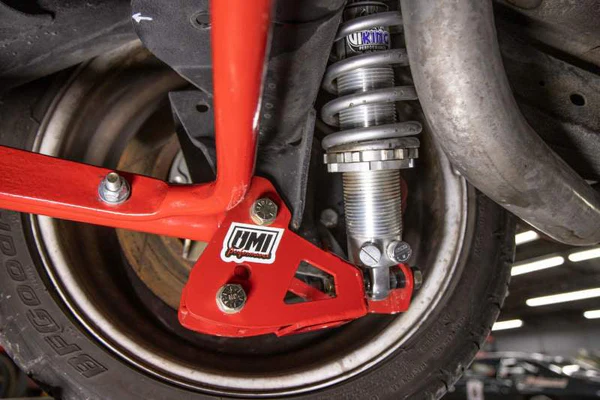
The term coilover is short for coil spring over shock. It describes a suspension setup where the coil spring is mounted directly around the shock absorber, forming a single integrated unit. This is different from many factory suspension systems where the spring and shock are separate components or mounted in different locations.
The shock absorber inside the coilover controls how quickly the suspension compresses and rebounds when you hit a bump or go around a corner. The coil spring supports the weight of the vehicle and absorbs energy from road impacts. Together, they work to keep the tires in contact with the road, minimize body roll during cornering, and provide a controlled, predictable ride.
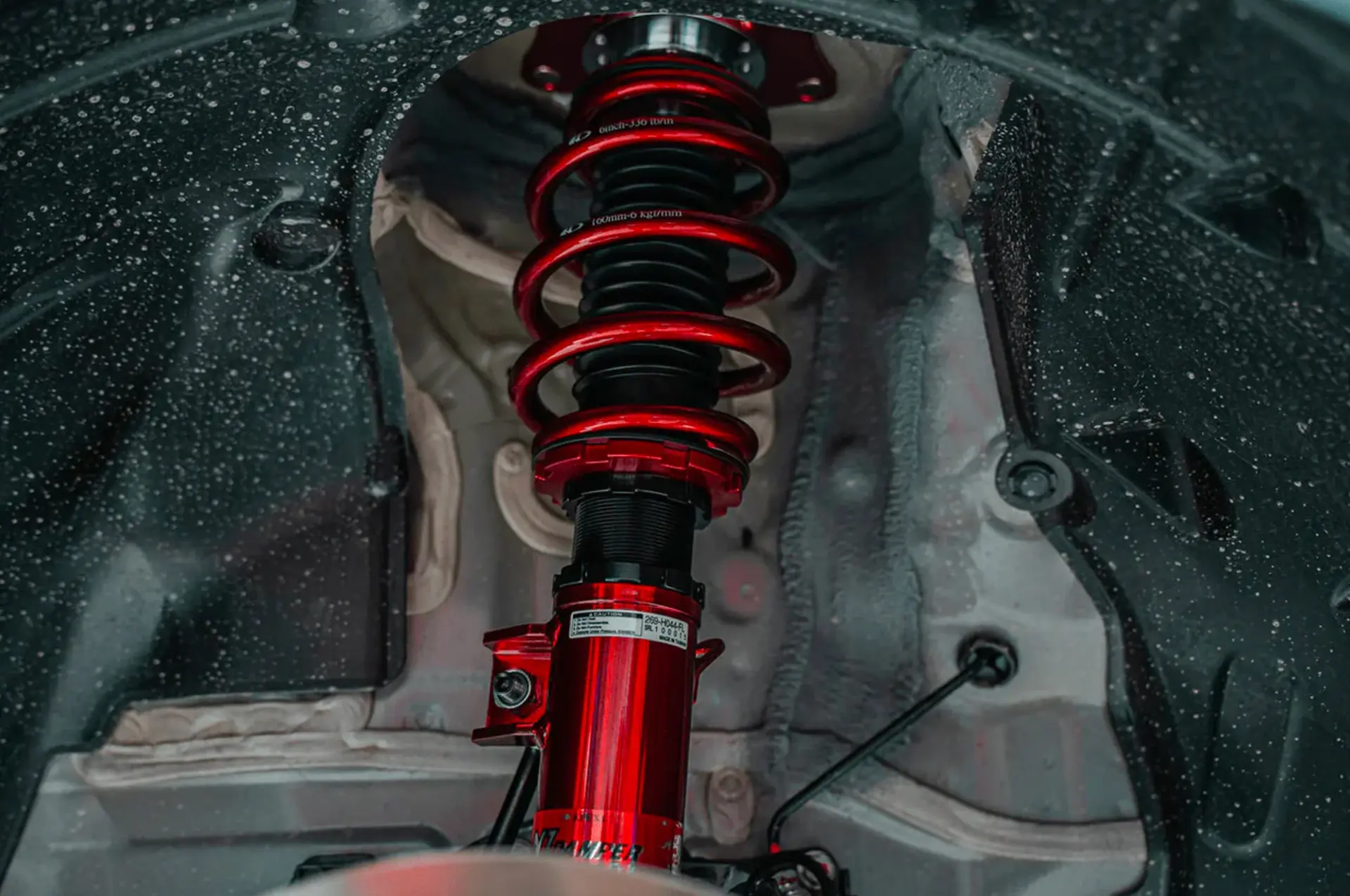
What makes coilovers special is their adjustability. Most coilover systems allow you to change the ride height by adjusting threaded sleeves on the shock body. Higher-end coilovers also let you adjust damping settings, which controls how stiff or soft the suspension feels. Some even allow you to adjust compression and rebound independently, giving you fine control over how the car behaves on different types of roads or driving conditions.
Types of Coilover Springs: Linear vs Progressive
Coilover springs come in two main types: linear and progressive. The type of spring affects how the suspension responds to load and road conditions.
Linear Springs
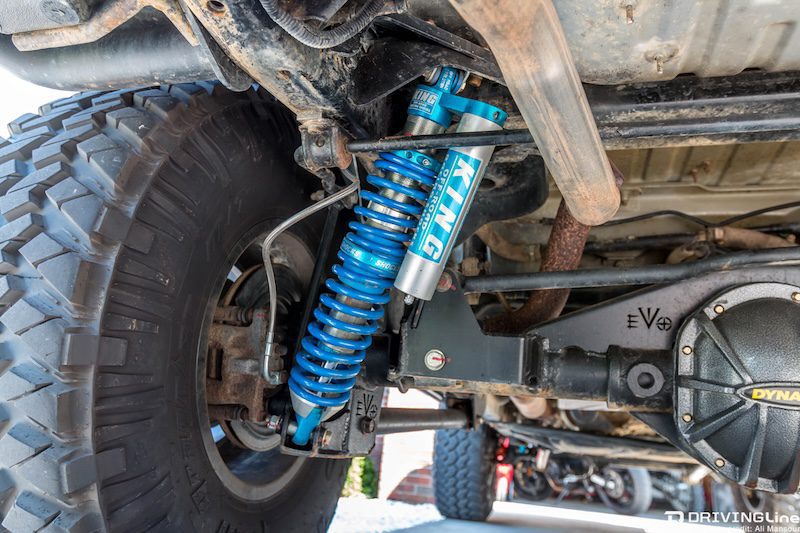
Linear springs have a consistent spring rate, meaning the amount of force required to compress the spring remains the same throughout its travel. For example, if a spring has a rate of 500 pounds per inch, it takes 500 pounds of force to compress it one inch, 1,000 pounds to compress it two inches, and so on.
Linear springs offer predictable, consistent performance, which is why they are favored in racing and performance applications where precise suspension tuning is important. The downside is that they can feel harsh over small bumps because the spring does not soften up under light loads.
Progressive Springs
Progressive springs have a variable spring rate. The coils are spaced unevenly or vary in diameter, so the spring gets stiffer as it compresses. Under light loads, the spring is soft and compliant, which helps absorb small bumps. Under heavier loads, like hard cornering or hitting a large pothole, the spring stiffens up to prevent bottoming out.
Progressive springs are often used in street-oriented coilovers because they offer a better balance between comfort and performance. They are more forgiving on rough roads while still providing enough support during aggressive driving.
Advantages of Coilovers
Coilovers offer several benefits over factory suspension systems, especially for drivers who want more control over how their car handles and looks.
Better Handling and Cornering
One of the main reasons people install coilovers is to improve handling. A well-tuned coilover setup reduces body roll during cornering, keeps the tires planted on the road, and provides more predictable steering response. This is especially noticeable on twisty roads or racetracks where precision and control matter.
Factory suspension is designed for comfort and compliance, which means it allows more body movement. Coilovers tighten up that movement and give you a more connected, responsive feel behind the wheel.
Adjustable Ride Height
Coilovers let you raise or lower your car to suit your preferences. Want a slammed look for car shows? You can drop the car several inches. Need more ground clearance for daily driving or light off-road use? You can raise it back up. This adjustability is something you do not get with most lowering springs or stock suspension.
Lowering the car also lowers the center of gravity, which improves handling and reduces body roll. But be careful not to go too low, as excessive lowering can cause suspension geometry issues, tire rubbing, and reduced ride quality.
Customization and Tunability
High-end coilovers offer damping adjustability, allowing you to fine-tune how the suspension behaves. You can dial in a softer setting for daily driving and switch to a stiffer setting for spirited driving or track days. This level of customization is impossible with stock suspension or basic lowering springs.
Prestige and Enthusiast Appeal
In the car community, coilovers are seen as a serious performance upgrade. They signal that the owner is invested in the handling and performance of their vehicle, not just its appearance. Quality coilover brands like KW, Bilstein, Ohlins, and BC Racing are well-respected and add credibility to a build.
Disadvantages of Coilovers
Coilovers are not without their downsides. Before you decide to install them, you need to understand the trade-offs.
Stiffer, Harsher Ride
The most common complaint about coilovers is that they make the ride harsher. Because they are designed to reduce body movement and improve handling, they sacrifice some of the cushioning and compliance that makes a car comfortable on rough roads.
This is especially true with budget coilovers or coilovers that are set up too stiff. If you daily drive your car on pothole-filled city streets or long highway commutes, a stiff coilover setup can become tiring and uncomfortable over time.
That said, high-quality coilovers with proper damping adjustability can be tuned to provide a surprisingly comfortable ride while still offering better handling than stock suspension.
Fitment and Clearance Issues
Coilovers take up space, and depending on your vehicle and how low you set them, they can interfere with other components like sway bars, brake lines, or even the tires themselves. If the coilovers are not designed specifically for your vehicle or if the installation is done incorrectly, you can end up with rubbing, binding, or damage to the suspension components.
Lowering the car excessively can also cause the tires to rub against the fenders during turns or over bumps, which can wear down the sidewalls and create a safety hazard.
Risk of Failure With Cheap Coilovers
Not all coilovers are created equal. Budget coilovers from unknown brands often use low-quality materials, poor damping design, and inadequate construction. These cheap coilovers can fail prematurely, leak oil, or provide such poor ride quality that they are worse than the stock suspension they replaced.
Investing in a reputable brand with good reviews and a solid warranty is essential if you want coilovers that will last and perform well.
How Long Do Coilovers Last?
When properly installed and maintained, quality coilovers can last 100,000 to 150,000 miles or more. Some high-end coilovers are rebuildable, meaning you can replace seals, oil, and internal components to extend their lifespan even further.
That said, coilovers are subject to wear just like any other suspension component. Common issues that can shorten their lifespan include:
- Oil leaks: Worn seals can allow damping oil to leak out, which reduces the shock’s ability to control spring oscillations. If you notice oil on the shock body, the seals need to be replaced or the coilover needs to be rebuilt.
- Weak or broken springs: Springs can sag or break over time, especially if the coilovers are subjected to harsh driving conditions or excessive loads.
- Worn bushings and mounts: The mounting hardware and bushings that attach the coilovers to the car can wear out and cause clunking, squeaking, or poor handling.
Regular inspections and addressing issues early can help maximize the lifespan of your coilovers.
Do Coilovers Improve Ride Quality?
This is a question with no simple yes or no answer. Coilovers are designed primarily to improve handling, not comfort. In most cases, they will make the ride firmer than stock, which some people interpret as worse ride quality.
However, high-quality coilovers with adjustable damping can be tuned to provide a comfortable ride while still offering better handling than stock suspension. The key is choosing the right coilovers for your needs and taking the time to set them up correctly.
If your priority is a plush, isolated ride, coilovers are probably not the best choice. But if you want a more connected, controlled driving experience and are willing to accept some firmness, good coilovers can actually improve the overall driving experience.
How Much Do Coilovers Cost?
Coilover prices vary widely depending on the brand, features, and quality. Here is a general breakdown:
| Type | Price Range |
|---|---|
| Budget coilovers | $500 to $1,000 |
| Mid-range coilovers | $1,000 to $2,500 |
| High-end coilovers | $2,500 to $5,000+ |
| Professional installation | $300 to $800 |
| Alignment after installation | $100 to $200 |
Budget coilovers can be tempting, but they often sacrifice quality, durability, and ride comfort. Mid-range coilovers from reputable brands offer the best balance of performance, adjustability, and longevity for most enthusiasts. High-end coilovers are for serious track use or builds where every detail matters.
Can Coilovers Replace Shocks or Struts?
Yes, coilovers can replace both shocks and struts. In fact, that is exactly what they are designed to do. A coilover is a complete suspension unit that combines the shock absorber and spring into one assembly, so it replaces both components at once.
On vehicles that use struts, the coilover replaces the entire strut assembly. On vehicles that use separate shocks and springs, the coilover replaces both. This makes installation straightforward in most cases, though some vehicles may require additional modifications or mounting hardware.
Are Coilovers Worth It?
Whether coilovers are worth it depends entirely on what you want from your car. If you are looking for better handling, adjustability, and the ability to fine-tune your suspension setup, coilovers are absolutely worth the investment. They transform how a car drives, especially on twisty roads or at the track.
But if you are primarily concerned with comfort, daily drivability, and a smooth ride, coilovers may not be the best choice unless you invest in high-quality, adjustable units and take the time to dial them in properly.
Do your research, choose a reputable brand, have them installed by a professional, and get a proper alignment afterward. Done right, coilovers can be one of the most rewarding upgrades you make to your vehicle.