
You are driving down the highway when you hit a bump. Instead of a single jolt that quickly settles, your car continues bouncing several times before stabilizing. Or maybe you have noticed your vehicle feels floaty and vague through corners, like you are driving a boat instead of a car. These are classic signs that your shocks or struts are worn out and need replacement.
Shocks and struts are among the most overlooked maintenance items on modern vehicles. People obsess over oil changes and tire rotations but completely ignore their suspension components until something catastrophic happens. The problem is that worn shocks and struts degrade so gradually that many drivers do not notice the deterioration until the components are completely shot. By that point, handling, braking, and safety have been compromised for thousands of miles.
In this comprehensive guide, I am going to walk you through everything you need to know about shocks and struts. We will cover what they actually do, how to tell when they are failing, what happens when you drive with worn suspension, how long they should last, and how to maintain them properly. By the end, you will understand why these components are critical to your safety and why ignoring them is a terrible idea.
What Shocks and Struts Actually Do
Before we talk about failure symptoms and replacement, you need to understand what shocks and struts do and why they matter so much.
Your car’s suspension system has several jobs. It needs to absorb impacts from road irregularities so you do not feel every bump. It needs to keep the tires in contact with the road as much as possible for traction and control. It needs to manage body movement during acceleration, braking, and cornering. And it needs to do all this while providing acceptable ride comfort.
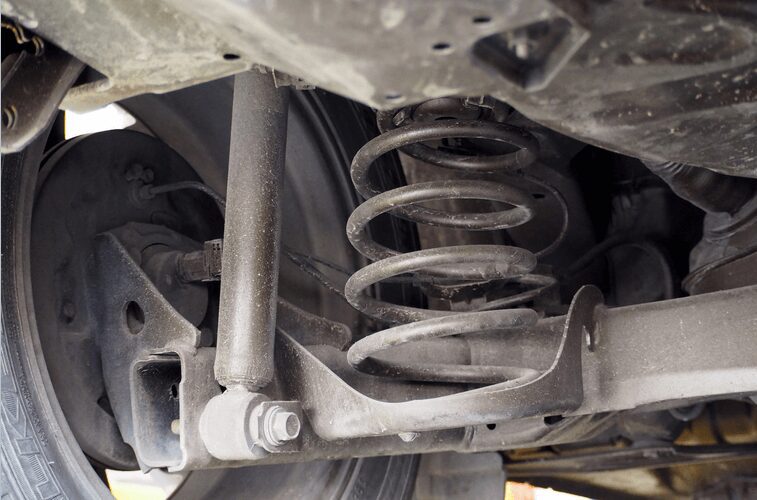
Springs are what actually support the vehicle’s weight and absorb energy from bumps. When a wheel hits a bump, the spring compresses to absorb the impact, then rebounds. Without any damping, the spring would continue bouncing up and down for several cycles after each bump, like a pogo stick. This is where shocks and struts come in.
Shocks and struts are dampers. They control the spring’s motion by converting the kinetic energy of the bouncing spring into heat, which dissipates harmlessly. This damping action stops the bouncing quickly, keeping the tire in contact with the road and preventing excessive body movement.
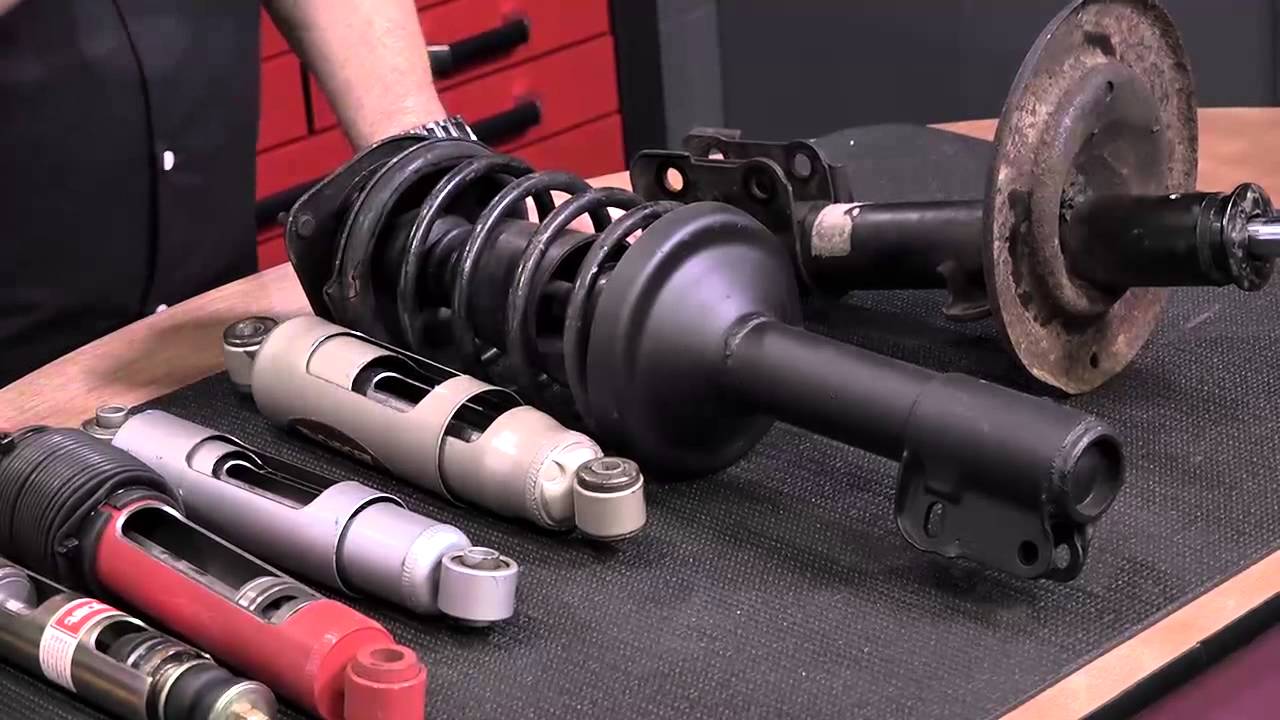
The difference between shocks and struts is structural. Shocks are standalone components that attach to the suspension and frame to dampen spring movement. Struts are integrated into the suspension structure itself, serving both as a damper and as a structural component that supports the vehicle’s weight and provides a mounting point for the spring. Struts are more compact and lighter than separate shock and spring assemblies, which is why most modern vehicles use struts on at least the front suspension.
Inside a shock or strut is hydraulic fluid and a piston with valves. As the suspension moves up and down, the piston moves through the fluid. The valves control how quickly the fluid can flow past the piston, creating resistance that damps the spring’s motion. The specific valve design determines the damping characteristics, how firm or soft the ride feels, how well the suspension controls body motion, and how the damping varies with suspension speed.
How to Tell When Your Shocks or Struts Are Failing
Shocks and struts wear gradually, which makes it difficult to notice the deterioration if you drive the car every day. The decline is so slow that your perception of normal adjusts over time. This is why many people drive around on completely worn suspension without realizing how bad it has gotten until they drive a vehicle with fresh shocks.
Here are the warning signs that your shocks or struts need replacement.
Excessive Bouncing After Bumps
This is the classic symptom. Hit a bump and the car bounces two, three, or more times before settling. Worn dampers cannot control the spring oscillation, so the bouncing continues. A car with good shocks should hit a bump, compress once, rebound once, and settle. If it keeps bouncing, the dampers are worn.
You can test this in your driveway. Push down hard on one corner of the car and release. The car should bounce back up and settle. If it bounces more than once or twice, that shock or strut is worn. Test all four corners and compare.
Nose Dive During Braking
When you brake, weight transfers to the front of the vehicle, compressing the front suspension. Good shocks or struts control this compression and prevent excessive nose dive. Worn front dampers allow the nose to dive dramatically, sometimes enough that the bumper seems like it might hit the ground on hard stops.
This is not just annoying. Excessive nose dive affects braking performance and increases stopping distances because the rear tires lose contact pressure with the road, reducing their contribution to braking.
Squat During Acceleration
The opposite of nose dive. When you accelerate hard, weight transfers to the rear, compressing the rear suspension. Worn rear shocks allow excessive squat where the rear end drops and the front end lifts. This reduces traction from the front tires and can make steering feel vague during acceleration.
Body Roll in Corners
All cars lean to the outside of a turn to some degree. This is normal body roll from weight transfer. But worn shocks and struts allow excessive body roll where the car leans dramatically and feels like it might tip over. The car wallows through corners rather than feeling planted and controlled.
Excessive body roll is not just uncomfortable. It compromises handling and can lead to loss of control, especially in emergency maneuvers where you need to change direction quickly.
Floating or Wandering Feel
A car with worn shocks feels disconnected from the road, like it is floating rather than tracking precisely. On the highway, the car wanders within the lane rather than holding a straight line. It feels vague and requires constant steering corrections. This floating sensation is the suspension oscillating without proper damping control.
Harsh Ride Over Small Bumps
Counterintuitively, worn shocks can actually make the ride harsher over small bumps even though they allow excessive bouncing over large bumps. This happens because the worn dampers cannot properly control the suspension movement, so instead of smoothly absorbing small irregularities, the suspension either bottoms out harshly or transmits impacts directly to the chassis.
Uneven or Cupped Tire Wear
Worn shocks allow the tire to bounce and lose contact with the road repeatedly. This causes cupping or scalloping wear patterns where you can see and feel regular dips around the tire tread. If you run your hand around the tire circumference, you will feel high and low spots instead of a smooth surface.
This wear pattern destroys tires prematurely and creates road noise. If you see cupped tires, check the shocks because they are almost certainly worn.
Fluid Leaks
Shocks and struts are sealed hydraulic units. If you see oily fluid leaking from a shock body or strut, the seal has failed and the damper is no longer working properly. Leaking dampers need replacement immediately. Once the hydraulic fluid leaks out, there is no damping action happening at all.
A light film of oil on the shock body might be normal weeping and not a concern. But active dripping or heavy wetness indicates a failed seal that requires replacement.
Noise
Worn shocks and struts can create various noises. Clunking over bumps might indicate worn mounting bushings or hardware. Squeaking might indicate dry or worn bushings. Groaning during suspension movement can come from a worn strut mount bearing. These noises tell you something in the suspension needs attention.
Longer Stopping Distances
This is the most dangerous consequence of worn shocks and is not obvious until you actually measure it. Worn shocks can increase your stopping distance by 10 to 20 percent or more because they cannot keep the tires in firm contact with the pavement during braking. The tires skip and bounce rather than maintaining constant grip, reducing braking effectiveness.
Testing has shown that a car with 50 percent worn shocks can take an extra 10 to 15 feet to stop from 60 miles per hour compared to the same car with new shocks. That extra distance can be the difference between stopping safely and rear-ending someone.
The Real Dangers of Driving on Worn Shocks and Struts
Some people might think worn shocks just make the ride a bit bouncy and are not a big deal. This attitude is dangerously wrong. Worn suspension components seriously compromise vehicle safety in multiple ways.
Reduced Control in Emergencies
Emergency maneuvers require precise vehicle control. Swerving to avoid an obstacle, making a sudden lane change, correcting a skid, all of these depend on the suspension keeping the tires planted on the road and the chassis stable. Worn shocks allow excessive body movement and tire bounce that make emergency maneuvers unpredictable and dangerous.
Testing shows that vehicles with worn shocks are significantly more likely to lose control during emergency maneuvers compared to vehicles with fresh dampers. The car that might navigate safely through an emergency situation with good shocks could spin out or roll over with worn shocks.
Increased Risk of Hydroplaning
Hydroplaning happens when a layer of water builds up between the tires and road surface, lifting the tire and causing complete loss of traction. Worn shocks increase hydroplaning risk because they allow the tire to bounce and skip on the water rather than maintaining firm contact that pushes water out of the way.
A car with good shocks might safely drive through standing water that would cause a car with worn shocks to hydroplane and lose control.
Compromised Headlight Aim
Headlights are aimed to illuminate the road ahead properly. Worn shocks allow excessive body movement that constantly changes headlight aim as the car bounces and pitches. This reduces nighttime visibility and can blind oncoming drivers as your headlights point up when hitting bumps.
Poor headlight aim from suspension movement makes night driving more dangerous for you and everyone else on the road.
Accelerated Wear of Other Components
Worn shocks do not just destroy tires through cupping. They also accelerate wear on ball joints, bushings, wheel bearings, and other suspension components because these parts experience higher impact loads without proper damping. Driving on worn shocks can turn a simple shock replacement into a complete suspension overhaul as other components fail from the abuse.
How Long Should Shocks and Struts Last?
This is one of those questions where the answer is complicated because it depends on so many variables.
Most manufacturers recommend inspecting shocks and struts around 50,000 miles and replacing them somewhere between 50,000 and 100,000 miles. But this is a very general guideline that might not apply to your specific situation.
Shocks and struts wear based on work done, not just miles driven. A car driven 50,000 miles on smooth highways will have less shock wear than a car driven 30,000 miles on rough potholed city streets. Operating conditions matter enormously.
Factors that accelerate shock and strut wear include rough roads with potholes and broken pavement, frequent driving on unpaved roads, heavy loads or towing, aggressive driving with hard acceleration and braking, extreme temperatures, and salt exposure from winter roads or coastal environments.
A delivery truck driven in New York City will need shocks far more frequently than a highway cruiser in Arizona. There is no universal mileage interval that works for everyone.
The practical advice is to have your shocks and struts inspected by a qualified technician around 50,000 miles and then annually after that. They can assess the actual condition rather than just going by mileage. Replace them when testing shows significant wear or when symptoms become noticeable, whichever comes first.
How Mechanics Test Shock and Strut Condition
Professional shops have equipment to objectively measure shock and strut performance. Understanding these tests helps you make informed decisions about replacement.
Shock Dyno Testing
The most accurate test uses a shock dynamometer that measures the actual damping force the shock produces at various speeds. This gives objective data about whether the shock is performing to specification. Most shops do not have this equipment because it is expensive and removing shocks for testing is time-consuming.
Wheel Suspension Tester
Many shops have suspension testing equipment that shakes each wheel at a specific frequency and measures how well the tire maintains contact with the vibrating platform. The test produces a percentage score for each wheel. Scores above 60 percent are considered good. Scores between 20 and 60 percent are marginal. Scores below 20 percent indicate worn shocks that need replacement.
This test also shows imbalance between sides. If the left front scores 70 percent and the right front scores 25 percent, that huge difference indicates the right shock is worn while the left is still good. This matters because shocks should be replaced in pairs on the same axle for balanced handling.
Visual Inspection
Technicians inspect shocks and struts for physical damage, leaking fluid, and worn mounting hardware. They check for play in strut mounts and worn bushings. They look at tires for cupping patterns that indicate shock problems. This visual inspection catches obvious failures but cannot detect partial wear that testing equipment would reveal.
Bounce Test
The old-fashioned bounce test where you push down on a corner and watch how the car rebounds gives a rough indication of shock condition. It is not scientific and can miss partial wear, but it catches completely failed shocks. If the car bounces more than once or twice after you release it, that shock is done.
Replacing Shocks and Struts: What You Need to Know
When the time comes for replacement, understanding what is involved helps you make good decisions.
Replace in Pairs
Always replace shocks or struts in pairs on the same axle. Never replace just one side. Having one new shock and one worn shock on the same axle creates handling imbalance that can be dangerous. The car will pull toward the side with more damping and behave unpredictably.
You can replace just the front pair or just the rear pair if only one axle is worn. But both sides of that axle must be replaced together.
Consider Replacing All Four
If one axle is worn enough to need replacement, the other axle is probably not far behind. Many people choose to replace all four shocks or struts at once to avoid paying for labor twice when the other end fails shortly after.
Having all four corners fresh also ensures balanced handling front and rear. The decision depends on the condition of all four corners, your budget, and how long you plan to keep the vehicle.
Replace Related Components
When replacing struts, many mechanics recommend replacing the strut mounts and bearings at the same time. These components wear from the same mileage and conditions that wore out the struts. Replacing them with the struts saves labor because the struts have to come out anyway to access the mounts.
Worn strut mounts create clunking noises and allow the strut to move excessively. Replacing them with new struts ensures quiet, proper operation.
Similarly, if shock mounting bushings are worn or damaged, replace them during the shock installation.
Get an Alignment After Strut Replacement
Replacing struts disturbs suspension geometry and alignment settings. Always get a four-wheel alignment after replacing struts. The alignment ensures the vehicle tracks straight and the tires wear evenly.
Shock replacement typically does not require alignment because shocks are not structural and their replacement does not change suspension geometry. But if you are replacing struts, budget for an alignment as part of the job.
Quality Matters
Shocks and struts are available in a wide range of quality and price. The cheapest economy shocks might cost 30 dollars each. Premium units can exceed 200 dollars each. There is a reason for the price difference.
Quality shocks use better materials, tighter manufacturing tolerances, and more sophisticated valve designs. They provide better control, last longer, and maintain their performance over their service life. Cheap shocks might work okay when new but degrade rapidly and need replacement sooner.
For most drivers, mid-range quality shocks from reputable manufacturers offer the best value. You do not need to buy the most expensive options, but avoid the cheapest bargain-bin units.
The Bottom Line on Shocks and Struts
Shocks and struts are not glamorous. They do not make your car faster or improve fuel economy. They sit quietly doing their job without drawing attention to themselves. This makes them easy to ignore, but ignoring them is a mistake with serious safety consequences.
Worn shocks and struts compromise your ability to control the vehicle, increase stopping distances, accelerate tire and suspension wear, and make driving less safe in countless small ways that add up to real danger. The gradual degradation means you might not realize how bad they have gotten until you drive a vehicle with fresh suspension and experience the dramatic difference.
Have your shocks and struts inspected regularly starting around 50,000 miles. Pay attention to symptoms like excessive bouncing, nose dive, body roll, and floating sensations. Get them tested objectively rather than relying on subjective feel because you adapt to gradual changes. Replace them in pairs when testing shows significant wear or symptoms become noticeable. Use quality parts and have related components like strut mounts replaced at the same time to avoid repeat jobs. Get an alignment after strut replacement. These practices keep your suspension functioning properly and your vehicle safe. The few hundred dollars you spend on shock or strut replacement is trivial compared to the safety and handling benefits you receive. Your suspension connects your vehicle to the road and determines how it responds to your inputs and road conditions. Keep it in good condition, and it will keep you safe for thousands of miles to come.