
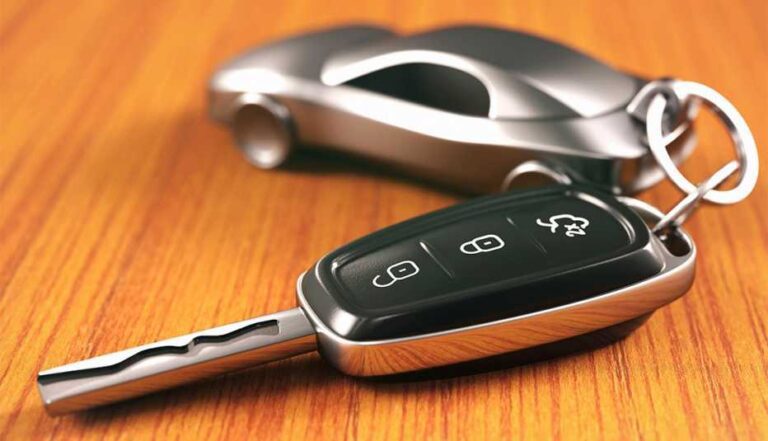
Losing a car key starts as a minor inconvenience and can escalate into a stressful, expensive ordeal surprisingly fast, particularly if you do not know what your options are. And of course, there is that classic added frustration: you go through the entire process of getting a replacement, and two days later you find the original sitting in the inside pocket of a jacket you wore last week.
Whether your key is lost, broken, bent, or simply worn to the point where it no longer works reliably, this guide walks you through exactly what to do, from the initial search all the way through getting back on the road without paying more than you need to.
Step One: Search Thoroughly Before Assuming the Worst
Before spending money on a replacement, take a calm and systematic approach to finding the key. Panic is the enemy here. It narrows your thinking and causes you to overlook the obvious. Most lost keys turn up within a reasonable search radius of where they were last used.
Mentally retrace your steps from the last moment you definitely had the key. Where did you go? What did you carry? Which jacket or bag did you have with you? Check every pocket of every item of clothing you have worn in the past 24 to 48 hours, including gym bags, coat pockets, and the bottom of handbags where keys often sink below other items.
If you were in a public place, a shopping centre, hotel, restaurant, or office building, contact their lost property or information desk. Honest people hand in found keys far more often than you might think, and a public announcement in a building can produce results surprisingly quickly. Leave your contact details and check back if you do not hear anything immediately.
It is also worth posting in local social media groups for the area where you lost the key. Include the make and model of the car, the approximate time and location, and your contact details. Keep the details specific enough to be useful but vague enough that anyone claiming to have found it can be verified. Do not describe the key fob colour and shape in your post, so that you can confirm a genuine finder by asking them to describe it.
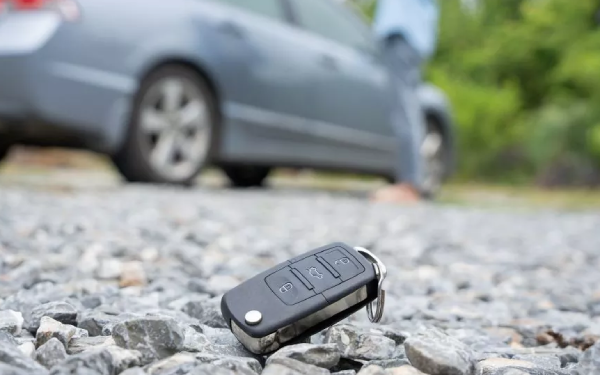
Know What Type of Key You Have Before Doing Anything Else
The replacement process and the cost vary enormously depending on what type of key your vehicle uses. Before calling anyone or ordering anything, it helps to know which category your key falls into. That information shapes every decision that follows.
Basic Mechanical Keys
These are the simple cut metal keys found on older vehicles, typically pre-1990s and some budget vehicles from the early 2000s. There is no electronic component. The key operates purely mechanically, physically turning the ignition barrel and door locks. These are the easiest and cheapest keys to replace because any competent locksmith can cut a duplicate from the key code or by taking an impression from the lock barrel.
Transponder Keys
The vast majority of cars manufactured from the mid-1990s onward use transponder keys. These look like a basic mechanical key but contain a small electronic chip embedded in the plastic head. When the key is inserted into the ignition, the car’s immobilizer sends a radio frequency signal to the chip. The chip responds with a unique code. If the code matches what the ECU expects, the immobilizer disarms and the engine is allowed to start.
If the chip is absent, shielded, damaged, or programmed with the wrong code, the immobilizer stays active. The engine will not start regardless of whether the mechanical cut is correct. You can open the door, but the car will not move.
A quick way to check whether your key has a chip: wrap the key head tightly in several layers of aluminium foil. The foil blocks the chip’s radio signal. Try to start the engine. If it does not start with the foil but starts normally without it, your key contains a transponder chip.
Remote Key Fobs
Many vehicles use a key that combines a traditional mechanical blade with a remote control for locking and unlocking the doors. These contain both a transponder chip and the remote control circuitry. Some manufacturers fold the mechanical blade into the fob body for a cleaner design. All of the transponder key considerations apply here, with the added complexity of the remote electronics.
Keyless Entry and Push-Button Start Systems
Modern premium and many mainstream vehicles now use a proximity key, sometimes called a smart key, that does not physically enter any lock. The car detects the fob’s presence through a short-range radio signal when it is within a metre or two of the door or start button. You touch the door handle to unlock and press a button on the dashboard to start the engine without ever removing the fob from your pocket.
These systems are convenient but represent the most complex and expensive key replacement scenario. The programming required to pair a new fob to the vehicle’s systems can only be done with specialist software, and in many cases requires the vehicle to be present at a dealer or equipped workshop.
| Key Type | Common Era | Replacement Complexity | Typical Cost Range |
|---|---|---|---|
| Basic mechanical key | Pre-1990s, some early 2000s | Low | $5 to $50 |
| Transponder key | Mid-1990s onward | Moderate | $50 to $250 |
| Remote key fob | Late 1990s onward | Moderate to high | $100 to $400 |
| Smart key / proximity fob | 2005 onward, widely adopted after 2010 | High | $200 to $600+ |
Your Four Options for Getting a Replacement Key
Option 1: Go Through the Car Dealer
This is the most secure route and is strongly recommended for any key involving chip programming or push-button start systems. It is also the most expensive option. Here is what the process typically involves:
- Contact the relevant brand dealership and report the lost key. Have the vehicle’s make, model, year of manufacture, and VIN ready. The VIN is usually stamped on a plate visible through the windscreen at the base of the driver’s side, or printed on the vehicle registration document. In many cases, the VIN alone is sufficient to order a replacement key.
- Provide proof of ownership. The dealership will require documentation confirming you are the registered owner before cutting or programming any key. This typically means your vehicle registration certificate and photo ID. This step exists for legitimate security reasons. A dealership that hands keys to anyone claiming to own a vehicle would effectively be providing a theft service.
- If you cannot drive the car because you have lost the only key, you will need to arrange for it to be transported to the dealership by a towing company.
- For chip-coded keys, if you have the special code card issued at the time of purchase, which carries the immobilizer and radio codes, the process is significantly faster. Without that card, the dealership must recover the code from the vehicle’s immobilizer system, which is a lengthier and more expensive process. Always keep that code card in a safe place at home, never in the car.
Dealership key replacement for a modern transponder or smart key can cost anywhere from $200 to over $500 depending on the vehicle. Wait times vary. Some keys can be cut and programmed on the same day, while others, particularly for less common models, may take several days for the part to arrive.
Option 2: Use an Automotive Locksmith
For basic mechanical keys and for many transponder key situations, a qualified automotive locksmith is an excellent alternative to the dealership. They can often come to your location, cut a mechanical key from the lock barrel or from the vehicle’s key code, and in many cases program a new transponder chip to the vehicle’s immobilizer system on-site.
Modern automotive locksmiths use specialised programming software covering a wide range of makes and models. The process for a transponder key replacement typically includes:
- Pairing the new key’s chip to the vehicle’s electronic immobilizer system
- Removing the lost key’s code from the immobilizer memory so the lost key can no longer start the car
- Recoding the immobilizer with the new key’s unique identifier
- Clearing any immobilizer-related fault codes from the ECU
The advantages over a dealership are lower cost and faster turnaround. A mobile automotive locksmith can often complete the job within an hour at your location. The disadvantage is that coverage of very new vehicles or obscure models can be limited. For the most current smart key systems, only the manufacturer’s dealer may have the necessary programming tools.
When choosing a locksmith, verify they are specifically qualified in automotive work and check reviews or recommendations. Key programming is specialist work. A general locksmith who primarily deals with house locks may not have the automotive software and tools needed for chip key programming.
Option 3: Specialist Key Replacement Companies
A growing category of businesses sits between the dealership and the traditional locksmith: companies that specialise specifically in vehicle key duplication and replacement. They typically hold a wider stock of key blanks than a general locksmith and invest in comprehensive programming software. For common vehicle models, they can often produce and program a replacement key more quickly and at lower cost than a dealership.
The same ownership verification requirements apply. Any reputable company will ask for proof of ownership before cutting or programming a key.
Option 4: Online Key Blank Purchase and Home Programming
For some vehicle models, aftermarket key blanks and fobs can be purchased online at significantly lower cost than OEM parts. Depending on the vehicle, it may also be possible to program the key to the car without specialist equipment using the vehicle’s own on-board programming procedure.
Many manufacturers allow owners to program remote fob buttons, lock, unlock, and panic, themselves by following a specific sequence of ignition on and off cycles and button presses. This procedure is usually in the owner’s manual or can be found by searching your specific vehicle make, model, and year.
However, programming the transponder chip itself, the part that communicates with the immobilizer, typically cannot be done without a programming tool. The self-programming procedures available for most cars only cover the remote control functions, not the immobilizer pairing. For chip programming, professional equipment is generally required regardless of the vehicle’s age.
If you go the online purchase route, be meticulous about compatibility. Key blanks and fobs are vehicle-specific. The same visual appearance does not mean the same chip type, frequency, or compatibility. Match the part number precisely to your vehicle’s year, model, and trim level before ordering.
What to Do When You Are Stranded Without a Key
If you have lost your only key and cannot access or start the car, your immediate options are:
- Call a mobile automotive locksmith. Many operate around the clock and can come to your location, open the vehicle, and in many cases arrange key programming on-site.
- Contact your breakdown or roadside assistance provider. Many breakdown memberships include locksmith call-out as part of their service, or can refer you to a trusted provider. Check your membership benefits before paying separately for a locksmith.
- Arrange towing to a dealer or specialist if no mobile solution is available for your specific vehicle type. This adds cost but may be unavoidable for certain smart key systems.
- Contact your insurance company. Some comprehensive motor insurance policies include cover for lost keys, which may offset the cost of replacement. Check your policy documents or call your insurer. You may be paying for a benefit you are not currently aware of.
The Security Step Most People Skip After Losing a Key
If you lose a key and are not certain whether it was genuinely lost or potentially taken, there is an important step beyond simply getting a replacement key cut. For transponder and smart key systems, the lost key’s code should be removed from the immobilizer system and the system recoded to recognise only the replacement keys.
This step is standard practice for any professional locksmith or dealer performing a replacement after a key is lost. They will remove the old key’s credentials from the system as part of the process. If you use a less thorough provider who does not mention this step, ask specifically whether it is being done.
A lost key that remains registered in the immobilizer system could theoretically still be used to start the vehicle if someone found it and knew where the car was parked. Removing the old code from the system closes that possibility completely.
Always Get a Spare Key Made Immediately After Replacement
The most practical lesson from any key loss experience is this: once you have resolved the immediate problem, get a spare key made and store it somewhere safe at home. Not in the car. Not on the same key ring. Somewhere accessible to you but not to anyone who might access the vehicle.
Getting a spare cut and programmed at the same time as a replacement is always cheaper than treating each as a separate job. The locksmith or dealer has the vehicle’s information in front of them and the programming tools already connected. Adding a second key at that point costs a fraction of what a completely separate call-out would later.
For vehicles with push-button start systems and proximity fobs, a spare is especially important. These keys are expensive to replace, often require dealer programming, and may involve waiting days for a part to arrive. Having a spare eliminates all of that disruption at exactly the moment when you can least afford it.
Losing a car key is solvable. Know your key type, keep your vehicle documentation accessible, and the next time it happens, because for most drivers it will happen at some point, you will know exactly what to do and who to call without the panic that makes the situation feel worse than it is.