
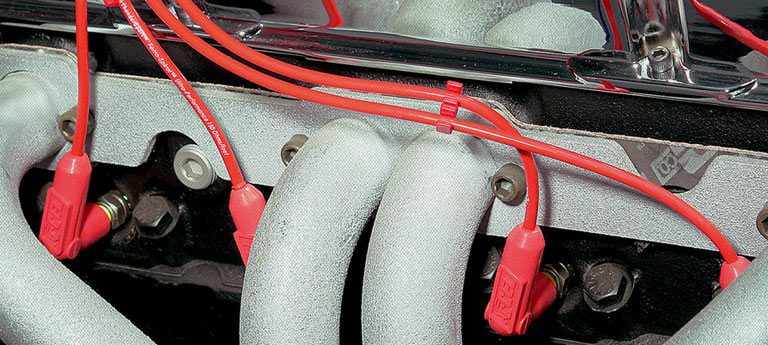
Spark plug wires are one of those components that never get much attention until something goes wrong. They sit quietly in the engine bay, doing their job without complaint, until they do not. When the insulation cracks, the conductors wear, or the connections corrode, the effects show up in ways that can be frustratingly difficult to pin down: rough idling, poor fuel economy, hesitation under acceleration, and an engine that just does not feel quite right.
Understanding what spark plug wires actually do, how long they last, and how to assess whether they need replacing can save you from unnecessary parts changes and missed maintenance that leads to bigger problems down the road.
Spark Plugs and Glow Plugs: What Is the Difference?
Before diving into the wires themselves, it is worth clarifying something that confuses a lot of drivers: there are actually two completely different types of ignition plugs, used in two completely different types of engines.
Spark Plugs (Petrol Engines)
Spark plugs are active throughout the entire operation of a petrol engine. On every piston cycle, in every cylinder, the spark plug fires, producing an electrical spark that ignites the compressed air-fuel mixture at precisely the right moment. This is the fundamental mechanism by which a petrol engine produces power. The spark plug wires (or in modern systems, the ignition coils) are what deliver the high-voltage electrical pulse to the spark plug for each firing event.
Glow Plugs (Diesel Engines)
Diesel engines operate on compression ignition, the air-fuel mixture ignites because of the extreme heat generated by compressing air to very high ratios, not from a spark. Glow plugs serve a completely different purpose. They are essentially small electric heating elements that preheat the combustion chamber to ensure the air temperature is high enough for reliable cold-start ignition.
A glow plug heats its tip to approximately 800 degrees Celsius (1,472 degrees Fahrenheit) during the preheating cycle, the period you observe when you turn the ignition key to the first position and wait for the dashboard glow plug warning light to extinguish before cranking. Once the engine has started and reached operating temperature, the glow plugs are typically no longer needed, making their active role limited to cold starts only.
This article focuses specifically on spark plug wires used in petrol ignition systems, the high-voltage cables that carry electrical energy from the ignition coil to each spark plug.
What Do Spark Plug Wires Actually Do?
Spark plug wires, also called high-tension leads or HT leads, carry the high-voltage electrical pulse generated by the ignition coil to the spark plug. We are not talking about a modest voltage here. The ignition coil steps up the 12-volt battery supply to anywhere from 15,000 to 45,000 volts depending on the system. That voltage needs to travel from the coil to the spark plug without leaking to ground through the wire’s insulation.
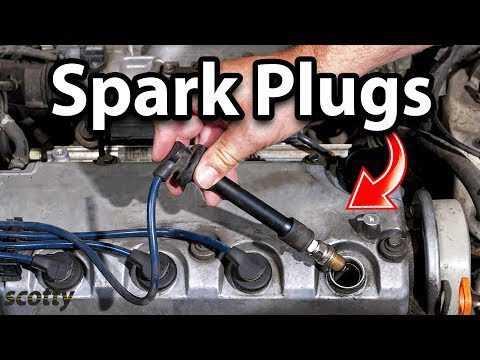
A spark plug wire consists of several layers:
- The conductor core: The material through which the electrical current travels. Materials vary, copper, carbon, and spiral-wound conductors are all used, each with different resistance characteristics and interference suppression properties.
- The insulation layers: Multiple layers of insulating material surround the conductor. These must withstand both the electrical stress of carrying tens of thousands of volts and the physical heat of the engine environment. Silicone is common in quality wires due to its superior heat resistance.
- The outer jacket: The outermost layer provides mechanical protection against abrasion, heat, and chemicals.
- The terminals: The metal connectors at each end, one fitting onto the ignition coil or distributor cap, the other onto the spark plug boot.
When a wire deteriorates, the insulation breaks down. High voltage begins to leak through the compromised insulation to the surrounding metal of the engine rather than travelling cleanly to the spark plug. The result is a weaker spark, inconsistent firing, or in severe cases, no spark at all in that cylinder.
Do All Cars Have Spark Plug Wires?
Not anymore. This is an important distinction to make before you start inspecting your engine bay looking for something that may not be there.
Older vehicles, generally pre-2000 and many early 2000s models, used a central ignition coil connected by individual high-tension leads to each spark plug through a distributor. This system required spark plug wires, and those wires were a regular maintenance item.
Most modern vehicles have moved to a coil-on-plug (COP) ignition system, where an individual ignition coil sits directly on top of each spark plug. There are no high-tension leads at all, the coil connects directly to the plug without a wire intermediary. These systems eliminate one of the traditional failure points of the ignition system and require no spark plug wire maintenance. If you have a modern vehicle with individual coils on each plug, what you need to maintain is the coils themselves and the spark plugs, not any wires.
Some vehicles use a hybrid arrangement, a single coil or coil pack connected by shorter wires to a coil near each cylinder. The maintenance requirements depend on the specific configuration.
Check your vehicle’s engine layout before assuming you have spark plug wires. If you can see individual coil units sitting directly on the valve cover over each cylinder, you have a COP system and no wires to worry about.
How Long Do Spark Plug Wires Last?
The general benchmark is approximately 50,000 km (around 31,000 miles) for standard copper-core spark plug wires. However, real-world service life varies significantly depending on wire quality, engine bay temperatures, maintenance history, and how the wires have been handled during previous service visits.
Several factors influence how quickly spark plug wires degrade:
- Heat exposure: Engine bays run hot, and spark plug wires are often routed close to exhaust components. Sustained high heat accelerates the breakdown of insulation materials. Silicone-jacketed wires handle heat significantly better than those using PVC or EPDM insulation.
- Wire quality: High-performance aftermarket wires with thicker insulation and spiral-wound conductors can outlast cheaper wires by a considerable margin, sometimes up to 65,000 km or more. Budget replacement wires may not even achieve the 50,000 km baseline.
- Physical handling: Spark plug wires that have been bent sharply, pulled off by gripping the wire rather than the boot, or run over sharp edges develop internal damage that accelerates failure.
- Ozone exposure: Ozone in the atmosphere attacks rubber and polymer materials over time. Wires exposed to high ozone concentrations (common near high-voltage electrical equipment) show cracking and brittleness earlier than typical.
- Coolant or oil contamination: Leaking gaskets that allow oil or coolant to contact the wires degrade the insulation jacket and can cause premature failure.
The practical recommendation is to inspect the wires at every major service interval and replace them when either visual inspection or resistance testing indicates deterioration, or at the 50,000 km mark as a preventive measure, whichever comes first.
Symptoms of Failing Spark Plug Wires
Spark plug wire failure rarely announces itself with a single dramatic symptom. More often, it is a gradual deterioration that shows up as a collection of running issues that seem minor individually but point clearly to an ignition problem when considered together.
Higher Than Normal Fuel Consumption
When a cylinder misfires due to a weak or absent spark, the air-fuel mixture is not fully burned. The ECU detects the reduction in power output and compensates by commanding more fuel. The result is increased consumption without any corresponding improvement in performance. If your fuel economy has dropped noticeably without an obvious explanation, ignition system condition, including the spark plug wires, is worth investigating.
Reduced Engine Power
Each misfiring cylinder contributes no power to the engine’s output. On a four-cylinder engine, a single misfiring cylinder represents 25 percent of total available power. The car will feel sluggish, particularly under load during acceleration or hill climbing. The power loss may be consistent or intermittent, depending on whether the wire failure is complete or partial.
Rough Idle and Engine “Suffocation”
At idle, engine speed is low and there is less electrical energy available to force current through a high-resistance wire. This makes idle the condition where deteriorating wires most often reveal themselves first. The engine may lope, stumble, or vibrate at idle in a way that smooths out partially when revved. This rough idle from ignition-related misfires is sometimes described as an engine “suffocating”, an appropriate description of an engine trying to run cleanly on an ignition system that is not delivering consistent sparks.
Engine Hesitation During Acceleration
Acceleration places the highest demand on the ignition system. Cylinder pressure rises significantly under load, requiring the spark plug to fire across a larger effective gap. This demands more voltage from the system. A wire that provides marginal performance at idle may fail completely under this additional demand, causing a stumble or flat spot during acceleration that may not be present during gentle driving.
Check Engine Light With Misfire Codes
The ECU monitors crankshaft rotation speed and detects small irregularities caused by cylinder misfires. When a pattern of misfires is detected, it logs a fault code and illuminates the check engine light. Misfire codes (typically P0301 through P0308 for specific cylinder misfires, or P0300 for random misfires) do not specifically identify spark plug wires as the cause, misfires can also result from faulty spark plugs, ignition coils, fuel injectors, or other issues, but they are the right starting point for diagnosis.
Visible Arcing in the Dark
If you suspect wire insulation breakdown, try this test: run the engine in a dark garage or at night with the bonnet open. Look carefully at the spark plug wires while the engine idles. Failing wires with cracked or compromised insulation will often show visible blue arcing, sparks jumping from the wire to nearby metal rather than travelling to the spark plug. This is a definitive visual confirmation of insulation failure and means replacement is immediately necessary.
How to Assess Whether Your Spark Plug Wires Need Replacing
Visual Inspection
Start with a thorough visual inspection of each wire. Work along the full length of every wire and check for:
- Cracks, splits, or brittleness in the outer jacket, particularly common near the ends where the wires have been repeatedly flexed during removal and installation
- Burn marks or carbon tracking where voltage has been arcing through damaged insulation
- Swelling, softening, or discolouration from heat damage or oil contamination
- Corrosion at the metal terminals inside the plug boots or at the distributor connections
- Any physical damage from contact with hot exhaust components or sharp edges
Any wire showing these symptoms should be replaced immediately, regardless of mileage. A wire with compromised insulation is a fire risk in addition to being an ignition problem.
Resistance Testing With an Ohmmeter
This is the most reliable method for assessing wire condition, because it detects problems that may not yet be visible externally. An ohmmeter or multimeter set to resistance measurement mode is all you need.
To test each wire:
- Disconnect the wire from both the spark plug and the distributor cap or coil.
- Touch one probe to each end terminal of the wire.
- Read the resistance value displayed on the multimeter.
- Compare this to the specification in your vehicle’s workshop manual or the wire manufacturer’s data sheet.
As a general guideline, most spark plug wires should measure approximately 10,000 to 15,000 ohms per 30 centimetres (per foot) of wire length. A longer wire will naturally show higher resistance than a shorter one, what matters is whether the reading is within the specified range for that wire’s length and type. Resistance that is significantly higher than specification indicates a degraded conductor with increased electrical resistance. Even if the wire appears physically intact, high resistance means it is not efficiently delivering voltage to the spark plug.
Test each wire individually and compare the readings. A healthy set of wires on the same engine should produce broadly similar readings. A single wire showing dramatically higher resistance than the others is clearly compromised.
Replacing Spark Plug Wires: What You Should Know
If your testing or inspection confirms that the wires need replacing, here are some important points for doing the job correctly, whether you are doing it yourself or having a workshop do it.
- Always replace the full set. If one wire has failed, the others are typically at a similar point in their service life. Replacing only the failed wire means the remaining wires may need replacing again very soon, at the additional cost of labour. Replace all wires at the same time.
- Replace one wire at a time. If replacing them yourself, disconnect and reconnect one wire completely before moving to the next. Spark plug wires need to be connected to the correct cylinder in the correct firing order. Disconnecting all of them at once and relying on memory or photos to reconnect them in the right order is a recipe for an engine that runs poorly or not at all.
- Always grip the boot, never the wire. When removing a spark plug wire, grasp the rubber boot at the spark plug end, the part that covers the plug itself and twist and pull. Never yank the wire by its middle section. This stretches and damages the internal conductor and is one of the most common causes of premature wire failure from improper handling.
- Use quality replacement wires. The difference in service life between premium silicone-jacketed wires with spiral-wound conductors and the cheapest available replacements can be dramatic. Spending a little more on quality wires means they will last longer and perform better.
- Replace spark plugs at the same time. If the wires are being replaced due to age or mileage, the spark plugs are likely at a similar service point. Having both replaced together means a fully renewed ignition system and avoids the need for separate labour visits for the plugs shortly afterward.
How Much Does Replacing Spark Plug Wires Cost?
| Cost Item | Typical Range | Notes |
|---|---|---|
| Spark plug wire set (budget) | $20 to $60 | Shorter service life, adequate for older low-performance engines |
| Spark plug wire set (mid-range) | $60 to $120 | Good balance of quality and cost for most applications |
| Spark plug wire set (premium/performance) | $100 to $200+ | Superior heat resistance and longevity |
| Labour (independent workshop) | $50 to $120 per hour | Replacement typically takes 30 to 60 minutes |
| Total (parts and labour combined) | $120 to $400 | Varies by vehicle complexity and workshop rates |
For a mechanically confident driver, replacing spark plug wires is one of the more approachable DIY maintenance tasks, you do not need specialist tools, just an ohmmeter for testing and basic hand tools for access. The main requirement is patience, working one wire at a time, and taking a photo of the original routing before you disconnect anything so you can replicate it exactly with the new wires.
Regular inspection of spark plug wires, or the ignition coils and spark plugs on modern COP-equipped vehicles, is a small maintenance habit that protects you from the larger costs of rough running, poor fuel economy, and the cumulative wear on catalytic converters from unburned fuel passing through misfiring cylinders. Stay on top of it and the ignition system stays out of your way.