
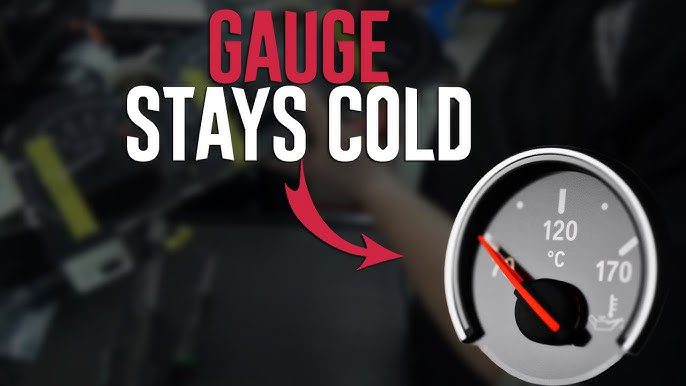
You glance down at your dashboard while driving and notice the coolant temperature gauge sitting at the bottom, stone cold, even though the engine has been running for twenty minutes. Or maybe the needle moves slightly but never reaches the normal operating range. Something is clearly not right, but what exactly?
A coolant temperature gauge that reads low or stays at zero is more than just a cosmetic nuisance. Your engine’s temperature information feeds into critical decisions the ECU makes about fuel delivery, ignition timing, and emissions management. If the gauge is lying to you, or simply not working, you could be driving with a problem that is affecting engine performance, fuel economy, or both, without even knowing it.
Here is a thorough breakdown of why this happens, how the system works, and what you can do about it.
Understanding What the Coolant Temperature Gauge Actually Does
Before jumping into the causes, it helps to understand how the temperature gauge system works, because it is not as simple as a sensor talking directly to a needle. The architecture varies significantly between older and newer vehicles, and knowing which type of system your car has helps you narrow down the fault much faster.
Older Vehicles: Simple Two-Wire Systems
On older cars, typically pre-1990s and many vehicles from the early 2000s, the coolant temperature sensor is a simple unit with two wires that connect directly to the instrument cluster. When the sensor detects coolant temperature, it changes its electrical resistance. That change in resistance alters the current passing through the circuit, which in turn moves the gauge needle. Simple, direct, and easy to test with basic tools.
These older systems have no ECU involvement for the temperature gauge specifically. The gauge and the sensor talk to each other directly. If either one fails, or the wiring between them breaks, the gauge stops working. That is essentially the full list of failure points.
Modern Vehicles: ECU-Integrated Systems
Modern cars are considerably more complex. The coolant temperature sensor sends its signal first to the Engine Control Unit (ECU). The ECU then uses that temperature data for fuel calculations, cold-start enrichment, fan control, idle speed management, and emissions monitoring. After processing, the ECU passes the temperature information on to the instrument cluster to move the gauge.
This means the failure chain is longer. Something can go wrong at the sensor, in the wiring to the ECU, within the ECU itself, in the communication line between the ECU and the cluster, or within the cluster. Each of these points is a potential cause of a gauge reading that stays low.
Dual-Sensor Systems
Some manufacturers, particularly several Asian brands including Nissan and others, use two separate coolant temperature sensors. One sensor is dedicated to feeding the instrument cluster gauge. The other sends data exclusively to the ECU for engine management. This configuration means a fault in one sensor may affect only the gauge or only the ECU calculation, but not both simultaneously. It also means replacing the wrong sensor solves nothing.
Some vehicles use a four-wire sensor that handles both functions within a single unit. Knowing your specific vehicle’s configuration before starting diagnosis saves a lot of time and money.
Why Your Coolant Temperature Gauge Stays Low or Does Not Move
1. A Faulty Coolant Temperature Sensor
This is the most common cause by a significant margin, and it is always the right place to start diagnosis. The coolant temperature sensor is a thermistor, a resistor whose resistance value changes predictably with temperature. As coolant heats up, the sensor’s resistance drops in a specific, calibrated way. The ECU or instrument cluster reads that resistance and translates it into a temperature reading.
When the sensor fails, it typically does one of two things. It either reads a fixed resistance value (often corresponding to an extremely cold temperature) regardless of actual coolant temperature, or it sends an erratic, unreliable signal that the ECU cannot use. In either case, the gauge reads low or stays at the bottom of its range because the system is receiving data that says the coolant is cold.
A sensor fault on a modern vehicle will almost always trigger a fault code, typically a P0115, P0116, P0117, or similar code depending on the manufacturer. Connecting an OBD2 scanner is one of the fastest ways to confirm whether the sensor is the culprit. If you have live data capability on your scanner, you can watch the coolant temperature reading in real time as the engine warms up. A sensor that shows -40 degrees or some other fixed extreme value while the engine is clearly warm is almost certainly faulty.
Coolant temperature sensors are typically inexpensive parts, often $15 to $50 for the sensor itself and replacement is usually straightforward. The sensor is generally accessible on the engine block or cylinder head, threaded into the coolant passage. Have a small amount of coolant leakage ready to deal with when you unscrew the sensor, and make sure to use the correct replacement sensor for your specific vehicle.
2. A Thermostat Stuck in the Open Position
This cause often gets confused with a sensor fault, because the symptom, a gauge that barely rises or stays very low, looks identical from the driver’s seat. But the mechanism is completely different.
The thermostat is a temperature-sensitive valve that controls coolant flow between the engine and the radiator. When the engine is cold, the thermostat stays closed, preventing coolant from circulating through the radiator and allowing the engine to warm up quickly. Once the engine reaches normal operating temperature, the thermostat opens, allowing coolant to flow through the radiator and maintaining the correct temperature range.
When a thermostat fails in the open position, coolant circulates through the radiator constantly from the moment the engine starts. The radiator continuously dissipates heat, and the engine can never fully warm up. In cold weather especially, the engine may reach only a fraction of its normal operating temperature, and the temperature gauge will sit unusually low, perhaps barely above minimum, even after extended driving.
A reliable way to distinguish a stuck-open thermostat from a sensor fault: if the temperature reading rises very slowly over a long drive, particularly in cold weather, but never reaches the normal midpoint of the gauge, suspect the thermostat. If the gauge reads the same (zero, or barely above minimum) whether the engine is cold or hot after 30 minutes of driving, suspect the sensor or wiring.
You can also feel the upper radiator hose. If it becomes hot very quickly after starting the engine (within a minute or two), the thermostat is stuck open and coolant is flowing through the radiator before the engine has a chance to warm up. On a working thermostat, the upper radiator hose stays cool for several minutes until the engine reaches operating temperature and the thermostat opens.
A thermostat is an inexpensive part. Do not ignore a stuck-open thermostat. Beyond the gauge reading low, an engine that cannot reach operating temperature runs less efficiently, uses more fuel, produces more emissions, and accelerates wear on internal components that depend on the oil reaching its correct operating viscosity.
3. Broken or Damaged Wiring Between Sensor and Gauge or ECU
Wiring faults are less common than sensor failures, but they are worth investigating, particularly on older vehicles where the wiring harness may have suffered from heat, moisture, or rodent damage over the years. A broken wire in the circuit between the coolant temperature sensor and the ECU (or cluster) will effectively give the system no signal at all, which in most cases causes the gauge to read at its minimum position.
Testing the wiring requires a multimeter. Check for continuity between the sensor connector and the ECU connector at each relevant pin. No continuity indicates a broken wire somewhere along the harness. Also check for short circuits, a wire touching ground (the metal body of the car) where it should not be.
Visually inspect the wiring harness near the sensor connector first, because this is where heat cycles and proximity to the engine most commonly cause wire insulation to crack or connectors to corrode. Traces of green or white oxidation on the connector pins are a reliable indicator of corrosion-related electrical problems.
4. Corroded Electrical Connectors
Even without a broken wire, corrosion at the connector pins creates enough electrical resistance to disrupt the signal between the sensor and the rest of the system. Coolant temperature sensor connectors sit in a harsh environment, close to the engine, exposed to heat cycles, moisture from coolant leaks or condensation, and road spray. Over time, the connector pins oxidise, and the resulting resistance layer interferes with the small electrical signals the system relies on.
The fix is straightforward: disconnect the affected connector, inspect the pins for green, white, or powdery oxidation, and clean them thoroughly with an appropriate electrical contact cleaner. Apply a small amount of dielectric grease to the pins before reconnecting to slow future oxidation. Check the connectors at the sensor, at the ECU, and at any intermediate connectors in the harness if the vehicle has them.
If the connector housing is cracked or the rubber seal is damaged, moisture will continue to penetrate regardless of how well you clean the pins. In that case, the connector itself needs to be replaced, either the connector housing only if the correct repair kit is available, or the affected section of harness.
5. Air Bubbles Trapped in the Cooling System
This one is easy to overlook, but it is a surprisingly common cause of erratic or low temperature gauge readings. The coolant temperature sensor needs to be fully immersed in coolant to accurately measure its temperature. If an air pocket has formed in the cooling system, from an incomplete coolant refill, a recent head gasket repair, or coolant work that was not properly bled and that air pocket sits around or near the sensor, the sensor is reading air temperature rather than coolant temperature.
Air is an insulator and heats up much more slowly than coolant under engine conditions. A sensor surrounded by an air pocket will report a much lower temperature than the actual coolant temperature, causing the gauge to read low even when the engine is properly warm.
If you have recently had coolant work done and the gauge has behaved differently since, bleed the cooling system to remove any trapped air. The procedure varies by vehicle, some have a specific bleed screw or bleeder valve, while others require the coolant cap to be left open while the engine warms up and the system self-purges. Refer to your vehicle’s service information for the correct bleeding procedure.
6. A Faulty Instrument Cluster
If the sensor tests correctly, the wiring is intact, the connectors are clean, the thermostat is functioning, and there are no air pockets in the system, the fault may lie in the instrument cluster itself. The temperature gauge in the cluster is an electromechanical device, it uses an electromagnetic coil to move the needle in proportion to the signal it receives. These coils can fail, particularly in older clusters. The circuit board within the cluster can develop solder joint failures or component faults that affect specific gauge functions.
On some vehicles, the temperature gauge function within the cluster can be repaired independently, a specialist instrument cluster repair service can often rebuild or replace the affected gauge at lower cost than a full cluster replacement. On others, the cluster is replaced as a complete unit.
One way to confirm whether the cluster is the fault: if you have a scanner with live data capability, check whether the ECU is receiving a correct temperature signal from the sensor. If the ECU shows a correct, rising temperature value while the dashboard gauge stays at zero, the fault is in the cluster or the signal path between the ECU and the cluster. If the ECU also shows an incorrect or static reading, the fault is before the ECU, at the sensor or in the wiring to it.
7. A Faulty ECU
This is the least common cause on this list, and it should only be considered after all the other possibilities have been properly ruled out. ECUs are generally very reliable, and an ECU fault causing only the temperature gauge to malfunction, while everything else works normally, is unusual.
That said, it is possible. If the ECU receives a correct signal from the sensor but fails to process it correctly or fails to pass the information on to the instrument cluster, the gauge will not respond. This can be confirmed by measuring the output signal from the ECU to the cluster for the temperature channel, a job best done by an automotive electronics specialist with the correct equipment.
Do not replace the ECU without professional confirmation that it is actually the fault. ECUs are expensive, vehicle-specific, and typically require coding to the vehicle before they will function correctly. An unnecessary ECU replacement is one of the most avoidable and costly mistakes in automotive diagnostics.
How to Diagnose the Problem Step by Step
If you are facing this issue, here is a logical diagnostic sequence that starts with the simplest and cheapest checks and works toward the more complex:
| Step | What to Do | Tools Needed | What to Look For |
|---|---|---|---|
| 1 | Check for fault codes with OBD2 scanner | OBD2 scanner | P0115 to P0119 or similar temperature-related codes |
| 2 | Check live data coolant temp at ECU | OBD2 scanner with live data | Does ECU show correct rising temperature? Or fixed/extreme value? |
| 3 | Inspect sensor connector for corrosion | Visual inspection | Green or white oxidation on pins; damaged seals |
| 4 | Test sensor resistance with multimeter | Multimeter | Compare resistance to spec at known temperature (use manufacturer data) |
| 5 | Check thermostat behavior | Feel upper radiator hose or infrared thermometer | Hose getting hot immediately from cold start indicates stuck-open thermostat |
| 6 | Bleed cooling system for air pockets | None or bleed screw | Has coolant work been done recently? Air purging may resolve gauge issue |
| 7 | Test wiring continuity | Multimeter | No continuity on sensor-to-ECU or sensor-to-cluster wires indicates break |
| 8 | Test cluster function | Specialist or cluster tester | ECU shows correct temp but gauge does not move, cluster is suspect |
| 9 | ECU output testing | Automotive electronics specialist | Only after all other causes confirmed clear |
Why You Should Not Ignore This Problem
A temperature gauge stuck at zero might seem harmless, the car runs, nothing seems wrong, and maybe you have simply learned to ignore the dashboard. But there are real reasons to take it seriously.
- You lose your overheating warning. If the coolant temperature circuit is not working, you also lose the ability to detect overheating. The gauge that normally warns you when the engine is dangerously hot will not respond to a real overheat situation. By the time you smell coolant or see steam, the damage may already be done.
- The ECU may be running incorrect fueling. If the sensor feeding the ECU is faulty, the engine management system is making fuel delivery and timing calculations based on wrong temperature data. On a cold-start reading, the ECU commands richer fueling. If it permanently believes the engine is cold, it may over-fuel continuously, increasing fuel consumption and accelerating carbon buildup.
- A stuck-open thermostat harms the engine long-term. If the low gauge reading is caused by a thermostat stuck open, the engine is running below its optimal temperature. This increases fuel consumption, reduces oil effectiveness (oil needs heat to circulate properly), and increases wear on internal components.
A coolant temperature gauge sitting at zero is your car telling you something is wrong in one of several possible ways. Work through the causes systematically, start with the sensor, check the thermostat, inspect the wiring and connectors, and use a scanner to gather real data before spending money on parts. Most of the time, the fix is simpler and cheaper than it initially appears.