
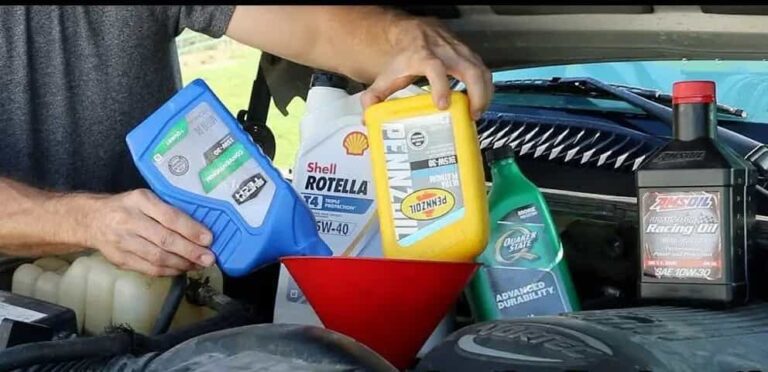
Choosing the right engine oil for your car is not just about grabbing the nearest plastic gallon off the shelf. The viscosity of your engine oil plays a massive role in how well your engine performs, how long it lasts, and even how much fuel your car burns. Get it right, and your engine runs smoothly for years. Get it wrong, and you could be looking at premature wear, poor fuel economy, and a hefty repair bill.
But here is the thing most car owners will, at some point, face a situation where they need to top up their oil and the exact same type is not available. Maybe you are on a long road trip, miles away from the nearest auto shop. Maybe the store only has one type of oil on the shelf. What do you do?
That is exactly what this guide is going to walk you through. We are going to talk about engine oil viscosity, what it means, how different oils compare, and whether or not you can mix different oil viscosities without destroying your engine in the process.
What Is Engine Oil Viscosity and Why Does It Matter?

Before we get into the mixing debate, let us take a moment to understand what viscosity actually means. In simple terms, viscosity is just a fancy word for how thick or thin a liquid is. Water has low viscosity. Honey has high viscosity. Engine oil sits somewhere in between, and the exact thickness matters a great deal for how it flows through your engine.
Your engine has hundreds of moving metal parts that are constantly rubbing against each other at high speed. Engine oil creates a thin film between those parts, reducing friction, preventing metal-to-metal contact, and carrying heat away from critical components. If the oil is too thick, it struggles to flow quickly enough to protect parts during cold starts. If it is too thin, the film breaks down under heat and pressure, leaving parts exposed to wear.
This is why getting the viscosity right is so important. It is not just a number on a gallon. It is the difference between an engine that lasts 200,000 miles and one that starts knocking at 80,000.
How to Read the Viscosity Numbers on an Oil plastic gallon
You have probably seen numbers like 5W-30, 10W-40, or 0W-20 on an oil plastic gallon and wondered what they mean. Here is a quick breakdown.
The number before the “W” refers to the oil’s cold-weather performance. The “W” stands for Winter, not weight, despite what many people assume. A lower number before the W means the oil flows better in cold temperatures. So a 0W or 5W oil will reach your engine’s critical parts faster on a cold winter morning than a 15W or 20W oil would.
The number after the dash tells you how thick the oil is at normal operating temperature. A higher number means the oil maintains a thicker, more protective film when your engine is hot. So a 5W-40 oil is thicker at operating temperature than a 5W-30, even though both flow equally well in cold conditions.
This dual-rating system is why modern oils are called multigrade oils. They are engineered to behave like a thin oil in the cold and a thicker oil when hot, giving you the best of both worlds. That said, not all multigrade oils are created equal, and the type of oil (fully synthetic, semi-synthetic, or mineral) plays a huge role in how well they actually deliver on that promise.
The Four Types of Viscosity You Should Know About
Engine oil viscosities are categorized in four main ways: kinematic, dynamic, conditional, and specific. You do not need to memorize all four, but it helps to know that when you are choosing an oil at a shop, the two most practically relevant ones are kinematic viscosity and dynamic viscosity.
- Dynamic viscosity tells you how resistant the oil is to flow under an applied force. This is the number most relevant to cold-weather starting performance, and it is reflected in the “W” rating.
- Kinematic viscosity measures how freely the oil flows under the force of gravity at operating temperature. This is the number reflected in the second part of the rating, like the “30” in 5W-30.
When manufacturers and mechanics talk about picking the right oil, these are the two numbers they are comparing. Everything else is secondary to getting these right for your specific engine.
Can You Mix Different Engine Oil Viscosities?
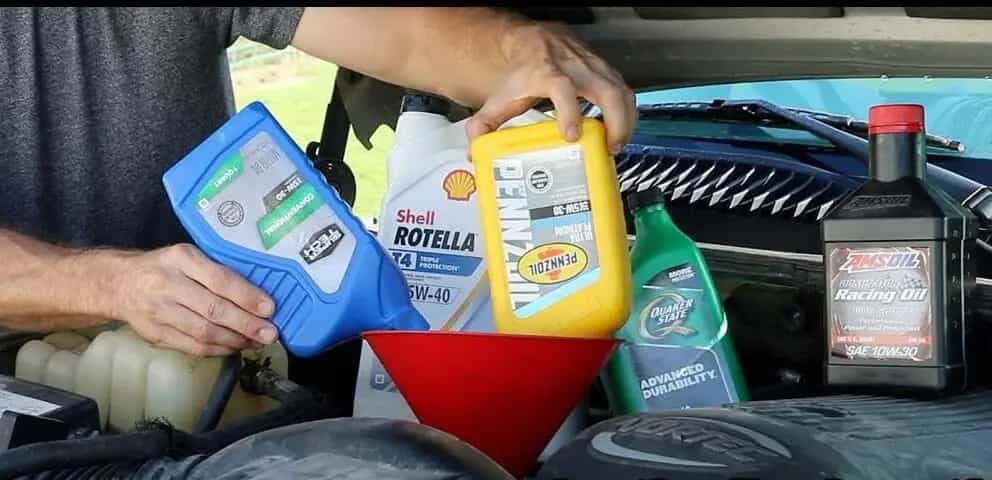
Yes, you can mix different engine oil viscosities, but there are some very important conditions you need to understand before you do. This is not a blanket “go ahead and mix anything” situation. Let us break it down properly.
All modern engine oils are formulated to be compatible with each other at a basic chemical level. Whether an oil is fully synthetic, semi-synthetic, or mineral-based, mixing different viscosities will not cause a violent chemical reaction inside your crankcase. You are not going to get foaming, bubbling, or some kind of dangerous chemical event from mixing two conventional motor oils. That is reassuring, right?
That said, “safe to mix” and “a good idea to mix” are two very different things. Mixing oils changes the effective viscosity of the blend, and depending on how different the two oils are, you could end up with a mixture that does not protect your engine as well as either oil would have on its own.
When Mixing Is Acceptable: The Emergency Rule
Think of mixing different oil viscosities as a last resort, not a regular habit. Imagine you are driving on a highway late at night, your oil pressure warning light comes on, and you pull into the only open gas station for miles. They have one type of oil on the shelf, and it is not exactly what your car calls for. In that situation, adding what is available is absolutely the right call. Running an engine with critically low oil will destroy it far faster than running it with a slightly different viscosity for a short period.
But once you get that situation under control, your very next step should be draining the mixed oil and refilling with the correct specification. Do not treat the emergency fix as a permanent solution.
What Happens When You Mix Two Similar Viscosities?
Let us take a real-world example. Say your engine currently has 5W-30 oil in it, and you need to top up but only have access to 5W-40. These two oils are very close in their cold-weather performance (both rated 5W), but they differ slightly in their high-temperature behavior. The 5W-40 runs a bit thicker when the engine is hot.
Mixing these two? Not a major issue. You will end up with a blend that sits somewhere between the two viscosities. If you mix equal parts, you are roughly looking at a blend that behaves like a 5W-35 type oil. Your engine will not love it, but it will not hate it either. You can drive on this mix safely until you can do a proper oil change.
The same logic applies to mixing 5W-40 with 10W-40. The viscosities are neighboring, the high-temperature behavior is identical, and the only real difference is the cold-flow rating. Again, this is an acceptable short-term fix in an emergency.
Here is a quick visual to illustrate how the viscosity blend math works:
| Oil A | Oil B | Result of 50/50 Mix | Safe to Drive? |
|---|---|---|---|
| 5W-30 | 5W-40 | ~5W-35 | Yes, short-term |
| 5W-40 | 10W-40 | ~7.5W-40 | Yes, short-term |
| 10W-40 | 15W-40 | ~12.5W-40 | Yes, short-term |
| 5W-30 (Synthetic) | 5W-30 (Semi-synthetic) | 5W-30 blend | Yes, longer-term |
| Mineral | Fully Synthetic | Degraded mix | Only if no other option change ASAP |
The Mix You Absolutely Want to Avoid Keeping Long-Term
Mixing mineral oil and fully synthetic oil is where things get more complicated. These two types of oil have fundamentally different base formulations. Mineral oils are refined directly from crude oil and contain more natural impurities. Fully synthetic oils are engineered from the ground up in a lab to deliver specific performance characteristics.
When you mix them, you are essentially diluting the premium performance of the synthetic oil with a less refined product. The resulting blend will not perform as well as either oil would on its own, and over time, this can lead to increased engine wear, sludge buildup, and reduced protection at high temperatures.
Can you mix them in a genuine emergency? Yes. Will your engine immediately explode? No. But you need to get to a workshop and do a full oil change as soon as physically possible. Do not leave that mixture in your engine any longer than you absolutely have to.
Fully Synthetic vs. Semi-Synthetic vs. Mineral Oil: What Are the Real Differences?
A lot of drivers have a vague idea that synthetic oil is “better” and mineral oil is “cheaper,” but they are not entirely sure what that actually means in practice. Let us clear that up, because understanding the differences between these three oil types directly affects how you think about mixing them.
Mineral Oil: The Old Reliable
Mineral oil is the most traditional type of engine oil. It comes straight from crude oil that has been refined and processed. It is affordable, widely available, and perfectly adequate for older engines or vehicles that do not operate under extreme conditions.
One thing to note about mineral oils: they tend to be thicker by nature. In practice, this means you will rarely find a mineral oil with a low cold-weather rating like 0W or 5W. Most mineral oils sit in the 10W-40, 15W-40, or 20W-50 range. This thicker baseline makes them less ideal for modern engines that are engineered to extremely tight tolerances and require fast oil delivery on cold starts.
Mineral oil also breaks down faster under heat and pressure compared to synthetic options, which is why it typically requires more frequent oil changes. If your car’s manufacturer says to change the oil every 3,000 miles on mineral oil, that schedule exists for a reason.
Semi-Synthetic Oil: The Middle Ground
Semi-synthetic oil, sometimes called synthetic blend oil, is exactly what it sounds like. It is a mixture of mineral oil and synthetic oil, typically containing anywhere from 10% to 30% synthetic content, depending on the brand and formulation.
This blend gives you better performance and temperature stability than pure mineral oil, without the full price tag of a complete synthetic. For many everyday drivers with modern but not high-performance vehicles, semi-synthetic is a solid middle-ground choice.
Semi-synthetic oils can be found across a wider viscosity range than mineral oils, including the popular 5W-30 and 10W-30 grades. This makes them more versatile and suitable for a broader range of driving conditions.
Fully Synthetic Oil: The High Performer
Fully synthetic oil is engineered at a molecular level to deliver precise performance characteristics. There are no naturally occurring impurities from crude oil, because the base oil itself is manufactured rather than refined. Modern chemical additives are used to achieve very low viscosities that mineral oils simply cannot match.
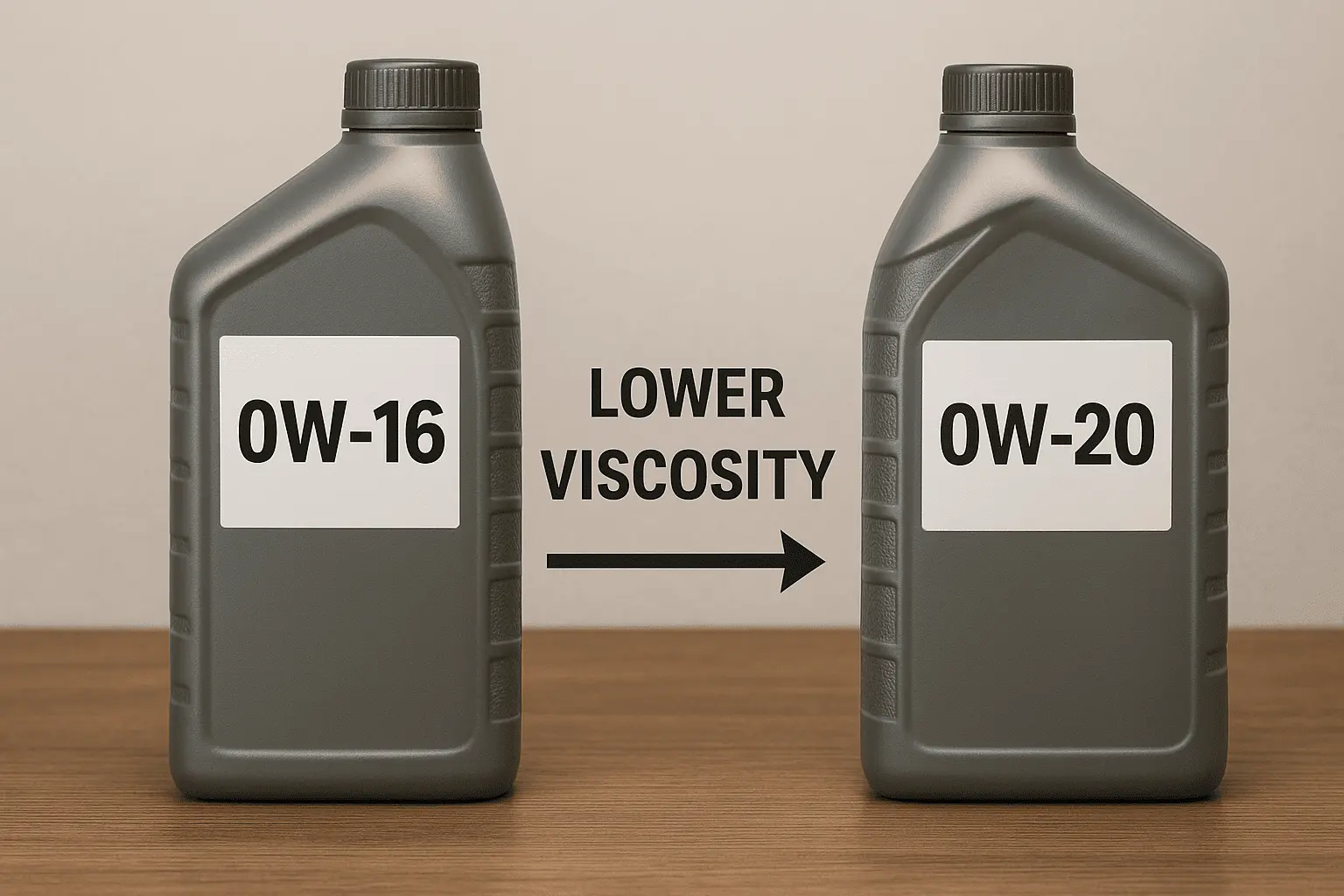
This is why you see viscosity grades like 0W-20 and 0W-16 almost exclusively in fully synthetic formulations. These ultra-low viscosities flow almost instantly on a cold start, delivering oil to engine components within seconds of ignition. For modern engines with tight tolerances, this is a significant benefit.
Fully synthetic oil also handles extreme heat far better than mineral or semi-synthetic oil. It resists oxidation, breaks down more slowly, and maintains its protective film strength for longer. A common misconception is that fully synthetic oil is automatically less viscous than mineral oil. That is not true. You can get fully synthetic oil in a 10W-40 or even a 15W-40 grade. The difference is not in the viscosity number alone, it is in the quality and longevity of the protection that the oil provides at that viscosity.
Here is something that genuinely surprises most people: the thickness of an oil film does not tell you how strong it is. A mineral oil film and a fully synthetic film at the same viscosity grade can have dramatically different load-bearing capacities. A mineral oil film can typically withstand around 900 kg per square centimeter of pressure before it breaks down. A modern fully synthetic oil film at the exact same viscosity? Up to 2,200 kg per square centimeter. That is more than double the protection from a film that is no thicker.
The Standards That Make Mixing Possible: API and ACEA Explained
You might be wondering: if all these oils are so different, why can they be mixed at all without causing problems? The answer comes down to international standardization.
All engine oils sold commercially must meet standardized quality benchmarks. In the United States, the governing body is the American Petroleum Institute (API). In Europe, it is the Association des Constructeurs Européens d’Automobiles (ACEA). These organizations set strict requirements for things like viscosity stability, oxidation resistance, wear protection, and compatibility.
Because all oils that meet these standards share a common quality baseline, they are formulated to be chemically compatible with each other. That is the underlying reason why mixing different viscosities does not cause foam, gel, or chemical breakdown in normal circumstances.
That said, meeting the API or ACEA standard is just the floor, not the ceiling. Car manufacturers often layer their own specific tolerances and approvals on top of these standards. A BMW, for example, might require an oil that meets the BMW Longlife-04 specification. A Volkswagen might call for an oil meeting VW 504.00 or 507.00. A Mercedes-Benz diesel could require MB 229.51 approval.
If your engine requires a specific manufacturer tolerance and you top up with an oil that does not carry that tolerance, you need to treat it as a temporary measure and get a full oil change done promptly. Running your engine on the wrong tolerance oil for an extended period can void your warranty and potentially cause long-term damage, even if the oil meets the general API or ACEA standard.
How to Check if Two Oils Are Compatible
Before you mix anything, run through this quick compatibility checklist:
- Check the viscosity grades. The closer the two grades are to each other, the safer the mix. Neighboring grades like 5W-30 and 5W-40 are fine. Very different grades like 0W-20 and 20W-50 are not ideal.
- Check the API or ACEA rating. Both oils should meet the same or equivalent standards. You can find this on the gallon’s label, usually displayed as a circular starburst symbol.
- Check for manufacturer-specific tolerances. If your car requires a specific OEM tolerance, both oils should ideally carry it. If not, plan a full oil change soon.
- Check the oil type. Synthetic with synthetic, or synthetic with semi-synthetic, is fine. Mineral with mineral is fine. Mineral with fully synthetic is acceptable only in a genuine emergency.
- Stick with the same brand if possible. When you have the luxury of choice, using the same brand reduces the risk of additive package conflicts between formulations.
What Really Happens Inside Your Engine When You Mix Oil Viscosities
Let us get a bit more specific about the real-world consequences of mixing oil viscosities. This will help you understand why some mixes are relatively harmless and others should be corrected quickly.
The Viscosity Blend Effect
When you mix two oils, you do not get some wildly unpredictable fluid. The resulting blend generally lands somewhere between the two viscosities in a fairly predictable way. If you mix equal volumes of 5W-30 and 5W-40, you get approximately a 5W-35 blend. The additive packages from both oils are now sharing the same crankcase, and they generally coexist without conflict, provided both oils meet compatible API or ACEA standards.
The concern with mixing is not usually a chemical catastrophe. It is more about the fact that the resulting blend may no longer meet the exact specification that your engine was designed for. Modern engines are engineered with extremely tight tolerances, and the oil specification your manufacturer recommends is the result of extensive testing to find exactly what works best in that engine.
Running an off-spec oil blend for a few hundred miles is not going to blow your engine. Running it for 10,000 miles or more is a different story. The wear accumulates gradually, and by the time you notice symptoms, the damage may already be done.
The Additive Package Problem
Here is something that does not get talked about enough. Every engine oil contains an additive package. These additives include things like:
- Detergents that keep engine components clean and prevent sludge buildup
- Dispersants that hold contaminants in suspension so they get filtered out
- Anti-wear additives like ZDDP that form a protective layer on metal surfaces
- Friction modifiers that improve fuel economy
- Viscosity index improvers that help the oil behave consistently across a temperature range
- Antioxidants that slow the oil’s degradation over time
Each oil brand has its own proprietary blend of these additives, carefully balanced to work together. When you mix two different oils, you are combining two different additive packages. In most cases, this is fine. But in some cases, especially when mixing very different oil types or oils from manufacturers using different additive chemistries, the additives can interact in ways that reduce their effectiveness.
This is one reason why mixing oils from the same manufacturer is generally safer than mixing oils from two completely different brands. The additive systems are more likely to be compatible.
Does Mixing Affect Engine Oil Life?
Yes, it can. Engine oil has a service life, a point at which its additive package is depleted and its viscosity has changed enough that it no longer provides adequate protection. When you mix oils, you are effectively resetting the age balance in the crankcase. The new oil dilutes the old oil, but it also dilutes the additive packages of both.
If you add a relatively small top-up of a compatible oil (say, half a quart in a system that holds 5 quarts), the effect on overall oil quality is minimal. The system is still predominantly the original oil, and the topped-up amount will integrate without significantly changing the blend’s performance.
But if you are adding a significant volume, for instance, if your engine burned through two full quarts and you top up with a completely different viscosity, the resulting blend is a meaningful departure from your original oil specification. In that case, you should be planning an oil change sooner than your normal interval, not waiting for the full mileage to play out.
Practical Scenarios: What Should You Actually Do?
Let us run through some realistic situations you might face as a car owner and give you a clear, practical answer for each one.
Scenario 1: You Need to Top Up and Only Have a Different Viscosity Available
You check your oil and it is a quart low. Your car takes 5W-30, but all you have in the garage is a half-used plastic gallon of 5W-40 from your previous car. What do you do?
Add the 5W-40. Being a quart low is worse for your engine than running a slightly different viscosity. The blend you create is close enough that your engine will be fine for normal driving until you can pick up the correct oil and do a top-up with the right spec. No need to panic, but do get the correct oil added soon.
Scenario 2: You Are on a Road Trip and the Oil Light Comes On
Pull over immediately. Check the oil level. If it is dangerously low, add whatever the nearest gas station has available. Your priority is protecting the engine from running dry. A short-term viscosity mismatch is infinitely better than the metal-to-metal contact of an oil-starved engine.
Once you reach your destination or a proper auto shop, explain what happened, get the oil drained, and fill with the correct specification. Most shops can do this in under an hour.
Scenario 3: The Auto Shop Does Not Have Your Exact Oil
This happens more often than you might think. You drive to a shop or parts store and they do not carry the exact grade your car needs. Say your car takes 5W-40 semi-synthetic, and they only have 5W-30.
In this case, 5W-30 is close enough to use as a top-up. The cold-weather performance is identical (both 5W), and the high-temperature behavior is similar enough that your engine will not notice a significant difference with a partial fill. The key rule here is that the oils should not differ greatly from each other in their overall characteristics. A 0W-20 and a 20W-50 would be too far apart. A 5W-30 and a 5W-40 are practically neighbors.
Scenario 4: You Accidentally Mixed Mineral and Fully Synthetic
Maybe you grabbed the wrong gallon, or someone else topped up your car without realizing what was already in there. Relax, you have not committed automotive arson. Your engine is not going to seize up immediately.
But you need to get this sorted out at the next earliest opportunity. Drain the mixed oil, flush if necessary, and refill with your correct specification. Do not wait until your next scheduled oil change. The sooner you correct it, the better.
How to Find the Right Oil Viscosity for Your Car
Now that you understand viscosity and mixing, let us talk about how to find the correct oil for your specific vehicle in the first place. This is genuinely simple, but a surprising number of people skip this step and just buy whatever is on sale.
Method 1: Check the Owner’s Manual
This is the most reliable source. Your car’s owner’s manual will specify exactly which oil viscosity grade your engine requires, and it will often also list the API or ACEA standards and any OEM-specific tolerances your oil must meet. If you still have your manual, this is always your first stop.
Method 2: Check the Oil Filler Cap or Under the Hood Label
Many manufacturers print the recommended oil viscosity directly on the oil filler cap or on a label somewhere under the hood. It is a quick reference that does not require digging out the manual. Look for a label near the engine bay or check the inside of the filler cap itself.
Method 3: Use an Online Oil Selector Tool
Most major oil brands (like Castrol, Mobil 1, Shell Helix, and Valvoline) have an oil selector tool on their websites. You enter your car’s make, model, year, and engine size, and it tells you exactly which product to use. These tools are regularly updated and are generally very accurate.
Method 4: Ask a Mechanic You Trust
If you are unsure, there is no shame in asking. A good mechanic will take two minutes to confirm the right oil for your car. If you are going in for a service anyway, that is the perfect time to double-check that the shop is using the correct specification.
Common Oil Viscosity Myths Worth Busting
There is a lot of misinformation floating around about engine oil. Some of it is decades old and refuses to die. Let us address a few of the biggest myths directly.
Myth 1: Thicker Oil Always Means Better Protection
This one is deeply embedded in old-school car culture. The thinking goes: if a little oil protection is good, more oil (thicker oil) must be better. In reality, this is not how modern engines work.
Modern engines have very tight tolerances between components. They are designed for specific viscosity ranges. Using a thicker oil than specified can actually starve parts of adequate lubrication because the oil is too viscous to flow through tiny passages quickly enough. It can also increase fuel consumption and reduce horsepower, since the engine has to work harder to push thicker oil through its system.
Thicker is not better. Correct is better.
Myth 2: Fully Synthetic Oil Is Always Thinner Than Mineral Oil
Not true. You can buy fully synthetic oil in a 10W-40 or even a 15W-40 grade. The difference between synthetic and mineral oil at the same viscosity grade is not the thickness of the oil. It is the quality, stability, and longevity of the protection it provides at that thickness.
Remember the film strength example mentioned earlier: both a mineral oil and a fully synthetic oil can be 5W-40, but the synthetic film can withstand more than twice the pressure before breaking down. Same viscosity, very different protection.
Myth 3: Mixing Oils Will Definitely Damage Your Engine
As we have covered in detail, this is not categorically true. In a genuine emergency, mixing compatible oils is far better than running your engine dry or low. The key is knowing which combinations are acceptable short-term and which ones need to be corrected immediately.
The real damage happens when people mix oils casually and then forget about it, leaving an incompatible blend in the engine for tens of thousands of miles. That is the behavior that leads to problems, not the act of mixing itself.
Myth 4: You Can Switch Between Fully Synthetic and Mineral Oil Freely
This is a grey area. Switching between oil types is possible, but it is not without nuance. If your engine has been running on mineral oil for a long time, it may have accumulated sludge deposits that the mineral oil’s detergents have been holding in suspension. Switching to a fully synthetic oil with its more aggressive detergent package can dislodge these deposits all at once, potentially clogging oil passages or filters.
This does not mean you can never switch, but if you are making the change from long-term mineral oil use to full synthetic, it is often recommended to do a gradual transition through a semi-synthetic, or to have the engine flushed first. Ask your mechanic for guidance based on your specific vehicle’s history.
Why Your Oil Change Intervals Matter More Than Most People Think
All of this talk about viscosity and oil types ties directly into how often you change your oil. And this is an area where a lot of drivers are either over-cautious or dangerously complacent.
The old “every 3,000 miles” rule? That was designed for older engines running mineral oil with less sophisticated filtration systems. Most modern cars running fully synthetic oil can go 7,500 to 15,000 miles between oil changes, depending on the manufacturer’s recommendation and your driving conditions.
On the flip side, some drivers push well past the recommended interval because “the oil still looks fine.” Oil color and clarity are not reliable indicators of oil quality. The additive package can be significantly depleted long before the oil starts to look dirty. Once the additives are gone, the oil is just a lubricant with no meaningful protection against wear, oxidation, or deposits.
The safest approach is always to follow your car manufacturer’s recommended oil change interval for the type of oil you are using. If you have done any mixing during that interval, consider shortening the interval accordingly. Better to change the oil a little early than to risk running degraded protection.
Signs That Your Oil Needs Attention Right Now
Do not wait for a warning light to tell you something is wrong. Here are some signs to watch for:
- Dark, gritty oil on the dipstick — Oil that is completely black and feels gritty between your fingers is well overdue for a change
- Oil level dropping faster than usual — Your engine should not be consuming significant amounts of oil between changes. If it is, there is a problem worth investigating
- A burning smell from the engine bay — This can indicate oil leaking onto hot components, which is both a fire risk and a sign that your oil level is dropping
- Louder engine noise than usual — Increased engine noise, especially a ticking or tapping at startup, often means the oil is not providing adequate lubrication
- The oil pressure warning light — If this light comes on while driving, pull over as soon as it is safe to do so. Do not ignore it and hope for the best
Choosing the Right Oil for Different Driving Conditions
Your driving conditions have a real impact on which oil viscosity is most appropriate for your engine. The spec in your owner’s manual is a great starting point, but understanding how conditions affect oil performance can help you make smarter choices.
Cold Climates
If you live somewhere that regularly drops below freezing in winter, the cold-weather rating of your oil matters a great deal. A lower W rating means the oil flows faster at low temperatures, which is exactly what you want in a cold climate. On a cold morning, the oil needs to reach critical engine components within seconds of startup. A thick mineral oil with a 20W rating is going to move through your engine much more slowly in freezing temperatures than a 0W or 5W synthetic.
For cold climates, fully synthetic oils with a 0W or 5W cold rating are the smart choice. They provide fast lubrication on cold starts, which is one of the highest wear periods for any engine.
Hot Climates and High-Stress Driving
If you live somewhere consistently hot, or if your driving involves a lot of towing, highway driving at sustained high speeds, or stop and go traffic that keeps the engine running hot for extended periods, you want an oil that maintains its viscosity under heat. This is where a higher number after the dash matters. A 5W-40 or 10W-40 will maintain a thicker protective film at high temperatures compared to a 5W-30.
Fully synthetic oils are again the preferred choice here, as they resist thermal breakdown far better than mineral oils and maintain their protective properties across a much wider temperature range.
High-Mileage Engines
Once your car hits around 75,000 miles or more, the engine’s internal tolerances have widened slightly due to normal wear. Seals may have hardened a bit. This is when some manufacturers recommend stepping up slightly in viscosity to compensate for the increased clearances.
There are also specific “high mileage” oil formulations available that include seal conditioners to help aging seals retain their flexibility, plus extra detergents to address any sludge buildup that older engines tend to accumulate. If your car has significant miles on it, these formulations are worth considering.
The Bottom Line on Mixing and Viscosity
Here is a clean summary of the key rules to take away from everything covered above:
- Mixing similar viscosities from compatible oil types is safe in the short term. 5W-30 with 5W-40, for example, is not going to damage your engine.
- Mixing oil types (synthetic with semi-synthetic) is generally acceptable. Mixing mineral with fully synthetic is a last resort only.
- Always plan to do a full oil change after any emergency mixing situation. Do not normalize the mixed blend as your new normal.
- Check your manufacturer’s required tolerances, not just the viscosity grade. The tolerance matters for warranty protection and long-term engine health.
- Thicker is not better. The right oil for your engine is the one your manufacturer specified, not the heaviest one on the shelf.
- Fully synthetic oil at the same viscosity provides significantly stronger film protection than mineral oil. Viscosity and film strength are not the same thing.
- Follow your oil change intervals, and if you have mixed oils during the interval, consider changing sooner rather than later.
Engine oil is one of the cheapest forms of insurance you can buy for your car. A proper oil change costs a fraction of what even minor engine repairs cost. If you are ever unsure about what to put in your engine, or whether a mix you made is safe to leave in for a while, just ask a mechanic you trust. There is no shame in a two-minute phone call that might save you thousands down the line.
Your engine cannot tell you when it is struggling. By the time it does, through noise, smoke, or a warning light, the damage is often already done. Stay on top of your oil, use the right viscosity, and if you ever have to mix in a pinch, fix it as soon as you can. That is how engines last.