
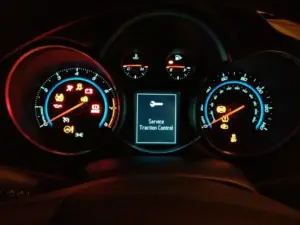

Seeing the “Service Traction Control” message pop up on your Chevy Cruze can feel like your car is suddenly speaking a different language, especially when the vehicle seems to drive “mostly fine” one moment and then throws warnings the next. In most cases, this alert means the Cruze has detected a fault within the traction control strategy or a related subsystem, which commonly includes Electronic Stability Control (ESC) and the Anti-lock Braking System (ABS). Because these systems share sensors, wiring, and control modules, one weak link can trigger multiple warnings at once. The key is understanding what the message really implies, what driving changes you should expect, and how to pinpoint the root cause without replacing parts blindly. In the sections below, you’ll learn how traction control works in the Cruze, the symptoms that typically accompany traction faults, the most common causes behind the alert, and practical repair and driving strategies that help restore a smooth, confident, and safe ride.
Understanding Traction Control in the Chevy Cruze
In the Chevy Cruze, traction control is not a standalone “extra”, it’s a foundational safety feature designed to manage wheel grip during acceleration and cornering, particularly on wet pavement, gravel, slush, or ice. The Cruze accomplishes this by using a network of sensors and control modules that constantly evaluate wheel speed, steering input, and vehicle behavior. When the system detects that one or more wheels are slipping beyond an acceptable threshold, it intervenes by reducing engine torque, applying brake pressure to specific wheels, or both.
Table of Contents
Just as importantly, traction control in the Cruze typically operates as part of a larger stability and braking ecosystem. The traction system frequently shares hardware and information with ABS (which helps prevent wheel lock during braking) and Electronic Stability Control (which helps prevent skids and loss of directional control during turns or emergency maneuvers). This is why a traction control warning is often closely tied to ABS and stability control behavior and why diagnosing it properly requires you to think in terms of the whole system rather than a single button or dashboard light.
If you’ve ever felt the Cruze “cut power” briefly when pulling away on a slick road, or noticed a subtle pulsing sensation as the brakes modulate, you’ve experienced these systems doing exactly what they were engineered to do. The “Service Traction Control” message, however, indicates the Cruze believes it may not be able to perform that job reliably, so it alerts you and may reduce or disable certain interventions until repairs are made.
What Is Traction Control?
Traction control is engineered to limit wheel slip during acceleration. When road conditions are poor or when the driver requests more throttle than the tire to road surface can support one or more drive wheels can spin faster than the vehicle is actually moving. That wheel spin reduces forward traction, increases stopping distance in certain conditions, and can make the vehicle feel unstable. Traction control addresses that by monitoring wheel speeds and, when it detects excessive slip, reducing engine output and/or applying braking to the slipping wheel to help redirect torque to a wheel that still has grip.
In practical terms, the system behaves like an invisible driving coach. If one wheel begins to spin too quickly, the Cruze can “pull back” engine torque, sometimes so smoothly you barely notice or it can apply a targeted brake intervention to regain traction. This technology is especially valuable in rain, snow, and ice, but it can also help on dry surfaces when accelerating aggressively or when one tire encounters sand, paint lines, metal plates, or uneven pavement.
The traction control system doesn’t work alone. It operates alongside the Anti-lock Braking System (ABS) and Electronic Stability Program (ESP) / Electronic Stability Control (ESC). ABS prevents wheel lock during braking, traction control manages wheel slip during acceleration, and ESC helps correct understeer/oversteer by applying braking to individual wheels and adjusting engine torque. Together, these systems form a coordinated safety net that helps the Cruze remain predictable and controllable when traction is limited or when sudden maneuvers occur.
It’s worth emphasizing a realistic expectation: traction control improves stability and reduces the likelihood of a loss of control event, but it cannot create grip where none exists. Tires, road surface, vehicle speed, and driver inputs still matter. A healthy traction control system gives you an advantage, especially in emergency situations, but it is most effective when combined with appropriate speed, good tires, and smooth driving technique.
The Chevy Cruze Traction Control System
The Chevy Cruze is equipped with a traction control system that relies on continuous data from wheel speed sensors and other inputs. The system monitors how fast each wheel is rotating and compares those speeds against one another and against expected vehicle motion. If the Cruze detects a wheel is spinning too fast relative to the others, suggesting wheel slip, it can intervene rapidly by reducing engine torque, applying brake pressure to that wheel, or blending both actions for a controlled correction.
This traction strategy is tightly integrated with Electronic Stability Control, which focuses on overall vehicle direction and yaw (the car’s tendency to rotate). During sudden turns or evasive maneuvers, ESC may apply braking to specific wheels to help keep the Cruze pointed where you intend to go. Because traction control and stability control share components, especially ABS-related hardware and wheel speed sensors, an issue in one area can trigger warnings in another.
In many Cruze scenarios, traction control intervention is subtle: you might see a traction indicator flash, feel a slight change in engine power, or notice the vehicle straightening itself under slippery conditions. When the system detects a fault, however, it may illuminate the traction control light, display the “Service Traction Control” message, and, in some cases, limit certain stability features to prevent unpredictable interventions. In other words, the vehicle would rather reduce assistance than provide assistance based on questionable sensor data.
From a technician’s perspective, that design choice makes sense. If a wheel speed sensor is sending inaccurate signals, the module could mistakenly apply a brake or reduce power at the wrong time. So, the Cruze warns you and may disable portions of the system until it can trust the information again. This is why the alert is both a caution and a diagnostic clue: it tells you the system’s self-check has failed, not necessarily that the car is immediately unsafe, but it does mean your safety margin may be reduced on low-traction roads.
In some cases, the system will also warn you to protect drivability. If the Cruze believes traction or stability control cannot operate as intended, it may adjust engine management strategies, leading to the common complaint that the car “feels sluggish” or “doesn’t respond” the way it normally does.
Benefits of Traction Control
Traction control offers several real-world advantages, with the biggest being improved stability and safety when grip is limited. By reducing wheel spin, the system helps the Cruze accelerate more predictably and reduces the chances of the vehicle sliding, fishtailing, or drifting off-line during acceleration. This is especially beneficial when pulling away from a stoplight on a rainy day, merging onto a highway where the on-ramp may be slick, or navigating shaded areas where ice lingers longer.
Beyond safety, traction control can also improve drivability and reduce wear. Excessive wheel spin can overheat and wear tires faster, strain driveline components, and create uneven tire surfaces. By preventing unnecessary spinning, the traction system helps protect the tires and can contribute to a smoother ride. Many drivers also find it reduces stress because the vehicle feels more composed when road conditions are unpredictable.
In a broader sense, traction control is one of those features that is easy to take for granted until it’s gone. When it’s functioning properly, it helps the Cruze stay planted and confident. When it’s compromised, the difference may become obvious on wet pavement or loose surfaces, where wheel spin and stability changes can appear sooner than you expect. That’s why taking the “Service Traction Control” message seriously and diagnosing it correctly matters for both safety and comfort.
Common Symptoms of Traction Control Issues
Traction control problems in your Chevy Cruze can show up in several ways, ranging from a simple warning light to noticeable changes in how the vehicle accelerates, brakes, or handles. The most common signs include the traction control light illuminating, a service message on the dashboard, and unexpected reductions in engine power. Recognizing these symptoms early can help you address the problem before it becomes more inconvenient or before you encounter low-traction conditions where you would really want the system working at full strength.
It’s also common for traction control concerns to overlap with ABS- or stability-related warnings. Because these systems share sensors and control logic, a single fault may trigger multiple messages. For example, a wheel speed sensor issue may cause traction control warnings, ABS warnings, and stability warnings simultaneously, even though the “real” failure is one small component. Understanding that relationship helps you avoid misdiagnosis.
As you review the symptoms below, pay attention to when they occur: only during rainy weather, only when turning, only at startup, or only after driving a few miles. Those patterns are extremely valuable for pinpointing whether you’re dealing with a sensor, wiring, or mechanical condition.
Traction Control Light Illumination
One of the earliest and most obvious indicators is the traction control light on the instrument cluster. This light can behave in two distinct ways: it may flash when the system is actively intervening (which is normal on slippery roads), or it may stay illuminated when the Cruze detects a fault and wants your attention.
If you see the traction light blinking while accelerating on snow, wet leaves, or icy pavement, that’s typically the system doing its job, reducing torque and controlling wheel slip. But if the light comes on when roads are dry and traction is good, it often suggests a malfunction. The underlying issue might be a sensor reading outside its expected range, a wiring problem causing intermittent signal loss, or a control module detecting inconsistent data.
This light can also be linked to your stability control system, which shares information and hardware with traction control. Because these systems are integrated, one warning may represent a broader stability/ABS concern.
If the light remains on, the next professional step is to retrieve stored diagnostic trouble codes. An OBD-II scanner can help, but keep in mind that many basic scanners only read engine-related codes. Traction control and ABS codes are often stored in other modules. A scan tool that can access ABS/ESC data is ideal for clarity. Codes provide the quickest path from “warning light” to a specific component or circuit.
Also watch for secondary clues: Is the speedometer behaving normally? Do the brakes feel the same? Does the warning appear after hitting bumps? Those details often point toward a wheel speed sensor harness issue or an intermittent connector problem.
Service Traction Control Message
The “Service Traction Control” message is the Cruze’s way of saying the system has detected a fault that may prevent traction control from operating correctly. This message often appears along with the traction control light and may coincide with other alerts, depending on the nature of the problem.
When this message is active, your Cruze may not be able to prevent wheel slip as effectively; meaning the vehicle may behave more like an older car without electronic traction assistance. In some cases, traction control may be disabled entirely, while ABS may continue to operate (or the reverse may occur, depending on the fault). That variability is exactly why diagnosing the root cause is important: the warning doesn’t always mean every related feature is offline, but it does mean the system is not fully confident in its ability to intervene correctly.
Common triggers include a faulty wheel speed sensor, an electrical interruption (like corrosion in a connector), a low battery voltage event, or a problem within the electronic brake control module. Because traction control is a safety-related feature, it’s best not to ignore the message for long, especially if you drive in regions with frequent rain, snow, or gravel roads where traction changes quickly.
If you are unsure whether it is safe to continue driving, a cautious rule is this: on dry roads at moderate speeds, you can often drive to a shop safely, but you should increase following distance and avoid aggressive acceleration or abrupt steering. On wet, icy, or snowy roads, treat the warning as a serious reduction in your safety buffer and drive accordingly or postpone travel if conditions are poor.
Unexpected Loss of Engine Power
A sudden reduction in engine power is one of the most unsettling symptoms drivers report. This can occur because traction control and stability control have the authority to reduce engine torque to prevent wheel spin or to help correct a skid. Under slippery conditions, that power reduction is normal and helpful. The concern arises when the Cruze reduces power unexpectedly on dry pavement, during gentle acceleration, or at inconsistent moments.
Some drivers describe this experience as the vehicle going into “limp mode,” because acceleration feels limited and the car may struggle to gain speed. In reality, several different strategies can feel like limp mode: traction control torque reduction, stability intervention, or a separate engine management fault that coincides with traction warnings. Poor acceleration, hesitation, or jerky movements, especially during turns may occur if the system receives incorrect wheel speed or steering angle data and attempts to “correct” a situation that isn’t actually happening.
When you experience power loss alongside traction control warnings, consider it an indication that the car is actively protecting itself and you. The best next step is a professional inspection with proper scanning equipment to determine whether the cause is traction/ABS-related, engine performance-related (such as misfires), or a combination of both. Correct diagnosis matters here, because replacing traction components won’t fix an engine misfire, and replacing engine parts won’t fix a failed wheel speed sensor.
If the power loss is severe or you feel the Cruze is not responding predictably, it’s safer to pull over when possible and arrange for assistance rather than forcing the vehicle to continue in traffic.
Potential Causes for Service Traction Control Alerts
If your Chevy Cruze is displaying a “Service Traction Control” alert, the underlying cause typically falls into one of three categories: sensor faults, electrical/communication problems, or mechanical issues that cause the system to interpret wheel behavior incorrectly. In the Cruze, traction control depends on accurate real-time data. When that data becomes unreliable, whether due to a failing sensor, a damaged wire, corrosion, or a mechanical condition like a worn wheel bearing, the system can no longer guarantee correct interventions and will warn you accordingly.
To troubleshoot efficiently, it helps to remember how the system “thinks.” Traction control decisions are based on comparisons: one wheel speed versus another, steering input versus actual vehicle motion, and expected acceleration versus measured wheel rotation. If any input becomes inconsistent, the system may interpret the mismatch as a fault or as wheel slip and it may respond with a warning or a power reduction.
Below are the most common cause categories and how they typically trigger the service message.
Sensor Malfunctions
Sensors are the eyes and ears of the traction control system. The most critical is the wheel speed sensor, which measures how fast each wheel is rotating. The control module uses these signals to determine whether a wheel is slipping. If a wheel speed sensor fails or even becomes inconsistent due to debris, corrosion, or a damaged wire, it may send inaccurate data to the control unit, triggering a traction control alert.
Another key input is the steering wheel position sensor (often referred to as a steering angle sensor). This sensor tells the system where you intend the vehicle to go. If it is faulty, the stability logic may not be able to compare steering intent with actual vehicle motion correctly. That can trigger traction and stability warnings, because the system depends on that comparison to detect skids and to decide when intervention is necessary.
The ABS sensor (often integrated with wheel speed sensing, depending on design) also matters because traction control and ABS share wheel speed information. If the ABS side of the system detects a fault, it can disable or limit traction control functions as well. The result can be multiple warnings from one underlying sensor issue.
When diagnosing sensor-related problems, stored fault codes (diagnostic trouble codes) are your roadmap. Codes can point you toward a specific wheel location (front left, rear right) or a specific type of circuit fault (open circuit, short to ground, erratic signal). Without codes, it’s easy to guess wrong because symptoms can be similar across many sensor failures.
Real-world causes of sensor malfunctions often include:
- Road debris or rust buildup at the sensor tip
- Damaged wiring near the wheel well from rubbing, impact, or improper routing
- Connector corrosion from water intrusion or winter road salt
- Encoder/tone ring damage (cracked, worn, or packed with debris)
- Wheel bearing play that changes the sensor air gap and creates erratic readings
In short, the sensor itself may not be the only culprit, the sensor signal quality depends on wiring integrity, mechanical alignment, and a clean, readable ring (tone wheel).
Electrical Issues
Electrical problems are a leading cause of traction control alerts because the system relies on clean power, strong grounds, and uninterrupted communication between modules. In the Cruze, traction control typically communicates through an electronic brake control module (and the associated ABS hydraulic unit) and exchanges data with other modules over the vehicle network. A single wiring fault can cause intermittent signal loss, making the system appear to fail randomly.
Wiring damage is a common trigger. If a wire is chafed, stretched, or partially broken, it may still work under some conditions and fail under others, such as when you turn the steering wheel, hit a bump, or drive through heavy rain. Corrosion is another frequent culprit. A connector that looks “fine” from the outside can hide corrosion on terminals, increasing resistance and distorting the signal enough to trigger a warning.
The control unit depends on stable electrical conditions. Loose connections, corroded grounds, and battery voltage dips can all cause the traction system to fail its self-check. While drivers often focus on sensors first, an expert diagnostic approach always includes verifying electrical integrity: battery health, terminal tightness, ground straps, and connector condition. Fixing the electrical foundation can resolve many traction warnings without replacing expensive modules.
Common electrical issues linked to traction control warnings include:
- Loose or corroded battery terminals causing voltage drop
- Weak battery or charging system causing module resets
- Damaged wheel speed sensor wiring near suspension components
- Corrosion at ABS module connectors (often influenced by moisture/salt exposure)
- Blown or partially seated fuses related to ABS/ESC systems
- Ground connection corrosion (especially in harsh climates)
If the alert appears after a battery replacement or jump-start event, it’s particularly important to re-check battery terminal tightness and overall system voltage stability. Modern modules can be sensitive to low voltage, and traction/stability systems are no exception.
Mechanical Failures
Mechanical failures are less common than sensor or electrical faults, but they can absolutely trigger traction control warnings, especially when they alter wheel speed behavior or braking response. For example, a worn wheel bearing can introduce excessive play that causes an erratic wheel speed sensor signal. Similarly, uneven tire sizes or severely uneven tire wear can create wheel speed differences that confuse the system.
Mechanical problems within the braking system can also affect traction control. Because traction control often uses the ABS hydraulic unit to apply brake pressure to individual wheels, issues such as sticking calipers, uneven brake wear, or hydraulic concerns can create abnormal wheel deceleration signals. The control system may interpret these irregularities as a fault (or unstable traction) and respond with warnings or reduced functionality.
In some cases, the issue may involve the control unit itself or components closely tied to it. While control module failures are not the first thing a seasoned technician assumes, they do occur, typically after water intrusion, severe corrosion, or internal electronic failure. If you’ve verified sensors and wiring but the alert persists and codes indicate internal module faults, professional diagnosis becomes essential.
When the warning remains active despite basic checks, it’s wise to have a professional evaluate whether there is a deeper mechanical fault in the braking system or wheel-end components. A correct diagnosis here prevents wasted money and ensures the Cruze’s braking and stability behavior remains predictable.
Repair and Maintenance Tips
When addressing Chevy Cruze “Service Traction Control” issues, the most effective approach is methodical: verify what the vehicle is reporting, inspect the most failure prone components first, and confirm repairs with a scan and road test. Traction control warnings are often system-level messages, meaning the car is reporting a problem somewhere in the traction/ABS/stability network, not necessarily one single part. Focusing on sensors, electrical connections, and any components that influence engine torque and braking control will help restore proper function efficiently.
Before replacing parts, it’s smart to:
- Check for additional warning lights (ABS, stability, Check Engine).
- Scan for codes using a tool that can access ABS/ESC modules, when possible.
- Inspect tires for mismatched sizes, uneven wear, or low pressure.
- Visually inspect wheel speed sensor wiring near each wheel for damage.
Those steps often narrow the problem dramatically and prevent unnecessary replacements.
Addressing Sensor Concerns
Sensors are essential to traction control accuracy, so they deserve careful attention. Begin with the wheel speed sensor, which tracks wheel rotation speed for traction, ABS, and stability decisions. Dirt, rust, metal debris, or physical damage can distort the sensor’s signal. In many cases, a sensor can be electrically “alive” but still provide a weak or erratic signal, enough to trigger an alert and disable traction control.
The encoder ring (often called a tone ring or reluctor ring or pulse wheel) works with the wheel speed sensor by providing a patterned surface the sensor reads. If the encoder ring is cracked, rust-swollen, out of alignment, or packed with debris, the sensor’s output can become inconsistent. This inconsistency is a classic reason warnings appear intermittently, especially at certain speeds or during turns. Inspect the encoder ring for physical damage and contamination, and clean it where appropriate.
The ABS sensor should also be clean and functioning correctly to prevent false traction control alerts. Because traction control often uses ABS hardware to apply braking to a slipping wheel, ABS sensor integrity is non-negotiable for proper traction function. Regular visual inspection, particularly after winter driving or off-road/gravel exposure, can prevent small issues from turning into persistent warnings.
If you’re seeing repeated sensor-related codes, don’t overlook the harness and connectors. It’s common for wiring near the wheel well to be damaged by road debris, rubbing, or previous repair work. A sensor replacement will not solve a broken wire, and a broken wire can mimic a failing sensor. Ensuring the wiring is secure, properly routed, and protected from rubbing is part of a correct repair.
From an expert maintenance standpoint, one of the best routine habits is keeping wheel areas clean when possible and addressing torn splash shields or loose fender liners. Those “small” items can allow water and debris to attack wiring and connectors, increasing the likelihood of traction and ABS warnings over time.
Resolving Electrical Connections
Electrical integrity is the backbone of traction control reliability. Start with engine-related components such as the ignition coil and spark plugs. While these parts don’t belong to the braking system, they can still influence traction control behavior because the traction system often requests engine torque reduction to control slip. If the engine is misfiring or producing unstable torque, the system may set faults or disable traction/stability functions to avoid unpredictable interventions.
Make sure spark plugs are in good condition, correctly gapped (where applicable), and free from heavy deposits. Confirm the ignition coil is performing correctly and that coil connectors are secure. A weak ignition system can cause hesitation that some drivers mistakenly blame on traction control, when the real issue is combustion stability.
Next, inspect the negative battery cable. A loose or corroded negative cable can cause voltage fluctuations and poor grounding, two conditions that can wreak havoc on sensitive control modules. Even a brief voltage drop can trigger warnings and cause the system to disable traction control until the issue is resolved.
Also pay attention to module connectors and grounds. Loose connectors at the ABS module or corrosion at a ground strap can lead to intermittent loss of communication. If warnings appear after driving through heavy rain, after a car wash, or during freezing temperatures, moisture intrusion and corrosion are especially worth investigating.
In professional diagnostics, voltage-drop tests and network communication checks are often used to confirm these issues. For owners, the practical takeaway is simple: keep battery connections clean and tight, address corrosion early, and don’t ignore signs of electrical instability such as flickering lights or intermittent accessory behavior.
Replacement of Faulty Components
Sometimes cleaning and inspection aren’t enough, and component replacement becomes the correct fix. If your Cruze shows erratic acceleration, inconsistent throttle response, or unusual torque-reduction events, the throttle body is a component worth evaluating. A dirty or failing throttle body can cause unstable airflow and unpredictable engine response. Cleaning may help in some situations, but if the throttle body is malfunctioning electrically or mechanically, replacement may be required to restore consistent performance.
The brake pedal switch is another small but important part that can influence traction and stability operation. The vehicle uses brake switch input to determine when you are braking and how to coordinate torque reduction and brake interventions. If the switch is faulty or intermittent, the system may misinterpret driver intent and trigger warnings or disable features as a safety precaution.
Replacing worn or faulty parts with quality components helps ensure dependable behavior on slippery roads. When traction control is healthy, the Cruze can brake and accelerate more predictably under changing conditions, which boosts driver confidence and reduces fatigue, especially in winter driving or heavy rain. The key is to replace parts based on evidence (codes, tests, inspections) rather than guesswork, because the same dashboard message can be caused by multiple different failures.
After replacing any traction/ABS-related component, it’s best practice to clear codes, perform a controlled road test, and confirm that the warning does not return. Some vehicles may require a steering angle sensor calibration or a short drive cycle for the system to fully re-initialize. If the message returns immediately, that’s a sign the root cause may still be present (such as wiring or connector damage).
Driving Tips for Optimizing Traction Control
Even with a perfectly functioning traction control system, the driver’s technique plays a major role in how stable and confident the Cruze feels. Traction control is designed to assist you, not replace basic physics. Smooth inputs help the system work with minimal intervention, while abrupt throttle or steering can overwhelm available grip and force the system to work harder (or reach its limits sooner). Here are practical, driver-friendly strategies to get the best performance out of your Chevy Cruze’s traction control.
Light on the gas: When starting from a stop on slippery surfaces, apply the throttle gradually. Gentle acceleration reduces wheel spin and allows the traction control system to maintain grip without harsh torque cuts. This is especially useful on ice, packed snow, or wet painted road markings where tires can break traction easily.
Smooth steering: Avoid sudden steering inputs in wet, icy, or loose conditions. Turn the wheel progressively and predictably. Smooth steering helps maintain tire grip and gives the stability system more accurate, manageable conditions to work with, reducing the likelihood of skids and abrupt interventions.
Proper tire maintenance: Tire condition is the foundation of traction control effectiveness. Check tire pressure regularly and keep it at the manufacturer’s recommended specification. Underinflated or overinflated tires reduce grip and can cause the traction system to intervene more frequently. Also ensure tires are evenly worn and properly matched in size; mismatched tires can confuse wheel speed comparisons and may contribute to warning messages.
Know your traction control: Understand what the system is designed to do. Traction control helps reduce wheel spin and stabilize acceleration, but it does not shorten stopping distance on ice (that’s more ABS territory), and it cannot overcome excessive speed for conditions. Treat traction control as an added layer of stability, not a reason to drive faster than the road allows.
Avoid over acceleration: On snow or ice, rapid throttle inputs can cause repeated wheel-spin events. Even though the system will attempt to correct it by reducing power or braking a wheel, constant over acceleration can create a “surging” sensation and longer acceleration times. Give the system a moment to manage torque and allow the vehicle to build speed steadily.
Increase following distance: When traction is limited, leave more space between you and the vehicle ahead. Traction control assists acceleration stability, but it does not change the fact that braking distances increase dramatically on slick roads. More space gives ABS and stability systems room to work effectively if you need to stop suddenly.
Be strategic about turning traction control off: Many vehicles allow partial or full traction control deactivation. In everyday driving, it’s typically best to leave traction control on. However, in specific scenarios, such as rocking the vehicle out of deep snow or mud, momentarily reducing traction control intervention can help the wheels build momentum. If you choose to do this, re-enable traction control as soon as you are free and moving normally, because disabling it reduces your safety margin in slippery conditions.
By applying these habits, you help the Cruze remain stable and predictable, and you reduce the workload on traction and stability systems. The result is a smoother driving experience, less aggressive system intervention, and better overall control in the conditions where traction control matters most.
A Professional, Step by Step Troubleshooting Approach (Owner-Friendly)
If you want to move from “warning message” to “clear diagnosis” with minimal stress, use a structured troubleshooting process similar to what a technician would follow. This helps you avoid the most common pitfall: replacing parts based on assumptions. Since traction control is interconnected with ABS and stability systems, a clean, logical workflow saves time and money.
Step 1: Note What Else Is on the Dash
Start by observing the dashboard. Is the Check Engine light on? Is there an ABS warning? Do you see a stability control message? The combination matters. A traction message by itself may point toward a traction-specific input, but traction plus ABS warnings strongly suggest a wheel speed sensor circuit, ABS module, or related wiring issue. Traction plus Check Engine can indicate the engine control system is limiting torque due to a misfire or throttle issue, which can cascade into traction/stability warnings.
Write down when the alert appears: at startup, after driving a few minutes, only when turning, only above certain speeds, or only in rain. Those patterns are diagnostic gold.
Step 2: Check Tires and Tire Pressure First
This step is often overlooked, but it’s simple and important. Traction control relies on comparing wheel speeds. If tire sizes are mismatched, pressures vary widely side to side, or one tire is severely worn compared to the others, wheel speeds may differ more than the system expects. That can lead to intervention or warnings in borderline cases.
Make sure all tires are the correct size, properly inflated, and in reasonable condition. If you recently replaced only one tire, confirm it matches the others. On many vehicles, mixing tires with different tread depths can affect wheel-speed-based systems more than drivers realize.
Step 3: Perform a Visual Wheel Well Inspection
Look behind each wheel at the wheel speed sensor wiring. You’re looking for obvious damage: broken clips, wires rubbing on suspension parts, torn insulation, or connectors not fully seated. If the warning is intermittent and appears after hitting bumps, the issue is often a marginal connection or a wire that opens under movement.
Also inspect for heavy debris buildup (mud or ice) around sensor areas. In harsh winter climates, packed ice can sometimes affect sensor readings or damage wiring over time.
Step 4: Scan for Codes the Right Way
To diagnose traction control accurately, you ideally need a scan tool capable of reading ABS/ESC module codes, not just generic engine OBD-II codes. If you only have a basic scanner, you can still gather useful information (especially if the Check Engine light is on), but you may miss the most relevant traction/ABS fault data.
When codes are available, they often point directly to a wheel position or circuit type, which lets you test rather than guess. If you don’t have access to a capable scan tool, a qualified shop can usually pull these codes quickly and advise whether the issue is a sensor, wiring, or module fault.
Step 5: Confirm the Repair With a Road Test
After a repair, whether it’s cleaning a sensor, repairing wiring, or replacing a component, clear the codes (when appropriate) and perform a controlled road test. Many traction/ABS faults will reappear quickly if the underlying problem remains, especially those related to wheel speed signals. Confirm that the warning stays off and that the Cruze accelerates and brakes smoothly.
If the warning disappears for a day and then returns, that can suggest intermittent wiring, moisture intrusion, or a component failing under heat or vibration. In those cases, more advanced testing may be needed to capture the fault while it occurs.
Why Traction Control Warnings Can Be Intermittent (and Why That Matters)
One of the most confusing aspects of the “Service Traction Control” message is that it may come and go. This isn’t your imagination, and it doesn’t necessarily mean the problem “fixed itself.” Intermittent traction warnings are common because many root causes are intermittent by nature: marginal connections, moisture-related corrosion, wires that open only when flexed, sensors that fail at certain temperatures, or encoder rings that read poorly only at specific speeds.
Intermittency is important because it changes the diagnostic approach. If a warning is constant, it’s often easier to trace. If it is intermittent, you need to look for conditions that trigger it:
- Does it happen after rain or a car wash? (Moisture intrusion or connector corrosion is likely.)
- Does it happen after hitting potholes? (Loose connector, broken wire, wheel bearing play.)
- Does it happen only at highway speeds? (Encoder ring issues, signal dropout at higher frequency.)
- Does it happen only when cold? (Brittle wiring, sensor performance changes, corrosion effects.)
When you provide these patterns to a technician or use them yourself during inspection, you dramatically increase the odds of a correct and efficient fix.
When It’s Okay to Drive and When It’s Not
A common question is whether the Cruze is safe to drive with a “Service Traction Control” message. The most accurate answer depends on what else is happening. If the vehicle drives normally and you’re on dry roads, you can often drive cautiously to a repair facility. However, you should assume traction assistance may be reduced or disabled, meaning the car could spin tires more easily during acceleration on wet or icy pavement.
If you also have ABS warnings, the risk level increases because ABS affects braking stability on slippery roads and during emergency stops. If you experience severe power loss, unpredictable braking feel, or multiple warnings that make the vehicle behave erratically, it’s safer to stop and arrange service rather than continuing in traffic.
In general, treat this message as a reason to drive more conservatively: gentle throttle, increased following distance, and avoidance of abrupt maneuvers until the issue is diagnosed and repaired.
Frequently Asked Questions (Quick, Clear Answers)
Does “Service Traction Control” always mean a traction control part is bad?
Not always. The warning often indicates the system cannot rely on one or more inputs. That could be a wheel speed sensor, a wiring issue, a connector problem, a battery-voltage concern, or even an engine performance issue that affects torque management.
Why does the message show up with other warnings?
Traction control is integrated with ABS and stability control. These systems share wheel speed data and braking hardware, so a fault in one area can trigger multiple alerts. This is normal system behavior, not necessarily multiple separate failures.
Can bad tires cause traction control warnings?
They can contribute. Mismatched tire sizes, significant tread-depth differences, and improper tire pressure can create unexpected wheel speed differences. While this may not always trigger a warning, it can worsen system behavior and should be corrected as part of a proper diagnosis.
Will clearing codes make the problem go away?
Clearing codes may temporarily remove the message, but if the underlying fault is still present, the warning will return. The goal is not to silence the alert, it’s to restore accurate sensor data and reliable system operation.