
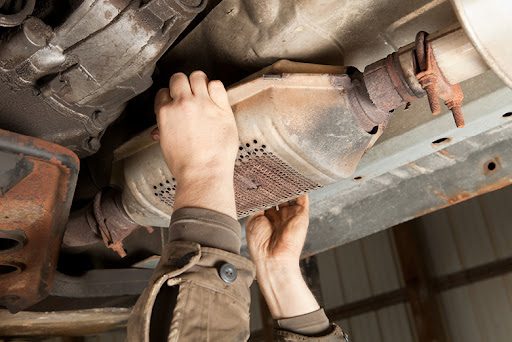

You press the gas pedal, and there it is, a rattling, metallic sound coming from somewhere underneath your car. It gets louder the harder you accelerate. If that sounds familiar, your catalytic converter is probably trying to tell you something. And ignoring it? That’s how small problems turn into expensive ones.
Let’s walk through what’s likely going on, how to figure out exactly what’s wrong, and what you can do to fix it.
Table of Contents
What’s Actually Causing That Noise?
Most of the time, a noisy catalytic converter comes down to one of a few common culprits:
The most frequent offender is a broken or damaged honeycomb structure inside the converter itself. That honeycomb is what converts harmful exhaust gases into less toxic stuff. When it cracks or breaks apart, the loose pieces rattle around inside the housing and you hear it every time you hit the gas.
But that’s not the only possibility. Here are the other usual suspects:
- Loose or rusted heat shields — They vibrate against the exhaust and create a buzzing or rattling sound.
- Mismatched seals or flex couplings between the engine and catalytic converter — Poor fitment lets things move around when they shouldn’t.
- Weak springs at exhaust joints — If the springs holding everything together don’t have enough tension, the joint rattles under exhaust pressure.
Sometimes the fix is as simple as tightening a few bolts or replacing a heat shield. Other times, you’re looking at a converter replacement. Either way, knowing the cause helps you avoid overpaying at the shop.
How to Tell What Kind of Noise You’re Dealing With
Not all catalytic converter noises sound the same, and the type of sound can point you toward the problem.
What to Listen For
A rattling or metallic clanking underneath the car during acceleration usually points to loose internal components or a detached heat shield. If it sounds like someone shaking a tin can full of rocks, the honeycomb inside the converter may have broken apart.
A high-pitched whining or squeaking, especially between 25 and 45 mph, can signal that the converter is starting to fail internally. Pay attention to whether the sound changes with speed or gear shifts. That detail helps a mechanic narrow things down fast.
Tools and Steps for Diagnosing It Yourself
If you want to get closer to an answer before heading to a shop, here’s a practical approach:
- Visual inspection — Get under the car (safely, on a lift or jack stands) and look for obvious damage. Check the heat shield, exhaust connections, and belts for anything loose, cracked, or corroded.
- Mechanic’s stethoscope — Place it on different parts of the exhaust system while someone revs the engine. This helps isolate where the noise is actually originating.
- OBD-II scanner — Plug in a scan tool and check for trouble codes related to the catalytic converter or exhaust system. A stored code can confirm what your ears are telling you.
When to Let a Pro Handle It
If you’ve done the basics and still can’t pinpoint the issue, it’s worth having a professional take a look. Have someone rev the engine while a mechanic inspects both the engine bay and the underside of the car. A dealership with proper diagnostic equipment can accurately determine whether the converter itself is at fault.
| Diagnostic Step | What It Tells You |
|---|---|
| Engine rev test | Where the noise is coming from |
| Visual check | Visible damage or loose parts |
| Dealer diagnostics | Definitive identification of the noise source |
Heat Shield Problems: The Most Common (and Cheapest) Fix
Here’s the good news, a lot of catalytic converter rattling isn’t the converter at all. It’s the heat shield.
The heat shield wraps around the converter to keep intense exhaust heat away from other components. Over time, the fasteners holding it in place can corrode, loosen, or break entirely. When that happens, the shield vibrates against the exhaust pipe, and it sounds terrible, even though the actual fix might cost you almost nothing.
What Causes the Shield to Come Loose?
- Degraded fasteners — Bolts and clips rust out, especially in areas with road salt.
- Corrosion — Years of exposure to moisture and temperature swings eat away at the metal.
- Physical damage — Hitting a pothole or running over debris can bend or dislodge the shield.
On older vehicles, this is incredibly common. Rust does its thing over time, and eventually, something gives.
How to Fix It
Start by inspecting the heat shield and its mounting points. If the shield is still intact but just loose, tightening or replacing the fasteners is usually all it takes. If the shield itself is corroded through or badly damaged, replacement is cheap and straightforward.
| Issue | What to Check |
|---|---|
| Loose components | Mounting points and fasteners |
| Corroded shield | Look for rust and deterioration |
| Excessive movement | Secure or replace the shield |
| Overheating risk | Make sure the shield is doing its job |
Don’t put this off. A missing or loose heat shield doesn’t just make noise — it can let heat damage nearby wiring, hoses, or even the undercarriage.
Internal Damage: When the Problem Is Inside the Converter
If the heat shield checks out fine, the noise might be coming from inside the converter itself. A broken or collapsed honeycomb is the most common form of internal damage, and it produces a distinctive rattling during acceleration.
This kind of damage usually happens because of:
- Engine misfires — Unburned fuel entering the converter can cause extreme heat and melt or crack the honeycomb.
- Overheating — Sustained high temperatures break down the internal structure over time.
- Physical impact — A hard hit from road debris can fracture the honeycomb.
You can sometimes confirm internal damage by listening carefully, if the rattle sounds like it’s coming from inside the converter housing rather than from an external component, that’s a strong clue. A visual inspection might also reveal debris or damage if you can get a look inside the converter’s inlet or outlet.
Don’t sit on this one. Internal damage only gets worse, and a converter that’s falling apart internally isn’t cleaning your exhaust properly either.
How a Noisy Converter Hurts Your Car’s Performance
A rattling catalytic converter isn’t just annoying, it’s actively costing you.
When the converter’s internals are damaged, it can’t filter exhaust gases efficiently. That means higher emissions and worse fuel economy. You might also notice a drop in engine power, especially during hard acceleration.
The vibrations from a loose or damaged converter can also stress other exhaust components, leading to cascading problems. Imagine a loose heat shield eventually wearing a hole in an adjacent exhaust pipe, now you’ve got an exhaust leak on top of everything else.
Catching these issues early keeps repair costs down and keeps your engine running the way it should.
How to Fix Catalytic Converter Noise
Depending on what’s causing the noise, repairs can range from dead simple to moderately involved. Here are three common fixes:
- Adjust spring force — Adding washers to compress the springs at exhaust joints can reduce vibration and eliminate rattling.
- Tighten connections — Properly torquing bolts and replacing worn gaskets removes slack in the converter’s mounting, cutting down on movement.
- Seal exhaust leaks — Applying muffler and tailpipe sealer around the downpipe gasket can quiet noise caused by small leaks.
If the internal honeycomb is destroyed, though, you’re looking at a full converter replacement. That’s pricier, but there’s no way to repair a shattered honeycomb, it has to come out.
How to Keep Your Catalytic Converter Quiet for the Long Haul
Prevention beats repair every time. A few simple habits can dramatically extend the life of your catalytic converter and keep it from making noise in the first place.
| Maintenance Task | How Often | Why It Matters |
|---|---|---|
| Inspect the exhaust system | Every 6 months | Catches loose shields, corrosion, and leaks early |
| Use high-quality fuel | Every fill-up | Reduces deposits and improves converter efficiency |
| Follow the manufacturer’s service schedule | Per your owner’s manual | Keeps engine performance optimized, protecting the converter |
Also worth mentioning: avoid overloading your vehicle and address engine misfires immediately. A misfire dumps unburned fuel into the converter, which is one of the fastest ways to destroy it.
The bottom line? That rattle you’re hearing during acceleration won’t fix itself, and the longer you wait, the more it’ll cost you. A 20-minute inspection today could save you a $1,000+ converter replacement down the road.