
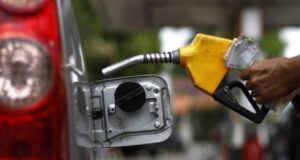

If you come across the message “Fuel System Monitor Not Ready”, do not panic. You’re not alone, and in many cases you’re not even dealing with a “broken car”—you’re dealing with an emissions self-test that has not finished running. This is one of the most common readiness issues drivers discover right before an inspection, right after repairs, or right after clearing a check-engine light.
That said, it’s still a message worth taking seriously. Readiness monitors are not random warnings; they’re your vehicle’s way of confirming that key emissions-related systems can be tested and verified under real operating conditions. If the fuel system monitor won’t complete, your vehicle may be unable to pass an emissions check, and you may also have a clue that something in the fuel-control strategy isn’t stable enough for the computer to certify it.
Table of Contents
So what exactly does “Fuel System Monitor Not Ready” communicate to you as the owner? Why does it happen? And how can you get the monitor to show READY without wasting time, money, or replacing parts blindly? I’ll walk you through it step by step—like a technician would—so you can fix the issue efficiently and confidently.
Fuel System Monitor Not Ready
“Fuel System Monitor Not Ready” is an OBD-II readiness status. It indicates that your vehicle’s computer has not completed (or cannot complete) the self-test for the fuel system’s ability to control the air/fuel mixture properly. When this monitor is incomplete, your vehicle may be considered not ready for an emissions test, even if it drives normally and even if the check engine light is off.
To make sense of this, it helps to understand what OBD-II is actually doing in the background. Your vehicle’s On-Board Diagnostics system doesn’t just wait for a part to “fail.” It constantly measures sensor data, compares real conditions to expected conditions, and runs a series of automated evaluations called monitors. Some monitors run under very specific conditions (for example, highway cruise, cold start, or deceleration), while others are more continuous.
The fuel system monitor is used by the Powertrain Control Module (PCM/ECU) to evaluate how well the fuel system maintains the correct fuel mixture inside the combustion chamber. The goal is to maintain the correct air/fuel ratio so combustion remains clean, efficient, and low-emission. This monitor typically runs when the vehicle is in closed loop—a mode where the ECU actively adjusts fueling based on oxygen sensor feedback.
When the system is healthy, the ECU can consistently correct for small changes in air flow, engine load, temperature, and fuel delivery. It does that through fuel trims (short-term and long-term corrections). If the ECU cannot stabilize those corrections within an acceptable range—or if conditions prevent the test from running at all—the OBD system may report the fuel system monitor as incomplete.
The “Fuel System Monitor Not Ready” status can appear when the OBD system detects a fuel-control change that could increase emissions, or when the ECU cannot complete its emissions checks because the enabling conditions aren’t met. In plain terms, your car’s computer is saying: “I can’t confirm fuel-control compliance right now.”
One key detail in the original concept is important: the fuel system monitor is often considered a continuous monitor on many vehicles. That means it runs frequently once the vehicle is in the right mode, especially if there are no active trouble codes. However, “continuous” does not mean “instant.” If the ECU never enters stable closed loop, if voltage is unstable, if fuel trims are extreme, or if codes are present, the monitor may not complete and readiness may remain blocked.
You might fail a smog test with just this continuous monitor’s not-ready condition depending on your local inspection rules. Some programs allow one monitor to be not ready; others are strict, and some treat fuel system-related readiness differently. That’s why it’s smart to fix it early rather than discovering the problem the day of your inspection.
How the Fuel System Monitor Works (and Why It Gets Stuck)
When diagnosing readiness issues, I always start with a simple principle: a monitor needs both “permission” and “data” to complete.
Permission comes from the ECU’s enabling criteria. Many monitors will not run if:
- There are active or pending trouble codes (DTCs).
- Battery voltage is unstable.
- The engine isn’t at operating temperature.
- Closed loop has not been achieved.
- Fuel level is outside an acceptable window (varies by vehicle).
Data comes from sensor signals and measured engine behavior. For the fuel system monitor, the ECU is “watching” inputs such as:
- Oxygen sensor response and stability
- Mass airflow (MAF) or manifold pressure (MAP)
- Coolant temperature
- Fuel pressure and injector command behavior (directly or indirectly)
- Short-term fuel trim (STFT) and long-term fuel trim (LTFT)
- Evaporative system behavior (purge/vent in some situations)
If any of these signals are missing, unrealistic, unstable, or outside expected ranges, the ECU may refuse to complete readiness because it cannot validate the results. In that way, an incomplete fuel system monitor is often a symptom—not a part that “needs to be reset.”
Now, that doesn’t mean you need an expensive repair every time. In many cases, the cause is something as simple as a recent battery disconnect, a recent code-clear, or driving patterns that never allow stable conditions. But if your monitor stays incomplete after you do the correct steps, that’s when you treat it like a diagnostic clue pointing to fuel-control instability.
Some Causes of “Fuel System Monitor Not Ready”
There are multiple reasons this monitor may remain incomplete. The original list highlights several common triggers. Below, I’ll keep those core causes, but I’ll also expand the context so you can recognize which one matches your situation. As an expert rule: the fastest fix is the one that matches the cause.
Recent car battery disconnection
If you recently disconnected your battery—whether for repairs, battery replacement, alternator work, stereo installation, or even cleaning terminals—you may have reset the ECU’s learned memory and readiness history. On many vehicles, a power reset sets multiple monitors to NOT READY until the ECU completes its testing again.
This is one of the most common scenarios:
- No check engine light
- Vehicle drives fine
- Readiness shows one or more monitors incomplete
In this case, the solution is usually not a repair. It’s a correct drive cycle and enough stable driving to rebuild readiness.
Failed or repaired Fuel System
Another underlying cause is recent fuel system work—or a fuel system that is malfunctioning. If components such as fuel injectors, fuel filter, fuel pressure regulator, fuel rail sensor, or even the fuel pump are not performing correctly, the ECU may not be able to stabilize the mixture consistently enough to complete the monitor test.
Additionally, repairs can introduce temporary readiness issues because:
- Electrical connectors may be loose or not fully seated.
- A fuse may be disturbed during repair work.
- Air can be introduced into the fuel system (especially after certain service procedures).
- Fuel trims may need time to relearn after a component change.
A break in power during replacement, or clearing codes after the repair, can reset monitors and require a drive cycle to restore readiness.
Faulty OBD system
Yes—sometimes the OBD system itself (or what people call “the OBD system”) is part of the problem. More accurately, the issue may be with sensors and circuits that feed data to the ECU. A scan tool might display “fuel system monitor not ready” when the ECU cannot trust the data it needs.
Other components that can contribute include the fuel tank sensor and the oxygen sensor. If these inputs are faulty, damaged, contaminated, or behaving erratically, fuel control becomes unstable and the ECU may keep the fuel not ready. In practice, what looks like “a monitor issue” is often a sensor signal issue preventing testing.
From an expert standpoint, the key is to distinguish between:
- Readiness reset (normal after battery disconnect or code clearing)
- Readiness blocked (because a fault is present or conditions aren’t met)
- Readiness failing (because a system can’t meet emissions expectations)
That difference determines whether you need driving time, a simple fix (like a gas cap), or actual diagnostics (like fuel pressure testing).
Additional Real-World Causes Technicians Check (Often Overlooked)
Even though the sections above cover the original core ideas, there are several additional “usual suspects” that commonly keep fuel monitors from completing. If you want a more complete understanding—and fewer wasted trips—these are worth knowing.
Vacuum leaks and unmetered air
A vacuum leak introduces air that the ECU did not measure (unmetered air). That drives the mixture lean and forces the ECU to add fuel. If the corrections become excessive, fuel trims go out of range and the monitor may remain incomplete or fail its logic.
Common vacuum leak sources include cracked PCV hoses, intake manifold gaskets, brake booster leaks, loose intake clamps, and brittle vacuum lines—especially on older vehicles.
Dirty or failing MAF sensor
If the mass airflow sensor under-reports or over-reports airflow, fueling calculations become inaccurate. The ECU can “fight” the problem with fuel trims for a while, but if corrections become unstable, readiness may not complete. In many cases, careful MAF cleaning (with proper MAF cleaner, not brake cleaner) can improve stability, though replacement is sometimes needed.
Exhaust leaks before the O2 sensors
An exhaust leak upstream of an oxygen sensor can draw in outside air and trick the sensor into reporting a lean condition. The ECU then adds fuel to compensate—causing rich operation and unstable trims. That affects fuel system monitoring directly because the ECU can’t trust the feedback loop.
Stuck-open thermostat or incorrect coolant temperature data
Many monitors require the engine to reach and hold operating temperature. If the thermostat is stuck open, the engine runs cooler than intended, and the ECU may delay closed loop or prevent certain tests. Likewise, a faulty coolant temperature sensor can report incorrect temperature, confusing fuel strategy and readiness criteria.
Fuel pressure problems
Low fuel pressure, a weak pump, a restricted filter, or a malfunctioning regulator can cause lean operation under load and unstable trims. High fuel pressure can cause rich operation. Both scenarios can interfere with monitor completion because the ECU cannot keep the mixture controlled within expected correction ranges.
These are not “monitor fixes.” These are underlying performance problems that the monitor is revealing.
How to Get Your Fuel System Monitor Ready
To pass an emission test, you must get your monitors ready. That begins with a basic rule: do not chase readiness until you know there are no active or pending trouble codes. If codes exist, some monitors may not run at all. If a check engine light is on, address that first.
For the fuel system monitor, try the following suggestions. I’ve rearranged the list into a more effective order—starting with checks that cost nothing, then moving toward component-level work.
- Ascertain the performance of the OBD system itself. Use a scan tool to check for active and pending DTCs, verify battery voltage (if available), and confirm whether the vehicle is entering closed loop. If you have pending fuel trim or oxygen sensor codes, fix those first.
- Ensure your gas cap is in good condition and not loose. Otherwise, you may need to replace it. While a loose gas cap is more often tied to EVAP monitors, it can also create fuel-control instability in some scenarios due to purge/vent behavior and may contribute to readiness complications.
- You may need to drive your vehicle around to reset the system if you replace or reconnect your battery. Make sure your fuel level is between 35% and 85%. Then turn on your engine and idle for 10 to 12 minutes. After that, drive your car between a speed of 50 and 60 mph to complete a drive cycle.
- Check and replace damaged parts in your fuel system. Pay attention to injectors, fuel filter (if serviceable), fuel pressure regulator, fuel rail sensor (if equipped), and vacuum lines that affect fueling.
- Clean the fuel injections thoroughly. Check for any blockage, and if it is necessary to change them, do so. Injector clogging can create uneven cylinder fueling, which destabilizes fuel trims and closed loop correction.
- Check if the fuel pump is not damaged. If you must replace it, do so. In the fuel system, the fuel pump supplies fuel to the engine. But if the fuel pump is not functioning as it should, it can lead to different issues, like the Fuel System Monitor Not being Ready.
- Change the oxygen sensor if it is no longer functioning. Oxygen sensor feedback is central to closed loop fuel control. If the sensor is slow, contaminated, or the heater circuit is weak, the ECU may not be able to certify fuel control accurately enough to complete the monitor.
The most important mindset shift here is this: getting the monitor ready is usually about stabilizing fuel control—not tricking the ECU. If the underlying system is healthy and you drive under the right conditions, readiness should return naturally.
A Technician’s “No-Waste” Workflow (Do This Before Driving 100 Miles)
If you want to minimize wasted time, here’s the diagnostic workflow I recommend before you commit to long highway drives. This is especially valuable if your monitor has been incomplete for a while, or if you’ve already attempted drive cycles with no success.
- Scan for codes: check for stored and pending DTCs. Pending codes matter; they can block monitor completion even without a check engine light.
- Check readiness overview: confirm which monitors are incomplete. If many monitors are not ready, you likely have a recent reset or a persistent blocking fault.
- Verify closed loop: confirm the car goes into closed loop after warm-up. If it stays open loop, fix that first (coolant temp sensor, thermostat, O2 heater, etc.).
- Review fuel trims: observe STFT and LTFT at idle and at steady cruise. Extreme trims are a strong hint of vacuum leaks, MAF issues, fuel pressure problems, or exhaust leaks.
- Quick physical checks: inspect intake tubing, vacuum lines, PCV system, and obvious exhaust leaks. Confirm connectors are seated after repairs.
- Then do the drive cycle: once the system is stable, the drive cycle becomes productive rather than random.
This workflow helps you avoid the common frustration of “I drove 80 miles and it still didn’t set.” If the ECU is blocked, driving more won’t help. Fix the blocker first.
How to Find out if On Board Diagnostics (OBD) system is ready for Check
You can often verify whether your car’s OBD system is ready for emissions inspection without any special tools—though a scan tool is the most reliable method. Some automakers provide an instrument cluster or check-engine-light blinking procedure that indicates readiness status. Other brands don’t provide a simple manual method, which is why scanners are so common now.
If you do not have a scan tool and your manufacturer supports a readiness blink test, you can try the maker-specific procedures below. Keep in mind: these procedures are not universal and may not work for all model years.
Here are maker-specific emissions check procedures for a few car models and makes.
If you own a Honda or Acura model, follow this emission inspection method:
- Turn on the ignition
- Allow it for 20 seconds (don’t start the engine)
- Wait for the check engine light to come up
- If the check engine light (CEL) blinks five times, then the fuel system monitor (FSM) isn’t ready. If the light goes off, then the system is ready.
Expert note: If this procedure doesn’t behave as described, don’t assume the car is broken. Many Hondas/Acura models vary by year and ECU type. A scan tool remains the most consistent option.
The fuel system monitor emission checks for Dodge, Chrysler, and Jeep models require the following steps:
- Switch on the ignition without starting the engine
- Allow the check engine light to come on after a few seconds, 15 to be exact.
- Does the check engine light blink 10 times and then remain on the solid? Your fuel system monitor isn’t ready.
- If the light doesn’t blink but yet remains on the solid, then your fuel system monitors are ready for emissions inspection.
Practical caution: Some cluster behaviors can also reflect bulb checks or ECU communication issues. If anything seems inconsistent, verify with a scanner rather than relying on the blink count alone.
For owners of Mercury, Lincoln, and Ford, use this technique:
- Insert your ignition key into the car
- Switch your car ignition to the “ON” position
- Allow it to stay for at least 15 seconds (do not start the engine)
- The fuel system monitor (FSM) is not ready if the CEL flashes eight times.
- The monitor is ready if the CEL stays on solid.
Expert note: Ford platforms often have robust scan-tool support, and even an inexpensive reader can show readiness clearly. If you’re dealing with repeated readiness failures on a Ford, fuel trims and O2 sensor heater operation are especially worth checking.
Drive Cycle Reality: Why Some Cars Need “Just a Few Miles” and Others Need Several Trips
One of the most frustrating parts of readiness issues is inconsistency. One driver says: “I drove 15 minutes and everything turned ready.” Another says: “I drove for two days and it still won’t set.” Both can be telling the truth, because drive cycles vary by:
- Vehicle make/model/year
- Engine type (turbo vs non-turbo, direct injection vs port injection)
- Ambient temperature
- Driving style (steady cruise vs stop-and-go)
- Traffic conditions (ability to decelerate without braking, ability to hold a steady throttle)
- Vehicle health (fuel trims stable vs unstable)
When people say “drive 50–100 miles,” they’re offering a rough rule of thumb that often works when the vehicle is healthy and the monitor was reset by a battery disconnect or code clearing. But if the ECU is blocked, those miles won’t help. That’s why scanning fuel trims and confirming closed loop before the drive cycle is so valuable—it tells you whether the ECU is likely to complete the test at all.
When You Should Stop DIY and Get a Professional Diagnosis
DIY is excellent for readiness resets and basic checks. However, there’s a point where repeating drive cycles becomes unproductive. If any of the following are true, professional diagnosis may save money rather than cost money:
- You have repeated incomplete readiness after multiple correct drive cycles.
- Fuel trims are consistently high or unstable (a sign of a real fueling problem).
- The vehicle has drivability symptoms: rough idle, hesitation, poor fuel economy, stalling, or misfires.
- There are pending DTCs that return after clearing.
- You suspect fuel pressure issues (which require testing tools).
- You suspect vacuum leaks or exhaust leaks that require smoke testing.
A competent technician can often identify the blocker quickly by observing live data, checking heater circuit current, verifying sensor switching, and measuring fuel pressure. That is far more accurate than “guess and replace.”
Final Thoughts
The Fuel System Monitor Not Ready message means your car cannot complete its emissions-related fuel-control checks for one reason or another. Depending on your local inspection requirements and your vehicle’s model year, you may fail an emissions test if this monitor remains incomplete—even if the check engine light is off.
Until you get your monitor ready and clear other DTCs, you will not pass a smog test. The good news is that many cases are caused by recent battery disconnects, ECU resets, or incomplete drive conditions and can be resolved by correct driving and stable operating conditions. The more stubborn cases point to underlying issues such as vacuum leaks, sensor faults, fuel pressure problems, or unstable fuel trims—and those require real diagnosis, not just more miles.
For the smooth running of your car, follow the suggestions in this article methodically. Start with a scan for codes and readiness, verify closed loop and fuel trim stability, then perform a proper drive cycle. If the monitor still refuses to set, consider professional help so you can fix the true cause efficiently and avoid replacing good parts.