

Driving a car that sits too low to the ground can become irritating very quickly. What looks sporty and sleek in a parking lot may feel far less appealing when the front bumper scrapes on a steep driveway, the underbody kisses a speed bump, or getting in and out of the seat starts to feel like a daily stretching exercise. For taller drivers, older drivers, or anyone dealing with stiffness, a low vehicle can turn simple errands into an awkward routine. For drivers on rougher roads, a car with very little clearance can feel like it is always one pothole away from an expensive repair.
That is why so many owners eventually ask the same question: can a low car be raised in a practical way?
Table of Contents
The answer is yes, but with an important warning. Increasing ground clearance is possible, yet it is not something to do casually or blindly. The suspension, steering geometry, wheel alignment, tire size, driveshaft angles, ride comfort, braking feel, and even the car’s safety systems can be affected by changes in height. A small increase done properly can make a vehicle easier to live with and more resilient on rough roads. A poorly planned lift can create handling problems, uneven tire wear, vibration, or parts damage that cost more than the original scraping issue ever did.
As someone who approaches vehicle modifications from a chassis and mechanical-safety perspective, I always recommend beginning with diagnosis before modification. In many cases, the car is not “naturally too low” at all. Worn springs, sagging struts, damaged bushings, overloaded cargo areas, or incorrect tire sizes may be the real reason the vehicle is sitting lower than it should. If that is the case, restoring the car to its original ride height may solve the problem without any custom modification at all.
However, when the vehicle is healthy and still sits lower than your real-world driving conditions allow, there are several ways to raise it. Some methods are simple and relatively affordable. Others are more technical, more expensive, and more appropriate for specific vehicle types. The most common paths involve taller tires, suspension changes, combining both, or—on certain body-on-frame vehicles—a body lift. Each route has its own strengths, tradeoffs, and mechanical consequences.
In this in-depth guide, I will explain why you might want more ground clearance, what to check before modifying anything, and the four most practical ways to raise a vehicle’s height. I will also cover the downsides, the hidden costs, the safety considerations, the vehicles that respond best to each method, and the situations where lifting a car is a good idea versus when it is better to leave the car alone or replace it with something better suited to your needs.
If your vehicle feels too close to the pavement, or if you are simply tired of winching your spine into a low seat every morning, this guide will help you make a smarter decision.
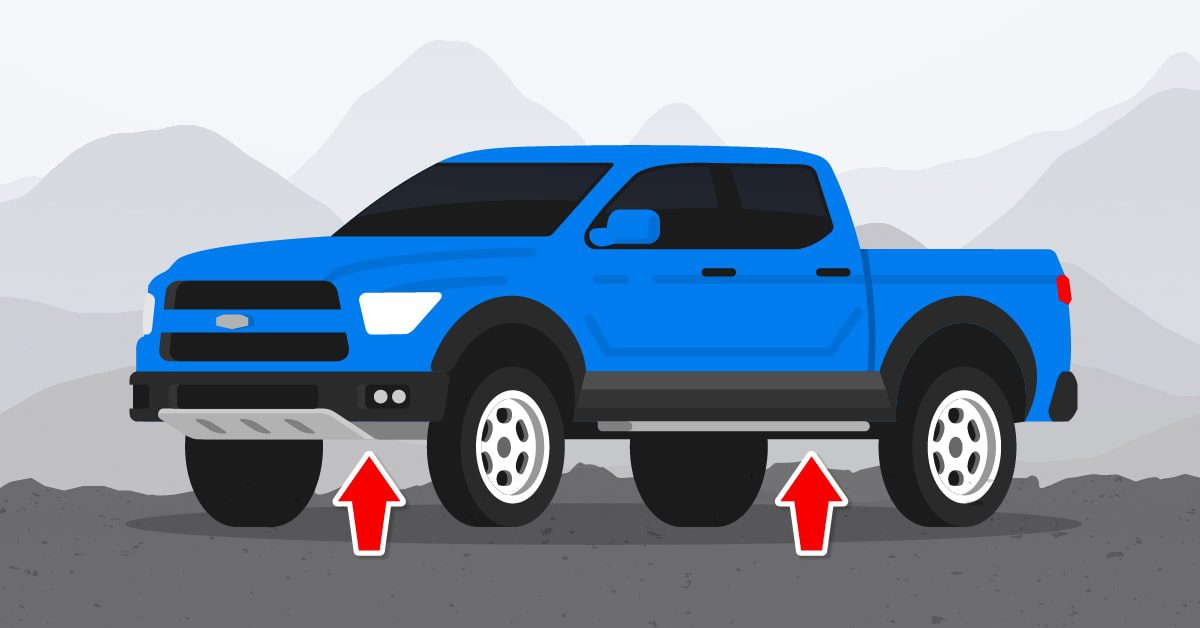
Why Increase Your Car’s Ground Clearance?
Ground clearance is the distance between the lowest fixed part of a vehicle and the ground beneath it. It sounds like a simple measurement, but it influences far more than many drivers realize. It affects ease of entry, underbody protection, winter drivability, driveway clearance, speed-bump survival, off-pavement confidence, and even how often you hold your breath pulling into a parking lot.
The first reason many drivers want more ground clearance is comfort. Low cars often require you to drop down into the seat and then pull yourself back out again. For younger drivers with no mobility issues, that may be only a minor inconvenience. For tall people, drivers with knee or back pain, or anyone who uses the car multiple times a day, it can become genuinely frustrating. There is a big difference between enjoying a low sports coupe on a weekend and living every day with a low daily driver that constantly reminds you how much your joints dislike it.
The second reason is protection. A car that sits very low is much more vulnerable to road obstacles. It may scrape on driveway transitions, steep ramps, broken pavement, raised manhole covers, speed humps, or road debris. The underbody, front lip, exhaust, splash shields, oil pan, and even the subframe can be at greater risk. Sometimes the damage happens gradually, through repeated light scraping. In other cases, one hard contact is enough to crack plastic trim, bend an exhaust section, or tear an undertray loose.
The third reason is road quality. Not every driver lives in an environment where the pavement is smooth and predictable. Some deal with gravel roads, poorly maintained urban streets, winter snow buildup, construction zones, or deeply crowned rural lanes. A car that feels perfectly fine in one region may feel vulnerable in another. Ground clearance that is adequate in one city can become impractical in a different climate or road environment.
The fourth reason is loading and use. A vehicle that clears everything easily with one driver and a half tank of fuel may sag enough to scrape once passengers, luggage, tools, or camping gear are added. Some owners discover their vehicle is acceptable 90 percent of the time but becomes annoying the moment they use it for road trips, family hauling, or seasonal travel.
Finally, there is the simple emotional reason. Some people just do not like the constant feeling that the car is one inch away from hitting everything. Even if the damage risk is moderate, the stress of driving cautiously over every dip and incline wears people down. A small increase in ride height can make the vehicle feel more usable and less fragile.
All of those are valid reasons to want more clearance. But before choosing a solution, you need to know whether your car is actually “too low by design” or whether something is worn, damaged, or incorrectly sized.
Before You Lift the Car, Check Whether It Is Actually Sitting Lower Than It Should
This is one of the most important steps in the entire process, and it is the one many owners skip. A surprisingly large number of vehicles that “need to be lifted” really need to be repaired.
Suspension components wear over time. Coil springs sag. Struts weaken. Rubber isolators compress. Bushings deteriorate. Rear springs on vehicles that have carried heavy loads for years often settle lower than they did when new. A car that once had normal ground clearance can gradually become a low-riding problem car simply because the suspension is tired. If you add larger tires or spacers to a worn suspension, you may be treating the symptom while leaving the real issue untouched.
Start with a visual check. Look at how evenly the vehicle sits from side to side and front to rear. If one corner is clearly lower than the others, that points more toward a worn or damaged suspension component than toward a factory ride-height issue. Compare the wheel gap at each corner. Uneven height should always raise suspicion.
Next, think about recent changes. Did the car become “too low” after installing cheaper replacement springs or struts? Did the problem start after adding oversized cargo systems, audio equipment, towing hardware, or a heavy trunk setup? Did you recently buy the car used and assume the current height was factory correct? It may not be. Previous owners often install lowering springs, cut springs, body kits, or aftermarket wheels without leaving any clear documentation behind.
Tire size matters here too. Tires wear down over time, and a vehicle on badly worn or undersized tires will sit lower than the same vehicle on fresh tires of the correct diameter. The difference may not be huge, but it can be enough to matter if the car already operates close to the edge of practicality.
This is also the moment to check the basics: is the car overloaded? Is there a full trunk of tools, spare parts, or construction material in the back? Is the spare tire setup incorrect and dragging one side down? Is a trailer tongue weight compressing the rear suspension? You would be surprised how often “suspension problems” turn out to be use-pattern problems.
If your car is visibly sagging, rides poorly, bottoms out more often than it should, or looks lower than similar examples of the same model, your first investment should be diagnosis—not lift hardware. Restoring healthy factory suspension often gives you the clearance you were missing without any custom modification.
Once you have confirmed the car is healthy and still too low for your needs, then it is time to choose a lifting strategy.
The Four Most Practical Ways to Raise a Vehicle’s Height
There is no single best method for every vehicle. The right choice depends on the design of the car, how much extra clearance you need, how much money you want to spend, and how willing you are to accept tradeoffs in handling, ride quality, and appearance.
The four most common methods are:
First, switching to taller tires.
Second, modifying the suspension with taller springs, spacers, or height-adjustable components.
Third, combining tire and suspension changes for a greater total increase.
Fourth, using a body lift—but only on vehicles designed in a way that makes body lifting possible, which excludes most normal passenger cars.
Each of these can add somewhere between roughly one inch and several inches of additional height, depending on the vehicle and method. But none of them are equally appropriate in every situation. Let’s go through them in the most practical order.
Method 1: Upgrade to Taller Tires
If you want the simplest and usually least invasive way to gain some extra clearance, start with the tires. Among all practical lifting methods, this is often the easiest first step, especially if the current tires are worn and already due for replacement.
The important word here is taller, not just wider. Many drivers assume a wider tire automatically raises the car. It does not. Width mainly changes the contact patch and sidewall shape. What raises the vehicle is an increase in the tire’s overall diameter. Because only half of the diameter increase affects ride height, the actual clearance gain is always smaller than the diameter increase itself. For example, increasing tire diameter by 1 inch typically raises the car by about 0.5 inch.
That may not sound dramatic, but even half an inch can matter in the real world. It can be the difference between lightly brushing a driveway apron and clearing it cleanly. A full inch of extra clearance from tire diameter can feel very noticeable on a low-sitting car.
From a practical standpoint, a tire upgrade makes the most sense when you are already replacing tires. If the current set is worn down, you were going to spend money anyway. Choosing a slightly taller approved size can improve both ground clearance and the daily usability of the vehicle without diving immediately into suspension work.
However, this method has limits. Tire size changes must stay within the clearance envelope of the car. If the tires are too tall, they can rub the fenders, inner liners, struts, or wheel wells during steering and suspension compression. The car may also see changes in speedometer accuracy, gearing feel, acceleration, braking response, and fuel economy. Anti-lock braking, traction control, and advanced driver-assistance systems can also become more sensitive if tire size changes too far from factory specification.
That is why I never recommend guessing with tire size. Use approved fitment data, a trusted tire professional, or a vehicle-specific fitment calculator. You need to know how much room exists at full steering lock, under hard suspension compression, and near brake and strut components.
Another important expert point: replace all four tires together with the same size if the vehicle is designed for square fitment. Mixing tire heights side to side or front to rear on a vehicle that was not built for it can upset handling, stress drivetrain components, or confuse stability-control systems. On all-wheel-drive vehicles, mismatched diameter can be especially harmful.
So yes, taller tires are a very smart way to gain clearance. But “a bigger tire” is only a smart idea if it is still the right tire for the vehicle.
What Taller Tires Improve
The biggest advantage of taller tires is that they raise the car without forcing you to redesign the suspension. They also preserve a more factory-like ride quality compared with some aggressive lift methods. In some cases, a taller sidewall can even improve comfort slightly because there is more rubber to absorb small road imperfections.
Another benefit is simplicity. If you already need new tires, the installation process is straightforward. There is no need to disassemble struts, swap springs, or realign major suspension geometry unless the tire change is large enough to require additional corrections.
A taller tire can also improve protection for the wheels and help the vehicle look more proportionate if the factory setup felt too tucked or too low visually.
What Taller Tires Can Complicate
There are tradeoffs. A larger-diameter tire effectively changes final drive behavior. That can make acceleration feel a little softer because the tire travels farther per revolution. The speedometer may also read slightly low if not recalibrated, meaning you could be traveling faster than the dash indicates.
Steering feel may change too. A taller or heavier tire can slow response and increase effort slightly, especially if the wheel and tire package becomes much heavier than stock. In extreme cases, rubbing under full lock or during compression can make the car less usable rather than more.
This is why tire changes are best viewed as a mild-to-moderate lift strategy, not a free-for-all. Used carefully, they are one of the smartest ways to gain extra clearance. Used carelessly, they create a chain of other problems.
Method 2: Adjust the Suspension Height
If taller tires are not enough, or if the car’s clearance issue is severe enough that wheel diameter changes cannot solve it, the next option is suspension modification. This is where things become more technical, more expensive, and more dependent on correct installation.
The suspension controls not just ride height but also wheel movement, alignment geometry, handling, and ride quality. Changing it means you are altering one of the most important systems in the entire car. Done properly, this can raise the vehicle by roughly one to three inches in many applications. Done poorly, it can ruin the way the car drives.
There are several ways to raise suspension height. Some vehicles can use taller coil springs. Others use strut spacers or spring seat spacers. Some aftermarket coilover systems are height-adjustable in both directions, allowing the car to be raised or lowered within a designed range. Trucks and some SUVs may have lift kits built specifically for their suspension type. Passenger cars, however, often require a more cautious and limited approach because their suspension geometry is not meant for large changes.
The key advantage of suspension modification is that it creates genuine chassis lift. Unlike a tire change, which raises the car only by increasing wheel radius, a suspension change moves the body and chassis farther from the axle centerline itself. That can make a meaningful difference if your concern is underbody scraping, approach angle, or ease of entry.
But because the suspension affects so many systems at once, this is the point where I strongly recommend working with an experienced mechanic or suspension specialist. Even if you are an advanced DIY owner, you need to understand alignment changes, spring rate, strut travel, bump-stop behavior, and component angles before making decisions.
Taller Springs
Installing taller or higher-rate springs is one of the most common ways to lift a vehicle modestly. Springs support the weight of the vehicle, so changing their free height or spring rate alters where the body sits. In some cases, simply restoring sagged springs back to correct factory height already feels like a lift. In other cases, aftermarket lift springs are used to raise the car beyond stock height.
The big advantage here is that the lift is mechanically clean. You are not forcing a spacer between existing parts just to push the body upward. The spring itself is designed to support the new resting height. If done with high-quality parts matched to the vehicle, this can feel more natural than some other methods.
The tradeoff is ride quality. Taller or stiffer springs may improve clearance but make the vehicle feel firmer. If the spring rate changes too much, the ride can become bouncy or harsh unless the dampers are matched properly. That is why I rarely recommend springs alone without considering the shocks or struts that will be controlling them.
Strut or Spring Spacers
Spacers are another common approach, especially when the goal is a relatively modest lift without fully redesigning the suspension. A spacer can be installed above the strut assembly or in spring seating positions depending on the platform. This effectively pushes the body upward without replacing the main spring itself.
Spacers can be cost-effective, but they must be chosen carefully. Cheap, poorly designed spacers can introduce alignment issues, top-mount stress, or strange suspension geometry. They can also reduce available droop or compression travel if the system was not designed to accommodate them well.
That does not mean spacers are automatically bad. Many vehicle-specific spacer kits work very well when engineered correctly and installed properly. But this is not a category where I would trust unknown bargain parts. Precision matters here.
Height-Adjustable Suspension
Some vehicles can use height-adjustable coilovers or similar systems. These setups allow the suspension perch or body position to be changed in a controlled way. In enthusiast communities, coilovers are often associated with lowering cars, but they can also be used to raise them within the system’s intended range.
This option provides flexibility, but it also demands more knowledge. Not every adjustable system offers a healthy operating range above stock ride height, and some are tuned mainly for lowering. The shocks must still operate within an acceptable travel window, and the alignment must still be corrected afterward. This is often the best route for a driver who wants both custom stance control and careful tuning, but it is not usually the cheapest or simplest path.
Suspension Lift Side Effects
Any meaningful suspension lift changes more than body height. It changes the relationship between steering angles, axle or CV shaft angles, camber, caster, toe, roll center, and bump steer characteristics. On front-wheel-drive or all-wheel-drive vehicles, raising the body too much can increase the angle of the half-shafts and place extra stress on CV joints. On strut-type suspensions, the geometry window is often narrow. This is why most passenger cars do best with moderate lift changes rather than exaggerated ones.
You will almost certainly need a professional alignment after any suspension height change. Skipping alignment is not optional if you care about tire wear, steering feel, and safety. In some cases, adjustable arms, camber bolts, or additional correction parts may be needed just to bring the car back into proper specification.
This is also the stage where warranties, insurance, and local regulations can become relevant. Significant changes to ride height may not be welcomed by every insurer or inspection authority, especially if they affect headlight aim, bumper height, or wheel coverage.
So while suspension modification is one of the most effective ways to raise a vehicle, it is also the method that requires the greatest respect. This is not a casual bolt-on decision. It is a chassis decision.
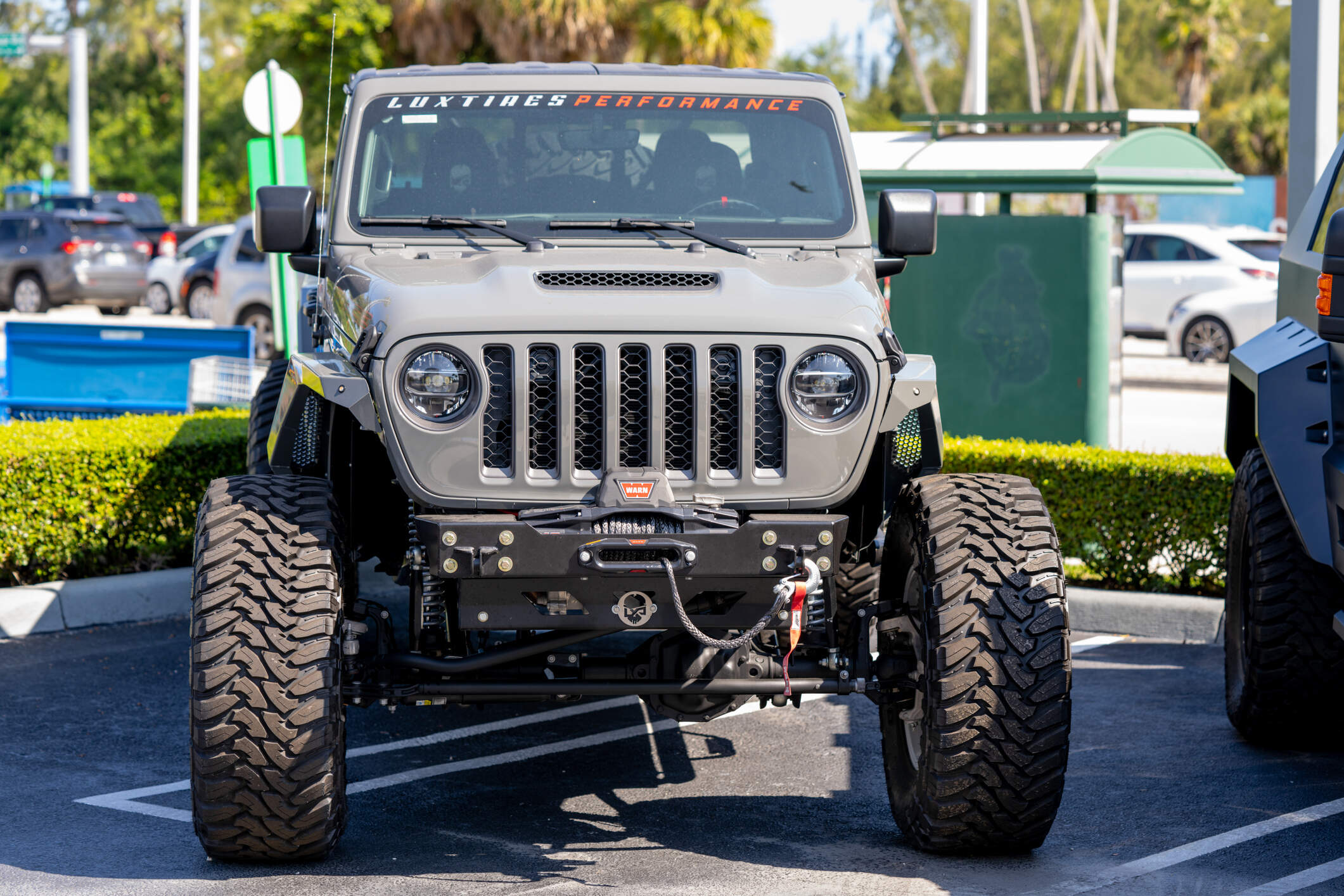
Method 3: Combine Taller Tires with Suspension Changes
If you need more clearance than either method can offer alone, combining a modest tire upgrade with a modest suspension lift is often the smartest overall strategy. Rather than pushing one system too far, you let each method contribute part of the total. This tends to create a better-balanced result than trying to gain all of the height from one change alone.
For example, suppose the car needs roughly two to four inches of additional usable clearance. Getting all of that from tires may be impossible without severe rubbing or speedometer issues. Getting all of it from suspension may create alignment headaches or awkward component angles. But if you gain a little from tire diameter and a little from the suspension, the total can become achievable with fewer side effects.
This is often the sweet spot for drivers who want meaningful improvement without turning the vehicle into something mechanically compromised. A one-inch gain from tire radius and another one to two inches from suspension work can transform a frustratingly low car into a more practical one while still preserving decent road manners and a factory-like feel.
That said, the combination method is not automatically simple. It requires planning. Tire clearance and suspension geometry have to be evaluated together, not separately. The new tire must still fit during full suspension compression, which matters more once the chassis has been lifted because owners often assume “more space” solves everything. In reality, arc movement, steering lock, and wheel offset still matter.
It also makes the alignment process more important. Combined modifications change the whole stance and operating range of the suspension. You need someone who understands how these changes interact, not just someone willing to install parts.
When executed well, however, this method often gives the best overall result. The car gains a more useful ride height, larger tires help visually balance the new gap, and the suspension does not need to be pushed to a mechanical extreme. For many owners, especially those trying to make a low vehicle more livable rather than turn it into a full off-road build, this is the most intelligent compromise.
Why This Combination Often Works Best
There is an engineering reason this approach works so well: it spreads the burden. Tires carry some of the change in height. Springs or spacers carry the rest. Neither system is forced into an extreme adjustment alone. That reduces the chance of side effects becoming dominant.
It also lets you tune the result to your exact needs. Maybe you only need another inch and a half for winter roads and driveway clearance. In that case, a mild tire increase plus a subtle spring correction may be perfect. Maybe you need closer to three or four inches for rural access roads. Then a more substantial but still moderate combined setup makes more sense.
From a visual standpoint, the combination method also tends to look more natural. A car with a suspension lift but tiny original tires can look awkward, as if the wheel gap was created by accident. A car with only oversized tires sometimes looks stuffed or mismatched. Combining both helps the proportions stay believable.
Method 4: Use a Body Lift—But Only if the Vehicle Is Built for It
A body lift is the most misunderstood method on the list because people often assume it works on any vehicle. It does not. In fact, it only makes sense on a vehicle with a body-on-frame construction, such as certain trucks and older SUVs. Most normal passenger cars, unibody crossovers, and modern sedans are not built in a way that makes a body lift practical or even possible in the traditional sense.
A body lift works by inserting spacers between the vehicle’s body and its frame. This raises the body shell relative to the chassis while leaving the suspension itself largely unchanged. That means the wheel and suspension geometry stay closer to stock than they would with a large suspension lift. It can add multiple inches of body height—often around four to six inches in the kinds of off-road truck applications where body lifts are common.
On the right vehicle, this can create serious visual and practical lift without the same degree of suspension-angle change. That is why body lifts became popular in the truck and SUV world. They allow larger tire clearance and a taller overall stance while avoiding some of the driveline and steering issues of very large suspension lifts.
However, on an ordinary low-riding car, this method is almost always irrelevant. Most modern cars do not have a separate ladder frame with a removable body shell floating above it in the way body-on-frame trucks do. Their body structure and chassis are integrated into one unibody. You cannot simply space the body upward from the frame because there is no separate frame-body relationship to exploit in the same way.
That means anyone driving a low sedan, hatchback, coupe, or modern crossover should not assume a body lift is a realistic path. It usually is not. This method belongs mainly to trucks, certain rugged SUVs, and older body-on-frame platforms where the structure was designed accordingly.
What a Body Lift Does Well
On the right platform, a body lift can create a dramatic increase in ride height and allow much larger tire fitment. Because the suspension is not lifted by the same amount, steering and axle geometry can remain more manageable than with an equally large suspension lift. It is often favored by drivers who want visual lift and tire room more than extreme wheel travel or hardcore suspension articulation.
It can also be less expensive than a full major suspension lift on some trucks because the hardware itself is simpler. But “simpler” does not mean casual. You still have to account for steering shaft length, shifter linkages, radiator positioning, bumper mounts, brake line movement, and other body-to-frame relationships.
What a Body Lift Does Poorly
Because the body rises without the frame and many suspension components moving by the same amount, a body lift can create visible gaps and proportion issues if not finished well. On trucks, this often shows up as increased space between the bumpers and body or a more obvious view of the frame. That is why body lifts often pair best with additional visual correction parts or larger tires that balance the new stance.
It also does not actually improve under-differential or axle clearance the way larger tires do. The body is higher, yes, but some of the lowest mechanical points remain where they were. This is an important distinction for off-road use. Body lift helps the body clear obstacles. It does not move the axle housings farther from the ground.
Most importantly, it is not the solution for typical low passenger cars. I include it here because it is one of the classic height-increase methods, but as an expert, I need to say clearly: for most low-riding everyday cars, a body lift is not the right path and often not an available path at all.
How Much Height Can You Realistically Gain?
Drivers often ask for a number before they ask for a method, which is understandable. They want to know whether the effort is worth it. The answer depends on the vehicle and the strategy.
With slightly taller tires, you may gain roughly half an inch to one inch of real ground clearance, sometimes a little more if the fitment window is generous. With modest suspension changes, you might gain one to three inches depending on the platform and parts used. Combining the two can often deliver two to four inches if the vehicle and geometry allow it. On suitable body-on-frame vehicles, a body lift can raise the body four to six inches, though again that does not automatically mean all underbody mechanical points gain that same amount of real clearance.
Those are useful guidelines, not promises. Real-world gains depend on what is physically possible within the wheel wells, suspension travel limits, alignment correction range, and the design tolerance of the car itself. One inch on a low sports sedan may already be meaningful. Four inches on a compact unibody hatchback may be unrealistic or mechanically irresponsible.
So yes, meaningful gains are possible. But the smartest builds are the ones where the target height is chosen based on the vehicle’s design, not just on the owner’s wish list.
What Raising a Car’s Height Can Change Beyond Ground Clearance
One of the biggest mistakes owners make is focusing only on how much higher the body will sit. Height is only one part of the story. Every change to ride height also changes the way the vehicle behaves. Sometimes the differences are small. Sometimes they are impossible to ignore.
Handling is the first and most obvious change. Raising a vehicle raises its center of gravity. That can increase body roll in corners, make steering feel slower, and reduce the immediate planted sensation low cars often have. The higher the lift, the more pronounced this tends to become. A one-inch increase may barely change the driving experience. A four-inch change absolutely will.
Braking can also feel different, especially if larger tires are heavier. More rotational mass asks more from the braking system. The car may need slightly more effort to stop crisply, and ABS calibration may feel different if tire diameter has changed noticeably.
Acceleration may soften if tire diameter increases because the effective gearing changes. The car travels farther per wheel revolution, which can make the engine feel less eager. The speedometer may also under-read unless recalibrated, meaning the car is moving faster than the dashboard suggests.
Fuel economy can change too. More tire drag, more aerodynamic exposure, and more weight in the wheel-and-tire package can all contribute to reduced efficiency. Again, the severity depends on how far the modification goes.
Then there are the hidden systems. Advanced driver-assistance features, headlight aim, lane sensors, radar calibration, and stability control can all be affected by substantial changes in ride height or tire diameter. This is especially true in newer vehicles with integrated driver-assistance technology.
None of this means lifting a vehicle is a bad idea. It means lifting a vehicle is a meaningful idea. If you are going to change the chassis, be prepared for the car to drive differently too.
When Raising the Car Is the Right Answer—and When It Isn’t
There are situations where lifting the vehicle makes perfect sense. If you regularly scrape on your driveway, drive on rough roads, live in snow-heavy areas, or physically struggle with entering and exiting a very low car, a modest increase in ride height may improve your quality of life noticeably. If the car otherwise suits your needs and is in good mechanical condition, modifying it intelligently can be more practical than replacing it.
But there are also times when lifting the car is the wrong answer. If the vehicle is already poorly suited to your environment—say, an extremely low sports coupe in a rural area with rough roads year-round—forcing it to become something it was never designed to be may not be cost-effective. Likewise, if the car’s suspension is simply worn out, you should repair it before modifying anything. If your goal is six inches of additional height on a normal unibody sedan, you are asking the car to do something outside its sensible design envelope.
In those cases, the better answer may be to sell the low vehicle and move into something with naturally greater clearance. There is no shame in that. Modifying the wrong platform beyond its comfort zone can cost more than changing vehicles and still leave you with a compromised result.
The best lift projects are the ones that respect the nature of the vehicle. They solve a real problem without trying to transform the car into a completely different species.
Professional Help Is Often the Smartest Investment
Of the four methods discussed here, only tire replacement is routinely simple enough for an average owner to treat casually, and even that requires correct sizing and fitment judgment. Once you move into spring changes, spacer installation, or anything resembling a body lift, the work becomes serious enough that professional input is highly recommended.
A skilled mechanic or suspension specialist can tell you whether the current ride height is normal, whether the springs are tired, how much clearance your wheel wells really have, what tire diameter increase is realistic, and how the steering and alignment will need to be corrected after the change. That sort of knowledge saves money because it prevents you from buying parts that solve the wrong problem or create new ones.
It also protects safety. Suspension and steering are not cosmetic systems. They control how the vehicle turns, stops, and reacts during emergencies. A poorly planned lift may look fine parked in the driveway and still behave badly at speed. This is not the kind of modification where “close enough” should ever be the standard.
If your vehicle needs more ground clearance, the cheapest part of the process should not be the thinking. Get the diagnosis right first. Then choose parts and methods that suit both the car and the reason you want it higher.
Final Thoughts
Raising a low-riding car is possible, but the smartest method depends on why the car feels too low in the first place and how much extra clearance you truly need. In some cases, the best fix is not a custom lift at all, but a return to proper factory ride height through suspension repair and fresh correctly sized tires. In other cases, a mild increase through taller tires, suspension modifications, or a carefully planned combination of both can make the vehicle dramatically easier to live with.
The four main strategies—taller tires, suspension adjustment, combining both, or using a body lift on suitable vehicles—each have real strengths. But they also come with real consequences. Ride quality, handling, alignment, driveline angles, speedometer accuracy, and even advanced safety systems may all be affected. That is why lifting a car should never be treated as a cosmetic shortcut. It is a mechanical change with practical consequences.
For everyday drivers, the best results usually come from modest, well-planned changes rather than dramatic ones. A small increase done intelligently often solves the scraping, comfort, or road-clearance problem without turning the car into something awkward or compromised. The goal is not just to make the vehicle taller. The goal is to make it more usable without making it worse at everything else.
If you approach the project with that mindset—and with the right professional guidance when needed—you can absolutely improve your vehicle’s ground clearance in a safe and effective way. Just make sure you solve the real problem, not the problem you only think you have.