
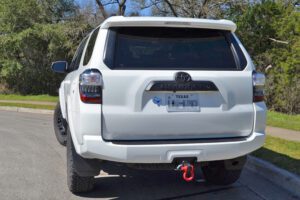

Few things are more annoying than walking up to your Toyota 4Runner, pressing the hatch release like you’ve done a thousand times, and getting… nothing. No click, no movement, no satisfying “thunk”; just a stubborn rear hatch that refuses to open. For many owners, this becomes more than a mild inconvenience. A stuck rear hatch can trap groceries, tools, emergency gear, or even prevent you from accessing a spare tire kit depending on how you’ve packed your cargo area.
Rear hatch problems are common enough on the 4Runner that I consider them a “known frustration” rather than a rare fluke. The good news is that most causes are straightforward: a sensor condition that isn’t met, a latch/actuator issue, corrosion or dirt, a wiring problem, or a keyless-entry limitation you didn’t know the vehicle enforces. It can feel like the truck has randomly turned on you; but in reality, the hatch system is following rules. When one of those rules isn’t satisfied, the hatch stays locked.
Table of Contents
If your Toyota 4runner rear hatch ever gets stuck or fails to open, you’ll either get rid of it or simply fix it. Keep reading as this article provides the information you need to sort out your rear hatch stuck problem.
My goal here is to help you troubleshoot like a professional: start with the simplest checks that solve the majority of cases, then move toward the less common (but more technical) failures. Along the way, I’ll point out what symptoms matter, how to avoid breaking trim pieces, and when it’s smarter to call a locksmith or technician instead of forcing the hatch and making the repair more expensive.
Why Is My Rear Hatch Not Opening?
A liftgate is a motorized backdoor that automatically opens and closes through an electronic system. The system also functions by pressing or pushing a button in a vehicle. This grants the owner or driver the ability to control the back door with just a pull or push. The rear hatch not opening is one of the common unexpected issues a car owner may face.
Even on 4Runner trims that do not fully power-open the liftgate like a minivan-style power tailgate, the release mechanism is still largely electronic: a switch/handle request is sent to the body control logic, which then commands the latch actuator to release; provided the vehicle agrees conditions are correct (doors unlocked, valid key fob present, glass position acceptable, and no anti-theft conditions active). That means a hatch that won’t open is often caused by the system refusing the request, not simply because the physical latch “forgot” how to move.
You may experience rear hatch issues as a result of one or more underlying issues. Here are some possible causes of the rear hatch stuck in the Toyota 4runner.
- Unresponsive key fob: The fob allows you to control a keyless lock system. Using an unresponsive key fob to open your rear hatch may cause it to not open. How? Your car key fob is mostly located next to the rear hatch, not in all cases though. It doesn’t matter if you unlock all four doors. The rear hatch won’t open if the key fob doesn’t respond or is far from the back of the car. The only reason the rear hatch will open without the presence of the key fob is if you open the right rear door.
- Height setting: A Toyota 4runner has an adjustable rest hatch design. Maintaining a height setting over time could cause your rear hatch to not open.
- Broken lock/latch: Broken rear hatch lock can create difficulties when you try to open your lift gate. Basically, a latch has a bar that connects directly with a notch in your vehicle frame. When the latch or lock is broken, your vehicle frame and the rear hatch may no longer fit together as expected.
- Dirty tracks/rusts: Too much build-up or dirt or rust can cause rear hatch problems. This is because debris build-ups can block the liftgate track.
- Spoilt cables: If you’re opening your rear hatch with the trigger or manual lever close to the driver’s seat, you are connecting to your rear hatch through a cable. In a situation whereby the cable is damaged or ruined, you may experience difficulty while trying to open your rear hatch.
- The engine control unit (ECU) inside the rear hatch may be bad.
Those are the headline causes, but to troubleshoot efficiently, it helps to understand what each one looks like in the real world and what quick checks can confirm or eliminate it. Below is a deeper, technician-style breakdown that stays consistent with the causes above; just explained in a more practical way so you’re not guessing.
1) Unresponsive key fob (or the vehicle doesn’t “see” it at the rear of the truck)
Keyless entry is convenient until it isn’t. If the 4Runner’s antennas don’t detect a valid fob near the rear hatch, the vehicle may ignore the hatch request even if the doors were just unlocked. This is especially common when the fob battery is weak, when the fob is in a bag with electronics that interfere with the signal, or when you’re standing at an odd angle where the body blocks reception. Some owners also run into this when the fob is in a pocket on the far side of the vehicle and they’re trying to open the hatch one-handed while carrying items.
Pro-level check: Move the fob close to the rear hatch handle area and try again. If it works consistently only when the fob is inches away, replace the fob battery and verify the keyless system is functioning normally. If the hatch opens when you open the right rear door (as noted), that also suggests the system is recognizing proximity through a different antenna/logic path.
2) Height setting (power liftgate logic or a learned stop point)
On vehicles equipped with liftgate position memory, a height/stop setting can sometimes be misinterpreted as “the gate is already at its limit” or the system can stop the gate from operating as expected. While this is more typical on vehicles with true power liftgates, the core idea remains: the body ECU stores learned positions and conditions. If that memory becomes corrupted; often after a low battery event; it can lead to abnormal behavior.
Pro-level check: If your 4Runner has any programmable liftgate behavior, reset procedures (battery reset or ECU fuse reset) can clear a bad learned state. Also verify there isn’t a physical obstruction at the top edge that would prevent normal movement and cause the system to “think” it hit the stop early.
3) Broken lock/latch (mechanical wear or internal latch failure)
The latch is the hardware that physically holds the hatch shut against the striker (the metal loop or catch mounted on the body). Inside the latch assembly are springs, levers, and in many cases an electric actuator. If the latch mechanism cracks, binds, or the actuator fails, the hatch may remain locked even though the switch is working. This is the classic “I hear a click but it still won’t open” problem; or sometimes “I hear nothing at all.”
Pro-level check: Listen carefully when you press the hatch release. A healthy actuator/latch usually makes a distinct click or motor sound. No sound may indicate a power/switch/fuse issue. Sound with no release often points to a latch that is jammed, misaligned, or mechanically damaged. Also pay attention to whether the hatch feels like it’s being held tightly under tension; sometimes body flex, a slight impact, or a misaligned striker can preload the latch and make it reluctant to release.
4) Dirty tracks/rust (contamination and corrosion)
Dirt, road salt, and moisture build up in the rear hatch area more than most owners realize. The rear of an SUV lives in a low-pressure zone that pulls in dust and moisture. Over time, grime can cause binding in moving parts, and rust can seize pivots or cause rough movement that the system interprets as abnormal. Debris can also prevent the hatch handle switch from returning fully, confusing the system.
Pro-level check: Inspect the latch area and striker for rust, sticky residue, or signs that the latch isn’t moving freely. If you see orange corrosion, plan on cleaning and lubricating properly rather than repeatedly forcing the handle. Repeated forcing can break plastic handle components or bend linkage pieces; creating a bigger repair than you started with.
5) Spoilt cables (manual release cable or interior release mechanism)
If your specific 4Runner setup uses a cable-operated release (common in older designs or in specific interior release pathways), a stretched or damaged cable can prevent full release travel. Cables can also bind in their housings, especially when dust and moisture get in, or when interior trim has been disturbed and the cable routing is no longer smooth.
Pro-level check: If an interior lever feels “loose” with no resistance, or you pull it and nothing happens, the cable may be detached or broken. If it feels stiff and gritty, it may be binding. Either condition can keep the hatch stuck shut.
6) The ECU inside the rear hatch may be bad (control/module failure or logic lockout)
Some rear hatch systems rely on a dedicated control unit or body ECU logic that governs requests, lock states, and safety conditions. A failing module is not the most common cause, but it does happen; especially after water intrusion, a battery voltage event, or repeated strain from a failing actuator that draws abnormal current.
Pro-level check: When a control unit is the issue, you often see inconsistent behavior: the hatch works sometimes, fails other times, or fails after rain. You may also see other symptoms; like odd lock behavior, keyless entry inconsistencies, or intermittent electrical issues in the rear. Resetting the system (battery disconnect or ECU-B fuse pull) is a reasonable first step before condemning a module.
Additional real-world causes worth checking (common on 4Runner-style liftgates):
- Rear glass not fully closed: Many 4Runner liftgate designs include a power rear window. If that glass is even slightly down, the hatch may refuse to open or may behave oddly. Always confirm the rear window is fully up and seated.
- Frozen weatherstripping or ice bonding: In cold climates, the hatch seal can freeze to the body. The latch may release, but the hatch still feels stuck. Gentle warming and patience beats forcing it.
- Wiring harness fatigue at the hinge area: Repeated opening/closing flexes the wiring boot near the top of the hatch. Over time, wires can break internally, causing intermittent or complete failure of the release switch, actuator power, or rear accessories.
- Blown fuse or poor ground: A fuse feeding the lock/actuator circuit, or a corroded ground point, can create a “dead” hatch. This can look like a bad actuator but is actually a power supply problem.
- Misaligned striker after body work: If the vehicle has been rear-ended, had the hatch replaced, or had body work near the latch area, a slightly mispositioned striker can jam the latch.
Now that you know the likely causes, the next step is applying a reset and release strategy that prioritizes safe access. When your hatch is stuck, it’s tempting to yank, pry, and slam. That approach often breaks trim clips, damages the handle bezel, or bends the latch bracket; turning a simple lubrication or reset fix into a multi-part repair. Instead, work through the reset steps in a controlled order.
How To Reset Toyota 4runner Rear Hatch
Here are steps to reset your Toyota 4runner rear hatch:
Before you begin, set yourself up for success. If the hatch is stuck closed, you may be working from awkward angles, and it’s easy to scratch paint or crack plastic trim. If you can, park on level ground with good lighting. Have a microfiber cloth handy, and avoid using metal tools directly against painted surfaces. If you’ll be unplugging the battery or pulling fuses, make sure the ignition is fully off and the key is away from the vehicle to prevent partial wake-up states.
- Step 1: Spray some WD-40: The first thing to do is to try spraying some WD-40 on the car door handle. This way, you can lubricate it and help loosen up build-ups and rust.
- Step 2: Unplug the battery: Remove the battery for about 30 seconds and plug it in again.
- Step 3: Open the rear hatch: Using the key, open the rear hatch. It’s pretty simple to do.
- Step 4: Insert your car key: Insert the key and try to rotate it gently to see if it opens up.
- Step 5: Use the rear hatch button: Try using the rear hatch release button on your car’s dashboard. It is on the left side of your steering wheel.
- Step 6: Access your trunk: Start by removing or folding your rear seats if possible. Then try to open it by pulling the release mechanism from the inside of your car. This works in a case where the trump lock is damaged.
Let’s add professional context to those steps so you get the best results and reduce the chance of breaking something.
Step 1 (WD-40): what to spray; and what not to spray
Using WD-40 can be helpful, but placement matters. Lightly lubricate the latch/striker area if you can access it, and the exterior handle pivot points if they feel sticky. Use a straw nozzle and aim carefully. Avoid soaking electrical connectors or spraying directly into switches. If you suspect heavy corrosion, a dedicated latch lubricant or silicone-based product may last longer, but WD-40 is perfectly acceptable as a first attempt for freeing sticky mechanisms.
Step 2 (battery unplug): why it works and how to do it safely
Disconnecting power briefly can reset the body control logic and clear a “stuck” state; especially after a low-voltage event or a glitch where the latch logic didn’t complete a cycle. When you unplug the battery, start with the negative terminal. Wait at least 30 seconds as suggested; in stubborn cases, a few minutes can help modules fully power down. After reconnecting, make sure the vehicle is unlocked and then test the hatch again.
If you disconnect the battery, be aware that some settings may reset (clock, radio presets). Also, if your 4Runner has any learned window or lock behavior, it may need a brief relearn period. None of that should prevent the hatch from opening, but it explains why the truck might behave slightly differently right after reconnection.
Step 3 and Step 4 (key access): gentle beats force
If your model uses a physical key cylinder for the hatch, use it. But do it with finesse. If the cylinder is stiff, do not force it; a broken key in a hatch cylinder is a headache you don’t want. A small amount of lock lubricant (graphite-based for cylinders) can help. Rotate gently and feel for movement. If the key turns but the hatch does not release, the problem may be internal to the latch linkage rather than the cylinder itself.
Step 5 (dash button): isolate the fault path
Trying the rear hatch release button on the left side of the steering wheel is smart because it uses a different request path than the exterior handle switch. If the dash button works but the exterior handle doesn’t, you’ve narrowed the problem to the handle switch, wiring at the hatch, or the request sensor at the rear. If neither works, your focus shifts toward power/ground, fuse, ECU logic, or the latch actuator.
Step 6 (access from inside): the “no drama” entry plan
Folding the rear seats and accessing the release mechanism from the inside is one of the best ways to avoid damage when the hatch won’t open. This method is especially useful when the trunk lock (not “trump lock”) or latch is physically jammed. Work slowly, protect interior panels, and use a flashlight. If you’re uncomfortable removing trim, this is also the point where calling a locksmith or technician can save you from broken clips and cracked panels.
Alternatively, use the manual release button on your car’s dashboard if the key fob is not responsive.
One more practical tip that solves a surprising number of “my hatch is stuck” complaints: confirm the vehicle is truly in an unlocked state. Some owners assume the hatch will open because they unlocked the driver door, but the hatch may remain locked depending on settings or how the unlock request was performed. Try unlocking twice (or using the dash unlock switch), then attempt the hatch again with the fob nearby.
Also, if your 4Runner has a power rear window, verify it is fully closed. If the glass is not seated at the top, the hatch can feel like it’s malfunctioning when it’s actually refusing to release under an interlock condition. Run the rear window fully down and then fully up using the proper control, then retry the hatch release.
To reset the rear hatch ECU, follow the guide:
The ECU reset approach below is particularly helpful when the hatch problem started after one of these events: a dead/weak battery, a jump start, battery replacement, water intrusion, or a situation where the hatch worked inconsistently and then stopped. The idea is to clear stored logic states and long-term memory values that can keep the system “stuck” in an incorrect condition.
- First, remove your car key.
- Try to reset the ECU fuse by pulling the ECU-B fuse (it is found below the hood) from the fuse box for at least a minute.
- Thereafter, put the fuse back. This will reset the system and clear the long-term memory already in the car’s ECU.
When you pull the ECU-B fuse, do it carefully and use a proper fuse puller (often stored in the fuse box) to avoid damaging the fuse legs. Don’t substitute a different amperage fuse, and don’t force the fuse back into place at an angle. After reinstalling, close the fuse box securely to keep moisture out; water intrusion in fuse/relay areas is a common cause of intermittent electrical problems that look like “random Toyota weirdness.”
After the reset, test the hatch using multiple methods: key fob, exterior handle, and dash button. If one method works and another does not, that difference is diagnostic gold; it tells you where to focus next (switch, wiring, actuator, or control logic). If none work after the reset, you likely have a physical latch/actuator failure, wiring damage, a fuse/relay issue, or a control module problem that requires deeper testing.
If you still have some difficulties opening the hatch by yourself, visit a locksmith as soon as possible.
A locksmith is a smart choice when the issue appears related to the lock cylinder, a key that won’t turn, or a latch that’s stuck in a locked position with no electronic response. A qualified locksmith can often open the hatch without destroying trim pieces, and they can determine whether the cylinder is seized, the linkage is disconnected, or the latch itself is jammed.
If your symptoms point more toward electrical failure (no actuator sound, intermittent power, multiple rear electrical items acting up), an automotive technician; especially one experienced with Toyota electrical diagnosis; may be the better next stop. Electrical diagnosis is about testing, not guessing, and you want someone willing to check fuses, grounds, request signals, and actuator commands rather than simply replacing parts one by one.
While you’re troubleshooting, keep one key principle in mind: if the hatch is stuck, your priority is controlled access; not brute force. The rear hatch is a structural panel with weather sealing, alignment points, and trim that can be costly. Forcing it can bend the hatch, damage the striker alignment, or crack the inner panel. If you’re not getting progress after the basic resets and gentle lubrication, that’s the time to pause and shift to a professional approach.
Below are additional diagnostic pointers that help you quickly identify which “category” your problem falls into. These aren’t replacements for the steps above; they help you interpret what you’re seeing.
If you hear the actuator click but the hatch won’t open: suspect a jammed latch, misaligned striker, frozen seal, or mechanical failure inside the latch assembly. Gentle inward pressure on the hatch (pushing it slightly closed while pressing the release) can sometimes unload the latch and allow it to pop free. Do this carefully, with controlled pressure, and never slam.
If you hear nothing at all: suspect a power or signal problem; fuse, switch, wiring, ECU logic, or a dead actuator. Compare the behavior of the dash button versus the exterior handle. If both are silent, check power supply issues. If one works and the other doesn’t, your problem is likely localized to that request switch or the wiring at the hatch.
If it fails after rain or washing: suspect water intrusion into the handle switch, latch actuator connector, or wiring harness boot at the hinge. Drying and cleaning can temporarily restore function, but a long-term fix often requires resealing or repairing the affected connector or harness.
If it fails only in winter: suspect icing at the seal or a latch mechanism that’s becoming stiff due to old grease. Cold temperatures thicken lubricants and shrink plastic slightly; marginal parts often fail in the cold first.
If your locks behave oddly too: when door locks and hatch lock issues occur together, the problem may be in the body control system, a shared power supply, or a keyless entry recognition issue. That’s when reading the vehicle’s settings and scanning for body codes can save time.
FAQs
Rear hatch problems are stressful because they’re disruptive, and because the hatch is one of the main access points on an SUV. The questions below address the scenarios I see most often from 4Runner owners; especially those dealing with a hatch stuck shut in a driveway, parking lot, or on a trip.
Can I open my Toyota 4runner rear hatch or trunk from the inside?
The answer is yes. You can use the cable trunk release close to the driver’s seat. While inside the car, you can tug the cable icon to open the rear hatch. There is also the option of falling or removing the back seats, to access the release mechanism from the inside.
From a practical standpoint, here’s how to approach it safely: fold the second row down to create working room, use a flashlight, and locate the interior trim access points near the latch area. Some vehicles have a dedicated emergency release; others require partial trim removal to reach the latch lever. If you choose to remove trim, work slowly and use plastic trim tools. In cold temperatures, plastic becomes brittle and clips break more easily; warming the interior slightly can reduce breakage.
Also, if the hatch is stuck because the latch is physically jammed, interior access is often the cleanest path to resolution. It lets you manually move the latch lever while applying gentle pressure to the hatch, which can free a bound mechanism without bending the outer panel.
Why is my rear hatch not opening with the button?
Your rear hatch may not open due to a problem with the wiring harness or the luck actuator of your car. A skilled technician will help you make whatever repairs to restore your rear hatch button to its original state.
To refine that with expert clarity: if the hatch won’t open with the button, the most common culprits are (1) a failed request switch/button, (2) a broken wire in the harness (especially at the hatch hinge where wires flex), (3) a failed lock actuator/latch assembly, or (4) a control logic condition that is refusing the request (key fob not detected, vehicle not unlocked, rear glass not fully up, etc.).
A skilled technician typically tests this in a logical sequence: confirm the request signal is reaching the control module, confirm the module is commanding the actuator, then confirm the actuator has power/ground and is capable of movement. That’s the difference between diagnosis and guessing. Replacing an actuator without confirming power and command signals can waste money if the real problem is a broken wire or a blown fuse.
My key fob unlocks the doors, but the rear hatch still won’t open; how is that possible?
This is more common than most owners expect. The doors unlocking proves the keyless system worked at least once, but it doesn’t guarantee the hatch release request is being accepted at the rear of the vehicle. If the truck can’t detect the fob near the hatch when you press the handle/button, it may ignore the request. Weak fob batteries, interference, and distance are frequent factors. Move the fob close to the hatch, try again, and consider replacing the fob battery if the problem improves only at close range.
I can hear a click, but the hatch won’t open; what does that mean?
A click usually means the system is trying; your switch is sending a request and the actuator is responding. When the hatch still won’t open, the likely issue is mechanical: the latch is jammed, the striker is misaligned, the hatch is under tension, or corrosion has reduced internal movement. In mild cases, applying gentle inward pressure on the hatch while pressing the release can unload the latch enough to pop free. If the hatch opens after that, clean and lubricate the latch/striker area to prevent recurrence.
Could a weak battery really cause rear hatch problems?
Yes. Low voltage causes modern vehicle modules to behave unpredictably. If the body ECU or hatch control logic browns out during a start event, it can store faults or get stuck in an incomplete state. That’s why the battery unplug (or ECU-B fuse pull) step is included in the reset process. If the problem returns repeatedly, it’s wise to test battery health and terminal condition rather than resetting forever.
Final Thoughts
Fixing a latch stuck in most cases is easy. The problem may spring from other issues in your car. However, if you’re not mechanically inclined or if you try the above tips and there is still no change, seek the professional assistance of a qualified locksmith near you.
As a driver or vehicle owner, preparing ahead for an unexpected issue, like a rear hatch stuck, can affect your response or reaction when such a problem eventually occurs. You can reset and open up your rear hatch yourself with the simple steps above. While doing so, ensure you handle the locking mechanism with care. Do not exert too much force, to avoid damage and costly repairs. I hope this article helps you make an informed decision.
From an expert standpoint, the “best” fix is the one that solves the root cause and prevents the next failure. If lubrication freed a sticky latch, follow up by cleaning away grime and applying a more durable lubricant where appropriate. If a reset fixed it, ask why the system needed a reset; weak battery, loose terminals, water intrusion, or a failing actuator drawing abnormal current can all create recurring problems. And if your hatch is consistently inconsistent (works some days and not others), treat that as a classic sign of wiring fatigue at the hinge boot or moisture in a connector.