
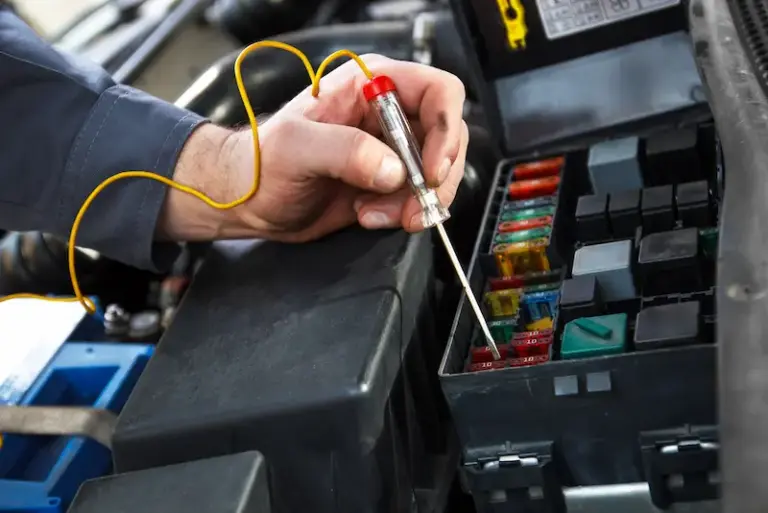
If you have ever opened your fuse box and seen a fuse labeled ECU-B, you probably wondered two things right away. What does it actually protect, and why would it ever blow in the first place?
The short version is that the ECU-B fuse is tied to your vehicle’s Electronic Control Unit side of the wiring. When it fails, the car can feel “confused.” You might get warnings, strange electrical behavior, or problems starting. That is why owners end up searching for answers like “What is the ECU-B fuse?” and “Why does it keep failing?”
This guide walks you through what the ECU-B fuse does, the most common warning signs when something is wrong with it, how to replace a blown ECU-B fuse safely, and what to check when the fuse keeps blowing again. The goal is simple: help you handle the fuse part correctly, then stop the real cause from coming back.
One more thing before we start. Cars are not all wired exactly the same, even when they use similar fuse names. So treat the steps here as the right logic and safety approach, and use your vehicle’s manual for the exact fuse box layout and fuse ratings.
What does the ECU-B fuse do?
The ECU-B fuse is a protective link between the battery and the ECU (Electronic Control Unit). Think of it like a safety gate in the wiring. Its job is to protect the ECU system components from electrical shorts by interrupting power if current spikes beyond what the circuit is designed to handle.
Physically, it is housed in your vehicle’s fuse box, along with many other fuses. The ECU-B fuse is one specific fuse among them. It is there because ECU circuits need stable power. If power becomes unstable, sensitive electronic components are more likely to fail, so the fuse stands guard.
Now let us connect the dots. The fuse name “ECU-B” can sound mysterious, but it is basically a label that helps identify which circuit and which power feed the fuse belongs to. In many vehicles, the ECU has multiple power feeds and protection circuits. The ECU-B fuse is one part of that protection strategy.
The ECU-B fuse is part of the wider ECU fuse set. In other words, it is one of several fuses within the ECU system. The ECU, also called the electronic engine control unit, is the brain that regulates critical engine and control functions.
The electronic engine control unit primarily regulates various elements, including the oxygen supply to the engine, the amount of fuel injected into the cylinders, and the engine’s ignition timing.
Without the ECU system, a vehicle cannot transform air and fuel into the energy needed to operate. The sequences handled by the ECU are not optional. They are the combustion control steps that make your engine run at all, and run smoothly.
Because the ECU is complex, it relies on multiple fuses. It is common for an ECU system to include 10 or more fuses. Some are positioned in different parts of the vehicle to keep circuits protected and organized. They are usually labeled clearly so the right fuse goes into the right slot. The ECU-B fuse is one of those fuses.
Here is a quick analogy that helps many owners. Imagine the ECU is a sophisticated restaurant kitchen. The battery provides electricity like a city grid. Fuses are the circuit breakers in each section of the building. If a shortcut happens in the “soup” area, the soup circuit breaker trips. That prevents the entire restaurant from going down, and it prevents overheating damage where the shortcut occurred.
That is what the ECU-B fuse is doing in your car. It is preventing a short from turning into expensive ECU or wiring damage.
Frequent fuse issues
When an ECU-B fuse issue is developing, you usually get a few clues first. Sometimes the clues show up as electrical oddities. Other times the clue is as simple as the fuse blowing again and again after you replace it.
According to the guidance you provided, there are two common signs that indicate a fuse problem. Let us unpack both, because they help you figure out whether you are dealing with a straightforward fuse replacement scenario or something more involved like a relay fault or wiring problem.
Faulty fuse relay
A fuse relay plays a buffer role. Its job is to shield components and devices from electrical surges that could cause a short circuit. In many systems, the relay sits between the battery supply and the device or control circuit it feeds. That makes the relay like a regulator for electrical flow.
With a properly functioning fuse relay, the electrical current is moderated. That keeps the connected component from being overwhelmed. In the real world, this means fewer spikes, fewer stress events on the ECU wiring side, and a lower chance of a circuit shortcut causing major damage.
If the fuse relay fails, it may stop regulating the current. When it cannot regulate correctly, the circuit can see an overload. Overload conditions can create conditions where the circuit shorts. That is when fuses like ECU-B can blow.
What owners often miss is that a “blown fuse” does not always mean the fuse was the real problem. The relay can be the root issue that caused the fuse to fail. If you replace only the fuse and ignore the relay and the circuit behavior, you can end up doing the same repair again next week.
Battery drain
The second common sign is battery drain. A malfunctioning fuse can impair battery performance, causing it to charge more slowly and deplete more quickly. It can also be linked to electrical loads that behave incorrectly because the circuit is not regulating power the way it should.
The guidance also notes that using high-power features such as the air conditioner can further reduce battery lifespan. That is not just about battery chemistry. It is about how your electrical system is forced to carry more load when power regulation is not right.
If you feel like your battery is always “almost dead,” and you also experience ECU-related electrical trouble, the ECU-B fuse and its circuit deserves attention. In some cases, the fuse fault triggers power problems. In other cases, a deeper electrical issue drains the battery and causes the fuse-related symptoms.
To make this more practical, here is a simple symptom-based table. Use it as a quick owner checklist when you suspect the ECU-B fuse circuit.
| What You Notice | Likely ECU-B Fuse Related Meaning | What to Check First |
|---|---|---|
| ECU-B fuse blows after replacing | Circuit overload, relay fault, or wiring short | Inspect wiring for damage and test/inspect the relay if applicable |
| Electrical systems act weird, followed by fuse blowing | Unstable power regulation toward ECU circuits | Check fuse rating, wiring connections, and relay behavior |
| Battery seems to drain faster than normal | Possible power regulation problem tied to fuse/control circuit | Check charging system health and investigate fuse and related circuits |
| High use loads (AC, lights) make the problem worse | Extra load exposes weak regulation or faulty protection | Reduce load temporarily and diagnose the circuit |
In the real world, the most frustrating part is when the fuse blows again immediately. That is your cue to stop treating it like a “cheap part” replacement job and treat it like a diagnostic problem. The fuse is doing its job. Something else is triggering the overload.
Repairing a faulty ECU-B fuse
Let us be clear here. Replacing a blown fuse is the only solution regardless of the fuse type. If the fuse is blown, it is open inside and it will not protect the circuit. Attempting to “repair” the fuse element is not realistic. It is also unsafe.
The guidance you provided also states that driving with a faulty fuse can drain the battery and fail to regulate electrical current, risking damage to connected components. That is why you should replace the ECU-B fuse correctly and stop the “keep driving with it wrong” mindset.
At the same time, it is smart to respect another reality. Replacing a fuse is not the same as fixing the underlying cause. If the fuse is blowing because of wiring damage or a relay issue, the new fuse may blow too. Still, the correct fuse replacement is the first step that restores safe circuit operation while you diagnose further.
How to replace the ECU-B fuse safely (DIY steps)
You can replace a defective ECU-B fuse yourself. The guidance recommends purchasing a fuse pack from an auto parts store. You will also want a flashlight and your vehicle’s manual.
Your manual is invaluable for pinpointing the ECU-B fuse’s location. If you do not have the manual, you can often download one from the manufacturer’s website. That step saves time because you do not waste effort hunting through the fuse box “by guess.”
Before handling the fuse box or working around the battery, ensure the vehicle is off. That reduces electrical hazards. The guidance also recommends wearing protective gloves. Those gloves help protect your hands from sharp fuse box edges and reduce the chance of accidental contact with electrical points.
Here is the general process described in the guidance, expanded just enough so it is easier to follow:
- Turn the vehicle off. Key out, no accessories running, and let the car sit for a moment.
- Locate the fuse box. The ECU-B fuse is typically in the fuse box, but its exact location varies by vehicle.
- Use the manual to confirm the correct slot. Do not rely on memory or generic fuse box charts alone.
- Remove the faulty fuse carefully. Use the correct fuse puller if available, or gentle needle-nose style tools if your fuse box design allows it safely.
- Insert a new fuse with the correct rating. Match the amperage exactly. Using the wrong rating is one of the fastest ways to cause more damage.
- Keep the engine off while replacing. The guidance specifically calls out that the engine remains off during the process.
- Start the car and observe. If the fuse blows again, do not keep repeating replacement. That is a sign of a deeper wiring issue.
The original guidance also notes that researching the vehicle’s fuse box layout online can help if you are trying to locate ECU-B quickly. Still, always cross-check anything you find with your manual or official fuse chart so you do not put a new fuse into the wrong slot.
One small owner tip that can save you time: take a quick photo of the fuse box labels before you pull anything. Even if you have a manual, labels help you move faster while your hands are in the fuse box area.
What not to do
Owners sometimes get creative when they cannot find the exact fuse rating quickly. That is where trouble starts.
- Do not replace a blown ECU-B fuse with a higher amperage fuse in an attempt to “make it work.” That defeats the safety function.
- Do not leave the wrong fuse installed just to test drive for “five minutes.” Short conditions can damage wiring fast.
- Do not work with the engine running when you are handling the fuse box. The guidance advises keeping the engine off.
- Do not keep clearing the issue by replacing fuses if it blows again quickly. That is a “diagnose the cause” scenario.
If you remember those four rules, you will avoid the most common DIY mistakes that turn a simple fuse replacement into a bigger electrical repair.
Why does my ECU-B fuse keep failing?
This is the big question. You replace the ECU-B fuse. It works for a bit. Then, it blows again. That pattern almost always points away from the fuse itself and toward the circuit or wiring feeding the ECU.
The guidance you provided states that if a replaced fuse continues to blow, the issue likely lies with the wiring. More specifically, the ECU-B fuse can be affected by faulty wiring connections.
Let us translate that into what you should actually look for. When wiring is damaged, it can create a short circuit condition. It might be exposed wires, a connector that is loose or corroded, or insulation that has worn from vibration and heat. It can also happen when the wiring gets pinched somewhere near a harness route.
The guidance gives an example: in some vehicles, the ECU-B fuse is linked to the anti-theft system. That matters because a wiring fault connected to the anti-theft system can cause the ECU-B fuse to fail repeatedly.
Persistent fuse failures often indicate damaged wiring that connects to the anti-theft system, which may require replacement. Wiring repairs are usually costlier than fuse replacements, but ignoring wiring damage is what creates the repeated “blow and replace” cycle.
There is also an important knock-on effect mentioned in the guidance. Faulty wiring can disrupt components tied to the ECU-B fuse, such as the anti-theft system itself. In practical terms, the alarm may not function if the wiring fault causes the fuse to fail.
The anti-theft system triggers an alarm when sensors detect a break-in attempt. If wiring issues cause the fuse to fail, the alarm may not operate when it should. That is why repeated ECU-B fuse failures are more than an annoying electrical glitch. They can affect security features too.
Depending on the vehicle, components like power windows, navigation, power seats, electronic suspension, headlights, and air conditioning may connect to the ECU system via the ECU-B fuse. A repeatedly failing fuse can harm the entire system because multiple circuits lose stable power protection.
Let us make that easier to visualize with a scenario.
Example scenario: ECU-B blows after you use certain accessories
Imagine you replace the ECU-B fuse on Saturday morning. By Sunday afternoon, it blows again. The only new thing you did was run the air conditioning and keep adjusting power seats and windows. Monday morning, you notice the navigation display is acting up. The anti-theft light also seems unusual.
This kind of “blows after loads” pattern can happen when a wiring short appears under vibration, movement, heat soak, or connector stress. If the ECU-B fuse feeds multiple convenience and control circuits, the wiring fault can be exposed more when those components draw power.
That is why the right repair strategy is not just “replace the fuse.” It is “replace the fuse and then identify the wiring path that causes the overload.”
A practical diagnosis logic when ECU-B keeps blowing
Here is a simple, owner-friendly troubleshooting roadmap aligned with the guidance facts: if ECU-B keeps failing, wiring is likely the root cause.
Use this checklist approach. It helps you decide what you can inspect safely and what you should hand to a professional.
- Track how fast it blows. Does it blow immediately after replacement, or after a few starts, or after using AC or power windows?
- Confirm the fuse rating you installed. The correct amperage matters. A wrong rating can hide a fuse fault while worsening a wiring fault.
- Look for visible wiring damage near known harness routes. Wear points include harness areas near moving parts and sharp edges.
- Inspect connectors for looseness or corrosion. Corroded contacts can create unstable electrical connections, leading to abnormal current draw.
- Focus on anti-theft circuit wiring if your vehicle ties ECU-B to anti-theft. The guidance specifically mentions this connection in some vehicles.
- Consider the fuse relay if the circuit overload seems relay-driven. A faulty fuse relay can fail to moderate current and contribute to fuse blowing.
- Stop DIY replacement if fuses keep blowing. At that point, the wiring fault is actively causing the failure. You need proper circuit testing and repair.
Those steps help you stay aligned with the guidance: repeated blowing points to wiring issues, and the fuse relay and battery-related load factors can also play roles.
Battery drain as a complicating factor
One reason ECU-B issues can feel confusing is that battery health affects everything. If your battery is weak, voltage can dip during starts. Electrical control modules may see out-of-range voltages, and certain systems may behave strangely.
The guidance states that a malfunctioning fuse can impair battery performance, causing slower charging and quicker depletion. That means you could experience battery drain as a symptom of the fuse circuit fault. But it also means a drained battery can make the problem feel worse, because low voltage can trigger faults in sensitive electronics.
So if ECU-B keeps blowing and the battery seems weak too, do not ignore that battery angle. A stable electrical system reduces stress on relays and control circuits, and it helps your diagnostic process stay accurate.
What happens if you ignore an ECU-B fuse problem?
Ignoring it typically does not keep it “small.” It tends to cascade.
When the ECU-B fuse is blown, the ECU circuit feed loses protection. If you drive anyway with incorrect fusing or repeated failures, it can drain the battery and fail to regulate electrical current. The guidance warns that connected components can be at risk.
Even if the engine seems to run, unstable power can cause erratic behavior in the ECU inputs and outputs. That can lead to additional symptoms you did not have at the start, such as additional electrical faults, module resets, or intermittent control problems.
Security features can be impacted too. The guidance specifically notes that anti-theft systems can be affected when wiring causes the fuse to fail. That means the alarm may not work when it should, which is not a small thing for owners.
When you should contact a mechanic
You can replace a fuse yourself, and that is a valid first step. However, it is smart to contact a professional when the situation has clear diagnostic complexity.
Contact a mechanic if:
- The ECU-B fuse blows again shortly after replacement.
- Multiple systems go off or behave incorrectly, especially if power windows, navigation, or electronic suspension are affected.
- You suspect the anti-theft wiring circuit is involved and you are not comfortable tracing it.
- You suspect a fuse relay issue or cannot identify whether a relay is failing under load.
- You need to verify wiring continuity and short conditions with proper tools.
A trained technician can also inspect grounds and connector integrity, then test circuits so the repair targets the real fault instead of only stopping the fuse from blowing for a few days.
Final thoughts
The ECU-B fuse is a key component of the Electronic Control Unit (ECU) system. It can fail due to a faulty fuse relay overwhelming the system or due to battery drain overloading electrical behavior. When the ECU-B fuse is blown, the correct repair is to replace it, not attempt to patch it.
If you have the vehicle manual, a flashlight, and the correct fuse pack, you can usually replace the ECU-B fuse yourself by following safe steps, keeping the vehicle off during the process, and matching the fuse rating exactly. If you do not have the confidence to inspect wiring or a fuse relay, or if the fuse keeps failing, it is smarter to let a mechanic handle the wiring and circuit diagnosis so you end the problem for good.
Here is the actionable question that matters most: When your ECU-B fuse blows, do you replace it once and then actually trace what is causing the overload, or do you keep swapping fuses and hoping the wiring damage disappears?