
The automotive industry is brutal. Dozens of car companies have disappeared over the decades, swallowed by bad timing, poor management, failed products, or all three at once. But some manufacturers came right to the edge of collapse and somehow pulled back. In most cases, what saved them was not a restructuring plan or a change in leadership alone. It was a car. One specific model that arrived at exactly the right moment and gave the brand a reason to exist again.
Here are five vehicles that did exactly that.
Volkswagen Golf MK1: The Car That Replaced an Icon
The Volkswagen Beetle was one of the great success stories of the twentieth century. It dominated the market from the 1940s through the 1960s and became a genuine cultural symbol. The problem was that cultural symbols eventually stop selling, and by the late 1960s and into the early 1970s, the Beetle was aging badly in a market that was moving forward without it.
Volkswagen knew it needed something new. The attempts that followed, including the Type 4 and the EA266 project, never made it to market. Both were scrapped before they could do any good. The Passat arrived first as part of the company’s effort to modernize, and it helped. But it was the Golf MK1 that actually turned things around.
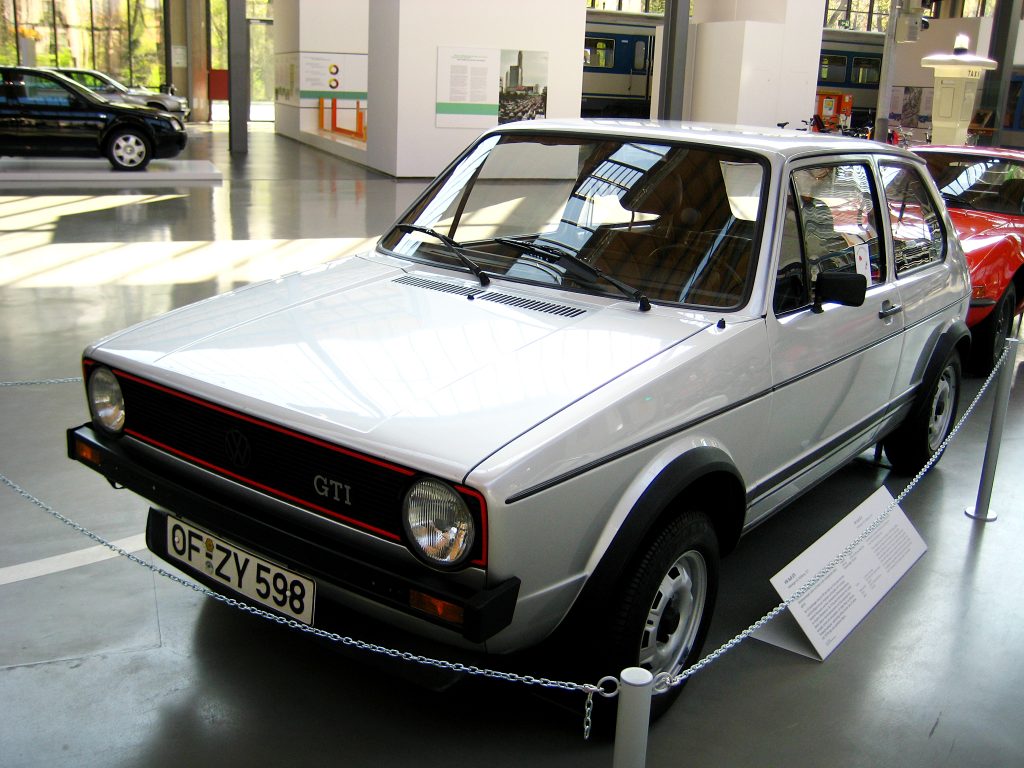
Launched in 1974, the Golf was designed by Giorgetto Giugiaro and it looked nothing like the Beetle. It was sharp, modern, front-wheel drive, and practical in a way that suited the decade perfectly. It did not just replace the Beetle. It created an entirely new segment of the market, the hot hatch, and it gave Volkswagen a product identity that the company still builds on today. Without the Golf, it is genuinely hard to say whether Volkswagen would have survived the 1970s in any form that would be recognizable now.
Peugeot 205: The Hatchback That Saved a Company Drowning in Acquisitions
Peugeot spent the 1970s expanding aggressively and paid a serious price for it. In 1975, the company formed the PSA Group through the acquisition of Citroën. Three years later, in 1978, it absorbed Chrysler Europe as well. These were enormous moves, and absorbing two major manufacturers within a few years created financial strain that pushed the company toward genuine crisis. By the early 1980s, Peugeot was in serious trouble.
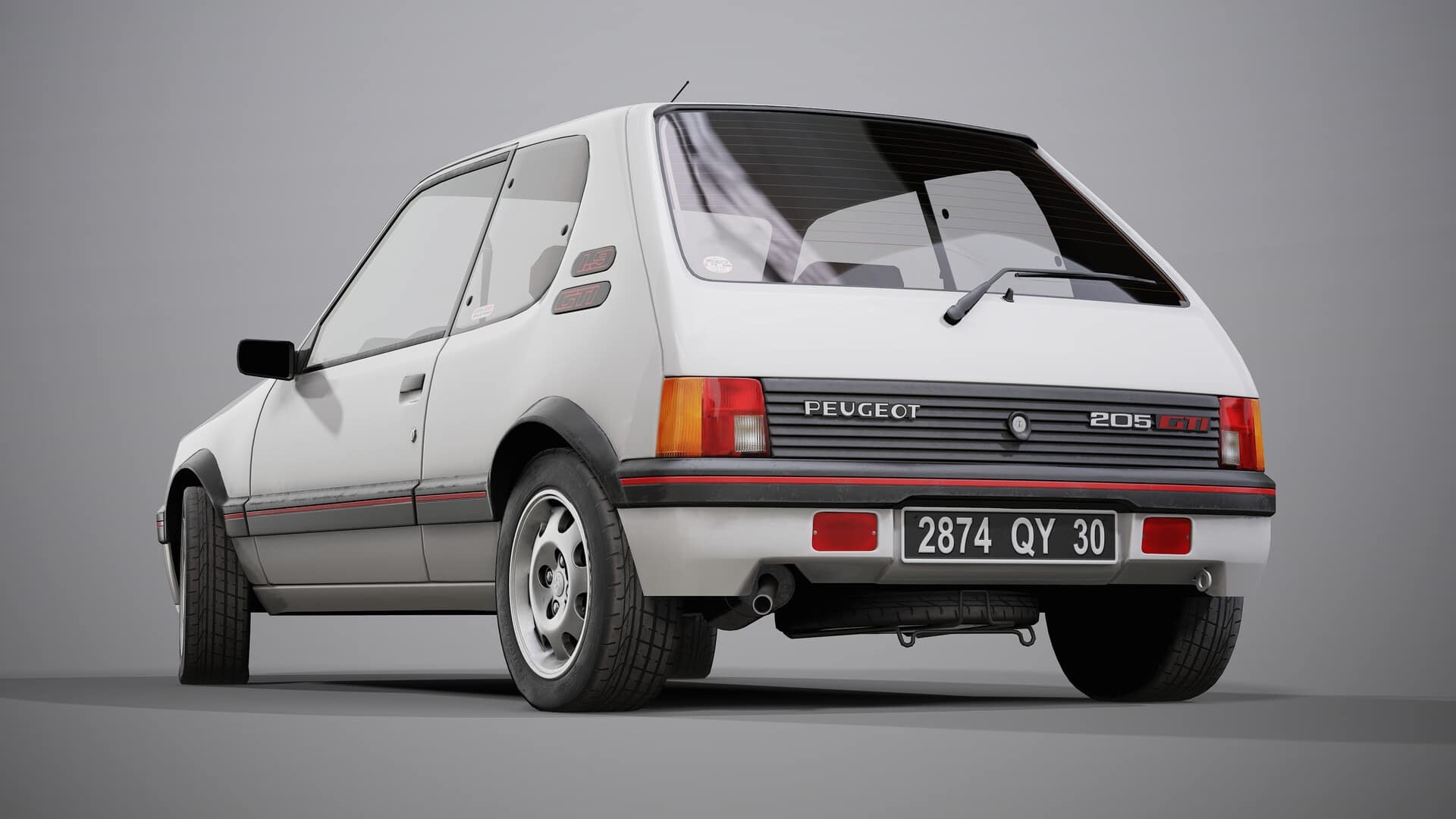
The 205 arrived in 1983 and became available more widely through 1984 and 1985. It was exactly what the company needed and exactly what buyers wanted. The design was clean, the proportions were right, and the car felt quality in a way that the market responded to immediately. It was a compact hatchback, which was the right product for the right era, and it sold in numbers that the company desperately needed.
The GTI version that followed added a performance dimension that made the 205 legendary well beyond its practical merits. The car ran in production until 1998, a fifteen-year lifespan that tells you everything about how well it was received. Without it, PSA would almost certainly have collapsed under the weight of its own expansion.
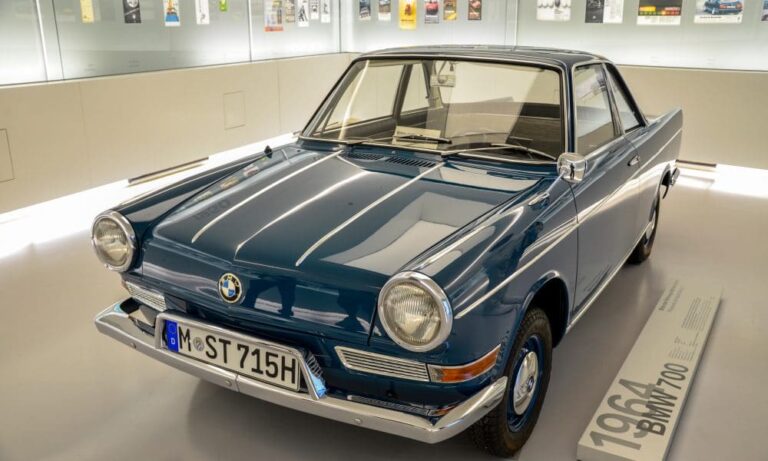
BMW 700: The Car That Kept a Giant From Disappearing
Most people today think of BMW as one of the most financially secure and prestigious brands in the world. That reputation makes it easy to forget how close the company came to ceasing to exist altogether in the late 1950s.
The problem was a product lineup that had split itself into extremes without anything successful in the middle. BMW was producing luxury cars that were too expensive to sell in volume and microcar-style vehicles like the Isetta bubble car that kept the lights on but did nothing for the brand. Neither approach was enough. By 1959, the company was in such difficulty that a vote was held on whether to allow Mercedes-Benz to acquire it. The proposal failed by a narrow margin.
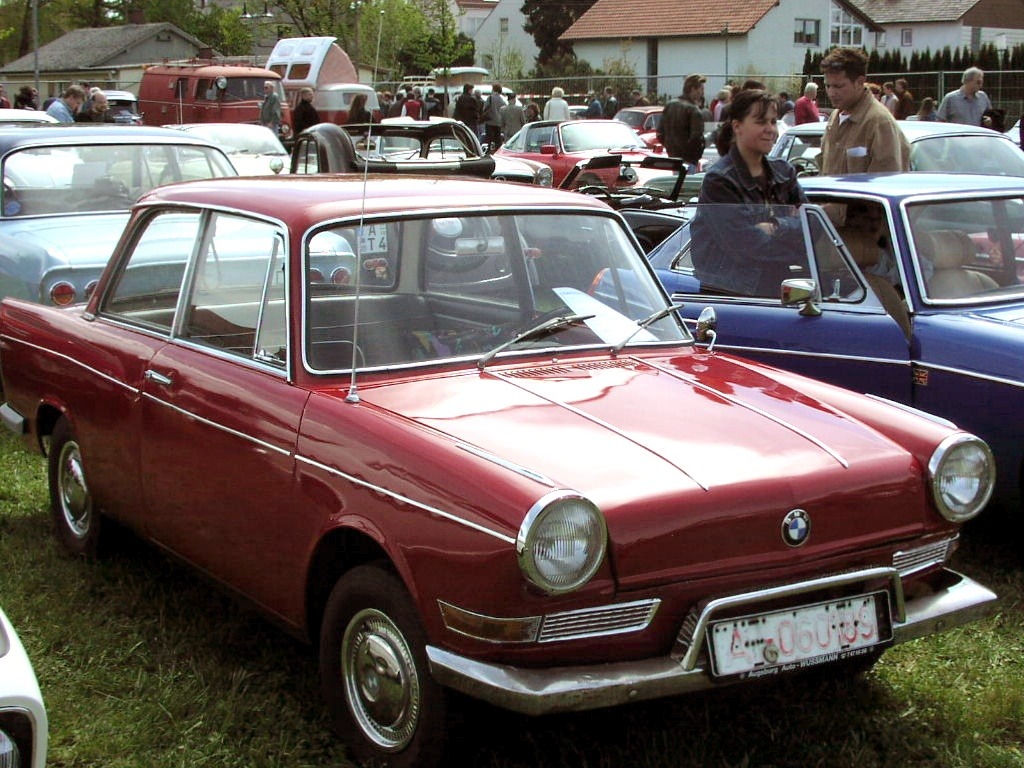
The BMW 700, introduced in 1959, gave the company something it had been missing: a car with genuine mainstream appeal that also happened to be the first BMW to use monocoque construction. That structural approach, where the body and chassis are integrated rather than separate, made the car lighter and more modern than its predecessors. It sold well enough to give BMW breathing room, and that breathing room turned into the foundation for everything the brand became afterward.
Herbert Quandt, the shareholder who blocked the Mercedes takeover, was later credited with saving the company. The BMW 700 was the product that made his decision look like the right one.
Austin Metro: Britain’s Last Real Attempt at a Small Car Savior
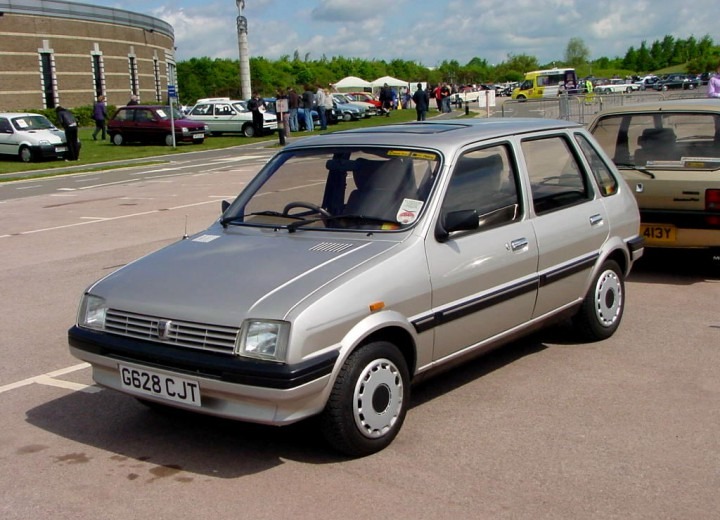
The story of British Leyland in the 1970s is one of the most painful chapters in the history of any national automotive industry. A series of failed models, an industrial relations crisis, worker strikes, and management that could not get ahead of any of it combined to create a company that was essentially collapsing in slow motion.
The Austin Metro, launched in 1980, was meant to be the answer to all of it. And to a significant degree, it was. The car was built in the UK, designed to compete with the Mini in terms of its compact footprint while offering more of what buyers actually wanted by that point, more modern engineering, better interior space for the size, and a look that felt contemporary rather than dated.
The launch went well. The public responded with genuine enthusiasm, and sales were strong enough to give the company the financial oxygen it needed to keep operating. Prime Minister Margaret Thatcher was photographed with the car at the launch event, and the Metro became a rare piece of good news for British manufacturing at a time when almost everything else was going wrong.
It did not fix British Leyland permanently. The company’s deeper problems were too structural for any single model to solve completely. But the Metro bought time, and in the automotive business, time is sometimes the difference between survival and closure.
The 1949 Ford: How Henry Ford’s Grandson Rescued a Company Drifting Backward
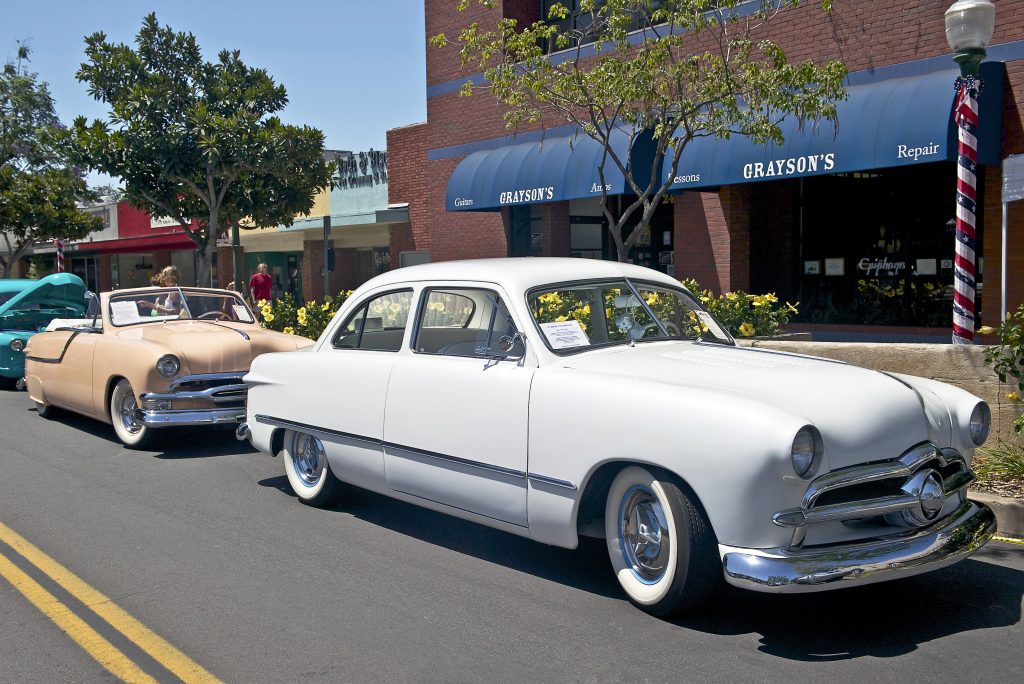
By the mid-1940s, Ford was not in the position you might expect for one of America’s most famous companies. The problem was momentum of the wrong kind. Ford had been producing vehicles that were essentially pre-war designs carried forward without the kind of modernization that customers and the market were starting to demand. Sales were declining, the company was losing ground to General Motors, and the internal culture had grown stagnant.
When Henry Ford II, the founder’s grandson, took over leadership in 1945, he inherited a company that needed to be rebuilt from the inside out. He brought in a team of management consultants, restructured operations, and pushed for a completely new product that would signal a genuine break from the outdated approach that had been dragging the company down.
That product was the 1949 Ford, which was unveiled to the public in June 1948. The response was immediate and overwhelming. On the day of the reveal, the company received approximately 100,000 orders. Over the model’s run, it went on to sell more than a million units, which was the kind of commercial validation that reset Ford’s competitive position in the American market.
The 1949 Ford was lower, wider, and more modern-looking than anything the company had produced in years. It looked like it belonged to the postwar era rather than being a relic of the one before it. Henry Ford II had essentially bet the company on one model and won, and the margin of that victory helped set up Ford for the decades of success that followed.
What These Five Cars Have in Common
Look across these five stories and a pattern emerges. In each case, the manufacturer was not saved by financial engineering, government bailouts, or rebranding exercises. It was saved by a product that connected with buyers at the right moment in the right way.
| Car | Manufacturer | Year | Why It Mattered |
|---|---|---|---|
| Golf MK1 | Volkswagen | 1974 | Replaced the aging Beetle and created the modern hatchback segment |
| Peugeot 205 | Peugeot PSA | 1983 | Generated the sales volume needed to recover from aggressive and costly acquisitions |
| BMW 700 | BMW | 1959 | Gave the company commercial footing after near-bankruptcy and blocked a Mercedes takeover |
| Austin Metro | British Leyland | 1980 | Restored public confidence and generated crucial revenue during a period of severe industrial crisis |
| 1949 Ford | Ford | 1949 | Modernized the lineup and delivered over one million sales, reversing a competitive decline |
The automotive industry has always been unforgiving. The companies that survived did not always do so because they were better managed or better funded. Sometimes they survived because one engineer, one design team, or one product decision happened to land perfectly. The cars above are reminders that in this industry, the right model at the right moment can be worth more than any boardroom strategy ever written.