
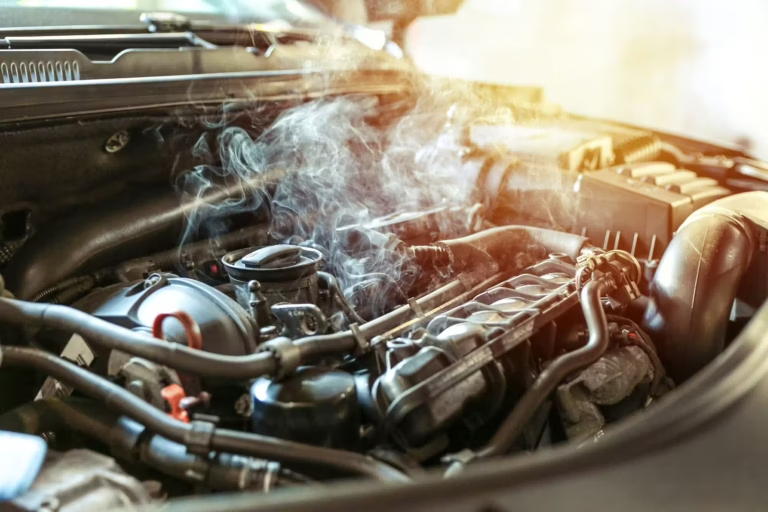
You are driving home from work, and the temperature gauge needle starts creeping toward the red zone. You tell yourself it is probably nothing. Maybe the weather is hot, or maybe you are imagining it. Then you notice a faint sweet smell, like maple syrup, drifting through the air vents. When you stop at a light, a puff of white smoke curls up from the exhaust pipe behind you. Your stomach sinks because you have been around cars long enough to know what those signs can mean. The head gasket might be gone.
A blown head gasket is one of those phrases that mechanics utter with a grim expression. It sounds expensive. It sounds catastrophic. The truth sits somewhere in between. Yes, it is a serious problem. No, it does not automatically mean your engine is junk. Understanding what a head gasket actually does, why it fails, and what your options are when it does can be the difference between a manageable repair bill and a complete engine replacement that sends your car to the scrapyard. This guide walks you through everything you need to know, from the moment you suspect a problem to the day you hand your keys to the mechanic.
What a Head Gasket Actually Does Inside Your Engine
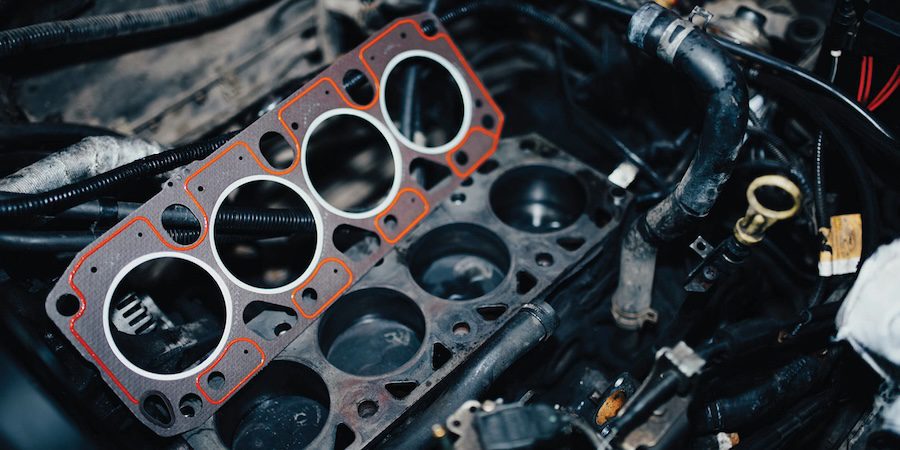
The head gasket is a flat, seemingly unremarkable piece of material sandwiched between the engine block and the cylinder head. It looks like a sheet of metal or composite material with precisely cut holes for the cylinders, coolant passages, and oil galleries. Its job, however, is anything but unremarkable. The head gasket is responsible for sealing the combustion chamber so that the enormous pressures generated when fuel ignites remain contained. It also keeps engine oil and coolant in their separate passages, preventing them from mixing together and destroying each other’s ability to do their respective jobs.
Inside a running engine, temperatures inside the combustion chamber can exceed 2,000 degrees Fahrenheit. Cylinder pressures can spike above 1,000 psi during the compression and power strokes. The head gasket withstands these extremes every single time a cylinder fires, which happens thousands of times per minute at highway speeds. Modern head gaskets are typically made from multiple layers of steel, sometimes coated with a thin elastomer or Viton material, designed to handle the specific thermal expansion rates of the aluminum heads and cast-iron or aluminum blocks they sit between. They are engineered to last the life of the engine under normal operating conditions. When something goes wrong that pushes the engine outside those normal conditions, the head gasket is often the first component to fail.
Think of the head gasket like a diplomat between two nations that do not always get along. The engine block and the cylinder head expand and contract at different rates because they are often made of different metals. The head gasket absorbs those differences, flexing just enough to maintain a perfect seal without cracking under the strain. Over time, heat cycles, vibration, and pressure fluctuations take their toll. A well-maintained engine can go hundreds of thousands of miles without ever needing a new head gasket. A poorly maintained engine, or one that suffers a severe overheating event, can blow a head gasket in minutes.
What Causes a Head Gasket to Fail in the First Place
Overheating is the number one cause of head gasket failure, and it is not even close. When an engine overheats, the cylinder head can warp. Aluminum heads are particularly susceptible to warping because aluminum expands more than cast iron when heated. If the head warps even a few thousandths of an inch, the head gasket can no longer maintain a proper seal. Coolant leaks into the combustion chambers, combustion gases force their way into the cooling system, and the engine begins a death spiral that only gets worse the longer it runs.
Overheating does not happen without a reason. Common culprits include a failed water pump, a stuck thermostat, a clogged radiator, a broken radiator fan, or a coolant leak that drops the fluid level too low. Sometimes the cause is as simple as a loose or deteriorating radiator cap that cannot maintain the correct system pressure. Other times, the previous owner neglected a coolant flush for so long that the coolant turned acidic and ate through the head gasket material from the inside.
Detonation, also called engine knock or pinging, is another cause of head gasket failure. Detonation occurs when the air-fuel mixture in the combustion chamber ignites unevenly or too early, creating shockwaves that hammer the piston, cylinder head, and head gasket with forces far beyond what the engine was designed to handle. Persistent detonation, even mild cases that the driver may not notice, can erode the head gasket’s sealing surfaces and eventually create a leak path. Using low-octane fuel in an engine that requires premium, running with an overly lean air-fuel mixture, or having incorrect ignition timing can all lead to detonation.
Pre-ignition, a related but distinct phenomenon, can cause even faster damage. Pre-ignition happens when a hot spot in the combustion chamber, such as a glowing piece of carbon buildup or an overheated spark plug electrode, ignites the air-fuel mixture before the spark plug fires. This can create cylinder pressures that spike to catastrophic levels in a single cycle, blowing the head gasket instantly. Pre-ignition is less common than detonation, but its effects are more immediate and more destructive.
Manufacturing defects and age-related fatigue also play a role. Some engines are known to have head gasket issues from the factory. Subaru’s EJ-series boxer engines, for example, earned a reputation for head gasket failures, particularly in the late 1990s and early 2000s. The original gaskets used a graphite coating that degraded over time, especially when exposed to the acidic byproducts of combustion. Chrysler’s 2.7-liter V6 and certain GM 3.1-liter and 3.4-liter V6 engines also had higher-than-average head gasket failure rates. A knowledgeable mechanic can tell you whether your engine is on that list, and if so, whether an upgraded replacement gasket is available.
The Warning Signs That Point to a Blown Head Gasket
Blown head gaskets do not always announce themselves with a single unmistakable symptom. Sometimes the clues are subtle, and you need to piece them together like a detective working a case. The more of these signs you notice, the more likely the head gasket is the culprit.
- Thick white smoke from the exhaust pipe. Coolant entering the combustion chamber burns along with the fuel and turns into steam. That steam exits the tailpipe as white smoke. A small puff during cold startup that disappears as the engine warms up can be normal condensation. Persistent white smoke, especially when the engine is fully warm, points to coolant consumption. The smoke may have a sweet, syrupy smell from the ethylene glycol in the antifreeze. If you see this, stop driving and check your coolant level immediately.
- Milky, frothy substance on the oil dipstick or under the oil filler cap. When coolant mixes with engine oil, the combination churns into a light brown or tan sludge that looks like a milkshake. You may see it on the dipstick when you check the oil. You may see it on the underside of the oil filler cap. This contamination destroys the oil’s lubricating ability, accelerates wear on bearings and cylinder walls, and leads to catastrophic engine damage if the vehicle continues to be driven.
- Engine overheating with no obvious coolant leak. Combustion gases are being forced into the cooling system through the failed head gasket. These gases displace coolant, create air pockets, and prevent proper heat transfer. The engine runs hot even though no puddle appears under the car.
- Bubbles in the coolant reservoir or radiator. With the engine running and the radiator cap safely removed (only when the engine is cold), you may see a steady stream of bubbles coming up through the coolant. Those bubbles are combustion gases escaping past the blown gasket and into the cooling passages. A chemical block test kit, available at most auto parts stores, can confirm the presence of exhaust gases in the cooling system.
- Loss of coolant with no visible external leak. The coolant is being consumed inside the engine. If you find yourself adding coolant regularly and cannot find a puddle, a hose leak, or a radiator crack, the head gasket is a prime suspect.
- Spark plugs that look fouled or steam-cleaned. Coolant entering a cylinder will wash the spark plug tip, giving it a strangely clean appearance compared to the other plugs. The plug may also be coated with a white or greenish residue. A mechanic removing the spark plugs for inspection can often spot the cylinder that is consuming coolant by looking at the plug color.
- Misfires, rough idle, or loss of power. Coolant in the combustion chamber does not burn like gasoline. The affected cylinder will misfire, especially during cold starts when coolant has seeped in overnight. The engine may stumble, shake, and hesitate under load. The check engine light will often illuminate with a misfire code (P0300 through P0308, depending on the cylinder).
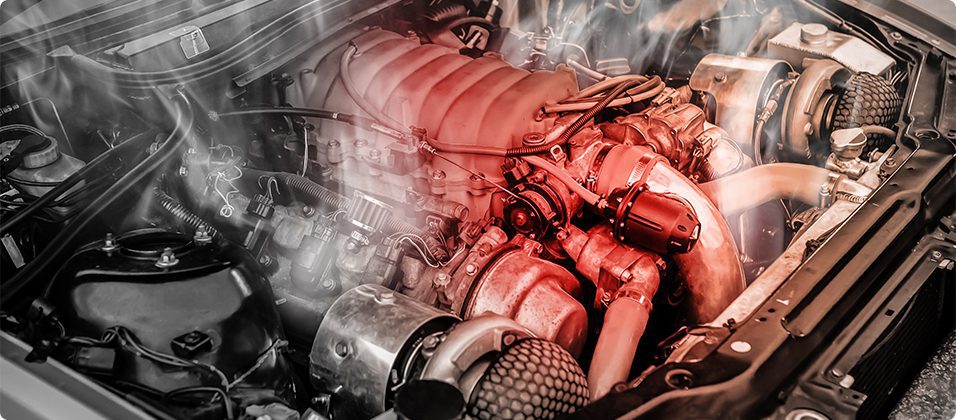
Not every blown head gasket presents all these symptoms. The location and severity of the breach determine what you see. A gasket that fails between a coolant passage and the outside of the engine may leak coolant externally with no internal symptoms. A gasket that fails between two adjacent cylinders may cause compression loss and misfires without any coolant or oil contamination. A gasket that fails between the combustion chamber and a coolant passage will push exhaust into the cooling system and draw coolant into the cylinder on the intake stroke. Each failure mode tells a slightly different story, and a professional diagnosis is the only way to know for certain.
Will Your Car Actually Start With a Blown Head Gasket?
The short answer is yes, in most cases, your car will start with a blown head gasket. The engine requires fuel, air, compression, and spark to run. A blown head gasket does not immediately remove any of those elements. The starter motor will crank the engine, the fuel injectors will spray fuel, the spark plugs will fire, and the engine will catch and run. The problem is not whether the engine will start. The problem is what happens to the engine while it is running.
A blown head gasket will not usually prevent the car from starting, but starting and running the engine with a compromised head gasket puts your entire vehicle at risk. The head gasket’s job is to seal the combustion chamber and separate the oil and coolant passages. With that seal broken, coolant can enter the cylinders where it does not belong. Oil can leak into the coolant, reducing heat transfer efficiency. Combustion gases can pressurize the cooling system and force coolant out of the overflow tank. Every minute the engine runs with a blown head gasket, the damage compounds.
There are some situations where a blown head gasket will prevent starting. If the breach is severe enough that a significant amount of coolant has leaked into a cylinder while the engine was off, the engine may hydrolock. Liquid coolant does not compress the way air and fuel vapor do. When the piston tries to rise on the compression stroke, it meets an incompressible wall of liquid. The starter cannot overcome that resistance, and the engine either refuses to turn over or turns over very slowly with a labored sound. Hydrolock can bend connecting rods, crack pistons, and destroy the engine in seconds. If you ever suspect hydrolock, do not keep cranking the starter. Have the vehicle towed to a repair shop.
A less catastrophic scenario is a loss of compression that makes the engine hard to start. If the head gasket has failed between two adjacent cylinders, compression pressure leaks from one cylinder to the other instead of building up to ignite the fuel mixture. The engine may crank and crank without catching, or it may start after extended cranking and then run roughly. A compression test or leak-down test will quickly reveal this type of failure.
If You Must Start the Car, Here Is What to Expect
There are situations where moving the car a short distance, such as onto a tow truck or out of a dangerous traffic lane, is necessary. If you absolutely must start a car with a known blown head gasket, expect the engine to behave differently than it normally would. The idle may be rough and unsteady. The engine may hesitate and stumble when you press the accelerator. If coolant has been leaking into the cylinders, the initial startup may produce a heavy plume of white smoke that gradually diminishes as the liquid burns off. The temperature gauge may climb faster than normal, so watch it closely and shut the engine down immediately if it approaches the red zone.
Do not, under any circumstances, attempt to drive a car with a blown head gasket any farther than is absolutely necessary to get to safety. The repair bill that awaits you is directly proportional to how long you continue to operate the engine in its compromised state. A head gasket replacement, while expensive, is a fraction of the cost of a complete engine rebuild or replacement. Continuing to drive because the car still moves is like ignoring a heart attack because you can still walk. The real damage is happening inside, and every mile makes the eventual repair more expensive.
What Happens Inside the Engine When You Keep Driving
Understanding the chain reaction that a blown head gasket sets off helps explain why prompt action saves money. Coolant entering the combustion chamber dilutes the oil film on the cylinder walls. That oil film is the only thing preventing the piston rings and cylinder walls from making metal-to-metal contact. When the oil film breaks down, the rings scrape against the cylinder wall, accelerating wear and eventually scoring the surface. A scored cylinder wall cannot be repaired with a simple head gasket replacement. It requires boring the cylinder oversize, fitting a new piston, or replacing the entire engine block.
Coolant that mixes with engine oil creates a substance that is terrible at lubricating bearings. The crankshaft main bearings and connecting rod bearings rely on a pressurized film of clean oil to float the rotating assembly on a microscopic cushion. Diluted, contaminated oil cannot maintain that cushion. The bearings begin to wear, first the soft overlay layer, then the copper intermediate layer, and finally the steel backing. Once the steel backing contacts the crankshaft journal, the crankshaft itself is damaged, and the repair cost escalates from a few thousand dollars to an engine replacement costing far more.
Combustion gases entering the cooling system create air pockets that prevent the water pump from circulating coolant effectively. These air pockets cause localized hot spots in the cylinder head and block. Aluminum heads can crack under the thermal stress, and once a cylinder head is cracked, it is usually beyond repair. The head must be replaced, adding hundreds or thousands of dollars to the parts cost of the repair. The cooling system itself suffers damage as well. Hoses, the radiator, the heater core, and the water pump are all designed to move liquid, not compressible gas. Over-pressurization and overheating can rupture hoses, crack the radiator tanks, and destroy the water pump seals.
How Long Can You Realistically Drive on a Blown Head Gasket?
There is no fixed answer because every blown head gasket is different. The size and location of the breach, the engine design, and how the vehicle is driven all affect the timeline. Automotive enthusiasts and mechanics who have observed this situation report that, on average, an engine with a blown head gasket will survive for about a month of regular driving before the damage becomes catastrophic. This is not a guarantee. Some engines will fail in a week. Others, particularly those with a very minor external coolant leak, can be nursed along for longer if the owner is meticulous about topping off the coolant and never allowing the engine to overheat.
Nursing a blown head gasket along is not a recommended long-term strategy. It is a temporary measure to buy time while you arrange for repairs, and even then, it carries significant risk. The internal damage accumulates silently. The contaminated oil is eating away at the bearings while you drive. The coolant is washing the cylinder walls while you accelerate onto the highway. You may not notice the symptoms getting worse until the engine seizes or throws a rod through the side of the block. At that point, the car is worth its scrap value, and nothing more.
If you catch the symptoms early, the milky oil, the white smoke, the unexplained coolant loss, and you stop driving immediately, the repair is often limited to resurfacing the cylinder head and replacing the head gasket. If you keep driving for weeks, you may add new cylinder head bolts, a head resurface, a valve job, and a complete cooling system flush to the list. If you keep driving for months, you may need an engine. The difference between those outcomes is measured in thousands of dollars and is entirely within your control.
Can You Have a Blown Head Gasket Without Any Noticeable Symptoms?
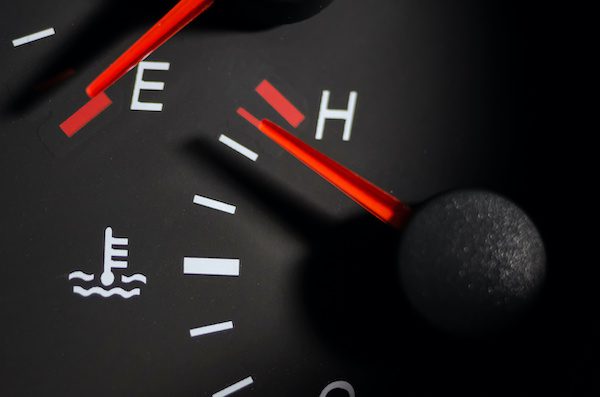
Yes, and this is one of the reasons a blown head gasket can be so deceptive. Not every breach produces white smoke or milky oil. If the failure occurs between a coolant passage and the outside of the engine block, the coolant may simply leak onto the ground, running down the side of the block where it evaporates before it can form a noticeable puddle. The driver might notice a sweet smell when the engine is hot and the coolant consumption is gradual. A very small leak between the combustion chamber and a coolant passage can pressurize the cooling system without allowing enough coolant into the cylinder to produce visible smoke. The only symptom might be intermittent overheating or a coolant reservoir that keeps needing top-ups.
Some engines experience head gasket failure in a way that initially causes rough idle and subtle misfires without any temperature gauge movement. The driver might dismiss the symptoms as a bad tank of gas or a minor tune-up issue. A misfire code stored in the engine computer may be the only evidence, and even then, the cause is not obvious until a mechanic performs a leak-down test or uses a borescope to inspect the cylinders. This is why any persistent engine performance issue deserves a professional diagnosis. Ignoring it because the car still drives only guarantees that the eventual repair will be more extensive.
The Relationship Between a Blown Head Gasket and Engine Overheating
Many people assume that a blown head gasket always causes overheating. While overheating is a common symptom, the relationship works in both directions. A blown head gasket can cause overheating by allowing combustion gases into the cooling system and displacing the coolant. However, overheating is also a primary cause of head gasket failure. A pre-existing cooling system problem, such as a failed thermostat or a leaking water pump, can cause the engine to overheat, which warps the cylinder head and blows the head gasket. Once the gasket is blown, the overheating becomes worse and self-perpetuating.
It is also possible to have a blown head gasket without any overheating at all. A failure between an oil passage and the outside of the engine, or between two cylinders, may not involve the cooling system directly. The engine can maintain normal operating temperature while the gasket breach allows compression loss or oil leakage. The absence of a temperature gauge spike does not mean the engine is healthy. It simply means the failure mode has not yet involved the cooling system.
The Rough Idle and Misfire Connection
A blown head gasket will cause a rough idle, and this is one of the more noticeable symptoms for many drivers. When the head gasket loses its ability to seal combustion pressure in a particular cylinder, that cylinder cannot contribute its full share of power. The engine runs unevenly, shaking at idle and stumbling under load. The misfire is often most pronounced during cold starts, when coolant that has seeped into the cylinder overnight fouls the spark plug and prevents proper ignition. As the engine warms up and the coolant burns off, the misfire may become less noticeable, but it rarely disappears completely.
The check engine light will frequently come on, storing a specific misfire code. A P0301 code, for example, indicates a misfire on cylinder one. If you see a single-cylinder misfire code combined with any of the other symptoms discussed here, the head gasket is a strong suspect. A compression test or cylinder leak-down test is the next logical step. A mechanic will thread a pressure gauge into the spark plug hole, crank the engine, and measure how much compression the cylinder can build. A cylinder that reads significantly lower than its neighbors points to a sealing problem, whether it is the head gasket, a burned valve, or a damaged piston ring. The leak-down test, which pressurizes the cylinder with compressed air and measures how quickly it loses pressure, can pinpoint the source of the leak.
What a Proper Diagnosis Actually Looks Like
A shop that simply looks at white smoke and declares the head gasket blown without further testing is guessing. A proper diagnosis involves several steps, each designed to confirm the failure and rule out other causes. The process begins with a visual inspection. The mechanic checks the oil dipstick and filler cap for milky residue. They look at the coolant reservoir for signs of oil contamination or bubbling. They inspect the spark plugs for unusual deposits or a steam-cleaned appearance. They look for external coolant leaks dripping down the block.
Next comes a cooling system pressure test. The mechanic pumps the cooling system up to operating pressure using a hand pump and a gauge. If the pressure drops over time without any visible external leak, the coolant is going somewhere inside the engine. The intake manifold may need to come off to inspect for internal leaks, or the mechanic may use a borescope to look inside the cylinders through the spark plug holes. A borescope is a small camera on a flexible tube that can reveal coolant pooling on top of a piston, which is a clear sign of a head gasket leak into that cylinder.
The chemical block test is a simple but effective tool. A blue liquid in a tube attached to the radiator filler neck changes color to yellow if it detects combustion gases in the coolant. This test works well for failures that allow exhaust into the cooling system. A compression test measures the cylinder’s ability to build pressure. A cylinder leak-down test pressurizes the cylinder with compressed air and identifies where the air is escaping. Air coming out of the radiator filler neck points to a head gasket failure between the combustion chamber and a coolant passage. Air coming out of the oil filler cap points to a failure between the combustion chamber and an oil passage. Air coming out of the adjacent spark plug hole points to a failure between two cylinders. Air coming out of the exhaust pipe points to a burned exhaust valve. Air coming out of the intake manifold points to a burned intake valve.
A thorough diagnosis takes time and costs money, but it is money well spent. Replacing a head gasket is a major repair, and you want to be certain it is necessary before paying for the work. A misdiagnosis that leads to a head gasket replacement when the real problem was a cracked intake manifold gasket or a leaking heater core will not fix the issue and will drain your wallet for nothing.
The Real Cost of Fixing a Blown Head Gasket
Head gasket replacement is expensive because the repair involves disassembling a significant portion of the engine. The intake manifold, exhaust manifold, valve cover, timing chain or belt, and cylinder head must all be removed. Depending on the engine layout, the engine may need to be partially or fully removed from the vehicle to access the head bolts. The cylinder head is then sent to a machine shop for resurfacing. The machine shop checks the head for flatness, cracks, and warpage. If the head is warped beyond the specification tolerance, it must be machined flat again. In some cases, the head is too warped or cracked to be saved and must be replaced entirely.
The cost of parts includes the head gasket itself, new cylinder head bolts (which are often one-time-use torque-to-yield bolts that must be replaced), intake and exhaust manifold gaskets, valve cover gasket, timing components if applicable, fresh coolant, fresh oil and filter, and possibly spark plugs. The labor involved is substantial. Most shops charge between $1,000 and $2,000 for a head gasket replacement on a typical four-cylinder engine. V6 and V8 engines, especially those mounted transversely in a front-wheel-drive vehicle, cost more because the shop may need to remove the engine or drop the subframe to gain access. A head gasket job on a Subaru flat-four, for example, often runs between $1,500 and $2,500. Jobs on larger engines, luxury vehicles, or diesel engines can exceed that.
The decision of whether to repair a blown head gasket comes down to the value of the car and the condition of the rest of the engine. If the vehicle is otherwise reliable, has been well maintained, and is worth more than the repair cost, fixing it makes sense. If the car is older, has high mileage, has other developing problems, or is worth less than the repair, the financial equation becomes more difficult. Some owners choose to sell the car as-is, disclosing the blown head gasket to the buyer and accepting a significantly reduced price. Others choose to replace the entire engine with a used or remanufactured unit, especially if the original engine has high mileage and a head gasket failure suggests that other major repairs may be on the horizon.
Whether Fixing a Blown Head Gasket Is Worth the Money
Yes, in most situations, fixing a blown head gasket is worth the investment when compared to the alternative. The alternative to repairing a head gasket is continuing to drive until the engine fails completely, at which point the vehicle’s value plummets to scrap levels. Unless the car was on its last legs before the head gasket failed, repairing the problem restores the engine to reliable operation and prevents the cascade of secondary damage that makes the car undriveable.
There is a larger lesson here about vehicle maintenance. A blown head gasket is often the final consequence of a problem that could have been caught earlier. A coolant leak that was ignored. A thermostat that stuck closed and was not replaced. A radiator fan that stopped working on a hot day. The overheating event that blew the head gasket was the culmination of a series of smaller failures that were individually fixable at a much lower cost. Regular cooling system inspections, timely replacement of aging hoses and belts, and immediate attention to temperature gauge fluctuations are the cheapest head gasket repairs you will ever make. They prevent the problem from occurring in the first place.
If a blown head gasket is repaired properly, with a quality replacement gasket, new head bolts torqued to the correct specification, and a properly machined cylinder head surface, the repaired engine can last for many more years of dependable service. The key is finding a shop that does this work regularly and stands behind it with a warranty. A head gasket repair that fails after a few thousand miles because the cylinder head was not machined correctly or the bolts were not torqued properly is worse than the original problem. Do your research when choosing a shop. Ask about their experience with your specific engine. Ask whether they use OEM or upgraded aftermarket gaskets. Ask what kind of warranty they provide on the work. A shop that is confident in its work will have no problem answering these questions.
Can You Do a Head Gasket Replacement Yourself?
A head gasket replacement is one of the more challenging jobs a home mechanic can attempt. It requires a comprehensive set of tools, including torque wrenches, specialty sockets, and often engine support bars or a hoist. The process demands careful attention to detail, methodical organization of parts and fasteners, and strict adherence to torque specifications and sequences. Getting the head bolt torque wrong by a few pound-feet or tightening the bolts in the wrong order can cause the new gasket to fail almost immediately. The cylinder head must be sent to a machine shop for inspection and resurfacing unless you own a precision straightedge and a set of feeler gauges and know how to use them correctly. The cost of a tow to get the car to a shop after a failed DIY head gasket job can exceed the cost of having a professional do it right the first time.
For a mechanically experienced person with a well-equipped garage, a service manual, and the time to do the job without rushing, a head gasket replacement is achievable. For someone who has never changed their own brake pads, it is not the place to start learning. The risk of causing additional damage, stripping threads in the engine block, or reassembling the engine incorrectly is high, and the consequences are expensive. If you have any doubt about your ability to complete the job, pay a professional. The money you spend is buying certainty that the engine will run properly when the job is done.
Preventing a Blown Head Gasket Before It Ever Happens
Prevention centers on the cooling system. The single most effective thing you can do to avoid a blown head gasket is to maintain your cooling system properly. Change the coolant at the manufacturer’s recommended intervals, which is typically every 30,000 to 100,000 miles depending on the formulation. Old coolant becomes acidic and corrodes the internal passages, thinning the cylinder head material around the combustion chambers and eating away at the head gasket from the coolant side. Replace the thermostat if it shows any sign of sticking. A thermostat is a ten-dollar part that can destroy an engine. Replace aging radiator hoses before they burst. Replace the water pump when it begins to leak or at the manufacturer’s recommended interval, often at the same time as the timing belt replacement.
Pay attention to the temperature gauge every time you drive. It becomes part of your routine scan, along with the speedometer and fuel gauge. If the needle starts creeping higher than normal, pull over safely and turn off the engine. Do not try to make it the last few miles home. An overheating engine can warp a cylinder head in minutes. The few minutes you save by pushing on are not worth the thousands of dollars in potential damage.
Address engine performance issues promptly. A persistent misfire, whether from a bad spark plug, a failing ignition coil, or a vacuum leak, can lead to unburned fuel entering the catalytic converter and causing it to overheat. The resulting backpressure and thermal stress can contribute to head gasket failure in some situations. Tuning the engine to run properly, using the correct spark plugs, and keeping the fuel system clean all contribute to head gasket longevity.
Use the correct fuel for your engine. If the manufacturer recommends premium fuel, use it. The higher octane rating prevents detonation that can pound the head gasket into submission over time. Saving a few cents per gallon by using regular fuel in an engine designed for premium is a false economy that can cost thousands of dollars in engine repairs. If you hear pinging or knocking under acceleration, have the engine checked. The cause could be a carbon buildup, a malfunctioning knock sensor, or a lean running condition, all of which can be corrected before they cause permanent harm.
The Bottom Line on Blown Head Gaskets
A blown head gasket is serious, but it is not the end of the world. It is a problem that has clear symptoms, a defined diagnostic path, and a repair procedure that thousands of mechanics perform every week. The key to a good outcome is acting quickly. The longer you drive with a blown head gasket, the more damage accumulates and the more expensive the repair becomes. If you suspect your head gasket has failed, stop driving the vehicle and have it diagnosed by a trusted mechanic. The diagnostic fee is a small price to pay for knowing exactly what you are dealing with.
Your car will start with a blown head gasket. It may even drive. But every mile you travel with that compromised seal between the engine block and cylinder head is a gamble you are losing. The engine that could have been saved with a simple gasket replacement is being slowly destroyed by contaminated oil, lost compression, and overheating that stresses every component under the hood. Listen to what your car is telling you. Respond to the white smoke, the milky oil, the unexplained coolant loss, and the rough idle. These are not minor annoyances. They are your engine’s way of saying it needs help right now. The choice of what happens next is entirely yours.