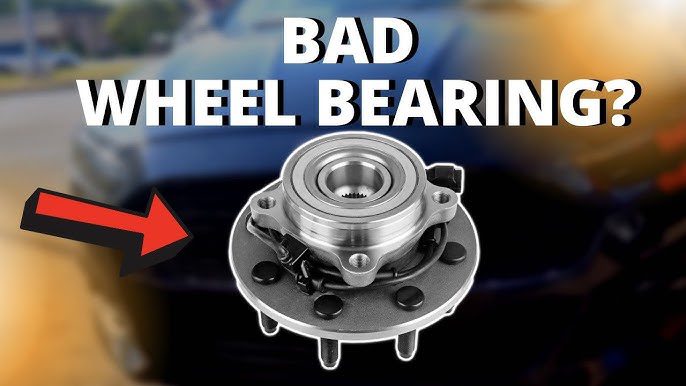
There are components on your car that work silently in the background, taking on enormous loads every single day without ever demanding your attention, until they start to fail. The wheel bearing is one of them. Most drivers never think about their wheel bearings until they hear that unmistakable humming noise coming from somewhere around the wheels, and by then, the bearing is already in trouble.
A failing wheel bearing is not a problem you can defer. It gets worse progressively, and in the final stages, it becomes genuinely dangerous. Understanding what wheel bearings do, how to recognize when they are failing, and what causes them to wear out early is knowledge every driver should have.
What Is a Wheel Bearing and What Does It Do?
At its core, a wheel bearing is the connection point between your car’s stationary axle and the rotating wheel hub. It allows the wheel to spin freely around the axle with minimal friction while simultaneously supporting the enormous forces that driving generates, the weight of the vehicle, the side loads from cornering, the braking forces, and the impacts from road surface irregularities.
Structurally, a wheel bearing consists of two metal rings, an inner ring and an outer ring, with precision-made rolling elements (either balls or tapered rollers) packed between them. The whole assembly is filled with high-temperature grease and sealed with rubber covers to keep the lubricant in and contamination out. The rolling elements allow the rings to rotate relative to each other with extremely low friction.
Two main types of wheel bearings have been used in automotive applications:
- Ball angular contact bearings: Use spherical balls as the rolling elements. These handle both radial loads (the weight of the car pressing down) and axial or lateral loads (side forces from cornering) effectively. Common in modern passenger vehicles.
- Tapered roller bearings: Use cone-shaped rollers. These are exceptionally strong under combined radial and axial loads and are commonly found on heavier vehicles, rear axles, and older vehicle designs.
Since the mid-twentieth century, single-row bearings have been largely replaced by multi-row sealed hub units that integrate the bearing, hub, and in many cases the wheel speed sensor for the ABS system, all into one pre-assembled component. These modern units are more durable, easier to install, and require no maintenance, but they also cannot be disassembled or re-greased. When they fail, the entire unit is replaced.
The Four Main Jobs a Wheel Bearing Does
- Enables free rotation: Allows the hub and wheel to spin around the axle with minimal energy loss to friction
- Centers the hub on the axle: Keeps the wheel precisely positioned relative to the suspension geometry at all times
- Distributes forces: Transfers radial loads (weight), lateral loads (cornering), and torque forces between the wheel and the suspension and axle structure
- Relieves the axle shaft: On driven axles, the bearing takes the vehicle’s weight load so the axle shaft only needs to transmit drive torque rather than bear the car’s weight as well
When a wheel bearing starts to fail, it cannot perform these functions properly. Friction increases, heat builds up, the wheel position becomes slightly unstable, and the forces that should be smoothly transferred through the bearing begin creating noise and vibration instead. Left unchecked, a failing bearing can ultimately seize, locking the wheel at speed, which is a catastrophic event with serious accident potential.
How Long Do Wheel Bearings Last?
Wheel bearings are robust components designed to last a long time. Under normal operating conditions on reasonably good roads, you can typically expect a wheel bearing to last between 50,000 km and 150,000 km (roughly 31,000 to 93,000 miles). The wide range reflects the many variables involved, road quality, driving style, vehicle weight, bearing quality, and whether the bearing was correctly installed in the first place.
Some vehicles make it to very high mileage without a single bearing replacement. Others start showing bearing issues well before 80,000 km, particularly if they are regularly driven on rough or potholed roads. The bearing does not wear evenly from all sides either, a car driven frequently in one direction on a cambered road will put different loads on the inner and outer elements of the bearing over time.
Warning Signs of a Failing Wheel Bearing
Wheel bearings communicate their failure in a fairly consistent progression. Catching it early, at the first sign rather than the last, makes the difference between a straightforward bearing replacement and a much more complicated and expensive repair.
Stage 1: The Hum
The first and most recognizable symptom of a failing wheel bearing is a low, steady humming or droning noise that increases with vehicle speed. It typically becomes noticeable around 40 to 50 km/h (25 to 30 mph) and gets louder as you accelerate. It is different from road noise or tyre roar, it is consistent, rhythmic, and changes character with speed rather than road surface.
From inside the car, it can be surprisingly difficult to pinpoint which wheel the noise is coming from. Sound travels through the body structure, and a rear bearing can sometimes sound like it is coming from the front, or vice versa. That is why proper diagnosis requires the specific tests described later in this article.
Stage 2: Steering Wheel Vibration
As the bearing deteriorates further, the internal rolling elements begin to move less smoothly within the bearing races. In more advanced wear, the bearing seat itself starts to break down, and the balls or rollers begin to move erratically around the bearing circumference. This creates a vibration that travels up through the hub, the steering linkage, and into the steering wheel.
Steering wheel vibration from a failing bearing is different from vibration caused by wheel balance issues. Imbalance-related vibration is usually speed-specific, it appears at a certain speed and then smooths out again at higher speeds. Bearing-related vibration tends to increase consistently with speed and worsens progressively over time rather than appearing and disappearing.
Stage 3: The Car Pulling to One Side
A significantly worn wheel bearing changes the relationship between the hub and the suspension geometry. As the bearing degrades and play develops, the wheel position shifts slightly. This creates an asymmetry in rolling resistance and handling that causes the car to drift toward the side with the failing bearing.
This symptom is a sign that the bearing is in advanced failure. A bearing that is causing the car to pull is well past the early warning stage. At this point, replacement is urgent.
Stage 4: Knocking, Cracking, and Wheel Play
In the final stages of bearing failure, the internal separator, the cage that keeps the rolling elements evenly spaced, breaks down. The balls or rollers lose their organized positions and begin making contact with each other rather than rolling cleanly. The hum is replaced by knocking or cracking sounds. At this point the wheel will have measurable play, you can physically wobble it when lifted off the ground.
If a bearing reaches total failure, the wheel can seize. At any speed above walking pace, a suddenly locked wheel is a serious accident waiting to happen. The wheel can stop rotating while the car is still moving, causing an immediate loss of control. This is not a hypothetical worst case, it happens, and when it does, the consequences are severe.
How to Check a Wheel Bearing: Three Practical Methods
Method 1: The Coast-Down Noise Test (No Equipment Needed)
This is the simplest check and can be done on any road without lifting the car.
- Find a smooth, straight section of road with minimal surface variation.
- Accelerate to approximately 70 to 80 km/h (44 to 50 mph).
- Put the transmission in neutral and let the car coast without acceleration or braking.
- Listen carefully for any humming, droning, or growling noise from the wheel area.
With the transmission in neutral and the engine essentially disconnected from the drivetrain, most drivetrain-related noises disappear. What remains is noise coming from the wheels, tyres, and bearings. A consistent hum that increases with speed and does not go away when the engine is disconnected is a strong indicator of bearing wear. Smooth, quiet coasting means the bearings are likely fine.
Method 2: The Steering Weave Test
This test helps identify which side the failing bearing is on, and can be done on a quiet road at low speed.
- Find a quiet road or large empty car park.
- Drive at around 20 to 30 km/h (15 to 20 mph).
- Gently weave the car left and right, not dramatically, just enough to shift the car’s weight from side to side.
- Listen for changes in the bearing noise as the weight transfers.
Here is the key to interpreting the results: when you turn right, the car’s weight shifts toward the left side (the body leans outward to the left). This increases the load on the left wheel bearing. If the hum gets louder when turning right, the left bearing is the likely culprit. If the noise increases when turning left, suspect the right bearing.
This test identifies the side, left or right, but not whether the problem is front or rear. For that, you need to lift the car.
Method 3: The Lifted Wheel Shake Test
This is the most definitive check and confirms bearing wear by detecting physical play in the hub.
- Safely lift the vehicle using a jack and place it securely on axle stands. Never work under a car supported only by a jack.
- Grasp the wheel firmly at the 12 o’clock and 6 o’clock positions (top and bottom).
- Try to rock the wheel toward and away from you, push the top in while pulling the bottom out, then reverse.
- Repeat with hands at the 9 o’clock and 3 o’clock positions (sides).
On a front wheel, there should be absolutely zero play. Any detectable movement indicates bearing wear, and the amount of play indicates how far the wear has progressed. On a rear wheel, a very tiny amount of play is acceptable depending on the vehicle, but it should be truly minimal, not something you can easily feel. Any significant movement is a problem.
While the wheel is lifted, spin it by hand and listen. A healthy bearing spins smoothly and quietly. A worn bearing may produce a grinding, rumbling, or gravelly sensation as it turns, sometimes you feel this through the tyre rather than hear it clearly.
What Causes Wheel Bearings to Fail Prematurely?
Bearings can wear out simply through age and mileage, that is normal. But several factors can significantly shorten their lifespan well below what the manufacturer intended.
- Road surface quality: Consistently driving on potholed, rough, or poorly maintained roads subjects the bearing to impact loads far beyond its normal design conditions. A single hard hit into a deep pothole can cause immediate internal damage to the bearing races and rolling elements.
- Aggressive driving style: Hard cornering, aggressive braking, and frequent high-speed driving all increase the loads on wheel bearings. Drivers who regularly push their vehicles hard will typically see shorter bearing lifespans than those who drive more conservatively.
- Lubricant loss: The grease inside a sealed bearing is what keeps the rolling elements moving freely and prevents corrosion. If the rubber seal is damaged, from an impact, a kerb strike, or simply degradation over time, the grease escapes and the bearing starts running dry. A bearing without lubrication deteriorates rapidly.
- Incorrect installation: A wheel bearing that is not pressed in squarely, or that has been installed without proper tools, can fail very quickly, sometimes within 1,000 to 2,000 km of fitting. The bearing races need to be perfectly aligned for the rolling elements to distribute loads correctly. An improperly installed bearing concentrates stress on a small area rather than spreading it evenly, and that area wears through fast.
- Wrong lubricant type: If the bearing is a serviceable type (older vehicles) and is re-greased with an incompatible lubricant, the grease may not hold up under the operating temperatures the bearing reaches. It can melt, leak out, and leave the bearing dry, causing rapid failure.
- Low-quality or counterfeit bearings: The automotive parts market has a genuine counterfeit problem in some regions. A bearing that appears identical to a quality unit but is made from inferior steel or has inadequate quality control can fail dramatically earlier than expected. Buying from reputable suppliers and sticking to known brands is worth the modest premium.
- Brake overheating: Repeatedly overheating the brake system, through aggressive repeated braking, transfers excess heat to the hub assembly. Sustained elevated temperatures degrade the grease inside the bearing and can cause the metal races to harden unevenly, accelerating wear.
Can You Drive on a Failing Wheel Bearing?
This is one of the most common questions, and the honest answer depends on how far the bearing has deteriorated.
At the first sign of bearing noise, a mild hum that you have only recently noticed, you have some time to arrange a repair, but it should be treated as a priority, not something to ignore for months. The bearing will not spontaneously recover. It will only get worse.
Once the symptoms have progressed to vibration in the steering wheel, the car pulling to one side, or any detectable play when you shake the wheel by hand, you are in the stage where continued driving poses a real risk. At this point, keep trips short, avoid motorway speeds, and get the bearing replaced as soon as possible.
If you are hearing knocking or cracking sounds, or the wheel has significant play, stop driving the car. A bearing in this condition can seize without further warning. On a front axle especially, a seized wheel at speed means immediate loss of steering control. This is a genuine emergency, and the car should be transported to a workshop rather than driven there.
Replacing a Wheel Bearing: What to Expect
Wheel bearing replacement is not a simple DIY job for most people. On modern vehicles, the bearing is usually integrated into the hub unit and pressed into the knuckle or hub carrier using a hydraulic press. Without the right equipment, it is extremely difficult to install the new bearing correctly and an incorrectly installed bearing will fail prematurely, as mentioned above.
Some key points about the replacement process:
- On most modern cars, replacing the bearing means replacing the entire hub unit. These sealed, pre-assembled units include the bearing, hub, and often the ABS sensor ring. The upside is that no re-greasing or adjustment is needed, the unit is ready to install.
- Special tools are required. A hydraulic press or specialist bearing removal and installation tools are needed to remove the old bearing and correctly seat the new one. Attempting to drive a bearing in with a hammer risks damaging the new bearing immediately.
- Re-greasing is not a reliable repair option. Some older bearings can technically be disassembled and re-greased, but on a bearing that has been running dry or is already significantly worn, this is a very short-term solution. A new bearing is the correct repair.
- The ABS sensor may need to be checked or replaced. On vehicles where the wheel speed sensor is integrated into the hub assembly, a bearing replacement gives you the opportunity to inspect the sensor and its wiring. A failing bearing can damage the sensor ring, which will trigger ABS warning lights after the bearing is replaced if the sensor ring is compromised.
How to Get a Good Quality Replacement Bearing
When buying a replacement wheel bearing, quality genuinely matters. Here is what to look for:
- Check that the unit comes pre-greased and sealed. Some lower-quality or aftermarket units have been found to be inadequately filled with grease from the factory. A bearing that leaves the factory under-greased will fail far sooner than it should.
- Stick with reputable brands. SKF, FAG, Timken, NSK, and NTN are among the established bearing manufacturers whose products meet consistent quality standards. Unbranded or suspiciously cheap alternatives are a false economy.
- Verify the part number matches your vehicle. Bearings that look similar can have slightly different dimensions. An incorrect fit will cause installation problems and premature failure.
- Buy from a reputable supplier. Original equipment quality bearings from a trusted parts supplier are worth the small premium over the cheapest available option.
A wheel bearing is not the most glamorous car component, and it is easy to forget it exists right up until the moment it starts making noise. But it sits at the literal interface between your car and the road, handling enormous loads in silence for tens of thousands of miles. When it starts telling you something is wrong, through noise, vibration, or any of the other symptoms described here, listen to it promptly. The cost of ignoring a failing bearing is always higher than the cost of replacing it in time.