
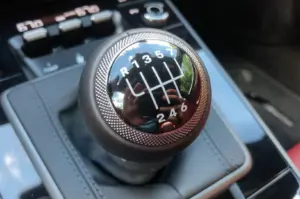

In a world where automatic transmissions, dual-clutch gearboxes, and electric powertrains are taking over, the manual transmission is becoming an endangered species. Walk into most dealerships today and try to order a new car with a stick shift. You will find that your options have shrunk dramatically compared to even ten years ago. Manufacturers are dropping manual transmissions from their lineups at an accelerating pace, and the ones that remain are mostly limited to sports cars and enthusiast-oriented models.
But here is something that might surprise you. While the 5-speed and 6-speed manual transmissions most people are familiar with have been slowly disappearing, a small group of cars pushed the manual gearbox concept even further. They added a seventh gear. A 7-speed manual transmission.
Table of Contents
If your first reaction is “wait, that exists?” you are not alone. Most people have no idea that a 7-speed manual is even a thing. When you think of seven or more speeds, your mind probably goes to automatic transmissions, the 8-speed, 9-speed, and even 10-speed automatics that have become common in modern cars and trucks. But a manual gearbox with seven forward gears and a clutch pedal? That is a very different and much rarer beast.
The 7-speed manual transmission made its debut in 2012, and it came from exactly the manufacturer you would expect to push the boundaries of the driving experience: Porsche. Since then, only a handful of manufacturers have offered it, and the list of cars that come equipped with a 7-speed manual is surprisingly short. We are talking about Porsche, Ford (in the Bronco, of all things), and Chevrolet (in the C7 Corvette). That is essentially the entire club.
So why does a 7-speed manual exist? Who needs seven gears with a stick shift? And which specific cars offered this unusual transmission? Let us go through all of it, including the full lineup of 23 vehicles that have been sold with a 7-speed manual gearbox, what makes this transmission special, and whether it is worth seeking out if you are in the market for a driver-focused car.
Why Seven Gears? What Problem Does a 7-Speed Manual Solve?
To understand why anyone would add a seventh gear to a manual transmission, you need to understand the fundamental trade-off that every gearbox deals with: performance versus efficiency.
In simple terms, lower gears (first, second, third) are short and provide strong acceleration. They keep the engine in its power band while the car is building speed. Higher gears (fifth, sixth, seventh) are tall and allow the engine to turn at lower RPM while the car cruises at highway speed. Lower RPM at cruising speed means less fuel consumed and a quieter, more relaxed driving experience.
With a 5-speed manual, you have a limited number of ratios to work with. The spread between gears has to be relatively large, which means bigger RPM jumps between shifts. A 6-speed manual tightens that spacing a bit, giving you better acceleration (because you stay in the power band more consistently) while also offering a taller top gear for highway cruising.
A 7-speed manual takes this one step further. The seventh gear is essentially an overdrive gear designed specifically for highway cruising. It lets the engine turn at very low RPM, say 1,500 to 2,000 RPM at 70 mph, which saves fuel and reduces engine noise. Meanwhile, gears one through six are spaced tightly for crisp, quick shifts during spirited driving.
Think of it this way. A 6-speed manual is like having six tools in your toolbox. A 7-speed manual gives you those same six tools plus one extra, specifically designed for highway fuel economy. In daily driving, you might rarely use seventh gear at all. It is there for when you are cruising on the interstate and want the engine to loaf along at the lowest possible RPM. The rest of the gears are optimized for the fun stuff.
There was also a regulatory reason behind the 7-speed manual. Fuel economy and emissions standards have been tightening globally for decades. Manufacturers need every possible trick to squeeze extra miles per gallon out of their vehicles. Adding an extra overdrive gear to a manual transmission is one way to improve highway fuel economy numbers without fundamentally changing the engine or the driving character of the car. For Porsche, this was particularly important because the 911’s flat-six engine is not exactly known for sipping fuel.
Where It All Started: Porsche and the Birth of the 7-Speed Manual
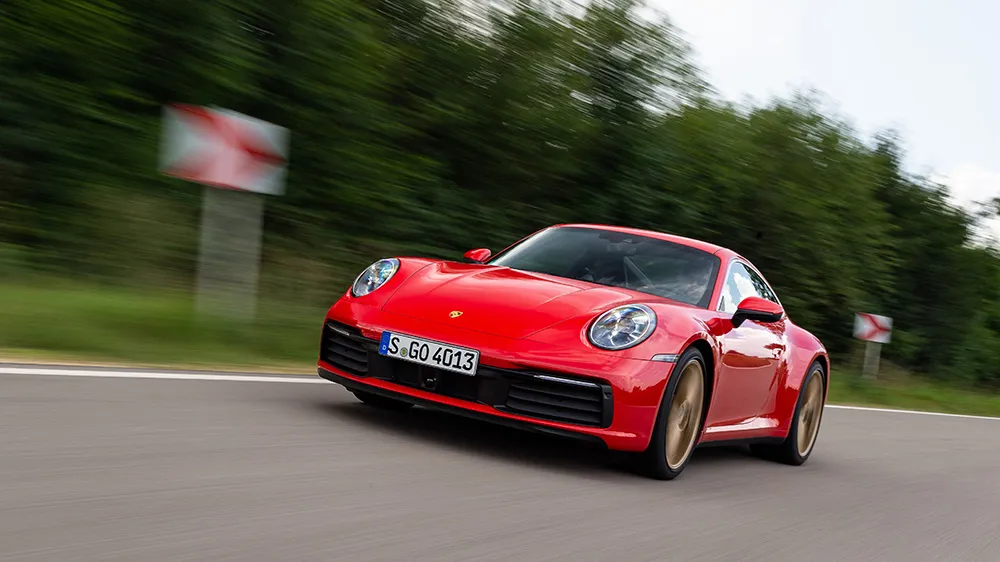
Porsche introduced the 7-speed manual transmission in the 2012 Porsche 911 (the 991 generation). It was the first production car in the world to offer a manual gearbox with seven forward gears. At the time, it was a bold move. Most sports cars were trending in the opposite direction, moving toward dual-clutch automatics and paddle shifters. Some manufacturers were dropping the manual option entirely.
But Porsche understood something about its customer base that other manufacturers either did not know or chose to ignore. A significant portion of 911 buyers want to shift their own gears. They do not care that a dual-clutch automatic is technically faster. They do not care that it is more efficient. They want three pedals, a shift knob, and the satisfaction of executing a perfect heel-toe downshift into a corner. For these drivers, the manual transmission is not a compromise. It is the whole reason they are buying the car.
By adding a seventh gear, Porsche was able to give these manual-transmission loyalists the best of both worlds. Six closely spaced gears for spirited driving, plus a tall seventh gear that turned the 911 into a relaxed, fuel-efficient highway cruiser when the driver wanted it to be. The seventh gear essentially acted as an overdrive that you could engage on the highway and then forget about until you exited the freeway and wanted to have fun again.
Since that 2012 introduction, Porsche has continued to offer the 7-speed manual across a wide range of 911 variants. As of the 2022 model year, the 7-speed manual was available in the Carrera, Carrera S, Carrera GTS, Carrera 4S, Carrera 4 GTS, Targa 4S, Targa 4 GTS, and even the special Edition 50 Years model. That is an impressively broad lineup, and it shows how committed Porsche remains to the manual driving experience.
The Ford Bronco: The Unexpected 7-Speed Manual Candidate
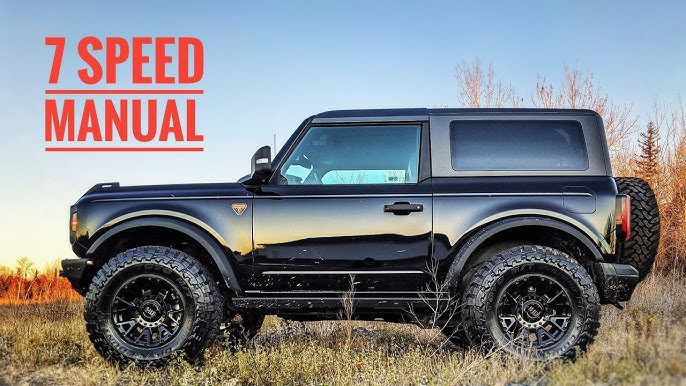
When Ford brought the Bronco back from the dead in 2021 after a 25-year hiatus, it generated enormous excitement. The new Bronco was a rugged, off-road-focused SUV designed to go head-to-head with the Jeep Wrangler. And in a move that delighted enthusiasts and surprised just about everyone else, Ford offered it with a 7-speed manual transmission.
Now, this was not the same kind of 7-speed manual that Porsche uses. In the Bronco, the seventh gear is actually a crawler gear, an ultra-low first gear designed specifically for off-road use. When you engage the crawler gear, the Bronco can creep over rocks, through deep sand, and up steep inclines at extremely slow speeds with maximum torque multiplication. It is essentially a granny gear that gives you much more control in technical off-road situations.
So while the Porsche 7-speed manual adds a gear at the top of the range (for highway cruising), the Bronco 7-speed manual adds a gear at the bottom of the range (for low-speed off-roading). Same number of gears, completely different philosophy. It is a clever approach that makes the manual-transmission Bronco a more capable off-road vehicle than it would be with a standard 6-speed.
The Bronco’s 7-speed manual is paired with the 2.3-liter turbocharged four-cylinder engine producing 275 horsepower and 315 lb-ft of torque. It is available across several Bronco trim levels, from the base model to the off-road-oriented Badlands and the mid-range Big Bend and Black Diamond trims. Notably, the 7-speed manual is only available with the 2.3-liter engine. If you want the more powerful 2.7-liter twin-turbo V6, you have to get the 10-speed automatic.
The C7 Corvette: America’s Sports Car With a 7-Speed Stick
Chevrolet jumped into the 7-speed manual game with the C7 Corvette, which was produced from 2014 to 2019. The C7 was the last front-engine Corvette (the current C8 is mid-engine and only comes with a dual-clutch automatic), and it offered a 7-speed manual transmission across its entire model range: Stingray, Grand Sport, Z06, and even the insane 755-horsepower ZR1.
Like the Porsche approach, the Corvette’s seventh gear was a tall overdrive designed for highway fuel economy. Chevrolet engineers also incorporated a feature called “Active Rev Matching” that automatically blipped the throttle during downshifts to match engine speed to wheel speed, making every downshift smooth and satisfying even for drivers who had not mastered the art of heel-toe shifting. You could turn this feature off if you wanted the full, unassisted manual experience, which many enthusiast owners preferred.
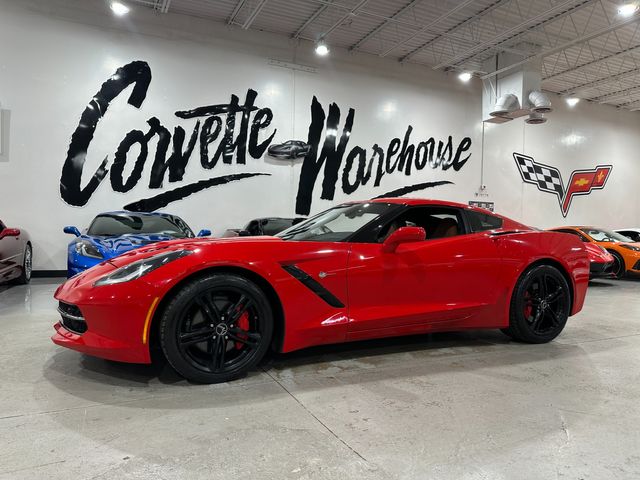
The 7-speed manual in the Corvette was paired with General Motors’ Small Block V8 engines, either the naturally aspirated 6.2-liter LT1 (455 hp in the Stingray), the naturally aspirated 6.2-liter LT4 (460 hp in the Grand Sport), the supercharged 6.2-liter LT4 (650 hp in the Z06), or the supercharged 6.2-liter LT5 (755 hp in the ZR1). Routing 755 horsepower through a manual transmission and a clutch pedal is not for the faint of heart, and the ZR1 with a manual gearbox is one of the most raw and intense driving experiences available from any American manufacturer.
Since the C8 Corvette switched to a mid-engine layout and dropped the manual transmission entirely, the C7 has become increasingly desirable among collectors and enthusiasts. Manual-transmission C7 Corvettes, especially the Z06 and ZR1 variants, are expected to appreciate in value over time because they represent the end of an era: the last front-engine, manual-transmission Corvettes ever built.
The Complete List: Every 7-Speed Manual Transmission Car
Now let us get into the full list. Below are all 23 vehicles that have been offered with a 7-speed manual transmission, organized by manufacturer. For each car, you will find the MSRP (manufacturer’s suggested retail price at time of sale), fuel economy, horsepower, and engine specifications.
Porsche 911 Models With 7-Speed Manual (2022 Model Year)
Porsche offered the 7-speed manual across the widest range of models, with variants spanning from the “base” Carrera S all the way up to the special-edition 50 Years model. All of the 2022 Porsche 911 manual models use the same 3.0-liter twin-turbocharged flat-six engine, but output varies depending on the trim level.
| Model | MSRP | City / Hwy MPG | Horsepower | Engine |
|---|---|---|---|---|
| 911 Carrera S Manual Coupe | $117,100 | 18 / 25 | 443 hp @ 6,500 rpm | 3.0L 6-cylinder |
| 911 Carrera S Manual Convertible | $129,900 | 17 / 25 | 443 hp @ 6,500 rpm | 3.0L 6-cylinder |
| 911 Carrera GTS Manual Coupe | $136,700 | 17 / 24 | 473 hp @ 6,500 rpm | 3.0L 6-cylinder |
| 911 Carrera GTS Manual Convertible | $149,500 | 17 / 24 | 473 hp @ 6,500 rpm | 3.0L 6-cylinder |
| 911 Carrera 4S Manual Coupe | $137,200 | 17 / 24 | 443 hp @ 6,500 rpm | 3.0L 6-cylinder |
| 911 Carrera 4S Manual Convertible | $137,200 | 17 / 24 | 443 hp @ 6,500 rpm | 3.0L 6-cylinder |
| 911 Carrera 4 GTS Manual Coupe | $144,000 | 17 / 23 | 473 hp @ 6,500 rpm | 3.0L 6-cylinder |
| 911 Carrera 4 GTS Manual Convertible | $156,800 | 16 / 23 | 473 hp @ 6,500 rpm | 3.0L 6-cylinder |
| 911 Targa 4S Manual Coupe | $137,200 | 17 / 24 | 443 hp @ 6,500 rpm | 3.0L 6-cylinder |
| 911 Targa 4 GTS Manual Coupe | $156,800 | 16 / 23 | 473 hp @ 6,500 rpm | 3.0L 6-cylinder |
| 911 Edition 50 Years Manual Coupe | $183,800 | 17 / 24 | 473 hp @ 6,500 rpm | 3.0L 6-cylinder |
A few things jump out from this lineup. First, the price range is substantial. You are looking at $117,100 on the low end for a Carrera S Coupe up to $183,800 for the Edition 50 Years model. Second, all of these cars share the same basic engine, the 3.0-liter twin-turbo flat-six, but the GTS and Edition 50 Years models get an extra 30 horsepower bump to 473 hp compared to the S models’ 443 hp. Third, the fuel economy numbers are remarkably similar across the lineup, hovering around 16 to 18 city and 23 to 25 highway. The all-wheel-drive models (anything with a “4” in the name) tend to lose about 1 mpg compared to their rear-wheel-drive counterparts.
The Edition 50 Years model deserves special mention. This was a limited-production variant celebrating the 50th anniversary of the Porsche Design studio. It came exclusively with the 7-speed manual transmission, which was a deliberate statement from Porsche about the importance of the manual gearbox to the 911’s identity. You could not get this car with the PDK automatic even if you wanted to. That is a pretty bold move in an era when most buyers default to the automatic.
Ford Bronco Models With 7-Speed Manual (2022 Model Year)
Ford offered the 7-speed manual across four Bronco configurations, ranging from the affordable base 2-door to the trail-ready Badlands 4-door.
| Model | MSRP | City / Hwy MPG | Horsepower | Engine |
|---|---|---|---|---|
| Bronco 2.3L Manual 2-Door SUV | $29,300 | 20 / 21 | 275 hp @ 5,700 rpm | 2.3L 4-cylinder turbo |
| Bronco Big Bend 2.3L Manual | $36,130 | 20 / 21 | 275 hp @ 5,700 rpm | 2.3L 4-cylinder turbo |
| Bronco Black Diamond 2.3L Manual 4-Door | $38,795 | 17 / 19 | 275 hp @ 5,700 rpm | 2.3L 4-cylinder turbo |
| Bronco Badlands 2.3L Manual 4-Door | $44,840 | 16 / 17 | 275 hp @ 5,700 rpm | 2.3L 4-cylinder turbo |
The Bronco lineup shows a clear pricing ladder from $29,300 for the stripped-down 2-door to $44,840 for the Badlands. All four share the same 2.3-liter turbocharged four-cylinder engine with 275 horsepower. The interesting variation is in the fuel economy. The lighter 2-door models manage 20 city and 21 highway, which is respectable for a body-on-frame SUV with four-wheel drive. But the heavier 4-door Badlands, with its more aggressive off-road gearing, drops to 16 city and 17 highway. That is a significant difference, and it shows how much the off-road-oriented gearing and additional weight of the 4-door body affect efficiency.
The Bronco also stands out as the most affordable entry point into 7-speed manual ownership. At $29,300 for the base 2-door, it is less than a quarter of the price of the cheapest Porsche on this list. That accessibility has made the manual Bronco enormously popular with buyers who want a stick-shift SUV, a combination that is vanishingly rare in today’s market.
Chevrolet Corvette C7 Models With 7-Speed Manual (2019 Model Year)
The 2019 model year was the last for the C7 Corvette, and Chevrolet offered the 7-speed manual across all variants. This gives us the widest performance spread of any manufacturer on this list, from the 455-hp Stingray to the earth-shaking 755-hp ZR1.
| Model | MSRP | City / Hwy MPG | Horsepower | Engine |
|---|---|---|---|---|
| Corvette Stingray Manual Coupe | $56,950 | 16 / 25 | 455 hp @ 6,000 rpm | 6.2L V8 |
| Corvette Stingray Manual Convertible | $58,950 | 16 / 25 | 455 hp @ 6,000 rpm | 6.2L V8 |
| Corvette Grand Sport Manual Coupe | $65,900 | 16 / 25 | 460 hp @ 6,000 rpm | 6.2L V8 |
| Corvette Grand Sport Manual Convertible | $70,400 | 16 / 25 | 460 hp @ 6,000 rpm | 6.2L V8 |
| Corvette Z06 Manual Coupe | $81,995 | 15 / 22 | 650 hp @ 6,400 rpm | 6.2L supercharged V8 |
| Corvette Z06 Manual Convertible | $85,000 | 15 / 22 | 650 hp @ 6,400 rpm | 6.2L supercharged V8 |
| Corvette ZR1 Manual Coupe | $120,900 | 13 / 19 | 755 hp | 6.2L supercharged V8 |
| Corvette ZR1 Manual Convertible | $125,400 | 13 / 19 | 755 hp | 6.2L supercharged V8 |
The Corvette lineup tells a fascinating story about the relationship between power and price. The base Stingray starts at just under $57,000 and makes 455 horsepower, which is already an incredible performance bargain. The Grand Sport adds wider bodywork and better suspension for around $66,000 to $70,000. The Z06 jumps to a supercharged engine with 650 horsepower for about $82,000 to $85,000. And the ZR1, the ultimate expression of the C7, packs 755 horsepower and starts at nearly $121,000.
That ZR1 with the 7-speed manual is a particularly special machine. Very few ZR1 buyers opted for the manual transmission over the 8-speed automatic, which means manual ZR1s are rare. Rare plus desirable plus never-to-be-repeated (since the C8 has no manual option) equals a car that is almost certainly going to be a valuable collectible.
Fuel economy across the Corvette lineup tells you exactly what to expect from a large-displacement V8. The Stingray and Grand Sport manage a respectable 25 mpg on the highway thanks to that tall seventh gear. The Z06 drops to 22 highway. And the ZR1, with its massive supercharger gulping air and fuel, manages just 19 highway and 13 city. If you are buying a 755-horsepower car with a manual transmission, fuel economy is probably not high on your list of priorities.
The Full Picture: All 23 Cars Side by Side
Looking at the complete list of 23 vehicles, a few patterns emerge:
Three manufacturers dominate the 7-speed manual space. Porsche, Ford, and Chevrolet are the only manufacturers that have offered a 7-speed manual in a production vehicle. No other automaker, not BMW, not Toyota, not Aston Martin, has gone to seven speeds with a manual gearbox. This makes the 7-speed manual one of the rarest transmission configurations in automotive history.
The price range is enormous. You can get into a 7-speed manual car for as little as $29,300 (base Ford Bronco 2-door) or spend up to $183,800 (Porsche 911 Edition 50 Years). That $154,500 spread means the 7-speed manual experience is available at wildly different price points, though the character of each car is obviously very different.
The horsepower range is just as wide. From the Bronco’s 275 hp to the Corvette ZR1’s 755 hp, you are looking at nearly a 500-horsepower gap between the least and most powerful cars on this list. The Bronco uses its 7-speed manual for off-road crawling. The ZR1 uses it for track-day heroics. Same number of gears, completely different missions.
Porsche offers the most variety. With 11 different 911 variants carrying the 7-speed manual, Porsche clearly believes in this transmission. The breadth of the lineup, from rear-drive coupes to all-wheel-drive convertibles to a special anniversary edition, shows that Porsche sees the manual gearbox as a core part of the 911 experience, not an afterthought.
How Reliable Is a 7-Speed Manual Transmission?
This is one of the most common questions potential buyers ask, and the short answer is: very reliable.
Manual transmissions, as a category, have always been more durable and longer-lasting than automatic transmissions. The reason is mechanical simplicity. A manual gearbox is fundamentally a set of gears, shafts, synchro rings, and a clutch. There are no torque converters, no valve bodies, no complex hydraulic circuits, and no electronic solenoids to fail. The parts that wear out, primarily the clutch and the synchro rings, are well-understood components that last for tens of thousands of miles and are relatively inexpensive to replace when they eventually do wear.
The 7-speed manual transmissions used in these cars are no exception. In fact, they benefit from modern manufacturing precision, advanced materials, and decades of accumulated engineering knowledge. Here is a look at each manufacturer’s track record:
Porsche’s 7-Speed Manual
Porsche has been building manual transmissions for the 911 since the 1960s. They know what they are doing. The 7-speed unit used in the 991 and 992 generation 911s is well-regarded for its precise shift action, smooth engagement, and long-term durability. Porsche owners who maintain their cars properly (regular fluid changes, avoiding abusive launches) routinely report trouble-free operation well past 100,000 miles.
The clutch is the consumable item in any manual transmission. Porsche clutches are not cheap to replace (expect $2,000 to $3,500 including labor), but they typically last 50,000 to 80,000 miles under normal driving conditions. Aggressive track use or frequent city driving with lots of stop-and-go traffic will shorten that lifespan. Highway commuting will extend it.
Ford’s 7-Speed Manual in the Bronco
Ford’s 7-speed manual in the Bronco is a newer design, and early reliability data has been generally positive. There were some reports of a slightly notchy shift feel in first and second gear during the earliest production units, but Ford addressed this with updated transmission fluid recommendations and minor calibration changes. Overall, the Bronco’s manual has proven to be a solid unit that handles the rigors of off-road use without major issues.
The crawler gear adds some mechanical complexity compared to a standard 6-speed, but it is a straightforward gear set, not a fundamentally different design. Ford engineers designed it to handle the torque loads of the 2.3-liter turbo engine in both on-road and off-road conditions, and so far it has held up well.
Chevrolet’s 7-Speed Manual in the C7 Corvette
The Tremec TR-6070 7-speed manual used in the C7 Corvette is built by Tremec, one of the most respected manual transmission manufacturers in the world. Tremec supplies manual gearboxes to a wide range of performance car manufacturers, and their products have a strong reputation for durability.
The TR-6070 handles the Corvette’s massive torque output (up to 715 lb-ft in the ZR1) without complaint. Corvette owners have reported excellent reliability from this transmission, with many high-mileage examples still shifting smoothly after years of use. The Active Rev Matching feature, which electronically blips the throttle during downshifts, also helps protect the transmission from ham-fisted downshifts that might otherwise cause excessive synchro wear.
Across all three manufacturers, the consensus is clear: 7-speed manual transmissions are at least as reliable as their 5-speed and 6-speed predecessors, and they often outlast automatic transmissions of similar vintage. If you maintain the clutch and use the correct transmission fluid, a 7-speed manual should give you many years of trouble-free service.
What It Actually Feels Like to Drive a 7-Speed Manual
Numbers and specifications only tell part of the story. What is it actually like to sit in one of these cars and row through seven gears with a stick shift?
The honest answer is that, in everyday driving, you do not notice the seventh gear much. For around-town driving, you will probably only use gears one through four or five. The shift pattern is a standard H-pattern, with seventh gear typically placed to the right of and below sixth gear (in the Porsche layout) or in a similar position depending on the manufacturer. You do not accidentally shift into seventh gear instead of fifth, because the gates are clearly defined and the shift action guides you naturally.
Where seventh gear makes its presence known is on the highway. Once you are up to cruising speed and slot the lever into seventh, the engine RPM drops noticeably. In a Porsche 911, you might be turning 2,200 RPM in sixth gear at 70 mph. Drop it into seventh, and that falls to around 1,700 RPM. The engine gets quieter. The vibrations smooth out. Fuel consumption decreases. It feels like the car takes a deep breath and relaxes.
During spirited driving, on a back road or a track, you probably will not use seventh gear at all. Gears one through six are spaced closely enough to keep the engine in its sweet spot through all the normal driving scenarios you would encounter. The shift action in all three of these manufacturers’ transmissions is precise and satisfying. The Porsche is famously slick, with short throws and a connected, mechanical feel. The Corvette’s Tremec unit has a slightly longer throw but a meaty, solid engagement. The Bronco’s shift action is a bit longer and softer, which suits its off-road character.
One thing that takes getting used to is the clutch weight and engagement point. The Porsche and Corvette both have moderately weighted clutches with progressive engagement. They are not as heavy as an old muscle car clutch, but they are heavier than what you would find in a Honda Civic. The Bronco’s clutch is lighter and more forgiving, which makes sense for a vehicle that might be driven in heavy traffic or on technical trails where smooth, controlled clutch modulation is important.
Overall, driving a 7-speed manual is not dramatically different from driving a 6-speed manual. You just have one more option available when you need it. The real magic is in the specific cars that offer this transmission. Whether you are winding through mountain roads in a 911, crawling over boulders in a Bronco, or blasting down a straightaway in a Corvette, the 7-speed manual adds an extra dimension to the driving experience that no automatic can replicate.
7-Speed Manual vs. Modern Automatics: Where Each Wins
It is worth addressing the elephant in the room. Modern automatic transmissions, particularly dual-clutch units like Porsche’s PDK and torque-converter automatics like the Corvette’s 8-speed, are objectively faster than any manual. They shift quicker. They do not lose time during gear changes. They optimize shift points for both performance and fuel economy with a precision that no human foot and hand can match.
A PDK-equipped Porsche 911 GTS will beat the manual version to 60 mph by about half a second. Over a lap of a racetrack, the gap can be even larger. From a pure performance standpoint, the automatic wins every time.
But performance is not everything. If it were, nobody would ever choose a manual. The appeal of the manual transmission goes beyond lap times and 0-60 numbers. It is about engagement. It is about the satisfaction of a perfectly timed shift. It is about the challenge of mastering heel-toe downshifts. It is about the tactile connection between the driver and the machine.
Here is a comparison of where each type excels:
| Category | 7-Speed Manual | Modern Automatic (DCT/AT) |
|---|---|---|
| Acceleration (0-60) | Slower by 0.3 to 0.7 seconds | Faster |
| Lap Times | Slightly slower | Faster |
| Driver Engagement | Much higher | Lower |
| Traffic Comfort | Less convenient (clutch fatigue) | Much easier |
| Theft Deterrent | Very effective (fewer people can drive them) | None |
| Long-Term Reliability | Excellent | Good to excellent (varies) |
| Maintenance Cost | Lower (clutch is main wear item) | Higher (fluid changes, mechatronics) |
| Resale Value | Often higher (limited supply, high demand) | Standard |
| Fun Factor | High | Moderate |
That last point about resale value is increasingly relevant. As manual transmissions become rarer, the cars that have them are holding their value better than their automatic counterparts. A manual Porsche 911 or a manual C7 Corvette will almost always sell for more on the used market than the same car with an automatic. Supply and demand are working in favor of the manual, and that trend is likely to continue as fewer new cars offer the option.
The Future of the 7-Speed Manual: Is It Here to Stay?
The outlook for manual transmissions in general is uncertain. The automotive industry is in the middle of a massive shift toward electrification, and electric cars do not have multi-speed transmissions at all. Most EVs use a single-speed reduction gear because electric motors produce maximum torque at zero RPM and maintain a broad, flat power curve across their entire speed range. There is no need for multiple gear ratios when the motor can handle every speed efficiently on its own.
Even among internal-combustion-powered cars, the manual is losing ground. Toyota recently dropped the manual from the Supra for certain model years. BMW no longer offers a manual in the M3 in all markets. Honda, long a champion of the manual gearbox, has reduced its manual offerings to just a few models. The economics are simple: developing and certifying a manual transmission option costs money, and if only 10 to 15 percent of buyers choose it, the business case gets hard to justify.
But here is the flip side. Porsche continues to invest in the manual. Ford put a manual in the Bronco specifically because they knew it would generate enthusiasm and differentiate the Bronco from the automatic-only competition. And the market for manual-transmission sports cars, while small, is passionate and loyal.
Porsche CEO Oliver Blume has gone on record saying that Porsche will continue to offer the manual transmission as long as there is demand for it. Given the strong take rate on manual 911s (reportedly around 20 to 30 percent of buyers in some markets), the manual appears safe at Porsche for the foreseeable future.
The 7-speed manual specifically may or may not persist as a configuration. As emissions regulations get tighter and electrification accelerates, manufacturers may find other ways to achieve the fuel economy benefits that the seventh gear provides. But for now, the 7-speed manual remains one of the most distinctive and satisfying ways to experience a performance car.
Which 7-Speed Manual Car Should You Buy?
If this article has piqued your interest and you are considering a 7-speed manual car, the right choice depends entirely on what you want to do with it.
If you want the ultimate sports car driving experience and budget is not a major constraint, the Porsche 911 Carrera GTS with the 7-speed manual is hard to beat. It has the perfect balance of power (473 hp), refinement, and driver engagement. The GTS is widely considered the sweet spot of the 911 lineup, offering more performance than the Carrera S without the extreme commitment of a GT3. With the manual gearbox, it becomes one of the most rewarding cars to drive on the planet.
If you want a manual-transmission off-road SUV that can handle trails during the week and commute to work on Friday, the Ford Bronco with the 7-speed manual is your pick. The crawler gear gives it serious off-road chops, and the overall package is rugged, capable, and surprisingly affordable. At $29,300 for the base model, it is the most accessible 7-speed manual on the market.
If you want a performance bargain with a manual gearbox, look for a used 2019 Chevrolet Corvette Stingray or Grand Sport with the 7-speed manual. These cars offer stunning performance (455 to 460 hp), a glorious V8 soundtrack, and a driving experience that punches far above their price point. Used examples can be found for well under their original MSRP, and they represent one of the best performance-per-dollar values in the car world.
If you want a future collectible, the C7 Corvette Z06 or ZR1 with the 7-speed manual is worth serious consideration. These are the last front-engine, manual-transmission Corvettes ever made. The ZR1, with its 755-horsepower supercharged V8 and a stick shift, is a genuinely rare and special car. Low-mileage manual examples are already commanding premiums in the used market, and that trend is only going to strengthen over time.
A Few Practical Tips for 7-Speed Manual Owners
If you do end up buying one of these cars, here are some tips to keep the transmission happy for years to come:
- Change the transmission fluid on schedule. Most manufacturers recommend every 30,000 to 60,000 miles, but enthusiasts who track their cars often change it more frequently. Fresh fluid keeps the synchros happy and the shifts smooth.
- Do not rest your hand on the shift knob while driving. The weight of your hand, as light as it seems, puts pressure on the shift fork and synchro rings. Keep your hand on the steering wheel between shifts.
- Fully depress the clutch before shifting. Partial clutch engagement during shifts accelerates synchro wear. Push the clutch pedal all the way to the floor every time.
- Avoid lugging the engine. Do not try to accelerate in seventh gear at 30 mph. Downshift to an appropriate gear before adding throttle. Lugging puts enormous stress on the drivetrain.
- Let the car warm up before driving hard. Transmission fluid, like engine oil, works best at operating temperature. Give the car a few minutes of gentle driving before you start wringing it out.
- Learn to rev-match your downshifts. Even if your car has automatic rev matching, learning to do it manually with a heel-toe technique will make you a better driver and reduce wear on the clutch and synchros. It is a skill worth developing.
The 7-Speed Manual Is a Statement, Not Just a Transmission
Choosing a 7-speed manual in an age of 10-speed automatics and instant-torque electric motors is a deliberate act. It is a declaration that the journey matters as much as the destination. That the act of driving, the physical process of engaging gears, modulating a clutch, and controlling a machine with your own hands and feet, is something worth preserving.
These 23 cars represent a tiny, special corner of the automotive world. They come from just three manufacturers, span a price range from $29,000 to nearly $184,000, and cover everything from off-road crawling to 200-mph highway blasts. What they all share is a commitment to the idea that driving should be an active, engaged, physical experience.
The window for buying a new car with a 7-speed manual is not going to stay open forever. Electrification is coming. Regulations are tightening. And the economics of low-volume transmission options are getting harder for manufacturers to justify. If a 7-speed manual car is something you have been thinking about, the time to act is now, while the options still exist and before the used-market premiums get even steeper.
So which one would you pick: the precision of a Porsche, the rugged versatility of a Bronco, or the brute-force charm of a Corvette V8 with a stick shift?