
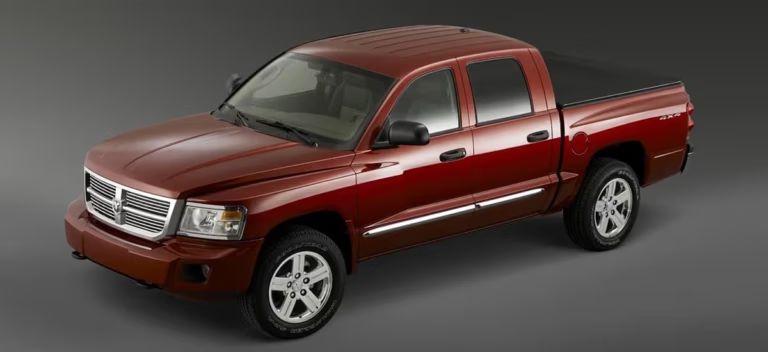
Struggling to locate the fuel filter on your Dodge Dakota can be surprisingly frustrating, especially when you are ready to dive into some hands-on maintenance and want the job to go smoothly from the start. On most Dodge Dakota models that use an external serviceable filter, the fuel filter is typically mounted underneath the truck on the driver’s side, along the left frame rail. That said, not every Dakota generation uses the same setup, and that is where many owners get tripped up. Some model years place the filter in a more accessible frame-mounted location, while others integrate it into the fuel pump module inside or on top of the fuel tank.
If you have ever crawled under your truck expecting to find a simple inline filter, only to come back up with more questions than answers, you are not alone. Dodge changed fuel system designs over the Dakota’s production life, which means the correct answer depends heavily on the model year. Knowing where the filter is located saves time, prevents unnecessary disassembly, and helps you approach maintenance with more confidence and less guesswork.
This guide is designed to make the job easier. I’ll walk you through how the Dodge Dakota fuel system is arranged, explain where the fuel filter is located on different generations, show you what to expect before you start replacing it, and help you recognize the symptoms of a clogged or failing filter. By the time you finish reading, you should have a clear roadmap, whether you are checking a 1997 Dakota, a 1998 model, a 2002 truck, or another variation that may use a slightly different design. Stick around, and we’ll make sure you are ready to handle each step with confidence, care, and the kind of practical understanding that makes DIY maintenance feel far less intimidating.
Understanding the Dodge Dakota Fuel System
Your Dodge Dakota’s fuel system has one simple mission: deliver the right amount of clean fuel from the tank to the engine at the proper pressure. While that sounds straightforward, the system relies on several components working together precisely. If even one part of that chain starts to fail, whether it is the fuel filter, the pump, a pressure regulator or part of the pump module, your truck’s performance can suffer in noticeable ways.
At its most basic, the process works like this: fuel is stored in the tank, the pump draws it out, the filter removes contaminants, and the pressurized fuel is then sent toward the injectors so the engine can burn it efficiently. When the system is healthy, you rarely think about it. The engine starts cleanly, accelerates smoothly, and responds predictably. But when fuel delivery is restricted, even slightly, the truck may hesitate, idle roughly, lose power under load, or become harder to start.
One reason Dodge Dakota owners get confused about the fuel filter is that the term “fuel filter” means slightly different things depending on the generation. In some years, it is a separate inline component mounted along the frame rail. In others, it is integrated into the fuel pump assembly, which changes how it is serviced. That distinction matters because searching for an external filter on a model that has an in-tank design can waste a lot of time.
Understanding these core components gives you a much better foundation for maintenance and troubleshooting. It also helps explain why a truck with a clogged fuel filter may behave similarly to one with a weak fuel pump. The symptoms overlap because both problems reduce the amount of usable fuel reaching the engine. The only reliable way to separate them is to understand how the system is built and what each part is responsible for.
Below, we will break down the most important fuel system parts so you can understand not only where the filter lives, but also why it matters so much to overall performance.
Function of the Fuel Filter in Your Dodge Dakota
The fuel filter is one of the unsung heroes of your Dodge Dakota’s fuel system. Its main job is to trap contaminants, such as dirt, rust flakes, sediment, and other debris, before they can travel downstream and damage the injectors or interfere with combustion. Gasoline may look clean when it goes into the tank, but over time, contamination can still find its way into the system. The filter acts as the last line of defense before the fuel reaches the engine.
When the filter is doing its job correctly, fuel flows through it easily while harmful particles are captured inside. Over time, though, the filter media becomes more and more restricted. Once it starts clogging, your Dakota may not receive enough fuel under higher demand conditions like acceleration, towing, climbing hills, or cold starting. That is why a dirty filter often causes subtle symptoms at first and then more noticeable drivability issues later.
On many Dodge Dakota models with an external filter, it is mounted along the frame rail on the driver’s side, making it relatively accessible compared to vehicles that place the filter inside the tank. This frame-mounted design is convenient because you can replace the filter without removing the fuel tank or disturbing the pump module. On the other hand, some Dakota years moved away from that style and integrated the filter into the tank or pump assembly, which changes the maintenance strategy entirely.
Replacing the fuel filter when it becomes clogged is not just about restoring performance. It is also about protecting expensive components. Dirty fuel can shorten injector life, strain the fuel pump, and reduce combustion efficiency. A restricted filter also forces the pump to work harder, which can accelerate pump wear over time. In other words, an overlooked fuel filter can eventually contribute to a much bigger repair bill.
That is why fuel filter service is one of those maintenance items that pays you back quietly. A clean filter supports smoother starts, better throttle response, healthier fuel pressure, and more consistent engine operation. It may not be glamorous, but it plays a critical role in how well your Dakota runs day after day.
Fuel Pump and Pump Module Essentials
The fuel pump is the muscle of the system. Its job is to move gasoline from the tank to the engine at the pressure required for proper fuel injection. On older vehicles, pumps were sometimes mounted externally. On most Dodge Dakota models, especially newer ones, the pump is electric and located inside the fuel tank. This design helps with cooling, noise reduction, and fuel delivery efficiency.
In many Dakota configurations, the fuel pump is part of a larger pump module. This module can include the pump itself, the strainer or pre-filter, fuel level sending unit, pressure control components, and, on some models, the filter system. This is important because many owners expect to replace the fuel filter separately, only to discover that the filter is not a standalone part in their particular model year. Instead, it may be part of the module assembly.
If the fuel pump starts to fail, the symptoms can resemble those of a clogged filter: hard starts, stalling, weak acceleration, hesitation, and loss of power under load. That is why correct diagnosis matters. Replacing a filter will not solve a failing pump, and replacing a pump will not help if the real restriction is a clogged external filter. Understanding the relationship between these parts helps prevent expensive guesswork.
Fuel pumps also depend on fuel for cooling and lubrication. Letting the tank run very low on a regular basis can contribute to overheating and shorten pump life. That is one reason many technicians advise keeping at least a quarter tank of fuel whenever possible. It may sound like a small habit, but it can help extend the life of the pump over time.
For Dodge Dakota owners, the biggest takeaway is this: the exact fuel system layout changes by year, so always confirm whether your truck uses a separate inline filter or a filter integrated into the tank-mounted pump module. That single detail changes how you inspect, service, and troubleshoot the entire system.
Why Fuel Filter Design Changed Across Dakota Models
If you are wondering why Dodge did not keep one simple fuel filter design across all Dakota years, the answer comes down to evolving emissions standards, packaging efficiency, manufacturing changes, and fuel delivery technology. As fuel injection systems became more sophisticated, manufacturers started integrating more components into the fuel tank module. This reduced the number of serviceable external parts, but it also made some repairs more complex.
From a maintenance perspective, this is a mixed blessing. An external frame-mounted filter is easier to locate and replace. But an integrated tank-based design can simplify plumbing and reduce the number of external leak points. The tradeoff is that what used to be a quick service job may become a tank-lowering procedure, depending on the model year.
That is why owners researching Dodge Dakota fuel filter location often find conflicting answers online. Many of those answers are technically correct, but only for certain years. The key is matching the information to your exact truck.
Locating the Fuel Filter on Different Dakota Generations
Finding the fuel filter on a Dodge Dakota depends heavily on the model year. This is where many owners get misled, because one generation may have a visible inline filter under the truck while another uses a filter arrangement that is integrated with the tank assembly. If you use a guide meant for the wrong year, you can spend a long time searching in places where no external filter exists.
As a rule, earlier Dakotas are more likely to use a serviceable inline filter mounted along the frame rail, while later models may place the filter on or within the fuel tank module. That means “Where is the fuel filter?” is not always a one-line answer. It is a model year specific answer. The sections below explain what to expect on key Dakota years often searched by owners.
When you check your own truck, always compare what you see physically with your factory service information or a reliable parts diagram. It only takes one design variation to completely change the job.
Fuel Filter Location on the 1998 Dodge Dakota
If you own a 1998 Dodge Dakota, the fuel filter is generally mounted along the driver’s side frame rail. This is one of the more user-friendly setups because the filter can usually be reached without dropping the fuel tank or dismantling major components. Once you raise the vehicle safely and look along the left frame rail, you should be able to identify the inline filter connected to the fuel line.
For many owners, this is the setup they hope to find because it keeps the replacement job relatively straightforward. You can visually inspect the filter, disconnect the lines, swap the unit, and reinstall everything with basic hand tools and proper safety precautions. Compared with in-tank designs, this layout feels far more DIY-friendly.
That said, access still depends on working carefully and safely under the truck. You may need to raise the front or side of the vehicle for better visibility, and you should always secure the Dakota properly with jack stands rather than relying on a jack alone. If the truck has been driven recently, give the exhaust and surrounding components time to cool before working underneath.
The biggest benefit of this location is serviceability. It allows you to replace the filter without disturbing the tank, which saves both time and effort. If you are dealing with rough running, fuel starvation symptoms, or overdue maintenance, knowing that your 1998 Dakota uses a driver’s-side frame-rail filter makes the job much less intimidating.
As always, verify what you see before ordering parts. Even within a model year, engine or emissions package differences can affect the exact configuration, so matching the part to your VIN or engine code is a smart move.
Seeking Out the Filter on the 1997 & 2002 Dakota Models
For the 1997 Dodge Dakota, the fuel filter is commonly located on top of or associated with the fuel tank area rather than mounted conveniently along the frame. This makes the job more difficult because access may require loosening the tank straps or partially lowering the tank. Depending on fuel level, this can become cumbersome very quickly, which is why many owners choose to siphon some fuel out first to reduce the tank’s weight.
This tank-area placement changes the tone of the repair. What looks like a quick filter service on paper can turn into a careful fuel tank access procedure. If you are working at home, this means you need more space, better support for the tank, and greater attention to fuel safety. Even if you are comfortable with DIY repairs, it is wise to plan this job rather than jump into it casually.
On the 2002 Dodge Dakota, the fuel filter may again be part of the tank or module assembly. In practice, this often means the filter is not an easy stand alone external part. Instead, reaching it may require lowering the tank to gain access to the assembly. This setup can make owners think the filter has “disappeared,” when in reality it is simply built into a less accessible location.
If you suspect recent maintenance has already been performed on a 2002 Dakota, checking for tool marks or dirt around the tank straps, fittings, or module fasteners can help identify whether someone has already been into the system. That can be useful if you are troubleshooting drivability issues and trying to determine whether the filter or pump assembly was recently serviced.
These differences between the 1997 and 2002 models are exactly why general online advice about Dodge Dakota fuel filters can feel inconsistent. One owner may tell you the filter is easy to reach under the truck, while another insists you need to access the tank. Both may be correct, just for different model years.
When in doubt, inspect the frame rail first. If no external filter is present, the next likely location is the fuel tank assembly. That quick logic check can save a lot of wasted time.
Why Model Year Verification Matters Before You Buy Parts
One of the easiest ways to turn a simple maintenance job into a frustrating one is buying the wrong part before confirming the filter style used on your Dakota. Owners often search by model alone, but the better approach is to confirm the year, engine, and whether the truck uses an external inline filter or an integrated module design.
Parts databases can sometimes list both a serviceable filter and module-related components for similar years, which adds to the confusion. That is why using your VIN, checking a factory parts diagram, or physically confirming the layout under the vehicle is worth the extra few minutes. It helps you avoid ordering a filter that does not belong on your exact truck.
For DIY maintenance, correct part identification is not just a convenience. It is the difference between progress and wasted effort. Always confirm the design before disassembly begins.
Replacing the Dodge Dakota Fuel Filter
Replacing the fuel filter on your Dodge Dakota is one of those jobs that can provide immediate benefits when the old filter has become restricted. A clean filter supports proper fuel flow, helps maintain engine performance, and may even improve drivability and fuel economy if the old one was partially clogged. The exact difficulty depends on your truck’s fuel filter location, but for models with a frame-mounted filter, the job is usually manageable for a careful DIY owners.
Before you start, remember that fuel system work always involves some risk. Gasoline is flammable, and even after the engine is off, fuel lines may still be pressurized. That means preparation is just as important as the actual replacement. The goal is not simply to remove and install a filter. The goal is to do it safely, cleanly, and without damaging the line fittings or creating leaks afterward.
If your Dakota uses an in-tank or tank-mounted filter design, replacement becomes a more involved job. But the basic ideas remain the same: reduce fuel pressure, work safely, keep dirt out of the lines, and verify that there are no leaks before driving. The following guidance is aimed primarily at serviceable filter replacements but also helps you understand when the job may be better handled with more advanced tools or additional support.
Let’s break the process into practical steps so you can approach the work with more confidence.
Step By Step Filter Replacement Guide
To replace the fuel filter, gather a few basic tools before you begin: a wrench set or appropriate disconnect tools, safety gloves, eye protection, shop towels, and a container for catching spilled fuel. If you are working under the truck, you will also need a safe way to lift and support it, such as a floor jack and sturdy jack stands. Never work under a vehicle supported only by a jack.
Start by relieving fuel pressure. A common method is to open the hood, locate the fuel pump relay in the fuse box, remove it, and then start the engine. Let the engine run until it stalls. This step helps reduce pressure in the lines, which minimizes fuel spray when you disconnect the filter. Turn the key off once the engine dies.
Next, locate the filter. On many Dodge Dakota models with a serviceable inline filter, it will be underneath the truck on the driver’s side frame rail. Confirm the direction of fuel flow before removing the old filter; most filters have an arrow printed on the body showing the correct installation direction.
Use the proper tool to disconnect the fuel lines. Be gentle and deliberate here. Fuel line fittings can become brittle or stubborn over time, and forcing them can damage the line or retaining clip. Keep your catch container under the work area because some fuel will still spill out even after pressure is relieved. Use shop towels to wipe drips immediately.
Once the old filter is removed, compare it with the new one. Check length, fitting type, and flow direction. Install the new filter in the correct orientation, reconnect the fuel lines securely, and make sure each connection clicks or seats fully into place. Tighten mounting hardware if applicable, but do not overtighten anything that could damage the bracket or filter body.
After installation, reinstall the fuel pump relay, cycle the ignition key to the “on” position a few times without starting the engine, and allow the system to build pressure. Then inspect the filter and fittings closely for leaks. Only after you confirm everything is dry and secure should you start the truck. Let it idle and inspect the filter area again before taking it for a drive.
This final leak check is not optional. A fuel system repair is only complete once you know the connections are sealed properly. A few extra minutes here can prevent a dangerous fuel leak and save you from having to redo the job later.
When to Consider a Filter Change
You should consider changing the fuel filter when the truck begins showing signs that fuel flow may be restricted. Common clues include hard starting, reduced power during acceleration, rough running, hesitation under load, or a noticeable drop in gas mileage. These symptoms do not guarantee a clogged filter, but they are strong enough to make the filter worth checking, especially if maintenance history is unknown.
Another smart time to think about the fuel filter is during regular scheduled maintenance. Many owners treat oil changes as a routine checkpoint for inspecting other service items, and that is a great habit. If your Dakota has an accessible external filter, a quick visual inspection during routine maintenance can help you decide whether replacement is due.
As a general rule, many trucks benefit from checking the fuel filter around every 30,000 miles, although the correct interval depends on the exact model and fuel system design. For older models like the 1992 Dodge Dakota, you should always verify the recommendation for your specific truck and engine combination before scheduling replacement.
It is also worth considering a filter change if the truck has been sitting a long time, if the fuel quality has been questionable, or if you recently purchased the vehicle and do not know its maintenance history. A fresh filter can be a smart baseline service item in those cases.
In short, do not wait for a complete performance collapse. Fuel filter problems often develop gradually. Replacing the filter before it becomes severely restricted is far easier on the fuel pump and far better for the engine.
Safety Tips Before You Start the Job
Fuel system work demands more respect than many simple maintenance tasks. Always work in a well-ventilated area, away from open flames, hot work lights, cigarettes, or anything that could ignite fuel vapors. Wear eye protection because even a small amount of residual pressure can send fuel toward your face when a line is disconnected.
Keep a fire extinguisher rated for flammable liquids within reach. Use approved containers if you need to catch or store gasoline. Dispose of fuel soaked rags properly rather than leaving them piled up in the work area. And if you are lifting the truck, make certain it is secure before sliding underneath it.
Professional mechanics treat fuel system jobs seriously for a reason. A little preparation goes a long way toward making the work safe and successful.
Troubleshooting Fuel Filter Issues
When your Dodge Dakota begins having trouble with fuel delivery, the fuel filter is one of the first components worth considering, especially if the truck has higher mileage or an unknown service history. A partially clogged filter can mimic a range of other issues, including pump weakness, ignition problems, or injector trouble. That is why understanding the classic symptoms of a restricted filter is so helpful.
The trick is to recognize the pattern rather than focusing on just one symptom. A Dakota with a fuel restriction may still idle fairly well but fall flat under acceleration. It may start eventually but take longer than normal. It may even stall occasionally and then restart, making the problem feel unpredictable. When you see several fuel-related symptoms together, the filter becomes a much stronger suspect.
Below are the most common signs of a filter problem and the practical ways to address them before the issue grows more serious.
Signs of a Faulty Fuel Filter
A faulty or clogged fuel filter can cause a wide range of drivability problems in your Dodge Dakota. One of the most common symptoms is frequent stalling, especially when the engine is under load or the truck is idling in traffic. If not enough fuel reaches the engine consistently, combustion becomes unstable and the truck may shut off unexpectedly.
Hard starting is another strong clue. A clogged filter can reduce fuel pressure enough that the engine cranks longer than normal before firing. You may also notice that the truck runs rough for the first few moments after startup. That roughness happens because the engine is not getting a steady supply of clean, properly pressurized fuel.
Reduced power during acceleration is one of the clearest signs. If the Dakota feels sluggish, hesitates when you press the throttle, or struggles more than usual when climbing hills or towing, fuel restriction should be on your list of suspects. The engine may idle acceptably but lack power once more fuel is demanded.
Other clues can include rough idle, engine misfires, surging, and poor overall responsiveness. In some cases, you may see a warning light on the dash if the lean-running condition causes a broader drivability code. While a warning light does not automatically mean the filter is bad, it can point to related issues like low pressure or a failing pressure regulator.
The important thing is to catch these symptoms early. A clogged filter does not just affect performance. It can also force the fuel pump to work harder, which may shorten pump life and lead to a more expensive repair if left unresolved.
Solutions and Quick Fixes
If the fuel filter appears to be the likely culprit, the first step is simple: inspect it and replace it if your Dakota uses a serviceable unit. On external-filter models, this is often the most direct and cost-effective fix for symptoms related to fuel restriction. If the truck improves noticeably afterward, you have strong evidence that the old filter was indeed the problem.
While you are in the area, check the fuel line connections and inspect the nearby wiring. If the fuel pump relay connection is loose or corroded, it can disrupt fuel delivery and create symptoms that feel very similar to a clogged filter. Making sure the relay and electrical connections are secure is a smart supporting step.
If you suspect the pressure regulator is misbehaving, inspect it as well. A bad regulator can create drivability issues even when the filter is fine. In other words, if replacing the filter does not solve the problem, do not stop diagnosing. Confirm that pressure is actually correct and that the pump is supplying fuel properly.
Clogged or damaged fuel lines are also worth checking, especially on older trucks or vehicles that have seen rust, road debris, or improper previous repairs. A filter replacement will not solve a collapsed or restricted line, so be sure to evaluate the entire path if symptoms persist.
Regular maintenance remains the best long-term solution. A well-maintained filter, healthy pump relay, clean lines, and proper fuel pressure all work together to keep your Dakota reliable and free from unexpected stalls.
Common Mistakes Dodge Dakota Owners Make When Diagnosing Fuel Problems
One of the most common mistakes owners make is assuming every fuel-related symptom must be caused by the pump. Because fuel pumps are expensive and well-known failure points, they often get blamed first. But a clogged filter, weak relay, poor ground, or restricted line can create nearly identical symptoms. Replacing the pump without confirming the true cause can waste money and leave the truck with the same problem.
Another mistake is overlooking the model-year differences in filter design. Owners of later Dakotas sometimes spend time searching the frame rail for a filter that is actually built into the tank assembly. Meanwhile, owners of serviceable-filter models sometimes overcomplicate the job because they assume the tank has to come down. The right repair starts with knowing which design your truck uses.
Drivers also frequently ignore early warning signs. Rough starts, occasional hesitation, and small drops in performance are often brushed aside until the truck stalls or becomes hard to drive. Fuel restriction tends to worsen gradually, so catching it early is always easier on both the truck and your budget.
The smartest approach is always methodical: identify the system layout, inspect the accessible components, look at the service history, and avoid guessing. That is the approach professionals use, and it works just as well for careful DIY owners.
Fuel Filter Maintenance Tips for Long-Term Reliability
If you want your Dodge Dakota’s fuel system to stay healthy over the long haul, a few habits can make a meaningful difference. First, avoid running the tank extremely low on a regular basis. Fuel helps cool the pump, and repeated low-fuel operation can increase pump stress over time. Second, use quality fuel from reputable stations when possible, since fuel contamination is one of the filter’s main enemies.
Keep records of maintenance. If you know when the filter was last changed or when the pump module was last serviced, you are far less likely to waste time second-guessing the system when symptoms appear. Fuel system history matters more than many owners realize.
Also, do not delay replacement once a serviceable filter is clearly overdue. A partially clogged filter may let the truck run “well enough,” but it forces the rest of the system to compensate. That extra strain usually shows up somewhere else eventually, often at the fuel pump.
As with most maintenance, the goal is not perfection. It is consistency. A little attention at the right time can prevent a lot of frustration later.
Final Thoughts
Finding the fuel filter on a Dodge Dakota becomes much less frustrating once you understand that the location changes by model year. On many models, especially those with an external serviceable filter, it is located under the truck on the driver’s side along the left frame rail. On others, such as certain 1997 and 2002 configurations, the filter may be on or as part of the fuel tank assembly, which makes access more involved.
The most important takeaway is to verify your truck’s exact design before starting the job. That simple step saves time, reduces confusion, and helps you buy the correct parts the first time. Once you know what your Dakota uses, the rest of the process becomes much more manageable, from locating the filter to deciding whether replacement is a quick under-truck service or a tank-access procedure.
Fuel filters may not get much attention, but they play a vital role in keeping your Dakota running smoothly. A clean filter protects the injectors, supports consistent fuel pressure, and helps prevent drivability problems that can otherwise feel much harder to diagnose. If your truck is hesitating, stalling, struggling to start, or losing power, the fuel filter is absolutely worth considering.
With the right information, the job becomes far less intimidating. Whether you are doing the work yourself or simply trying to understand what your mechanic is talking about, knowing where the fuel filter is, and how it fits into the broader fuel system, puts you in control. That is how confident maintenance starts.