
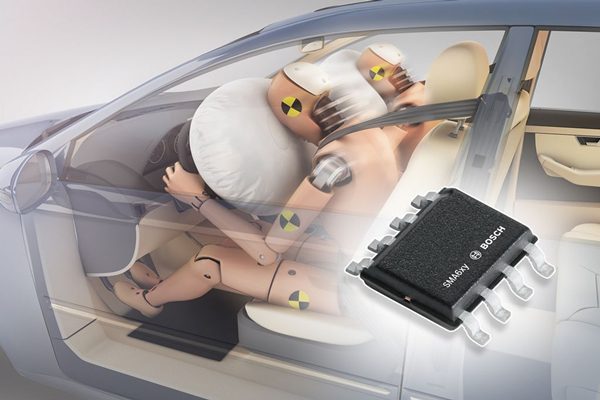
Being in a car accident is stressful enough on its own. Then comes the aftermath: the insurance calls, the body shop estimates, and the nagging question of whether your car is actually safe to drive again. One of the most important things to figure out after any collision is the state of your airbag system, specifically whether the sensors need to be reset or replaced before you get back on the road.
This guide breaks down exactly how airbag sensors work, what happens to them in a collision, how to determine whether they need repair or replacement, what the process looks like, and what it will cost you.
How Airbag Sensors Work and Why They Matter
Your vehicle’s airbag system is not a single component. It is a network of sensors, a control module, inflators, and the airbag cushions themselves, all working together in a precisely timed sequence that has to complete in milliseconds during a crash.
The sensors are the first link in that chain. They are the parts that detect the crash in the first place. When a collision occurs, the sensors measure the forces involved and transmit that data to the airbag control module, which acts as the system’s brain. The control module analyzes the incoming data and determines within a fraction of a second whether the collision is severe enough to warrant airbag deployment, which airbags to deploy based on the direction and type of impact, and how aggressively to inflate them.
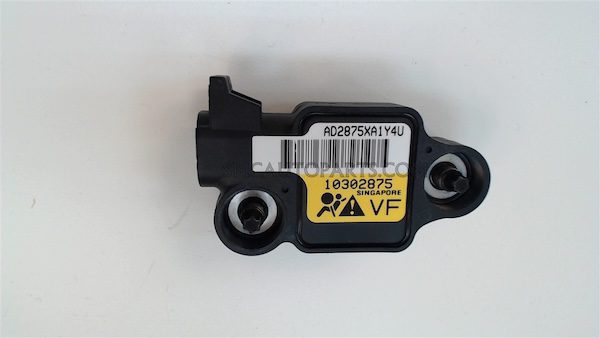
If the sensors are not functioning correctly, that entire decision-making process breaks down. An airbag system with faulty sensors may fail to deploy when you need it, may deploy at the wrong time, or may deploy with the wrong force. None of those outcomes is acceptable in a vehicle designed to protect its occupants.
Crash Sensors
Crash sensors are typically positioned at the front and rear of the vehicle. Their job is to measure the rapid deceleration that occurs during a collision. Specifically, they look for a deceleration rate that exceeds what would occur during normal hard braking, which is the physical signature of an actual crash rather than an aggressive stop.
Some crash sensors are designed as single-use components. Once they have registered a collision event significant enough to trigger the airbag system, they are considered consumed and must be replaced. This is not a flaw in the design. It is an intentional safety measure to ensure that any sensor that has experienced a real crash event is new and verified before the vehicle is put back into service.
Impact Sensors
Impact sensors are distributed throughout the vehicle in areas that are likely to absorb force during various types of collisions. You will find them in the doors, the B-pillars, the side bumpers, and sometimes in the seat frames for side-impact protection. These sensors provide supplementary data to the control module, helping it understand the angle, severity, and distribution of the impact so it can make a more precise deployment decision.
Impact sensors in the doors are particularly important for side-impact airbag deployment timing, since side impacts leave very little time and distance between the point of contact and the occupant compared to a frontal collision.
Do Airbag Sensors Need to Be Replaced After an Accident?
The honest answer is: it depends on the severity of the accident and whether the airbags deployed. There is no single universal rule, but there are clear guidelines based on what actually happened during the collision.
If the Airbags Deployed
If any airbags inflated during the accident, you should assume that every sensor in the system needs inspection and that many will need replacement. Here is why: the crash event that triggered deployment generated data in the sensors, stored crash information in the airbag control module, and in some cases, physically altered the state of the sensor components themselves.
The airbag control module stores crash data including the severity and duration of the impact, which sensors were triggered, which airbags deployed, and the timing of the deployment sequence. This data cannot simply be cleared. The module itself will typically need to be either reprogrammed back to its pre-crash state by a specialist, or replaced entirely if it has been damaged or if the crash data is locked in a way that cannot be cleared through reprogramming.
Single-use crash sensors must be replaced after deployment. Impact sensors will be evaluated individually based on their location relative to the collision and whether they show signs of physical or electrical damage.
If the Airbags Did Not Deploy
This scenario is more nuanced. If the airbag warning light is illuminated after the accident but the bags did not deploy, the sensors were triggered but the control module determined that the impact did not meet the threshold for deployment. The sensors are still flagged and the system has logged a fault.
In many cases, the sensors in a minor collision where airbags did not deploy can be reset rather than replaced. But this determination should only be made by a qualified technician with the right diagnostic equipment who can read the stored fault codes, assess the sensor readings against the collision severity, and confirm that the sensors are reading accurately before clearing anything.
Do not assume that because the airbags did not go off, the sensors are fine. The airbag warning light tells you the system detected something worth flagging, and that flag should never be dismissed without a proper evaluation.
Key Indicators That Sensor Replacement Is Needed
- The airbag warning light is illuminated after the accident and does not go off after engine restart
- The airbags deployed during the collision
- A diagnostic scan reveals stored crash data in the airbag control module
- Physical inspection shows visible damage to any sensor location, such as a crushed door, deformed bumper area, or impact near a known sensor position
- The technician’s inspection returns fault codes for specific sensors indicating internal damage
- The airbag control module requires replacement rather than reprogramming
Resetting vs Replacing: Understanding the Difference
There is an important distinction between resetting the airbag system and replacing components within it. Understanding the difference can save you money in the right circumstances and prevent dangerous shortcuts in the wrong ones.
What an Airbag System Reset Involves
A reset involves clearing the fault codes and crash data stored in the airbag control module, restoring the module to its pre-crash operational state. This is only appropriate when the physical sensors themselves are intact and undamaged, the airbags did not deploy, the collision was minor, and the fault codes indicate a triggered threshold rather than sensor damage.
This can be done by a qualified mechanic using professional-grade diagnostic tools that can access the airbag control module specifically. Standard consumer OBD-II scanners typically cannot access airbag system modules, which require manufacturer-level or professional aftermarket scan tools to read and clear properly.
What Replacement Involves
Replacement involves physically removing damaged or single-use sensors and installing new ones, and in cases where deployment occurred, replacing the airbag cushions, inflators, and often the airbag control module as well. Replacement is always the correct path when:
- Airbags deployed during the collision
- A sensor shows physical damage on inspection
- Fault codes indicate an internal sensor failure rather than a triggered threshold
- The airbag control module has locked crash data that cannot be cleared through reprogramming
- Any single-use crash sensor was triggered
There is a practice some shops use of installing secondhand or salvaged airbag control modules to avoid the cost of a new OEM unit. This is not recommended. A salvaged module contains the crash history of its previous vehicle, which can interfere with how it manages your vehicle’s airbag system. Always insist on either a reprogrammed OEM module or a new replacement for your specific vehicle.
The Airbag Replacement Process: What Happens at the Shop
If you bring your vehicle in after an accident where airbags deployed, here is what a proper airbag system restoration looks like from start to finish.
Step 1: Diagnostic Scan and System Evaluation
The technician connects a professional diagnostic tool to the vehicle and reads all stored fault codes across the airbag system. This reveals which sensors were triggered, which airbags deployed, any communication errors between modules, and whether the control module has locked crash data. This information drives all the subsequent repair decisions.
Step 2: Physical Inspection of All Affected Areas
The technician physically inspects the areas of the vehicle affected by the collision, checking sensor locations for physical damage, inspecting wiring harnesses for breaks or shorts in circuits related to the airbag system, and evaluating the condition of the airbag mounting points where deployed airbags were housed.
Step 3: Component Replacement
Based on the diagnostic and physical inspection, the technician replaces all confirmed damaged or single-use sensors, removes the deployed airbag cushions and their inflators, installs new airbag assemblies, and addresses the control module through reprogramming or replacement.
Other components that are often replaced or inspected as part of a post-deployment restoration include:
- The clockspring: This is the coiled electrical connector inside the steering column that allows the steering wheel to turn while maintaining electrical connections to the horn, airbag, and other controls. It is frequently damaged during driver airbag deployment and needs replacement
- Seat belt pretensioners: These are pyrotechnic devices that tighten the seat belts during a crash. Like airbags, they are single-use components and must be replaced after deployment
- Trim panels and covers: The panels that house the airbags are designed to rupture during deployment and cannot be reused
Step 4: System Reset and Verification
After all physical components are replaced or repaired, the technician resets the airbag control module, clears any remaining fault codes, and performs a full system verification to confirm that all sensors are communicating correctly, no new fault codes are present, and the airbag warning light is off with all systems operational.
This final verification step is non-negotiable. A vehicle should not leave the shop after airbag system work with the airbag warning light still illuminated. A lit airbag light means the system has a known fault and may not protect you in a subsequent collision.
Choosing Replacement Airbags and Sensors: What to Look For
When components need to be replaced, the quality of the replacements matters significantly for a system as safety-critical as airbags.
- OEM parts: Original equipment manufacturer parts are the safest choice. They are designed specifically for your vehicle, meet the manufacturer’s exact specifications, and are certified to perform correctly within the system as designed
- Aftermarket certified parts: High-quality aftermarket parts from established suppliers can be acceptable alternatives in some situations, but verify they are certified to the same safety standards as OEM components before agreeing to their use
- Avoid salvaged airbag components: Airbags from salvage yards carry unknown deployment history, unknown storage conditions, and no guarantee that the inflator chemicals have not degraded. Using salvaged airbag cushions and inflators is a serious safety risk
- Vehicle compatibility: Every component must be matched to your specific vehicle make, model, year, and trim level. Airbag systems are engineered as integrated, vehicle-specific systems, and a component from a similar vehicle may not perform correctly in yours
What Does Airbag Sensor Replacement Actually Cost?
| Service | Estimated Cost Range | Notes |
|---|---|---|
| Airbag sensor (parts only) | $50 – $300 per sensor | Varies by vehicle and sensor type |
| Sensor replacement labor | $50 – $300 | Location affects labor time significantly |
| Airbag module reset or reprogramming | $50 – $150 | Only applicable when physical module is undamaged |
| Airbag module replacement | $400 – $1,200 | Parts and programming included |
| Driver airbag replacement | $300 – $800 | Includes cushion and inflator assembly |
| Passenger airbag replacement | $300 – $700 | Varies by vehicle |
| Side curtain airbag replacement | $200 – $600 per side | Depends on vehicle design |
| Clockspring replacement | $150 – $400 | Often required after driver airbag deployment |
| Seat belt pretensioner replacement | $150 – $350 per belt | Single-use, must be replaced after deployment |
| Full airbag system restoration after deployment | $1,000 – $5,000+ | Depends on how many bags deployed and vehicle type |
These costs are typically covered by your auto insurance when the airbag deployment resulted from a collision claim. Review your policy and discuss with your insurer before authorizing repairs to understand what is covered under your collision or comprehensive coverage.
Can You Drive With the Airbag Warning Light On?
Technically, yes. The vehicle will operate normally. But you should not drive a vehicle with the airbag warning light illuminated if you can avoid it, and you should never accept a vehicle back from a repair shop with that light on after airbag system work.
Here is the problem. When the airbag warning light is on, the system has identified a fault that prevents it from functioning correctly. In a subsequent collision, the airbags may not deploy at all, may deploy at the wrong time, or may deploy with incorrect force. The system that was supposed to protect you is compromised and you cannot know in what way without a proper diagnostic.
If you have had an accident and the airbag light came on, do not drive the vehicle until it has been properly evaluated. If it is not drivable without addressing the airbag system, arrange for it to be towed to a qualified shop. The inconvenience of a tow is minor compared to the consequences of being in another collision without a functional airbag system.
What to Ask the Repair Shop Before Authorizing Work
Not all repair shops have equal expertise with airbag systems. Before authorizing airbag sensor or system repairs, ask these questions:
- Do you have the diagnostic equipment to fully read and clear the airbag control module on my specific vehicle?
- Will you be using OEM or certified aftermarket parts for any replacements?
- Will the airbag control module be reprogrammed or replaced, and is it going to be new or salvaged?
- Will you verify that the airbag warning light is off and the system shows no fault codes before returning the vehicle?
- Do you have technicians certified in restraint systems repair?
A shop that hesitates on any of those questions, particularly about OEM parts or the airbag module, is worth approaching carefully.

A Quick Reference: Airbag Sensor Decision Guide After an Accident
| Situation | Recommended Action |
|---|---|
| Minor collision, no airbag deployment, no warning light | Have system scanned as a precaution to confirm no stored fault codes |
| Minor collision, no deployment, airbag light on | Professional diagnostic scan required. Possible reset if sensors are undamaged |
| Moderate collision, no deployment, airbag light on | Full sensor inspection required. Reset or replacement based on diagnostic results |
| Any collision where airbags deployed | Full system replacement required: sensors, module, airbag assemblies, pretensioners, clockspring |
| Airbag light on with no known collision history | Diagnostic scan to identify fault. Sensor, wiring, or module issue to be determined by technician |
The airbag system in your vehicle is one of the few components where there is genuinely no room for guesswork or shortcuts. It either works correctly when you need it or it does not. After any collision significant enough to illuminate the airbag warning light, a proper professional evaluation is not optional. Get the system checked, confirm all sensors are functioning, verify the module is clear of crash data, and do not accept the vehicle back until the airbag light is off and the system has been verified as ready. That verification is what stands between you and an airbag system that fails you in the next incident.