
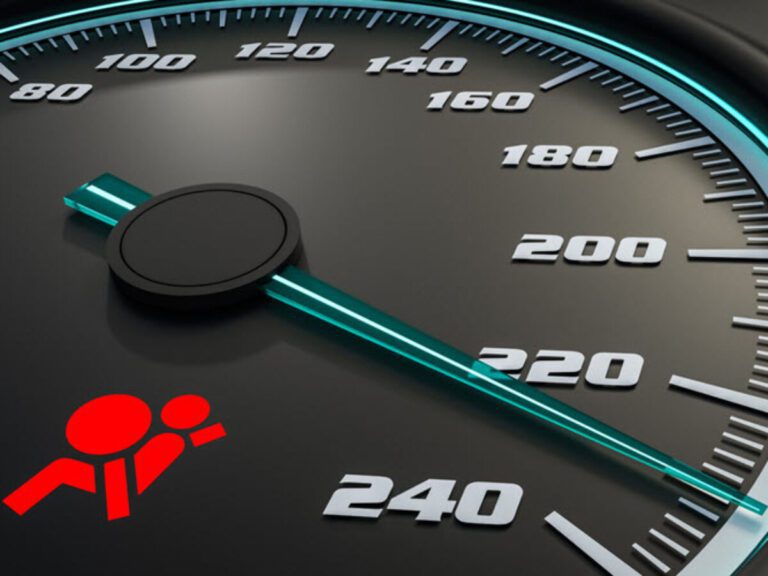
If you see an SRS warning light on your dashboard, it is not just an “electrical annoyance.” The SRS system is tied directly to how your airbags and restraint components behave in a crash. That is why the question “what is an SRS fuse” comes up so often, because fuses are the simplest parts in the chain, and when one fails, it can shut the whole safety system down.
Here is the bottom line up front: the Supplemental Restraint System (SRS) is the mechanism that manages your airbags. The SRS fuse is the specific fuse linked to that system. When it blows or fails, your airbags may not deploy when you need them most. Never disregard an SRS warning light on your dashboard.
This guide is written like a conversation between a mechanic and a car owner who wants clear answers. You will learn what the SRS fuse does, what causes an SRS fuse to fail, how to find and replace it safely, and what to do about the warning light afterward. The goal is to keep the advice practical and focused on safety, not guessing.
Before you touch anything, one important safety mindset: airbag systems are not like normal under-hood electrical accessories. Treat them with respect. You are not “diagnosing for fun.” You are trying to restore the safety function the car was designed to provide.
What does the SRS fuse do?
Every vehicle has an airbag system. That system includes sensors that detect a crash and then, based on severity, activates airbags to protect the driver and passengers. In most car manuals and warning systems, the airbags are part of the Supplemental Restraint System, usually shortened to SRS.
The SRS system is often described as a passive safety feature. That means it is designed to constantly monitor the vehicle’s status and be ready at any moment. It is always “waiting” in the background, which also means it needs stable electrical power to do its job.
Like other vehicle components, the SRS can malfunction or fail. When the system detects a problem, an SRS warning light illuminates on the dashboard. A common cause is a blown SRS fuse, and that fuse is located in the vehicle’s fuse box alongside other fuses.
A faulty SRS fuse can disable the entire SRS system. In the event of a collision, a nonfunctional SRS fuse means the airbags will not deploy. Without functioning airbags, the risk of severe injuries to drivers and passengers increases significantly.
That is the safety reason you should act promptly. If the SRS warning light appears, you should visit a mechanic to have the system inspected as soon as possible. Driving with nonfunctional airbags during a collision is a serious safety risk, even if the car seems to drive normally day to day.
Also understand that the SRS does not work alone. It collaborates with components such as seatbelt force limiters, crash sensors, and occupant detection sensors. If any of those parts fails, it can disrupt the system’s overall performance, and you might still see the SRS warning light.
So what is the SRS fuse, in plain terms?
An SRS fuse is basically a protected electrical feed to the airbag system. The fuse is designed to stop dangerous electrical shorts by interrupting power when current goes beyond what the circuit can safely handle. If the fuse blows, the system loses power or its ability to operate as designed.
Because the SRS is safety critical, fuses and connectors in this system are treated as “do not ignore” components. When you see the warning light, you are not just looking at an inconvenience. You are looking at a signal that the car’s protective restraint logic might not be ready.
Think of it like the difference between a smoke alarm that has power and one that does not. A fuse is not supposed to be a permanent component you keep living with. If it fails, you repair the cause, not just replace the symptom.
What the SRS warning light really means
The SRS warning light means the system has detected a problem. That problem may involve a blown fuse, an electrical fault, or a failure in a related sensor or restraint component. The key point is that the warning is designed to protect people, so the car is basically telling you, “Do not assume this safety system will work.”
One reason owners sometimes delay is that the car still feels normal. But the SRS can be disabled without changing how the engine runs or how the car drives around town. You do not get a “smooth driving warning” before a crash. The light is the warning.
What makes SRS circuits different from normal vehicle circuits?
Normal electrical systems often tolerate temporary faults. You might lose a radio feature or a power window circuit and still be safe to drive. SRS circuits cannot tolerate “maybe” behavior, so the system is set up to alert you when it cannot guarantee operation.
That difference is why mechanics treat SRS lights seriously. You might still find a blown fuse that looks like an easy fix. But you also want to prevent the fuse from blowing again and ensure the entire system is functioning as designed.
What causes an SRS fuse to fail?
Several factors can lead to an SRS fuse blowing. The guidance you provided lists common reasons for SRS fuse failure, and those two causes are the ones most owners end up dealing with: a weakening vehicle battery and an aging or defective fuse.
It helps to look at these causes from an owner perspective. A fuse does not fail in a vacuum. It usually fails because the circuit is being stressed, because power conditions are not stable, or because the fuse itself has aged to the point where it cannot safely handle its job.
A weakening vehicle battery
As a vehicle’s battery loses strength, its ability to power connected components diminishes. A weak battery can impair the SRS system’s functionality, which can potentially cause the fuse to blow. Replacing an aging battery often resolves the issue, because stable voltage gives the SRS circuit the conditions it needs to operate properly.
A failing battery can also affect other fuses in the fuse box. That matters because owners sometimes replace only the fuse that seems obvious. If battery health is the underlying cause, you may see multiple related issues until the battery is corrected.
Let us make this real. Imagine you start your car and everything seems okay, but it cranks slower than normal. Later that day, the SRS warning light appears. If the battery is weak, voltage dips can cause the SRS circuit to misbehave and can contribute to fuse failure.
This is why a mechanic may suggest checking battery condition when an SRS fuse is involved. It is not because they want to sell you a battery. It is because a weak battery can cause repeating problems that never seem to fully go away after a fuse replacement.
Aging or defective fuse
Fuses can wear out over time. Some may fail due to poor-quality materials or manufacturing defects, reducing their lifespan and causing premature failure. Even when the circuit itself is not “wrong,” an aged fuse can fail because it cannot handle the electrical load reliably anymore.
That does not mean every blown fuse is “just old.” You still want to treat the SRS warning light as a safety issue. If the fuse blows once, replacing it may solve the immediate problem. If it blows again, you are signaling a deeper electrical issue that needs inspection.
One more owner reality check: electrical problems are not always visible. You might not see corrosion at the fuse box, and you might not find an obvious short in a quick look. That is exactly why the SRS warning light is important. It points you toward the circuit that has failed in the vehicle’s logic.
How to replace an SRS fuse
Changing a fuse in a vehicle is generally straightforward. The tricky part is not the physical replacement. The challenge lies in identifying the correct fuse. Fuse boxes can be intricate, and without the right diagram, it is easy to pick the wrong one.
Many people mistakenly remove the wrong fuse. That mistake wastes time, it wastes a new fuse on a functional circuit, and it delays the real fix. With SRS fuses, delay is the last thing you want because the warning light is signaling a potential safety issue.
So the best replacement approach is careful and methodical. Use your owner’s manual. Confirm the fuse location and label. Replace the fuse with a properly rated match. Then verify whether the SRS warning light returns.
Steps to locate the SRS fuse
Always start by checking your vehicle’s owner’s manual. Manufacturers provide guides that are written for the exact fuse box layout on your vehicle. If you do not have a physical copy, you can download one from the manufacturer’s website.
The SRS fuse location varies by vehicle make. For example, in a Mercedes-Benz, it is typically on the driver’s side. In GM vehicles, it is often in the center console between the front seats. In a Lexus, the fuse is usually under the passenger seat.
Fuse boxes are commonly found under the passenger-side glove compartment or near the battery in the engine bay. The fuse box cover displays a diagram with symbols and numbers indicating each fuse’s purpose. Use your owner’s manual to find the SRS fuse’s specific number or letter so you replace the right circuit.
Once you identify the correct SRS fuse, remove it carefully. Ensure the vehicle is completely off before handling any fuses to avoid electrical hazards. Wear protective gloves, remove the faulty fuse, and insert a new one.
This is where good habits matter. Do not rush. Do not grab multiple fuses and “figure it out later.” If you do not confirm the fuse location, you will end up chasing the wrong problem.
A quick safety note before you touch the fuse box
Even though replacing a fuse sounds simple, an SRS fuse is part of a safety system. That means you should treat the work like a safety service, not like a normal “electronics swap.” Make sure the vehicle is off, keep the area dry, and use your gloves to avoid irritation from fuse box edges or nearby wiring.
If you notice any signs of damage around the fuse box, such as water intrusion or burned connectors, stop and move toward professional inspection. The fuse may have blown for a reason beyond “the fuse aged.”
How to reset the SRS warning light
Here is the next important point. If the SRS fuse and the system are functioning correctly, the warning light should not remain on. A persistent light with no underlying issue indicates a problem with the warning system itself.
Resetting the SRS warning light is often simple, but you still need to follow the steps carefully. Some vehicles can require a diagnostic tool to reset the SRS system, so do not assume every procedure is identical across brands and model years.
The guidance you provided offers a reset method that owners can try. It involves turning the ignition on without starting, cycling ignition, and in some cases starting the engine briefly and then checking if the light is off.
Reset steps (as described in the guidance)
Follow this sequence:
- Turn the vehicle’s ignition on without starting the engine and wait for 10 seconds. The SRS light should illuminate.
- Turn the ignition off, count to three, then turn it back on.
- If the light persists, fully start the engine, let it run for 7 seconds, then turn it off.
- Turn the engine on again to check if the SRS light is off.
These steps may not work for all vehicles. Some require a diagnostic tool to reset the SRS system. If the warning light does not clear after following the procedure, the next step is professional diagnosis rather than repeating the reset attempts indefinitely.
Another ownership detail to remember: resetting the light is not the same thing as “fixing” the problem. If the underlying fault remains, the system often reactivates the warning. If the light returns, you should assume the issue is still present and get it inspected.
What to do if the light comes back after you replace the fuse
This part matters because many owners replace a fuse, reset the light, and then feel relief. Then it comes back after a few days or after a battery restart event, or it triggers again after driving normally. That pattern usually suggests the original fuse was not the only issue.
When the warning returns, do not keep repeating fuse swaps as a habit. Treat it like a diagnostic problem. The fuse likely failed because the circuit was stressed, the battery was weakening, or another component in the SRS network is not working correctly.
Even though the guidance focused on fuse replacement and reset steps, the safety logic stays the same: the warning light is a safety alert. If it returns, you want the system checked rather than ignored.
Battery health check: a practical step owners can understand
The guidance explicitly mentions a weakening vehicle battery as a cause of SRS fuse failure. So if your battery is old, or if you notice slow cranking, dimming lights, or repeated jump-starts, that information becomes part of the diagnosis.
If you replace the SRS fuse but the battery remains weak, the SRS circuit can still experience voltage instability. That can lead to another fuse failure. A quick battery test is often cheaper than chasing repeated fuse replacements.
Do not “clear and ignore” a safety warning
Resetting the light can silence the dashboard warning temporarily. Even so, the underlying safety issue does not magically disappear unless the system fault is truly resolved. That is why you should follow up with an inspection when the light returns or when the fuse keeps blowing.
Conclusion
An illuminated SRS warning light signals a potential issue with the airbag system. The SRS fuse is a key part of that system, and replacing a blown SRS fuse is a simple task in many cases. The guidance you provided points to common failure reasons such as an aging battery or aging and defective fuses.
If you choose to replace the fuse yourself, the safest move is to locate the correct fuse using your owner’s manual, keep the vehicle completely off during replacement, and wear protective gloves. Afterward, you can try the reset procedure outlined in this guide to clear the warning light if the system is functioning correctly.
Here is the actionable thought: if your SRS light is on, do not treat it like a casual dashboard reminder. Are you ready to grab your owner’s manual and identify the correct SRS fuse, or would you rather book a mechanic inspection so you are not guessing with your airbag safety?