
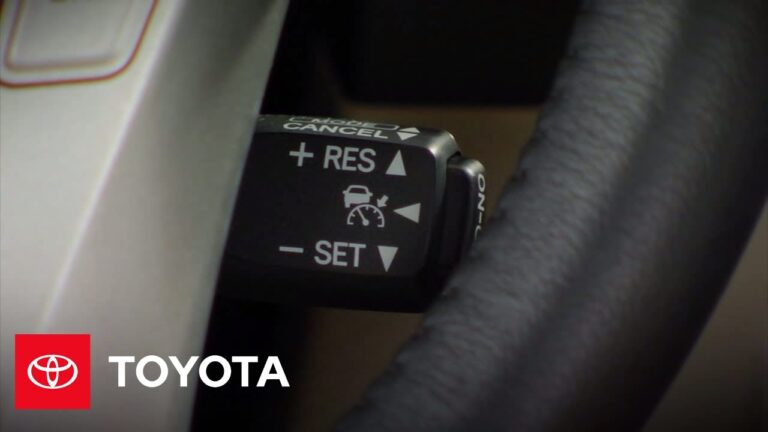
When your Prius cruise control suddenly stops working, it can take a lot of comfort out of a drive. On a short city trip, you may barely notice it. On a long highway run, though, the difference becomes obvious fast. A feature that normally makes cruising easier, smoother, and less tiring suddenly refuses to engage, drops out without warning, or acts as if the button press never happened at all. That is frustrating enough on its own, but it can also leave you wondering whether the problem is minor or a sign of a deeper electrical or sensor-related issue.
As someone who has spent years diagnosing Toyota electronic systems, I can tell you that cruise control failures in the Prius usually fall into a handful of predictable categories. They are rarely random. In most cases, the fault can be traced to one of a few common causes: an electrical issue, a bad brake switch, a speed signal problem, a failing steering wheel connection, a throttle or pedal-related fault, or a deeper control-module or communication problem. The trick is knowing how the Prius cruise system actually works and then checking the likely failure points in a smart order.
That matters because cruise control in a Prius is not just a simple “set speed and forget it” feature. It is integrated into the car’s electronics, safety logic, and hybrid power management. On newer models, it may also be tied into radar-based following distance control. So when the system refuses to work, the reason is often less about the cruise function itself and more about another input the car no longer trusts.
In this guide, I will break down the six most common reasons your Prius cruise control may not be working, explain what each problem feels like from the driver’s seat, and show you what to check before paying for unnecessary parts. I will also cover a few model-year patterns, including issues seen on the 2004 and 2007 Prius, plus realistic repair cost expectations so you know what kind of bill you may be facing if a professional repair becomes necessary.
If your Prius cruise control has stopped engaging, you are in the right place. Let’s start by looking at what the system is supposed to do when everything is working properly.
What Cruise Control Does in a Prius
Cruise control in a Prius is designed to maintain a selected speed without requiring you to keep your foot on the accelerator pedal. Once engaged, the car automatically manages power to hold the target speed as road conditions change. On a flat road, that may feel effortless. On hills, the system works harder, adjusting throttle input and hybrid power delivery to keep the vehicle as close to the selected speed as possible.
In older Prius models, the system is fairly straightforward. You switch it on, bring the car to an appropriate speed, and set it using the cruise control stalk or steering wheel controls. The system then relies on vehicle speed input, throttle control, and safety-cancel inputs to keep the car cruising steadily. If you tap the brake, press cancel, or push the system beyond a condition it considers safe, it disengages.
In newer Prius models, especially those equipped with Dynamic Radar Cruise Control, the setup is more advanced. It still maintains your chosen speed, but it also uses radar and sometimes camera input to monitor the traffic ahead. If another vehicle is in front of you, the Prius can reduce speed automatically to preserve a safe following gap. That makes the system more helpful, but it also means more sensors and more conditions can prevent it from operating.

Because the Prius is a hybrid, cruise control also works with the vehicle’s broader powertrain management. It does not simply hold a throttle plate open like older cars once did. Instead, it coordinates with the gasoline engine, electric motor support, and electronic throttle system to keep the vehicle stable and efficient. That is part of why cruise control in a healthy Prius usually feels smooth and refined.
This is also why a Prius can lose cruise control for reasons that seem unrelated at first glance. If the car sees a problem with the brake input, speed signal, steering wheel controls, or drive-by-wire system, it may disable cruise as a protective measure. In other words, the feature depends on several systems agreeing with one another. If one of them sends bad information, cruise control is often one of the first conveniences to disappear.
How the Prius Cruise Control System Decides Whether It Can Engage
Before you blame the cruise control stalk or assume the feature itself is broken, it helps to understand the logic Toyota uses. The Prius will not engage cruise control unless several conditions are met. The car wants to see a valid vehicle speed. It wants to know the brake pedal is not being applied. It wants the throttle and pedal signals to make sense. It wants the steering wheel controls to communicate properly. It also wants any related safety systems to be happy.
If any of those inputs look wrong, the system may refuse to set cruise at all. In some cases, the cruise light appears but the set function does nothing. In others, the system engages and then drops out. On radar-equipped models, you may also see related warning messages if the forward sensor system is obstructed or disabled.

This built-in caution is intentional. Toyota does not want the car maintaining speed when a brake switch is reporting the wrong status, when the speed signal is unreliable, or when the accelerator system has a fault that could affect throttle control. So if your cruise is not working, do not think of it only as a convenience problem. Think of it as the vehicle declining to use a feature because one of the supporting conditions has failed.
That is why diagnosis works best when you start with the systems cruise control depends on. When you do that, the problem often becomes much clearer.
Reason 1: A Blown Fuse or Other Electrical Issue Is Cutting Power to the System
The first and one of the most overlooked reasons your Prius cruise control may stop working is a basic electrical problem. Cruise control is an electronic system, which means it depends on clean, uninterrupted power. If the fuse that protects the cruise circuit blows, the system may stop functioning entirely. You press the cruise button, try to set speed, and get nothing in return because the system is not being powered the way it should be.
Fuses blow for a reason. Sometimes it is a brief electrical overload. Sometimes it is a short circuit caused by damaged wiring, moisture intrusion, or a failing component upstream. In other cases, the fuse itself may be fine but a related power supply issue is creating the same effect. That is why it is important not only to replace a blown fuse but also to consider why it failed.
On many Prius models, the cruise control function is not isolated on a big, obvious “cruise control” fuse the way owners expect. Instead, it can be tied into a larger circuit that feeds steering wheel controls, brake input logic, or engine management. That means you may notice other small electronic quirks if the problem is truly electrical. The system might behave inconsistently, the cruise indicator may not come on, or other features on the steering wheel might also stop responding if the fault involves shared wiring or shared protection.
A weak 12-volt battery can create similar symptoms even when no fuse is blown. This is especially important in a Prius because owners often assume that if the hybrid system starts and the car goes into Ready mode, the 12-volt battery must be fine. Not necessarily. A Prius can mask early battery weakness better than a conventional vehicle because the hybrid system changes how starting works. Yet low voltage can still confuse smaller electronic systems, including switch circuits and modules involved in cruise control operation.
This is why I always recommend starting with the basics. Check the fuse panel using the owner’s manual. Identify the relevant fuse or fuses tied to cruise, stop lights, steering controls, or ECM-related functions, depending on the model year. Inspect them visually, then verify with a meter if possible. If a fuse is blown, replace it with the exact correct amperage and test the system again. If it blows a second time, stop there and investigate further because the car is telling you there is an underlying fault.
At the same time, measure the 12-volt battery if you have access to a multimeter. With the car off, a healthy battery should generally sit around the mid-12-volt range. If it is significantly low, or if the battery is several years old and the car has shown other minor electronic oddities, it deserves attention. Voltage that is merely “good enough” for starting can still be poor enough to upset lower-current control systems.

One reason this issue frustrates owners is that electrical faults do not always look dramatic. The car may run and drive normally. The engine and hybrid system may feel fine. Yet the cruise system will remain disabled because one small part of the car’s electrical logic is not receiving the power or voltage stability it expects. That is why fuse and voltage checks should always come early in the diagnostic process. They are quick, relatively easy, and sometimes they solve the problem completely.
If the fuse is intact and the battery is healthy, move on. But never skip this step. Too many people start replacing switches and sensors when the real fault is sitting quietly in the fuse box or the battery tray.
Reason 2: A Faulty Brake Light Switch or Stop-Light Circuit Is Preventing Cruise Engagement
If I had to pick one cause that fools Prius owners most often, it would be the brake light switch. Cruise control depends heavily on accurate brake input. From the car’s perspective, there is no safe reason to maintain speed if it thinks the brake pedal is being pressed. So if the brake switch sends the wrong signal, even briefly, the cruise system usually refuses to engage or immediately cancels the moment it tries.

The brake light switch is mounted near the brake pedal and tells the car when the pedal is at rest and when it is being pressed. In a Prius, that information is used for more than just the rear brake lights. It is part of the decision-making logic for cruise control, regenerative braking coordination, and other safety-related functions. When that switch gets out of adjustment, sticks internally, wears out, or develops an electrical fault, cruise control often becomes one of the first features to stop working properly.
What makes this problem tricky is that the switch can fail in ways that are not obvious. In some cases, your brake lights may stay on. That is an easy clue. In other cases, the brake lights seem normal, but the stop-light circuit that the cruise control logic relies on is still not behaving the way it should. This is especially important on certain Prius model years where the switch circuit can create a cruise problem without causing a dramatic, obvious brake light complaint.
When this happens, the driver usually experiences one of three patterns. The first is that cruise will not set at all. The second is that it sets but drops out immediately. The third is that it works intermittently, often depending on brake pedal position, road vibration, or temperature. That last one is especially frustrating because it makes the system feel random when it really is responding consistently to a marginal switch signal.
You can do a basic check at home. Have someone look at the brake lights while you lightly press and release the pedal. Make sure they come on and go off cleanly. Also look for a brake pedal that does not return fully because a weak pedal stop pad or small mechanical issue can alter switch position enough to confuse the system. In some Toyotas, a missing or damaged rubber stopper at the pedal can change the switch relationship and create all sorts of odd behavior, including cruise-related problems.
However, visual brake light function alone is not enough to declare the switch healthy. A professional diagnostic scan tool or switch continuity test is often needed to confirm that the switch is reporting properly to the vehicle electronics. This is why a car can leave you convinced “the brake lights are fine, so it cannot be that,” when in fact the switch is still the culprit.
The good news is that a brake light switch is usually not one of the most expensive cruise-related repairs. It is often relatively affordable and accessible. The challenge is recognizing it before replacing more expensive parts. If your Prius cruise stopped working and there is no obvious sign of major failure elsewhere, the brake switch deserves serious attention very early in the diagnosis.
In practical terms, cruise control does not care whether the brake switch is “almost good.” It needs a clean, believable on-off signal every time. Anything less can keep the entire system offline.
Reason 3: A Bad Speed Sensor or Speedometer Signal Is Confusing the Cruise System
Cruise control cannot maintain a set speed if the car does not know how fast it is going. That sounds obvious, but it explains why speed-signal problems are a major cause of non-working cruise control in the Prius. If the vehicle speed sensor data becomes inaccurate, inconsistent, or disappears entirely, the cruise system usually shuts itself down rather than guessing.
Depending on the Prius generation, the vehicle speed information may come from one main sensor source or from a broader network of wheel-speed and ECU data. The exact architecture varies by year, but the principle remains the same: the car needs a stable speed signal. If that signal is unreliable, cruise cannot do its job safely.
A failing speed sensor can cause more than just cruise control trouble. In some cases, you may also notice an erratic speedometer, warning lights related to ABS or traction systems, or unusual behavior in transmission or hybrid power management. In other cases, the issue is subtle. Cruise may simply refuse to engage, and no other symptom is dramatic enough to make the cause obvious right away.
This is one reason proper scan data matters. A speed sensor that is dropping out briefly may not create a constant obvious failure, but a technician watching live data can often see the speed signal behaving abnormally. Without that kind of information, owners sometimes waste time on the cruise stalk or steering wheel controls because those are the parts they physically touch, while the real problem is a sensor the driver never sees.
If your speedometer is acting strangely, take that as an important clue. Cruise control and accurate speed display live in the same world. A car that cannot measure road speed correctly cannot be trusted to maintain it. Likewise, if the Prius has ABS-related warnings at the same time cruise stops working, do not treat those as separate events. They may share the same root cause.
Another point worth remembering is that sensor faults are not always “all or nothing.” A sensor can degrade gradually. The signal can be noisy rather than absent. It can fail only when hot, only when cold, or only at certain speeds. That can make cruise problems feel inconsistent. You may find that cruise works sometimes on local roads but not on the highway, or works until the car has been driven for a while. Those patterns matter.
If you suspect a speed-signal issue, do not ignore related warning lamps or dashboard behavior. Cruise control often loses trust before the rest of the car fully reveals the problem. Treat that lost cruise function as an early warning rather than a minor annoyance.
Ultimately, if the speed data is wrong, cruise control is doing the right thing by refusing to work. Your task is to find out why the data stopped being dependable.
Reason 4: The Steering Wheel Controls, Cruise Lever, or Clock Spring Have Failed
Many Prius owners focus on sensors and modules but forget something much simpler: the system also needs to receive your command in the first place. If the cruise control lever, steering wheel switch, or clock spring is faulty, the car may never receive a usable “turn on” or “set” signal at all. To the driver, it feels like cruise control has died. To the car, it may simply feel like no valid request was ever made.
On many Prius models, the cruise control is activated using a stalk or lever mounted behind or below the steering wheel. On others, especially later models with more integrated controls, the commands may be part of the steering wheel button array. Either way, those signals have to travel through the steering wheel assembly, and that is where the clock spring becomes important.
The clock spring, also called a spiral cable, is the flexible electrical connector that allows the steering wheel to turn while maintaining communication with switches, airbags, and other steering wheel functions. When the clock spring fails, it can interrupt the electrical path between the cruise control controls and the rest of the car. In some cases, cruise stops working while the horn, audio buttons, or other steering wheel functions also begin acting up. In other cases, cruise is the first noticeable casualty.
This is particularly relevant on older Prius models such as the 2004 generation, where owners have sometimes reported cruise activation problems linked to the spiral cable or related steering wheel circuitry. The failure may begin as intermittent. You tap the stalk and nothing happens one day, then it works again later. That is a classic sign of an electrical path beginning to deteriorate.
The cruise lever itself can also wear out. The internal contacts may become unreliable, the stalk may develop a weak detent, or the switch assembly may stop sending a clean signal. When that happens, the system may ignore your input even though everything else in the vehicle is healthy. This is one of those faults that can feel almost insulting because the rest of the car drives perfectly, yet the cruise button seems to have forgotten its purpose.
A useful clue is whether other steering wheel controls are also misbehaving. If the horn, audio controls, or other buttons stop working, the clock spring climbs higher on the suspect list. If all other steering wheel functions work but cruise commands do not, the stalk or switch assembly itself becomes a more likely culprit. A scan tool and switch continuity testing can narrow it down further.
This is also a repair area where experience matters because steering wheel work usually involves proximity to the airbag system. If you do not know how to disable and handle that system safely, this is not the place to learn by trial and error. A professional can inspect the switch assembly, spiral cable, and related wiring far more safely and efficiently.
When the command path from your hand to the car breaks down, cruise control becomes impossible no matter how healthy the rest of the system is. The car cannot respond to a request it never truly received.
Reason 5: The Accelerator Pedal, Throttle System, or Related Connectors Have a Fault
The Prius uses an electronic throttle system, which means the car interprets pedal input and then controls throttle response electronically rather than through an old-fashioned mechanical cable. Cruise control depends on that same drive-by-wire setup to maintain your chosen speed. If the car sees a problem in the accelerator pedal position system, throttle body control, or associated connectors, it may disable cruise control immediately.
This makes perfect sense from a safety standpoint. Cruise control works by commanding the car to apply throttle automatically. If the vehicle is not fully confident in the accelerator or throttle control system, allowing cruise to operate would be irresponsible. So Toyota programs the car to err on the side of caution.

What does this look like in real life? Sometimes you may notice no obvious drivability complaint other than the cruise not engaging. In other cases, the car may feel hesitant, may trigger a check engine light, or may go into a reduced-performance mode. Faults with the accelerator pedal assembly, throttle position feedback, or related connectors can vary widely in how visible they are. Some are obvious. Some are subtle enough that owners focus only on cruise until another symptom appears later.
Loose or corroded connectors can also play a role. If a connector at the accelerator pedal or throttle system is not making clean contact, the signal can drop out intermittently. That may be enough for the engine control system to flag a problem and disable cruise even if the car still seems drivable. Intermittent connector faults are frustrating because they do not always leave behind a dramatic trail. A technician may need to inspect harnesses and watch live data to catch the fault in the act.
This is one of the reasons cruise control failure should never be diagnosed in isolation. The cruise system does not exist separately from the powertrain. If the engine control system is unhappy, cruise often becomes collateral damage. That is especially true in a hybrid vehicle like the Prius, where power delivery is managed very carefully and electronic input accuracy matters a great deal.
If your Prius cruise is not working and you also notice throttle hesitation, unusual pedal response, warning lights, or stored engine codes, pay close attention. Those symptoms may not be separate problems. They may all point back to the same electronic throttle issue. In that case, replacing a cruise switch would accomplish nothing because the cruise system is offline for a very good reason.
The takeaway is simple. Cruise control relies on the same trust relationship the car has with the accelerator and throttle system. Once that trust is broken, cruise is one of the first features to be shut down.
Reason 6: A Control Module, Sensor Network, or Software-Related Fault Is Blocking Cruise Operation
The last major reason Prius cruise control stops working is a failure deeper in the car’s electronic control network. This is the category many people summarize as a “bad control module,” but that phrase needs a little context. On many Prius models, there is not a separate little box labeled cruise control computer that simply goes bad by itself. Instead, cruise control logic is often integrated into larger systems such as the engine control module, hybrid control logic, brake control network, or related sensor pathways.
That means a problem somewhere in the module network can knock out cruise even though the cruise buttons and stalk are fine. If the engine control module does not like a sensor input, if the brake control logic sees inconsistent data, or if hybrid system communication is unstable, the car may simply refuse to allow cruise control.
On newer Prius models with adaptive cruise or radar cruise functions, this category becomes even more important. The system may depend on front radar, camera data, and pre-collision system health. If the radar sensor is obstructed, misaligned, or temporarily disabled, dynamic cruise may not operate. In some cases, the standard cruise function is also limited, depending on how the model handles integration. Owners of these newer cars sometimes think the cruise system itself is broken when the real issue is that a sensor in the front of the vehicle cannot provide reliable information.
Software and communication faults also matter more than people expect. Modern vehicles process huge amounts of information, and even older Priuses are far more electronically coordinated than many drivers realize. A failed control module is not the only possibility. A healthy module with corrupted input or poor network communication can create the exact same user complaint: cruise control not working.
This is why scanning for trouble codes is so important once the basic checks have been done. A blown fuse or bad brake switch can often be found with simple tools. But once you get into module communication and integrated sensor logic, guessing becomes expensive very quickly. The right scan tool can reveal whether the engine control module has disabled cruise because of a stored throttle fault, whether the brake system is reporting inconsistent switch status, or whether another subsystem has quietly taken cruise offline as a side effect.
Do not overlook the possibility of software updates or known model-specific patterns either. Automakers sometimes refine control logic over time. Not every non-working cruise system is fixed by a reflash, but some model-year-specific behaviors are well known among dealer technicians and experienced hybrid specialists. That is another reason professional diagnosis can save time when the obvious parts check out fine.
So yes, a failed module can absolutely be the reason your Prius cruise does not work. But in practical diagnosis, what matters is broader than that. The real question is whether the car’s network and control logic have enough clean, believable information to allow cruise in the first place. If the answer is no, the system stays off, even if the dashboard gives you no dramatic explanation beyond its silence.
By the time you reach this reason on the list, the smartest next move is often professional scanning rather than more driveway guessing. You want evidence now, not theories.
Year-Specific Prius Cruise Control Concerns
While the six causes above cover most Prius cruise control failures broadly, certain model years have their own patterns. Two of the more commonly discussed years are the 2004 Prius and the 2007 Toyota Prius. These cars are similar in many ways, but there are a few details worth understanding if you own one.
2004 Prius Cruise Control Problems
On the 2004 Prius, cruise control complaints often come down to one of three areas: the brake light switch, the cruise control switch path through the steering wheel, or a signal problem involving the control side of the system. Many owners initially assume the stalk itself is broken, but that is not always the case. The path between the cruise control switch and the rest of the car includes the clock spring, and if that spiral cable begins to fail, cruise can become intermittent or stop altogether.
The brake light switch is another common suspect on this generation. Since cruise relies on a clean brake input, any switch wear or misadjustment can keep the system from engaging. This is especially frustrating because the car may otherwise feel normal. No one expects a tiny switch at the brake pedal to be the reason long-distance driving just became less comfortable, but on a Prius, that is exactly the kind of thing that happens.
There are also cases where a deeper control or throttle-related issue prevents cruise from operating even though the driver experiences no major drivability symptoms. That is why a scan remains useful on the 2004 model as well. It is an older hybrid, but it is still an electronically coordinated car that can disable cruise for reasons the driver does not immediately see.
2007 Toyota Prius Cruise Control Issues
The 2007 Prius shares many of the same possibilities, but one point deserves special emphasis: problems in the stop-light switch circuit do not always reveal themselves through obvious brake light failure. That makes diagnosis more deceptive. You can look at the back of the car, see the brake lights behaving normally, and still have a stop-light-related cruise problem inside the logic that the car uses to decide whether it is safe to maintain speed.
This generation can also show cruise failure from the usual mix of switch-circuit issues, throttle logic concerns, and steering wheel connection faults. So if you have a 2007 Prius and your cruise control is not working, do not let “the brake lights look fine” convince you that the stop-light circuit is off the table. It may still be the right direction.
Year-specific knowledge matters because it helps you avoid dead ends. The more familiar you are with common patterns on your generation of Prius, the less likely you are to replace the wrong part first.
A Smart Diagnostic Order for Prius Cruise Control Problems
If your Prius cruise control is not working, the best way to save time and money is to work through the problem in a sensible order. Start with what fails most often and what is easiest to confirm. Move toward more technical causes only when the simple checks do not reveal the answer.
- Confirm whether the cruise indicator comes on at all.
- Check the 12-volt battery condition and look for any obvious low-voltage symptoms.
- Inspect the relevant fuses.
- Test the brake lights and consider the brake switch even if the lights appear normal.
- Pay attention to other steering wheel control symptoms that might point to the clock spring or switch assembly.
- Note any speedometer, ABS, or traction-related issues that could suggest a speed-signal fault.
- Scan the vehicle for stored codes if the above checks do not identify the cause.
This order works because it mirrors the way the system itself operates. Cruise control needs power, permission, brake clarity, speed clarity, control input, and trustworthy engine management. If you check those in order, the answer usually appears far faster than if you start by replacing random parts.
It is also worth testing the system in controlled conditions. Make sure you are traveling above the minimum engagement speed for your Prius, that no warning lights are present, and that you are using the controls correctly. It sounds basic, but incorrect operating conditions can create false alarm diagnostics. Once you have ruled that out, move into the actual fault-finding steps with confidence.
Repair Costs and What You Should Expect to Pay
Repair cost is one of the first questions owners ask, and understandably so. The answer depends entirely on which of the six causes is behind the problem. Some Prius cruise control failures are inexpensive. Others become more costly if they involve advanced electronics, steering wheel components, or deeper diagnostics. The good news is that the most common causes are usually not the most expensive ones.
Brake Light Switch and Related Brake Circuit Repairs
If the issue is a brake light switch, you are usually looking at one of the cheaper fixes. Depending on labor rates and the shop, replacement often lands in the lower repair-cost range. A simple switch replacement is usually far less expensive than steering wheel electrical work or module diagnosis. If the issue turns out to be a related stop-light circuit problem, cost can vary more depending on whether wiring repair is needed.
As a rough real-world expectation, many owners spend somewhere in the area of $50 to $150 for a basic brake-switch-related fix when labor is straightforward. It can be less in some markets and more in others, but it is usually not the kind of repair that should trigger panic.
Cable, Clock Spring, and Steering Wheel Switch Costs
If the cruise problem is tied to the steering wheel switch path, the bill often climbs. Replacing the cruise stalk may be fairly reasonable depending on the model, but a clock spring replacement usually costs more because of the labor involved and the care required around the airbag system. Labor rates also vary sharply here because some shops price steering wheel disassembly more aggressively than others.
For basic switch or stalk work, many owners see costs roughly in the $100 to $200 range. A clock spring or spiral cable replacement can be higher, especially once labor is added. Exact numbers vary by region and whether you choose genuine Toyota parts, aftermarket parts, or used components.
Speed Sensor Repair Costs
If a speed sensor or related speed-signal issue is the cause, repair cost often lands in the middle. Replacing a faulty sensor is usually not extreme, but it is more involved than swapping a fuse or brake switch. If diagnosis is tricky or the problem lies in a related ABS or speed-data path rather than a simple sensor swap, the price may increase.
A common real-world estimate for speed sensor work is roughly $150 to $250, including labor, though that can vary. If live-data diagnosis takes longer or if there are related warning lights and additional system checks, expect that number to move upward.
Throttle, Pedal, and Connector Repairs
Accelerator pedal and throttle-related repairs are harder to price because the range is wider. Sometimes the fix is simply a connector issue or a minor harness repair. Other times the accelerator pedal assembly or another electronic component must be replaced. In that case, diagnosis matters just as much as the part itself.
This category can stay moderate if the problem is caught early and proves simple. It can become more expensive if it involves deeper electronic testing or multiple related codes. The main thing to remember is that cruise failure tied to throttle or pedal faults is often part of a larger engine-management issue, so do not think of the repair as “just for cruise control.”
Control Module and Advanced Diagnostic Costs
Once you get into control modules, adaptive cruise sensor issues, or advanced communication faults, costs become much less predictable. Some shops charge a dedicated diagnostic fee before any repair begins, which is reasonable because these systems take time to interpret properly. On a Prius, that diagnostic time is often money well spent.
If a module truly has failed, total cost can range from manageable to substantial depending on what is involved, whether programming is required, and whether the part is available new, rebuilt, or used. This is another reason not to rush toward module replacement. A correct diagnosis protects you from expensive mistakes.
The short version is this: if the repair is a fuse, switch, or simple sensor, the bill is often tolerable. If the problem lives in deeper network electronics, the cost rises. That makes intelligent diagnosis your best financial strategy.
Should You Fix Prius Cruise Control Right Away?
Strictly speaking, a non-working cruise control system does not usually make the car unsafe to drive in the way that failed brakes or overheating would. You can still drive the vehicle manually. However, that does not mean you should ignore the problem indefinitely. Cruise control often stops working because another supporting system has developed a fault. The feature itself is the symptom, not always the whole story.
If the cause is a bad fuse or worn switch, the issue may be relatively minor. If the cause is a brake switch circuit problem, inaccurate speed data, or an electronic throttle fault, the stakes are higher because those systems affect more than just long-distance comfort. Likewise, if your Prius has adaptive cruise and the failure is tied to radar or safety-system input, it may indicate a broader driver-assistance issue that deserves attention.
My advice is simple: do not panic, but do not postpone diagnosis forever either. If the cruise stopped working once and immediately came back after correcting a simple issue, fine. If it stays offline, if other warning lights appear, or if the car shows related symptoms, investigate promptly. The longer you wait, the harder intermittent faults can become to trace.
Comfort features are optional. The systems they rely on often are not.
Final Thoughts
When Prius cruise control stops working, the failure usually comes down to one of six root causes: an electrical or fuse problem, a faulty brake light switch or stop-light circuit, a bad speed signal, a problem in the steering wheel control path such as the clock spring or stalk, an accelerator or throttle-related fault, or a deeper control-module or sensor-network issue. Once you know that, the problem feels far less mysterious.
The smartest way to approach the repair is to resist the urge to guess. Start with power. Check the battery and fuses. Then look at the brake switch and speed signal. Pay attention to steering wheel controls and any other symptoms, such as horn or button problems. If the simple checks do not solve it, move to proper scan-tool diagnostics rather than replacing parts blindly. That is how you save money and avoid frustration.
For 2004 and 2007 Prius models in particular, the brake-switch circuit and steering wheel connection path deserve close attention. On newer cars, do not forget that adaptive cruise adds radar and safety-system dependence to the equation. In every case, cruise control failure is best treated as a clue. The car is telling you it no longer trusts one of the systems required to maintain speed safely.
Fix the cause, not just the symptom, and your Prius will usually return to the smooth, efficient highway companion it was designed to be.