
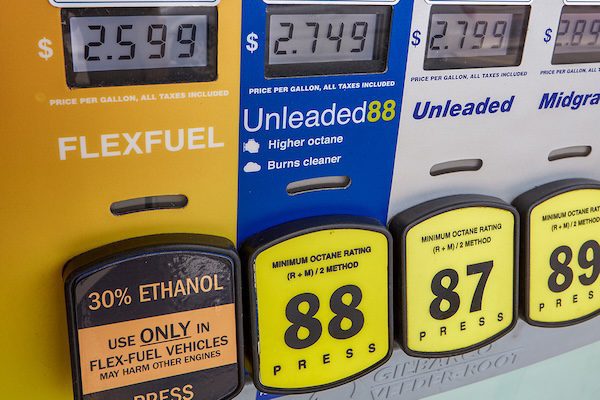
If you’ve pulled up to a gas pump recently and noticed an unfamiliar option sitting right next to the usual 87 and 89 buttons, you’re not alone. Unleaded 88 has been showing up at more and more fuel stations across the country, and it’s catching a lot of drivers off guard. The price is usually a few cents cheaper than regular unleaded 87, which naturally makes people curious. But that curiosity comes with a healthy dose of skepticism. Is this stuff actually safe? Will it hurt your engine? Is it some kind of budget fuel that’s going to cause problems down the line?
Let’s cut through the confusion right now. Unleaded 88 is best understood as regular gasoline with a slightly different recipe. In everyday driving, it behaves a lot like unleaded 87, with one key technical difference: it contains more ethanol in the blend. For most gasoline cars and light trucks designed to run on regular fuel (87 AKI), unleaded 88 (commonly labeled E15) isn’t harmful. But if your vehicle requires premium fuel (typically 91 AKI or higher), you shouldn’t step down to 87, 88, or 89 unless your owner’s manual explicitly says it’s acceptable.
This guide breaks down everything you need to know about unleaded 88. We’ll cover what it actually is, whether it can damage your vehicle, how it compares to regular unleaded 87, where you can find it, and which vehicles and equipment should absolutely avoid it. By the time you’re done reading, you’ll know exactly whether unleaded 88 belongs in your tank or not.
Is Unleaded 88 Safe for Your Vehicle, or Will It Cause Damage?
Most of us grow up seeing the same familiar buttons at the gas pump: 87, 89, 91 (or 93 in some regions), plus diesel. After a while, it becomes muscle memory. You learn what your vehicle runs on, you stick to it, and you rarely think about fuel again unless prices spike or a new option suddenly appears on the dispenser.
That’s exactly why unleaded 88 can feel like a curveball. It shows up on the pump, it’s priced a bit lower than 87, and it raises an obvious question: Is this safe, or is it a shortcut that’s going to cost me later?
Here’s the straightforward answer. For the vast majority of modern gasoline passenger vehicles, unleaded 88 isn’t a “danger fuel.” When used in a vehicle that’s approved for E15, it doesn’t damage the engine, fuel system, or emissions components under normal operating conditions. And if you accidentally fill up with it once, there’s no need to panic. Your vehicle won’t suddenly fail because E15 went into the tank.
Where drivers get into trouble isn’t with unleaded 88 itself. The real risk comes from using the wrong fuel for the wrong application. Two situations matter most, and understanding both will save you from costly mistakes.
Premium-Required Engines Need Premium Fuel
If your manufacturer specifies 91+ octane as required (not just “recommended,” but required), running lower octane fuel increases the risk of knock. Knock is a form of abnormal combustion where the fuel-air mixture ignites prematurely or unevenly inside the cylinder. It sounds like a metallic pinging or rattling, and over time it can cause real damage to pistons, cylinder walls, and other internal components.
Modern engine computers are pretty smart about this. They can detect knock and compensate by adjusting ignition timing and other parameters. But that compensation comes at a cost. You’ll usually see reduced performance, and in demanding conditions like heavy load, high ambient temperatures, towing, or hard acceleration, the engine is working harder to protect itself. It’s not ideal, and it’s not what the engine was designed for.
So if you drive a turbocharged sports sedan, a performance SUV, or any vehicle where the owner’s manual says “91 octane required,” don’t substitute unleaded 88 (or 87, or 89) as your regular fuel. The octane rating of 88 might sound close to 91, but in terms of knock resistance, the gap is significant enough to matter.
Small Engines and Recreational Vehicles Are a Different Story
E15 is generally not recommended for motorcycles, many ATVs, boats, and small engines like lawn mowers, chainsaws, leaf blowers, and generators. These applications tend to be more sensitive to ethanol content, fuel volatility, and long-term storage issues. Their fuel systems weren’t designed with higher ethanol blends in mind, and the consequences of using E15 in these machines can include corroded fuel lines, degraded rubber seals, clogged carburetors, and poor running performance.
We’ll get into more detail on this later, but the takeaway here is simple: unleaded 88 is designed for approved cars, trucks, and SUVs. If it has a small engine or it’s something you ride on two wheels or take out on the water, stick with what the manufacturer recommends.
What Exactly Is Unleaded 88? Breaking Down the Blend
Let’s get specific about what’s actually in this fuel, because the name alone doesn’t tell the whole story.
Unleaded 88 is a gasoline blend that carries an 88 AKI octane rating and contains 15% ethanol mixed with 85% gasoline. That’s why it’s also called E15. The “E” stands for ethanol, and the “15” tells you the percentage of ethanol in the blend.
For comparison, the standard unleaded 87 that most people have been pumping for years is typically E10. That’s about 10% ethanol and 90% gasoline. So the difference between unleaded 87 and unleaded 88 isn’t a complete overhaul of the fuel. It’s a 5-percentage-point increase in ethanol content and a one-point bump in octane rating. That’s it.
Think of it this way. If you’ve been happily running E10 in your car for the last decade (and you almost certainly have, since E10 is the dominant fuel at pumps nationwide), the jump to E15 isn’t a dramatic change in what’s flowing through your fuel system. It’s an incremental adjustment to a formula your vehicle is already familiar with.
Understanding Octane: It’s Not About Power
A common misconception is that higher octane means more power. It doesn’t. The octane rating is a measure of the fuel’s resistance to knock, not its energy content or performance potential. Higher octane fuel can withstand more compression and heat before igniting, which is why high-performance and turbocharged engines require it. Those engines operate at higher compression ratios, and they need fuel that won’t ignite prematurely under that pressure.
For an engine designed to run on regular 87 octane fuel, the bump to 88 octane doesn’t unlock hidden horsepower. It simply provides a tiny bit more knock resistance. In most regular engines, this difference is imperceptible. You won’t feel it in the seat of your pants, and your engine won’t suddenly perform differently.
The octane increase in unleaded 88 comes from the higher ethanol content. Ethanol is a high-octane fuel component. It has an octane rating of about 109 AKI on its own, which is why adding more of it to the gasoline blend raises the overall octane number. This is also why flex-fuel vehicles (which can run on E85, an 85% ethanol blend) can take advantage of significantly higher octane ratings.
Understanding Ethanol: The Tradeoff You Should Know About
Ethanol is an alcohol-based fuel derived from plant materials, primarily corn in the United States. It’s been blended into gasoline for decades as an oxygenate (it helps fuel burn more completely) and as a way to reduce dependence on petroleum. E10 has been the standard pump fuel in most of the country for years, so ethanol in gasoline is nothing new.
But ethanol does come with a tradeoff that every driver should understand: it contains less energy per gallon than pure gasoline. A gallon of ethanol has about 33% less energy than a gallon of gasoline. That doesn’t mean your fuel economy drops by 33% when you use E15, because E15 is still 85% gasoline. But it does mean you’ll see a small reduction in miles per gallon compared to E10.
In real-world driving, this difference is usually modest. Most drivers report a fuel economy decrease of around 1 to 3 percent when switching from E10 to E15. If you’re averaging 30 MPG on unleaded 87, you might see something like 29.1 to 29.7 MPG on unleaded 88. That’s a difference you’d struggle to even notice without carefully tracking your fill-ups.
If you notice a dramatic drop in fuel economy (say, close to 10% or more), don’t blame the fuel. You’re almost certainly dealing with another issue. Low tire pressure, a failing oxygen sensor, a dirty air filter, a stuck thermostat, changes in driving conditions, or a developing engine problem can all cause fuel economy drops that far exceed what a 5% increase in ethanol content would produce.
How to Know If Your Vehicle Can Use Unleaded 88
This is where your owner’s manual becomes your best friend. Being cautious about an unfamiliar fuel is smart, and the manual is the final authority because manufacturers specify both the minimum octane requirement and the maximum ethanol content the vehicle is engineered to handle.
Many vehicles built in the last decade or so are designed with ethanol-blended fuels in mind and can run E15 without issue. But you should confirm rather than assume, because not every vehicle from the same era got the same fuel system design. Even within the same brand, some models might be approved for E15 while others aren’t.
When you crack open the manual (or look it up online if the paper copy has long since disappeared from your glove box), focus on two specific pieces of information:
Minimum recommended octane (AKI): This is the number you see on the pump handle (87, 89, 91, etc.). It tells you the lowest octane rating the manufacturer has tested and approved for your engine. It’s not a measure of power or quality. It’s a measure of knock resistance. If your manual says 87, that means your engine is designed to run on fuel with an octane rating of 87 or higher. Unleaded 88 meets that requirement.
Maximum ethanol content: This is the detail a lot of people overlook. Look for language like “up to E15,” “approved for fuels containing up to 15% ethanol,” or similar wording. If the manual only approves up to E10, you should stick with unleaded 87 (E10) unless updated guidance from the manufacturer says otherwise. Some manufacturers have issued supplemental statements or technical service bulletins approving E15 for models that didn’t originally list it in the manual, so it can be worth checking the manufacturer’s website or calling the dealer.
Here’s a practical example. Let’s say you drive a 2019 Honda CR-V. You check the owner’s manual and find that it specifies a minimum octane of 87 AKI and approves fuels containing up to 15% ethanol. That’s a green light for unleaded 88. Now let’s say your neighbor drives a 2008 Toyota Camry. The manual for that vehicle might only specify approval for E10. In that case, unleaded 87 (E10) is the right choice, even though the vehicle could technically handle 88 octane from a knock-resistance standpoint. It’s the ethanol content that’s the limiting factor, not the octane number.
As a general guideline, unleaded 88 is commonly considered compatible with many gasoline vehicles produced after the early 2000s. But compatibility remains a vehicle-by-vehicle question. If your manual doesn’t prohibit E15 and your vehicle falls within the approved range, you can typically use unleaded 88 with confidence.
For some vehicles built roughly between the early 2000s and mid-2010s, manufacturers often list unleaded 87 (E10) as the standard or “preferred” fuel. That doesn’t necessarily mean E15 will harm the vehicle. It often just means 87 E10 is the baseline fuel around which the official performance and economy figures were calculated. The distinction between “preferred” and “required” matters. Check the manual and the labeling at the pump, and you’ll have your answer.
The Essential Facts About Unleaded 88 Every Driver Should Know
If you want the quick, practical version of what matters most, these are the points worth keeping in mind when you’re standing at the pump deciding whether to press the unleaded 88 button.
- Blend composition: Unleaded 88 is typically E15 (about 15% ethanol, 85% gasoline). Standard unleaded 87 is commonly E10 (about 10% ethanol, 90% gasoline). The difference is a 5-percentage-point increase in ethanol content.
- Vehicle compatibility: Many modern gasoline cars, trucks, SUVs, minivans, and crossovers can use E15 without any issues. But the owner’s manual should always be your primary reference. Don’t rely on assumptions or internet forums.
- Octane and knock resistance: The higher ethanol content raises the fuel’s knock resistance slightly, which is why it earns the 88 rating instead of 87. That said, this does not automatically make it suitable for engines that require premium fuel. The jump from 88 to 91 is still significant in terms of knock protection.
- Fuel economy expectations: Because ethanol has lower energy content per gallon than gasoline, mileage may decrease slightly versus E10. A small dip of around 1 to 3 percent is typical and shouldn’t cause concern.
- Combustion characteristics: Ethanol-blended fuels can burn somewhat differently than straight gasoline blends. In some operating conditions, the higher ethanol content can contribute to slightly cooler combustion temperatures. The practical takeaway for drivers is that unleaded 88 isn’t “hotter” or inherently more damaging when used as approved.
- Storage stability matters: E15 isn’t a great choice for equipment that sits idle for extended periods. Ethanol attracts moisture through a process called phase separation, which can lead to water contamination in the fuel tank. Avoid leaving unleaded 88 in tanks for long stretches, particularly in seasonal tools and equipment.
- Keep it away from small engines and certain vehicles: Don’t use unleaded 88 in lawn mowers, chainsaws, leaf blowers, pressure washers, generators, or similar small engine equipment. It’s also generally not recommended for motorcycles, many ATVs, boats, and similar recreational engines.
Putting the Fuel Economy Impact into Real Numbers
Numbers help, so let’s do some quick math. Say you normally average 32 MPG on unleaded 87 and your tank holds 22 gallons. A full tank could take you about 704 miles under ideal conditions. If your fuel economy drops by roughly 2% on unleaded 88, that range falls to around 689 miles. That’s 15 miles less on a full tank.
Is that noticeable? Barely. In real life, your driving style, traffic patterns, ambient temperature, wind conditions, highway versus city mix, and tire pressure can easily create bigger swings than that. A hot summer day with the AC blasting will affect your fuel economy more than switching from E10 to E15. So don’t overinterpret small changes at the pump.
The more relevant question is whether the price savings at the pump offset the minor efficiency loss. In many cases, they do, and we’ll get into those numbers in the next section.
A Note on Long-Term Storage and Ethanol
Ethanol-blended fuels are more sensitive to long storage times than pure gasoline. Ethanol is hygroscopic, meaning it absorbs moisture from the air. Over weeks and months, this moisture can accumulate in the fuel, eventually causing phase separation, where the ethanol and water separate from the gasoline and settle to the bottom of the tank. This contaminated layer can corrode fuel system components, clog injectors, and cause poor running or no-start conditions.
If you’re fueling something that might sit for weeks or months, like a snow blower, boat, or summer lawn mower, choose the fuel type the manufacturer recommends and avoid leaving E15 in the tank for extended periods. If the equipment will be stored, consider using a fuel stabilizer or running the tank as close to empty as practical before putting it away.
For your daily driver that gets used regularly, storage stability isn’t a concern. You’re burning through a tank of fuel every week or two, so the ethanol doesn’t have time to cause issues.
Where Can You Find Unleaded 88, and Is It Worth the Savings?
If unleaded 88 feels unfamiliar, that’s because it still isn’t universal. Availability varies widely depending on your region, your state, and even which brand of gas station you pull into. Some areas have it at the majority of pumps. Other areas rarely offer it at all. The Midwest tends to have the best availability, which makes sense given the region’s strong ties to corn production and ethanol manufacturing. Coastal regions and some Southern states have been slower to adopt E15 at retail stations.
You’ll often see unleaded 88 labeled as E15 on the pump. That label refers to the ethanol percentage, and it’s an important cue because ethanol content, not just octane, determines what the fuel should and shouldn’t be used in. Some stations display it prominently with dedicated signage, while others integrate it into the standard fuel grade selection on the dispenser. Either way, read the pump label carefully before you start fueling.
The Price Advantage That Gets People’s Attention
When you do find unleaded 88, the price is usually what grabs your attention first. It’s frequently priced below unleaded 87, and the spread varies depending on local market conditions, ethanol supply, and station pricing strategies. It’s not unusual to see a difference of around 10 to 30 cents per gallon.
In practical terms, that discount can add up, especially if you drive a lot or have a vehicle with a larger tank:
- 10 gallons: You’d save roughly $1.00 to $3.00 per fill-up.
- 25 gallons: Your savings could approach $2.50 to $7.50 per fill-up.
Whether that discount outweighs the slight MPG reduction depends on the exact price gap and your vehicle’s real-world fuel economy. Let’s work through a quick example. Suppose unleaded 87 costs $3.29 per gallon and unleaded 88 costs $3.09. That’s a 20-cent savings per gallon. If you fill up with 15 gallons, you save $3.00 at the pump. Your fuel economy might drop from 30 MPG to about 29.4 MPG (a 2% decrease), which means on those 15 gallons, you’d travel 441 miles instead of 450 miles. You gave up 9 miles of range but saved $3.00. For most people, that’s a net win.
Over the course of a year, those savings compound. If you fill up 50 times a year at 15 gallons each with a 20-cent discount, that’s $150 in annual fuel savings. Not life-changing, but not nothing either. And it’s real money that stays in your pocket.
How to Spot Unleaded 88 at the Pump
At the pump, unleaded 88/E15 is often dispensed from a dedicated hose and may use a blue nozzle or blue labeling, depending on the station and the fuel brand. However, this isn’t standardized nationwide, so stations can differ in how they present fuel grades. Some use a separate button on the dispenser. Others list it on a shared multi-grade display alongside 87, 89, and 91.
Always read the sticker on the pump face that lists the fuel grade, octane rating, and ethanol content. Federal regulations require this information to be displayed, so it should be there. If you’re ever unsure, ask the station attendant or look for additional signage near the dispenser.
As more stations adopt unleaded 88, finding it is getting easier every year. Major fuel retailers like Sheetz, Casey’s General Stores, QuikTrip, Kum & Go, and others have been expanding their E15 offerings. Some Costco and Sam’s Club locations also offer unleaded 88. If you’re curious about availability in your area, several fuel-finder apps and websites can help you locate stations that carry E15.
Why Motorcycles, ATVs, and Small Engines Should Avoid Unleaded 88
This is an area where a lot of people get tripped up, and it’s worth emphasizing clearly. Unleaded 88 (E15) is designed and approved for many cars, trucks, and SUVs. It is not recommended for motorcycles, many ATVs, boats, personal watercraft, snowmobiles, or small gasoline-powered equipment like lawn mowers, string trimmers, chainsaws, leaf blowers, pressure washers, and portable generators.
There are legitimate engineering reasons behind this restriction, and understanding them will help you avoid making a costly mistake.
Different Fuel System Designs
Most modern car and truck fuel systems are designed with ethanol-compatible materials. The fuel lines, seals, gaskets, O-rings, and fuel pump components are made from materials that resist ethanol’s corrosive properties. Many cars have been running on E10 for years without any issue, and the step up to E15 is within the design tolerance of their fuel systems.
Small engines and many motorcycle fuel systems, though, often use older material specifications. Rubber fuel lines, carburetor gaskets, and certain plastic fuel tank components in these machines can degrade when exposed to higher ethanol concentrations. Ethanol is a solvent, and it can soften, swell, or crack rubber and certain plastics over time. The result can be fuel leaks, clogged jets, and poor engine performance.
Storage and Seasonal Use Patterns
Cars and trucks get driven regularly. The fuel in their tanks is constantly being consumed and replaced. Small engines and recreational vehicles, on the other hand, often sit for weeks or months between uses. A lawn mower might get fueled up in April and not used again until the grass starts growing in earnest. A boat might sit at the dock for the entire winter.
During those idle periods, the higher ethanol content in E15 accelerates the fuel degradation process. Ethanol absorbs moisture from the atmosphere, and that moisture can lead to phase separation, corrosion of metal fuel system components, and the formation of gummy deposits that clog carburetors and injectors. These problems are much more likely to occur with E15 than with E10, simply because there’s more ethanol present to attract water.
Manufacturer Guidance Is Clear
Most small engine manufacturers (Briggs & Stratton, Honda Power Equipment, Husqvarna, Stihl, and others) explicitly state that E15 is not approved for use in their products. Many motorcycle manufacturers issue similar warnings. Unless your specific machine’s owner’s manual says E15 is acceptable, don’t use it. Stick with the commonly available E10 grades (87, 89, or 91 as specified for your engine) and you’ll avoid these problems entirely.
Unleaded 88 vs. Unleaded 87: A Side-by-Side Comparison
Sometimes the best way to understand a new fuel option is to compare it directly against what you already know. Here’s how unleaded 88 stacks up against the unleaded 87 you’ve been pumping for years.
Octane Rating: Unleaded 87 has an 87 AKI rating. Unleaded 88 has an 88 AKI rating. The one-point difference provides slightly more knock resistance but isn’t meaningful for engines designed to run on regular fuel. Neither fuel is appropriate for engines that require 91+ octane.
Ethanol Content: Unleaded 87 is typically E10 (10% ethanol). Unleaded 88 is typically E15 (15% ethanol). This 5-percentage-point difference is the primary distinction between the two fuels.
Energy Content: Because ethanol has less energy per gallon than gasoline, unleaded 88 has slightly less total energy per gallon than unleaded 87. This translates to a minor fuel economy decrease of roughly 1 to 3 percent.
Price: Unleaded 88 is usually cheaper than unleaded 87, often by 10 to 30 cents per gallon. The exact price difference depends on your location, local ethanol supply, and market conditions.
Compatibility: Both fuels are widely compatible with modern gasoline vehicles. However, unleaded 88’s higher ethanol content means it’s approved for a slightly narrower range of applications. Vehicles approved for E15 can use both. Vehicles approved only for E10 should stick with unleaded 87.
Environmental Impact: Ethanol is a renewable fuel, so blending more of it into gasoline can reduce reliance on petroleum. The lifecycle emissions benefits of ethanol are debated among experts, but from a tailpipe perspective, E15 can contribute to lower carbon monoxide and certain other emissions compared to E10.
For most drivers with approved vehicles, the decision between unleaded 87 and unleaded 88 comes down to economics. If unleaded 88 is available and priced lower, the math usually favors using it. The slight fuel economy decrease is more than offset by the lower per-gallon price in most real-world scenarios.
Common Myths and Misconceptions About Unleaded 88
Whenever a new fuel option hits the market, myths follow. Let’s clear up some of the most common misconceptions about unleaded 88.
“Unleaded 88 will ruin my engine.” For approved vehicles, this simply isn’t true. E15 has been used in millions of vehicles across the country without causing engine damage. The U.S. Environmental Protection Agency (EPA) approved E15 for use in model year 2001 and newer light-duty vehicles, and many manufacturers have explicitly approved it for their vehicles as well. If your vehicle is on the approved list, unleaded 88 won’t harm it.
“Higher octane means better performance.” As we discussed earlier, octane is about knock resistance, not power. Putting unleaded 88 in a car designed for 87 won’t make it faster, smoother, or more powerful. It just means the fuel has a marginally higher resistance to knock, which your regular engine doesn’t need because it’s not operating at pressures high enough to cause knock with 87 octane fuel.
“Unleaded 88 is a lower quality fuel.” It’s not. It’s a different blend, not a cheaper or inferior product. The gasoline component meets the same quality standards as other grades. The ethanol is the same ethanol used in E10. The blend ratio is just different. Quality has nothing to do with it.
“I accidentally used unleaded 88 once, and now I need to flush my fuel system.” No, you don’t. A single fill-up with E15 in a vehicle approved only for E10 isn’t going to cause immediate damage. Your engine will run normally, and the fuel will be consumed and replaced on your next fill-up. If you’re concerned, just go back to E10 on your next trip to the pump. Don’t lose sleep over it.
“Ethanol destroys fuel systems.” Ethanol at the E10 level has been in virtually all gasoline sold in the U.S. for over a decade. Modern vehicles are built with ethanol-compatible fuel system components. The concern about ethanol damage is valid for older vehicles (pre-2001), small engines not designed for ethanol, and situations involving long-term fuel storage. For a modern car or truck using E15 as daily fuel, it’s not a practical concern.
The Environmental and Economic Context of Unleaded 88
Understanding why unleaded 88 exists in the first place provides useful context. It didn’t appear out of nowhere. There are specific policy, economic, and environmental forces that drove its development and introduction to the retail fuel market.
The U.S. has a long history of blending ethanol into gasoline, driven largely by federal renewable fuel mandates and agricultural policy. The Renewable Fuel Standard (RFS) requires a certain volume of renewable fuel (including ethanol) to be blended into the nation’s fuel supply each year. E10 helped meet these requirements for years, but as overall gasoline demand flattened and the RFS targets continued to increase, the industry needed a way to blend more ethanol into the system. E15 was the logical next step.
From an agricultural perspective, E15 supports corn farmers and ethanol producers, particularly in the Midwest. From an energy independence perspective, using more domestically produced ethanol reduces the volume of petroleum that needs to be imported. And from an emissions perspective, ethanol blending can contribute to reductions in certain tailpipe pollutants, though the net environmental impact depends on factors like land use, farming practices, and the energy used in ethanol production.
For consumers, the primary appeal is price. Ethanol is generally cheaper to produce than gasoline on a per-gallon basis, and those savings are passed through to the pump price. That’s why unleaded 88 is consistently priced below unleaded 87. For budget-conscious drivers who put on a lot of miles, the cumulative savings over a year can be meaningful.
The geographic distribution of unleaded 88 availability reflects these economic and agricultural patterns. States with strong ethanol production infrastructure (Iowa, Nebraska, Illinois, Minnesota, Indiana, and others) tend to have the widest availability of E15 at retail stations. Coastal and Southeastern states have been slower to adopt, partly due to different fuel distribution networks and partly due to regulatory differences at the state level.
Over time, expect unleaded 88 to become more widely available as infrastructure expands, more manufacturers explicitly approve E15 for their vehicles, and consumer familiarity grows. It’s already one of the fastest-growing fuel segments in the retail market.
What to Do If You Accidentally Use the Wrong Fuel
Mistakes happen. You’re at an unfamiliar gas station, you’re in a hurry, you press the wrong button, and suddenly you’ve got E15 in a vehicle that’s only approved for E10. Or maybe you put unleaded 88 in your motorcycle without thinking. What now?
First, relax. A single accidental fill-up with unleaded 88 in a vehicle or machine that isn’t approved for E15 is extremely unlikely to cause any damage. Your engine will run normally. The fuel will be consumed. On your next fill-up, just go back to the correct fuel type and move on.
Where it becomes a problem is if you repeatedly use E15 in an application that isn’t designed for it. Over time, the higher ethanol content can degrade incompatible fuel system materials, leading to the issues we discussed earlier. A one-time mistake is a non-event. Making it a habit is where you’ll run into trouble.
If you put unleaded 88 in a small engine like a lawn mower or chainsaw, use up the fuel as quickly as possible and don’t let it sit in the tank. Then refuel with the correct grade on the next fill. If the equipment has been sitting with E15 in the tank for an extended period and you’re experiencing starting problems or rough running, you may need to drain the fuel tank and clean or replace the carburetor.
For vehicles that require premium fuel (91+ octane), accidentally using unleaded 88 (or 87) for one tank isn’t going to blow up your engine. Modern engine management systems will compensate by retarding ignition timing. You might notice slightly reduced performance, but there won’t be catastrophic damage from a single fill. Just go back to premium on your next stop and you’ll be fine.
A Quick Reference: Who Should and Shouldn’t Use Unleaded 88
Here’s a simple at-a-glance guide to help you decide.
Approved for unleaded 88 (E15):
- Most gasoline cars, trucks, SUVs, minivans, and crossovers from model year 2001 and newer that have manufacturer approval for E15
- Flex-fuel vehicles (which can handle E85, so E15 is no problem)
- Vehicles whose owner’s manual specifies a minimum octane of 87 and approves up to 15% ethanol
Not recommended for unleaded 88 (E15):
- Motorcycles (unless specifically approved by the manufacturer)
- Many ATVs and UTVs
- Boats, personal watercraft, and marine engines
- Snowmobiles
- Lawn mowers, string trimmers, chainsaws, leaf blowers, and other small gasoline-powered equipment
- Portable generators
- Vehicles manufactured before 2001 (unless the manufacturer has issued updated guidance)
- Any vehicle whose owner’s manual limits ethanol content to E10 or less
Separate consideration for premium-required vehicles:
- If your vehicle requires 91+ octane, don’t use unleaded 88, 87, or 89 as your regular fuel regardless of ethanol content. The octane is too low for your engine’s compression ratio and operating parameters.
The Bottom Line on Unleaded 88
Unleaded 88 is an E15 gasoline blend with a slightly higher octane rating than standard regular. For many modern vehicles, especially those designed for regular fuel and approved for E15, it’s a perfectly reasonable and often economical fuel choice. A single accidental fill-up with unleaded 88 isn’t something to lose sleep over, even if your vehicle isn’t officially approved for it.
That said, smart fueling is always about matching the fuel to the machine. Confirm approval in your owner’s manual. Don’t downgrade octane if your vehicle requires premium. And keep unleaded 88 out of motorcycles, many ATVs, boats, and small gas-powered tools, especially equipment that may sit with fuel in the tank for weeks or months.
If you want the safest default for small engines and seasonal tools, unleaded 87 (E10) remains the more conservative choice for storage stability and broad compatibility. For your daily driver that’s approved for E15? Unleaded 88 is worth considering every time you pull up to the pump, especially when the price is right.
The only question left is whether you’re going to keep paying more for unleaded 87 out of habit, or start pocketing those savings now that you know the facts.