
If your car suddenly refuses to start, hesitates when you press the accelerator, or seems to have developed an electrical problem that nobody can explain, one of the smallest components in the vehicle may be responsible: the EFI fuse. It is tiny, cheap, easy to overlook, and yet incredibly important. Many drivers spend time worrying about the fuel pump, battery, injectors, ignition coils, or even the ECU before they ever think to check a fuse. From a diagnostic perspective, that is a mistake. The EFI fuse may not be glamorous, but it plays a central role in keeping the electronic fuel injection system alive and protected.
Table of Contents
As an automotive systems expert, I like to describe the EFI fuse as a gatekeeper. It does not create power, and it does not deliver fuel by itself, but it stands between the electrical source and the components that make precise fuel delivery possible. If too much current flows in the circuit, the fuse is designed to sacrifice itself before more expensive and sensitive components are damaged. In other words, it fails on purpose so the rest of the system has a chance to survive.
The problem is that many people misunderstand both the term “EFI” and the role of the fuse. Some assume EFI refers to just one injector. Others believe the fuse only powers the fuel pump. Some think a blown fuse is always a minor issue, while others assume it automatically means the ECU has died. None of these interpretations is completely accurate. The truth is more practical: the EFI fuse protects part of the electrical side of the electronic fuel injection system, and if it fails, your engine may lose the ability to control or deliver fuel correctly.
This guide is designed to clear up that confusion in a way that is technically sound but still easy to understand. I will explain what an EFI fuse is, what the EFI system actually does, how the fuse fits into the bigger picture, what symptoms usually point toward a blown or failing EFI fuse, how to locate it, how to test it properly, and how to tell the difference between a simple fuse failure and a deeper wiring problem. I will also cover the relationship between the EFI fuse, EFI relay, fuel pump, and ECU, because in real-world troubleshooting these systems overlap.
The goal here is not just to define a part. The goal is to help you think like a skilled diagnostician. Once you understand what the EFI fuse protects and how it behaves, you stop guessing and start testing. That shift alone can save you time, money, and unnecessary parts replacement.
What Is an EFI Fuse?
An EFI fuse is the fuse that protects the electrical circuit for the Electronic Fuel Injection system. Let me correct an important misconception right away: EFI does not mean “electronic fuel injector.” The more accurate term is electronic fuel injection. That matters because EFI refers to a complete system, not just one part.
The EFI system is the mechanism through which a modern gasoline engine receives fuel in a controlled, electronically managed way. Gasoline leaves the fuel tank, travels through the fuel system, reaches the injectors, and is sprayed into the engine in measured amounts. Once inside the combustion chamber—or in some designs, the intake tract leading into it—it mixes with air. That mixture is then ignited by the spark plug, and the resulting combustion creates the force that moves the pistons. The pistons turn the crankshaft, and the crankshaft ultimately helps move the vehicle.
Without fuel, the cylinder would fill with air only. Without the correct amount of fuel, combustion would be weak, unstable, or impossible. So the EFI system’s job is not merely to “spray gas”; it is to control how much fuel enters the engine, when it enters, and under what operating conditions. That process requires electricity, and that is exactly why the EFI fuse exists.
The fuse sits in the electrical path between the power source and the EFI-related circuit. Its job is to protect the circuit from excess current. If a short, overload, or component failure causes too much electrical flow, the fuse element melts and opens the circuit. That prevents the current from continuing into the wiring harness, sensors, injectors, relay circuits, or control modules where damage would be more expensive and harder to repair.
So when someone asks, “What is an EFI fuse?” the expert answer is this: it is the protective fuse that supplies and safeguards the electrical circuits involved in your vehicle’s electronic fuel injection system.
How the Electronic Fuel Injection System Actually Works
To understand the EFI fuse, you need at least a working understanding of the EFI system itself. Many articles explain this too vaguely, so let us make it simple but accurate.
In an older carbureted engine, fuel delivery depended heavily on mechanical vacuum and airflow behavior. In an EFI-equipped engine, the process is much more precise. The engine’s electronic control system calculates how much fuel is needed based on current operating conditions, and then the injectors deliver that exact amount.
A basic EFI sequence looks like this:
- The fuel pump pulls gasoline from the tank and pushes it through the fuel lines.
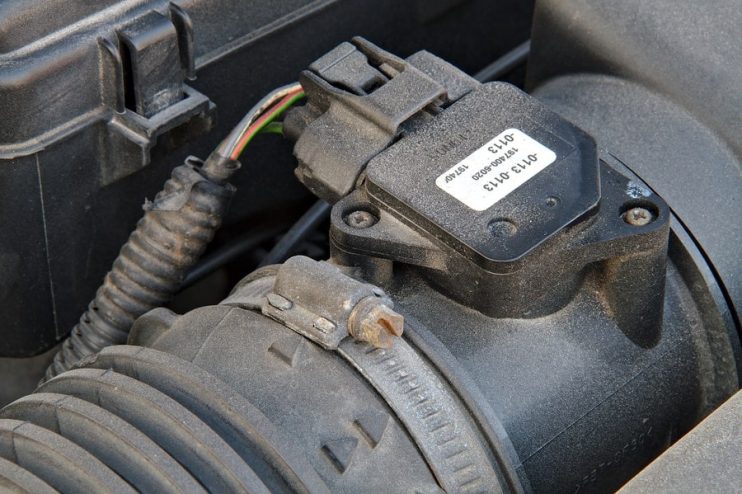
- The ECU reads information from sensors such as the throttle position sensor, coolant temperature sensor, crankshaft sensor, airflow sensor, or manifold pressure sensor.
- The ECU calculates the correct air-fuel ratio for the moment.
- The fuel injectors receive electrical pulses and open for precise intervals.
- Fuel enters the engine, mixes with air, and forms a combustible charge.
- The spark plug ignites the mixture.
- The combustion event creates expanding gases that push the piston down.
- The engine turns that force into usable mechanical power.
That means the engine is not just “burning gas.” It is managing a carefully timed series of events. Fuel quantity, air volume, ignition timing, sensor feedback, and computer control all work together. If one part of the electrical side of that system fails, the engine may misfire, hesitate, stall, or fail to start.
Now look at the EFI fuse in that context. It is not just protecting a random wire. It is protecting the electrical lifeline that helps run the very system responsible for delivering fuel in a modern engine. A blown EFI fuse can therefore stop the engine from operating correctly even if there is gasoline in the tank and the battery is strong.
This is why the fuse deserves far more respect than most car owners give it.
What Parts Are Usually Involved in the EFI System?
The EFI system is not one component. It is a network of mechanical, electrical, and electronic parts working together. Depending on the vehicle, the exact design differs, but the most common members of the EFI system include the following:
| Component | What It Does |
|---|---|
| ECU (Engine Control Unit) | Calculates fuel delivery and manages injector timing |
| Fuel Pump | Moves gasoline from the fuel tank toward the engine |
| Fuel Injectors | Spray measured fuel into the engine |
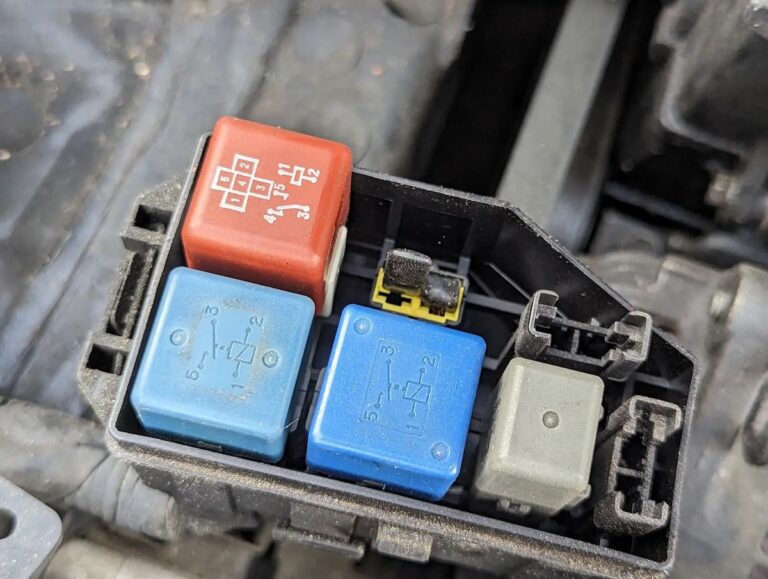
| EFI Relay | Switches power to key EFI components |
| Sensors | Send engine data to the ECU for fuel calculations |
| Wiring Harness | Connects all EFI electrical parts together |
| EFI Fuse | Protects the EFI electrical circuit from overload |
The original text says that fuses, fuel injectors, sensors, and a fuel pump are all part of the EFI system. Broadly speaking, that is true. But the expert refinement is this: the fuse is not a fuel-delivery component in the same way the pump and injectors are. It is a protective electrical component that supports the system’s operation by keeping the electrical side safe.
This distinction matters in diagnosis. If the engine has a fuel-pressure problem, the fuse may not be the cause. If the fuse is blown, the pump may not even receive power. So the same symptom — for example, a crank-no-start condition — can be caused by a fuel pump problem or by the fuse that protects its power path. Good diagnosis is about separating those possibilities logically.
Why the EFI Fuse Is Needed at All
The purpose of any automotive fuse is not to “redirect” electricity in the sense of controlling it intelligently like a computer would. Its real purpose is much simpler and more important: it protects the circuit by opening when current rises above a safe level.
Think of a fuse as a deliberate weak point in the circuit. If a short circuit occurs and electrical current spikes, the fuse melts internally and cuts off the power flow. That prevents the wiring, modules, sensors, injectors, and related components from overheating or burning.
Without a fuse, too much current could keep flowing until:
- wires overheat,
- insulation melts,
- connectors burn,
- control modules are damaged,
- or in severe cases, an electrical fire starts.
So when we say the EFI fuse sits between the power source and the EFI system, we are really saying this: it is the circuit’s emergency cutoff point. If current becomes dangerous, the fuse fails before the expensive parts do.
This is also why you should never install a higher-rated fuse just because the original one keeps blowing. A fuse that blows repeatedly is telling you the circuit has a problem. A larger fuse may silence that warning temporarily, but it can also allow real damage to spread further into the system.
Experts trust fuses as clues. They do not fight them blindly.
Where the EFI Fuse Usually Lives
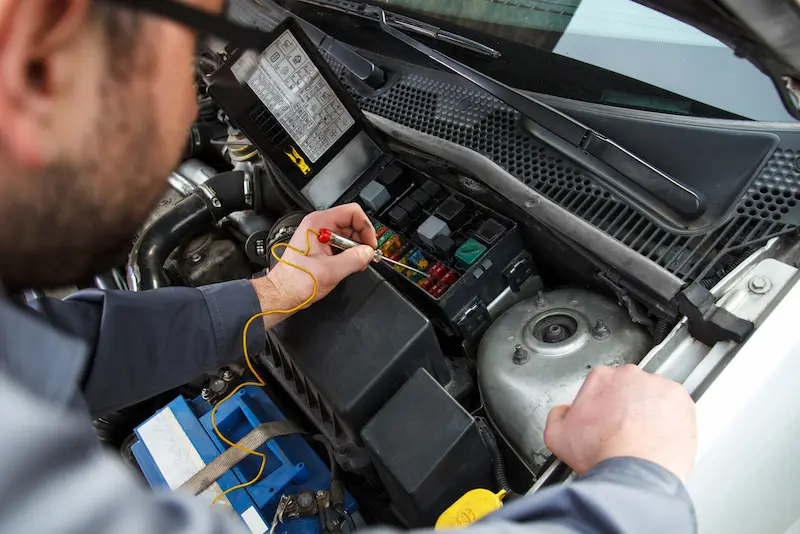
The EFI fuse is typically located inside the vehicle’s fuse box, sometimes also called the power distribution box. Most vehicles have at least one fuse box, but many have two or more. One is often found in the engine compartment, while another may be under the dashboard, near the driver’s side kick panel, or even in the trunk or rear side compartment.
That is why “where is the EFI fuse?” does not have a universal answer. It depends on the make, model, year, and electrical architecture of the car.
Still, the most common locations are:
- Under the hood: often inside a black plastic fuse box near the battery or fender.
- Under the dashboard: typically near the driver’s footwell or behind a lower trim panel.
- In the trunk or cargo area: less common, but possible on some vehicles.
The reason the EFI fuse often sits in the main power distribution box is simple: EFI-related circuits are critical engine-management circuits, and manufacturers usually place major engine fuses closer to the battery and relay system.
However, you should not rely on habit alone. Always verify with the manual or fuse-box diagram for your exact vehicle.

EFI Fuse Problems: The Most Common Issues
When people say “the EFI fuse is bad,” they are usually describing one of two situations:
- the fuse has already blown and no longer passes current,
- or the fuse keeps blowing because the circuit has a deeper problem.
Let us look at both in a more expert way.
1. The EFI Fuse Has Blown
Yes, fuses fail. But not all fuses fail simply because “time ran out.” A fuse can last many years if the circuit stays healthy. It blows when the circuit experiences current beyond the fuse’s rating. That overload may happen because of component failure, wire damage, moisture, corrosion, or a genuine fault in the system.
A blown fuse often shows physical signs such as:
- a black mark inside the plastic body,
- a visible break in the metal strip,
- heat discoloration,
- melted plastic near the center,
- or burned-looking blades.
If you pull the EFI fuse and find these signs, replacement is appropriate. But again, replacement is only the beginning of the story. The real question is why the fuse blew.
2. Wiring Problems
The original text is absolutely right to identify wiring issues as a common cause of repeated EFI fuse failure. If the fuse burns out quickly again after replacement, the problem is almost certainly somewhere in the circuit, not in the fuse itself.
Possible wiring-related causes include:
- insulation rubbed through and touching metal,
- a wire pinched between engine components,
- water intrusion into a connector,
- poor previous repairs,
- loose terminals creating heat,
- or corrosion inside the fuse box or relay socket.
If other nearby fuses are also blowing, the case for a wiring or distribution issue grows even stronger.
From an expert point of view, repeated fuse failure is not a parts-replacement problem — it is a circuit-diagnosis problem.
Additional Causes of EFI Fuse Failure That Many Drivers Miss
To make this article genuinely useful, we should go beyond the original simplified explanation and include other real-world causes that frequently show up in EFI fuse diagnosis.
3. Failing Fuel Pump Drawing Too Much Current
A worn or partially seized fuel pump motor can draw excessive electrical current. If the fuse protects the branch feeding the pump or its control path, that extra draw can blow the fuse. This often happens as pumps age internally and begin working harder than normal.
A common clue is this: the new fuse blows when the key is turned on or immediately when the pump should prime.
4. Bad EFI Main Relay
The EFI relay acts as an electrical switch for EFI-powered components. If it fails internally or develops a short, it may cause no-start symptoms or repeated fuse failure. In some cars, a stuck or damaged relay can mimic the same symptoms people would blame on the fuse.
5. Shorted Injector or Injector Harness
Fuel injectors are electrically pulsed solenoids. If an injector coil shorts or the injector harness is damaged, current draw may rise beyond normal. This is less common than fuel-pump or relay issues, but it absolutely happens — especially on older engines exposed to heat and vibration over many years.
6. Moisture, Corrosion, or Fuse Box Damage
A fuse box is not invincible. Water intrusion, condensation, corrosion, or terminal overheating can create resistance and intermittent power delivery. In some cases, the fuse itself is fine but the contact surface is damaged enough to create EFI-related symptoms.
7. Aftermarket Accessories or Poor Electrical Modifications
Alarm systems, stereo equipment, remote starts, LED conversions, immobilizer bypasses, and amateur wiring jobs are notorious for creating fuse problems. If someone has tapped into a circuit they did not fully understand, the EFI fuse may be paying the price.
In my experience, aftermarket wiring should always be treated as suspicious until proven otherwise in an electrical diagnosis.
How to Locate an EFI Fuse in Any Vehicle
Locating the EFI fuse may seem difficult at first, but the process is actually straightforward if you follow the right order. The mistake most people make is opening random fuse boxes and guessing based on labels they do not fully understand. A methodical approach is faster and safer.
Here is the best way to locate the EFI fuse:
- Get the owner’s manual. If the paper copy is missing, download a digital one from the manufacturer’s official site or a trusted archive.
- Go to the fuse section. This section will list fuse-box locations and fuse functions.
- Identify every fuse box in the vehicle. Some cars have multiple fuse boxes.
- Find the diagram that labels each fuse. Look specifically for “EFI,” “ECU,” “ENG,” “FI,” or related labels depending on the manufacturer.
- Use the fuse-box cover legend too. Most fuse-box lids have a map printed on the underside.
- Locate the fuse and remove it with a fuse puller. Then inspect and test it properly.
As the original article notes, fuse-box locations vary. Some are above the pedals, some are in the engine bay, and some are in the trunk or rear compartments. That is all true. The manual is always your starting point.
Once you learn how to find one fuse, you become much more comfortable handling basic electrical diagnosis in the future. That skill is worth having as a car owner.
Tools You Need Before Testing an EFI Fuse
You do not need an entire workshop to test an EFI fuse, but a few simple tools make the process safer, faster, and far more accurate.
| Tool | Why You Need It |
|---|---|
| Owner’s manual | To identify the correct fuse and fuse-box location |
| Fuse puller | To remove the fuse without damaging it |
| Digital multimeter | To test continuity or voltage accurately |
| Flashlight | To see the fuse element and fuse-box labels clearly |
| Spare fuses of the correct rating | To replace a failed EFI fuse immediately |
| Test light (optional) | Useful for quick in-circuit power checks |
Having the right tools turns EFI fuse diagnosis from guesswork into a clean, repeatable process.

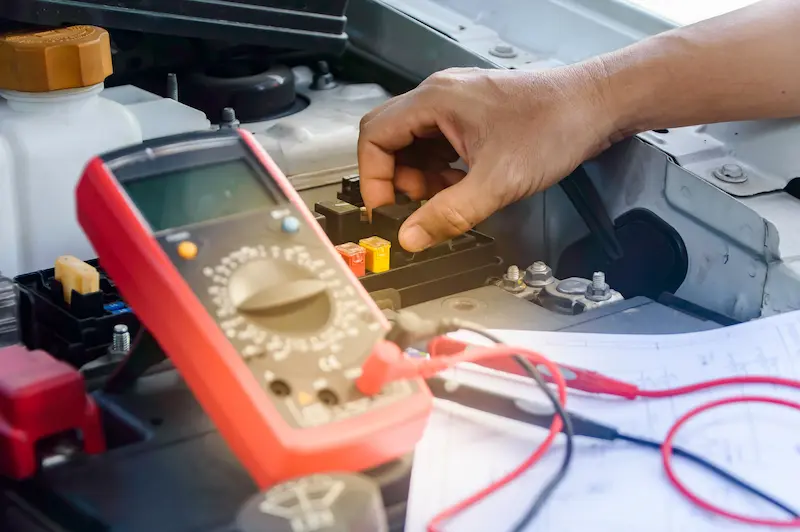
How to Test an EFI Fuse Correctly
If your car has electrical issues, poor acceleration, stalling, or a no-start condition, testing the EFI fuse is a smart move. The original article includes a listening test involving the fuel pump and relay. That is useful, but let us organize the testing process in the most effective order.
Method 1: Visual Inspection
Remove the EFI fuse and hold it up to the light. Look for:
- a broken or separated metal strip,
- dark burn marks,
- melted plastic,
- or heat discoloration.
This is fast, but not foolproof. Some bad fuses look normal.
Method 2: Continuity Test With a Multimeter
This is the most reliable do-it-yourself test.
- Remove the fuse.
- Set the multimeter to continuity mode or low ohms.
- Touch one probe to each metal blade of the fuse.
- If the meter beeps or shows near-zero resistance, the fuse is likely good.
- If the meter shows no continuity or OL, the fuse is blown.
Experts prefer this test because it confirms the fuse electrically instead of relying on sight alone.
Method 3: In-Circuit Voltage Test
With the fuse installed and the circuit energized:
- Turn the key to the position required for EFI circuit activation.
- Use a test light or multimeter to check both test points on top of the fuse.
- If power appears on one side but not the other, the fuse is likely open.
- If power appears on both sides, the fuse is probably intact.
This is a useful method if you want to test the fuse without pulling it out.
Method 4: Fuel Pump and Relay Listening Test
This method reflects the original article’s practical approach and can help narrow the diagnosis.
- Ask another person to help you.
- Stand near the fuel tank area or where pump priming can be heard best.
- Have your helper turn the key to ON.
- Listen for the fuel pump priming.
- If there is no sound, locate the EFI fuse and nearby relay in the power distribution box.
- Place a finger on the relay while your helper turns the key on again.
- If you do not hear or feel the relay click, the fuse, relay, or power feed may be at fault.
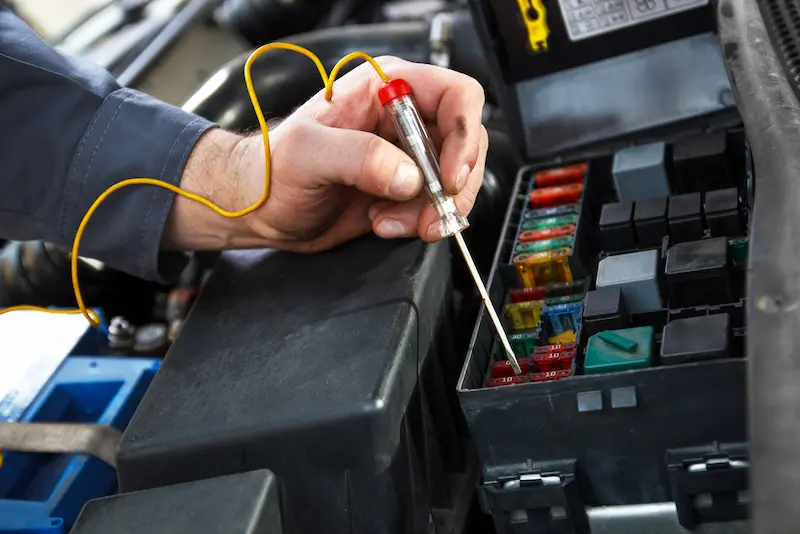
This method does not replace a meter, but it helps connect fuse diagnosis with real system behavior.
How to Tell Whether the Problem Is the Fuse, Relay, or Fuel Pump
One of the most important parts of EFI troubleshooting is separating cause from symptom. A silent fuel system does not automatically mean a bad pump. Here is a practical expert logic path:
| Observation | Most Likely Area to Check |
|---|---|
| Fuse is visibly blown | Replace fuse, then monitor for repeat failure |
| Fuse tests good, no relay click | Relay, relay control circuit, ECU command |
| Relay clicks, no fuel pump sound | Fuel pump, pump wiring, pump ground |
| New fuse blows immediately | Short circuit, pump overcurrent, wiring fault |
| Fuse, relay, and pump seem okay but no start remains | Injectors, ECU, fuel pressure, ignition, or sensor issues |
This is why experienced technicians work in stages. They do not replace the pump just because the car will not start. They first ask: does the pump have power? Does the relay close? Does the fuse carry current? Do the injectors pulse? Logic saves money.
What to Do If the EFI Fuse Keeps Blowing
If the EFI fuse blows once, replace it and test the car. If it blows again, you are no longer dealing with a simple maintenance issue. You are dealing with a circuit fault.
In that situation, take the following expert steps:
- Stop replacing fuses repeatedly without investigation.
- Confirm the fuse rating is correct.
- Inspect nearby wiring for heat, rubbing, or melting.
- Unplug suspect downstream loads one at a time, such as the fuel pump or injectors.
- Check for shorts to ground using a multimeter.
- Inspect aftermarket accessories or modifications.
- Test the EFI relay and its socket.
- If needed, consult a wiring diagram and proceed circuit by circuit.
At this stage, you may need a professional if you are not comfortable reading wiring schematics. But even then, understanding the logic helps you avoid being misled by lazy diagnosis.
Can a Bad EFI Fuse Cause Acceleration Problems?
Yes, it can — especially if the problem is intermittent rather than a complete circuit failure. A fully blown EFI fuse often causes a no-start or stall, but a poor fuse connection, corroded terminal, or unstable current path can lead to less dramatic symptoms first.
These may include:
- hesitation when accelerating,
- surging,
- rough throttle response,
- misfiring under load,
- or random stalling after warming up.
To be clear, acceleration issues have many causes, so the EFI fuse is not always the answer. But when acceleration problems are combined with no-start incidents, fuel pump silence, or repeated electrical oddities, the EFI fuse becomes a much more likely suspect.
Can You Drive With a Bad EFI Fuse?
In most cases, no. If the fuse is completely blown, the vehicle may not start at all. If the fuse or circuit is intermittent, the car may stall unpredictably. That is not a situation you want on the road.
Driving with a recurring EFI electrical fault is risky for several reasons:
- the engine may cut out unexpectedly,
- the car may fail to restart,
- the underlying short may worsen,
- and additional damage to wiring or modules may occur.
If the fuse problem is unresolved, the car should be treated as unreliable until properly diagnosed.
How Much Money Can You Save by Checking the EFI Fuse Yourself?
The original article mentions that finding and testing the fuse yourself can save around $100 in mechanic labor. That is a fair practical point. Workshops often charge a minimum diagnostic or inspection fee just to begin tracing a no-start or electrical complaint. If the problem turns out to be a simple blown fuse, basic owner knowledge can save both time and money.
However, the real savings go beyond one labor bill. Learning how to identify and test a fuse properly also helps you:
- avoid unnecessary towing,
- prevent random parts replacement,
- recognize bigger electrical faults sooner,
- and communicate more intelligently with a repair shop if deeper work is needed.
In other words, fuse knowledge pays back repeatedly.
Common Mistakes to Avoid With EFI Fuse Diagnosis
Many electrical problems become more expensive because of avoidable mistakes. Here are the biggest ones:
- Replacing the fuel pump before checking the fuse – this is a surprisingly common and expensive mistake.
- Using a larger fuse “just to get home” – this can damage wiring and electronics.
- Ignoring repeated fuse failure – if it blows again, the circuit has a real problem.
- Testing only by sight – some bad fuses still look fine.
- Skipping the manual – this leads to checking the wrong fuse or wrong box.
- Forgetting about aftermarket wiring – modifications create more EFI fuse headaches than many people realize.
An expert approach is disciplined, not impulsive. The fuse is part of a system, and it should be diagnosed like part of a system.
Frequently Asked Questions About the EFI Fuse
Does EFI mean electronic fuel injector?
Not exactly. The more accurate meaning is electronic fuel injection. The injector is one part of the EFI system, but EFI refers to the complete fuel-delivery control system.
Can a blown EFI fuse stop the engine from starting?
Yes. A blown EFI fuse can prevent the ECU, injectors, relay circuit, or fuel-delivery path from functioning correctly, causing a crank-no-start condition.
What does a bad EFI fuse look like?
It may show a broken internal strip, black burn marks, heat discoloration, or melted plastic. However, some bad fuses look normal, so a multimeter test is always better.
Where is the EFI fuse located?
It is usually in the fuse box or power distribution box, often under the hood, but sometimes under the dashboard or elsewhere depending on the vehicle.
Can a wiring problem make the EFI fuse blow repeatedly?
Yes. Repeated EFI fuse failure is one of the strongest signs of a short circuit, damaged harness, poor repair, or component overcurrent problem.
Should I replace the fuse with a bigger one if it keeps blowing?
Absolutely not. Always replace it with the exact same amperage rating specified by the manufacturer. A larger fuse removes the circuit’s intended protection.
Can the EFI fuse affect acceleration?
Yes, especially if the issue is intermittent. Poor fuel-delivery control can cause hesitation, surging, weak acceleration, or stalling.
Conclusion
The EFI fuse may be small, but it protects one of the most important systems in your car: the electronic fuel injection system that makes controlled combustion possible. Without that system, gasoline does not reach the engine in the right way, and without the correct air-fuel mixture, the engine cannot make power efficiently—or at all.
That is why the EFI fuse matters. It stands between the battery and EFI-related circuits such as the fuel pump, injectors, relay network, and engine-management electronics. If it blows, your car may crank without starting, stall suddenly, lose fuel delivery, or show strange acceleration and electrical symptoms. Sometimes the answer is as simple as replacing a blown fuse. Other times, repeated fuse failure points toward wiring damage, a bad relay, a failing fuel pump, or another electrical fault hidden deeper in the circuit.
The smartest move is always the same: locate the correct fuse using the manual, inspect it properly, test it with a meter, replace it only with the right rating, and investigate further if it blows again. Never treat the fuse as the whole story without checking why it failed.
In practical automotive diagnostics, small components often explain large problems. The EFI fuse is one of those components. Once you understand it, you are no longer guessing — you are troubleshooting with purpose.