
Most people start shopping for a vehicle by looking at the price. That makes sense. The purchase price is immediate, visible, and easy to compare. But from a real ownership-cost standpoint, the price you pay to buy a vehicle is only the opening chapter. What happens after the car is in your driveway often matters just as much, and sometimes even more. Oil changes, brakes, suspension work, filters, sensors, belts, tires, unexpected repairs, and routine servicing all add up over time. A car that looks like a bargain on day one can quietly become expensive over the next ten years if its maintenance and repair costs are high.
This is why experienced shoppers do not judge a vehicle by MSRP alone. They look at the total cost of ownership. That includes depreciation, insurance, fuel, financing, taxes, and maintenance. Of those categories, maintenance is one of the easiest to underestimate because it does not arrive as one large number. It shows up gradually—one service appointment here, one set of brake pads there, a cooling-system repair next year, suspension work later on. The spending feels manageable in small chunks, which is exactly what makes it so easy to ignore until the total becomes uncomfortable.
As a car-buying and ownership-cost specialist, I have found that maintenance cost is one of the most revealing long-term metrics a buyer can study. It tells you something about the design of the vehicle, the cost of parts, the complexity of the systems, the labor involved in common repairs, and the overall burden of keeping the car healthy after the honeymoon period ends. Some vehicles are forgiving. They can take years of use and ask relatively little from the owner. Others look attractive in the showroom, then slowly demand more money than expected in servicing and repairs.
For this article, the rankings are based on ten-year maintenance and repair projections published by CarEdge. To keep the analysis practical and fair, I have treated the two groups slightly differently. For the most expensive cars to maintain, I am focusing on maintenance cost relative to the original price of the vehicle. That matters because a car with a moderate total repair bill can still be a bad value if those costs make up a huge percentage of what the car originally cost. On the other side, for the least expensive cars to maintain, I am focusing on the lowest total ten-year maintenance and repair cost. That approach better reflects the actual dollar burden owners are likely to feel over time.
That difference in method is important. It explains why a low-cost vehicle like the Chevrolet Spark can show up on the expensive list even though its total maintenance bill is not extreme in absolute terms. Because the car’s original purchase price is so low, its long-term maintenance burden becomes large as a percentage of what the vehicle initially cost. By contrast, a more expensive car like the Toyota Avalon can look remarkably affordable to maintain because its total ten-year service cost stays low relative to its original price and low in absolute dollars as well.
Another important point: maintenance-cost studies are not perfect predictions of what your car will cost. Driving style, climate, road conditions, service quality, accident history, labor rates in your area, and whether you use a dealer or an independent shop all affect ownership costs. A carefully maintained BMW may treat its owner far better than a neglected Toyota. Still, broad patterns matter, and those patterns are useful when you are deciding what to buy or what to avoid.
And the patterns in this list are revealing. BMW appears repeatedly among the costliest vehicles to maintain. So do several models from brands under the old FCA umbrella. On the lower-cost side, Toyota dominates, with Honda close behind. That is not random. It reflects years of engineering philosophy, parts pricing, complexity, and reliability trends.
Below, I will break the list into two sections. First, the ten vehicles that ask the most from owners in maintenance relative to what they cost new. Then, the ten that remain impressively affordable over a decade of ownership. Along the way, I will explain why each vehicle lands where it does and what buyers should learn from the pattern.
How to Read These Rankings the Right Way
Before getting into the rankings, it helps to understand what these numbers do and do not mean. A high maintenance cost does not automatically mean the vehicle is “bad,” and a low maintenance cost does not automatically make the vehicle a perfect purchase. Maintenance cost is one piece of the ownership puzzle. It tells you how expensive the vehicle tends to be to keep healthy over a long period of time. It does not tell you how enjoyable the vehicle is to drive, how luxurious it feels, how much power it has, how well it tows, or how safe it is in a crash. Those things matter too.
It is also important to separate maintenance from catastrophic failure. A car can be maintenance-heavy without being mechanically fragile in the dramatic sense. Luxury vehicles often fall into this category. They use expensive parts, require specialized labor, and pack more complexity into the same footprint, which drives up service costs even when the vehicle is functioning as designed. On the other hand, some budget vehicles cost more than expected to maintain not because they are exotic, but because the purchase price is so low that even ordinary repair totals look large by comparison.
Another subtle but important point is that maintenance cost is often influenced by how hard the vehicle is to service. Two cars may need the same kind of repair, but if one requires significant disassembly just to access the parts, labor goes up sharply. This is one reason some premium brands stay expensive over time even when they are not constantly breaking. They are simply more costly to work on properly.
With that in mind, the most useful way to read this article is not to treat the rankings as moral judgments. Instead, see them as ownership signals. If a model shows up on the expensive list, ask yourself whether the driving experience or brand appeal is worth the ongoing cost. If a model appears on the affordable list, ask whether its strengths line up with the kind of car you actually want to live with. Numbers should guide the decision, not replace it.
10 Most Expensive Cars to Maintain
For this section, I am ranking vehicles based on maintenance and repair cost compared with the vehicle’s original new price. That approach highlights cars that become unexpectedly expensive to own relative to what the buyer paid up front. Some of these vehicles are not expensive in raw ten-year maintenance dollars, but they become poor long-term values because their ownership cost is disproportionately high for their price class.
The pattern is hard to miss. BMW appears repeatedly, as do several vehicles from Ram, Jeep, and Dodge. That tells us something important: these brands may offer attractive styling, strong marketing, or short-term appeal, but the ownership burden over time is harder on the wallet than many buyers expect.
1. Ram 1500
The Ram 1500 earns the top position on the expensive-maintenance list, and that surprises many people because half-ton trucks are often viewed as practical, durable, and relatively easy to live with. In general, that reputation is not entirely wrong. Light-duty trucks usually do offer decent long-term value compared with many luxury vehicles. But the Ram 1500 stands out against its direct rivals by demanding much more in maintenance and repairs over ten years than shoppers often expect.
What makes this result so important is the context. Buyers often choose a Ram 1500 because they want the usefulness of a truck without stepping into heavy-duty ownership costs. They expect reasonable durability and manageable maintenance. Instead, the numbers show that the Ram asks for a much larger percentage of its original cost back in maintenance than it should for its class. That makes it a poor value compared with competing full-size trucks that often deliver similar capability with lower long-term service expense.
Part of the issue is that modern trucks are no longer simple machines. They now carry advanced infotainment systems, air suspension on some trims, more complex emissions equipment, turbocharged engine options in some markets, and a lot of high-content hardware. Ram has also had a mixed long-term reputation when it comes to durability consistency. That combination raises the risk that an owner faces both regular maintenance costs and more expensive out-of-warranty repair events over time.
MSRP: $32,795
10-Year Average Maintenance/Repair Costs: $18,072
Maintenance Cost vs. New Price: 55.1%
That 55.1 percent figure is what makes the Ram 1500 so hard to ignore in this discussion. Over ten years, the vehicle can demand maintenance and repair spending equal to more than half of what it cost new. For shoppers looking for truck utility without ownership drama, that is a very serious warning sign.
2. BMW X1
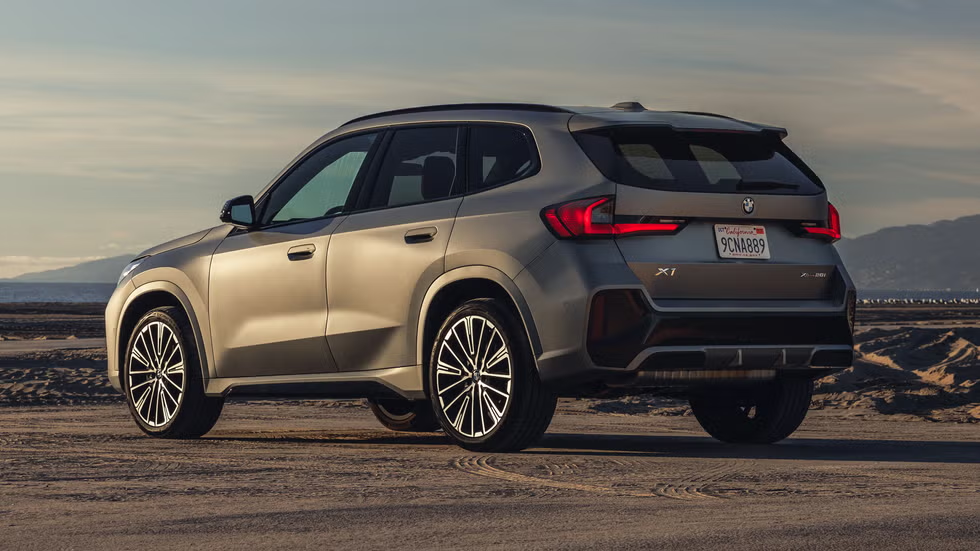
The BMW X1 is exactly the kind of vehicle that tempts buyers into focusing on the badge rather than the long game. At first glance, it looks like a relatively attainable entry point into luxury ownership. It is smaller, cheaper than many other BMWs, and marketed as a practical premium crossover. But ownership cost studies repeatedly show that “entry luxury” does not mean “economical to maintain.” In fact, it often means the opposite.
BMW maintenance costs tend to climb for several reasons. Parts are expensive, labor times can be high, and these vehicles often rely on tighter packaging and more complex electronics than mainstream rivals. The X1 may be one of the smaller models in the lineup, but that does not give it budget-car service bills. It still carries the repair economics of a premium European brand. That matters a great deal once the vehicle ages out of warranty.
Another factor is buyer expectation. Many shoppers stretch slightly to get into an X1 because it feels like a reachable premium upgrade from a mainstream compact SUV. But once the maintenance and repair bills begin arriving, the vehicle’s long-term affordability looks very different. The X1 may be cheaper to buy than some BMW siblings, but it is not proportionally cheaper to keep in shape.
MSRP: $35,400
10-Year Average Maintenance/Repair Costs: $17,691
Maintenance Cost vs. New Price: 49.9%
Nearly half of the original purchase price coming back as maintenance and repair expense over ten years is a striking number. It does not mean every X1 owner will regret the vehicle, but it absolutely means the cost of “affordable BMW ownership” is much higher than many buyers imagine at the time of purchase.
3. BMW X2
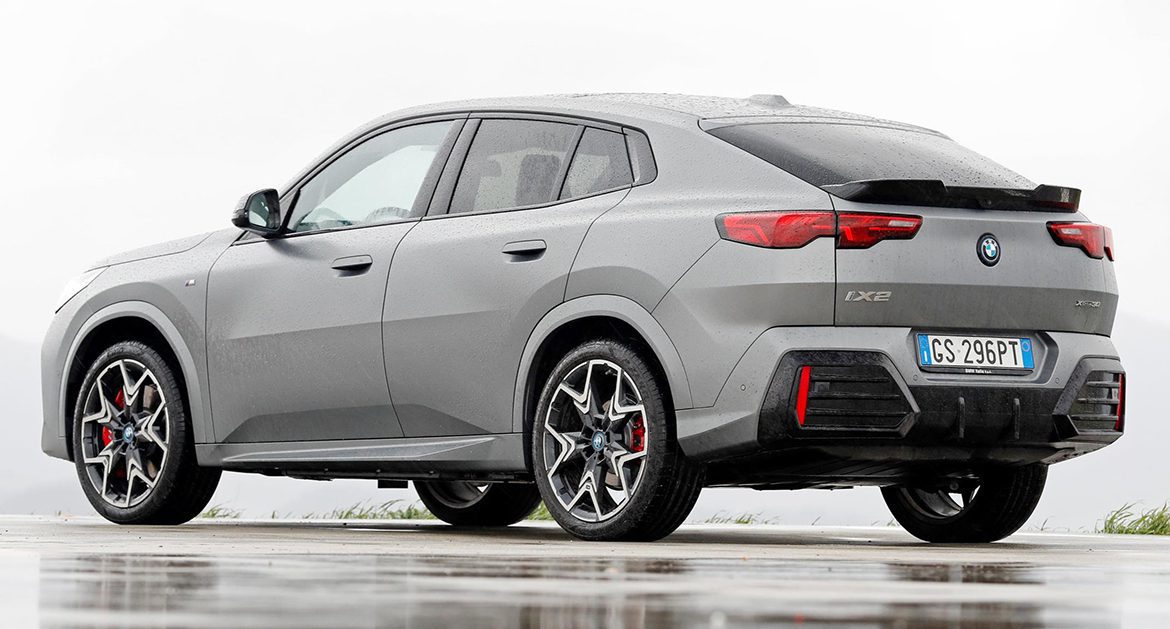
The BMW X2 follows the X1 closely, which makes sense because the two vehicles share much of their architecture and premium-market positioning. The X2 adds a more style-oriented design and coupe-like crossover vibe, but that extra visual appeal does not come with lower ownership costs. In fact, it remains one of the costliest vehicles to maintain relative to its price.
This ranking highlights something consumers often overlook: image-focused vehicles are not always financially logical vehicles. The X2 is sold on design appeal, brand image, and a sportier personality than the average compact crossover. None of those qualities reduce the price of labor or replacement components. So while the vehicle may look like a fun, fashionable way into the BMW brand, the service bills remain distinctly BMW in tone.
Luxury crossovers also often age in a frustrating way. They can remain attractive enough that owners want to keep them, but the combination of electronics, sensors, suspension components, and specialized parts becomes increasingly expensive to support. That is how a vehicle like the X2 ends up feeling attractive on the showroom floor and expensive in the service lane.
MSRP: $36,600
10-Year Average Maintenance/Repair Costs: $17,764
Maintenance Cost vs. New Price: 48.5%
The X2’s number is slightly lower than the X1’s mostly because its starting price is a bit higher, not because the ownership burden is meaningfully lighter. That is an important distinction. Buyers should not read “third on the list” as “much better value.” In practical terms, both vehicles ask for a very similar level of financial commitment over time.
4. Jeep Renegade
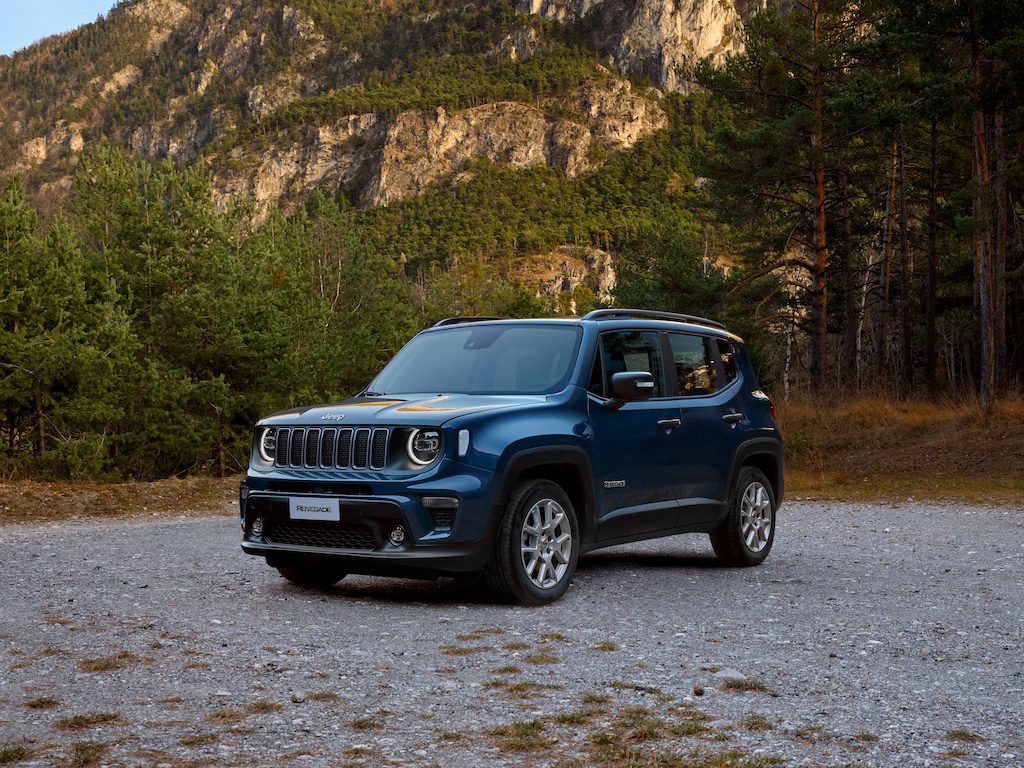
The Jeep Renegade is a particularly revealing vehicle on this list because it shows how a relatively inexpensive crossover can still become an expensive maintenance proposition in proportion to what it costs new. This is not a luxury vehicle. It is not supposed to carry premium-brand ownership expenses. And yet its long-term maintenance burden lands it near the top of the expensive side of the chart.
Part of the story here is that the Renegade has long lived in an awkward space between appealing design and disappointing ownership economics. It offers Jeep styling and urban-friendly size, but it does not deliver especially low service costs to reward buyers for staying mainstream. Compared with some larger SUVs that cost more up front, the Renegade’s maintenance-to-price ratio is hard to defend.
In practical ownership terms, this means the Renegade can become a frustrating kind of vehicle to own. It may have been purchased because it looked affordable, easy to live with, and compact enough for city use, but the maintenance spending does not stay in the budget-car lane. That is why this ranking matters so much. It challenges the assumption that smaller automatically means cheaper to own.
MSRP: $22,850
10-Year Average Maintenance/Repair Costs: $10,177
Maintenance Cost vs. New Price: 44.5%
When nearly half the original purchase price comes back through maintenance and repair over ten years, buyers need to think carefully. The Renegade might still appeal for other reasons, but on ownership cost alone, it is far from a bargain.
5. Chevrolet Spark
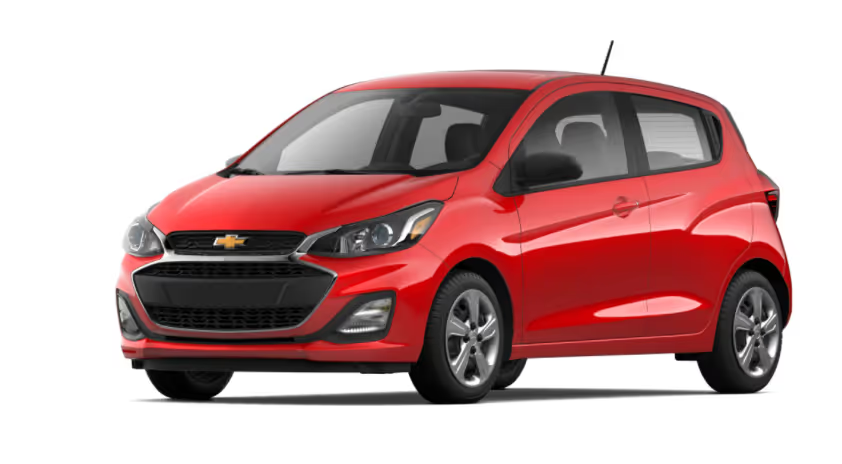
The Chevrolet Spark is one of the most interesting entries on this list because it proves how rankings can be misleading if you ignore the method behind them. In absolute dollars, the Spark’s ten-year maintenance and repair bill is not outrageously high. In fact, compared with luxury vehicles, it is modest. But because the Spark was such a low-priced new car to begin with, that maintenance total becomes huge as a percentage of the original cost.
This is exactly why shoppers need to think beyond sticker price. Low-cost cars often attract buyers who are extremely budget-conscious, which means every repair dollar matters more. A vehicle that costs very little up front can still become a poor value if the ownership costs do not stay proportionally low. The Spark sits in that uncomfortable space. It is cheap to buy, but not cheap enough to maintain relative to its price.
There is also a psychological factor at work here. People who buy the most affordable new cars often expect the ongoing costs to match the purchase price. When they do not, the ownership experience feels more frustrating than it might in a more expensive vehicle. A $6,000 ten-year maintenance figure sounds manageable in a luxury-car context. In a subcompact-economy-car context, it feels much heavier.
MSRP: $13,600
10-Year Average Maintenance/Repair Costs: $6,038
Maintenance Cost vs. New Price: 44.3%
This is a great example of why purchase price and ownership value are not the same thing. The Spark is affordable to buy, but the cost of keeping it healthy over a decade eats up a surprisingly large share of that original bargain.
6. Dodge Journey
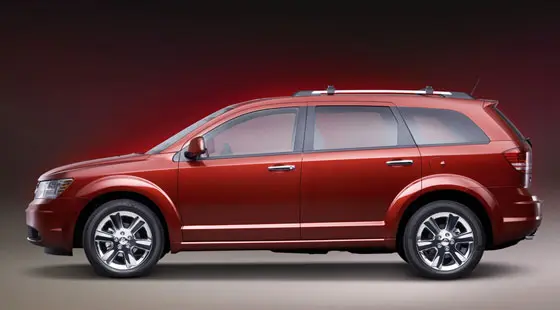
The Dodge Journey has spent years living in a strange corner of the market. It was often available at a tempting price, sold to buyers who wanted three rows or crossover practicality without spending heavily, and yet it never built much of a reputation as a standout vehicle. It was not especially refined, not especially beloved, and certainly not the class leader in most meaningful categories. The maintenance numbers only deepen that problem.
From an ownership-value standpoint, the Journey struggles because it never offered a compelling enough product to justify high long-term maintenance burden. Buyers could accept elevated maintenance if the vehicle delivered excellent performance, durability, or premium feel. The Journey did not. That makes its ten-year service cost particularly difficult to justify.
This is a recurring theme among some FCA-era vehicles: the purchase price may look attractive enough to lure budget-conscious buyers, but the long-term ownership economics fail to hold up. Over time, the vehicle stops looking inexpensive and starts looking like a compromise that kept asking for more money.
MSRP: $23,675
10-Year Average Maintenance/Repair Costs: $10,133
Maintenance Cost vs. New Price: 42.8%
That percentage is simply too high for a vehicle in this category to be considered a value play. If a shopper is trying to minimize long-term cost, the Journey should not be near the top of the list.
7. Hyundai Venue
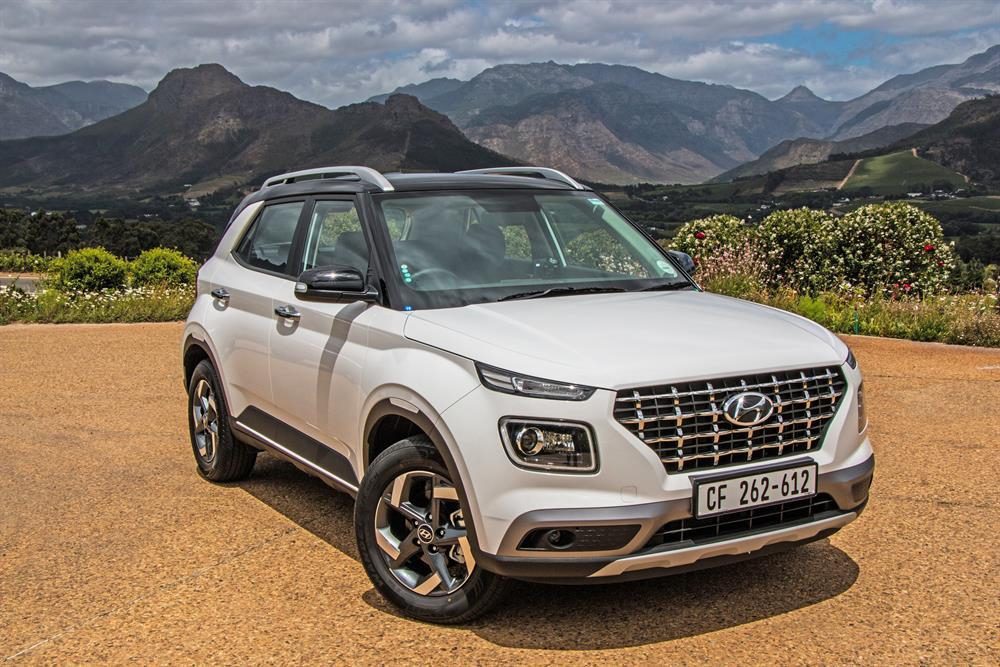
The Hyundai Venue’s appearance here is particularly interesting because Hyundai as a brand is often associated with strong warranties and competitive value. Yet the Venue lands among the most expensive vehicles to maintain relative to its purchase price. This does not automatically mean the Venue is unreliable in a dramatic sense, but it does suggest that its long-term maintenance equation is weaker than many shoppers would assume from the badge alone.
Part of the issue is simple arithmetic. The Venue starts at a relatively low price, so even moderate long-term maintenance costs loom larger in percentage terms. But there is more to it than that. Buyers often choose small crossovers because they want easy urban use, modest purchase prices, and manageable ownership costs. When a vehicle in that class starts behaving more like a financial stretch over ten years, it undercuts one of the main reasons people choose it in the first place.
The Venue is also a reminder that market positioning can be deceptive. “Small,” “entry-level,” and “city-friendly” do not always translate to “cheap to own.” Consumers should never assume that a vehicle’s size tells the full ownership-cost story.
MSRP: $18,750
10-Year Average Maintenance/Repair Costs: $7,834
Maintenance Cost vs. New Price: 41.7%
Those numbers put the Venue in a surprisingly uncomfortable position. It is not ruinously expensive in raw dollars, but relative to what the buyer paid for the vehicle, it asks for more than many would expect from a small mainstream crossover.
8. BMW X3
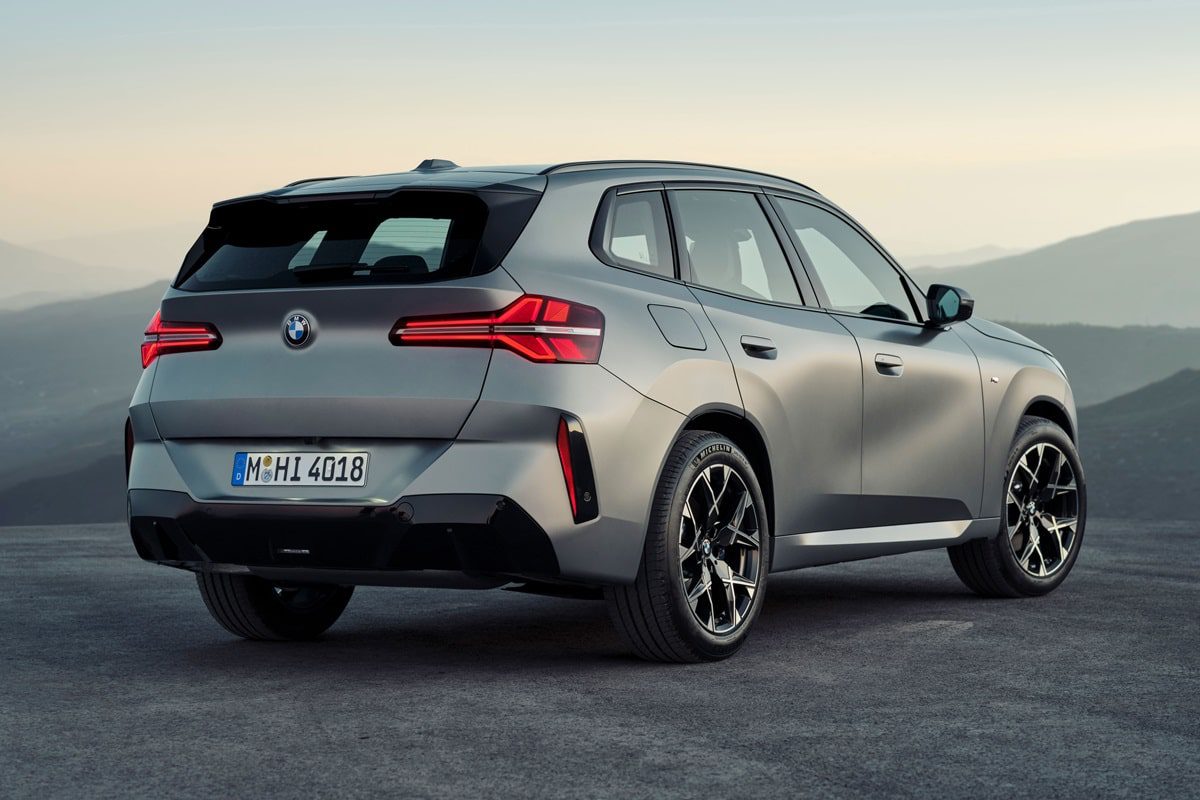
By the time we reach the BMW X3, the broader lesson about BMW is hard to miss. These vehicles offer premium branding, polished road manners, strong interiors, and a luxury identity many buyers genuinely value. But they do not offer that experience with budget-minded ownership costs. The X3 is a more mature, more upscale package than the X1 or X2, but it continues the brand’s pattern of expensive upkeep.
The X3’s maintenance burden is a reminder that premium ownership remains premium long after the vehicle leaves the showroom. Once the warranty fades, the owner is left dealing with higher labor rates, more expensive replacement parts, and a vehicle architecture that often takes more time and expertise to service than mainstream competitors. In exchange, the buyer gets the BMW experience. Whether that tradeoff is worthwhile depends entirely on the shopper’s priorities.
What matters for this article is that the X3 is not a value-oriented maintenance story. It is a luxury ownership story. Buyers need to enter it with eyes open. Too many second or third owners step into used premium SUVs expecting lower purchase price to equal lower total ownership cost. That is often exactly when the opposite becomes true.
MSRP: $43,000
10-Year Average Maintenance/Repair Costs: $17,878
Maintenance Cost vs. New Price: 41.5%
In absolute terms, the X3 is expensive to maintain. In percentage terms, it still lands among the highest on the list. That combination is why used luxury SUVs can be so tempting up front and so punishing later if the buyer has not planned carefully for service costs.
9. Jeep Compass
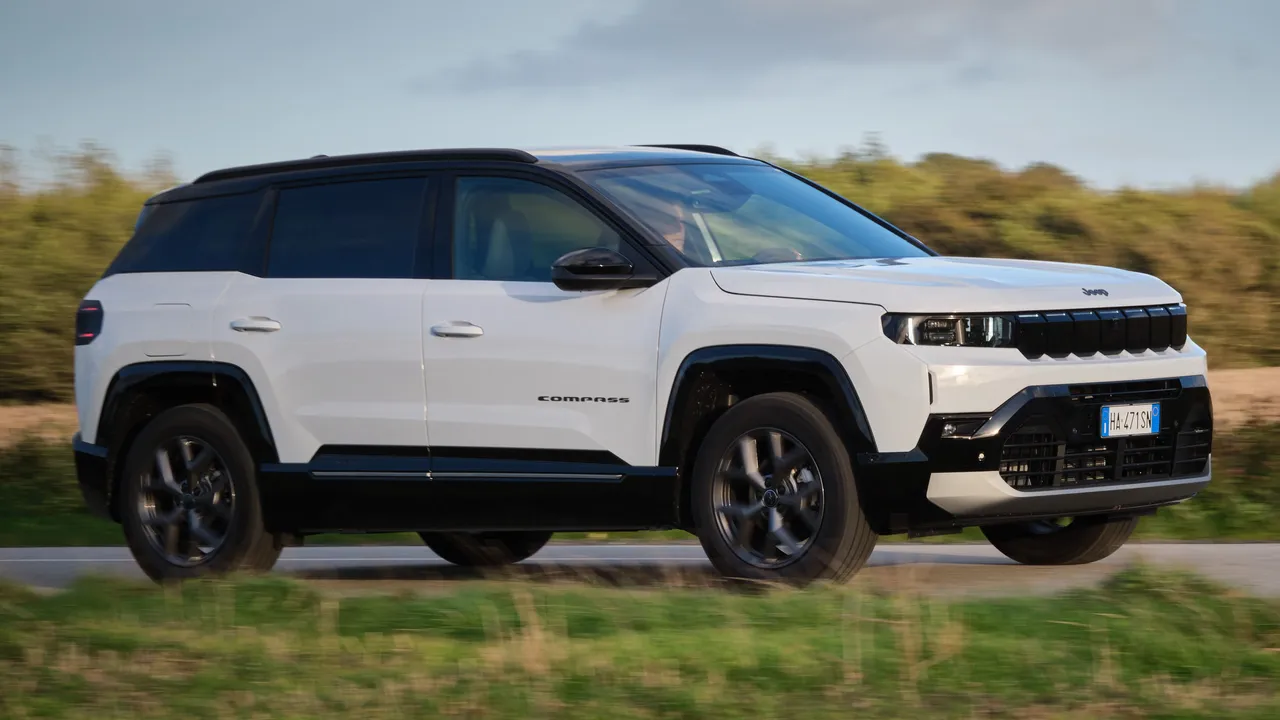
The Jeep Compass follows a very similar ownership-cost pattern to the Renegade, which should not be surprising considering how closely these vehicles sit within the same corporate family. Buyers are often drawn to the Compass because it looks like a practical, approachable compact SUV with a recognizable Jeep identity. But ownership cost data shows that it asks for more over time than a vehicle in this category ideally should.
That is what makes the Compass a cautionary example. Compact SUVs are one of the most competitive segments in the entire market. There are numerous alternatives that offer comparable practicality, fuel economy, and daily usability while demanding much less from the owner over a decade. In that context, the Compass becomes harder to justify as a financially rational choice unless the buyer strongly prioritizes the styling or brand image.
Like the Renegade, the Compass suffers from the mismatch between what buyers expect and what the maintenance data says. This is not a high-performance luxury machine where elevated upkeep is easier to mentally accept. It is a mainstream compact SUV. Mainstream buyers usually expect mainstream service costs, and the Compass does not deliver that outcome.
MSRP: $24,495
10-Year Average Maintenance/Repair Costs: $10,127
Maintenance Cost vs. New Price: 41.3%
That figure puts the Compass far outside the value zone that shoppers often assume compact crossovers occupy. If low long-term cost matters, this is not a model to approach casually.
10. Mercedes-Benz GLA-Class
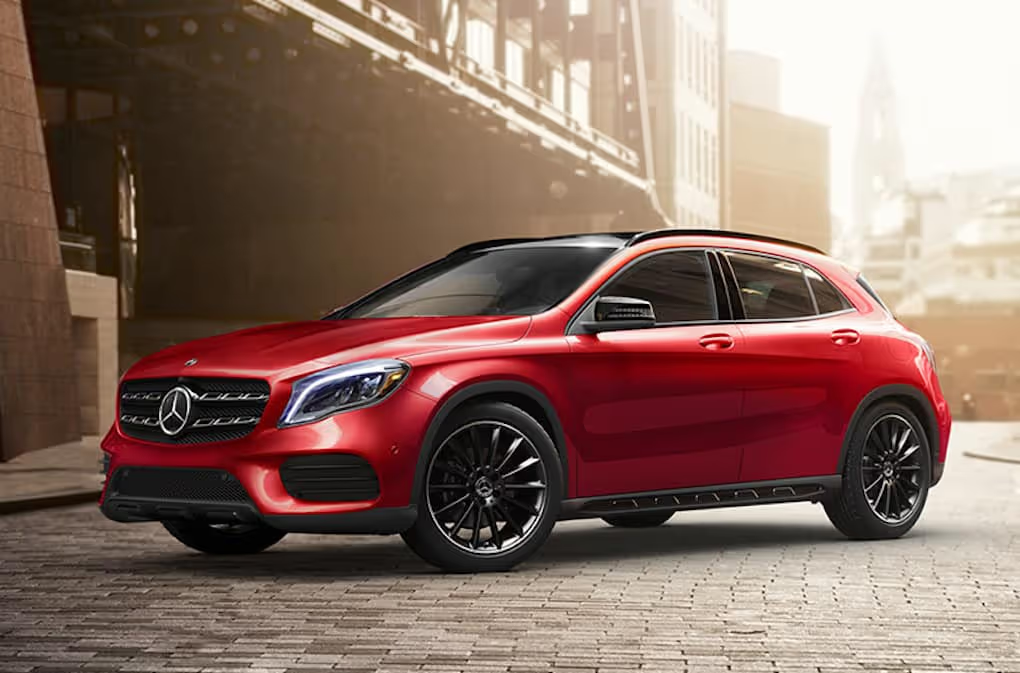
It should not surprise anyone that a Mercedes-Benz appears on the expensive side of the ownership-cost conversation, but the GLA-Class is especially noteworthy because it represents the “accessible luxury” idea in much the same way the BMW X1 does. It gives buyers a way into a prestigious brand without requiring flagship money. What it does not do is eliminate luxury-brand maintenance economics.
Mercedes-Benz parts tend to be costly, and qualified labor often commands a premium as well. Add modern electronics, tight engine packaging, and the general complexity of premium compact crossovers, and the service picture becomes much less friendly than the original sticker might suggest. Buyers often focus on monthly payment and overlook what happens once the vehicle settles into out-of-warranty life.
The GLA-Class is not unique in this sense. Many luxury-brand entry models rely on a similar formula: attractive branding, urban-friendly proportions, respectable interior quality, and the implicit promise that premium ownership is now within reach. What is usually left unsaid is that premium service remains premium service. The logo on the hood continues billing long after the excitement of the purchase fades.
MSRP: $34,250
10-Year Average Maintenance/Repair Costs: $13,911
Maintenance Cost vs. New Price: 40.6%
That still puts the GLA-Class firmly among the costliest vehicles to maintain relative to its original price. For buyers who prioritize luxury image, that may be acceptable. For value-focused shoppers, it should be a serious pause point.
What the Expensive List Tells You
Once you step back from the individual entries, the expensive-maintenance list reveals a few very clear themes. First, premium German brands remain expensive to own, even in their smaller or more “entry-level” models. A lower MSRP within a premium lineup does not mean low maintenance. It usually just means you entered the premium ecosystem at a lower starting point while still inheriting premium service economics.
Second, several vehicles from Ram, Jeep, and Dodge show that mainstream branding alone does not guarantee cheap ownership. These are not exotic vehicles, yet their long-term maintenance burden remains high relative to what they cost new. This is exactly why ownership-cost data matters. A badge does not always tell the truth. The ten-year numbers often do.
Third, smaller and cheaper vehicles can still become poor values if the maintenance total eats too deeply into the original purchase price. The Chevrolet Spark is the perfect example. It is not expensive to maintain in the same way a BMW X3 is expensive, but it is expensive relative to what the owner paid to buy it. That distinction matters, especially for budget shoppers.
The larger lesson is simple: a car’s long-term value is not determined at the point of sale. It is determined over years of ownership. The wrong vehicle can look affordable right up until the maintenance curve catches up with it.
10 Least Expensive Cars to Maintain
For the least expensive list, the ranking shifts from percentage of purchase price to lowest total ten-year maintenance and repair cost. This is the most useful way to judge true affordability on the low-cost side because buyers in this category usually care most about raw dollars, not ratio theory. If you want a car that is cheap to keep running, you want the one that asks for the least money over time, full stop.
Here, Toyota dominates. Honda follows closely. Mitsubishi and Nissan each get a mention. The pattern is one that experienced mechanics and long-term buyers already know well: conservative engineering, strong parts availability, simple drivetrains, and proven platforms usually age better and cost less to support.
1. Toyota Yaris
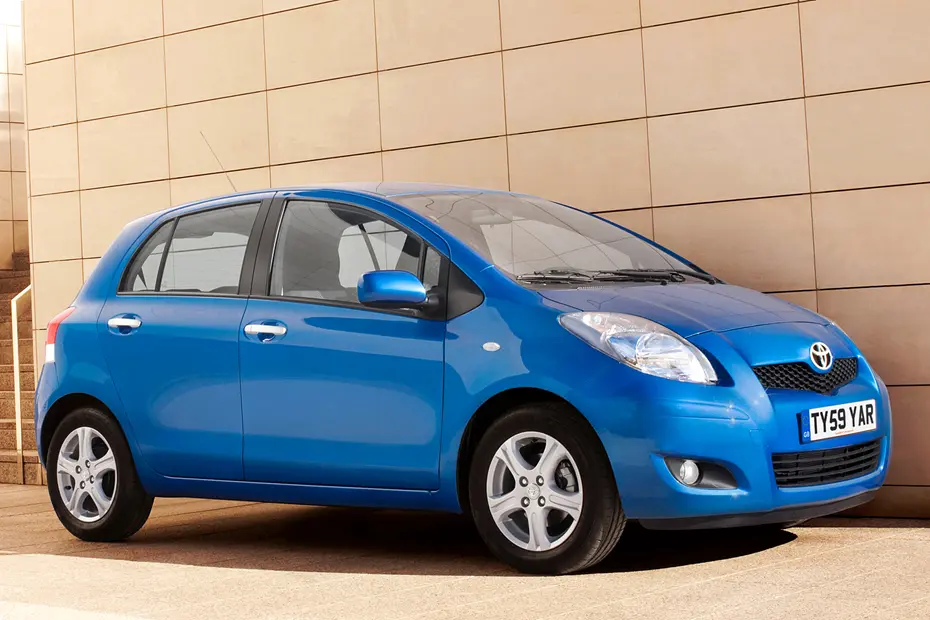
The Toyota Yaris takes the top spot among the least expensive cars to maintain, and that result fits perfectly with Toyota’s long-standing reputation. The Yaris was never designed to overwhelm buyers with luxury or power. It was designed to be economical, practical, efficient, and dependable. Those qualities continue to pay off long after the original purchase.
One reason the Yaris performs so well here is simplicity. Smaller Toyotas built around durability rather than high-performance ambitions tend to age gracefully. They use proven engineering, parts are widely available, and service procedures are familiar to countless independent shops. That keeps both parts cost and labor cost under control. When a vehicle does not rely on excessive complexity, it gives owners fewer ways to get punished later.
The Yaris also benefits from Toyota’s broader ownership culture. Many Yaris buyers tend to service their cars regularly and keep expectations realistic. That matters because an easy-to-maintain car still needs basic care. The Yaris rewards that care by remaining inexpensive to support year after year.
MSRP: $17,750
10-Year Average Maintenance/Repair Costs: $4,033
Maintenance Cost vs. New Price: 22.7%
For ten-year ownership, that is an outstanding number. It means the Yaris delivers exactly what budget-conscious buyers hope for: low purchase price and low upkeep, not just one or the other.
2. Toyota Corolla
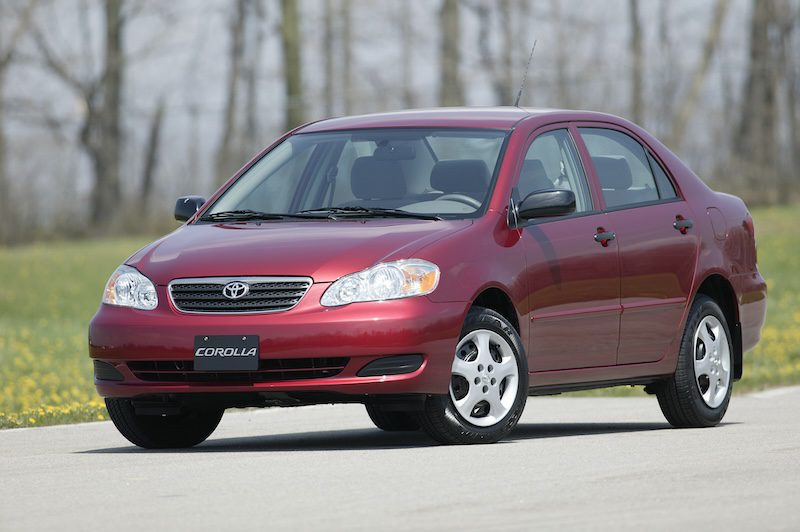
The Corolla’s presence near the very top should surprise no one familiar with long-term ownership patterns. It has spent decades building one of the strongest reputations in the industry for dependability, low operating cost, and broad everyday usability. If someone asked me to name one of the safest used-car ownership bets in the market, the Corolla would enter the conversation immediately.
The Corolla’s advantage comes from consistency. Toyota has repeatedly refined the formula rather than chasing constant reinvention. That tends to produce cars that are easy to service, well understood by mechanics, and forgiving in long-term ownership. Even when the Corolla is not the most exciting compact car in the segment, it remains one of the smartest from a cost perspective.
Buyers who choose the Corolla are often rewarded twice. First, they get relatively low maintenance spending. Second, they often avoid the kind of large surprise repairs that make ownership stressful. That combination is worth a great deal more than flashy marketing claims.
MSRP: $20,025
10-Year Average Maintenance/Repair Costs: $4,083
Maintenance Cost vs. New Price: 20.3%
That total is remarkably low for a mainstream compact sedan over a full decade. The Corolla continues to prove that boring, when it comes to maintenance, can be an excellent thing.
3. Toyota Prius
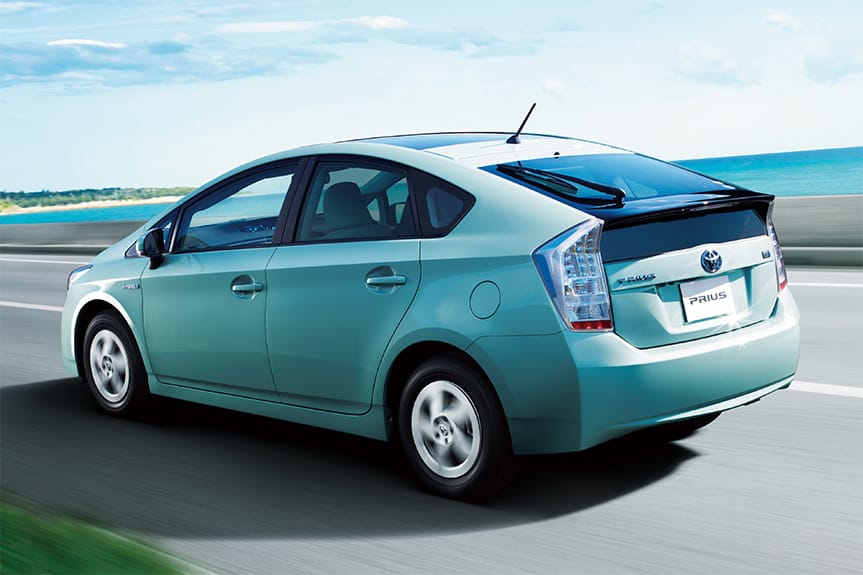
The Prius often gets discussed mainly in terms of fuel savings, but that focus can obscure another major strength: long-term ownership cost. For years, some shoppers worried that hybrid systems would automatically mean expensive maintenance and repair. The Prius has done more than almost any vehicle to prove that concern overstated.
Part of the Prius’s low maintenance burden comes from Toyota’s approach to hybrid engineering. The company built the Prius around efficiency, durability, and mainstream use rather than around exotic complexity for its own sake. Over time, the model has demonstrated that hybrid ownership does not have to mean high maintenance. In some cases, the opposite can be true. Regenerative braking can reduce wear on brake components. The engine’s duty cycle can be gentler in some conditions. And the vehicle’s entire identity is built around efficient operation.
That does not mean the Prius is maintenance-free. No vehicle is. But it does mean that the old fear—“hybrid equals expensive to maintain”—has been challenged very effectively by this car’s real-world record.
MSRP: $24,525
10-Year Average Maintenance/Repair Costs: $4,098
Maintenance Cost vs. New Price: 16.7%
When you combine those low maintenance costs with the Prius’s fuel-saving nature, it becomes one of the strongest long-term value plays in the market. It does not just save money at the pump. It also stays surprisingly gentle on the service budget.
4. Toyota Camry
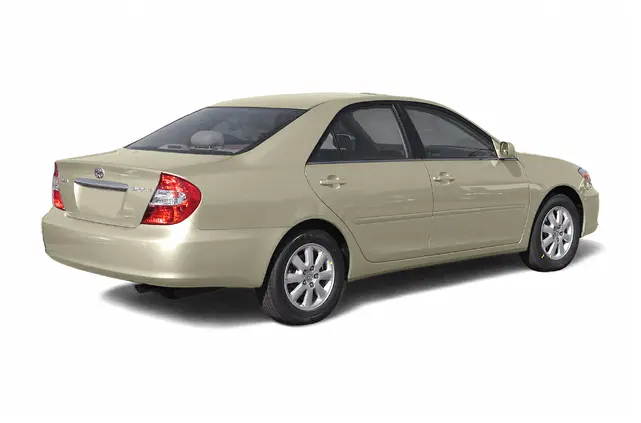
The Toyota Camry has become almost symbolic of dependable ownership, and the maintenance numbers support that reputation. As a midsize sedan, it offers more space and comfort than the Corolla while staying impressively affordable to maintain over ten years. That balance is exactly why it has remained a favorite for so long.
From a service perspective, the Camry benefits from mature engineering and massive parts availability. It is the kind of car nearly every repair shop understands, which helps keep labor friction low. Parts are easy to source, procedures are familiar, and the platform has a long history of being mechanically approachable. That matters a lot over ten years, because maintenance cost is not just about how often repairs happen. It is also about how painful each repair becomes when it does happen.
The Camry is especially appealing to buyers who want to move beyond economy-car size without stepping into premium-car ownership headaches. It delivers that middle ground extremely well.
MSRP: $25,045
10-Year Average Maintenance/Repair Costs: $4,211
Maintenance Cost vs. New Price: 16.8%
Those numbers make the Camry one of the clearest examples of why Toyota continues to dominate long-term ownership-cost discussions. It offers real daily livability without punishing the owner for choosing comfort over the absolute lowest purchase price.
5. Toyota Avalon
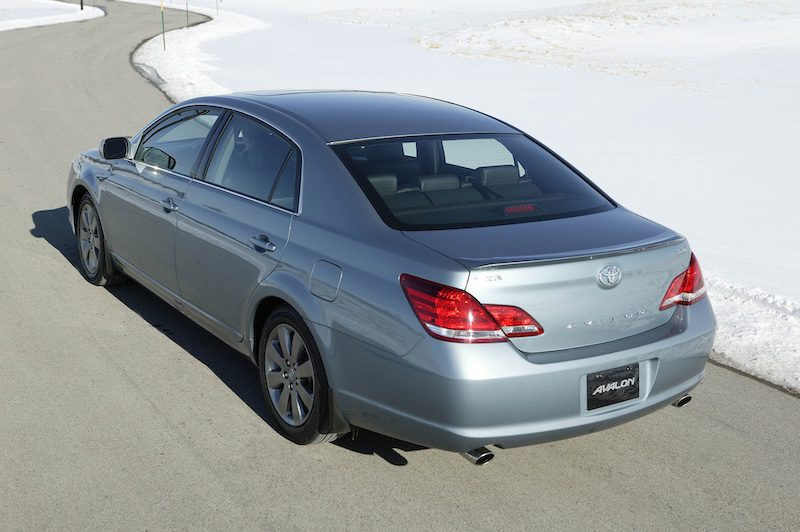
The Avalon is one of the most impressive entries on the affordable side because it shows that lower maintenance cost is not limited to small, stripped-down economy cars. The Avalon is a larger, more comfort-oriented sedan with a near-luxury personality, yet it still lands among the least expensive vehicles to maintain over ten years.
This is where Toyota’s engineering philosophy really shows. The Avalon does not ask owners to choose between comfort and financial sanity the way many near-luxury sedans do. It offers size, refinement, and long-term calm. Buyers who want a sedan that feels more substantial than a Corolla or Camry but still avoids the service drama of European premium brands should pay close attention to what the Avalon has historically delivered.
Another reason this ranking matters is percentage. Not only is the Avalon’s total maintenance cost low in absolute terms, it is extremely low relative to what the vehicle cost new. That makes it one of the best-value large sedans in long-term ownership terms.
MSRP: $36,125
10-Year Average Maintenance/Repair Costs: $4,409
Maintenance Cost vs. New Price: 12.2%
That 12.2 percent figure is exceptional. It means the Avalon offers a higher-end ownership experience without demanding higher-end maintenance spending. Few cars manage that balance as well.
6. Honda Fit
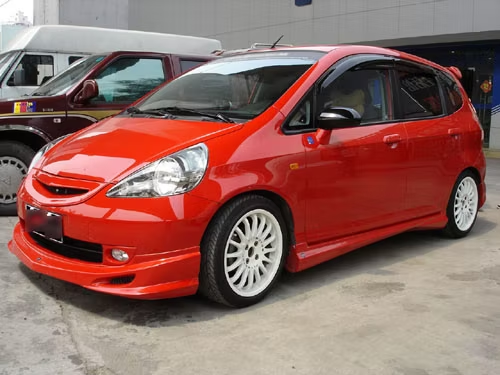
The Honda Fit has always had a reputation for punching above its weight. Buyers often talk about the interior packaging, clever cargo flexibility, and city-friendly size. What deserves equal attention is the fact that it stays relatively inexpensive to maintain over a decade. That is one reason the Fit developed such a loyal following.
The Fit succeeds because it follows many of the same principles that make Toyota’s smaller cars so financially appealing. It is efficient, well packaged, generally reliable, and not overloaded with unnecessary complexity. At the same time, it delivers more usefulness than its exterior size suggests, which makes the low maintenance cost feel even more valuable. Owners are not just saving money. They are getting a genuinely versatile car while doing it.
Its ratio is not as low as some of the Toyotas, partly because its original MSRP was lower, but the raw ten-year cost remains impressively reasonable. That is what matters most for practical ownership.
MSRP: $16,190
10-Year Average Maintenance/Repair Costs: $5,033
Maintenance Cost vs. New Price: 31.0%
In absolute dollars, the Fit remains one of the most economical vehicles to keep on the road. For buyers who value utility and low ownership stress in a small package, it continues to make a very strong case.
7. Mitsubishi Mirage
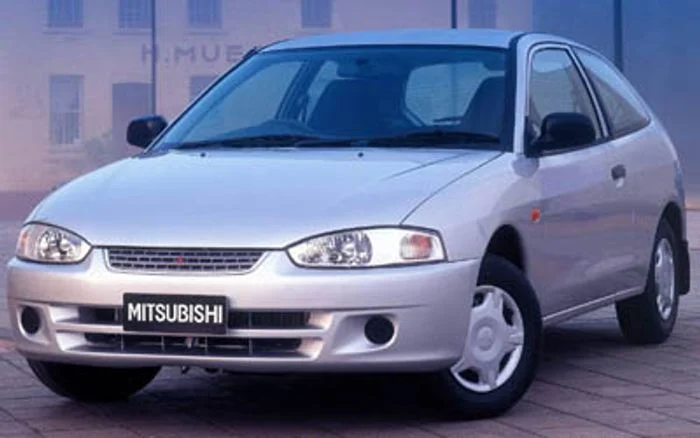
The Mitsubishi Mirage has never been a darling of enthusiast reviews, and it has often been criticized for modest power, simple interior design, and basic refinement. But if the question is affordability, the Mirage deserves more respect than it usually gets. It is one of the few vehicles that stays true to its budget mission in both purchase price and long-term maintenance cost.
That does not mean it is the right choice for every buyer. It is still a very basic car, and buyers looking for strong acceleration, upscale materials, or sophisticated highway manners may quickly outgrow it. But when judged on straightforward cost control, the Mirage is hard to dismiss. It is exactly the kind of car that makes sense when a buyer’s top priorities are low monthly burden and low ownership risk.
Its ratio looks somewhat high because the MSRP is so low, but again, the more important story here is the absolute ten-year maintenance figure. That number stays low enough to make the Mirage one of the cheapest mainstream vehicles to keep alive over time.
MSRP: $14,295
10-Year Average Maintenance/Repair Costs: $5,062
Maintenance Cost vs. New Price: 35.4%
The Mirage is not glamorous, but glamour is not the point. For buyers who simply need low-cost transportation and are realistic about what the car is, the maintenance profile remains one of its strongest arguments.
8. Honda Civic
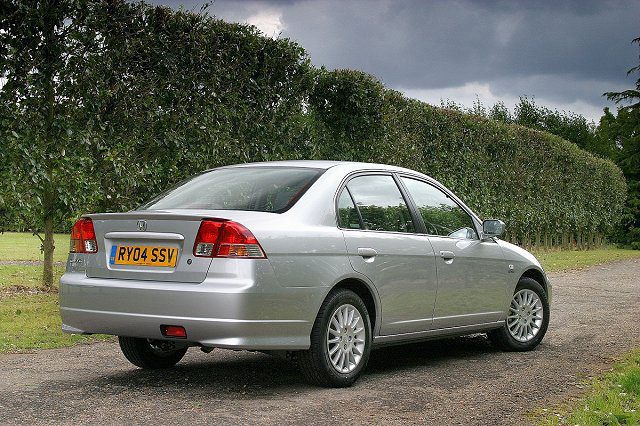
The Honda Civic has one of the broadest reputations in the industry because it has spent decades satisfying very different types of buyers. It works as a commuter car, a student car, a first car, and in some trims even an enthusiast platform. What makes that versatility so powerful is that it comes with impressively low long-term maintenance costs.
The Civic’s strength lies in balance. It is more engaging than many of the most appliance-like compact cars, but it still keeps ownership reasonably inexpensive. That balance is difficult to achieve. Some cars are cheap but dull. Others are fun but financially exhausting. The Civic traditionally finds a middle ground that appeals to a huge number of people, which is one reason it has maintained popularity for so long.
Mechanically, the Civic also benefits from widespread familiarity. Independent shops know it well, parts are widely available, and the platform has a history of strong durability when maintained properly. That reduces not just repair cost, but repair anxiety. There is comfort in owning a car that almost any shop can handle confidently.
MSRP: $21,250
10-Year Average Maintenance/Repair Costs: $5,250
Maintenance Cost vs. New Price: 24.7%
The Civic’s numbers reinforce why it remains a benchmark in the compact class. It is not just easy to recommend because it drives well or holds value. It is easy to recommend because it tends to stay financially reasonable over the long haul too.
9. Honda Insight
The Honda Insight lives in an interesting space because it has often been overshadowed by the Prius in the hybrid conversation. Yet when it comes to maintenance affordability, the Insight holds up extremely well. Like the Prius, it helps owners at the pump, but it also avoids becoming a financial burden in the service bay.
This matters because hybrid skepticism still exists. Many buyers remain nervous about long-term hybrid ownership, worried that electrification automatically means expensive upkeep. The Insight, like the Prius, demonstrates that this fear is often exaggerated when the hybrid system comes from an automaker with strong engineering discipline and a mainstream durability mindset.
The Insight also benefits from Honda’s broader maintenance philosophy. The company tends to build vehicles that are relatively easy to live with, widely supported, and engineered with everyday ownership in mind. When those values are applied to a hybrid, the result can be very compelling for buyers who want efficiency without long-term cost drama.
MSRP: $23,130
10-Year Average Maintenance/Repair Costs: $5,310
Maintenance Cost vs. New Price: 22.9%
Those figures confirm that the Insight deserves to be taken seriously not just as a fuel saver, but as a low-maintenance ownership proposition. For the right buyer, it delivers two kinds of economy at once.
10. Nissan Versa
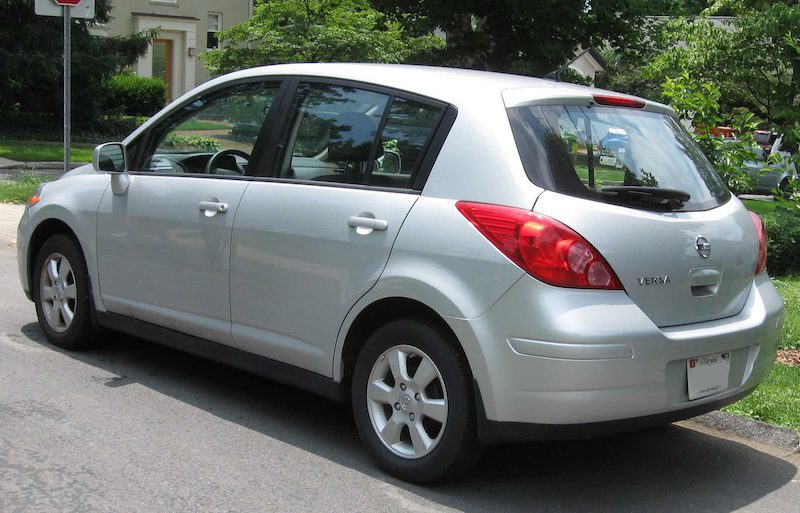
The Nissan Versa rounds out the list and represents a slightly different kind of value. It does not enjoy the same near-universal long-term trust that Toyota and Honda command, but in raw ten-year maintenance cost, it still lands among the least expensive vehicles to own. That alone makes it worth considering for budget-focused buyers.
Part of the Versa’s strength lies in simplicity and size. Smaller mainstream cars with modest ambitions often avoid some of the expensive maintenance patterns that burden more complex vehicles. When parts remain accessible and the engineering stays relatively straightforward, routine ownership can remain manageable.
That said, a smart buyer should still distinguish between low maintenance cost and overall best ownership bet. The Versa’s presence here means it can be inexpensive to maintain, but buyers should still evaluate model-year-specific reliability, drivetrain reputation, and transmission choices carefully, especially in the used market. Maintenance affordability is a strength. It is not the whole story.
MSRP: $14,980
10-Year Average Maintenance/Repair Costs: $5,340
Maintenance Cost vs. New Price: 35.6%
The ratio is not especially flattering because the MSRP is so low, but the total dollars remain modest enough to earn the Versa a place on this list. For shoppers whose budget is tight, that still matters a great deal.
What the Least-Expensive List Tells You
The low-cost side of the rankings tells an equally clear story. Toyota and Honda dominate because they have spent decades building mainstream vehicles around predictable long-term ownership. Their engineering philosophy tends to favor proven solutions, wide serviceability, strong parts support, and fewer unnecessary surprises. That does not make every model flawless, but it does create the kind of consistency that keeps maintenance cost down over ten years.
Another theme is that cars designed around efficiency and practicality often age more gracefully than cars designed around image or complexity. The Yaris, Corolla, Prius, Fit, Civic, and Insight are not trying to be everything at once. They are focused vehicles with clear priorities. That tends to lead to fewer ownership-cost traps over time.
The list also shows that bigger or more comfort-focused cars can still be affordable if they come from the right engineering culture. The Camry and Avalon prove that low maintenance cost is not only a subcompact story. Buyers do not necessarily have to shrink into the smallest possible car to get a financially smart ownership experience.
And finally, this list reminds us that “cheap to buy” and “cheap to maintain” are not always the same thing—but when they overlap, the value can be outstanding. That is exactly why vehicles like the Yaris, Corolla, and Civic remain such strong choices for practical owners.
How Smart Buyers Should Use This Information
Maintenance-cost data is most useful when it becomes part of a broader buying strategy. Do not use it in isolation. Instead, combine it with reliability history, depreciation patterns, insurance rates, fuel economy, and your own driving needs. A car that is very cheap to maintain but wrong for your lifestyle is not a smart buy. Likewise, a car that is expensive to maintain may still be worth it if you understand the costs and value what it gives back in performance, luxury, or capability.
What this data should do is protect you from unrealistic expectations. If you are shopping for a used BMW X3 because the secondhand price looks tempting, you now know not to assume the ownership cost became budget-friendly just because the first owner absorbed the depreciation. If you are considering a Toyota Camry or Corolla, you can move forward with more confidence that the lower long-term maintenance burden is part of what makes those vehicles such perennial recommendations.
This information is also helpful when comparing used cars that seem equally attractive on the surface. Two vehicles may cost the same today, but if one is statistically likely to need far less maintenance over the next decade, that difference should influence the purchase decision. Used-car shopping is often won not by finding the lowest price, but by finding the strongest ownership value.
If you are shopping on a tight budget, this becomes even more important. The lower your financial margin, the less tolerance you have for service surprises. In that situation, choosing a proven low-maintenance model can make the difference between stable transportation and a constant cycle of repair bills.
Final Thoughts
Used car shopping often starts with excitement and optimism. The prices look manageable, the options seem endless, and every listing carries the possibility of finding “the deal.” But the smartest buyers know that purchase price is only the beginning. Maintenance cost shapes the real ownership experience, and over ten years, it can reveal which vehicles are genuine values and which ones quietly become money drains.
The expensive-maintenance list shows that premium badges and some mainstream crossovers or trucks can ask for far more over time than buyers expect. BMW’s presence is no accident, nor is the repeated appearance of certain Jeep, Dodge, and Ram models. On the other side, Toyota and Honda continue to prove that long-term ownership discipline matters. Their vehicles do not just get buyers on the road affordably. They tend to keep them there without constant financial punishment.
The main lesson is not that you should only buy the cheapest car to maintain. It is that you should never confuse a low purchase price with low ownership cost, and you should never assume a familiar or attractive brand automatically delivers long-term value. Study the total picture. Think about ten years, not ten minutes. The best car deal is not always the one that looks cheapest on the sales contract. It is the one that still feels smart after years of maintenance, repairs, and real-life use.
If you shop with that mindset, this list becomes more than trivia. It becomes one of the most practical tools you can use to avoid buying the wrong car for the life you actually plan to live with it.