
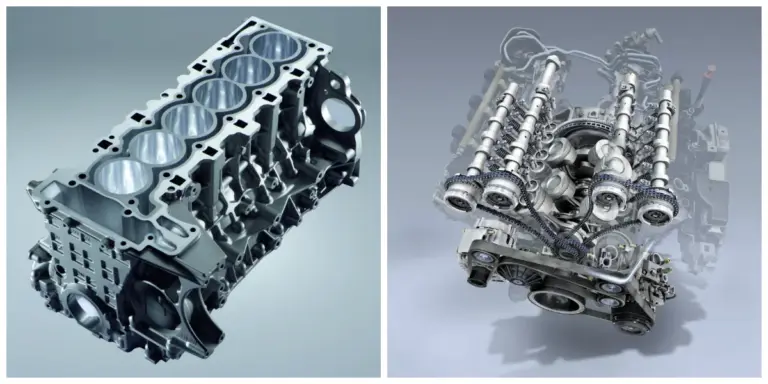
Walk into any car lot today, and chances are most vehicles you see are running on inline 4-cylinder engines. They are everywhere. But look a little closer, and you will find a good number of cars packing larger powerplants with 6, 8, 10, or even 12 cylinders. Some exotic machines push that number even higher. Among these bigger engines, the 6-cylinder is by far the most common. But here is the thing: not all 6-cylinder engines are created equal. They come in different configurations, and each has its own personality. So which one actually works better? Which design is the most efficient 6-cylinder engine? That is what we are going to unpack here.
If you have ever wondered why some cars sound different, feel smoother, or accelerate harder than others even with the same cylinder count, the answer often lies in how those cylinders are arranged. The two main types you will encounter are the inline 6 and the V6. Both have six pistons doing the same job, but the way they are laid out changes everything about how the engine behaves, how much it costs to build, and what kind of vehicle it is best suited for.
Let us walk through both configurations, piece by piece, and figure out what makes each one tick. By the end, you will have a much clearer picture of why certain manufacturers swear by one layout over the other, and which might be the right fit depending on what you need from your vehicle.
What Makes the Inline 6 Engine Stand Out
The inline 6 engine, sometimes called a straight-six, is exactly what it sounds like. All six cylinders are lined up in a single row. Picture a long, narrow block with pistons firing one after another in a straight line. This design has been around for decades and has earned a reputation for being smooth, reliable, and surprisingly sophisticated despite its simplicity. BMW is probably the most famous advocate of this layout, refusing to abandon it even when most other manufacturers switched to V6s.
But why does BMW stick with it? What is so special about lining up six cylinders in a row? Let us break down the real advantages.
It Costs Less to Build
An engine block with six pistons arranged in a straight line is simpler to manufacture than a V-shaped engine. The casting mold is straightforward. Whether the block is made from steel or aluminum, filling it with material is easier and faster. You are dealing with one continuous piece, not two separate cylinder banks that need to be perfectly aligned.
That said, do not expect this cost savings to trickle down to the price tag on the car. Manufacturers pocket that difference more often than they pass it along to you. But from an engineering standpoint, the inline 6 is cheaper to produce, and that matters when you are building engines by the thousands.
Torque Where You Need It Most
Because all six pistons are aligned and the engine is longer, inline 6 engines tend to produce more torque across a wider range of engine speeds compared to a V6. This is not just a number on a spec sheet. It translates to real-world pulling power, especially at mid-range RPMs where most driving happens.
That is why you see inline 6 engines in off-road vehicles, trucks, and heavy-duty machines. They need grunt at any speed, whether crawling over rocks or towing a trailer up a steep grade. Over the years, many manufacturers have chosen the inline 6 specifically for this characteristic. It just delivers power in a way that feels strong and consistent, not peaky or hard to access.
Simplicity Is a Strength
An inline 6 engine has only one cylinder head. Compare that to a V6, which has two. That means half the number of camshafts, one head gasket instead of two, and a simpler path for coolant to travel through the engine. Fewer parts mean fewer potential points of failure.
This simpler design brings some nice perks. The timing belt or chain is shorter, which makes replacement easier and cheaper. Lubrication is more straightforward because oil does not have to split and feed two separate heads. Everything is in a line, so the oil pump has an easier job keeping all the moving parts happy.
Naturally Balanced and Smooth
Here is where the inline 6 really shines. By design, it is a naturally balanced engine. The pistons move up and down along a single axis, and the firing order is arranged so that forces cancel each other out. This is not something you achieve with counterweights or fancy engineering tricks. It is just how the geometry works.
The result? Less vibration. A quieter engine. A smoother ride. If you have ever driven a car with a well-tuned inline 6, you know what I mean. It hums along with a kind of refinement that is hard to match. There is a reason enthusiasts love this engine layout. It just feels right.
Where the Inline 6 Falls Short
No engine is perfect. As much as the inline 6 has going for it, there are some real drawbacks that have pushed many automakers away from this configuration. Let us talk about the downsides.
Front-Wheel Drive? Forget About It
The inline 6 is a long engine. That length makes it nearly impossible to mount transversely, which is what you need for a front-wheel-drive car. There is just no room next to the gearbox and drivetrain components.
BMW gets around this by using rear-wheel drive or all-wheel drive, running a driveshaft from the transmission to the front axle when needed. Volvo tried to make front-wheel-drive work with an inline 6, but the results were not great. The car ended up nose-heavy, and the handling suffered. So if you want a front-wheel-drive vehicle, you are pretty much out of luck with an inline 6.
RPM Ceiling Is Lower
That long crankshaft in an inline 6 spins through seven main bearings. A V6, by comparison, only uses four. More bearings mean more friction, and more friction means the engine does not rev as freely.
There is also the issue of airflow. The pistons at the far end of the engine have a harder time getting fresh air because they are so far from the intake. This limits how high the engine can rev without running into performance or reliability issues. If you are building a race car or something that needs to scream at high RPMs, the inline 6 is not your best bet.
Thirstier Than It Needs to Be
Because of that internal friction and the difficulty getting air to all six cylinders efficiently, inline 6 engines tend to drink a bit more fuel than a comparable V6. Modern technology has helped. Turbocharging and direct fuel injection have closed the gap quite a bit. But all else being equal, the inline 6 is usually at a disadvantage when it comes to fuel economy.
Cooling Can Be a Challenge
Because the engine is so long, the last two cylinders sometimes do not get as much coolant flow as the first ones. The water pump has to push coolant a long way, and by the time it reaches the far end, it might not be as effective. This can lead to uneven temperatures and premature wear on those rear cylinders.
Modern inline 6 engines have addressed this with better cooling system designs, including dual coolant feeds that attack the problem from both ends. But it is still something engineers have to work around, whereas a shorter V6 does not face this issue to the same degree.
Torque Drops Off at High RPM
While the inline 6 delivers strong torque in the low and mid-range, it tends to fall off at high engine speeds. That long crankshaft and added friction start to work against you when you are pushing the engine hard. Power and torque both taper off, which is the opposite of what you want in a high-performance application.
So while the inline 6 is great for everyday driving and heavy-duty work, it is not the go-to choice if you are chasing top-end horsepower.
Why the V6 Has Taken Over
The V6 engine splits those six cylinders into two banks of three, arranged in a V shape. This makes the engine much shorter and more compact. That compactness is the key to most of its advantages. Let us look at why so many manufacturers have switched to this layout.
Works With Any Drivetrain Layout
Because a V6 is compact, you can mount it in just about any configuration. Front-wheel drive, rear-wheel drive, all-wheel drive. It does not matter. The engine fits.
You will find V6 engines in front-wheel-drive sedans like the Honda Legend and Toyota Camry, sports cars with rear-wheel drive, and SUVs with all-wheel drive. That versatility makes the V6 a favorite among manufacturers who want one engine platform to serve multiple vehicle types. It saves money and simplifies production.
Revs Higher, Faster
A V6 has a shorter crankshaft that spins on just four main bearings. The pistons also have a shorter stroke. Both of these factors mean less friction and less rotational mass. The engine can spin faster, rev higher, and respond more quickly to throttle input.
This is why performance cars and racing applications often favor the V6. It is not about torque at low speeds. It is about making peak power at high RPM. If you want horsepower, the V6 delivers.
Less Internal Friction
With fewer main bearings and shorter piston travel, a V6 engine has significantly less internal friction than an inline 6. That means better fuel economy, lower operating temperatures, and quicker acceleration. The engine does not have to work as hard to overcome its own internal resistance, so more of the power it makes actually reaches the wheels.
Fits in Tight Spaces
A V6 is often more compact than even some 4-cylinder engines. That small footprint gives designers a lot of flexibility. They can place the engine lower in the chassis for a lower center of gravity, move it forward or backward to balance weight distribution, or tuck it into a smaller engine bay to free up space for crumple zones and safety features.
This is a huge advantage in modern car design, where every millimeter counts.
Easier to Boost
Because the intake path is shorter and all six cylinders are close together, it is easier to add a turbocharger or supercharger to a V6. Air reaches all the cylinders evenly, and the compact design makes plumbing simpler.
Look at cars like the Nissan GT-R. That twin-turbo V6 makes absurd power in a relatively small package. You can supercharge an inline 6, but it is more complex and expensive. The V6 just lends itself better to forced induction.
Lighter Overall
Even though a V6 has two cylinder heads, it is usually lighter than an inline 6. The block is smaller, the crankshaft is shorter, and the overall package is more compact. Less weight means better acceleration, better handling, and better fuel economy.
For a performance car, every kilogram matters. The V6 gives you six cylinders without the weight penalty of a longer engine.
Cooling Is Simple
Because the engine is short, the water pump can easily circulate coolant to all six cylinders. You do not have the uneven cooling issues that can plague an inline 6. The antifreeze takes a shorter path, temperatures stay more uniform, and the engine runs more consistently across all operating conditions.
This is especially important in hot climates or under heavy load. The V6 just handles heat better.
The Downsides of the V6
For all its advantages, the V6 is not without its flaws. Let us be honest about where this engine layout struggles.
More Complex to Build
A V6 has two cylinder heads, often two intake manifolds, and twice as many camshafts as an inline 6. That complexity costs money. It also means more parts that can potentially fail, though to be fair, each part is under less stress because the load is split between two banks.
Still, if you are comparing manufacturing costs, the V6 is more expensive to produce. That can translate to higher repair costs down the road, especially if you need to replace a head gasket or camshaft.
Noisier and More Vibration
A V6 is inherently less balanced than an inline 6. The pistons push and pull on four different axes: up, down, left, and right. That creates vibrations that are harder to cancel out. You can use balance shafts and engine mounts to tame it, but it is never as smooth as an inline 6.
Over time, those vibrations can lead to wear on engine mounts, exhaust hangers, and other components. It is not a dealbreaker, but it is something to be aware of.
Weak Low-End Torque
The V6 is built for high RPM performance, not low-end grunt. If you are driving normally, puttering around town or cruising on the highway, the engine can feel a bit flat. You have to really push it to wake it up.
That is fine for a sports car, but it is not ideal for a truck or SUV that needs torque on demand. To get the most out of a V6, you often have to rev it higher, which can hurt fuel economy and make the engine feel less responsive in everyday driving.
So Which One Is Actually Better?
Here is the truth: there is no universal answer. Both engines are good at different things. The inline 6 is smoother, simpler, and better at producing torque across a wide range. The V6 is more compact, more versatile, and better at making high-RPM power.
If you are buying a luxury sedan or a truck that needs to tow, the inline 6 is probably the better choice. It feels refined, pulls strong, and lasts a long time with proper maintenance. BMW has stuck with it for a reason.
But if you need a flexible engine that can fit into different types of vehicles, or you want something that revs high and makes a lot of horsepower, the V6 is the way to go. It is no accident that most manufacturers have moved to this layout. It just works better for the modern automotive landscape.
A Quick Comparison Table
| Feature | Inline 6 | V6 |
|---|---|---|
| Compactness | Long and narrow | Short and wide |
| Drivetrain compatibility | RWD or AWD only | FWD, RWD, or AWD |
| Smoothness | Naturally balanced, very smooth | Less balanced, more vibration |
| Torque delivery | Strong low to mid-range | Weaker low-end, strong at high RPM |
| Fuel economy | Slightly worse | Slightly better |
| Manufacturing cost | Cheaper | More expensive |
| Ease of forced induction | Harder | Easier |
| Weight | Heavier | Lighter |
| Cooling difficulty | More challenging | Easier |
| High RPM capability | Limited | Excellent |
Real-World Examples
Let us look at how these engines play out in actual cars you can buy or have seen on the road.
Take the BMW 3 Series with an inline 6. It is smooth, quiet, and delivers power in a very linear way. You do not have to wring it out to feel the torque. It just pulls cleanly from low RPMs all the way to redline. That makes it a joy to drive on back roads or highways. The engine feels effortless.
Now compare that to a Nissan 370Z with a V6. That engine loves to rev. It does not have the same low-end punch, but when you get it above 4,000 RPM, it comes alive. The sound changes, the acceleration sharpens, and the whole car feels more aggressive. It is a different kind of fun.
Both engines are great. They are just great in different ways.
Why BMW Is the Last One Standing
BMW is the only major manufacturer still producing inline 6 engines in significant numbers. Mercedes gave it up. Nissan gave it up. Toyota moved on. So why does BMW stick with it?
Part of it is tradition. The inline 6 has been a part of BMW’s identity for decades. But it is not just nostalgia. BMW has invested heavily in making the inline 6 work in modern cars. They have developed modular engine platforms, improved cooling systems, and integrated turbocharging to keep the engine competitive.
The result is an engine that still feels special. It is smooth, powerful, and refined in a way that a V6 just is not. And for BMW’s customer base, that matters. People who buy a BMW expect a certain driving experience, and the inline 6 delivers it.
But make no mistake, this comes at a cost. BMW has to spend more on engineering and manufacturing to keep the inline 6 viable. That is part of why their cars are more expensive. You are paying for that smooth six-cylinder hum.
The Economics of Engine Design
Car manufacturers are businesses. They make decisions based on cost, efficiency, and what the market wants. The shift from inline 6 to V6 was not just about performance. It was about economics.
A V6 fits in more vehicles. It is easier to package in a front-wheel-drive car, which is what most people buy. It is lighter, which helps meet fuel economy standards. And because it is more compact, it allows designers to build safer, more aerodynamic cars.
The inline 6, for all its virtues, does not fit that mold. It is harder to package, heavier, and less flexible. So even though it is a better engine in some ways, it does not make business sense for most manufacturers.
BMW can afford to be different because their customers are willing to pay for it. But for mass-market brands, the V6 is just the smarter choice.
Forced Induction Changes the Game
Turbocharging and supercharging have shifted the playing field. They allow smaller engines to make more power, and they benefit the V6 more than the inline 6.
A turbocharged V6 can make as much power as a naturally aspirated V8, sometimes more. The compact design makes it easier to route exhaust gases to the turbo, and the shorter intake path means better throttle response.
You can turbocharge an inline 6, and some manufacturers do. But it is more expensive and complex. The V6 just lends itself better to modern performance tuning.
What About Reliability?
Both engines can be reliable if they are well-designed and properly maintained. The inline 6 has fewer parts, which theoretically means fewer things to break. But the V6 splits the load between two cylinder banks, so each part is under less stress.
In practice, reliability comes down to the specific engine, not the layout. There are bulletproof V6 engines and problematic inline 6 engines, and vice versa. Do your research on the specific model you are looking at, and do not assume one layout is automatically better.
The Future of Six-Cylinder Engines
Honestly, both layouts are on borrowed time. The automotive world is moving toward electrification. Hybrid powertrains, plug-in hybrids, and fully electric vehicles are taking over. Six-cylinder engines, whether inline or V-shaped, are becoming a niche product.
But as long as there are enthusiasts who care about driving feel, sound, and character, there will be a place for these engines. BMW will probably keep making inline 6 engines as long as they can. And performance brands will keep tuning V6 engines to make insane amounts of power.
The inline 6 and the V6 represent two different philosophies. One values smoothness and simplicity. The other values flexibility and performance. Both have earned their place in automotive history.
Which One Should You Choose?
If you are shopping for a car and trying to decide between an inline 6 and a V6, think about what you actually need.
Do you want a smooth, refined engine that pulls strong at any speed and feels effortless? Go with the inline 6. You will pay more, but the driving experience is worth it.
Do you want a versatile, high-revving engine that makes a lot of power and fits in a wide variety of vehicles? Go with the V6. It is the practical choice, and it still delivers plenty of performance.
There is no wrong answer. It just depends on what you value.
Final Thoughts
The inline 6 is a masterpiece of balance and simplicity. It is smooth, torquey, and has a character that is hard to replicate. But it is also long, heavy, and limited in where it can be used.
The V6 is compact, flexible, and powerful. It fits into almost any vehicle, revs high, and responds well to tuning. But it vibrates more, costs more to build, and does not have the same low-end pull.
If you ask me which one is more efficient, I would say it depends on your definition of efficiency. If you mean fuel economy and packaging, the V6 wins. If you mean smoothness and torque delivery, the inline 6 takes it.
But here is what really matters: both engines are good. Both have a place. And both are worth appreciating while they are still around. Because in another ten or twenty years, we might be looking back on six-cylinder engines the same way we look at carburetors and manual chokes today. They will be a memory, a piece of automotive history that people talk about with a little bit of nostalgia.
So if you have the chance to drive a car with a great inline 6 or a well-tuned V6, do it. Feel the difference. Understand what makes each one special. Because that is what being a car enthusiast is all about.