
Your engine’s ignition system has one fundamental job: produce a spark at exactly the right moment, in exactly the right cylinder, with enough energy to ignite the compressed air-fuel mixture. The ignition coil is the component that makes that spark possible. When it starts to fail, the consequences ripple through your entire engine, rough running, reduced power, increased fuel consumption, and eventually, cylinders that simply stop firing altogether.
Understanding what an ignition coil does, how to recognise when one is failing, and how to test and replace it can save you a significant amount of money compared to handing the car over to a workshop and asking them to figure it out for you.
What an Ignition Coil Does and How It Works
Your car battery produces 12 volts of direct current. A spark plug needs somewhere between 15,000 and 30,000 volts to fire reliably across its electrode gap under the compression pressures inside a running engine. The ignition coil is the device that bridges that enormous voltage gap.
In engineering terms, the ignition coil is a pulse step-up transformer. It has two windings of wire wrapped around an iron core:
- The primary winding consists of a relatively small number of turns (typically around 100 to 150) of thick wire. This is the low-voltage side of the transformer, connected to the 12-volt battery circuit.
- The secondary winding consists of a very large number of turns (sometimes up to 30,000) of fine wire. This is the high-voltage side, connected ultimately to the spark plug.
Here is the sequence of events when the coil fires:
- The ECU or ignition module closes the primary circuit, allowing 12-volt current to flow through the primary winding.
- This current builds a magnetic field inside the iron core. Energy accumulates in this field.
- At precisely the right moment for ignition, the primary circuit is interrupted. The magnetic field collapses rapidly.
- The collapsing field induces a high-voltage pulse in the secondary winding-up to 25,000 to 30,000 volts, through electromagnetic induction.
- This high-voltage pulse travels to the spark plug, jumps the electrode gap as a spark, and ignites the compressed air-fuel mixture.
This cycle happens thousands of times per minute in a running engine. The precision and reliability required from such a small component under these conditions is considerable, which is why ignition coils eventually wear out and fail.
Key Technical Characteristics of Ignition Coils
- Primary inductance: The coil’s capacity to store magnetic energy in the primary winding before release
- Transformation ratio: How many times the input voltage is multiplied, this determines whether the coil can generate sufficient voltage to reliably fire the spark plug under load
- Winding resistance: Primary windings typically measure 3 to 3.5 ohms; secondary windings typically measure 5,000 to 9,000 ohms. These values are used during testing to confirm coil condition.
- Spark energy: The total energy delivered to the spark plug, measured in millijoules. Higher energy means more reliable ignition across a wider range of conditions.
- Breakdown voltage: The minimum voltage the coil must generate to reliably bridge the spark plug electrode gap
Where Is the Ignition Coil Located?
The answer depends on the type of ignition system your vehicle uses.
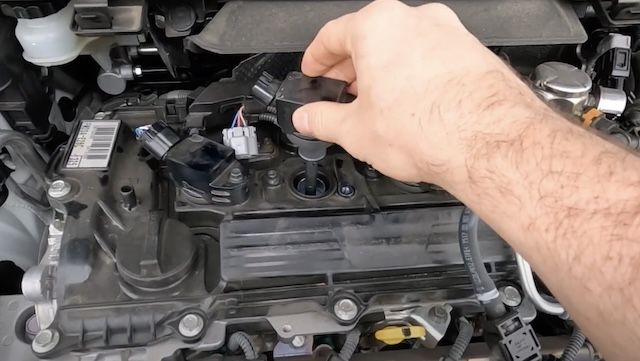
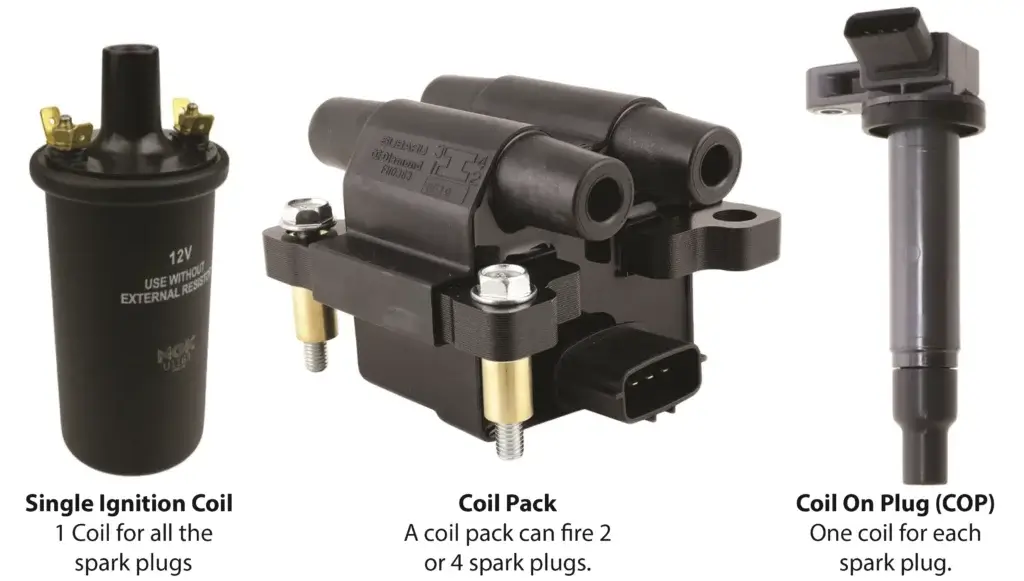
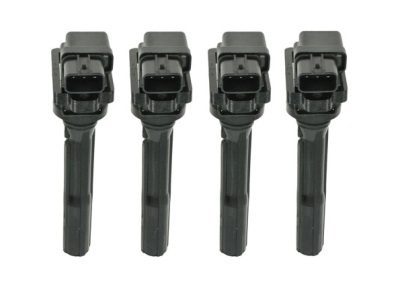
In modern vehicles with coil-on-plug (COP) systems, each spark plug has its own dedicated ignition coil mounted directly on top of it, sitting in the valve cover. These individual coils are the most common design in engines manufactured from the late 1990s onward. Their advantage is eliminating the need for high-voltage spark plug wires, which were a common failure point in older systems.
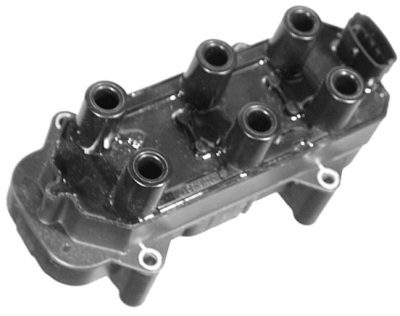
Older vehicles use either a single central coil that feeds high voltage to a distributor (which then routes it to each plug in firing order sequence), or a coil pack, a single unit containing two or more coils serving multiple cylinders. These are typically mounted on the side of the engine block or on the valve cover.
The Three Main Types of Ignition Coils
1. Conventional Single Coil
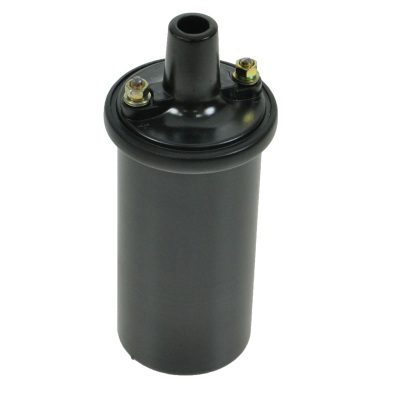
The original ignition coil design, a single coil connected to a distributor that mechanically sequences the high-voltage pulses to each cylinder. The secondary winding sits inside the primary, connected at one end to the low-voltage circuit and at the other to the high-voltage output terminal. These are still found on older vehicles but have been largely replaced by more sophisticated designs in modern applications.
2. Individual Coil-on-Plug (COP)
The dominant design in modern engines. Each cylinder has its own coil mounted directly onto the spark plug, eliminating distributor and high-voltage wires entirely. Individual coils differ from the conventional design in that the primary winding sits inside the secondary rather than outside it, and they typically incorporate two iron cores, one internal and one external, for improved magnetic efficiency. A built-in diode prevents high-voltage feedback. All COP coils must be synchronised to the engine’s camshaft position so they fire in the correct sequence.
3. Dual-Output (Wasted Spark) Coils
These coils have two high-voltage output terminals and fire two spark plugs simultaneously. One plug fires at the end of the compression stroke, a productive spark that ignites the mixture. The other fires during the exhaust stroke of a paired cylinder, a wasted spark that does no useful work but costs very little energy. This design eliminates the distributor while serving two cylinders per coil. Four-cylinder engines often use a coil pack containing two of these dual-output units to serve all four cylinders.
Oil-Filled vs. Dry Coils
Traditional coil designs were oil-filled, the oil inside the metal housing prevented the windings from overheating under sustained use. Most modern coils use a “dry” construction where the windings are encapsulated in an epoxy compound that simultaneously protects against moisture, dirt, and mechanical vibration while also serving as a cooling medium. Dry coils are lighter, more compact, and generally more reliable than their oil-filled predecessors.
How Long Do Ignition Coils Last?
Under normal operating conditions, modern ignition coils are typically rated for approximately 60,000 to 80,000 kilometres (37,000 to 50,000 miles). In practice, many coils last considerably longer on well-maintained vehicles. Others fail well before this threshold if subjected to adverse conditions.
The main causes of premature ignition coil failure include:
- Internal short circuit in the windings: The fine wire of the secondary winding can break down its insulation over time, causing internal short circuits that reduce the coil’s output voltage
- Overheating: Coils generate heat during operation. A coil mounted directly on a cylinder head is exposed to engine heat in addition to its own thermal output. Inadequate cooling accelerates insulation breakdown.
- Vibration fatigue: Extended exposure to engine vibration can weaken internal connections and crack the epoxy housing
- Overcharging time: When a battery is in poor condition and the charging system struggles to maintain voltage, the coil’s primary circuit remains energised for longer periods, generating excessive heat and stress
- Oil or moisture contamination: Engine oil leaking from valve cover gaskets is a particularly common coil killer in COP systems, the coils sit in wells in the valve cover, and a leaking gasket fills those wells with oil over time
- Worn spark plugs: A spark plug with an excessively large electrode gap forces the ignition coil to work harder to bridge it, significantly increasing thermal stress and shortening coil life
11 Warning Signs of a Failing Ignition Coil
1. Check Engine Light Illuminates
A failing ignition coil causes cylinder misfires. Modern engine management systems detect these misfires through crankshaft speed fluctuations and log specific fault codes. Misfire codes, typically P0300 for random misfire or P0301 through P0308 for cylinder-specific misfires, are some of the most common codes triggered by coil failures. The check engine light typically appears after several misfire events are detected within a driving cycle.
2. Engine Misfires
A misfire is what happens when a cylinder fails to ignite its charge of air and fuel. The unburned mixture passes into the exhaust, where any catalytic converter present must deal with raw fuel, which can rapidly overheat and damage the catalyst. You feel misfires as a stumble, hesitation, or irregular pulsing from the engine, particularly at idle or under light load. Misfires often become more noticeable when the engine is cold and may partially mask themselves once everything is warm.
3. Noticeably Higher Fuel Consumption
When a cylinder misfires, the ECU detects the reduced power output and compensates by injecting more fuel in subsequent cycles. The result is increased fuel consumption despite no improvement in performance. If your fuel economy has dropped without an obvious reason, a coil fault is worth investigating.
4. Difficulty Starting the Engine
A coil that produces insufficient voltage may struggle particularly on cold starts when the spark plug gap requires more energy to bridge. The engine cranks but fires reluctantly, or requires multiple attempts before it catches. Note that starting difficulties have several other possible causes, a weak battery, failing fuel pump, or worn spark plugs, so this symptom alone does not confirm a coil fault without further investigation.
5. Loss of Power During Acceleration
Under acceleration, the engine demands maximum output from every cylinder. A cylinder that is misfiring or firing weakly due to a failing coil cannot contribute its share of power. On a four-cylinder engine, one failing coil eliminates 25 percent of available power. The car will feel flat, sluggish, and unresponsive, particularly at higher RPM when the coil is being cycled more rapidly and its weakness becomes more pronounced.
6. Engine Hesitation Under Load
A partially failing coil may produce adequate sparks at idle or light throttle but struggle to generate sufficient voltage when the engine is under load. The result is a characteristic hesitation, a stumble or brief loss of power, when you press the accelerator firmly. The engine feels like it catches slightly before delivering power rather than responding smoothly and immediately.
7. Rough or Unstable Idle
A healthy engine idles smoothly and consistently. A coil fault causes the affected cylinder to contribute erratically or not at all to engine output, producing a rough, lumpy, or vibrating idle. You may also see the tachometer needle hunting or fluctuating rather than sitting steadily at the idle speed. On some engines, a rough idle from a coil fault is accompanied by a perceptible vibration through the steering wheel or body of the car.
8. Increased Exhaust Emissions
Unburned fuel from misfiring cylinders passes into the exhaust system, dramatically increasing hydrocarbon (HC) emissions. This matters practically if your vehicle is subject to regular emissions testing, a failing coil can cause a vehicle to fail its emissions inspection even though the engine otherwise appears to run normally. If you have failed an emissions test without an obvious explanation, coil condition is worth checking.
9. Smell of Fuel From the Exhaust
The unburned fuel that exits through a misfiring cylinder produces a noticeable petrol smell from the exhaust. This is distinct from the normal exhaust smell and becomes more obvious in enclosed spaces like underground car parks. If the people behind your car at traffic lights can smell raw fuel, misfiring from a coil or injector fault is a likely cause.
10. Unexpected Engine Stalling
A coil that fails intermittently, working normally when cool but breaking down as it heats up, can cause the engine to stall without warning. This sometimes happens at idle after extended running, when the coil has reached a temperature at which its internal insulation begins to break down. The engine may restart after cooling for a few minutes, which is a useful diagnostic clue that points toward a heat-related electrical fault.
11. Unusual Noises on Startup
Persistent misfires create irregular combustion pulses that can manifest as unusual clattering, popping, or rough-sounding noises on startup. While engine noise has many possible causes, a repetitive popping from the exhaust combined with rough running is consistent with ignition-related misfires.
How to Diagnose a Faulty Ignition Coil
Step 1: Read the Fault Codes
Connect an OBD2 scanner to the diagnostic port (usually located under the driver’s side dashboard). Turn the ignition on with the engine off (KOEO mode). Read and record any stored fault codes. Cylinder-specific misfire codes (P0301 to P0308) directly indicate which cylinder is affected. Clear the codes, start the engine, and drive for five to ten minutes. If the same codes return, the fault is consistent rather than intermittent.
Step 2: Visual Inspection
With the engine off and ignition key removed, visually inspect the ignition coils:
- Look for cracking, burning, or physical damage to the coil body or housing
- Check the wiring harness connectors for corrosion, moisture ingress, or damaged insulation
- On COP systems, check whether the spark plug wells are filled with engine oil, a leaking valve cover gasket will destroy coils over time if not addressed
- Check connector pins for green or white oxidation, bent pins, or loose connections
- Look for any signs of moisture around or inside the connector housing
Step 3: Electrical Testing With a Multimeter
A digital multimeter allows you to test the resistance of both windings and compare the values against the manufacturer’s specification:
- Primary winding resistance: Disconnect the coil and measure resistance between the primary terminals. Typical specification: 0.5 to 3.5 ohms. A reading significantly outside this range indicates primary winding failure.
- Secondary winding resistance: Measure between the high-voltage output and one of the primary terminals. Typical specification: 5,000 to 9,000 ohms. A reading outside this range indicates secondary winding failure.
- Supply voltage: With the ignition on and engine off, measure voltage at the coil’s supply terminal. It should be within 90 percent of battery voltage. A significantly lower reading indicates a wiring or connection problem rather than a coil fault.
Step 4: Live Data Testing
A scan tool with live data capability allows you to monitor misfire counts per cylinder in real time while the engine runs. If one cylinder consistently accumulates misfire events while others remain stable, the coil, spark plug, or injector for that specific cylinder is the most likely cause. To isolate the coil, swap it with a coil from a known-good cylinder and see whether the misfire moves to the new cylinder with the coil. If it does, the coil is confirmed as the fault.
Step 5: Using an Ignition Analyser
For workshops or experienced DIY mechanics, an inductive ignition analyser clips around the coil without requiring disconnection. It reads the coil’s magnetic field activity and can display waveform patterns, output voltage estimates, and firing duration in real time. This is the fastest and most accurate way to test COP coils while the engine is running and provides direct confirmation of coil output quality rather than indirect electrical measurements.
How to Replace an Ignition Coil
On most modern vehicles with COP systems, replacing a faulty ignition coil is a job within the reach of a confident DIY mechanic. Here is the process:
- Gather your tools. You will need an OBD2 scanner, safety glasses, protective gloves, appropriate screwdrivers or socket set, a torque wrench if specified, and a flashlight for working in tight engine bays.
- Turn off the ignition and disconnect the battery. Disconnecting the negative terminal prevents electrical damage and eliminates the risk of accidental ignition system activation while working.
- Locate the faulty coil. Use your fault code reading to identify which cylinder is affected. On a COP system, count from the front of the engine to identify the correct coil position.
- Remove the engine cover if fitted. Many modern engines have a plastic cover over the top. Remove it to access the coils.
- Disconnect the coil harness connector. Press the release tab on the connector and pull it straight off. Some connectors have a secondary retention clip that needs to be released first with a small flathead screwdriver.
- Remove the coil mounting bolts. Most COP coils are secured with one or two small bolts or screws. Remove these and carefully lift the coil straight up and out of the spark plug well. Some coils are a tight fit, a gentle twisting motion while pulling upward usually releases them.
- Inspect the spark plug well. Before fitting the new coil, check the plug well for oil contamination. If oil is present, the valve cover gasket needs to be replaced before fitting a new coil, or the replacement coil will suffer the same fate.
- Install the new coil. Lower it straight into the plug well, ensure it seats fully onto the spark plug, and install the mounting hardware. Verify you are using the correct part number for your vehicle.
- Reconnect the harness connector until you hear or feel it click into its locked position.
- Reconnect the battery and clear the fault codes using the OBD2 scanner. This prevents previously stored codes from masking whether the repair has been successful.
- Test drive the vehicle. Drive for at least 10 to 15 minutes, including some acceleration. If the repair is successful, the check engine light will not return and the engine should run smoothly throughout the drive.
What Does Ignition Coil Replacement Cost?
The cost varies considerably based on vehicle make, model, and whether you are replacing one coil or all of them:
| Cost Item | Typical Range | Notes |
|---|---|---|
| Individual ignition coil (budget/aftermarket) | $20 to $80 | Quality varies, buy from reputable brands |
| Individual ignition coil (OEM or premium) | $80 to $200+ | More reliable, especially for premium vehicles |
| Full set of coils (4-cylinder engine) | $100 to $400 | Replacing all at once recommended if mileage is high |
| Labour (independent workshop) | $50 to $120 per hour | COP coil replacement is usually 30 to 60 minutes |
| Labour (dealership) | $100 to $200+ per hour | Higher labour rate but uses OEM parts |
One practical consideration: if one coil on a high-mileage engine has failed, the others are typically at a similar point in their service life. Replacing all coils at the same time, while you already have the tools out and the engine open, costs less in labour than returning to the job for each subsequent coil failure. It is worth factoring this into your decision, particularly if the vehicle has covered more than 100,000 kilometres.
Also replace the spark plugs at the same time if they are approaching their service interval. A worn spark plug makes a new coil work harder than it needs to, and skipping this step can shorten the replacement coil’s lifespan unnecessarily.