
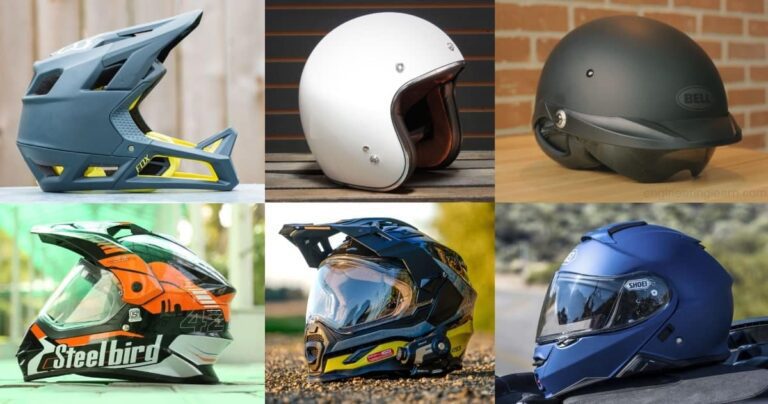
Walk into any motorcycle gear shop and the helmet wall alone can stop you in your tracks. Dozens of styles, shapes, and price points all competing for your attention and your money. Some look race-ready and aggressive. Others look laid-back and retro. A few look like they belong on a dirt track rather than a city street.
But here is the thing. The helmet style you pick is not just an aesthetic decision. It directly affects how well your head is protected if something goes wrong on the road. And in motorcycling, things do go wrong. The helmet sitting on your head in that moment is the one piece of gear that makes the difference between walking away and not walking away at all.
All six major helmet types serve the same basic function: protecting your skull. But they vary significantly in terms of coverage, ventilation, visibility, and the type of riding they are best suited for. Before you spend money on a helmet, it pays to understand what each type actually offers and where it falls short.
The 6 Main Types of Motorcycle Helmets
1. Full Face Helmets: The Gold Standard for Rider Protection
If you ask any experienced rider or safety expert which helmet type offers the best overall protection, the full face helmet wins every time. There is no close second.
A full face helmet wraps completely around your head, covering the top, sides, back, and critically, your chin and jaw. That last part matters more than most riders realize. Studies on motorcycle crash injuries consistently show that the chin and jaw area absorbs around 50 percent of impact forces in accidents. Full face helmets are the only type with a rigid chin bar protecting that zone. Every other helmet type leaves it exposed to varying degrees.
Beyond raw protection, full face helmets also do a better job of:
- Blocking wind noise at highway speeds, which reduces rider fatigue on longer trips
- Keeping out rain, road grit, insects, and airborne debris
- Reducing aerodynamic buffeting that pulls at your head when riding fast
- Providing a sealed environment that works well with Bluetooth intercoms and communication systems
The trade-off is heat and airflow. In stop-and-go city traffic on a warm day, a full face helmet can feel stuffy compared to more open designs. Modern full face helmets have improved significantly in this area, with multiple intake and exhaust vents that move real air when the bike is rolling. But at low speeds or when sitting at a red light, the enclosed design retains more heat than open alternatives.
Sport bikers who ride with a forward-leaning, aggressive posture need a full face helmet with a taller chin bar and a visor opening angled slightly upward. This setup prevents the helmet from catching the wind and lifting at speed. Tourers and cruisers, who typically sit more upright, are better served by a helmet with a more direct visor opening and a lower-positioned chin bar. The riding position genuinely affects which helmet geometry works best for you, so keep that in mind when shopping.
Full face helmets suit almost every type of riding. Track days, highway touring, daily commuting, sport riding. If you ride regularly and take safety seriously, this is the helmet type to start with.
2. Modular Helmets: Full Face Convenience With a Trade-Off
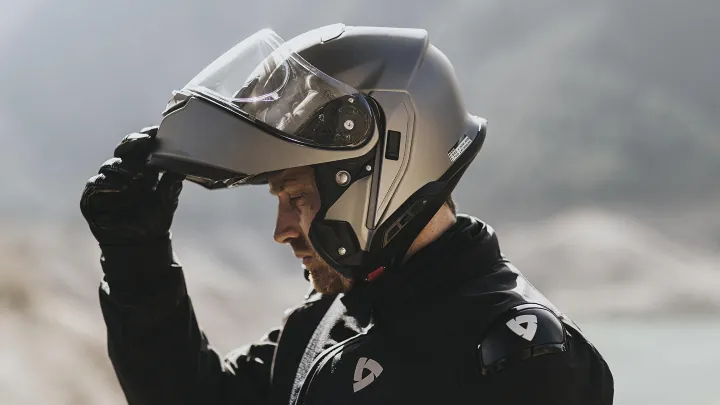
Modular helmets, often called flip-up helmets, are essentially full face helmets with a chin bar that pivots upward on a rear hinge. In the closed position, they look and function much like a full face helmet. Flip the chin bar up and you have an open face configuration instead.
That versatility is the entire appeal. Long-distance touring riders particularly appreciate modular helmets because the ability to flip the chin open without removing the helmet entirely makes a lot of everyday tasks much easier. Stopping for fuel, grabbing a coffee, having a quick conversation, paying a toll, checking your phone at a rest stop. All of these become less of a production when you can flip the front open in seconds rather than pulling the entire helmet off and finding somewhere to put it.
Many modular helmets also come fitted with an extra internal sun visor that drops down at the press of a button, giving you shade without needing to carry tinted visors or wear sunglasses underneath. That is a genuinely useful feature on long rides where the sun angle keeps changing.
Where modular helmets get complicated is in the safety conversation. The chin bar mechanism that makes them so convenient also introduces a structural weak point that simply does not exist in a solid full face design. The pivot hardware and locking mechanism must absorb impact forces that would be handled by uninterrupted shell material on a traditional full face helmet. High-quality modular helmets from reputable manufacturers engineer these mechanisms to be robust, but the added complexity does add some weight and some risk.
One important thing to check before buying: some modular helmets are rated and tested for use with the chin bar in the open position, and others are only certified for closed-position use. Do not assume a modular helmet offers full face protection in both configurations. Read the certification information before you buy.
Modular helmets are a smart choice for adventure riders, tourers, and commuters who want the protection of a full face design with added day-to-day convenience. They are not ideal for pure track use where the pivot mechanism may not meet circuit requirements, but for road riding, they are a strong and practical option.
3. Off-Road Helmets: Designed for Dirt, Not the Street
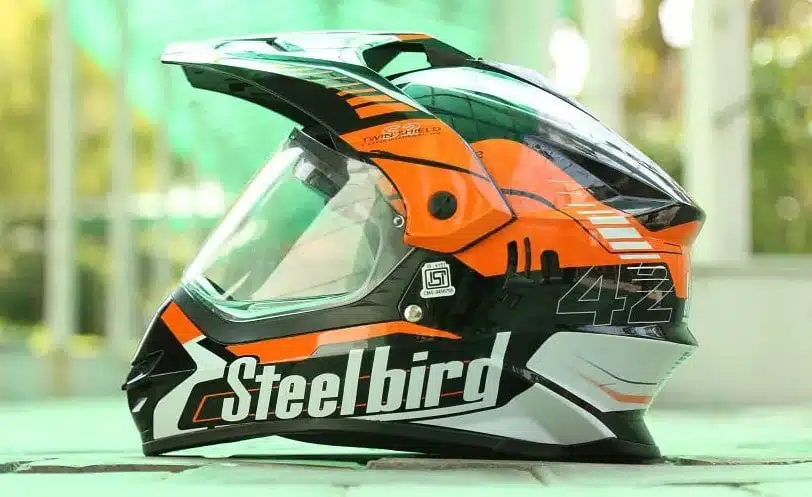
Off-road helmets look unlike any other helmet type. They have an extended chin bar that juts forward significantly, a large peak above the visor area, and a very open face design. They are light, aggressively ventilated, and engineered specifically around the demands of motocross and trail riding rather than road use.
The design priorities for off-road riding differ from road riding in some important ways. Motocross riders crash at lower speeds than road riders but tend to hit dirt, mud, rocks, and vegetation rather than hard concrete or tarmac. The forward-extended chin bar is designed to handle those specific types of impacts. The large peak above the visor shields the face from roost, which is the dirt, mud, and debris that gets thrown up by the wheels of other riders ahead of you.
Because off-road helmets have no integrated visor, riders pair them with goggles. Goggles provide better protection against dirt and debris in off-road conditions than any visor design could, and they allow the face to remain as open as possible for maximum airflow during physically demanding riding. Motocross and enduro riding is genuinely hard physical work, and riders run hot. Ventilation is a top priority, not an afterthought.
For material options, quality off-road helmets come in Kevlar, carbon fiber, and fiberglass composites. These materials are both strong and lightweight, which means less strain on your neck during a long day of riding rough terrain.
One point worth being clear about: off-road helmets are not designed or certified for road use. The open face design provides no meaningful protection against wind blast at highway speeds, and riding without an integrated visor or goggles on public roads is genuinely impractical and dangerous. If you need a single helmet that works on both surfaces, the dual sport helmet is the right answer.
4. Dual Sport Helmets: One Helmet, Two Worlds
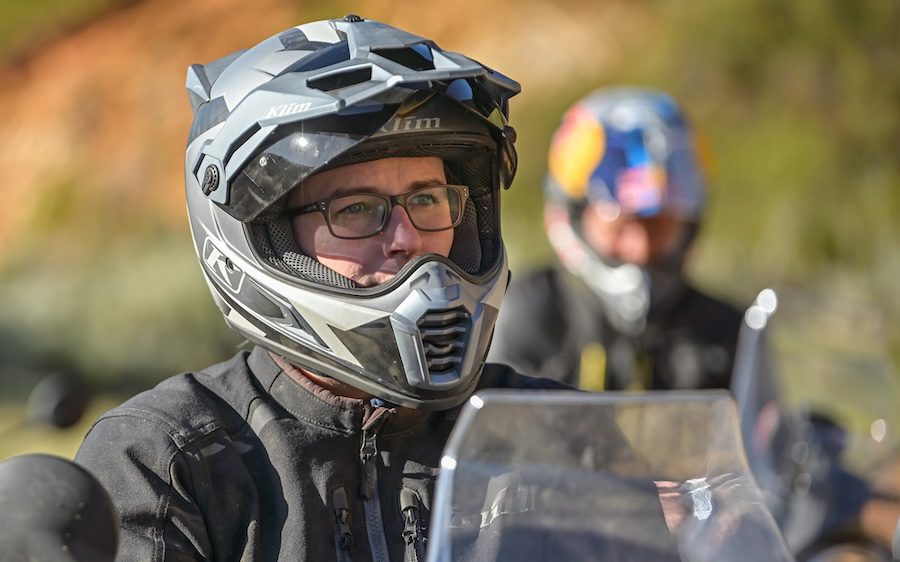
Dual sport helmets bridge the gap between off-road motocross helmets and road-going full face helmets. They take the extended chin bar and peak design of an off-road helmet and add features that make the helmet practical for road riding as well.
The key additions that make a dual sport helmet road-capable include:
- An integrated flip-down face shield that provides eye protection at road speeds without needing a separate pair of goggles
- Better sound insulation compared to a pure off-road helmet, which reduces the wind noise fatigue that builds up on extended highway rides
- Ventilation ducts designed to work effectively at road speeds rather than purely at the low-speed airflow of motocross
- A permanently fixed chin bar rather than a removable setup, which provides more consistent structural protection across both environments
The peak is still present on dual sport helmets, but it is typically redesigned to be less affected by aerodynamic lift at higher road speeds. A full motocross peak at 100 kilometres per hour on a highway would be genuinely uncomfortable and unstable. Dual sport peaks are trimmed and angled to reduce that problem while still blocking sun glare and light rain effectively.
The visor on dual sport helmets is also wider than what you get on a full face helmet, which improves peripheral vision for off-road riding where hazards can come from any direction. The visor can typically be snapped upward as well to create space for goggles when you transition from sealed roads to dirt tracks.
Dual sport helmets suit adventure riders, enduro riders, and anyone whose regular routes genuinely include both sealed road and off-road sections. They are not the optimal choice for pure road riding at sustained highway speeds, nor are they ideal for serious motocross where a dedicated off-road helmet would outperform them. But for riders who actually live in both worlds, they are the most practical single helmet to own.
5. Half Face Helmets: More Coverage Than a Skull Cap, Less Than You Might Think
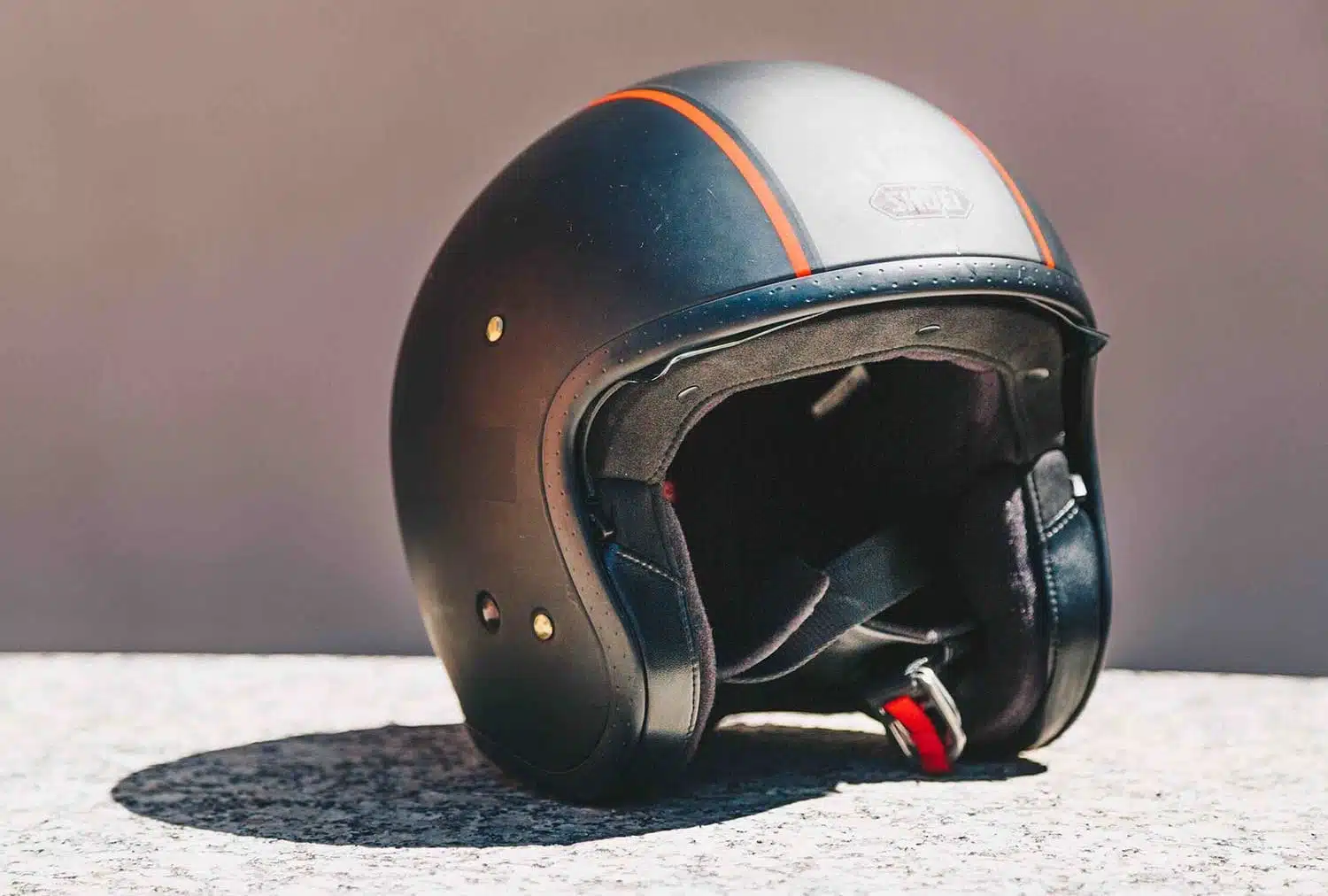
Half face helmets, sometimes called open face helmets or three-quarter helmets, cover the top of your head, wrap around the sides, and extend to protect the back of the skull. The face remains fully open, but compared to a half shell design, there is meaningfully more head coverage overall.
A visor is included on most half face helmets, which gives you a full, unobstructed view of the road ahead and provides some protection against wind, rain, and debris reaching your eyes. The airflow through a half face helmet is noticeably better than in a full face design, which is part of why riders who feel claustrophobic in enclosed helmets gravitate toward them.
The limitation, as with every open face design, is the chin and jaw area. There is no chin bar. In any impact that involves the face or the lower portion of the head, you are exposed. That is a significant gap in protection for riders who cover meaningful distances or ride at higher speeds where crash forces are greater.
Half face helmets have a long history in motorcycling. They were the dominant helmet style for decades before full face designs became widely available, and they remain genuinely popular among scooter riders, urban commuters, café racer enthusiasts, and classic bike owners who prioritize the sensory experience of open-air riding while still wanting meaningful head coverage.
Many half face helmets accept snap-on visors and aftermarket face shields, and some also work with balaclava-style wind blocks that help manage exposure to cold air, rain, and road grit at speed. This makes them more versatile in variable weather than a pure half shell design.
For urban riders who spend most of their time at lower speeds and value the sensation of open riding, half face helmets represent a reasonable middle-ground choice. For riders who regularly travel at highway speeds or in conditions where impact protection is more likely to be tested, a full face or modular design is the more defensible option.
6. Half Shell Helmets: Maximum Freedom, Minimum Protection
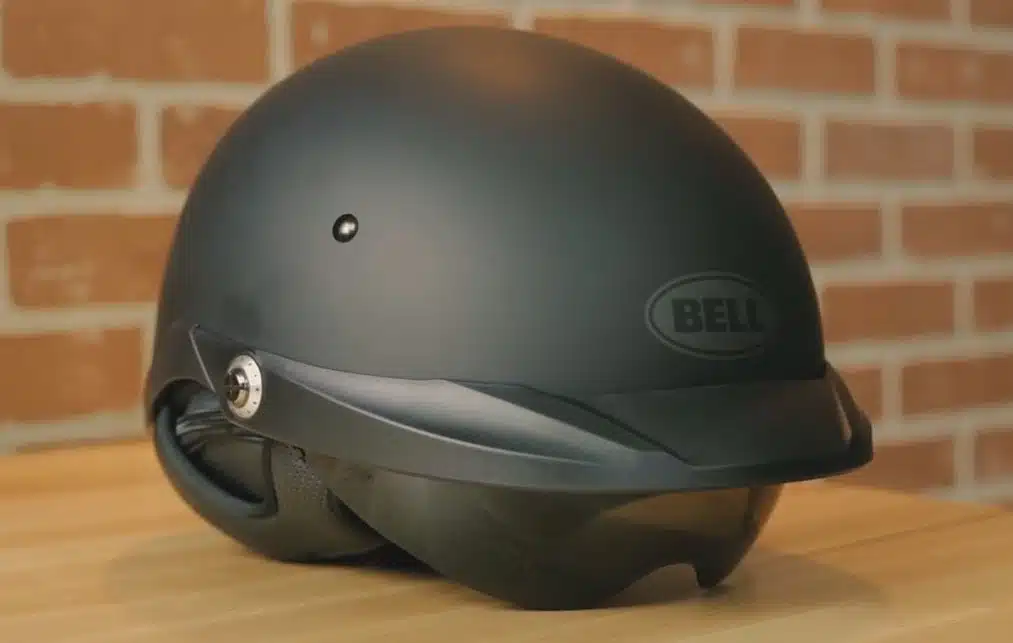
Half shell helmets, sometimes called skull caps or brain buckets, are the minimalist option. They cover only the top of the skull down to roughly ear level and stop there. Everything below the brow, including your face, chin, jaw, and the sides of your head below the ears, is completely exposed.
The appeal is straightforward. A half shell helmet feels as close to riding without a helmet as you can get while technically still complying with helmet laws in jurisdictions where they apply. Airflow is totally unrestricted. Peripheral vision is completely unimpeded. The sensation of open-air riding is fully preserved. Riders on custom cruisers, choppers, and bobbers are the most common wearers of this style, and the low-profile aesthetic fits the look of those bikes in a way that a full face helmet simply does not.
But the protection trade-off needs to be stated plainly. Half shell helmets offer the least protection of any helmet type currently available. They do protect against skull fractures to the top of the head, which has genuine value. But they provide nothing for the face, chin, jaw, or lower sides of the head. These are areas that absorb substantial impact forces in real-world crashes.
Without an integrated visor, eye protection becomes a separate requirement. Riding glasses or goggles are essential. Some half shell helmets accept a snap-on visor or peak as an accessory, but these are clip-on additions rather than integrated designs and offer limited protection compared to a proper visor.
Half shell helmets also have very limited surface area for mounting Bluetooth intercoms or communication systems. The small interior and open design leave few practical mounting options.
If you ride exclusively at low speeds over short distances and you have thought carefully about the risk trade-off, a half shell helmet is a legal and personal choice in many places. For anyone covering real distances at real speeds, it is the weakest option on the market and worth knowing that going in.
Side-by-Side: Which Helmet Type Suits Which Rider?
| Helmet Type | Protection Level | Best For | Key Trade-Off |
|---|---|---|---|
| Full Face | Highest | All road riding, track use, touring, commuting | Less airflow at low speeds and in traffic |
| Modular | High (closed), moderate (open) | Touring, commuting, riders who want daily convenience | Heavier than full face, chin pivot is a structural weak point |
| Off-Road | High for dirt impacts, not road-rated | Motocross, enduro, trail riding | Not suitable for road use, requires separate goggles |
| Dual Sport | Good for both environments | Adventure riding, mixed on and off-road use | Not the best choice for purely road or purely off-road riding |
| Half Face | Moderate | Urban commuting, scooters, café racer and classic bike culture | No chin or jaw protection |
| Half Shell | Lowest | Low-speed cruising, custom and chopper builds | Face, chin, and jaw entirely exposed |
The Anatomy of a Safe Motorcycle Helmet: What Is Actually Inside That Keeps You Safe
Choosing the right helmet type is step one. But understanding what is inside the helmet, and why each layer matters, is what separates an informed buyer from someone who just picks whatever looks cool. Motorcycle helmet technology has evolved significantly over the years, with lighter materials, smarter ventilation systems, and integrated electronics becoming more common. But the core structure of what makes a helmet safe has stayed remarkably consistent.
Every quality motorcycle helmet is built around four fundamental components. Each one has a specific job to do in protecting your head, and each one matters.
1. The Outer Shell: Your First Line of Defense
The outer shell is the hard exterior surface you see when you look at a helmet. It is typically made from polycarbonate, fiberglass, Kevlar, carbon fiber, or a composite blend of these materials. Each material has a different balance of weight, cost, and performance.
The outer shell has two primary jobs. First, it resists penetration from external objects like rocks, road debris, or anything else that might strike the helmet during a crash. Second, it spreads the energy of an impact across a wider surface area so the force reaching your skull is distributed rather than concentrated at a single point.
Carbon fiber shells are the lightest and among the strongest available, which is why they command the highest prices. Polycarbonate shells are heavier but more affordable and still offer solid protection when properly certified. Fiberglass and composite blends fall between the two in terms of weight and cost. For most riders, the shell material matters less than the certification the helmet carries and the quality of construction behind it.
2. The Impact-Absorbing Liner: Where the Real Energy Management Happens
Just inside the outer shell sits the impact-absorbing liner. This is almost always made from EPS foam, which stands for expanded polystyrene. It is the same material used in bicycle helmets and packaging for fragile electronics, though motorcycle helmet grades are engineered to much more demanding specifications.
The EPS liner is the component that actually absorbs the energy of an impact. When your head strikes a surface, the liner compresses and crushes in a controlled way, converting the kinetic energy of the impact into heat and the physical deformation of the foam. This is what slows the deceleration of your skull and prevents the full force of the impact from reaching your brain.
Some helmets use a single-density EPS liner. Higher-end helmets use dual-density liners that combine two different foam densities in different zones of the helmet. The denser sections handle higher-energy impacts in areas most likely to take direct hits, while the softer sections manage lower-energy impacts more efficiently. The result is better overall energy management across a wider range of crash scenarios.
Here is something many riders do not know: once an EPS liner has absorbed a significant impact, it does not recover. The foam stays crushed. This is why helmets should be replaced after any crash that involves a significant impact, even if the outer shell looks completely undamaged. The liner may have already done its job and used up its protective capacity. A helmet that has absorbed one impact may offer dramatically reduced protection in a second one.
3. The Padded Comfort Liner: What Actually Touches Your Head
The comfort liner is the soft, fabric-covered layer that sits against your skin inside the helmet. It is made from open-cell foam covered in a moisture-wicking fabric, and its job is to manage sweat, provide cushioning, and make the helmet comfortable enough to wear for extended periods.
Most quality helmets have comfort liners that are fully removable and washable. This matters more than it sounds. After even a moderate riding session, the liner absorbs a meaningful amount of sweat and body heat. Being able to pull it out and wash it keeps the helmet hygienic and extends its usable life significantly.
Many manufacturers offer replacement comfort liners in different thicknesses. This is genuinely useful for riders who fall between standard sizes. If a helmet fits your head shape but feels slightly loose overall, fitting a slightly thicker comfort liner can fine-tune the fit without compromising the structural components of the helmet. Check with the manufacturer of any helmet you are considering to see whether this option is available for their models.
4. The Retention System and Chin Strap: What Keeps the Helmet on Your Head When It Matters Most
A helmet sitting on your head during normal riding and a helmet staying on your head during a crash are two different things. The retention system, which is the chin strap and its fastening mechanism, is what ensures the second condition is met.
Most quality helmets use a double D-ring fastening system. The strap threads through two small metal rings, creating a friction-based lock that is highly resistant to coming undone under load. It takes a deliberate manual action to release, which is exactly what you want from a safety-critical fastener.
Some helmets use quick-release buckles instead. These are more convenient but have historically been considered less secure under the extreme forces of a crash. Newer quick-release designs have improved significantly, and many meet current safety standards, but the double D-ring is still widely regarded as the more mechanically reliable option by helmet safety researchers.
A properly fastened chin strap should allow no more than two fingers to pass between the strap and your chin. If you can fit more than that, the strap is too loose. In a crash, a loose chin strap allows the helmet to pivot or come off entirely at exactly the moment it needs to stay in place.
The portion of the strap that rests against your skin is typically covered with a soft fabric material that matches the comfort liner. This reduces chafing during long rides and wicks away sweat in the same way the interior liner does.
5. The Ventilation System: Keeping You Comfortable and Alert
Ventilation does not protect your head in a crash, but it absolutely affects safety in a different and often underestimated way. A rider who is overheating or sweating excessively is a less attentive and less capable rider. Fatigue from heat builds up gradually and affects reaction time and decision-making before the rider even notices it happening.
Quality helmets are designed with a channel system that draws fresh air in through intake vents at the forehead and chin and exhausts warm air through vents at the rear of the shell. When this system works well, it creates genuine airflow through the interior of the helmet that evaporates sweat and carries heat away from your head.
Most modern helmets have adjustable vents that can be opened and closed to match the conditions. During warm months you might ride with everything fully open. In cooler weather you close them down to retain heat. In between, you find whatever combination suits the temperature and your riding pace.
Full face and modular helmets typically have the most sophisticated ventilation systems because they have more surface area to work with and more enclosed interior volume to manage. Open face and half shell designs rely more on natural airflow from the exposed face opening, which works well at speed but provides less active ventilation at lower speeds.
What to Look For Beyond Helmet Type When Buying
Choosing the right helmet type is the first decision. But the type alone does not tell you whether a specific helmet is a good buy. Several other factors matter significantly and are worth understanding before you hand over your money.
Safety certification. Look for helmets certified to recognized standards. DOT (Department of Transportation) is the legal minimum in the United States, but ECE 22.06, which is the latest European standard, and SNELL certification involve more rigorous testing protocols. A helmet that carries multiple certifications gives you more confidence in its protective performance across different impact scenarios.
Fit. A helmet that does not fit correctly does not protect correctly, regardless of its certification or price tag. The helmet should sit level on your head, feel snug all the way around without creating pressure points, and should not rock forward, backward, or side to side when you try to move it. Your cheeks should feel slightly compressed when the helmet is new. Helmets break in with use. If it feels loose when new, it will feel dangerously loose after a few months of regular riding.
Head shape compatibility. Human heads are not all the same shape, and helmet manufacturers design their products around different head shapes, typically described as round oval, intermediate oval, or long oval. Wearing a helmet that does not match your head shape will create pressure points even when the circumference measurement seems correct. Try helmets on in person before buying if you possibly can.
Weight. Heavier helmets cause more neck fatigue on longer rides and can increase the strain on your neck in certain crash scenarios. Helmets built with carbon fiber or composite shells tend to be lighter than those using pure fiberglass or polycarbonate, though they also cost more. For riders who cover significant distances regularly, the lighter weight is worth the investment in reduced fatigue.
Visor quality. Smoked or heavily tinted visors look sharp but impair visibility in low light conditions. If you ride at dawn, dusk, or at night, a clear or lightly tinted visor is the safer choice. Anti-scratch coatings are worth paying for because a scratched visor creates glare that is genuinely hazardous in direct sunlight. Anti-fog coatings or Pinlock inserts are valuable if you ride in cool or humid conditions where fogging is a regular problem.
Interior padding quality. The padding needs to be dense enough to deflect and absorb impact energy in a crash while still being comfortable enough to wear for hours at a time. Quality interior padding also conforms to the shape of your head over time, which improves fit and comfort progressively. Cheap padding compresses unevenly and can create uncomfortable contact points after extended use.
Safety Standards at a Glance
| Certification | Region | Testing Rigor | What It Means for You |
|---|---|---|---|
| DOT (FMVSS 218) | United States | Minimum legal standard | Meets basic impact protection requirements for road use |
| ECE 22.06 | Europe and internationally recognized | More stringent than DOT | Higher bar for impact absorption, retention system, and visor performance |
| SNELL | United States and internationally recognized | Among the most rigorous available | Independent testing organization with stricter impact standards than government minimums |
| FIM (for racing) | International motorsport | Required for sanctioned competition | Built for extreme impact scenarios beyond normal road use |
Common Helmet Buying Mistakes That Are Worth Avoiding
Even riders who understand helmet types and safety standards sometimes make avoidable mistakes when it comes time to actually buy. Here are the ones that come up most often:
- Buying based on looks alone. The style of the helmet is the last thing that should drive your decision, not the first. Find one that fits correctly and meets the appropriate safety standard, and then choose the best-looking option within that shortlist.
- Buying secondhand without knowing the history. A used helmet that looks perfect may have already absorbed a significant impact that permanently compromised the EPS liner. Without knowing the full history of a used helmet, you cannot know whether its protective capacity is intact. Buying new or buying from someone whose history you know completely is the safer route.
- Keeping a helmet too long. Most manufacturers recommend replacing helmets every five years from the date of first use, regardless of condition. The materials degrade over time with UV exposure, sweat, and general wear. A five-year-old helmet may look fine but perform meaningfully worse than a new one in a crash.
- Skipping the fit check. Helmet sizing varies between manufacturers and even between models from the same manufacturer. A size large from one brand may fit completely differently from a size large from another brand. Always try before you buy.
- Ignoring the retention system test. After putting the helmet on and fastening the chin strap correctly, try to pull the helmet forward off your head with some force. If it shifts or slides more than about an inch, the retention system fit is not secure enough for safe riding.
The helmet you wear every time you ride deserves the same careful selection process you would apply to any piece of serious safety equipment. Get the type right for how you actually ride. Get the fit right for your specific head. Confirm the certification. And then replace it on schedule, not just when it looks worn out.
The helmet you choose is not a fashion accessory. It is the one piece of gear between your skull and the road surface if everything else goes wrong. Make that choice with the weight it deserves.