
You are driving down the highway, and a low, rumbling hum starts creeping into the cabin. It is not the radio. It is not the tires on the pavement. It is a sound that rises and falls with your speed, and the more you listen to it, the more it sounds like something rotating. A growl that turns into a roar at higher speeds. That, right there, is the unmistakable cry of a wheel bearing in distress. The question that follows is not just what the noise is, but how far you can push your luck before something terrible happens.
Car safety always sits at the top of the priority list, whether you are commuting alone or hauling your family on a weekend trip. A wheel bearing is one of those components that rarely gets a second thought until it starts making noise. When it does, you have a decision to make. Ignore it and hope it goes away, or deal with it before it deals with you. Understanding what a wheel bearing does, why it fails, and how long you can actually drive on a failing one helps you make that decision with a clear head.
What a Wheel Bearing Actually Does
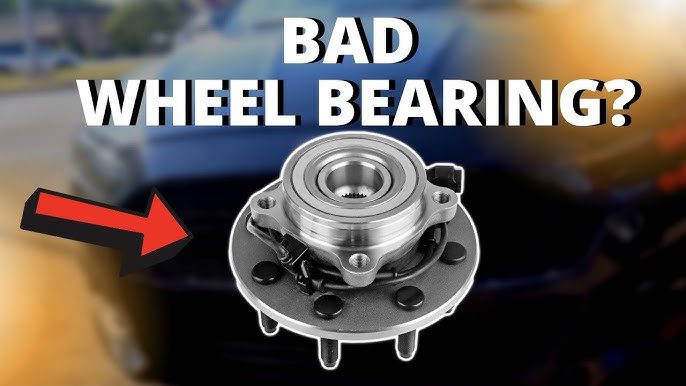
A wheel bearing is a set of precision steel balls or tapered rollers held inside a hardened metal ring called a race. It sits inside the wheel hub assembly and allows the wheel to spin freely with minimal friction. Every time your car moves, the wheel bearing carries the entire weight of that corner of the vehicle while rotating at whatever speed the wheel is turning. At 60 miles per hour, a typical wheel bearing spins hundreds of times per minute, and it does so while absorbing the lateral forces of cornering, the vertical impacts of potholes, and the constant heat generated by friction. It is a brutal job, and wheel bearings are engineered to handle it for a long time under normal conditions.
Inside a sealed wheel bearing assembly, factory-installed grease lubricates the balls or rollers and protects them from moisture and debris. The seals keep the grease in and contaminants out. Over time, those seals can degrade, the grease can break down, and the hardened steel surfaces can begin to wear. Once wear begins, it never stops. The smooth, silent rotation becomes a gritty, rumbling affair that transmits noise and vibration through the suspension and into the cabin. That is when you start hearing the hum.
The First Warning Signs You Should Never Ignore
The most common and most reliable symptom of a failing wheel bearing is a humming, growling, or rumbling noise that changes with vehicle speed. The noise gets louder as you accelerate and softer as you slow down. It might sound like you are driving on a rumble strip or like an airplane taking off in the distance. Because the noise is often subtle at first, many drivers mistake it for aggressive tire noise or a differential problem. The key distinction is that wheel bearing noise changes when you turn the steering wheel and shift the vehicle’s weight from one side to the other.
Other symptoms that point to a failing wheel bearing include:
- Grinding or clicking noises when turning, which can indicate a worn CV joint or a severely damaged bearing with broken rollers.
- Vibration in the steering wheel or through the floorboards, especially at higher speeds. The vibration may feel similar to an unbalanced tire but typically persists even after the tires have been balanced.
- Loose or wandering steering. A wheel bearing with excessive play can cause the wheel to wobble slightly, making the steering feel imprecise and the vehicle harder to keep in a straight line.
- Uneven tire wear. A loose bearing allows the wheel to tilt slightly, causing the tire to wear unevenly, often in a scalloped or cupped pattern.
- ABS warning light illumination. Many modern wheel bearing assemblies include the anti-lock brake sensor ring. When the bearing fails, the sensor may stop reading correctly, triggering a dashboard warning.
If you notice any of these signs, the bearing is already past the point of no return. The damage will only compound, and the risk of catastrophic failure increases with every mile.
So How Long Can You Actually Drive on a Bad Wheel Bearing?
There is no precise answer that fits every situation, and any mechanic who gives you an exact number without inspecting the vehicle is guessing. A wheel bearing that has just started humming might last for thousands of miles. A bearing that is already growling and vibrating might fail within the next fifty. The condition of the bearing, the quality of the part, the roads you drive on, and how much load the vehicle carries all influence the remaining lifespan.
As a general rule, you should not exceed 500 miles or 800 kilometers after you first notice a clear wheel bearing noise. That distance is not a guarantee of safety. It is an acknowledgment that a failing bearing can deteriorate quickly once the damage is audible. A high-quality bearing on a light vehicle driven gently on smooth highways might survive another 1,000 miles, or roughly 1,600 kilometers, but counting on that is a gamble. The stakes of losing that gamble are high.
Wheel bearings have an estimated service life of 85,000 to 100,000 miles under normal conditions. If your bearing has already reached or exceeded that mileage and begins making noise, the internal wear is likely substantial. The grease has probably dried out, the races are pitted, and the steel rollers are spalling. Every additional mile grinds more metal into the remaining lubricant, accelerating the destruction. A bearing that is already deep into its expected lifespan does not have a lot of reserve capacity left.
If you do not know what brand of bearing was installed, or if it was a budget replacement part, the safe remaining distance shrinks further. Quality bearings from reputable manufacturers like Timken, SKF, NSK, or FAG are built to tighter tolerances with better materials and seals. Cheap no-name bearings can fail prematurely even when new. A cheap bearing that starts humming might be on borrowed time from the very first day it makes noise.
What Happens If You Keep Driving Beyond the Warning
Ignoring a bad wheel bearing does not just mean putting up with an annoying noise. The bearing continues to deteriorate, and the consequences escalate. The first thing you will notice is that the noise gets louder and more insistent. The hum turns into a roar, and the roar turns into a grinding that you can feel through the pedals and the steering wheel. At this stage, the bearing has likely lost most of its lubrication, and metal is grinding against metal directly.
As the bearing loses its structural integrity, the wheel develops excessive play. The vehicle begins to wander on the highway, requiring constant steering corrections to stay in the lane. In a turn, the wheel can wobble enough to cause a sudden loss of control. The brake rotor, which is attached to the same hub, will also wobble, causing uneven brake pad contact and reduced braking performance. A severely damaged wheel bearing can cause the brake pads to be pushed back into the caliper, leading to a momentary loss of braking when you need it most.
The most catastrophic outcome is a seized bearing. When the bearing overheats from lack of lubrication, the steel components can weld themselves together. The wheel locks up instantly, which at highway speeds can send the vehicle into an uncontrollable skid. Even worse, a bearing that completely disintegrates can allow the wheel to detach from the vehicle entirely. That is not an exaggeration. A wheel coming off at speed is a life-threatening event for you and for everyone on the road around you. The repair bill for a simple bearing replacement is a fraction of what you will pay after a wheel-off collision.
How to Drive on a Bad Wheel Bearing If You Absolutely Must
The safest course of action when you hear a wheel bearing noise is to minimize driving and head directly to a repair shop. However, real life sometimes forces your hand. You might be far from home, the shop might be closed for the weekend, or you might need to get to work before you can schedule a repair. If you absolutely must drive on a suspect bearing, here is how to reduce the risk of sudden failure.
Keep your speed down. Do not exceed 40 miles per hour, or roughly 50 to 60 kilometers per hour. Higher speeds generate more heat in the bearing and multiply the forces acting on the damaged components. At lower speeds, if the bearing does seize or come apart, the consequences are less severe, and you have a better chance of maintaining control.
Avoid sharp turns. Cornering forces push the weight of the vehicle sideways, placing enormous lateral loads on the wheel bearing. A sharp right turn loads the left bearing heavily, and vice versa. Take corners as gently and as wide as conditions allow. If the noise changes dramatically during a turn, the bearing on the heavily loaded side is the likely culprit, and that bearing is particularly vulnerable.
Avoid potholes, speed bumps, and rough roads. Every impact sends a shockwave through the already compromised bearing. One hard hit can be enough to shatter the bearing races or deform the hub, causing immediate failure. Drive slowly and deliberately on uneven surfaces.
Listen carefully. If the noise suddenly changes from a hum to a loud grinding, or if the steering begins to shake violently, pull over immediately and stop. Continuing to drive at that point is inviting disaster. Call for a tow if necessary. The cost of a tow is far less than the cost of repairing a vehicle that has crashed because a bearing seized or a wheel came off.
How to Test Which Wheel Bearing Is Bad While Driving
A simple driving test can help you identify which corner of the vehicle has the failing bearing, and it can give you an idea of how severe the wear has become. The test takes advantage of weight transfer during cornering. When you turn, the vehicle’s weight shifts to the outside wheels, loading those bearings more heavily while unloading the inside bearings. A failing bearing will typically get louder when loaded and quieter when unloaded.
Find a smooth, empty road with no potholes or imperfections, preferably a section of asphalt in good condition. Accelerate to around 40 miles per hour, or 60 kilometers per hour, and then gently steer into a turn. If you turn to the left, the car leans to the right, placing the majority of the weight on the right-side wheels. The left-side bearings, particularly the left front bearing, are unloaded. If the humming noise disappears or becomes significantly quieter during a left turn, the problem is likely in the left wheel bearing. If the noise gets louder, the right bearing is under load and is the probable culprit.
Repeat the test in the opposite direction. A right turn loads the left side. If the noise increases when turning right, the left wheel bearing is failing. If the noise remains constant regardless of steering direction, the problem could be in a rear bearing, or both front bearings could be worn, or the noise may not be a bearing at all. In that case, have a professional diagnose the issue.
At low speeds, around 15 miles per hour, you can perform a sharper turn to isolate the bearing further. A sharp left turn at low speed heavily loads the right bearing. Listen for a distinct hum or grinding that appears during the turn and disappears as you straighten the wheel. That is a strong indicator that the loaded bearing is damaged. Pay attention to the sounds carefully. If the noise vanishes when you exit the turn, the problem is almost certainly in the wheel bearing on the outside of the turn.
Testing a Wheel Bearing While the Vehicle Is Stationary
Before you even take the car on the road, you can perform a stationary test to check for excessive wheel bearing play. Find a safe, level surface and park the vehicle. Engage the parking brake firmly and chock the wheels that will remain on the ground. Jack up one corner of the vehicle so the wheel is off the ground, and place a jack stand under the frame for safety. Never rely on a jack alone when working under or around a lifted vehicle.
Grasp the tire at the twelve o’clock and six o’clock positions. Attempt to rock the wheel by pushing firmly on the top while pulling on the bottom, then reversing direction. If there is noticeable movement or a clunking sensation, the wheel bearing has excessive play. A small amount of play can be normal on some vehicles with tapered roller bearings that require occasional adjustment, but on most modern cars with sealed hub assemblies, any perceptible movement indicates a failing bearing.
Repeat the test with your hands at the three o’clock and nine o’clock positions on the tire. Movement felt in both the vertical and horizontal tests can indicate a wheel bearing problem, though horizontal play can also be caused by worn tie rod ends or steering linkage components. A professional mechanic can distinguish between the two by observing which components move while the wheel is rocked.
You can also spin the wheel by hand while listening for roughness. A healthy wheel bearing spins smoothly and quietly. A failing bearing may produce a grinding, rumbling, or clicking sound as the wheel rotates. If you place a hand on the strut or control arm near the hub while someone else spins the wheel, you can sometimes feel the roughness of a damaged bearing transmitted through the suspension components. A stethoscope or a long screwdriver held against the hub and pressed to your ear can amplify the sound for a more accurate diagnosis.
Why Wheel Bearings Fail Before Their Time
Wheel bearings are designed to last, but several factors can cut their lifespan short. Understanding these causes helps you avoid repeat failures after a replacement and may help you get more miles out of your current bearings.
Water and Contamination Damage
Water is one of the most common enemies of wheel bearings. The seals on a wheel bearing assembly are designed to keep grease in and contaminants out, but they are not perfect. Regular driving through deep water, flooded streets, or even extended exposure to heavy rain can overwhelm the seals. Once water enters the bearing, it emulsifies with the grease, reducing its lubricating ability and causing rust to form on the precision steel surfaces. Even small amounts of moisture can start the corrosion process.
Vehicles that are frequently driven through water or mud need wheel bearings to be inspected more often. Using a high-quality petroleum-based grease helps repel water, but no grease can fully protect a bearing that is constantly submerged. If you regularly drive through flooded areas, consider having the wheel bearings cleaned and repacked, if they are a serviceable type, or replaced earlier than the expected mileage threshold.
Impact Damage From Potholes and Rough Roads
A single severe pothole impact can damage a wheel bearing instantly. The shock of the impact transmits through the wheel, into the hub, and directly into the bearing races. The hardened steel used in bearings is strong, but it is also brittle. A sharp enough impact can dent a bearing race or fracture a roller. Once that damage occurs, the bearing will begin to make noise almost immediately, and it will fail within a short distance.
Repeated smaller impacts from driving on rough, uneven roads have a cumulative effect. Every bump and jar sends a spike of force through the bearing, and over time, microscopic damage accumulates. The bearings in vehicles that primarily drive on poorly maintained roads will fail significantly earlier than those driven on smooth highways. Avoiding potholes and reducing speed on rough surfaces is one of the simplest ways to extend the life of your wheel bearings.
Unbalanced Tires and Wheel Alignment Issues
Tires that are out of balance create a vibration that is felt throughout the suspension system. That vibration is absorbed by the wheel bearings, which are not designed to handle constant oscillation. Over thousands of miles, an unbalanced tire can fatigue the bearing surfaces, leading to premature spalling and failure. Having your tires balanced at every rotation or whenever you feel a vibration through the steering wheel is a small maintenance step that pays off in longer bearing life.
Improper wheel alignment also contributes to bearing wear. When the wheels are not aligned correctly, the vehicle’s weight is not distributed evenly across the tire contact patch. This creates side loads on the wheel bearings that they were not designed to handle continuously. A vehicle with a significant alignment issue can wear out a set of front wheel bearings in half the expected mileage. Regular alignment checks, especially after hitting a major pothole or replacing suspension components, prevent this kind of premature wear.
Damage From Accidents
Even a minor collision that does not appear to cause significant body damage can harm the wheel bearings. A sideways impact on a wheel, such as being hit while parked or sliding into a curb, can dent the bearing races or knock the hub assembly out of alignment. The damage may not be visible, and the bearing may not start making noise immediately. Over time, however, the damaged area becomes a stress riser, and the bearing will eventually fail.
After any accident, even a fender bender at low speed, have the alignment checked and ask the mechanic to inspect the wheel bearings for play or roughness. Catching a damaged bearing before it starts making noise can prevent a roadside breakdown weeks or months later.
Improper Installation and Torque Errors
Installing a wheel bearing incorrectly can cause it to fail almost immediately. The axle nut that secures the hub assembly must be torqued to the manufacturer’s exact specification. Over-tightening the nut creates excessive preload on the bearing, causing it to run too hot and wear out prematurely. Under-tightening allows play in the assembly, which leads to uneven loading and rapid wear. Both mistakes will cause the new bearing to start making noise within a few thousand miles, or even within a few hundred.
A proper installation also requires a clean, smooth surface on the hub where the bearing seats. Any debris, rust, or burrs on the mating surface can cause the bearing to sit crooked, resulting in uneven loading and early failure. A reputable shop will clean the hub thoroughly and use a torque wrench on every fastener. If you recently had a wheel bearing replaced and are already hearing noise again, improper installation is a likely cause. Return to the shop and have them inspect and correct the work under warranty.
Factors That Affect How Far You Can Drive on a Bad Bearing
Even with the general guideline of staying under 500 to 1,000 miles, the actual distance a failing bearing can travel depends on several variables. Understanding these helps you gauge the urgency of your own situation.
- The severity of the wear at the time of detection. A bearing that has just started making a faint hum at highway speed is in the early stages of failure. A bearing that growls loudly at parking lot speeds is on the brink of catastrophic failure. The first can be nursed along for a limited distance. The second should not be driven at all, except perhaps onto a tow truck.
- The vehicle’s weight and load. A heavily loaded SUV or pickup truck places far more stress on the wheel bearings than a compact sedan with a single driver. The heavier the vehicle, and the more cargo and passengers it carries, the faster a failing bearing will degrade. If you must drive on a suspect bearing, remove unnecessary weight from the vehicle.
- Driving speed and habits. High-speed highway driving generates more frictional heat and subjects the bearing to higher centrifugal forces. Stop-and-go city driving, with constant acceleration and braking, also loads the bearings unevenly. The longest remaining distance will be achieved by driving gently at moderate speeds on smooth roads.
- Weather conditions. Rain and standing water can accelerate bearing failure by introducing moisture past compromised seals. A bearing that is already damaged is even more susceptible to water intrusion. Wet weather driving should be minimized when a bearing is known to be failing.
- The type of bearing failure. A bearing that is worn but still adequately lubricated may run for a while. A bearing that has lost its lubrication entirely and is running on metal-to-metal contact will seize quickly. If you smell hot metal or burning grease near the wheel after driving, the bearing has lost lubrication and is failing rapidly.
The Real-World Costs of Delaying a Wheel Bearing Repair
Replacing a single wheel bearing typically costs between $150 and $400, including parts and labor, for most common passenger vehicles. The part itself ranges from $50 to $150 for a quality aftermarket hub assembly. Labor is usually one to two hours at a shop rate of around $100 per hour. It is not the cheapest repair, but it is far from the most expensive. Delaying that relatively affordable repair can turn a manageable bill into a financial crisis.
If the bearing seizes while driving, the damage extends beyond the bearing and hub. A seized bearing can destroy the wheel speed sensor, which is often integrated into the hub assembly. The extreme heat can damage the CV axle, the steering knuckle, and the brake rotor. The sudden lockup can cause the vehicle to lose control, resulting in a collision that damages body panels, suspension components, and possibly injures occupants or bystanders. What started as a $300 bearing replacement could become a multi-thousand-dollar repair, or worse, a total loss.
If the wheel comes off entirely, the damage is catastrophic. The rotor and brake caliper will likely be destroyed when they slam into the pavement. The fender, bumper, and undercarriage can be torn apart. The studs and lug nuts may be broken or stripped, requiring replacement of the entire wheel hub. The vehicle will need a tow, and the insurance claim may affect your premiums. Delaying a wheel bearing repair is never the economical choice.
Quality Matters When Replacing a Wheel Bearing
When the time comes to replace a failing wheel bearing, the quality of the replacement part matters a great deal. The cheapest option on the shelf is rarely the best value. Budget bearings often use lower-grade steel, less precise machining, and inferior seals. They may not come with the necessary torque specifications, and some do not include the new axle nut that should always be replaced with a new hub assembly. A cheap bearing can fail again in a fraction of the miles that a quality bearing would last, costing you twice in labor for a second replacement.
Stick with known, reputable brands like Timken, SKF, FAG, NSK, or NTN. These companies supply original equipment to automakers and have rigorous quality control standards. Their bearings are manufactured to tighter tolerances and are sealed with premium materials that resist water and contamination. A quality bearing costs more upfront but provides peace of mind and a longer service life. When the labor cost is the same either way, it makes sense to install the best part you can afford.
Preventing Premature Wheel Bearing Failure
The best way to manage a bad wheel bearing is to prevent it from failing in the first place. Some preventative steps are simple habits. Others are part of routine maintenance that many drivers overlook.
- Avoid driving through deep water. If you must cross a flooded street, do it slowly, and have the wheel bearings inspected afterward if the water was deep enough to reach the hubs. Water that gets past the seals will remain inside the bearing, causing corrosion long after the road dries.
- Keep tires balanced and aligned. As discussed, unbalanced tires transmit harmful vibrations through the bearings, and misalignment creates constant side loading. Both are preventable through regular tire rotation, balancing, and alignment checks.
- Avoid potholes and curbs. Impact damage is instant and cumulative. When you cannot avoid a pothole, slow down as much as possible before hitting it. Never strike a curb at speed. A single curb impact can ruin a wheel bearing as effectively as a hundred thousand miles of highway driving.
- Have bearings inspected during brake and suspension service. When the brake pads are being replaced or the struts are being swapped, ask the mechanic to check the wheel bearings for play and roughness. The wheels are already off, and the inspection takes only a moment. Catching a failing bearing before it makes noise saves the inconvenience of an unexpected breakdown.
- Replace bearings in pairs if one side fails at high mileage. Wheel bearings on the same axle have been subjected to the same conditions and the same mileage. If the right front bearing fails at 95,000 miles, the left front bearing is likely not far behind. Replacing both at the same time costs more in the moment but saves a second labor charge within a few months.
What a Proper Wheel Bearing Replacement Involves
Understanding what a shop does during a wheel bearing replacement helps you evaluate quotes and ask informed questions. The process begins with lifting the vehicle and removing the affected wheel. The brake caliper and rotor are unbolted and set aside. If the vehicle uses a bolt-in hub assembly, the mechanic removes the axle nut, unbolts the old hub from the steering knuckle, and slides the assembly off the CV axle. If the bearing is press-in, the entire steering knuckle may need to be removed so the old bearing can be pressed out and a new one pressed in using a hydraulic press.
Once the new bearing assembly is in place, the axle nut is torqued to the exact specification, which can be anywhere from 100 to 200 pound-feet or higher, depending on the vehicle. This torque is critical. An under-torqued axle nut allows the bearing to develop play. An over-torqued nut creates excessive preload and destroys the bearing quickly. A professional shop uses a calibrated torque wrench and follows the manufacturer’s procedure, which sometimes includes a specific tightening sequence and angle beyond the initial torque value. They will also stake or replace the axle nut as required to prevent it from loosening.
After assembly, the brakes are reinstalled, the wheel is torqued to the proper specification, and the vehicle is test-driven. The mechanic listens for any remaining noise and rechecks for bearing play. A properly installed, quality wheel bearing should be silent from the first mile. If you hear noise immediately after a replacement, go back to the shop. Something is not right, and it will not correct itself.
The One Thing You Should Never Do With a Bad Wheel Bearing
Do not wait for the car to stall or for the wheel to feel like it is about to come off before you act. The noise is your warning. It is the car telling you, in the only way it can, that something is wrong. A completely failed wheel bearing can cause the wheel to detach from the vehicle. That is not a hypothetical scenario. It happens, and when it does, it is violent, terrifying, and entirely preventable.
A wheel bearing is a minor component in terms of size and cost, but it is a major player in your safety. The hum you hear from the wheel is not a suggestion. It is a countdown. You have time to act, but not an unlimited amount. Use the 500-mile guideline as a rough limit, and understand that every mile beyond it increases the risk of a failure that could hurt you, your passengers, and the people sharing the road with you. When you hear that hum, make the appointment. Clear your schedule. Get the bearing replaced. The peace of mind of a quiet, smooth ride is worth far more than the repair bill.