
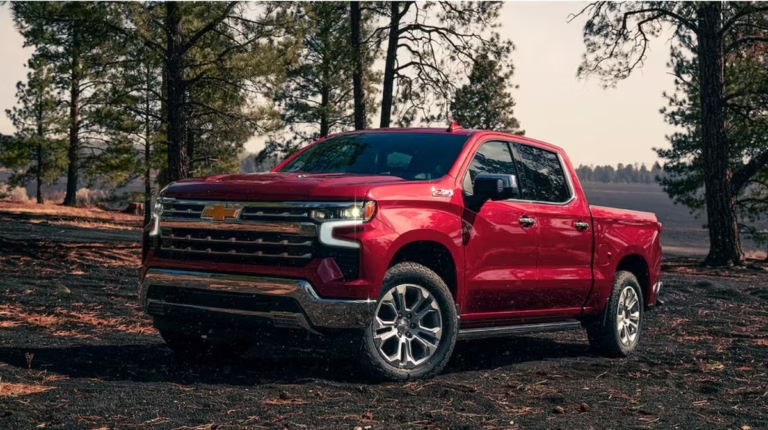
The starter on a Chevy Silverado is usually tucked under the engine on the passenger side. If your truck is having trouble starting, that location matters because you cannot fix a starter problem until you can actually reach the starter. This guide walks you through how to locate it, get set up safely, remove it, and install a replacement without creating new problems for yourself.
Before we get hands-on, here is the big mindset shift. Replacing a starter is not “random wrenching.” It is a straightforward job when you follow a safe order, disconnect the battery the right way, and treat the wiring and mounting bolts with respect.
Even if you have never done starter work before, you can do this. You just need patience, a flashlight, a couple of the right tools, and a plan for the small annoyances that show up under a truck.
Before You Touch Anything: Starter Symptoms and Quick Checks
Many people assume “starter” the second a Silverado will not crank. Sometimes that is exactly right. Other times, the starter is innocent and the real issue is a weak battery, bad connections, or a worn relay.
Here is the easiest way to sort the symptoms before you crawl under the truck. When you turn the key, do you hear one loud click, repeated clicks, a slow crank, or nothing at all?
Those patterns guide your next step. For example, repeated clicks can point to low voltage. No crank at all can point to a dead battery, a starter relay issue, or a cable connection problem. A slow crank can point to battery health or heavy voltage drop at the terminals.
That said, the reason this guide starts with location is simple. Even if the starter is not the culprit, being able to find the starter quickly helps you diagnose and confirm. You can visually inspect the starter wiring and mounting area while you plan the fix.
Getting Ready to Locate and Replace the Starter
Preparation is what separates a smooth replacement from a frustrating afternoon. Before you jack the truck up, gather your tools, read the layout you are about to work in, and set up for safety.
This is the same idea whether you replace a starter in your driveway or on a friend’s gravel lot. Good setup keeps you from improvising with the wrong tools, and it keeps the job safer for you.
Important Safety Precautions
Safety comes first when you work on starting systems. Start by disconnecting the negative battery terminal so you reduce the risk of sparks or short circuits. Even if you are careful, electricity does not forgive careless moves, especially around the battery and starter cables.
Next, use jack stands to stabilize the vehicle after lifting it. A jack alone can slip, and that can turn a repair into an emergency. Place the stands securely under the truck’s frame in the proper supported locations.
Wear safety goggles and gloves for protection from sharp edges and road grime you cannot see. Keeping a fire extinguisher nearby is a smart move for any car job involving electrical components, because battery-related incidents are the last thing you want to deal with without a plan.
One more practical safety habit. If you have to disconnect the negative terminal, you may lose some radio presets or other stored settings. That is an inconvenience, not a disaster, and it is still worth it for safety.
Essential Tools for the Job
Having the right tools on hand is what makes a starter replacement feel easy. A socket set is needed for the mounting bolts. A wrench set helps you loosen the negative battery cable and other connections if they require a different wrench profile.
You will also need a floor jack for lifting the truck and sturdy jack stands for stability. A ratchet with an extension bar is helpful for reaching awkward angles, especially when you are working on the passenger side under the engine area.
Bring a flashlight or work light. Under-hood and under-truck lighting makes a huge difference. You want to see wiring clips, heat shields, and the edges of bolts so you do not strip anything you are trying to remove.
Optional but useful items include a small magnet tray for bolts, a marker or tape for labeling wires, and some penetrating oil if bolts look rusty. You are not trying to turn this into a heavy restoration. You just want to remove the starter bolts without fighting every fastener.
Finding the Starter
Locating the starter is the first “real” step in fixing starting issues. The starter’s job is to crank the engine. It is one of the main parts in the ignition starting sequence, and it lives in an area where access can be tight.
For a Chevy Silverado, the key detail you should remember is this: look under the truck on the passenger side. The starter is typically secured toward the rear section of the engine block, often close to where the transmission and engine meet. That is why it can feel hidden at first glance.
How do you spot it? It is usually a cylindrical component with electrical connections bolted to the engine. Some models include a protective metal shield around the starter that helps it survive heat and vibration.
Do a quick visual sweep before you grab tools. Follow the wiring into the starter area, and look for the starter body. When you see it, confirm the battery is disconnected before you touch anything with your hands near the wiring or terminals.
A simple way to confirm you found the right part
If you are not sure whether the cylinder you see is the starter or something else, use a simple checklist. The starter will usually have:
- At least one heavy electrical cable that connects to the starter body
- A smaller wiring connection for the control signal
- Mounting bolts that thread into the engine/transmission area
- A shield in some configurations
Once that matches, you are in the right place. Then the job becomes a methodical removal, not a random hunt.
Starter Removal Process
Removing the starter is a step-by-step job. The general flow is: disconnect the battery, detach the wiring, and unbolt the starter from its mount. If you do those in the right order, you usually avoid the most common “stuck” problems.
Also, do not rush. Under a truck, it is easy to strip a bolt or pull on wiring you did not mean to stress. Slow down once you are at the connector and bolt stage.
Battery Disconnection
The first step is making sure the battery is disconnected. Locate the negative battery terminal marked with a minus (-) symbol.
Use a wrench to loosen the terminal nut, then detach the negative battery cable carefully. Move the cable away from the terminal so it cannot accidentally reconnect while you work.
This step removes the risk of electrical shocks and short circuits. It also helps protect your starter wiring and connectors while you remove and reinstall the starter.
Disconnecting the starter wiring (the part most people rush)
After the battery is disconnected, you can move on to wiring. In most starter setups, you have one larger cable that supplies current and one smaller wire or connector that carries the control signal.
Before you pull anything off, take a quick photo with your phone. It will help you remember which connector goes where, especially if you are removing a heat shield that hides part of the wiring route.
Then detach the wiring connections. If a connector has a clip, lift or press the clip before pulling the connector. If you yank, you can damage the connector housing and create an electrical problem that looks like a starter failure later.
Once the wiring is loose, keep the cables from dangling. You want them out of the way while you unbolt the starter.
Unbolting the starter from the engine mount
The starter is held in place with mounting bolts. Use the socket set to remove them. An extension bar is helpful because one or two bolts often sit in a spot where your socket hits the frame or exhaust.
As you remove the bolts, support the starter with one hand if possible. Starters can be heavier than they look, and once the bolts loosen, the part can tilt or pull on wiring if you are not ready.
If your Silverado has a protective shield, remove the shield as needed and set it aside. Do not discard shield bolts and do not force the shield off. Work the bolts and the shield will usually come free without damage.
When the last mounting bolt comes out, you should be able to pull the starter down or out from its mount area. If it feels stuck, stop. Check for missed bolts or wiring interference.
Installing the New Starter
Installing the new starter is where good placement and careful wiring matter. Picking the correct replacement part for your Silverado is the first step, but proper installation is what ensures it starts reliably.
Do not treat this like “swap and go.” You want the starter to sit correctly, the shield to fit if your model uses it, and the wiring connections to make solid contact.
Proper Starter Alignment
Position the new starter correctly by aligning it with the designated mounting holes on the engine block. Misalignment can cause problems, including difficulty mounting the starter flush and uneven pressure on the electrical connections.
Make sure the starter sits flush against the engine block. If your Silverado includes a heat shield, install it before you secure the starter. That is the sequence the original guidance points to, and it helps the shield do its job instead of forcing you to remove everything again later.
Once aligned, start the mounting bolts by hand if you can. Hand-threading helps you avoid cross-threading. After the bolts grab smoothly, tighten them down evenly.
Then reconnect the starter wiring. A solid connection here is what prevents intermittent “click but no crank” problems after replacement. Reconnect each connector to the exact spot where it came from. If a connector does not feel like it locks, do not force it. Recheck orientation and clip alignment.
If you have a heavy electrical cable with a terminal connection, make sure it sits cleanly at the terminal. Dirt, corrosion, and loose cable lugs can cause voltage drop even with a brand-new starter.
Final Steps: Testing and Verification
After installation, do a thorough check. Reconnect the battery and test the ignition system to confirm the starter is working correctly. This is the stage where you find mistakes like loose wiring, a bolt that did not seat, or a connector that did not lock.
Ignition Test
Reconnect the negative battery terminal securely. Then start the engine and listen for unusual noises. If the engine cranks smoothly, the installation was successful.
If the engine does not crank correctly, do not assume you need a second starter right away. Inspect the connections and mounting. A wiring connection that is slightly off or a starter that is not aligned can cause the exact same symptom you had before.
When everything checks out, take a moment to look under the truck for anything you moved. Make sure the wiring is clear of hot surfaces and the starter area is secure. That is the difference between a fix that works today and a fix that stays reliable for months.
Common Starter Replacement Mistakes (So You Can Avoid Them)
Starter jobs are simple when you respect a few common failure points. Most “starter replacement did not work” stories come from a small oversight rather than a bad part.
Here are the mistakes owners make most often, along with what to watch for:
- Skipping battery disconnection and creating a short risk while disconnecting cables.
- Mixing up wiring connectors during reinstallation and losing the control signal.
- Cross-threading mounting bolts by forcing them into the wrong angle.
- Not securing the heat shield on models that use it, which can cause vibration or heat exposure issues.
- Not tightening cable terminals properly, leading to voltage drop and intermittent starting.
- Assuming the problem is solved when the engine cranks once, without checking for unusual noises or confirming stable starting.
If you avoid those, you give yourself the best odds of a clean replacement.
A Real-World Example: Why “Finding the Starter” Saves Time
Picture a Silverado owner who hears a click when turning the key. They buy a starter because that sounds logical, but then they waste an hour searching for the part under the engine. While they search, they bump wiring and exhaust shields. When they finally remove the old starter, they rush wiring reconnection, and the truck fails to start again.
That scenario is why the original guidance emphasizes location. When you know the starter sits under the engine on the passenger side, you find it quickly, you plan your access, and you work in a more controlled way. Less time hunting means fewer rushed mistakes.
That does not mean you skip diagnosis. It means you remove one big uncertainty before you start turning bolts.
When to Stop DIY and Call a Pro
There is no shame in calling a mechanic when the job shifts from “starter swap” into something else. Electrical and starting systems are sensitive. If you see wiring damage, corroded terminals, or an issue you cannot safely access, it is smarter to pause.
Stop DIY and get help if:
- The starter mounting bolts will not move and you suspect stripped threads.
- You find melted, burned, or severely corroded wiring near the starter cable connections.
- The starter replacement does not fix the crank issue and you cannot identify whether it is a wiring or power feed problem.
- You are uncomfortable working under the truck in the required position.
Calling a pro does not mean you did something wrong. It means you chose the safest approach when the risk rises.
FAQ: Starter Replacement on a Chevy Silverado
Where exactly is the starter on a Chevy Silverado?
The starter is positioned under the engine on the passenger side. You usually find it toward the rear section of the engine block, near the transmission area. Some models include a metal heat shield around the starter.
Do I need to disconnect the negative battery terminal?
Yes. The correct safety step is to disconnect the negative battery terminal before touching starter wiring or cables. This reduces the risk of sparks and short circuits.
What if the truck still does not start after the new starter is installed?
Check the wiring connections and verify the starter is aligned and mounted flush. Also confirm the negative terminal is secure. If everything looks correct, you may have a power feed, relay, or battery voltage issue that the starter replacement did not address.
Should I install the heat shield before tightening everything?
If your model includes a heat shield, install it before you finish securing the starter in place. That matches the guidance and keeps you from needing to remove and reinstall later.
Question for you: when you turn the key, do you hear a click, get a slow crank, or hear nothing at all, and which one is happening on your Silverado right now?