Which car would you choose if you were granted one unforgettable drive before the curtain fell? Not just any car, but one that could leave a permanent mark on your memory—the kind of machine that rewrites your understanding of speed, control, beauty, engineering, or freedom. Every car enthusiast has a private list like this. Some names on that list are obvious dream machines. Others are there because they represent a type of driving experience that cannot be duplicated by anything modern, digital, or overly filtered.
As someone who studies cars not only as objects of transportation but as cultural artifacts, engineering statements, and emotional machines, I believe the best “must-drive” vehicles are not always the most expensive. Some are historically important. Some are mechanically honest in a way that modern cars no longer are. Some are terrifyingly fast. Some are raw and noisy and completely impractical—but unforgettable. Others are legendary because they taught the auto industry something important, changed performance expectations forever, or became symbols of an era.
Table of Contents
This article explores a small but fascinating group of vehicles that deserve to be experienced at least once in a lifetime: the 1992–2002 Toyota Supra 2JZ, the Bugatti Veyron EB 16.4, the 1964 Ford Thunderbolt, the Ferrari F40, and the Jeep as the essential off-road icon. These are very different machines. One is a Japanese performance legend with near-mythical tuning potential. One is a hypercar that turned impossible numbers into reality. One is an American drag-racing sledgehammer disguised as a family car. One is a stripped-down supercar so raw that it still frightens grown men decades after its release. And one is not a supercar at all, but a different kind of essential automotive experience—the kind that teaches you that “driving” does not only mean speed on perfect pavement.
The goal here is not simply to admire these vehicles from a distance. It is to explain why they matter, what makes each one worth driving, and what kind of lesson each machine teaches the person lucky enough to sit behind the wheel. Because the truth is this: the most important cars are not always the ones you would want to own forever. Sometimes they are the ones you need to experience once, just to understand the full spectrum of what a car can be.
And that, ultimately, is what a once-in-a-lifetime drive is about. It is not about collecting trophies. It is about collecting perspective.
What Makes a Car Worth Driving at Least Once in a Lifetime?
Before diving into the individual cars, it helps to ask a simple question: what actually qualifies a vehicle for this kind of list? Why should one car be considered essential while another, perhaps more comfortable or more practical, does not make the cut?
From an expert standpoint, a truly unforgettable car usually earns its place through one or more of the following qualities:
- Engineering significance: The car introduced a new performance benchmark, an innovative design, or a level of technical ambition that changed industry expectations.
- Driving character: The car offers a feel behind the wheel that cannot easily be replicated in ordinary vehicles.
- Cultural impact: The car shaped enthusiast culture, racing, tuning, luxury, off-roading, or popular imagination in a lasting way.
- Emotional force: The car makes you feel something dramatic—fear, wonder, respect, excitement, or even disbelief.
- Rarity of experience: Even if many have seen it in photos, few have actually driven it. That gap between image and reality makes the experience valuable.
The five vehicles below do not all succeed for the same reason. That is precisely why they are worth comparing. The Bugatti Veyron and the Jeep, for example, sit at opposite ends of the automotive universe. One is a multi-million-dollar technological missile built to master speed with absurd complexity. The other is a utilitarian icon whose brilliance lies in rugged simplicity and terrain confidence. Yet both can legitimately belong on a once-in-a-lifetime driving list.
Why? Because a must-drive car is not just one that is “good.” It is one that reveals a different face of driving.
Let us now look at the cars themselves.
1992 – 2002 Toyota Supra 2JZ
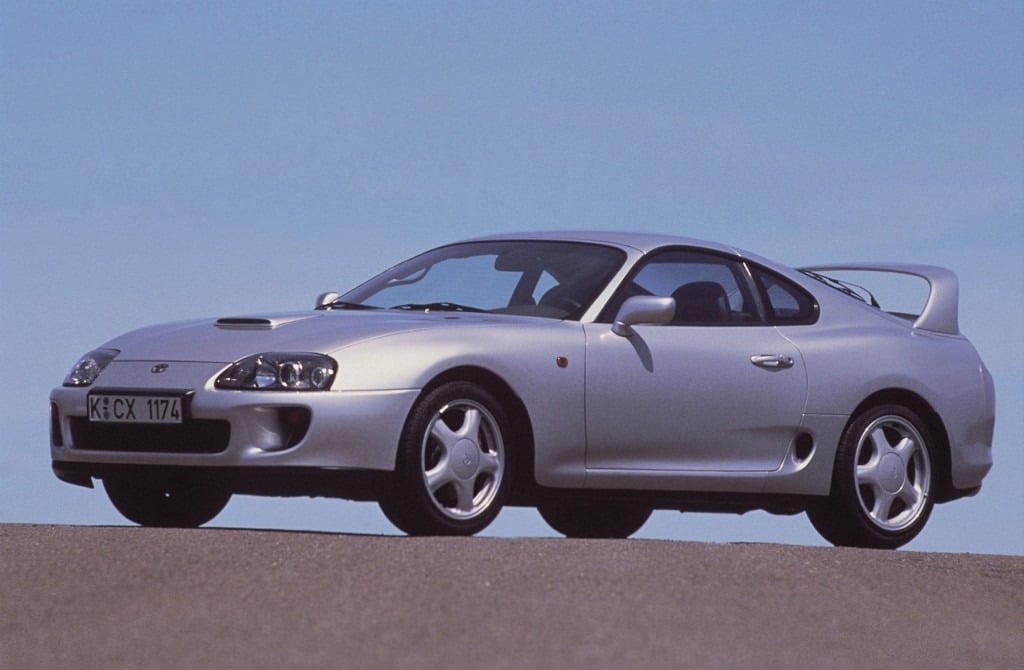
The Toyota Supra 2JZ is one of those rare cars that managed to live multiple lives at once. It was born as a serious grand touring performance machine. It matured into a cult tuning platform. It became a global pop-culture icon. And then, over time, it developed a kind of mechanical mythology that few Japanese performance cars have ever matched. To drive one is to step into a story that is much larger than the car itself.
To understand why the Supra matters, you need to understand what Toyota was trying to build. The company had already proven that it could make reliable, well-engineered sports cars. But the Supra represented something more ambitious. It was not merely a sporty coupe with nice styling and decent straight-line pace. It was Toyota’s attempt to build a proper flagship performance machine—something capable of standing proudly in a conversation that included European grand tourers and serious sports coupes from all over the world.
The most famous version of the Supra, and the one most people mean when they say “Supra 2JZ,” is the fourth-generation A80 model, sold through the 1990s and into the early 2000s in many markets. This is the car that came to symbolize Japanese performance excess before emissions rules, changing market tastes, and economics made such cars harder to justify. Its styling was smooth, round, and aerodynamic—an unmistakable product of its era, yet still handsome in a way that has aged surprisingly well. But as beautiful as the shape is, the real legend lies under the hood.
The twin-turbocharged 3.0-liter inline-six known as the 2JZ-GTE is one of the most revered engines in performance-car history. Its reputation is not an accident, nor is it just the result of internet exaggeration. It earned that status because it combines strength, smoothness, and tuning potential in a way that is almost absurd by modern standards. In factory form, it is already refined and powerful enough to make the Supra feel serious. But enthusiasts quickly discovered that the engine’s internal strength left room for far more than Toyota delivered from the factory.
That is part of what makes driving a Supra 2JZ so significant. You are not just driving a fast car. You are driving one of the foundational legends of the global tuning world. It is a machine that taught generations of enthusiasts what overbuilt engineering feels like. In stock or near-stock form, the car already provides a wonderful mix of boost, balance, and confidence. In modified form, it can become almost cartoonishly powerful. But even before you touch the throttle aggressively, there is something unmistakable about the way the car carries itself. It feels serious. It feels intentional. It feels as if Toyota knew it was building something that had to endure judgment.
From a driving standpoint, the Supra is fascinating because it sits between multiple identities. It is not as razor-sharp and delicate as a lightweight European sports car. It is not a brutish American muscle machine either. It is a powerful rear-wheel-drive coupe with genuine GT DNA, meaning it can feel composed, muscular, and stable at speed while still retaining enough Japanese precision to keep the experience engaging rather than clumsy.
The rear-wheel-drive layout matters here. It gives the Supra a proper performance-car architecture—front engine, driven rear axle, long hood, and the kind of power delivery that makes the driver feel involved in the way the car rotates and pushes through corners. Add the twin-turbocharged inline-six, and you get a car whose power is not only strong but dramatically delivered. When the boost comes in, the Supra does not feel casual. It feels purposeful, almost theatrical. Even by today’s standards, that experience can still make an impression.
But the Supra’s importance is not limited to speed. It matters because it represents an era when Japanese automakers were building halo performance cars with a seriousness that challenged Europe and America directly. Cars like the Supra, Skyline GT-R, NSX, and RX-7 were not just products. They were statements. They said that Japanese engineering could be reliable, technically advanced, and emotionally thrilling all at once.
Driving a Supra also teaches you something about automotive culture. It teaches you how a car becomes a symbol. Very few machines manage to satisfy both engineers and dreamers equally well. The Supra does. Engineers respect its durability. Tuners respect its headroom. Drivers respect its composure. Fans respect its style and cultural legacy. Pop culture embraced it, but the reason it survived beyond the hype is that the car had real substance underneath the fame.
If you are lucky enough to drive one, especially a well-kept example, pay attention to what the car is doing beyond the famous engine. Notice the mechanical confidence. Notice the broad-shouldered stability. Notice the strange balance between refinement and latent aggression. The Supra is not a nervous, lightweight, twitchy experience. It is more mature than that. It feels like a high-speed machine that was meant to cover ground with force and composure.
That is also why it remains classy. The original article calls it classy in every way, and that is not an overstatement. The car has presence without needing absurd theatrics. It is athletic, but not clownish. The shape is purposeful. The engine is legendary. The entire package carries a kind of confidence that explains why the Supra occupies such a permanent place in enthusiast memory.
If you only ever drive one Japanese performance icon in your life, the Supra 2JZ is among the strongest candidates. It is a car that lets you feel the intersection of engineering strength, cultural influence, and genuine rear-drive performance. More than that, it lets you understand why some cars stop being products and become myths.
Bugatti Veyron EB 16.4
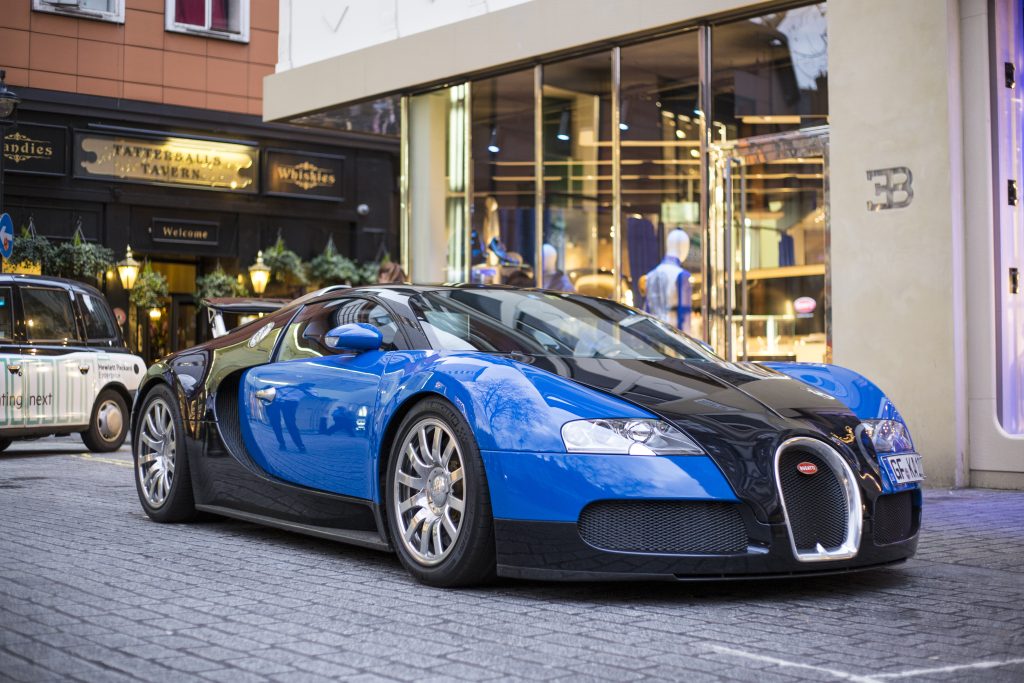
There are fast cars, there are exotic cars, and then there is the Bugatti Veyron EB 16.4 — a machine that arrived like an engineering dare. To understand its significance, you have to remember the context of its launch. Before the Veyron, the idea of a production car with roughly 1,000 horsepower and a top speed around 250 mph or more sounded less like a market-ready product and more like the fever dream of an unrestrained concept designer. Yet Bugatti made it real. And in doing so, it did not merely produce a quick supercar. It redefined the outer limits of what a road car could be.
When the Veyron entered the market in the mid-2000s, its numbers were shocking enough to feel fictional. A top speed of roughly 267 mph. A quad-turbocharged 16-cylinder engine. Around 1,000 horsepower. A cooling system so demanding that it required a small army of radiators just to survive the heat. It was not simply powerful; it was excessive in the purest, most deliberate sense. This was not excess born from gimmickry. It was excess born from a design target that almost no one believed could be delivered in a usable, road-legal package.
The engine itself became one of the Veyron’s central talking points. A W16 with four turbochargers is the sort of specification that sounds outrageous even now. It was designed not just to make huge power, but to make it in a way that remained controllable, stable, and exploitable on the road. That balance is what separates the Veyron from simpler forms of brute force. The car is not just a straight-line weapon. It is a comprehensive engineering statement about what happens when cost, complexity, and development ambition are pushed to a level most manufacturers would never dare approach.
And that is exactly why you should drive one at least once if fate ever gives you the chance. The Veyron is not merely a rare car. It is an educational experience. It teaches you what extreme engineering feels like when the goal is not only speed, but speed without obvious chaos. Many very fast cars feel dramatic, twitchy, or slightly unstable at the edge. The Veyron’s gift is different. It makes enormous power feel almost orderly. That is part of what makes it so astonishing.
Driving the Veyron is not like driving a stripped race machine for the road. It is much stranger than that. It combines absurd performance with luxury-level polish. That means the cabin is not just functional — it is trimmed like a prestige object. The controls do not ask you to tolerate discomfort in exchange for performance. The seats, the materials, and the refinement all remind you that Bugatti was not trying to build a loud track toy. It was trying to build the ultimate high-speed grand luxury machine.
This duality is essential to understanding the Veyron. It is at once a hypercar and a luxury object. It can behave like a high-speed engineering experiment, yet also like an expensive, highly finished road car. That balance is so difficult to achieve that it remains one of the Veyron’s greatest achievements. Many supercars can chase speed by sacrificing usability. The Veyron attempted something more difficult: retaining civility while reaching numbers that previously lived in the realm of fantasy.
The cooling system tells you a lot about the madness of the project. The original article notes that the powertrain required multiple radiators for cooling, and that is one of those details that makes the car feel almost surreal. High power is easy to brag about on paper. Managing the heat that comes with it, especially in a road car expected to idle in traffic and behave politely when needed, is a different challenge altogether. The Veyron’s packaging and thermal management are therefore not side notes — they are part of the miracle.
Then there is the financial reality. The article mentions that this machine is out of reach for most people, especially anyone without a million-dollar budget. That understatement is almost charming. The Veyron was never meant to be democratic. It exists in that rarefied air where cars become luxury engineering objects rather than ordinary consumer products. Yet the reason it belongs on a “drive before you die” list is precisely because it represents something most people will never encounter otherwise: the point where engineering ambition outgrows conventional restraint.
What does the Veyron actually feel like? At ordinary road speeds, the first surprise is how controlled and composed it seems. It does not constantly scream at you about its performance. It is not trying to feel dangerous at every moment. That is part of the genius. The menace is contained. It is there, but disciplined. Then, when you lean into the throttle properly, the car reveals another layer of reality. The acceleration does not merely feel strong. It feels decisive, deep, and inexhaustible. It is the sort of acceleration that does not ask whether you are ready; it assumes the answer should already be yes.
What truly makes the Veyron worth driving once, though, is not just the acceleration figure or the top-speed bragging rights. It is the insight it gives you into how far engineering can be pushed when a manufacturer decides to build something almost irrational. It teaches you that a car can be both a mechanical masterpiece and a philosophical statement. The Veyron says something bold: if the laws of physics can be respected but stretched, and if the financial constraints are removed, then human beings will build machines that border on the absurd simply because they can.
That matters in automotive history. The Veyron did not just arrive and join the supercar club. It forced the industry to reconsider the ceiling. Suddenly, “fast enough” had been publicly redefined. Benchmark culture changed. Engineering bravado changed. Consumer imagination changed. Even people who had no chance of owning one felt its impact because it shifted the conversation around what a production car could mean.
There is also something strangely emotional about the Veyron once you move beyond its statistics. It represents a moment when one company chose to pursue an answer to a question almost no one was practical enough to ask: what if we build the most overachieving road car the modern world has ever seen? That kind of ambition is rare. It belongs on a once-in-a-lifetime drive list because very few cars embody the words “engineering excess” so completely and so beautifully.
If you ever drive one, do not reduce the experience to speed alone. Notice the calmness. Notice the way the car makes impossible performance feel disturbingly manageable. Notice the craftsmanship that surrounds the violence. That contradiction — elegance wrapped around mechanical overkill — is what makes the Veyron unforgettable.
1964 Ford Thunderbolt
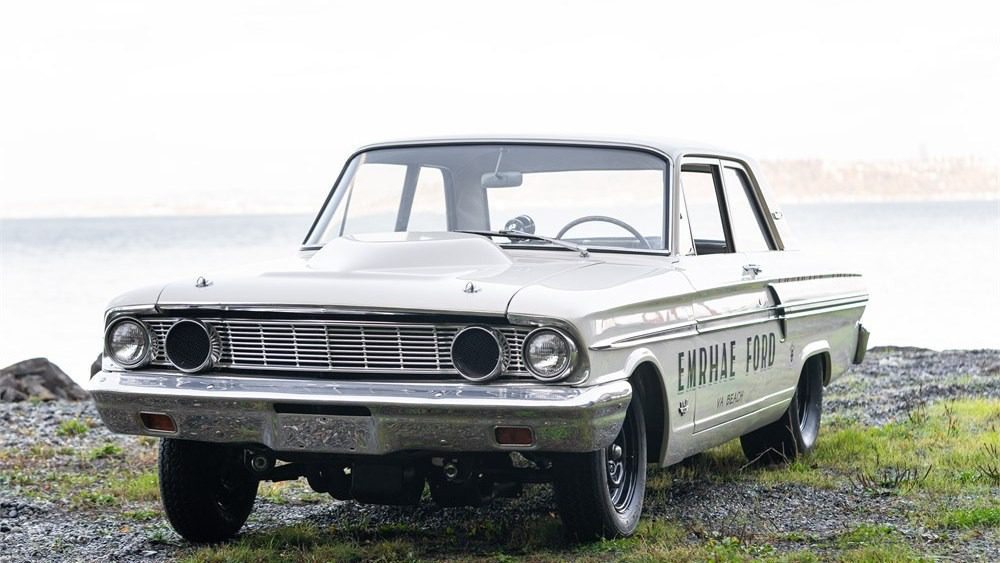
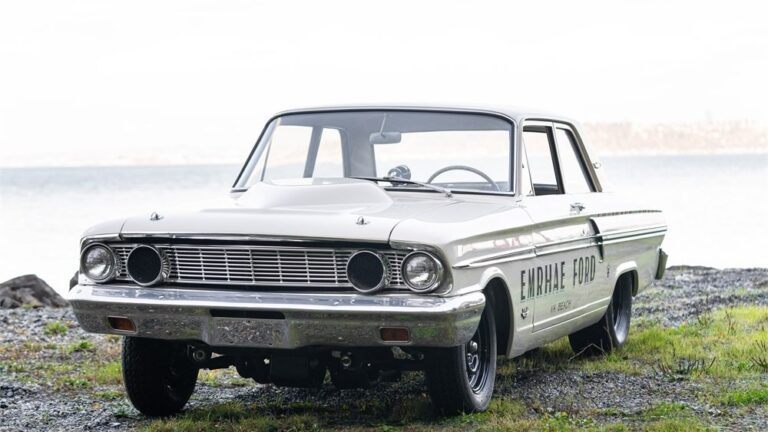
If the Bugatti Veyron represents engineering excess refined into polished modern speed, the 1964 Ford Thunderbolt represents something far older, rougher, and more primal: the era when Detroit built road-legal drag weapons by taking ordinary family-car shells and stuffing them full of racing intent. There are faster cars in absolute terms. There are more sophisticated cars, far more comfortable cars, and certainly easier cars to drive. But there are very few cars that capture old-school American performance culture with the same force as the Thunderbolt.
At first glance, the Ford Thunderbolt almost plays a joke on the untrained eye. It starts from the Ford Fairlane platform, a shape that does not immediately scream “drag-strip predator” in the way an exotic sports car does. But that disguise is exactly what makes the Thunderbolt so fascinating. It is a reminder of a time when performance engineering could be almost bluntly honest. The mission here was not subtle: make the car brutally effective over a quarter-mile, remove what is unnecessary, and deliver a machine built around one clear task.
The original article notes that only 100 of these cars were made. That rarity alone would make the Thunderbolt interesting. But rarity is not the real reason it matters. It matters because it was a homologation-style special built with direct racing purpose. It was not designed first as a luxury product or a lifestyle symbol. It was designed to win.
And the heart of that mission was the 427 cubic-inch V8, rated at 425 horsepower. On paper, modern enthusiasts may glance at that number and think it no longer sounds outrageous. That would be a mistake. Context matters. In 1964, this was not just a powerful engine. It was a giant, attitude-filled declaration of intent. Put that much engine in a stripped, focused Fairlane package, and the result is not a balanced all-rounder. It is a muscle-bound quarter-mile specialist that exists to intimidate.
The performance figures tell the story clearly. A quarter-mile in roughly 11.6 seconds at around 124 mph was no joke in the 1960s. This was serious territory, especially for something with road-going identity. The Thunderbolt was not pretending to be civilized in the way modern performance sedans often do. It was a race car wearing enough of a legal disguise to leave the factory.
Driving a Thunderbolt is therefore not just about speed; it is about understanding the character of old-school American performance. This is the kind of car that teaches you what brute force felt like before modern electronics, traction management, adaptive suspension, and countless layers of refinement began softening the experience. A car like this asks more from the driver. It feels mechanical, physical, and immediate. It does not flatter you with digital safety nets or fine-tuned civility. It makes you respect power the old-fashioned way.
That is exactly why it belongs on a once-in-a-lifetime drive list. Modern performance is often astonishingly accessible. Many contemporary cars are so well engineered that enormous speed can feel almost casual. The Thunderbolt comes from a different philosophy. It wants you to know what it is. It wants you to feel the engine, the weight transfer, the rawness, and the way performance once depended on a much more direct conversation between machine and driver.
There is also historical importance here. The Thunderbolt is part of the story of America’s drag-racing culture and factory performance wars. It came from a period when manufacturers were deeply invested in proving themselves through motorsport and street credibility. Cars were not only transportation tools; they were brand statements. Winning on the strip meant something. Power was identity. Big engines were not hidden behind efficiency narratives or softened by corporate caution. They were displayed proudly.
What does a car like the Thunderbolt teach a modern driver? First, it teaches that speed once came with much more theater. Second, it teaches that a car can be deeply important without being universally versatile. The Thunderbolt is not a modern do-everything performance machine. It is focused, uncompromising, and gloriously narrow in purpose. And that narrowness is part of the charm.
Driving it also reveals something about chassis-era engineering. A lot of modern drivers have never experienced a vehicle where the engine’s personality so completely dominates the rest of the car’s identity. In the Thunderbolt, the powertrain is not one part of the experience. It is the experience. Everything else is there to survive or support what the engine is trying to do.
There is a kind of honesty in that. No fake sophistication. No filtered aggression. No attempt to make the machine appear more polished than it is. The Thunderbolt is a brute. But it is a brilliantly purposeful brute, and because of that, it gives the driver access to a piece of performance history that newer cars can only imitate from a distance.
If you drive a Thunderbolt once in your life, you are not just driving a rare Ford. You are touching a time when factory performance was simpler, louder, and more willing to be ridiculous in the best possible way. That experience is worth more than a spec-sheet comparison. It is a direct connection to the emotional core of American drag-inspired muscle.
It may not be elegant like a Ferrari or technologically impossible like a Bugatti, but it does something neither of those cars can do in quite the same way: it reminds you that performance can be gloriously primitive and still feel deeply important.
Ferrari F40
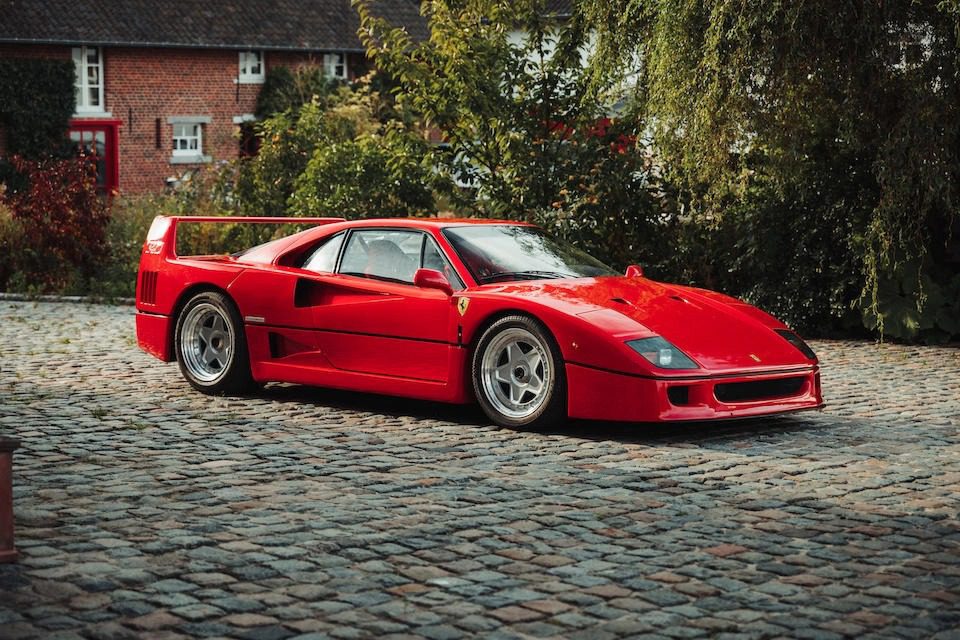
There are supercars that impress you with numbers, and there are supercars that unsettle you with presence. The Ferrari F40 belongs firmly in the second category. Yes, its performance was extraordinary for its time. Yes, it was one of the fastest road cars in the world when it arrived. But the reason the F40 remains essential is not just because it was fast. It is because it feels like a machine built without emotional compromise.
Introduced in 1987 and produced into the early 1990s, the Ferrari F40 became one of the defining supercars of its generation almost immediately. The original article rightly describes it as one of the most sought-after cars of its era, and that remains true today. It was a symbol of speed, wealth, obsession, and Ferrari’s own willingness to build something that felt unapologetically extreme. It was also historically important because it was the last Ferrari personally approved by Enzo Ferrari before his death. That alone would have given the car a special aura. But the F40 did not rely only on biography. It earned its legend dynamically.
To drive an F40 is to understand a kind of automotive honesty that modern supercars rarely offer. Today’s high-performance exotics are often astonishingly capable, but they are also increasingly mediated by electronics, stability systems, active aerodynamics, dual-clutch transmissions, drive modes, and algorithmic confidence. The F40 comes from another world. It is turbocharged, rear-wheel-drive, light, aggressive, and startlingly direct. It does not pamper. It does not flatter. It does not pretend that you and it are equal participants in the relationship. It lets you know very quickly that respect is required.
The 2.9-liter twin-turbo V8 under the rear deck is central to the experience, of course. It produces the kind of delivery that helped define the word “turbo” for an entire generation of enthusiasts: lag, build, then a sudden wave of urgency that demands attention. Modern turbocharged engines are often so well managed that their boost feels almost naturally aspirated in its smoothness. The F40 is not interested in making things that easy. It reminds you that forced induction once came with texture and drama.
That is one reason every serious enthusiast should drive one at least once. The F40 teaches you what “raw” truly means in a high-performance road car. It is not just a stripped interior or a loud exhaust note. It is a whole philosophy. It means the chassis talks constantly. It means the engine feels alive in ways that are not always polite. It means speed does not arrive in a calm, managed wave, but in a form that requires judgment and commitment.
The original article notes that the F40 had a top speed of nearly 200 mph and became the world’s most expensive car when released. Both points reflect how extraordinary the car was in its moment. But statistics alone cannot explain why the F40 still matters decades later. Its power lies in its personality. The F40 is memorable because it feels like it was built around one emotional instruction: remove anything unnecessary, preserve only what makes the car faster and more alive, and let the driver confront the result.
That philosophy shows up in everything. The interior is sparse compared with luxury-oriented Ferraris. The ride can feel unforgiving. The cabin does not isolate you from the car’s intentions. This is a machine that wants you to know you are driving something serious. And that seriousness is exactly why it remains compelling in a world now full of easier, faster, more digitally polished alternatives.
There is also something psychologically important about the F40. It represents a point where Ferrari, as a brand, seemed to distill its own mythology into one object. It had speed. It had danger. It had beauty, but not in a soft or decorative way. Its beauty was aerodynamic and tense, almost weapon-like. It looked fast standing still in a way that still makes modern viewers pause.
From an expert perspective, the F40 is essential because it reveals what happens when performance is still allowed to feel difficult. Modern cars often optimize away difficulty in the name of speed. That makes them more accessible, but it can also make them emotionally thinner. The F40 belongs to the school of thought that says difficulty is part of meaning. When a car demands care, concentration, and courage, the reward becomes more memorable.
And yet, the F40 is not simply a primitive monster. That would be too easy a reading. Beneath the rawness is intelligence. Ferrari did not accidentally build a legend. It engineered one. The lightweight construction, the aero, the powertrain response, the visual drama—these were all parts of a coherent performance statement. The result is not chaos. It is disciplined aggression.
If you ever have the privilege of driving one, pay attention not just to the speed, but to the sense of tension inside the experience. The steering, the turbo response, the low seating position, the noise, the visibility, the way the road feels through the chassis—everything in the F40 tells you that the car expects you to show up fully. It is a rare thing in the modern world: a machine that refuses to soften itself for your comfort.
That is why it belongs on this list. The F40 is not simply a Ferrari everyone admires. It is a benchmark in emotional performance. To drive one is to understand what a truly uncompromising supercar feels like before electronics began turning danger into convenience. It is one of the clearest, purest answers to the question of what a legendary car should be.
Jeep
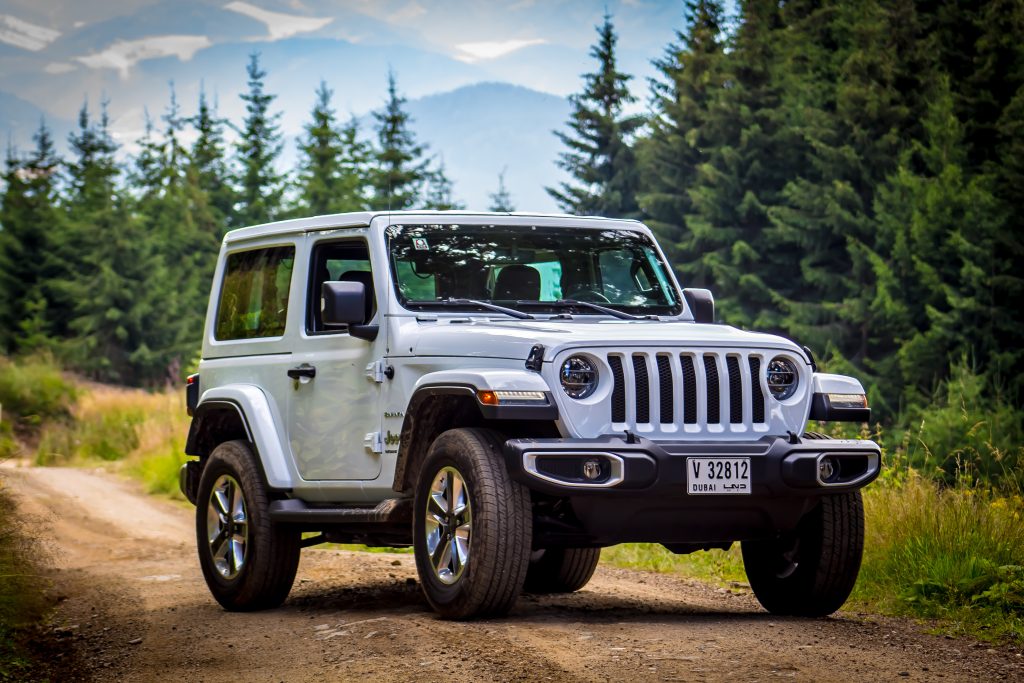
At first glance, the Jeep may seem like an odd inclusion next to the Supra, Veyron, Thunderbolt, and F40. It does not belong to the same performance category. It does not chase top speed. It does not announce itself as a hypercar, drag special, or turbocharged halo coupe. Yet from the perspective of pure driving experience, the Jeep absolutely deserves a place on a once-in-a-lifetime list.
Why? Because speed is only one dimension of driving. A person who has only experienced cars on smooth pavement at road-going speeds has experienced only a fraction of what a vehicle can be. The Jeep, especially in Wrangler-related forms such as the Wrangler Unlimited, represents something different: mobility beyond polished roads, beyond urban comfort, beyond the assumption that driving is just lane discipline and throttle response. It teaches a different language of movement.
The original article calls the Jeep one of the most well-known utility and off-road vehicles ever produced, and that is difficult to argue with. Jeep is not just a model line; it is practically a category in the minds of many people. The name has become shorthand for ruggedness, trail capability, open-air freedom, and the idea that the road does not need to be perfect in order for the journey to continue.
That is what makes driving a Jeep so important at least once in life. It broadens your definition of what driving can mean. In a world where many performance conversations revolve around 0–60 times, lap times, horsepower figures, and Nürburgring bragging rights, the Jeep offers a more physical, terrain-based kind of confidence. It is not asking, “How fast can you get there?” It is asking, “Can you get there at all?”
The Wrangler family in particular embodies this philosophy beautifully. With its upright shape, removable doors or roof in some variants, visible hinges, robust axle setup, and trail-oriented engineering, it makes no attempt to behave like a sleek sports crossover. It is mechanically and visually honest about its mission. That honesty is part of its charm. It tells you immediately that this vehicle values durability, articulation, and rough-terrain competence above polished road manners.
That is not a criticism. It is exactly why everyone should drive one at least once. A Jeep gives you access to experiences most ordinary road cars simply cannot offer. Muddy tracks, rocky paths, loose surfaces, washboard roads, uneven climbs, narrow trail lines—these environments require a different kind of automotive literacy. Steering inputs matter differently. Throttle application matters differently. Traction becomes a conversation rather than an assumption.
Driving a proper Jeep off-road or even on mixed surfaces teaches humility. It reminds you that capability is not always glamorous. Sometimes the greatest automotive satisfaction comes not from going fast, but from going confidently where lesser vehicles would hesitate. It is a different type of respect.
The article mentions models such as the Wrangler, Cherokee, and CJ, and this is worth emphasizing: Jeep’s legacy is broad. But when most enthusiasts speak of the “essential” Jeep experience, they usually mean something close to the Wrangler ethos—body-on-frame ruggedness, visible mechanical honesty, and genuine trail competence. It is that spirit, more than one exact trim or year, that deserves to be experienced.
There is also a cultural reason the Jeep belongs here. Few vehicles carry their identity so clearly. The moment you see one, you know roughly what it stands for: utility, adventure, rough-terrain confidence, and a certain anti-polished sincerity. It is the opposite of a car that needs explanation. The vehicle tells you its own story immediately.
And from a driving perspective, that story is refreshing. Modern cars are often designed to isolate you from imperfection. They smooth over surfaces, mute mechanical sensations, and hide the work being done beneath layers of refinement. A Jeep, especially one designed with serious off-road ability in mind, reminds you that some vehicles are meant to engage directly with the environment instead of insulating you from it.
That engagement changes how you think about control. On smooth asphalt, control often means precision, grip, and speed. Off-road, control means patience, line choice, wheel placement, torque delivery, and trust in mechanical capability. It is a slower kind of concentration, but no less fascinating. In fact, for many drivers, it becomes more memorable because it is so different from the norm.
There is another reason the Jeep is important: it democratizes adventure in a way that some dream cars never can. A Bugatti may represent the limits of wealth-fueled engineering. A Ferrari may represent emotional supercar theatre. But a Jeep represents access—to trails, to terrain, to experiences that are less about exclusivity and more about participation. That kind of accessibility gives it a very different emotional value.
To drive a Jeep once in your life is to discover that the joy of driving does not always live in speed or prestige. Sometimes it lives in the slow, deliberate, satisfying process of taking a machine over ground that resists smooth progress. Sometimes it lives in the sense that the road has not ended—only changed character.
That is why a Jeep belongs in this company. It stands as the representative of a different truth: a car can be deeply essential not because it is the fastest or the rarest, but because it reveals a form of driving you may otherwise never understand.
Why These Five Cars Belong Together — Even Though They Seem So Different
On paper, this is a strange group. A Japanese tuning icon. A million-dollar hypercar. A 1960s drag-homologation brute. An uncompromising Italian supercar. And an off-road legend. They do not share a single obvious category, and that is exactly why they work so well together.
What connects them is not body style, performance metric, or market segment. What connects them is that each one reveals a distinct truth about driving.
- The Supra teaches you about engineering strength, cultural legacy, and the long shadow of tuning mythology.
- The Veyron teaches you about excess, precision, and what happens when engineering ambition becomes almost irrationally bold.
- The Thunderbolt teaches you that raw purpose and power can define an era more strongly than luxury or sophistication.
- The F40 teaches you that the most unforgettable cars are often the ones that still demand bravery and respect.
- The Jeep teaches you that driving is not only about speed—it is also about terrain, freedom, and capability.
This is the real point of a once-in-a-lifetime driving list. It should not simply gather “the best” cars in one category. It should stretch your understanding of what automotive greatness can look and feel like.
If you drove all five of these vehicles, you would come away with a far broader understanding of the automobile as a human invention. You would understand engineering pride, raw mechanical force, luxury excess, emotional performance, and practical adventure in a much deeper way than any one style of car could teach you by itself.
If You Only Got One Chance, Which Should You Choose?
This is the kind of question that tends to split enthusiasts immediately, and rightly so. The answer depends on what kind of driving experience moves you most.
If your imagination is drawn to technological ambition and impossible speed, the Bugatti Veyron may be the most shocking choice. If you want the most emotionally raw supercar experience of the group, the Ferrari F40 is hard to beat. If you want to understand why one engine platform became almost sacred in tuning culture, the Toyota Supra 2JZ is the obvious candidate. If old-school American brute force speaks to you, the 1964 Ford Thunderbolt offers something no modern muscle car can replicate in exactly the same way. And if you want to experience a form of driving that expands your definition of the road entirely, the Jeep may be the most educational and unexpectedly memorable of them all.
As an expert, I would answer the question this way: there is no single correct choice, because each car answers a different emotional need. The most important thing is not to chase only the car with the biggest number or the highest resale value. Chase the experience you feel least likely to encounter again. Chase the kind of driving that will leave you changed.
That is the real standard for a once-in-a-lifetime car. Not ownership. Not image. Not status. Transformation.
Final Thoughts
There are cars we admire from a distance, and there are cars we need to experience directly if we want to understand why the automotive world inspires so much obsession. The five vehicles in this article belong firmly in the second category. They are not all practical. They are not all affordable. They are not all easy to access. But each one offers a form of automotive truth that cannot be fully appreciated through photos, videos, or statistics alone.
The Toyota Supra 2JZ reminds us that engineering integrity and tuning mythology can create a legend that outlives its production run. The Bugatti Veyron teaches us that ambition, when funded and focused, can turn madness into reality. The Ford Thunderbolt proves that raw intent can make even a modest silhouette unforgettable. The Ferrari F40 shows us what happens when speed, danger, and authenticity are left gloriously unsoftened. And the Jeep, standing proudly among these icons, reminds us that some of the most meaningful driving experiences are not about speed at all—but about freedom, terrain, and confidence beyond pavement.
In the end, a great car is not just one that performs well. It is one that leaves a mark on your memory so clearly that years later, you can still recall the feel of the wheel, the sound of the engine, the posture of the cabin, and the way your pulse changed when the machine revealed its true character. That is why everyone should drive certain cars at least once. Not because collecting experiences is fashionable, but because some cars reveal entire chapters of automotive history in a single drive.
If life ever gives you the chance to climb into one of these legends, do not hesitate too long. Some cars are meant to be admired. These are meant to be understood — and the only real way to understand them is from the driver’s seat.