
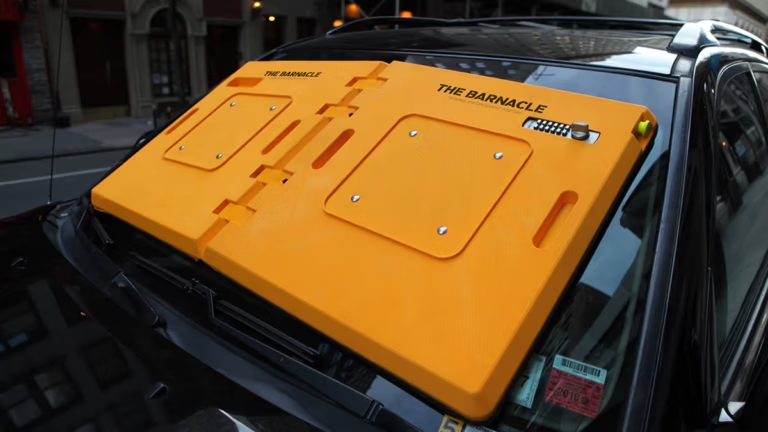
Getting your car wheel-clamped is one of those experiences that feels personal, even when it is not. You walk back to your parking spot, and there it is, a big metal boot locked onto your wheel because of unpaid tickets or a parking violation. It is heavy, it looks difficult to remove, and the whole situation makes you feel stuck waiting for someone else to fix your day.
That is why the idea behind Barnacle Parking Enforcement is turning heads. Instead of immobilizing your car with a bulky metal clamp on the wheel, Barnacle takes a completely different approach. It is a flat, lightweight device that locks onto your windshield.
Yes, you read that right. The device attaches to the glass, not the tire. And once it is on, your car is not going anywhere safely. This is not only a different look. It is a different enforcement workflow, a different driver experience, and potentially a different cost structure for the people running parking enforcement.
Let us slow down and break it all down. You will learn how Barnacle works, why officers prefer it, how paying and release works, and what you should do if you ever see one on your windshield. I will also include practical ways to avoid the situation in the first place, because prevention is always cheaper than any device removal.
Barnacle Parking Enforcement: why a windshield clamp changes everything
Traditional wheel clamps are built for one goal: stop the car from moving. They do that by locking onto your wheel. The issue is that this method is heavy, bulky, and physically demanding for officers. It also takes time to install and remove, which matters when officers are handling multiple vehicles across a busy area.
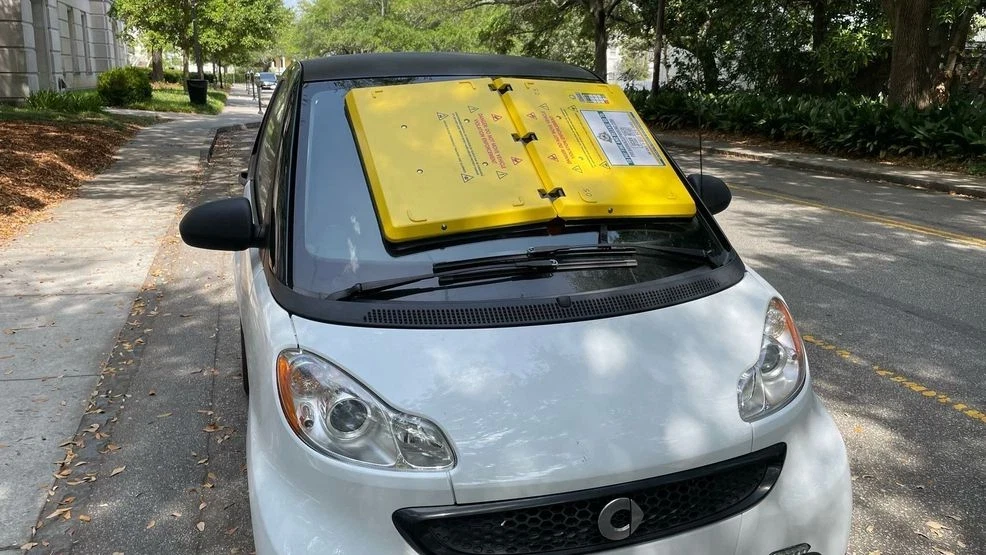
Barnacle approaches the same goal, immobilization, but with a different mechanism. Instead of locking onto your wheel, it locks onto your windshield. Once attached, it blocks the driver’s view, which means driving safely becomes impossible. You are not only locked out of movement. You are locked out of visibility and control.
This is not only about aesthetics or convenience. When enforcement tools are faster to deploy and easier to carry, the enforcement team can respond more efficiently. When removal is smoother, the system reduces the “time and effort” part of enforcement. That affects how parking enforcement operations run day to day.
Why locking onto the windshield works as immobilization
A wheel clamp physically prevents wheel rotation, which stops movement. Barnacle uses a different physics problem. It prevents safe movement by attaching to your windshield and blocking visibility. If the driver cannot see clearly, the car cannot be driven safely, even if the wheels are not mechanically locked.
That is the heart of the approach. It turns a “metal boot” problem into a “vision obstruction” problem. From the driver’s perspective, it still feels like you cannot leave. From the officer’s perspective, it can be faster and lighter to handle.
How the Barnacle works (and why it is hard to beat)
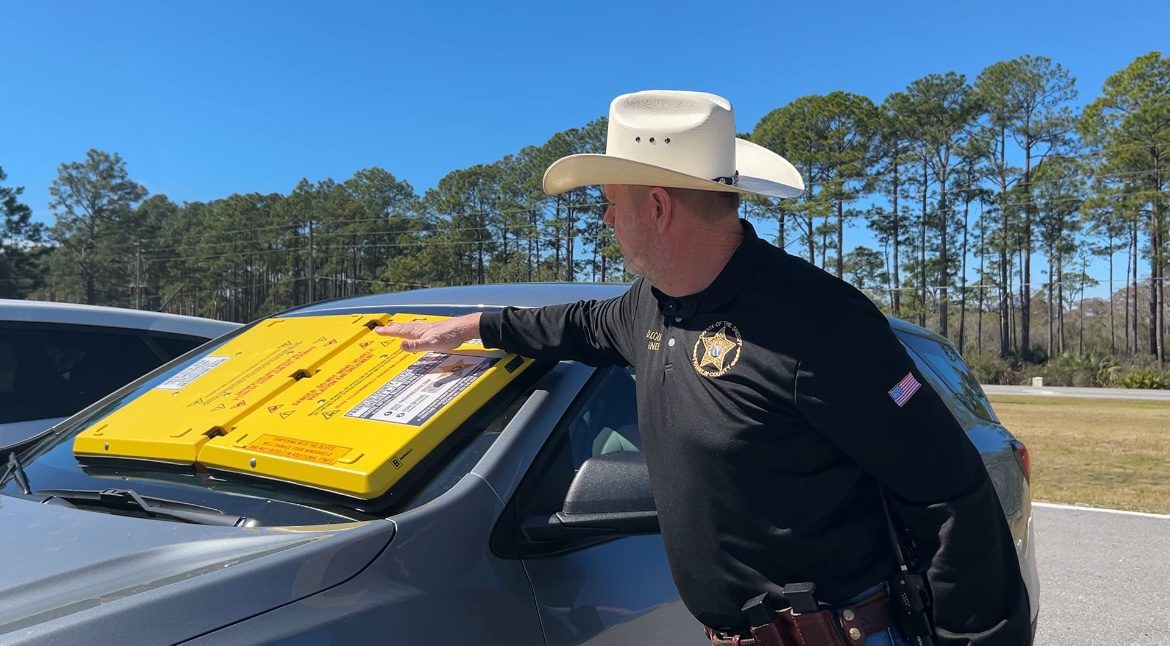
The Barnacle device uses industrial-strength suction cups that attach directly to the windshield. The attachment is designed to be firm enough that it does not fall off like a loose sticker or a basic suction hook. The goal is reliability in real parking situations where temperature, vibration, and vehicle movement can all test equipment.
Once attached, the Barnacle completely blocks the driver’s view. This is not a small inconvenience like a partial blind spot. It is intended to interfere with visibility in a way that makes driving unsafe. If you are thinking, “I will just drive carefully,” the whole design contradicts that idea.
Some drivers instinctively think they can fix the problem quickly by leaning out or forcing movement anyway. Barnacle is designed to make those attempts impractical too. The device is not just sitting there. It is actively obstructing vision and keeping the situation impossible to ignore.
The built-in alarm system: why tampering draws attention
Barnacle also includes a built-in alarm system. If someone tries to move the vehicle while the Barnacle is attached, the alarm goes off. That changes how drivers and would-be interferers behave, because it turns the situation into one that immediately attracts attention.
So even if you try to “test” whether you can get going, you are not only fighting a device. You are also triggering an alarm. From an enforcement perspective, that is a major deterrent. It discourages escape attempts and increases the chances that enforcement response happens quickly.
From a human perspective, it is also a psychological barrier. People do not want to stand there with an alarm blaring, especially when they already have a violation to resolve. That is how Barnacle discourages risky driving or tampering as a “solution.”
Why parking enforcement officers prefer the Barnacle
If you run parking enforcement as a team, you deal with practical issues, not just policy. You need equipment that is quick to carry, quick to deploy, and realistic for busy shifts. Barnacle is designed around those real-world needs.
According to the original breakdown, Barnacle solves several headaches officers often experience with traditional clamps:
- It is lightweight and foldable — Officers can carry multiple units without the physical strain of hauling heavy metal boots.
- It attaches quickly — Suction cup installation is faster and less labor-intensive than wrestling a clamp onto a wheel.
- It reduces operational costs — Less equipment weight, less time per vehicle, and fewer personnel needed.
In plain terms, when enforcement tools are easy to deploy, teams can focus on documentation and compliance instead of exhausting physical labor. When the process is faster, the entire system becomes less disruptive and more consistent.
Even if you never cared about the officer side of parking enforcement, your driver experience can improve when processes are efficient. A quicker installation can also mean a faster resolution timeline once payment is made. That matters if you are trying to get back to work, school, or family responsibilities.
Pay your fine and release it yourself: the clever part
This is the part many people find most interesting. Barnacle is designed to let violators resolve the issue on the spot. Instead of waiting for an officer to return with removal equipment, the device includes a built-in credit card swipe and keypad.
That means the process can go like this: you approach your car, the Barnacle stays attached and blocks your view, and you use the keypad plus credit card swipe right on the device to pay the fine. Once payment goes through, the Barnacle releases automatically.
So the system is designed to remove waiting. That can be a major improvement compared to older setups where an officer must return, unlock, and remove the device manually. Waiting time is often what ruins a person’s day, so anything that shortens that tends to be viewed as “smart,” even when you feel annoyed.
There is one key catch. After the Barnacle releases, you are required to return the device to a designated drop-off point. It is not yours to keep. The system is meant to be shared by the enforcement team, so the device must go back to where the program expects it.
That return requirement changes driver behavior too. It signals that the device is temporary. It also helps maintain operational control. If devices were not returned, enforcement teams would spend more time tracking missing equipment, which can erase some of the cost savings.
Whether you see this as genius or just another way to ruin your day, it is still a real shift. Barnacle is described as lighter, quicker to deploy, cheaper to operate, and harder for parking violators to ignore. That combination is exactly why this kind of technology tends to spread when enforcement budgets tighten.
What drivers should expect if they see a Barnacle on their windshield
If you come back and notice a Barnacle attached to your windshield, your first reaction might be panic or anger. That is normal. But the next step matters. Handle it calmly and safely. The goal is not to “fight” the device. The goal is to resolve the violation and get your car back as quickly and safely as possible.
Because Barnacle blocks your view and includes an alarm system, you should assume that attempting to drive while it is attached is not a practical option. Your safer approach is to treat it as immobilization that ends with payment and release.
Step 1: stay safe and do not try to “test drive” it
Do not try to move the vehicle to “see if it comes off.” The suction cup attachment plus the built-in alarm is specifically meant to discourage movement. If you drive anyway, the alarm is designed to activate. That escalation does not help you. It only complicates the situation.
Also, keep your attention on what you are doing. If the device blocks your windshield view, you might be tempted to lean out or adjust your posture. That is risky. Safer drivers keep their bodies inside the vehicle and focus on resolving payment and paperwork.
Step 2: use the built-in credit card swipe and keypad
Barnacle is designed with a credit card swipe and keypad, so the process is intended to be self-service. You pay right there on the spot. Once payment is successful, the Barnacle releases automatically.
Tip: have your payment method ready and follow the on-device instructions carefully. When devices include payment systems, they often require specific steps. If you miss one step, release can be delayed.
Step 3: remember the return-to-drop-off requirement
After the device releases, you are required to return the Barnacle to a designated drop-off point. The device is not meant to stay in the driver’s possession. Treat the drop-off as part of the resolution process, not as an afterthought.
If you return it late or leave it somewhere random, enforcement programs can lose track of devices. That can slow future enforcement deployments and increase costs. It can also increase your own risk if program rules require proof of return.
Wheel clamps vs Barnacle: a practical side-by-side comparison
It helps to compare the two systems clearly. The point is not to pick a “team.” The point is to understand what changes for both officers and drivers.
| Aspect | Traditional wheel clamp | Barnacle windshield clamp |
|---|---|---|
| Where it locks | On the wheel | On the windshield |
| How it immobilizes | Prevents wheel movement | Blocks driver view using suction cups |
| Alarm | No built-in alarm described | Built-in alarm triggers if someone tries to move the vehicle |
| Installation effort | Heavy and bulky, physically demanding | Lightweight and foldable, faster suction installation |
| Operational cost | Heavier equipment and more time per vehicle | Reduced equipment weight and less time per vehicle |
| Payment and release | Often requires officer presence to remove | Built-in credit card swipe and keypad, releases automatically after payment |
| Post-release requirement | No device return usually required | Device must be returned to a designated drop-off point |
When you look at it like this, Barnacle’s value becomes clearer. It is not only a different attachment point. It is built around faster deployment, easier self-service payment, and deterrence through alarm activation.
Potential concerns and real-life limitations to understand
Any new enforcement method raises questions about safety, fairness, and practicality. Barnacle has clear advantages in speed and self-service, but drivers still need to understand what could feel different compared to wheel clamps.
Keep in mind the core description says the suction cups attach to the windshield and block the driver’s view. That naturally raises questions like, “Will it damage glass?” or “What about tinted windows?” or “What about weather?” Those are reasonable concerns. The best approach is to focus on what you control as a driver: safe behavior, careful payment, and returning the device correctly.
Safety behavior is still your responsibility
The device blocks the driver’s view. Even after release, treat the car like a normal car. Before driving off, take a moment to confirm everything feels normal and secure. If you were stressed while dealing with the device, it is easy to overlook small details.
Also, do not attempt to move the vehicle while the Barnacle is attached. The system includes a built-in alarm designed to go off if someone tries to move the car. That deterrent exists for a reason.
Why the alarm matters in real enforcement
Traditional wheel clamps rely on weight and physical obstruction. Barnacle relies on visibility obstruction plus an alarm. Those two elements work together. The alarm prevents quiet escape attempts, and visibility obstruction ensures that even if the vehicle starts, the driver cannot safely operate it.
From a driver standpoint, it means you should treat it as “pay and resolve.” If you treat it as “test and escape,” you increase stress and risk, and you reduce your ability to resolve quickly.
What enforcement officers gain day to day
It is easy to focus only on the driver experience. But parking enforcement is a workforce and logistics game. Barnacle’s design is meant to solve practical operational problems, and the original breakdown makes those benefits explicit.
Let us translate those bullet points into a realistic enforcement workflow.
Lightweight and foldable means officers can carry more units
If officers have to walk with heavy metal boots, fatigue and time become limiting factors. Barnacle being lightweight and foldable reduces strain. That means more units can be available during the same shift without increasing staffing.
In busy areas, that changes outcomes. If enforcement can handle more vehicles efficiently, enforcement becomes more consistent. Consistency can reduce the “someone will not enforce today” feeling among repeat violators.
Quick attachment reduces time per vehicle
Wheel clamp installation can be labor-intensive. It takes time to lock the boot onto the wheel securely. Suction cup installation is designed to be faster and less physically demanding. That means less officer time spent doing the install and more time spent on documentation or the next vehicle.
For drivers, faster installation can mean you deal with the issue sooner. For enforcement management, it often means the system runs more efficiently. That can reduce backlog and keep enforcement consistent.
Cost savings and fewer personnel needed
The original breakdown says Barnacle reduces operational costs by lowering equipment weight, reducing time per vehicle, and requiring fewer personnel. In simple terms, cost is tied to staff hours and equipment handling.
When enforcement can resolve issues more quickly and allow self-payment release, the system may reduce repeat returns by officers. That is where cost savings can show up first.
A real-world scenario: what this looks like from arrival to release
Imagine you return to your parking spot and see a Barnacle locked to your windshield. The device blocks your view, and you notice an alert system designed to discourage attempts to move the vehicle.
You have two choices at that moment. You can escalate the stress by trying to drive anyway, or you can resolve it efficiently. Barnacle is built for the second option because it includes a built-in credit card swipe and keypad.
You approach the device, follow the on-device instructions, and pay your fine using your credit card. Once payment is successful, the Barnacle releases automatically. Then you must return the device to a designated drop-off point.
Notice how the process works as a full loop. It is not only immobilization. It is resolution and device return. That is a big difference from older systems where the officer must come back later.
If you have ever waited inside your car for someone to arrive, you already understand why a self-service loop feels better for drivers. It can also feel better for enforcement teams because it reduces follow-up visits.
How to avoid windshield clamping in the first place
Even with a self-service payment system, the best outcome is still avoiding the device entirely. The easiest way to avoid clamping is to treat parking like a checklist, not a gamble.
Here is a practical approach you can use anywhere, whether you park in a busy city center or a smaller neighborhood with strict rules.
A simple parking checklist (quick habits that work)
- Read the sign before you leave the driver seat: Look for time limits, permit requirements, and zone numbers.
- Confirm the exact curb or space rules: Parking rules can vary by a few meters.
- Use your meter or app correctly: Double-check the session start time and the correct zone.
- Do not assume a previous driver followed the rules: A parked car does not guarantee a valid spot.
- Watch for enforcement hours: Some zones enforce evenings, weekends, or overnight.
If you follow that routine, you reduce the chance of running into any enforcement device, including Barnacle. It is not glamorous, but it works.
Frequently asked questions about Barnacle Parking Enforcement
Does Barnacle lock onto the wheel or the windshield?
Barnacle locks onto your windshield, not your wheel. It uses suction cups to attach to the glass and block the driver’s view.
What keeps someone from trying to drive off?
The device blocks the driver’s view, and it also includes a built-in alarm system. If someone tries to move the vehicle while Barnacle is attached, the alarm goes off, which discourages attempts to flee.
Can you pay immediately?
Yes. Barnacle includes a built-in credit card swipe and keypad, so violators can pay right there on the spot. After payment goes through, the device releases automatically.
Do you get to keep the device after it releases?
No. After release, you are required to return the device to a designated drop-off point. It is not yours to keep.
Why do officers prefer this system?
The original breakdown explains that Barnacle is lightweight and foldable, attaches quickly with suction cups, and reduces operational costs. Officers can carry multiple units easily, install faster, and potentially need fewer personnel.
What this means for you as a driver
Here is the practical truth. Barnacle does not remove consequences, but it changes the “how” of the consequence. The immobilization point moves from the wheel to the windshield. The enforcement workflow moves from “officer must return” to “self-service payment and automatic release.”
That means your best strategy is not negotiation or risky attempts to drive. Resolve it correctly and quickly. Pay through the built-in system when applicable, and return the device to the designated drop-off point after release.
Also, take it as a reminder to park smarter next time. Even if this new system is faster for payment, the best time saver is still avoiding the violation in the first place.
Your next move if you want fewer parking surprises
Before you park anywhere strict, ask yourself one direct question: Did I confirm the exact sign rules and enforcement hours for this specific spot, or am I just hoping nobody notices? If you want a simple win, treat every parking decision like you are checking before you get a ticket. That habit beats any enforcement technology, including Barnacle, every single time.