
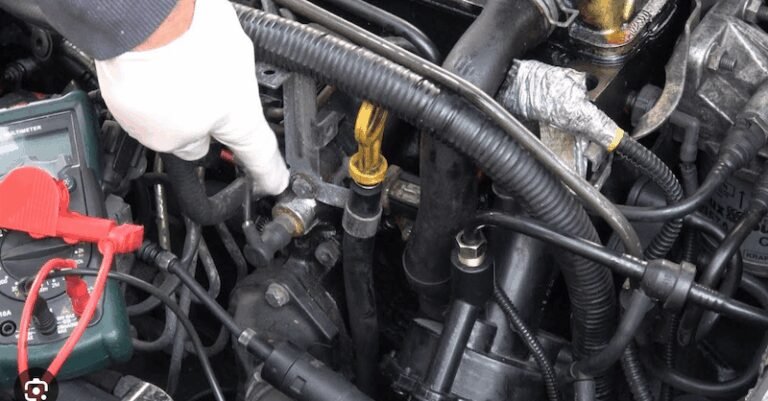
Modern cars rely heavily on sensors to function properly. Almost every system in your engine is constantly being monitored, measured, and adjusted based on data from these small but important components. One of those sensors, the coolant temperature sensor, plays a bigger role in your engine’s behavior than most people realize.
So, will a bad coolant temperature sensor stop your car from starting? The short answer is no, not directly. But here’s the thing: a failing sensor can cause your engine to stall shortly after starting, especially on cold mornings. If your car is refusing to start altogether, the coolant temperature sensor is probably not the culprit. You will want to look elsewhere first.
That said, a faulty coolant temperature sensor is not something you want to ignore. When it starts sending wrong information to your engine’s brain, things can go sideways fast. Poor idling, weird fuel consumption, overheating risks, and a lit-up check engine light are all fair warning signs that something is off.
One more thing to keep in mind before we get into the details: the coolant temperature sensor can only do its job accurately if your coolant level is where it should be. A low coolant level throws off the sensor’s readings entirely. So if you have not checked your coolant recently, that is a good place to start.
What Does the Coolant Temperature Sensor Actually Do?
Think of your engine like a hardworking athlete. The harder it works, the more heat it generates. Your coolant is the water bottle, circulating through the engine and the radiator to pull away all that excess heat. But how does your car know how hot the engine is at any given moment? That is exactly where the coolant temperature sensor comes in.
The sensor constantly monitors the temperature of the coolant flowing through your engine and sends that data straight to the ECU, which is the electronic control unit, essentially the computer that runs your car. Based on those readings, the ECU makes real-time decisions about how your engine should behave.
When the sensor is working correctly, your engine gets exactly what it needs, whether that is more fuel on a cold start or a cooling fan kicking in before temperatures climb too high. When it is not working correctly, those automatic decisions start going wrong, and you feel it.
Here is a breakdown of the specific processes the coolant temperature sensor influences:
- Fuel enrichment on a cold start. A cold engine needs a richer fuel mixture to run smoothly. When the ECU gets a signal that the coolant is cold, it increases the fuel injection time to compensate. As the engine warms up, the ECU gradually leans out the mixture. If the sensor sends wrong data, the ECU gets the fuel delivery completely wrong. Too much fuel, and you are wasting gas. Too little, and the engine stumbles or stalls.
- Engine RPM on startup. A cold engine needs higher idle speed to stay running. The ECU uses coolant temperature data to temporarily raise the RPM right after you start the car. Without accurate sensor data, the RPM may not rise enough, and the engine stalls out within seconds of starting.
- Exhaust gas recirculation (EGR) control. The EGR valve recirculates a small amount of exhaust gas back into the engine to reduce emissions. But this process needs to stay paused until the engine reaches operating temperature. The coolant temperature sensor tells the ECU when to open that valve. If the signal is off, the valve opens too early, and the result is rough idling or an engine that keeps dying.
- Torque converter clutch lockup. In automatic transmission vehicles, the torque converter clutch does not engage until the engine is warm enough. The coolant temperature sensor plays a role in controlling this timing to keep shifting smooth and handling predictable during warm-up.
- Radiator cooling fan operation. When coolant temperatures climb, the ECU triggers the radiator fan to kick in and cool things down. This decision is based entirely on the coolant temperature sensor’s readings. Some vehicles use a separate dedicated sensor just for fan control, but in many cars, it is the same sensor doing double duty.
All five of these processes are happening automatically, every single time you drive. And every single one of them depends on the coolant temperature sensor giving accurate readings.
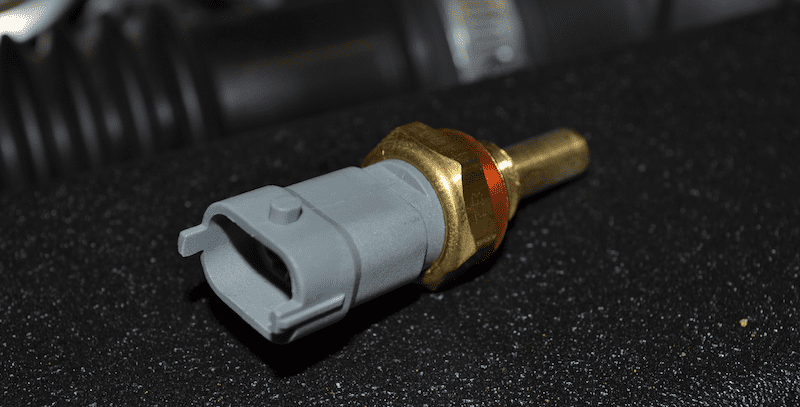
Where Is the Coolant Temperature Sensor Located?
If you pop the hood and go looking for this sensor, you will typically find it near the thermostat in the intake manifold. That is the most common location across most vehicles. In some designs, manufacturers mount it closer to the cylinder head instead.
Got a V6 or V8 engine with that distinctive V-shape? You may have two coolant temperature sensors, one for each bank of cylinders. Some vehicles also run dual sensors for separate purposes: one sensor reports data to the ECU, while the other is dedicated specifically to controlling the cooling fan.
If you are unsure where yours is located, check your vehicle’s service manual or look it up using your specific make, model, and engine size. Sensor placement varies enough between manufacturers that guessing can waste a lot of time.
Warning Signs of a Failing Coolant Temperature Sensor
A bad coolant temperature sensor does not always fail all at once. Sometimes it starts sending slightly wrong readings, and the symptoms sneak up on you gradually. Other times, it fails completely and the problems are immediate and obvious. Either way, here is what to watch for.
Your Engine Runs Rough on Cold Starts
This is one of the most common complaints. You start the car on a cold morning, it fires up, and then within a few seconds it stumbles and dies. Or it idles rough and barely holds itself together until the engine warms up. Once the engine gets to operating temperature, everything seems fine.
What is happening here? The sensor is telling the ECU that the engine is already warm when it actually is not. Because the ECU thinks the engine is at normal temperature, it does not deliver the extra fuel needed for a cold start. The engine starves for fuel, and stalls or runs poorly as a result.
Imagine trying to run a marathon after sleeping all night without eating anything first. Your body needs fuel to perform. Your engine is no different. A cold engine needs a richer fuel mixture to get going smoothly, and if the sensor is lying to the ECU, that is not happening.
Starting the Engine After It Is Already Warm Becomes a Problem
Here is the flip side of the previous symptom. You have been running errands, you park for 20 minutes, and when you try to restart the car, it cranks hard or floods out. This happens because the sensor is now reading the engine as cold when it is actually hot.
The ECU responds by dumping extra fuel into a warm engine that does not need it. The result is a flooded engine, and starting it becomes a struggle. In this situation, you may also see a fault code stored in your system. The P0172 code, which signals a rich fuel mixture, often shows up in exactly this scenario.
Your Fuel Economy Takes a Noticeable Hit
This follows naturally from the symptom above. If the ECU keeps thinking the engine is cold, it keeps pumping in more fuel than necessary. You might not notice the performance issue right away, but you will notice when you are filling up the tank more often than usual.
A consistently rich fuel mixture is wasteful and hard on your engine long-term. Excess fuel that does not burn cleanly can wash oil off the cylinder walls, increase carbon buildup, and even damage your catalytic converter over time. What starts as a small sensor problem can quietly snowball into much more expensive issues.
The Cooling Fan Behaves Erratically
Pay attention to your radiator fan. If it starts kicking on when the engine is cold and obviously does not need cooling, or if it stays off when the engine is clearly running hot, a faulty coolant temperature sensor is a strong suspect.
The first scenario is annoying but relatively harmless. The fan runs unnecessarily, draining a bit of power. The second scenario is dangerous. If the sensor tells the ECU that everything is fine while the coolant is actually approaching boiling point, the fan never activates. The engine overheats. And overheating, if left unchecked, causes serious engine damage that is far more costly to fix than replacing a sensor.
This is why a failing coolant temperature sensor is not just an inconvenience. In the worst-case scenario, it can put your engine at real risk.
The Check Engine Light Comes On
When the coolant temperature sensor sends readings that fall outside the expected range, the ECU logs a fault code and lights up the check engine light on your dashboard. You may also see a separate coolant temperature warning light depending on your vehicle.
Some of the common diagnostic trouble codes associated with a failing coolant temperature sensor include:
| Fault Code | What It Means |
|---|---|
| P0115 | Coolant Temperature Sensor Circuit Malfunction |
| P0116 | Coolant Temperature Sensor Range/Performance Problem |
| P0117 | Coolant Temperature Sensor Circuit Low Input |
| P0118 | Coolant Temperature Sensor Circuit High Input |
| P0119 | Coolant Temperature Sensor Circuit Intermittent |
| P0172 | System Too Rich (Bank 1) often linked to incorrect coolant temp readings |
A check engine light alone does not always mean the sensor itself is bad. Sometimes the wiring connector is corroded or loose. Sometimes the issue is with the circuit rather than the sensor. That is why proper diagnosis matters before you start replacing parts.
How to Test a Coolant Temperature Sensor Without Guessing
Before you spend money on a new sensor, it is worth doing a bit of actual testing to confirm it is the problem. There are a few different ways to do this, ranging from simple unplugging tests to using an OBD scanner.
The Unplug Test: Quick and Telling
The most straightforward way to get a clue is to simply unplug the coolant temperature sensor from its connector while the engine is running. When you disconnect the sensor, the ECU immediately recognizes there is no signal coming in and switches to a default, emergency operating mode.
In this backup mode, the ECU uses preset values and data from other sensors to manage the engine. The cooling fan will typically switch on automatically, and the fuel mixture will be recalculated using backup parameters. Here is the key part: if the engine suddenly runs smoother or idles better after you unplug the sensor than it did with it plugged in, that is a very strong indicator that the sensor was feeding bad data. At that point, replacement makes sense.
Keep in mind this is not a definitive test on its own, but it is a fast, zero-cost first step.
The OBD Scanner Test: More Reliable Data
For a more accurate diagnosis, use an OBD2 scanner. This tool plugs into the diagnostic port under your dashboard and reads live data from your car’s sensors in real time. If you do not own one, many auto parts stores will let you borrow one or will run the scan for free.
Here is how to use it to check your coolant temperature sensor properly:
- Check the reading on a cold engine. Do this first thing in the morning before starting the car. The coolant temperature reading on your scanner should closely match the ambient air temperature outside. If it is a 60°F morning and your scanner shows 60°F or very close to that, the sensor is starting from the right baseline.
- A small margin of error is acceptable. A difference of 3 to 4 degrees Celsius is within normal tolerance. Anything more than that on a completely cold engine suggests the sensor is already reading inaccurately before the car has even started.
- Watch the temperature rise after starting. Once you start the engine, monitor the live coolant temperature data on the scanner. The temperature should climb steadily and smoothly as the engine warms up. There should be no sudden jumps or erratic fluctuations in the readings.
- Look for spikes or flatlines. If the temperature is sitting at 30°C and then suddenly jumps to 33°C and back to 30°C with no gradual progression, or if it flatlines and never moves even as the engine heats up, the sensor is malfunctioning. Normal engine warm-up is a slow, steady climb, not a series of random jumps.
The Multimeter Test: Testing the Sensor Directly
If you want to go one step further and test the sensor itself rather than just its output readings, a multimeter will do the job. Coolant temperature sensors are essentially thermistors, meaning their electrical resistance changes with temperature. As temperature goes up, resistance goes down, and vice versa.
Here is a general reference for what resistance values you should expect at different temperatures:
| Coolant Temperature | Expected Resistance (Approximate) |
|---|---|
| -40°C / -40°F | 100,000 ohms |
| 20°C / 68°F | 2,000 to 3,000 ohms |
| 80°C / 176°F | 200 to 300 ohms |
| 120°C / 248°F | Approximately 50 to 70 ohms |
To do this test, disconnect the sensor, set your multimeter to measure resistance (ohms), and touch the probes to the sensor terminals. Compare what you read against the values in your vehicle’s service manual. If the numbers are way off or the reading jumps all over the place, the sensor is bad.
Always cross-reference with your specific vehicle’s specifications since values can vary between manufacturers.
Can You Drive With a Bad Coolant Temperature Sensor?
Technically, yes. Your car will still move. But should you? That is a different question entirely.
Driving with a known faulty coolant temperature sensor is a bit like flying a plane with a broken altimeter. You might be fine, or you might be heading directly toward a mountain. The risk is not worth it, especially given how inexpensive most coolant temperature sensors are to replace.
Here is what you are risking if you choose to keep driving with a bad sensor:
- Engine overheating. If the sensor fails to trigger the cooling fan at the right time, coolant temperatures can climb to dangerous levels without you knowing until it is too late. Overheating can warp cylinder heads, blow head gaskets, and cause catastrophic engine damage.
- Catalytic converter damage. Running consistently rich fuel mixtures sends excess unburned fuel into the exhaust system, which can overheat and destroy the catalytic converter. A new catalytic converter can cost anywhere from several hundred to over a thousand dollars depending on the vehicle.
- Fouled spark plugs. Too much fuel in the combustion chamber leads to carbon deposits building up on spark plugs, reducing engine performance and leading to misfires.
- Failed emissions test. Incorrect fuel mixture and erratic engine behavior can push your emissions readings outside acceptable limits. In areas where emissions testing is required for vehicle registration, this becomes a real-world problem.
The bottom line is that driving with a bad coolant temperature sensor for a short period while you arrange a repair is probably manageable. Ignoring it indefinitely is not.
How Much Does It Cost to Replace a Coolant Temperature Sensor?
Good news here: this is one of the more affordable repairs you can face as a car owner. The sensor itself typically costs between $15 and $50 for most common vehicles. Labor, if you take it to a shop, usually adds another $50 to $150 depending on where the sensor is located and how accessible it is.
Total repair cost generally lands somewhere between $65 and $200 at a shop. If you are comfortable doing basic repairs yourself, this is also one of the more DIY-friendly jobs. The sensor is usually accessible without major disassembly, and swapping it out often takes less than 30 minutes with basic tools.
Just remember to let the engine cool down completely before you start. Removing a sensor from a hot engine means dealing with hot coolant under pressure, and that is a burn risk you do not need.
How to Replace the Coolant Temperature Sensor: A Basic Overview
If you want to tackle this yourself, here is a general walkthrough. Always consult your specific vehicle’s service manual for exact torque specs and sensor location before you start.
- Let the engine cool down completely. Never work on the cooling system when the engine is hot. Wait at least a couple of hours after driving or leave it overnight.
- Locate the sensor. As mentioned earlier, it is usually near the thermostat housing or on the intake manifold. Have your service manual or a quick internet search handy to find the exact location for your vehicle.
- Disconnect the electrical connector. There is a small plastic clip that locks the connector in place. Press the tab and pull the connector off. Do this gently to avoid breaking the clip.
- Prepare for coolant spillage. When you remove the sensor, some coolant will drain out. Have a small drain pan or some rags ready underneath. You may want to partially drain the coolant beforehand if the sensor is positioned where drainage will be significant.
- Remove the old sensor. Use the correct socket size (commonly 19mm or a specialized sensor socket) to unscrew the sensor. Turn counterclockwise to remove.
- Install the new sensor. Apply thread sealant or use the sealing washer that comes with the new sensor if applicable. Thread it in by hand first to avoid cross-threading, then tighten with the socket to the manufacturer’s specified torque. Do not overtighten.
- Reconnect the electrical connector. You should hear or feel it click into place.
- Top off the coolant. If you lost coolant during removal, add the correct type back to the reservoir or radiator cap. Check your owner’s manual for the right coolant specification.
- Start the engine and check for leaks. With the engine running, watch for any coolant dripping from around the new sensor. Also monitor the temperature gauge to confirm it is reading properly.
- Clear the fault codes. Use your OBD2 scanner to clear any stored fault codes after the repair. Some codes will clear on their own after a few drive cycles, but clearing them manually speeds up the process.
Other Reasons Your Car Will Not Start That Are Commonly Confused With a Sensor Issue
Since a bad coolant temperature sensor is often suspected when a car stalls or starts poorly, it is worth pointing out what else to check when your car flat-out refuses to start. Here are the more common actual culprits:
Dead or Weak Battery
This is the number one reason cars do not start, especially in cold weather. A battery that is losing capacity will struggle to deliver enough power to crank the starter motor. You might hear a clicking sound, slow cranking, or nothing at all. Get the battery tested before anything else.
Faulty Crankshaft Position Sensor
The crankshaft position sensor tells the ECU where the crankshaft is in its rotation so the engine can time the fuel injection and ignition correctly. When this sensor fails, the ECU cannot fire the injectors or spark plugs at the right time. The engine will crank but simply will not start.
Bad Fuel Pump
If the fuel pump is not delivering fuel to the injectors at the right pressure, the engine will not start no matter how many times you turn the key. A weak fuel pump may allow starting sometimes but not others, especially when the engine is hot. A fuel pressure test will confirm this.
Failing Camshaft Position Sensor
Similar to the crankshaft sensor, the camshaft position sensor helps the ECU manage ignition timing and fuel delivery. A failed camshaft sensor can prevent the engine from starting or cause intermittent stalling that feels exactly like a fuel or sensor problem.
Ignition System Problems
Worn spark plugs, a failing ignition coil, or a bad ignition module can all prevent starting. If the spark plugs are not firing properly, the fuel-air mixture in the cylinders never ignites, and the engine cranks endlessly without catching.
Low or No Fuel
It sounds obvious, but a faulty fuel gauge can trick you into thinking you have fuel when you do not. If your car will not start and you are not sure of the fuel level, rule this out first before spending time diagnosing sensors.
Security System or Immobilizer Issues
Many modern vehicles have an immobilizer system that cuts off fuel or ignition if it does not recognize the key or key fob. If your car is completely silent when you turn the key and you notice the security light staying on, this could be the reason.
How to Keep Your Coolant Temperature Sensor in Good Shape
You cannot really service the sensor itself, but there are things you can do to extend its life and keep it reading accurately.
- Maintain proper coolant levels. Running low on coolant means the sensor may not be fully submerged in the fluid, which leads to inaccurate readings. Check the coolant reservoir level regularly, especially before long trips.
- Use the correct coolant mixture. Most vehicles call for a 50/50 mix of coolant and distilled water. Using the wrong mixture can cause corrosion inside the cooling system, which degrades sensor contacts over time.
- Flush the cooling system on schedule. Old coolant becomes acidic and can corrode metal components including the sensor housing and threads. Most manufacturers recommend flushing the coolant every 30,000 to 50,000 miles, though some extended-life coolants go longer.
- Check the wiring connector. Over time, the electrical connector on the sensor can develop corrosion, especially in regions with road salt exposure. If you notice green or white residue on the terminals, clean it with electrical contact cleaner. A corroded connector gives the same symptoms as a bad sensor.
- Do not ignore early warning signs. If the temperature gauge on your dashboard starts acting strangely, if you see unexplained fuel consumption increases, or if the check engine light comes on, get it scanned promptly. Catching a sensor issue early is almost always cheaper than dealing with the collateral damage it causes.
Coolant Temperature Sensor vs. Coolant Temperature Switch: Are They the Same Thing?
This is a point of confusion worth clearing up. Some older vehicles use a coolant temperature switch rather than a sensor. They are not the same thing.
A coolant temperature switch is a simple on/off device. When the temperature hits a certain threshold, it either opens or closes a circuit. It does not send variable data. It just triggers something, usually the cooling fan, at a specific temperature point.
A coolant temperature sensor, on the other hand, sends a continuous variable signal to the ECU. It communicates actual temperature values in real time so the ECU can make precise adjustments across a wide operating range.
Many modern vehicles have both: a sensor for the ECU and a switch for the fan. On older vehicles, you might only find a switch. Understanding which type your vehicle uses matters when you are buying a replacement part or diagnosing a problem.
What Happens If You Ignore a Failing Coolant Temperature Sensor for Too Long
Here is a realistic scenario. Say your coolant temperature sensor starts sending low readings to the ECU. The ECU thinks the engine is always cold, so it keeps running a rich fuel mixture even after the engine is fully warmed up. You notice slightly worse fuel economy but brush it off. The car seems to drive fine.
A few weeks go by. The unburned fuel washing into the exhaust has been slowly damaging your catalytic converter. Your spark plugs are getting fouled. You fail your next emissions test. Your mechanic finds a clogged catalytic converter that needs to be replaced for $800 or more.
All of that from a sensor that costs less than $50 to replace. This is not a scare tactic, it is just how deferred maintenance works in the real world. Small problems do not stay small indefinitely.
Frequently Asked Questions About the Coolant Temperature Sensor
Can a bad coolant temperature sensor cause overheating?
Yes. If the sensor sends falsely low temperature readings to the ECU, the cooling fan may never turn on at the right time. Without fan activation, coolant temperatures can rise unchecked, leading to genuine engine overheating. The tricky part is your temperature gauge on the dashboard may also rely on this sensor, meaning it could show a normal reading while the engine is actually overheating.
Will a bad coolant temperature sensor throw a code?
In most cases, yes. The ECU monitors the sensor’s signal range and will store a fault code if the reading falls outside expected parameters. Common codes include P0115 through P0119. However, an intermittently failing sensor may not always trigger a code consistently, which is why live data monitoring with an OBD scanner is a more reliable diagnostic approach.
Can I clean a coolant temperature sensor instead of replacing it?
If the issue is corrosion on the electrical connector, cleaning may help temporarily. Use electrical contact cleaner on the terminals and inspect the wiring for damage. But if the sensor itself is giving bad resistance readings or has been leaking coolant, cleaning will not fix it. Replacement is the right move at that point.
How long does a coolant temperature sensor last?
There is no fixed interval for replacing coolant temperature sensors. Many last the lifetime of the vehicle. Others fail at 80,000 or 100,000 miles due to heat cycling, corrosion, or simple wear on the internal thermistor. The best approach is to test it when symptoms appear rather than replacing it on a schedule.
Does the coolant temperature sensor affect the heater inside the car?
Not directly. The heater in your car uses hot coolant flowing through a heater core to warm the cabin air. The coolant temperature sensor does not control that process directly. However, if there is a broader cooling system problem causing low coolant levels, you may notice the heater producing less warm air, which is a sign of an air pocket or low coolant rather than a sensor issue.
Is the coolant temperature sensor the same as the water temperature sensor?
Yes, they are the same thing. Different manufacturers and repair guides use different terms, but coolant temperature sensor, engine coolant temperature sensor (ECT sensor), and water temperature sensor all refer to the same component measuring the temperature of the coolant flowing through the engine.
If your car is struggling on cold mornings, guzzling more fuel than usual, running the fan at odd times, or throwing a check engine code you cannot explain, do not overlook that small sensor near your thermostat housing. Get it tested before the problem quietly turns into something much more expensive. A $30 sensor replaced today beats a $1,500 repair bill six months from now.