
Getting a flat tire on the side of a road, miles from the nearest town, is one of those situations that separates the prepared driver from the unprepared one. For decades, the answer was simple: pull out the spare, jack up the car, swap the wheel, and drive on. But that straightforward solution is quietly disappearing from modern vehicles.
Manufacturers are dropping the full-size spare to save weight and free up cargo space. Many new cars come with nothing more than a compact repair kit as standard equipment, and if you want an actual spare tire, you often have to pay extra for it. Owners of older vehicles are not immune either. Many sacrifice the spare tire well to fit an LPG gas cylinder, leaving the spare propped in a corner of the garage or stuffed awkwardly in the trunk.
So what do you do when a tire goes flat and there is no spare in sight? That is where tire sealant comes in. But does it actually work? Is it safe to keep driving on a sealed tire? And how exactly do you use it? Let us go through everything you need to know.
What Types of Tire Sealant Are Available?
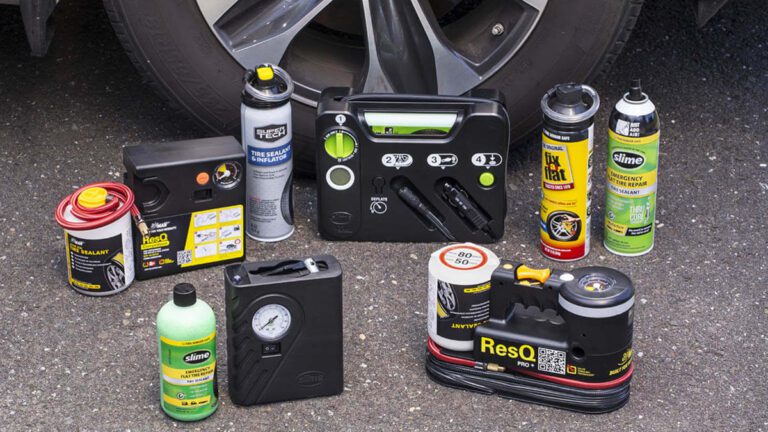
Walk into any automotive store or search online and you will find two main categories of tire repair products: chemical sealants and mechanical plug kits. For roadside emergencies, chemical sealants are the most practical option because they require no tools, no physical labor, and can get you moving again in minutes.
Within the chemical category, there are two common formats:
- Tire sealant foam (aerosol spray cans) that simultaneously seals the puncture and inflates the tire using the propellant gas in the can
- Tire repair kits with a compressor that inject a liquid sealant into the tire and then use an electric compressor to bring the tire back up to the correct pressure
Both are relatively compact, affordable, and genuinely useful in an emergency. But they work differently, have different limitations, and suit different situations. Here is an honest look at both.
Tire Sealant Foam: Does It Work?
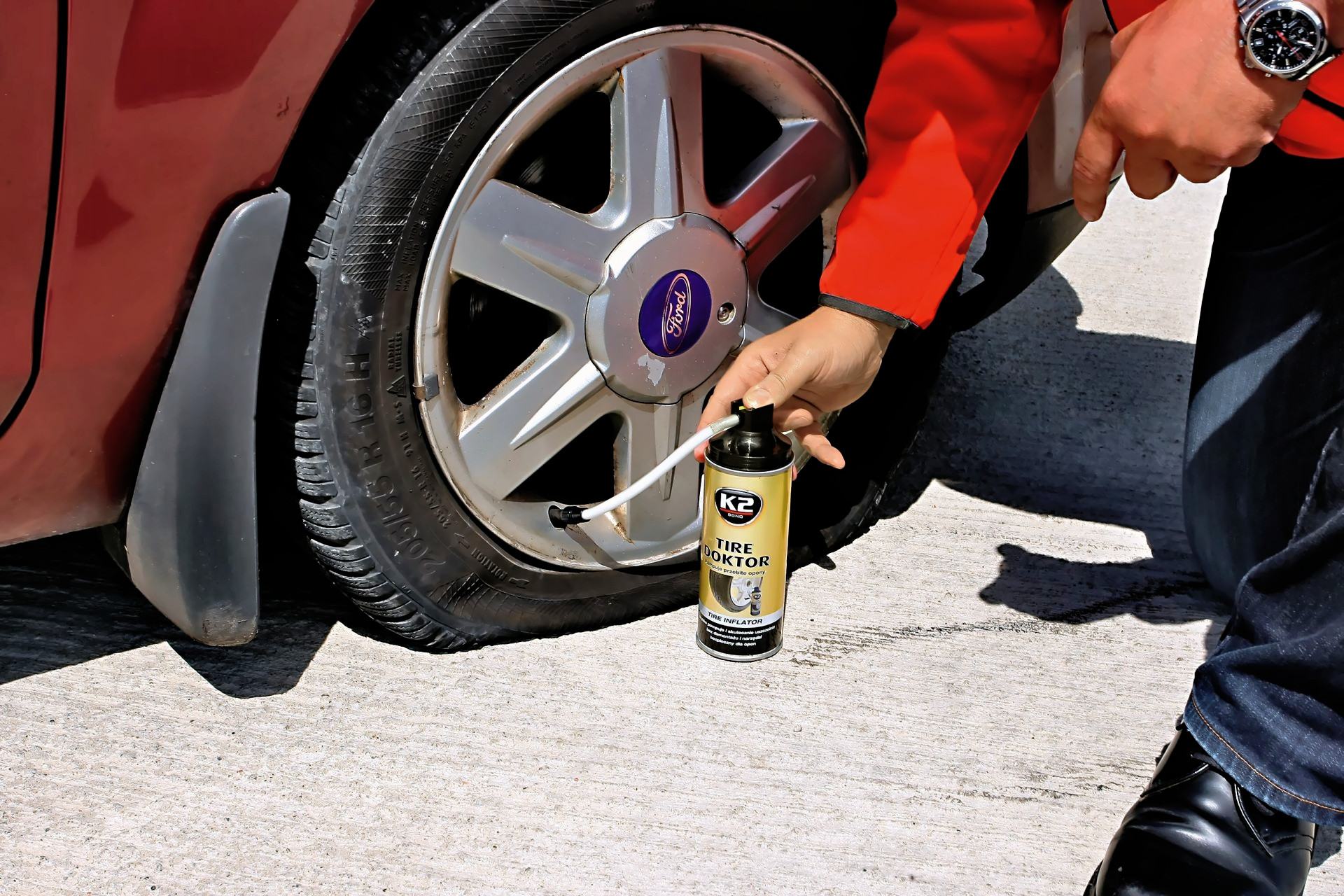
Tire sealant foam comes in an aerosol can with a flexible tube and valve adapter. It is one of the simplest emergency tire repair options available. You do not need a power source, a compressor, or any tools. The can does everything in one step.
How to Use Tire Sealant Foam
- If there is a nail, screw, or other foreign object in the tire, remove it before starting. The sealant needs to fill the hole, not work around an obstruction
- Rotate the wheel so the valve stem is at the bottom of the tire, pointing downward. This positioning is important because gravity helps distribute the foam inside the tire
- Clean the valve stem and screw the can’s tube adapter onto it securely. Make sure the connection is tight before opening the gas flow. A loose connection will vent gas into the air rather than into the tire
- Open the valve and let the can empty its contents into the tire. The foam inflates and seals simultaneously
- Drive the vehicle slowly for a short distance immediately after. This distributes the foam evenly around the inside of the tire, helping it coat and seal the puncture point
What Can You Realistically Expect?
A standard 400 ml can is typically enough to get a 15-inch tire back to functional pressure. The whole process takes around two minutes. Do not expect the tire to feel fully inflated. Initial pressure after using foam sealant is usually around 1.6 bar, which is below the recommended operating pressure for most passenger vehicles. That said, 1.6 bar is enough to drive carefully to the nearest gas station, where you can top up the tire with air.
A few things to check before and during the process:
- Make sure the tube adapter is firmly screwed onto the valve stem. Any air leak during the process will reduce the pressure you end up with, and you only get one shot with a single can
- Before you start, visually check that the tire has not completely unseated from the rim. If the tire bead has slipped off the rim entirely, pumping sealant foam in will not help. The tire needs to be remounted on the rim first
- Once the can is empty, check the tire visually. It should look noticeably more inflated than before
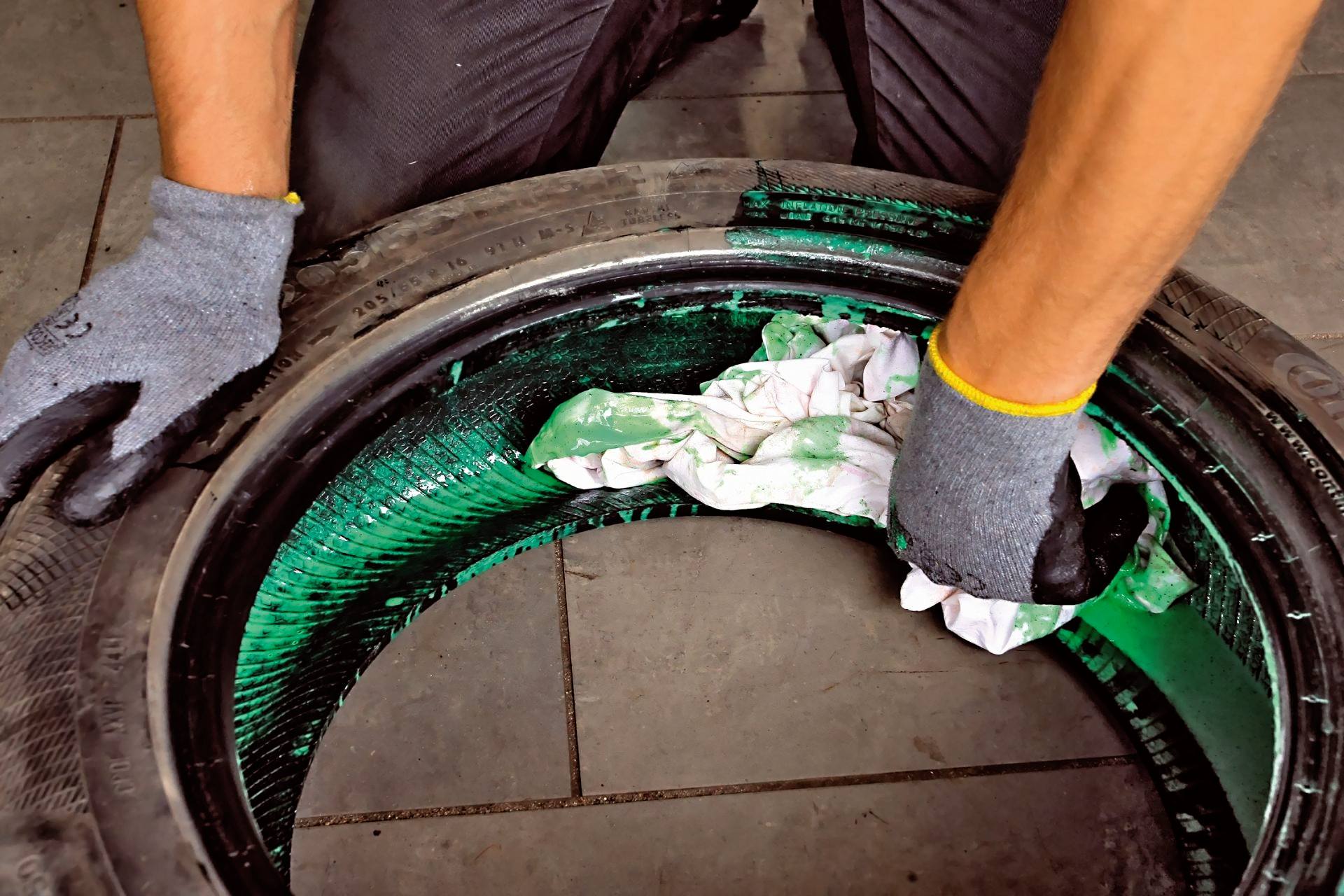
After using foam sealant and eventually having the tire removed and inspected, the foam inside remains fluid and wipes off relatively easily with a cloth. The main cleanup effort is scrubbing off any silicone residue that sticks to the inner tire surface. That is manageable, and it means the tire shop can properly inspect and repair or replace the tire afterward without major hassle.
Cost-wise, a can of tire sealant foam is one of the cheapest insurance policies you can carry in your car. It takes up almost no space and costs very little. For occasional drivers who rarely stray far from civilization, it is a perfectly reasonable emergency backup.
Tire Repair Kit With Compressor: Does It Work?
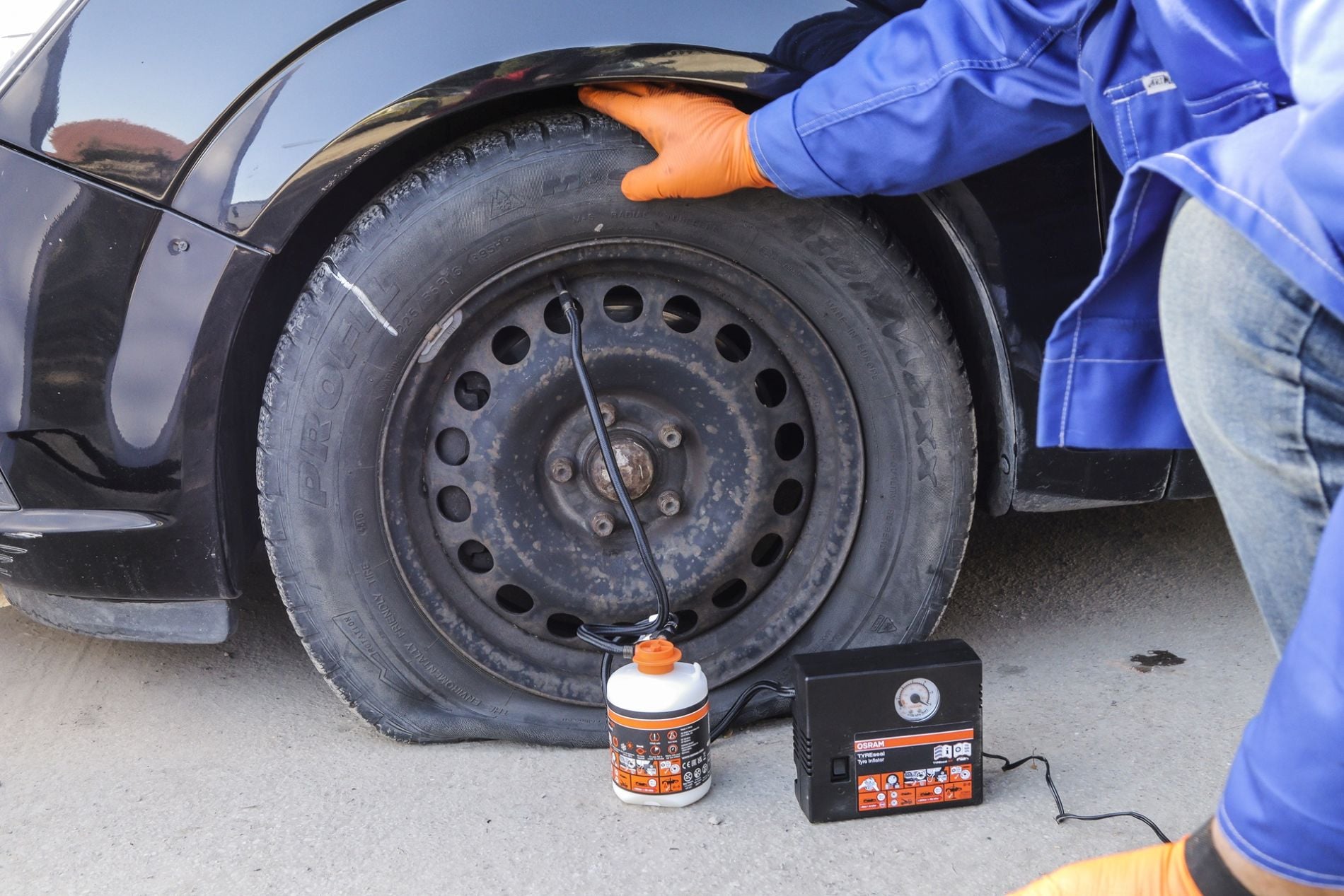
The repair kit that comes bundled with many new vehicles, or that you can purchase separately, takes a slightly different approach. Instead of a single aerosol can doing everything, this system uses a separate bottle of liquid sealant and an electric compressor that plugs into the vehicle’s 12V power outlet.
How to Use a Tire Repair Kit
The exact process varies slightly between brands, but here is the general procedure:
- Position the vehicle so that the valve stem of the damaged tire is at the top, pointing upward. This is the opposite of the foam method
- On simpler kit designs, unscrew the valve core, connect the sealant bottle tube to the valve, and squeeze the liquid contents into the tire. Then reinstall the valve core and connect the compressor to inflate
- On more advanced kit designs, the sealant bottle mounts directly between the compressor and the valve stem. When the compressor runs, it automatically pumps the sealant into the tire first, then continues pumping air to bring the tire up to the correct pressure. This integrated method is faster and simpler
- Inflate the tire to the pressure specified by the vehicle manufacturer. Unlike foam sealant, a compressor kit can get your tire to the proper operating pressure, not just enough to limp to a gas station
- Drive the vehicle for a short distance to distribute the sealant around the inner surface of the tire
The whole process, from setup to fully inflated tire, takes roughly ten minutes. That is longer than the two-minute aerosol foam approach, but the result is a tire inflated to proper pressure, which is a meaningful advantage.
How Well Does the Liquid Sealant Hold Up?
This is where things get interesting. In theory, the sealant is meant to get you to the nearest tire shop for a proper repair. In practice, many drivers find the sealed tire holds pressure for far longer than expected and simply keep driving on it.
Testing has shown that liquid sealants can remain effective for many months after application. Beyond just sealing the original puncture, the fluid inside the tire can automatically seal subsequent minor punctures if they occur, since the liquid coats the inner surface and flows into any new breach under pressure. That is a genuine bonus.
One concern some drivers raise about liquid sealants is wheel balance. In testing, sealants distributed inside the tire have not shown a significant negative effect on wheel balance. The liquid is thin enough that it spreads relatively evenly during driving.
That said, tire repair kit systems come with a higher price point than foam spray cans. Expect to pay significantly more for a decent compressor-based kit. The compressor itself has value beyond tire repairs since you can use it to top up all four tires whenever needed, which makes the cost easier to justify.
Speed Limits After Using Tire Sealant
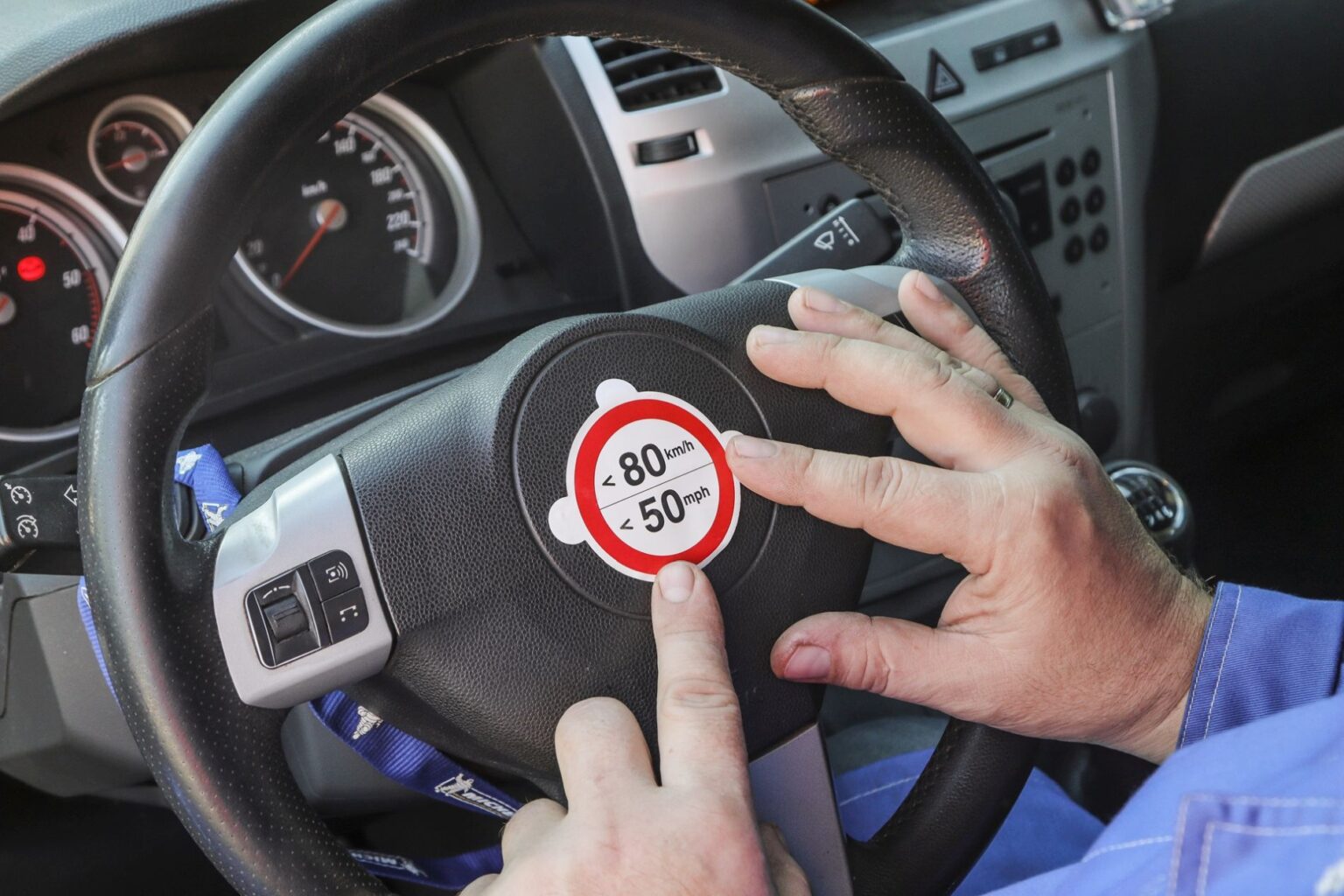
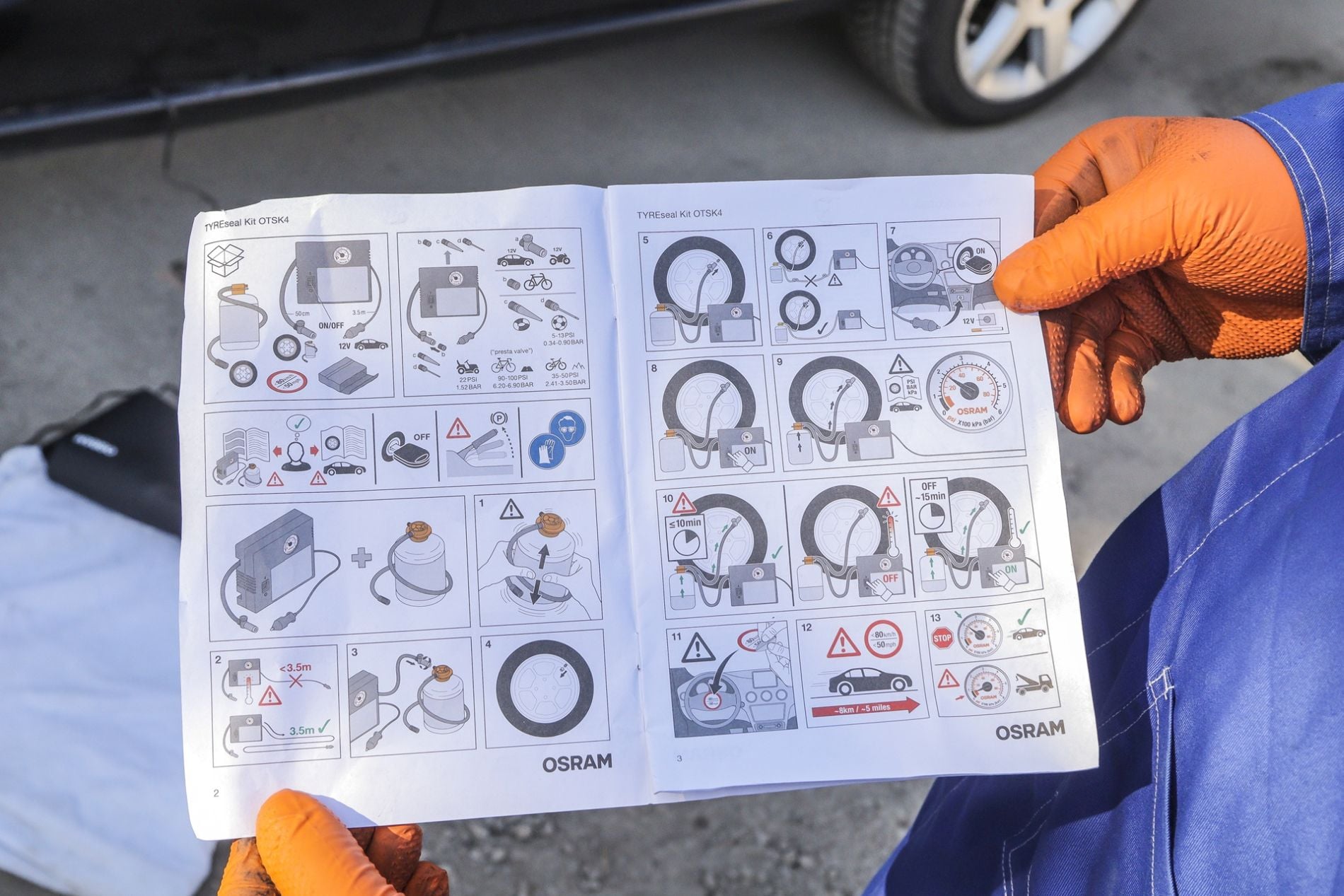
This is something many drivers overlook and should not. After sealing a tire with either foam or liquid sealant, manufacturers universally recommend keeping your speed below 80 km/h (approximately 50 mph). Some products include stickers to put on the dashboard as a reminder.
This speed limit exists for good reason. A sealant repair is a temporary fix, not a permanent one. The sealant fills and holds the puncture, but the structural integrity of the tire has been compromised. At higher speeds, the forces acting on the tire increase significantly. Heat builds up faster. The sealant seal can fail. A tire that holds fine at highway cruising speeds under normal conditions may behave very differently after a sealant repair.
Drive conservatively after any sealant repair. Get to a tire shop as soon as possible. Do not treat a sealant repair as an excuse to skip the proper fix.
How Long Does Tire Sealant Last in the Can?
Tire sealant products, both foams and liquids, carry a stated shelf life typically ranging from two to ten years depending on the brand. That covers the period during which the manufacturer guarantees effectiveness.
But here is the practical reality. Products tested beyond their stated expiration dates have shown continued effectiveness. The shelf life listed on the packaging is a conservative guarantee, not a hard cutoff after which the product becomes useless. Whether a ten-year-old can of sealant foam will work as well as a fresh one is uncertain, but the odds are better than you might expect.
That said, it is sensible to check your emergency repair kit every couple of years and replace it if it is well past the stated expiration date. Carrying a product you are not sure about is better than carrying nothing, but a fresh product is better still.
What Tire Sealant Cannot Fix
Tire sealant is genuinely useful in the right situation. But it has clear and non-negotiable limits that every driver needs to understand before relying on it.
Sealant only works on tread punctures. If the nail, screw, or other object that punctured your tire went through the tread area (the flat part that contacts the road), sealant has a good chance of sealing it. That covers the vast majority of everyday punctures.
Sidewall damage cannot be repaired with sealant. If the puncture is on the sidewall of the tire, the curved area between the tread and the wheel rim, no sealant product can fix it. Not even temporarily. Sidewall punctures involve the structural cords of the tire, and the flexing of the sidewall during driving will immediately reopen any attempted seal. This is not a limitation of sealant products specifically. It is a fundamental tire repair rule. Even a professional tire shop cannot repair a sidewall puncture. A tire with sidewall damage must be replaced, period.
Large punctures and blowouts are beyond sealant’s capability. A small nail hole or screw puncture in the tread? Sealant can handle that. A large gash, a blowout, or damage from hitting a pothole or curb at speed? No sealant is going to seal that. If your tire has suffered significant structural damage, sealant will not help and you should not attempt to inflate the tire at all.
A quick summary of what sealant can and cannot handle:
| Damage Type | Sealant Effective? | Notes |
|---|---|---|
| Small nail or screw in tread | Yes | Best-case scenario for sealant use |
| Large tread puncture (over 6mm) | Unlikely | May seal temporarily but not reliably |
| Sidewall puncture of any size | No | Tire must be replaced, no exceptions |
| Blowout or structural damage | No | Do not attempt to inflate the tire |
| Tire completely off the rim | No | Tire must be remounted before sealant can work |
| Valve stem leak | No | Valve stem replacement required |
Foam Sealant vs. Liquid Sealant Kit: Which Should You Choose?
Both products serve the same basic purpose. The right choice depends on your priorities and how you use your vehicle.
Choose tire sealant foam if:
- You want the simplest possible emergency solution with no setup required
- You drive mostly within a reasonable distance of services and just need to get to the nearest station or shop
- Budget is a concern and you want an affordable backup option
- Space in your vehicle is very limited
Choose a compressor-based repair kit if:
- You want to be able to inflate the tire to proper operating pressure, not just limp pressure
- You travel longer distances or through areas with limited services nearby
- You want the added benefit of a portable compressor for routine tire pressure checks
- Your vehicle came with a repair kit as standard and you want to make sure you know how to use it correctly
Honestly, having both is not a bad idea. A can of foam sealant takes up almost no space and costs very little. Keep one in the car alongside your compressor kit as a backup for the backup.
After Using Tire Sealant: What Happens at the Tire Shop?
One concern some drivers have is whether using sealant ruins the tire permanently or makes it impossible for a tire shop to repair properly afterward. The answer, in most cases, is no.
When you bring the vehicle to a tire shop after using sealant, the technician will remove the tire from the rim, clean out the sealant residue (which, as noted earlier, is usually straightforward since most liquid and foam sealants wipe out easily), inspect the tire for damage, and assess whether a proper repair is possible.
If the puncture is small and in the tread area, and the tire has not been run flat for any distance, a standard plug and patch repair is typically still viable. The sealant does not close off that option.
If the tire was run on low or no pressure for any distance before the sealant was applied, internal sidewall damage may have occurred that is not visible from the outside. That is another reason to get to a shop promptly rather than driving on a sealant repair indefinitely.
Practical Tips to Get the Most Out of Tire Sealant
- Check the expiration date when you buy it, and make a note to replace the product before it gets too old
- Read the instructions before you need it, not while standing on the side of a road in the dark. Knowing the steps in advance means you execute them correctly under pressure
- Remove the puncturing object before applying sealant, if it is safe to do so and the object is accessible. Trying to seal around a nail still in the tire reduces effectiveness
- Do not exceed the recommended speed limit after using sealant. The 80 km/h limit is there for your safety, not as a suggestion
- Get a proper repair done as soon as possible. Sealant is an emergency measure, not a long-term solution
- Store the product at stable temperatures. Extreme heat or cold can affect the propellant in aerosol cans and the viscosity of liquid sealants
Tire sealant will not replace a spare tire in every situation. If your tire suffers significant structural damage, if it is a sidewall puncture, or if the tire has completely come off the rim, sealant will not save you. But for the most common roadside scenario, a nail or screw through the tread with a slow or sudden loss of pressure, tire sealant genuinely works. It is inexpensive, easy to use, and can make the difference between a minor inconvenience and a genuinely dangerous situation on the side of a highway.
The question is not really whether to carry it. The question is why you would not.