
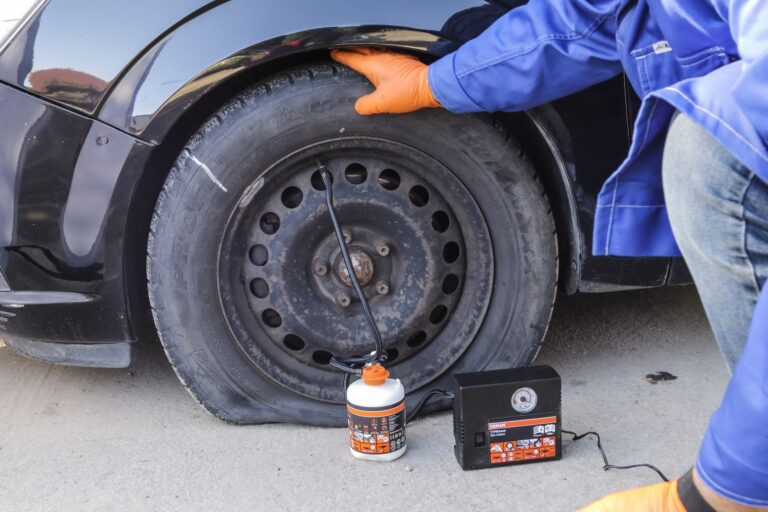
Every driver gets a flat tire eventually. It is not a question of if. It is a question of when, where, and how bad the timing is going to be. Maybe it happens in your driveway on a Sunday morning. Maybe it happens at 11 PM on a dark stretch of highway with no signal and no street lights. Either way, a puncture is one of those experiences that ranges from mildly annoying to genuinely dangerous depending on the circumstances.
The frustrating part is that most tire punctures are preventable. Not all of them, but a significant number happen because of habits, oversights, and situations that drivers could have avoided with a little more awareness. A puncture that seems like bad luck is often the result of a tire that was already in poor condition, driving over debris that was clearly visible, or ignoring a slow pressure loss until it became a full blowout.
Some punctures are cheap and easy to fix. Others cause enough damage to the tire that replacement is the only option, which costs considerably more and happens at the worst possible time. Let us go through the most effective ways to reduce the chances of a puncture finding you before you find it.
How to Prevent Tire Punctures: What Actually Works
1. Pay Attention to Where You Are Driving
This sounds obvious, but most drivers are on autopilot more often than they realize. Tire punctures caused by road debris are extremely common, and the debris responsible is frequently visible well before the vehicle reaches it. The problem is that drivers are not looking for it.
Certain road areas collect more debris than others. Hard shoulders, the edges of lanes near curbs, the center strip of poorly maintained roads, and areas near construction sites all accumulate broken glass, metal fragments, nails, screws, and other tire-threatening objects. Driving through a construction zone or past a work site is particularly risky because metal offcuts and fixings end up on the road surface regularly.
When you spot something on the road that you cannot identify, the default response should be to steer around it if it is safe to do so. That extra few feet of lane position costs you nothing. Running over an unidentified piece of metal on the road can cost you a tire, your time, and potentially your safety if the tire fails at speed.
After any road incident involving debris, it is worth pulling over safely and doing a quick visual check of all four tires. A slow puncture that goes undetected for twenty minutes is far more likely to cause sidewall damage from running low than a puncture caught immediately.
2. Check Your Tire Tread Regularly
Worn tires puncture more easily. That is not a theory. It is physics. The deeper the tread, the more rubber sits between the road surface and the inner structure of the tire. As tread wears down, that protective layer thins out, and objects that a newer tire would deflect or survive become puncture threats.
Most countries have a legal minimum tread depth of 1.6 mm for passenger vehicles. That legal minimum, however, is not the point at which your tire is performing well. It is the point at which it is legally on the line. Wet weather grip, puncture resistance, and overall handling all begin to degrade noticeably well before a tire reaches 1.6 mm.
A practical approach:
- Check tread depth monthly alongside your tire pressure check
- Use a tread depth gauge. They cost almost nothing and give you an accurate reading in seconds
- Start planning for replacement when tread reaches 3 mm, not when you are already at the legal minimum
- Check tread wear patterns as well as depth. Uneven wear, such as more wear on one edge of the tire, can indicate alignment or pressure problems that need addressing
Replacing tires before they are completely worn is an investment in puncture prevention, not just an expense.
3. Keep Your Tire Pressure Correct at All Times
Tire pressure is probably the single most neglected aspect of tire maintenance for the average driver. Checking it takes less than five minutes. Ignoring it can contribute directly to punctures, blowouts, and accelerated tire wear.
Both overinflation and underinflation create problems, just different ones.
Overinflated tires have less contact with the road surface, which concentrates all the load onto the center of the tread. The tire becomes stiffer and more vulnerable to impact damage. Hitting a pothole or a sharp edge in the road at speed with an overinflated tire dramatically increases the risk of the tire pinch-flatting against the rim, a failure where the inner tube or tire bead gets compressed so hard it cuts through.
Underinflated tires flex excessively as they roll. That constant flexing generates heat inside the tire, which weakens the rubber and the internal structure over time. An underinflated tire also has more of its sidewall in contact with the road on the outer edges, which is the most vulnerable part of the tire. Running underinflated increases puncture susceptibility and massively accelerates tread wear on the outer shoulders.
Check tire pressure at least once a month and always before long trips. Check it when the tires are cold, before the car has been driven more than a couple of miles, because heat from driving increases pressure readings and gives you an inaccurate number. The correct pressure for your vehicle is on the sticker inside the driver’s door frame or in the owner’s manual, not on the side of the tire itself.
4. Be Careful Parking Near Curbs
Parallel parking is where a lot of sidewall damage quietly happens. When a driver misjudges the distance to the curb and the tire scrubs along the concrete edge, the sidewall takes the hit. A single scuff might not cause an immediate puncture, but it can weaken the sidewall structure in ways that are not visible from the outside.
Sidewall damage is particularly serious because it is the one type of tire damage that genuinely cannot be repaired. A puncture in the tread area can often be plugged or patched. Sidewall damage cannot. A compromised sidewall can fail suddenly and without warning, often at speed, which is an extremely dangerous situation.
Taking an extra thirty seconds to park carefully, using your mirrors and sensors, is worth the effort. Curb rash on alloy wheels looks bad. Curb damage on a tire sidewall is a safety issue.
5. Anticipate the Road Ahead
Potholes cause a significant number of tire punctures and rim damage incidents, particularly in areas where road maintenance is inconsistent. The issue with potholes is that they are often not visible until you are almost on top of them, especially at night or in wet conditions when the road surface can look deceptively uniform.
Good driving technique involves scanning the road well ahead of the vehicle, not just the immediate few meters in front. This gives you more time to spot and react to road hazards, whether that is a pothole, a piece of debris, an animal on the road, or anything else.
At night, high-beam headlights give you significantly more road visibility than low beams. Use them appropriately, especially on unlit rural roads where potholes are more common and less likely to have been repaired promptly.
If you cannot avoid a pothole entirely, slow down as much as possible before hitting it. The damage a pothole causes to a tire and wheel increases dramatically with speed. A pothole that does nothing at 20 mph can crack a rim and blow a tire at 50 mph.
6. Do Not Overload Your Vehicle
Every vehicle has a maximum load rating, which is the combined weight of passengers, cargo, and fuel the tires are designed to handle safely at the recommended pressure. When that rating gets exceeded, the tires are operating outside their design parameters.
Overloading a vehicle puts the tires under excess stress. The sidewalls flex more than they should, heat builds up faster, and the risk of a sudden failure increases. This is particularly relevant for people who regularly haul heavy loads, tow trailers, or pack vehicles to the absolute limit for road trips or moving house.
Check your vehicle’s load rating in the owner’s manual. If you regularly carry heavy loads, consider whether the tires fitted to the vehicle have an appropriate load rating for that use. Tires have a load index stamped on the sidewall, and fitting tires with a higher load rating than the minimum specified for your vehicle is a sensible precaution if you carry heavy cargo regularly.
Even with run-flat tires, overloading creates problems. Run-flat tires allow you to keep driving after a puncture for a limited distance at reduced speed. They are not a solution to structural tire failure caused by chronic overloading.
7. Consider a Tire Puncture Sealant as a Preventive Measure
Most drivers think of tire sealant as a reactive product, something you use after a puncture happens. But some sealant products are designed to be used proactively, injected into the tire before any puncture occurs. These preventive sealants coat the inside of the tire and automatically seal small punctures as they occur, often before the driver even notices a pressure drop.
A quality preventive tire sealant can seal punctures up to approximately 15 mm in diameter across passenger cars, motorcycles, bicycles, vans, and 4×4 vehicles. The sealant sits inside the tire as a liquid. When a nail or other sharp object penetrates the tread, the escaping air pressure forces the sealant into the hole. The fibers and fillers in the sealant interlock to form a flexible plug that stops further air loss.
The result is that many punctures repair themselves automatically and the driver never ends up stranded. The tire may lose a small amount of pressure before the seal forms, but in many cases the driver notices nothing unusual at all until the tire is inspected later and the sealed hole is found.
How Tire Sealant Works
Understanding the mechanism helps you use the product correctly and set realistic expectations about what it can and cannot do.
When a sharp object penetrates the tire tread, air inside the pressurized tire tries to escape through the hole. That escaping air carries the liquid sealant with it toward the puncture site. The sealant contains fibers, fillers, and binding agents that, under the pressure and movement, interlock and form a flexible plug within the hole.
The key word is flexible. Unlike a rigid patch or plug, the sealant forms a seal that moves with the tire as it rotates and flexes. This flexibility is what makes it durable rather than a seal that cracks and fails after a few miles.
For the sealant to work effectively:
- The puncture must be in the tread area of the tire, not the sidewall
- The puncture diameter should not exceed the product’s rated capability, typically around 6 mm for most consumer-grade reactive sealants and up to 15 mm for some preventive products
- The tire must not have been run completely flat for any significant distance, as this can cause internal damage that sealant cannot fix
The Practical Benefits of Keeping Tire Sealant in Your Vehicle
Even if you use a preventive sealant, keeping a reactive aerosol sealant in the vehicle as an emergency backup is a sensible precaution. Here is why drivers who carry tire sealant consistently rate it as one of the most useful items in their car:
Speed of use. Applying aerosol tire sealant to a flat tire takes one to two minutes from opening the can to being ready to drive again. Changing a wheel takes considerably longer, requires more physical effort, and demands a safe place to do it. On a busy road or in poor weather, the ability to reseal a tire without getting out of the vehicle and jacking it up is a genuine safety advantage.
No tools required. Emergency sealant foam requires nothing beyond the can itself. No jack, no wheel brace, no getting down on the ground. For drivers who are not physically able to change a wheel, or who are alone in an unsafe location, this matters a great deal.
Cost effectiveness. A can of tire sealant foam costs a fraction of what a roadside assistance callout charges, and far less than the time and stress of waiting for help to arrive. Compressor-based repair kits cost more upfront but include a portable inflator that has value for routine tire pressure maintenance as well.
It buys you time. Even when a sealant repair is temporary, it gets you moving and gets you to a safe, controlled environment where a proper repair or tire replacement can happen on your terms rather than at the roadside.
One important point: tire sealant is not a substitute for a proper repair. After using sealant, get the tire inspected and properly repaired or replaced by a reputable tire shop. The sealant handles the emergency. The shop handles the fix.
A Quick Reference: Tire Puncture Prevention Checklist
| Prevention Step | How Often | Why It Matters |
|---|---|---|
| Check tire pressure | Monthly and before long trips | Correct pressure reduces puncture risk and prevents premature wear |
| Inspect tread depth | Monthly | Worn tread offers less puncture resistance |
| Visual tire inspection | Weekly | Catches embedded objects, bulges, and slow leaks early |
| Check load limits before hauling | Every time you carry heavy loads | Overloading stresses tires and increases failure risk |
| Scan the road ahead while driving | Always | Gives time to avoid debris, potholes, and hazards |
| Park carefully near curbs | Always | Prevents sidewall damage that cannot be repaired |
| Replace tires before they hit the legal minimum | As needed, typically every 4 to 6 years or by tread depth | Newer tires resist punctures better than worn ones |
| Carry emergency sealant | Ongoing | Provides a fast, safe option if a puncture occurs |
What to Do If You Get a Puncture Despite All Precautions
Even with the best habits, punctures can still happen. Here is how to handle one correctly when it does.
Do not panic and do not brake hard. A sudden tire deflation at speed can feel alarming, but hard braking makes vehicle control worse, not better. Keep a firm grip on the wheel, ease off the accelerator gradually, and steer smoothly. Let the vehicle slow down naturally before applying gentle brake pressure.
Get off the road as safely as possible. Activate your hazard lights immediately. Move to the hard shoulder, a side street, a parking area, or anywhere that puts distance between you and moving traffic. Do not stop in an active lane unless you have absolutely no choice.
Assess the situation before acting. Is it safe to change the wheel where you have stopped? Is the flat tire on the traffic side of the vehicle? If conditions are unsafe, staying in the vehicle with your seatbelt on and hazard lights flashing while you call for assistance is often the safer choice compared to standing roadside changing a wheel.
Use your sealant if appropriate. If the puncture is in the tread area and the tire is not completely destroyed, emergency sealant may get you to a safer location or to a tire shop without needing a full wheel change on the spot.
Get a proper repair done promptly. Even if the sealant holds perfectly, have the tire professionally inspected as soon as possible. What looks like a simple puncture from the outside can sometimes involve internal damage that is not visible until the tire is dismounted and examined.
Preventing tire punctures is largely a matter of consistent habits and paying attention to things most drivers treat as background noise. Check your pressures. Watch your tread. Scan the road ahead. Carry something to deal with a puncture if it happens anyway. None of these things are difficult or expensive. Getting a flat tire at the wrong time in the wrong place absolutely is.