

If you have ever ridden in a Buick Enclave, you already know why so many families fall in love with this thing. The ride is quiet, the seats are comfortable enough to fall asleep in on a long trip, and it has that upscale feel without the luxury brand price tag. But here is the thing nobody puts on the sales brochure: like every vehicle ever built, the Enclave has its weak spots, and one of the most talked about weak spots happens to be the transmission.
Transmission trouble in the Enclave does not always show up the same way. Sometimes it is a rough shift you feel through the seat of your pants. Other times it is a jerking sensation as you press on the gas to merge onto the highway. In the real world, these symptoms tend to cluster around certain model years more than others, with the 2009 Enclave and the 2018 Enclave getting mentioned again and again in owner complaints and repair shop conversations.
Even so, none of this means the Enclave is a bad vehicle or that you should avoid it entirely. It means you need to go in with your eyes open. Knowing what to watch for, what questions to ask, and when to act on a warning sign can be the difference between a minor fluid service and a transmission rebuild that costs more than a used car. Let us walk through everything you need to know.
The Transmission Problems Buick Enclave Owners Keep Running Into

Before we get into specific fixes and costs, it helps to understand the pattern of complaints that keep showing up across different Enclave model years. None of these problems are exclusive to Buick, by the way. Plenty of GM vehicles built on similar platforms share these same transmission quirks. But since we are talking about the Enclave specifically, let us break down exactly what tends to go wrong.
The Dreaded Transmission Shudder
This one comes up constantly, especially with the 2018 Buick Enclave. Owners describe a hesitation or shudder that they feel right through the floor of the vehicle during acceleration. It is not subtle either. Many drivers say it feels almost like driving over a rumble strip while the transmission tries to decide what gear it actually wants to be in.
Most of the time, this shudder traces back to one of two things: the torque converter or the transmission fluid itself. The torque converter is responsible for smoothly transferring power from the engine to the transmission, and when it starts to wear or develop internal issues, that smoothness disappears fast. Old or contaminated transmission fluid can cause a similar sensation because the fluid is not doing its job of lubricating and cooling the internal components properly anymore.
Here is a real-world way to think about it. Imagine merging onto a busy interstate, pressing the gas pedal to build speed quickly, and instead of a smooth pull forward, you feel a stuttering vibration that makes you wonder if something under the hood is about to fall apart. That is exactly the kind of moment that sends Enclave owners searching online for answers, and it is exactly why you should never brush off a shudder like this. Get it checked by a professional as soon as you notice it happening.
Transmission Fluid Leaking Where It Should Not Be
A leaking transmission is one of those problems that starts small and quiet, then snowballs into something much bigger if you ignore it. Buick Enclave owners have reported finding reddish fluid spots under their vehicles, which is a telltale sign that transmission fluid is escaping somewhere it should not be.
Checking your transmission fluid level regularly is one of the simplest maintenance habits you can build, and it costs you nothing but a few minutes of your time. Low fluid levels caused by a slow leak will eventually lead to bigger headaches like slipping gears and overheating, both of which are far more expensive to fix than the original leak would have been.
Here is a quick breakdown of what to look for when checking under your Enclave for potential leaks:
| Fluid Color | Location Spotted | Likely Source |
|---|---|---|
| Bright red or pink | Under the middle of the vehicle | Fresh transmission fluid leak |
| Dark red or brown | Under the middle of the vehicle | Older transmission fluid leak, possibly long-standing |
| Yellow or green | Near the front of the engine bay | Coolant leak, not transmission related but still needs attention |
| Dark brown or black, thick | Under the engine | Engine oil leak, unrelated to transmission |
When the Transmission Starts Slipping Between Gears
The 2009 Buick Enclave in particular has developed a reputation for transmission slipping issues. What does slipping actually feel like? Picture pressing the accelerator and feeling the engine rev up, but the vehicle does not respond with the acceleration you would expect. It almost feels like the transmission and the engine are having a miscommunication, with the engine spinning faster while the wheels lag behind.
Sometimes this shows up as the vehicle refusing to shift into certain gears altogether. Other times it presents as an unpredictable slip between gears while driving normally. Either way, this is not something you want to keep driving on and hoping it resolves itself. That said, ignoring transmission slipping almost never ends well. It tends to get progressively worse until you are looking at a complete transmission replacement instead of a smaller repair.
If your Enclave is struggling to shift gears smoothly, address it immediately. Waiting only increases both the severity of the damage and the eventual repair bill.
That Check Engine Light You Keep Ignoring
A check engine light illuminating on your dashboard can mean a hundred different things, which is honestly part of the problem. It could be something as minor as a loose gas cap or as serious as a transmission control module malfunction. Since transmission issues frequently trigger this light in Buick Enclave models, it is worth taking seriously every single time it comes on.
Having your vehicle checked by a professional mechanic when this light appears is not being paranoid. It is being smart. They can pull the diagnostic codes and tell you fairly quickly whether the issue is transmission related or something else entirely. Guessing on your own, or worse, ignoring the light completely, is how small problems turn into massive repair bills.
Torque Converter Trouble Brewing Under the Hood
Some Buick Enclave models experience issues specifically tied to the torque converter. If you start noticing vibrations that were not there before, strange noises coming from the transmission area, or your vehicle struggling to accelerate the way it used to, the torque converter deserves a close look.
A faulty torque converter does not just cause annoying symptoms. It can negatively affect the entire transmission system and, if left unaddressed long enough, lead to complete transmission failure. In many ways, the torque converter acts as the middleman between your engine and transmission, and when that middleman starts failing at its job, everything downstream suffers.
Being aware of these common transmission problems and staying on top of regular maintenance is genuinely your best defense as a Buick Enclave owner. Addressing concerns early on almost always saves you both time and money in the long run compared to waiting until something fails completely.
Why Some Enclave Model Years Are Worse Than Others
Not every Buick Enclave model year carries the same level of transmission risk. If you are shopping for a used Enclave or trying to figure out whether your current one is prone to trouble, knowing which years tend to have more reported issues can help you plan ahead.
The 2009 Enclave, being one of the earlier model years, dealt with growing pains that come with any new vehicle platform. Transmission slipping complaints were fairly common during this period. Manufacturers often work out the kinks in later production years, but early adopters sometimes end up as the test group whether they realize it or not.
The 2018 Enclave, on the other hand, represents a different generation of the vehicle entirely, yet it still developed its own transmission shudder complaints. This tells you something important: transmission issues are not always tied to age or mileage alone. Sometimes a redesigned transmission or updated software calibration introduces brand new problems that were not present in older versions.
Here is a simple way to look at this across the model lineup:
| Model Year | Common Transmission Complaint | What to Watch For When Buying Used |
|---|---|---|
| 2009 | Transmission slipping, difficulty shifting gears | Ask for service history, test drive extensively at varying speeds |
| 2018 | Transmission shudder during acceleration | Pay close attention during test drive acceleration from a stop |
| Other years | Fluid leaks, torque converter issues | Check under the vehicle for fluid spots, listen for unusual noises |
None of this means every single vehicle from these model years has transmission problems. Plenty of owners drive these exact years for well over 150,000 miles without a single transmission issue. But knowing the patterns helps you make a more informed decision, whether you already own an Enclave or are shopping for one.
Getting Real About Repair and Maintenance
Keeping your Buick Enclave’s transmission in good shape is not complicated, but it does require consistency. Regular maintenance combined with prompt attention to warning signs will keep you out of the shop far more often than reactive repairs after something has already broken down.
Why the Owner’s Manual Actually Matters
Your owner’s manual is not just filler paper stuffed in the glovebox. It outlines a specific maintenance schedule that includes regular fluid changes and inspection intervals designed specifically for your vehicle’s transmission. Following this schedule is one of the simplest ways to extend the life of your Enclave’s transmission significantly.
A fluid flush, for instance, can address minor issues like irregular shifting or torque converter hesitation before they become serious problems. Think of it as preventive medicine for your transmission. It costs relatively little compared to the alternative of letting small issues deteriorate into major failures.
When It Is Time to Visit the Dealer
Some problems are beyond the scope of routine maintenance. If your Enclave will not shift into reverse, or if you suspect complete torque converter failure, a visit to your Buick dealer becomes necessary rather than optional. Dealership technicians have specific experience and technical knowledge tailored to GM transmission systems, which makes them well equipped to properly diagnose and fix these more serious issues.
Here is something many owners overlook: transmission-related problems are sometimes covered under your vehicle’s warranty, even if the issue shows up a few years into ownership. Checking your warranty coverage before paying out of pocket for a major transmission repair could save you a significant amount of money. It never hurts to ask the service department directly whether your specific issue falls under any existing coverage.
Should You Try a Transmission Additive?
You have probably seen bottles of transmission additive sitting on the shelf at your local auto parts store, promising to fix shifting problems and extend transmission life. In some instances, these additives can genuinely help address minor transmission issues and improve overall performance.
That said, this is not a decision to make casually. Certain additives may not be compatible with your specific transmission type, and using the wrong product can sometimes cause more harm than good. Consult with a professional mechanic before pouring anything into your transmission that was not specifically recommended for your vehicle. What works fine in one vehicle’s transmission fluid can create seal problems or other complications in another.
A Simple Maintenance Routine You Can Actually Stick To
Consistency beats intensity when it comes to transmission care. You do not need to become an amateur mechanic to keep your Enclave running well. You just need a repeatable routine you actually follow.
- Check transmission fluid level and color at every oil change, not just when something feels wrong
- Look underneath your vehicle periodically for any signs of fluid spots or leaks
- Pay attention to how your Enclave shifts during normal driving, and note any changes from what feels normal
- Address the check engine light immediately rather than assuming it will resolve on its own
- Follow the fluid change intervals outlined in your owner’s manual without skipping them to save time
- Keep records of any transmission-related service, which helps both with warranty claims and resale value later on
None of these steps require special tools or advanced mechanical knowledge. They just require a little attention and consistency, which pays off enormously over the life of the vehicle.
What a Transmission Repair Actually Costs You
Numbers matter here, because understanding the cost difference between catching a problem early versus letting it snowball can be the motivation you need to act quickly next time something feels off.
| Repair Type | Approximate Cost Range | Notes |
|---|---|---|
| Transmission fluid flush | $150 to $250 | Routine maintenance, best done on schedule |
| Torque converter replacement | $600 to $1,500 | Varies depending on labor rates and parts availability |
| Transmission solenoid repair | $300 to $800 | Common fix for shifting hesitation issues |
| Full transmission rebuild | $2,500 to $4,000 | Needed when internal components are significantly worn |
| Complete transmission replacement | $3,500 to $6,000 or more | Typically the last resort after other repairs are ruled out |
Look at that gap between a fluid flush and a full transmission replacement. That gap represents every single warning sign you had the chance to catch along the way. A shudder here, a slip there, a check engine light you decided to ignore for another few weeks. Each of those moments was an opportunity to spend a few hundred dollars instead of several thousand.
Questions Buick Enclave Owners Ask Most Often
Is It Safe to Keep Driving With a Transmission Shudder?
Technically you can keep driving for a short while, but it is not something you should treat as normal or ignore for long. A shudder during acceleration usually points to a torque converter issue or degraded transmission fluid, and both tend to get worse the longer you wait. Get it inspected as soon as reasonably possible rather than hoping it resolves on its own.
Does Buick Cover Transmission Problems Under Warranty?
It depends on your vehicle’s age, mileage, and whether you purchased any extended warranty coverage. Standard powertrain warranties often cover transmission issues for a set number of years or miles, whichever comes first. Always check your specific warranty documentation or ask your dealer directly before assuming you will need to pay out of pocket.
How Often Should I Really Be Checking Transmission Fluid?
Check it at every oil change as a baseline habit. If you tow frequently, drive in extreme heat regularly, or have already noticed minor shifting irregularities, checking more often is not overkill. It is smart prevention that costs you nothing but a few minutes.
Can Transmission Slipping Be Fixed Without a Full Replacement?
Sometimes, yes. If caught early, slipping can occasionally be resolved through a fluid change, solenoid replacement, or adjustment. But if the internal clutch packs or bands have already sustained significant wear, a full rebuild or replacement becomes the only real long-term solution. This is exactly why acting quickly when you first notice slipping matters so much.
Should I Avoid Buying a Used 2009 or 2018 Enclave Entirely?
Not necessarily. Plenty of these vehicles run just fine with proper maintenance history. What matters most is doing your homework before buying. Ask for maintenance records, get a thorough test drive at varying speeds, and consider having an independent mechanic inspect the transmission before finalizing any purchase. Skipping this step is where buyers get burned, not the model year itself.
See the Common Fixes Explained Visually
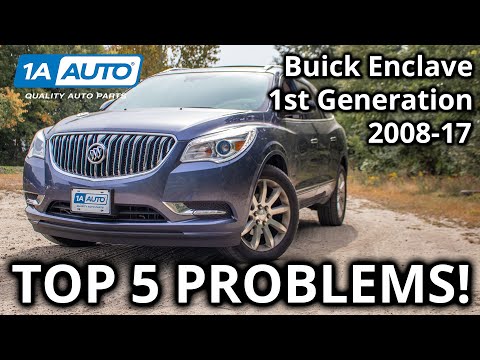
Watching someone walk through these transmission symptoms in real time often makes the whole picture click faster than reading text alone. If you suspect your Enclave is showing early warning signs, this is worth a few minutes of your time to compare against what you are experiencing.
What to Do If You Are Shopping for a Used Enclave Right Now
If you are currently browsing listings for a used Buick Enclave, everything covered here should factor directly into your buying decision. This does not mean walking away from every listing you find. It means walking into the process armed with the right questions.
- Ask for maintenance records specifically related to transmission service. A seller who cannot produce any service history on a vehicle with over 80,000 miles should raise a small flag in your mind.
- Test drive at varying speeds, not just around the block. Take it on the highway, accelerate hard from a stop, and pay close attention to how it shifts through every gear.
- Check underneath the vehicle for fluid stains. This takes thirty seconds and can reveal a leak the seller either does not know about or is not mentioning.
- Consider a pre-purchase inspection from an independent mechanic. This typically costs under $150 and can save you from an expensive mistake.
- Research the specific model year you are considering. As we covered earlier, certain years carry more reported transmission complaints than others.
None of these steps guarantee a perfect vehicle, because no used car purchase comes with that kind of guarantee. But they dramatically reduce your risk of ending up with a transmission headache within the first year of ownership.
General Motors Has Made Progress, But Stay Alert Anyway
General Motors, the parent company behind Buick, has genuinely worked to improve reliability across its vehicle lineup over the years. Newer transmission designs and software updates have addressed some of the earlier complaints tied to specific Enclave model years. That progress is real and worth acknowledging.
Even so, no manufacturer produces a flawless transmission across every single model year, and the Enclave is no exception to that reality. Being informed does not mean being paranoid. It means driving and maintaining your vehicle with a clear understanding of what to watch for, so small issues never get the chance to snowball into expensive disasters.
The Bottom Line for Every Enclave Owner and Buyer
Your Buick Enclave was built to deliver a comfortable, quiet, and dependable driving experience, and for the vast majority of owners, that is exactly what it does mile after mile. But transmission problems, when they show up, rarely announce themselves loudly on day one. They start as small hesitations, minor fluid stains, or a check engine light you convince yourself to deal with later.
The owners who avoid the big repair bills are the ones who take those small signals seriously the first time they appear. So here is the real question worth asking yourself right now: when was the last time you actually checked your transmission fluid, or paid attention to how smoothly your Enclave shifts through its gears? If you cannot remember, that is probably a sign it is time to go find out.