
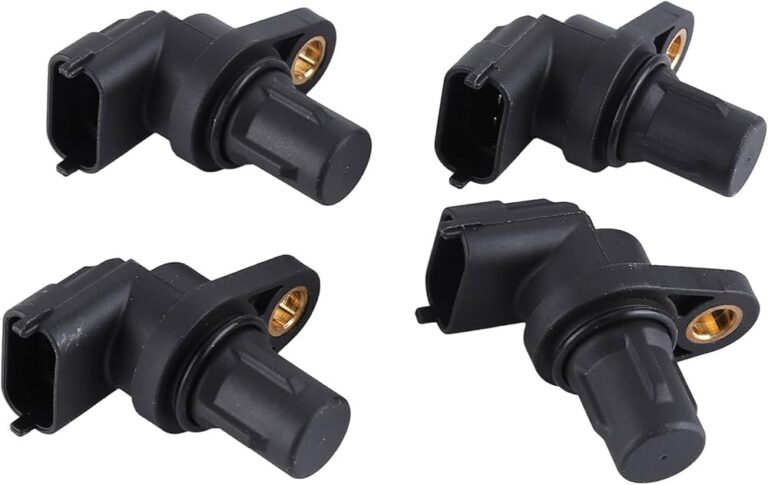
There isn’t one set number of camshaft position sensors for every car. The count depends mainly on the engine’s camshaft layout and the way its computer monitors valve timing, not on how many cylinders the engine has.
A common inline four-cylinder engine may have one or two camshaft sensors. A DOHC V6, which has four camshafts, often has four sensors. A pushrod V8 may have just one. So the short answer is: check the engine design and the vehicle’s service information before buying a part.
I’ve seen owners order four sensors because they were told a four-cylinder engine car must have four. That isn’t how the count works. One camshaft can operate valves for several cylinders, and some engines use fewer sensors than they have camshafts.
The short answer: count the camshafts, not the cylinders
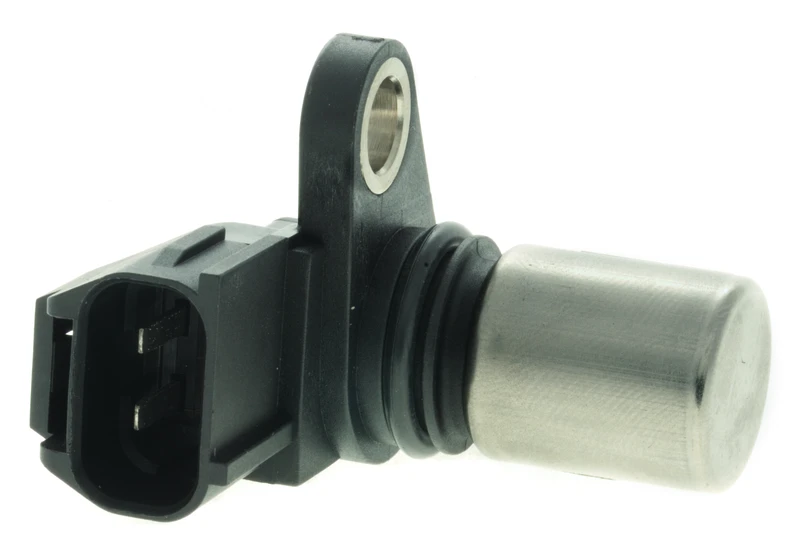
A camshaft position sensor, often called a CMP sensor or simply a cam sensor, reports the camshaft’s position to the engine computer. The computer compares that signal with information from the crankshaft position sensor to work out which part of the engine cycle it’s in. That helps it coordinate fuel injection, ignition timing, and, on engines so equipped, variable valve timing.
Camshaft sensors are common on engines for modern cars, but their number varies. Many engines have one sensor for each camshaft the computer needs to monitor. Others use a different arrangement, and some older engines don’t have a separate CMP sensor at all. A distributor pickup may provide related timing information instead.
| Engine layout | Typical camshaft arrangement | Common sensor setup |
|---|---|---|
| Inline four-cylinder, SOHC | One camshaft | Often one sensor, though the exact system varies. |
| Inline four-cylinder, DOHC | Two camshafts, usually intake and exhaust | Often one sensor for each camshaft, but not every engine follows that pattern. |
| V6, SOHC | Often one camshaft per cylinder bank | Often one per bank, with model-specific differences. |
| V6, DOHC | Four camshafts, two per bank | Often four sensors when each camshaft is monitored separately. |
| V8, pushrod or OHV | Usually one camshaft in the engine block | Often one sensor, sometimes incorporated into a distributor-related setup. |
| V8, DOHC | Usually four camshafts, two per bank | Often one sensor per monitored camshaft, but check the vehicle’s specifications. |
| V12, SOHC or DOHC | Usually two camshafts for SOHC or four for DOHC | Varies with the camshaft layout and engine-management system. |
These are common patterns, not a parts-ordering chart. Manufacturers can use different sensor arrangements on engines that look similar on paper. The exact engine code and model year are the reliable way to find out what your car uses.
Why cylinder count doesn’t tell you the sensor count
The cylinders are where combustion takes place. The camshafts control valve opening and closing, and one camshaft can serve several cylinders. That’s why a four-cylinder engine doesn’t automatically have four camshafts or four cam sensors.
Engine layout matters more. A single-overhead-cam, or SOHC, inline four has one camshaft over the cylinder head. A double-overhead-cam, or DOHC, inline four has two. If the computer monitors both cams separately, the DOHC engine will commonly have two cam sensors.
The same idea applies to V engines. The cylinders sit in two banks, but the number of camshafts in each bank depends on the valve layout. A V6 with one camshaft per bank can have two camshafts total, while a DOHC V6 usually has two per bank, for four in total.
Inline engines
An inline engine has its cylinders arranged in a single row. A DOHC inline six, for instance, usually has two camshafts even though it has six cylinders. Depending on the engine’s control system, it may have a sensor for each camshaft or another arrangement specified by the manufacturer.
Older designs can be different again. Some use a distributor, and the timing pickup may be built into it rather than supplied as a separate sensor on the cylinder head. When looking up a part, check whether the car has a standalone camshaft sensor or a distributor-based pickup.
V engines
A V engine has two cylinder banks joined to a common crankshaft. The “V” describes how the banks are arranged; it doesn’t tell you how many camshafts the engine has. A SOHC V engine often uses one camshaft per bank, while a DOHC V engine often uses two per bank.
That explains why some V6 and V8 engines have four camshaft sensors and others have fewer. The number of sensors follows the engine’s monitoring design, not the number of cylinders in each bank. A sensor labeled for Bank 1 or Bank 2 identifies which side of the engine’s control system it monitors, but the physical left and right sides depend on the vehicle.
V12 engines
A V12 has twelve cylinders, usually arranged as six in each bank. It doesn’t automatically have six camshafts. A typical SOHC layout has one camshaft per bank, while a typical DOHC layout has two per bank, for four camshafts total.
The original assumption that a V12 has six camshafts because it has six cylinders on each side confuses cylinders with camshafts. The sensor count depends on how the engine is built and which camshafts the computer monitors. If you’re looking up V12 engine parts or horsepower information, use the exact engine code, not just “V12.”
What SOHC, DOHC, and pushrod mean for sensors
SOHC means single overhead camshaft. In a V engine, that commonly means one camshaft in each cylinder bank. DOHC means double overhead camshaft, usually one cam for intake valves and one for exhaust valves in each bank.
Pushrod engines, also called OHV engines, place the camshaft in the engine block and use pushrods to operate the valves. Many have one camshaft for the whole engine and commonly use one camshaft position sensor. The sensor may be located in the block or incorporated into a distributor assembly, depending on the design.
These terms help you estimate the layout, but they aren’t enough to confirm the sensor count. Variable valve timing, sensor placement, and control-system design all matter. Two engines with the same number of cylinders and the same broad valve layout can still use different parts.
Don’t confuse the cam sensor with nearby parts
A camshaft position sensor is easy to confuse with a crankshaft position sensor or a variable valve timing solenoid. They can all be near the cylinder head or timing components, but they have different jobs.
- Camshaft position sensor: Reports camshaft position to the engine computer.
- Crankshaft position sensor: Reports crankshaft speed and position. The computer uses this signal along with cam information to manage engine timing.
- VVT solenoid or oil-control valve: Directs oil flow to adjust cam timing on engines with variable valve timing. It’s an actuator, not a position sensor.
On many vehicles, a sensor marked “A” and one marked “B” refer to different camshaft signals. They may correspond to intake and exhaust cams, but naming conventions vary by manufacturer. Don’t order a part from the letter alone without checking the vehicle’s service information.
Bank 1 is the bank containing cylinder number 1. Bank 2 is the opposite bank on an engine with two cylinder banks. The way cylinders are numbered, and which physical side is Bank 1, varies by engine. A service manual or reliable parts catalog can confirm the location.
How to find the number for your exact car
The fastest reliable route is to identify the exact engine, then check a wiring diagram or model-specific parts catalog. The badge on the trunk, such as “2.0” or “V6,” may not be enough because the same model can come with different engines, trims, or equipment.
- Record the model year and VIN. This narrows down the vehicle, but don’t assume the VIN alone tells you every engine detail without a proper lookup.
- Confirm the engine code. Check the service records, engine label, owner’s manual, or a parts catalog. Engine codes are more useful than broad descriptions such as “four-cylinder.”
- Look up the CMP circuit in a wiring diagram. The diagram can show how many cam signals the computer receives and which connectors and pins belong to each circuit.
- Check the service parts listing. Search for camshaft position sensors, not just VVT solenoids or crank sensors. Confirm the bank and intake or exhaust position where applicable.
- Use a scan tool as supporting information. Trouble codes and live data can identify a circuit or signal that needs checking, but they don’t always list every sensor fitted to the engine.
Visual inspection can help, but sensor locations aren’t standardized. A sensor might sit near the end of a cylinder head, under a cover, near a timing component, or in a distributor-related assembly. Some are hard to see without removing other parts.
Don’t count every electrical connector near the top of the engine as a cam sensor. A connector may belong to a VVT solenoid, ignition coil, fuel injector, or another component. If you’re unsure, compare the connector and location with the wiring diagram before unplugging anything.
What happens when a camshaft sensor fails?
A faulty cam sensor can cause a check-engine light, a long crank, rough running, stalling, loss of power, or a no-start condition. Some vehicles start and run using a fallback strategy; others rely more heavily on the cam signal and may have a harder time starting. A sensor can also fail intermittently, so the problem may come and go.
Misfires can occur if the engine computer loses reliable timing information, but a misfire doesn’t prove the cam sensor is bad. A misfire code such as P0303 points to a problem affecting cylinder 3, not automatically to the camshaft sensor. Ignition, fuel delivery, compression, wiring, and engine timing can all be involved.
Some common generic OBD-II code examples include P0340 for a camshaft position sensor circuit, P0341 for a signal range or performance concern, and P0345 for a Bank 2 cam sensor circuit. P0016 is a camshaft and crankshaft correlation code. The exact wording can vary with the vehicle, and none of these codes by itself confirms that the sensor needs replacing.
A code can point to a circuit, signal, or timing relationship rather than one failed component. A corroded connector, damaged wire, poor ground, low system voltage, a timing-chain issue, or a problem with the VVT system can produce similar clues. Reading the code is the start of diagnosis, not the repair.
How a mechanic checks a cam sensor fault
When a car comes in with a cam-related code, I don’t start by ordering a sensor. First I want to know when the fault happens, whether it’s constant or intermittent, and whether there are other codes. The engine’s behavior and the code information together help narrow the search.
- Scan all modules and save the details. Record the codes and freeze-frame data before clearing anything. The conditions stored with a fault can help show whether it appeared during a cold start, while driving, or under another specific condition.
- Confirm the symptom. Try the start-up or road-test conditions the driver described. An intermittent fault that appears only when the engine is hot may be missed by a quick check in the shop.
- Inspect the wiring and connector. Look for broken locking tabs, corrosion, oil contamination, loose terminals, and wires rubbed through against brackets or engine parts. A sensor can be fine while its circuit is not.
- Check the relevant power, ground, and signal circuits. The correct test depends on the sensor design. Use the manufacturer’s wiring diagram and test procedure rather than guessing at connector pins.
- Review oil and VVT operation when relevant. Some variable valve timing systems depend on engine oil flow. Low, dirty, or incorrect oil can contribute to a timing-performance problem, although that doesn’t mean every cam code is an oil issue.
- Check cam and crank signals together if needed. A capable scan tool or oscilloscope can help compare the signals and identify an intermittent or out-of-sync pattern. This is more useful than replacing parts based only on a code description.
- Investigate mechanical timing if the evidence points there. A stretched or slipped chain, incorrect belt timing, damaged trigger wheel, or sticking VVT phaser can cause a correlation fault. Those problems need a different repair from a sensor replacement.
A typical shop example is a car with a P0340 code that still runs after the owner has installed a new sensor. The next checks may reveal a loose connector or a damaged section of wiring. In another case, a cam-and-crank correlation code may lead the technician to inspect mechanical timing rather than fit another sensor.
Electrical tests vary by sensor type. Some cam sensors use a power, ground, and signal circuit; other designs use a different arrangement. A test light or a guessed resistance check can damage a circuit or lead to a false diagnosis, so use the service information for that engine.
Do you need to replace every camshaft sensor?
Usually, no. Camshaft sensors aren’t normally replaced as a set in the way some scheduled maintenance parts are. If testing confirms one sensor has failed and the other sensor circuits work correctly, replacing the confirmed faulty one is generally the sensible repair.
Replacing every sensor because they’re the same age can waste money and may not fix the real problem. If several codes appear together, check for a shared wiring or power issue before buying multiple parts. Multiple faults can sometimes point to one underlying cause.
There are exceptions. A technician may recommend more than one sensor if testing shows that multiple units have failed, or if the repair procedure makes combined work appropriate. The reason should be based on inspection and diagnosis, not a blanket rule that all sensors must be changed together.
Make sure the replacement matches the engine and the specific location. Intake and exhaust sensors, or Bank 1 and Bank 2 sensors, can look similar but have different part numbers or applications. Check the connector, fit, and catalog listing before installation.
What a camshaft sensor replacement may cost
A rough general estimate for a straightforward cam sensor replacement is around $95 to $200 for parts and labor. Treat that as a broad reference, not a current quote or a guaranteed price. The vehicle, local labor rate, part choice, and access to the sensor all affect the final bill.
| Situation | What can affect the bill |
|---|---|
| Sensor is easy to reach | The job may be fairly direct, but the part and labor rate still vary by vehicle and location. |
| Sensor is difficult to access | Extra time may be needed if other components must be moved or removed to reach it. |
| Wiring or connector fault | The repair may involve tracing and repairing the circuit rather than installing a sensor. |
| Timing or VVT problem | The required work can be more involved than a sensor replacement, and the cause needs to be confirmed first. |
Premium vehicles can cost more to service, but the brand alone doesn’t determine the price. Sensor location and access can matter just as much. A straightforward part on one engine may be buried behind other components on another.
Ask the shop whether the estimate includes diagnosis, the part, labor, and any required follow-up procedure. If the quote is for a sensor but the code is a correlation fault, ask what tests confirmed the sensor itself was bad. It’s reasonable to want the cause explained before approving parts.
Can you replace a camshaft sensor at home?
Some are accessible and simple to replace; others are awkward to reach or need testing before parts are changed. If you’re comfortable with basic repairs, have the correct service information, and can identify the right sensor, a DIY replacement may be manageable. If the car has a no-start, several timing codes, or an intermittent wiring fault, diagnosis may be the harder part.
Before starting, you’ll want the correct replacement part, basic hand tools, and a scan tool that can read the relevant codes. A digital multimeter and wiring diagram help with diagnosis, but they don’t replace a model-specific test procedure. Don’t work around hot exhaust parts or moving belts, and follow the vehicle’s safety instructions.
- Confirm the code and engine details. Record the code, engine code, and sensor position. Don’t buy a part based only on a generic search for the vehicle model.
- Let the engine cool and locate the correct sensor. Compare its position and connector with service information. Don’t unplug a nearby VVT solenoid by mistake.
- Inspect the connector and wiring first. Check for a loose plug, corrosion, damaged insulation, or oil in the connector. If you find a wiring problem, a new sensor may not solve it.
- Remove and install the part carefully. Follow the model-specific procedure, take care with any seal or O-ring, and use the specified tightening method. Don’t force a sensor that won’t seat correctly.
- Clear and recheck the fault. Follow the service instructions for any relearn or reset procedure, then check whether the code returns. A short start-up check may not reveal a fault that appears only when the engine is warm.
Don’t use a test light on an unknown sensor wire or pierce insulation casually. Some circuits carry low-voltage signals that can be damaged by the wrong test method. If you aren’t sure which terminal is power, ground, or signal, stop and get the wiring diagram or have a shop test it.
If the code comes back after replacement, don’t keep buying sensors. Recheck the part number, connector fit, wiring, and diagnosis. A code that returns may be pointing to a fault elsewhere in the system.
Common mistakes to avoid
- Assuming a four-cylinder engine has four sensors: It may have one, two, or another manufacturer-specific arrangement.
- Assuming a V12 has six camshafts: A typical V12 has two or four camshafts depending on its SOHC or DOHC layout.
- Replacing every sensor at once: Replace the part that testing has confirmed is faulty, unless there’s a clear reason to do more.
- Confusing a VVT solenoid with a sensor: One controls oil flow; the other reports cam position.
- Replacing a sensor based on a code alone: The code can describe a circuit or timing problem, not just a failed sensor.
- Ignoring oil or wiring clues: A VVT fault, loose connector, or damaged harness can mimic a sensor problem.
- Buying by model name without checking the engine: The same car model may use different engines and sensor locations.
If the engine stalls in traffic, won’t start, or runs roughly enough to make the car unsafe, arrange a proper diagnosis rather than continuing to drive it. A flashing check-engine light with a severe misfire also deserves prompt attention. A sensor code may be part of the problem, but it doesn’t tell you how safe the vehicle is to drive.
My answer
A car can have one camshaft sensor, several, or no separate sensor of that name, depending on its engine and control system. An inline four doesn’t automatically have four sensors, and a V12 doesn’t automatically have six. SOHC and DOHC layouts give you a useful starting point, but the service information for the exact engine is what settles the count.
If you’re checking a warning light, write down the code and identify the engine before ordering parts. A confident DIYer can replace an accessible, confirmed faulty sensor, but wiring, VVT, or timing faults are better handled with the right diagnostic equipment. The clear takeaway: count the camshafts the computer monitors, not the cylinders, and don’t replace sensors without confirming the fault.