
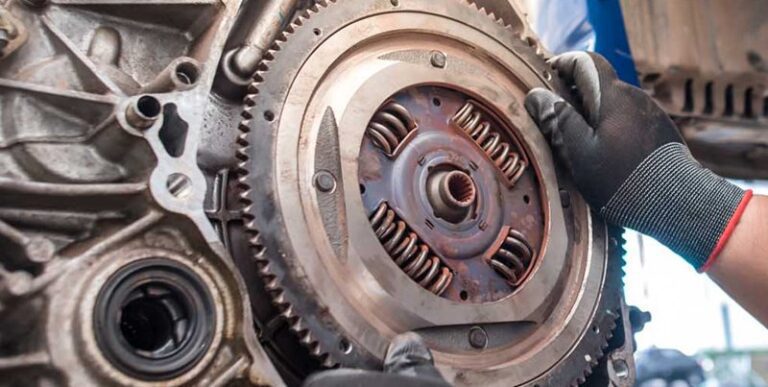
Yes, a bad flywheel can absolutely cause starting problems. The key thing to understand is what the flywheel is really doing for your engine. It is not just some heavy part bolted to the clutch side. It is part of the engine cranking system and, depending on your vehicle, it may also be involved in how smoothly the clutch engages.
When the flywheel or its gear teeth start failing, the starter cannot spin the engine the way it should. That can show up as slow cranking, grinding noises, repeated “click and no start” behavior, or a start that feels inconsistent. And once a flywheel issue is in the picture, it tends to get worse if it is ignored.
In this guide, you will learn what a flywheel does, which symptoms point toward flywheel trouble, the most common causes, and what repairs usually cost. You will also get practical advice on when to stop driving and when a repair makes sense.
Before you spend money, you want clarity. You want to know whether the flywheel is actually the problem or whether something else is mimicking the symptoms. Let us start with the question you care about most.
Can a Faulty Flywheel Lead to Starting Issues?
Absolutely. A defective flywheel can result in starting difficulties. The flywheel is a critical part of the mechanical system that lets your engine begin running. If the flywheel is compromised, the starter gear cannot engage properly, and the engine may crank poorly or not crank at all.
Here is the simple way to picture it. The starter motor spins a small gear that engages the flywheel’s ring of teeth. If those teeth are worn, damaged, or out of alignment, the starter may slip, bind, or grind. That creates starting problems that feel random until they get worse.
The same idea applies to automatic transmissions, where many people use the word “flywheel” even though the part is often called a flex plate. It performs a similar job by connecting engine rotation to the drivetrain while also being the surface the starter engages. When that flex plate fails, the starting symptoms can be very similar.
Now, one more reality check. Starting issues can be caused by many things. Weak battery, faulty starter, bad ignition switch, and corroded ground connections are common. That is why symptom patterns matter. When flywheel symptoms show up with the right clues, you can narrow the problem down faster and avoid guesswork.
Indicators Your Flywheel Needs Inspection
If you notice any of the symptoms below, you should schedule a mechanic visit as soon as you can. These symptoms do not automatically confirm a flywheel issue. Your engine contains many moving components, and starting or drivability problems can overlap across multiple parts.
Even so, flywheel-related problems tend to leave a distinct fingerprint. The big difference is not just that something sounds wrong. It is the pattern and what that pattern suggests about mechanical engagement, clutch behavior, and engine or drivetrain vibration.
Here are the typical signs that suggest your flywheel may be malfunctioning.
- While the vehicle is idling, you hear loud noises from the engine. Unlike normal engine noise, a faulty flywheel often produces repetitive banging noises.
- A burnt odor comes from the transmission. This can happen when the clutch plate deteriorates due to improper alignment with the flywheel.
- In a manual transmission, gears may shift unexpectedly without you touching the gear lever. This is a serious symptom because it points toward abnormal clutch engagement or internal driveline behavior.
- In a manual transmission, shifting becomes extremely difficult. If you notice increasing stiffness or resistance, it can be related to clutch engagement problems that connect back to flywheel condition.
If you encounter any of these issues, do not treat it like normal wear and tear. Get the vehicle checked immediately. The longer the flywheel is failing, the more likely you will damage nearby components and pay more for repairs later.
Think about it like this. If the flywheel is out of balance or the teeth are worn, it creates vibration and stress. That stress can loosen other parts, accelerate wear, and eventually turn a fix that involves a flywheel into a fix that involves the clutch too.
What Is a Flywheel and Its Role in a Vehicle?
If you are not sure what a flywheel does, you are not alone. Most drivers only hear about flywheels when something breaks. That is because flywheel problems are less common than issues like worn brakes, ignition coil failures, or coolant leaks that show up on the dashboard.
Still, the flywheel is important. It is a metallic disc in the engine area that is usually about 1 to 1.3 feet in diameter. The outer edge includes small serrated teeth often referred to as gear teeth.
Positioned between the engine and transmission, the flywheel also works as a partner to the clutch system. In many automatic transmission vehicles, the equivalent part is called a flex plate. It performs a similar function by connecting the engine to the transmission and allowing starter engagement.
In plain terms, the flywheel helps the engine start and helps the clutch operate correctly. That makes sense when you consider what must happen for your car to move. The engine must spin at the right speed and the drivetrain must engage smoothly. When the flywheel fails, both areas can suffer.
There is one more point that helps you understand why starting problems show up. The starter does not “fuel” the engine. It provides the mechanical spinning force that allows ignition to happen. If the flywheel engagement is wrong, the engine cannot crank correctly, and ignition never gets the chance to do its job.
What Triggers Flywheel Failure?
If a vehicle struggles to start due to a faulty flywheel, the next step is understanding what caused the flywheel to fail in the first place. There are multiple ways this can happen, but the problems usually come down to mechanical engagement issues, physical damage to the gear teeth, or balance problems that create vibration.
Here is the practical part. When you address the root cause early, the repair is often less expensive. If you wait, the flywheel can cause additional damage to components that were not originally damaged.
In many cases, mechanics point toward three common causes. These are the ones you will run into most often during inspections.
Three Common Causes of Flywheel Failure
These are frequent reasons a flywheel stops functioning properly.
- Misalignment between the starter gear and the flywheel’s gear teeth. When the starter gear does not meet the teeth correctly, it can create grinding, excessive wear, and repeated stress.
- Damage to the flywheel’s gear teeth. Worn or broken teeth can prevent smooth engagement. They can also cause the starter to slip or produce harsh noises.
- An unbalanced flywheel causing vibrations in the powertrain. Balance problems create vibration that can be felt at idle, under load, and during clutch engagement.
Even when these are the “three common causes,” they often have underlying contributors. For example, normal aging can wear gear teeth. Improper clutch installation can contribute to alignment issues. Rough driving can contribute to stress that increases wear. The main takeaway is that flywheel failure has a pattern, not just random luck.
If you notice the symptoms and ignore them, the misalignment and damage keep cycling. That cycle is what increases the chances of more expensive repairs.
What Is the Cost to Fix or Replace a Flywheel?
Because the flywheel is a vital engine component, the repair approach depends on how badly it is damaged. Sometimes a repair is possible. In many situations, replacement is the realistic option because the flywheel must be precisely aligned and balanced.
Repairing a flywheel can still be costly. If the damage is severe, repair may not even be feasible. In that case, a mechanic will advise replacing the flywheel entirely.
The part price varies. It depends on your vehicle’s make, model, type, year, and even the materials used for the flywheel. A new flywheel typically ranges from $500 to $1,100 for the part itself.
Those numbers typically exclude labor. Labor is often significant because flywheel work commonly requires transmission removal. That is why the total repair bill can climb when you add labor costs and any additional repairs uncovered during inspection.
Nearby components can also raise costs dramatically. Replacing the clutch along with the flywheel could at least double your bill, because it often makes sense to replace worn clutch parts when the transmission is already being removed.
NOTE: Address flywheel-related issues promptly.
A failing flywheel is not something to postpone until you feel “ready.” Some drivers delay because they need time to gather funds or schedule time off work. That is understandable, but the risk is real.
Neglect can lead to serious consequences. Until you can get service, drive cautiously. Limit trips to essential destinations such as home, work, or the store. Avoid situations that increase stress, such as sudden starts, steep hills, or traffic stops that require frequent clutch engagement.
When you ignore mechanical warnings, you are not just risking a more expensive repair. You are also risking safety and drivability problems that can happen at the worst time.
How a Mechanic Confirms It Is Actually the Flywheel
Here is the thing about flywheel symptoms. They overlap with several other clutch and transmission problems. A burnt smell can also come from friction issues in other driveline areas. Loud banging can come from loose exhaust parts, starter mounting issues, or worn mounts. And hard shifting can come from cables, hydraulic problems, or linkage wear.
That is why diagnosis matters. A real mechanic will inspect rather than guess. They will listen to noise patterns, check starter engagement behavior, and look for physical signs of wear or damage.
While your vehicle cannot be diagnosed remotely, you can understand what a mechanic typically checks when flywheel failure is suspected.
| Symptom you notice | What it can point to | What a shop usually checks |
|---|---|---|
| Hard starting or grinding | Starter engagement issues, flywheel teeth wear | Starter operation and ring gear condition, inspection for tooth damage |
| Repetitive banging at idle | Flywheel/flex plate damage, loose components | Visual inspection, checking mounting points, checking for play or cracking |
| Burnt smell from transmission | Clutch friction problems, clutch misalignment | Clutch wear, alignment, and condition while the system is accessed |
| Hard shifting or unexpected shifting | Clutch engagement issues, driveline problems | Clutch operation, release system, and driveline behavior under load |
That inspection process is what protects you from unnecessary repairs. If the problem is not the flywheel, the shop should be able to tell you what is actually causing the symptoms.
When You Should Stop Driving and Get Help
Most flywheel issues do not require immediate towing in every case. However, you should treat severe signs as a stop-til-fixed situation. When the flywheel is failing, it can create drivability and mechanical safety concerns.
Stop driving and get help if you experience:
- Repetitive loud banging noise that grows worse quickly
- Burnt smell that increases with driving
- Vehicle behavior that feels unsafe, such as unexpected gear engagement
- Starting problems that become frequent, especially if the starter grinds
- Excessive vibration that you cannot ignore
Even if you can still drive, every additional drive can add wear. Your flywheel is not just a “starting part.” It is part of the powertrain system. When it is unbalanced or damaged, it accelerates stress on other components.
Repair vs Replacement: What Usually Makes Sense
It is tempting to ask for a cheaper option. Sometimes you will hear talk about repairing. But flywheel repair depends heavily on what is wrong.
If the flywheel is warped, cracked, or severely damaged, replacement is usually the safest and most reliable approach. If the gear teeth are badly worn or broken, that is a sign the starter engagement surface has already suffered. In these cases, repair is often not a realistic long-term solution.
That said, a smart mechanic will not “sell replacement” as the only option. They should be able to explain what is wrong and why repair or replacement makes sense based on the condition they find.
If you are given a recommendation, ask a direct question: “What did you measure or observe that makes replacement necessary?” If the answer is clear, you can feel more confident. If the answer is vague, you might want a second opinion.
Why Flywheel Repairs Can Be Expensive
Flywheel replacement is expensive for two main reasons. One is the part itself, which is often $500 to $1,100. The other is labor, because the job can require significant disassembly to access the flywheel and clutch system.
Also, once the transmission is removed, it becomes normal to inspect related components. That is where extra costs sometimes appear. If the clutch is worn, the mechanic will usually recommend replacing it at the same time, which can double the bill.
That is not always “upselling.” It is also a practical decision. You do not want to pay to remove the transmission twice just because the clutch was worn enough to fail soon after.
When you understand this, you can budget better and plan for the most complete repair, not just a quick fix that leaves the next problem waiting.
What You Can Check Before You Pay for Flywheel Work
You might not be able to confirm the flywheel at home, but you can do a little due diligence. This can help you avoid misdiagnosis and decide whether the problem is likely mechanical or electrical.
Try these checks, then take your findings to the shop:
- Pay attention to the starter sound. If you hear grinding or repeated “catching,” that suggests an engagement surface issue.
- Note whether the noise happens at idle. Repetitive banging at idle is a strong clue that something mechanical is vibrating or hitting.
- Watch for clutch-specific behavior in manual transmissions. Difficulty shifting or unexpected shifting should raise attention immediately.
- Smell check after driving. A burnt odor from the transmission side can point toward friction issues.
- Check for vibration patterns. If the vibration changes when you engage the clutch or move through gears, it connects to driveline behavior.
These steps are not a full diagnosis. They help you provide accurate information to the mechanic, and accurate information helps them confirm the real issue faster.
How to Reduce Your Chances of Flywheel Trouble
Flywheel failure is not always avoidable. Still, you can reduce stress on the drivetrain and catch problems early when you still have options.
Here are sensible habits that help:
- Avoid riding the clutch. Let the clutch fully engage. Prolonged slipping creates heat and wear and can contribute to clutch plate problems.
- Do not delay when you smell burning. A burnt odor means friction materials are overheating or slipping. That problem rarely fixes itself.
- Address starting issues early. When the starter begins grinding or cranking becomes inconsistent, do not assume it is just a battery.
- Drive smoothly during cold starts. Harsh starts can increase driveline stress while components are still warming up.
- Follow maintenance schedules. Keep fluid levels correct and have the driveline inspected if you notice vibration or abnormal noises.
If you do these things, you reduce the odds of misalignment and excessive wear, especially if your clutch has to operate correctly against the flywheel.
Real-World Examples That Match Flywheel Symptoms
Sometimes it helps to hear how this shows up in normal life, not just in repair manuals. Here are a few realistic examples of how drivers describe flywheel-related problems.
Example one: “It started as hard starting.” A driver mentions the car takes a bit longer to start, and sometimes it makes a harsh grinding sound. At first the battery is suspected. Then the grinding repeats and increases in frequency. When the shop inspects, the ring gear teeth show damage consistent with engagement problems.
Example two: “The idle sounds like banging.” The vehicle idles and you can hear repetitive banging from the engine bay area. The driver assumes it is a loose exhaust. After inspection, the noise correlates with engine rotation and clutch engagement behavior. The flywheel or flex plate shows signs of damage or imbalance.
Example three: “Burnt smell and bad shifting.” After some driving, the transmission smells burnt and shifting becomes stiff. Sometimes gears feel wrong, almost as if the clutch is not engaging where it should. Inspection finds clutch plate issues connected to flywheel alignment and wear. The fix requires replacing the worn parts and restoring proper alignment.
Those scenarios do not mean every case is the same. They do show why flywheel diagnosis is worth doing promptly. When you delay, the problem often expands from a flywheel issue into a clutch issue too.
Final Thoughts
A bad flywheel can cause starting problems, loud noises, burnt transmission odors, and serious manual shifting problems. It can also lead to expensive secondary damage because the flywheel is part of the mechanical system that connects engine power to the transmission and clutch behavior.
If you are seeing flywheel-like symptoms, act now. A replacement part can typically cost $500 to $1,100, and nearby component damage, including the clutch, can raise the total significantly.
Here is your next move: If you hear repetitive banging at idle, smell burning from the transmission area, or experience hard or unexpected shifting, stop driving and get the vehicle inspected. What symptom are you seeing right now, the starting problem, the noise, the burnt smell, or the shifting issue?