
Have you ever put your car in reverse and heard a clunking noise that makes you pause before you finish backing out? It is unsettling. It sounds like something is loose, worn, or moving in the wrong way. And when it happens in reverse, it can feel extra confusing, because reverse is not just “another gear.” It changes the way forces travel through the drivetrain and suspension.
This guide is going to be practical. We will break down the most common reasons for a clunk when reversing, what to look for, and the usual fixes. Then we will talk about when you should stop DIY and get help, plus what you can do to reduce the chances of the problem coming back.
The goal is not to scare you. It is to help you figure out what is probably happening so you can make a smart repair decision. If you keep reading, you should be able to narrow the noise to a small list of likely causes instead of guessing blindly.
What causes a clunking noise when reversing a car?
There are several reasons why your car may make a clunking noise when reversing. Here are the common causes that show up again and again when owners bring their vehicles in or when mechanics find worn parts during inspections.
Quick note: the “clunk” can mean different things. Sometimes it is one solid thump when you first shift into reverse. Other times it is a repeated clunk every few feet, every bump, or every time the suspension unloads and reloads. The pattern helps you narrow down which system is involved.
1. Worn-out suspension components
The suspension system is responsible for ensuring a smooth ride by absorbing shock and vibrations. When suspension parts like struts, shocks, and bushings wear out, the suspension cannot control movement as precisely. In reverse, that worn play can show up as a clunk when the suspension loads in a slightly different direction.
This is also why you might hear the noise on certain driveway angles or when you back out of a spot with uneven ground. The worn parts may not sound bad in forward driving because load and movement change. Reverse often makes the worn movement more noticeable because the drivetrain load shifts direction and the rear suspension can compress or extend differently.
When suspension wear is the real cause, you can often confirm it with a few basic checks. You may notice additional symptoms like uneven tire wear, more bouncing than usual over bumps, or a rough feel in the steering or rear of the vehicle. If you find torn bushings, cracked rubber, or leaking struts, that points strongly in this direction.
There is a simple way to “listen smart.” If the clunk happens mainly at the start of reverse when the car settles, that can point to bushings and mounts letting the suspension move. If it happens over bumps during backing, the worn suspension components are likely allowing excessive movement. When the sound changes depending on road surface, that usually means suspension play is involved.
Important detail that helps you avoid wasted money: sometimes suspension clunks are caused by something else making the suspension move too much, like a driveshaft issue. That is why you should check the simple suspension wear signs and also pay attention to whether the clunk is tied to drivetrain load changes.
2. Loose or damaged driveshaft components
The driveshaft is responsible for transferring power from the engine to the wheels. If the driveshaft or its components are loose or damaged, you can hear a clunk when reversing because the drivetrain load shifts direction and the joints and supports experience different forces.
This is one of the most common “clunk in reverse” suspects, especially on vehicles where the driveshaft, universal joints, and related mounts are a big part of the power path. When the drivetrain load reverses, a slightly loose bracket or worn joint can make contact or shift position, producing the clunk you notice.
Mechanics often describe this as play that shows itself when the load direction changes. In forward drive, the play may be held by torque in one direction. In reverse, torque pulls the opposite way, and the slack can become obvious.
If you suspect driveshaft components, pay attention to when the clunk happens. If it is loudest when you shift into reverse or when you first start moving, that often points to driveline slack or a mounting support that is allowing movement. If it clunks repeatedly as you continue backing, it can suggest worn universal joints or a driveshaft imbalance that becomes noticeable under reverse torque.
One more real-world clue: if the clunk is accompanied by vibration at low speed or a rough feel when shifting between drive and reverse, the driveshaft side of the drivetrain deserves closer attention. That does not mean you automatically replace the driveshaft. It usually means you inspect the joints, mounts, and connection points first.
3. Faulty CV joints
The CV joints are responsible for transferring power from the transmission to the wheels. Over time, the CV joints can wear out. When that happens, reverse torque and suspension movement can make worn CV joints “knock” or clunk, especially if the boots are torn and dirt has entered the joint.
CV joint wear is not always silent. Many drivers report clicking on turns, vibration under acceleration, or clunks that come and go. The “clunk in reverse” part often becomes more noticeable when you reverse out of driveways because steering angle plus suspension movement can push the CV joint into a less forgiving position.
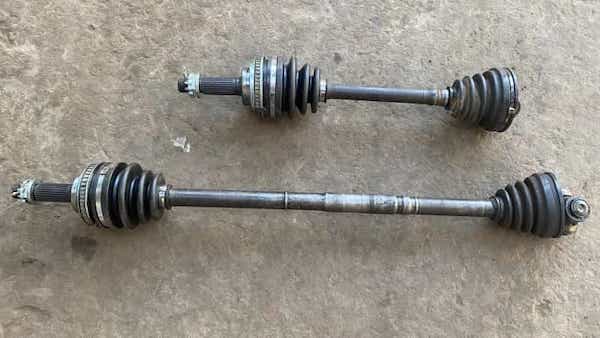
If the CV joint is the issue, you can often find physical evidence during inspection. Torn CV boots, grease sling, or visible grease around the boot area are big clues. A worn joint may also feel like it has excessive play when the wheel and axle are inspected.
Think of CV joints as “flex and drive” parts. They allow the axle to move up and down with the suspension while transferring power. When they wear, the joint can create knocking sounds under load changes. Reverse is one of those load-change moments, so the sound shows up right when you need to back.
It also helps to connect the clunk to driving behavior. If the clunk is worse when you steer while reversing, or when you reverse on uneven ground, that points toward the CV joint and the axle assembly. If the clunk is only present when shifting between drive and reverse, it could be driveshaft or engine mount play. Clues help you stop guessing.
4. Loose or worn-out engine mounts
The engine mounts hold the engine in place and prevent it from moving excessively. If the mounts are loose or worn out, the engine can move when you reverse. That movement can lead to a clunk because the drivetrain components connected to the engine and transmission shift slightly in position.
Owners often describe this as a sound that feels like it comes from underneath the front of the car. In reverse, torque can pull the engine and transmission a bit differently than in forward drive. If the mount is worn, that shift produces a clunk.
There are signs that point to worn engine mounts. You might see cracks in the rubber portion of the mount, fluid leaks if the mount design includes a hydraulic element, or you might feel extra vibration at idle. Even a small vibration that becomes noticeable when you shift gears can pair with a clunk in reverse.
Another useful clue: if you open the hood after you shut the car off and look for movement or obvious cracks, you might confirm a mount problem. Some mounts also allow the engine to sit slightly lower or misaligned compared to how it should appear. Visual checks are not a perfect diagnosis, but they can steer you toward the right repair direction.
5. Low transmission fluid
The transmission fluid is responsible for lubricating the transmission and preventing it from overheating. If the fluid level is low, it can cause a clunking noise when reversing.
Low fluid changes how smoothly the transmission engages. In reverse, the transmission may struggle to apply hydraulic pressure correctly, which can cause a clunk during engagement. You might notice harsh shifting, delayed reverse engagement, or a rough feel when the transmission goes into reverse.
Low fluid can also speed up wear on internal transmission components. That is why a “quick clunk fix” is not just about sound. It is about making sure the transmission is properly lubricated so the internal parts are protected.

If you suspect low transmission fluid, do not only add fluid blindly. Check the level with the correct procedure for your specific transmission type. Some transmissions require a temperature check, others require a specific engine running state, and others require a level check with the vehicle positioned on level ground. Using the wrong method can give you a false reading.
Also, low fluid can be a symptom, not the whole problem. If fluid is low more than once, it may indicate a leak. If you keep adding fluid and it keeps dropping, the underlying leak needs attention. Otherwise, the clunk can return.
Now that you have the most common causes listed, the next question is obvious. How do you fix a clunking noise when reversing? You start with the underlying cause. That is where the right fix comes from.
How to fix a clunking noise when reversing a car?
Fixing a clunking noise when reversing depends on the underlying cause. Here are some common fixes, matched to the most frequent problems listed above. Keep in mind that repairs are easiest when you choose the fix that directly matches the real source of the noise.
If you try to “fix everything,” you can end up spending money on parts that do not solve the actual issue. Instead, use the cause list as your short diagnosis path. Confirm which area is likely involved, then choose the appropriate fix.
1. Replace worn-out suspension components
If the suspension components such as struts, shocks, or bushings are worn out, you need to replace them. This will restore your car’s smooth ride and often eliminate the clunking noise when reversing.
In real ownership, this usually means inspecting suspension parts for cracks, leaking shocks or struts, and deteriorated bushings. Some bushings are small, inexpensive pieces. Others are part of a larger control arm assembly. Either way, the fix should remove the excessive play that creates the clunk.
When you replace worn suspension components, you also reduce the chance of tire wear and poor handling that can come from worn suspension geometry. A smoother ride is not just comfort. It helps tires contact the road correctly and reduces the noise you hear under load changes like reverse.
2. Tighten or replace driveshaft components
If the driveshaft or its components are loose or damaged, you need to tighten or replace them. This ensures that power transfers smoothly from the engine to the wheels and eliminates the clunking noise.
Depending on what is worn, the fix might be as simple as tightening a mounting bolt, or it might involve replacing a worn joint or support component. The important part is that the driveshaft assembly needs to be secure and aligned, without slack that can create the clunk.
One owner experience stands out here. Many people replace other parts first because the noise seems like a suspension issue. Then they discover a loose driveshaft support or worn universal joint. The clunk was drivetrain play all along. That is why the cause list matters.
3. Replace faulty CV joints
If the CV joints are worn out, you need to replace them. This ensures power transfers smoothly from the transmission to the wheels and eliminates the clunking noise.
When CV joints fail, replacing them can sometimes include replacing the whole axle assembly, depending on the vehicle. If the CV boot is torn, you often replace the joint because contamination has already entered. A new boot alone might not fix the worn joint inside.
After replacement, pay attention to whether any other symptoms disappear. The clunk in reverse should improve. You might also notice less clicking during turns or less vibration. That helps confirm you solved the real issue.
4. Replace worn-out engine mounts
If the engine mounts are worn out, you need to replace them. This holds the engine in place and prevents excessive movement when reversing, which eliminates the clunking noise.
Engine mounts are often overlooked because they are not a routine maintenance item. Still, when they wear, they can create clunks on gear changes. A mount replacement can also reduce vibrations felt in the cabin and improve driveline behavior overall.
Mechanics usually inspect engine mounts for cracks, collapsed rubber, leaks, and torn components. Some mounts show wear quietly for a long time. Reverse noise is often when the issue becomes obvious because the load direction changes.
5. Check and fill the transmission fluid
If the transmission fluid level is low, you need to check and fill it. Proper fluid level lubricates the transmission, helps prevent overheating, and can eliminate the clunking noise.
Here is the best way to approach this fix without making it worse. First, check the level using the correct procedure from your owner manual or service instructions. Second, if the fluid is low repeatedly, you should find the leak. Otherwise, you keep chasing the symptom instead of fixing the cause.
Also, pay attention to fluid condition. If the fluid is very dark or smells burnt, it might not be enough to just top off. You may need to service the fluid as well. The original guidance focuses on level, but in real ownership, condition matters too.
Sometimes the right fix is simple. Sometimes it is a little more involved. Either way, the best next step is to figure out whether you should try the fix yourself or call in professional help.
When should you seek professional help?
While some of the fixes can be done at home, others require professional expertise. If you want to avoid making the problem worse, use this rule. Seek professional help when you are uncertain, when the job is beyond your comfort, or when the noise does not improve after you try the likely fix.
- You are not sure about the underlying cause of the clunking noise.
- You are not confident about fixing the problem yourself.
- The noise persists even after trying the above fixes.
In other words, do not keep throwing parts at the problem. If a clunk persists, that is usually your cue that either the wrong component was replaced, the noise source is something else, or the real problem includes a second issue happening at the same time.
If you want a practical decision tool, think about your driveway. If you can identify the worn part visually, and you can replace it safely with basic tools, DIY is reasonable. If you must lift the car in the air, handle driveline components, or work inside the transmission system, that is where a professional saves you time and risk.
How to prevent clunking noise when reversing a car?
Here are some tips to prevent clunking noise when reversing a car. Most prevention comes down to maintenance and driving habits that reduce stress on the drivetrain and suspension.
- Regularly check and maintain your car’s suspension, driveshaft, engine mounts, and transmission.
- Avoid sudden stops and acceleration when driving.
- Do not overload your car beyond its weight capacity.
- Use high-quality lubricants and fluids in your car.
Prevention is more than “avoid clunks forever.” It is about catching wear early. Suspension bushings and engine mounts do not fail overnight. Driveshaft and CV joints do not fail by magic. When you maintain your vehicle and keep fluids topped off correctly, you give those parts a better chance to last.
Also, consider how you drive in reverse. Backing out slowly and smoothly reduces shock loading. If you back over a steep driveway lip aggressively, the suspension and drivetrain take a hit at the same time. That makes any existing play easier to hear as a clunk.
If you have a habit of reversing quickly when you back out of a tight space, it can accelerate wear in drivetrain joints and mounts. You do not need to creep at a snail’s pace. You just want controlled movements that do not slam the driveline.
Now let us bring it home with a conclusion that is not just repetition. A clunk when reversing is a signal. It can be a worn suspension bushing, a loose driveshaft component, a failing CV joint, worn engine mounts, or low transmission fluid. The best part is that these causes are recognizable, and they each have a logical fix.
Conclusion
In summary, a clunking noise when reversing a car can be caused by several factors, including worn-out suspension components, loose or damaged driveshaft components, faulty CV joints, worn-out engine mounts, and low transmission fluid. To fix the problem, you need to identify the underlying cause and take appropriate action. That could include replacing worn-out parts, tightening or replacing driveshaft components, replacing CV joints, swapping worn engine mounts, or checking and filling the transmission fluid. If you are unsure about the cause or how to fix it, seek professional help. And if you want fewer surprises, follow the prevention tips so suspension and drivetrain wear stays under control.
Here is the actionable question: when you hear the clunk in reverse, does it happen mostly the moment you shift into reverse, or does it show up over bumps and movement while backing? Your answer will point you to the right category of fix faster than guessing ever will.