
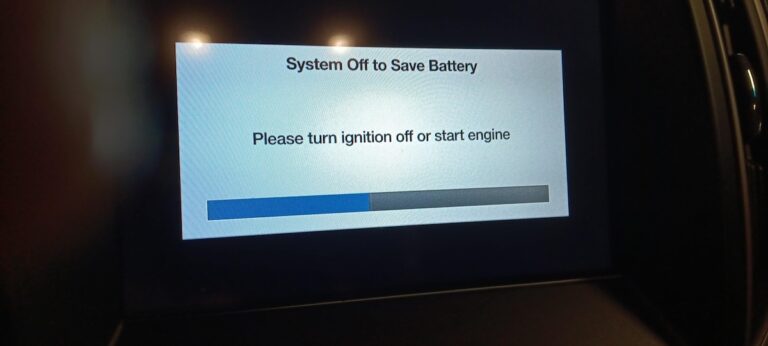
You are sitting in your parked Ford, maybe waiting for someone or listening to the radio, and suddenly a message appears on your dashboard: “System Off To Save Battery.” The entertainment system shuts down. The air conditioning stops. A few other features go quiet. And you are left wondering what is actually going on with your vehicle.
This message is not a random glitch. It is your Ford’s battery management system doing exactly what it is designed to do, which is protect your battery from draining to the point where the car will not start. But while the system is doing its job, seeing that message is a sign that something needs your attention. Let us break down exactly what is happening, why it happens, and how to fix it.
What “System Off To Save Battery” Actually Means
Your Ford contains a Battery Management System, commonly called the BMS. This is the computer responsible for monitoring how your battery charges and discharges energy in real time. It tracks the state of your battery continuously, and when it detects that power is dropping below a safe threshold, it takes action.
That action is the “System Off To Save Battery” message. When it appears, the BMS automatically shuts down non-essential electrical components to preserve whatever charge remains in the battery. The goal is simple: make sure there is enough power left to start the engine.
The components that get cut first are the ones you do not strictly need to drive, things like the infotainment screen, seat heaters, rear window defroster, and in some cases the climate control fan. The engine, steering, and brakes are not affected.
But here is the thing. The message itself is not the problem. It is a symptom. Something is causing your battery to drain faster than it should, and that underlying cause is what actually needs to be addressed. Simply dismissing the message or restarting the car might make it disappear temporarily, but if you do not find and fix the root cause, it will be back.
What Causes the Ford “System Off To Save Battery” Warning?
There are several reasons your battery might be draining to the point where the BMS steps in. Some are simple habits you can change immediately. Others point to a failing component that needs to be repaired or replaced.
1. Low Battery Charge From Everyday Use
The most straightforward cause is also the most common. Your battery naturally depletes as you use the electrical systems in your vehicle. Under normal driving conditions, the alternator keeps the battery topped up. But certain habits can outpace the alternator’s ability to recharge, causing the battery level to drop steadily.
Think about situations like these:
- Sitting in a parked car for an extended period with the radio, air conditioning, or interior lights running while the engine is off
- Leaving the headlights or interior dome lights on overnight
- Leaving a door slightly ajar, which keeps the dome light running without you realizing it
- Using multiple high-drain accessories simultaneously, such as the heated seats, rear defroster, and entertainment system, while taking only short trips that do not give the alternator enough time to recharge the battery
Any of these scenarios can push the battery low enough to trigger the BMS warning. In these cases, the fix is behavioral rather than mechanical. Turn off what you do not need, and give the battery a chance to recover through a longer drive or a proper charge.
2. A Worn-Out Battery
Car batteries do not last forever. Most conventional lead-acid batteries have a lifespan of three to five years under normal conditions. As a battery ages, its internal chemistry degrades. The plates inside the battery sulfate, and the battery’s ability to hold a full charge diminishes over time.
What this means practically is that an older battery may read as “charged” on a basic voltage test but cannot actually deliver the energy it claims to have. It drops voltage quickly under load, even if it appeared fully charged moments before. The BMS detects this rapid voltage drop and triggers the warning.
Signs that your battery is worn out rather than just temporarily depleted include:
- The engine cranks slowly when starting, especially in the morning
- The battery needs frequent jump starts
- The battery will not hold a charge even after being connected to a charger for several hours
- The battery is more than four years old
- The warning appears regularly even though you are not leaving lights on or running accessories heavily
Interestingly, a battery can also wear out prematurely if the vehicle sits unused for long periods. When a car is parked for weeks or months without being driven, the battery slowly self-discharges. If it drops too low repeatedly, it causes permanent damage to the battery’s internal structure, and the battery can never again reach full capacity. This is why Fords that are stored or rarely driven tend to experience this warning more often.
3. A Failing Alternator
The alternator is what keeps your battery charged while the engine is running. It converts mechanical energy from the engine into electrical energy, which it uses to power the vehicle’s electrical systems and simultaneously recharge the battery.
When the alternator starts to fail, it cannot generate enough output to keep the battery charged. The battery slowly drains even while the engine is running, and eventually drops to the point where the BMS intervenes.
Alternator failure is easy to mistake for a battery problem because the symptoms are similar. But there are a few signs that point specifically to the alternator:
- Headlights that are dim at idle and brighten when you rev the engine
- The battery warning light illuminated on the dashboard alongside the “System Off To Save Battery” message
- Electrical accessories that perform erratically or cut out while driving
- The engine stalling or running roughly
- A whining or grinding noise from the engine bay related to the alternator belt or bearings
If you charge the battery fully and the warning comes back within a day or two of normal driving, the alternator is a strong suspect. A quick alternator output test at any auto parts store or workshop will confirm whether it is generating adequate voltage.
4. Parasitic Battery Drain
A parasitic drain is an electrical load that continues drawing power from your battery after the vehicle is turned off and should theoretically have nothing consuming power. Some small amount of parasitic draw is normal. Your car’s clock, the memory settings in your modules, and the keyless entry system all draw a tiny current when the car is off. This is called “quiescent current” and the amount is so small it should not matter.
But when a component fails or a circuit stays active when it should not, the draw can be significant enough to drain the battery overnight or within a few days. Common culprits include:
- A faulty relay that stays energized after the car is off
- An aftermarket accessory, such as a dashcam, phone charger, or audio amplifier, that was wired improperly and draws power continuously
- A failing body control module that keeps certain circuits active
- A stuck HVAC control module that keeps the blower motor running intermittently
- A malfunctioning trunk or door latch that prevents the vehicle from detecting the door is closed, keeping interior lights running
Parasitic drain is diagnosed using a multimeter and a methodical process of pulling fuses one at a time to identify which circuit is drawing excessive current. This is a job that most technicians handle quickly but can be time-consuming to DIY if you are not familiar with the process.
5. Corroded or Loose Battery Terminals and Connections
The battery can be in perfect condition and fully charged, but if the connections between the battery and the rest of the vehicle are compromised, power cannot flow reliably. Corroded terminals or loose cable connections introduce resistance into the circuit, which reduces the effective voltage the rest of the vehicle receives. The BMS detects this reduced voltage and may interpret it as a low battery condition, triggering the warning.
Battery terminal corrosion is common and recognizable. It appears as a white, blue, or green chalky buildup around the terminal posts. Even a moderate amount of corrosion can significantly degrade the connection.
Loose cable connections are less visible but just as problematic. A cable that appears connected but is not fully tightened creates an intermittent connection that causes voltage fluctuations throughout the electrical system.
6. Driving in Extreme Temperatures
Temperature has a direct and significant effect on battery performance. It is not a malfunction or a fault in your vehicle. It is basic chemistry.
In cold weather, the chemical reactions inside a lead-acid battery slow down, which reduces the battery’s ability to deliver current. At the same time, cold engine oil is thicker and requires more power from the starter motor to turn the engine over. The net result is that your battery is being asked to deliver more power than normal while simultaneously being less capable of doing so. The BMS may trigger the warning during cold starts or short winter trips where the alternator does not have enough run time to replenish what was used.
In hot weather, the water in the battery’s electrolyte solution can evaporate over time, particularly in older batteries. This accelerates internal corrosion and degrades the battery’s capacity. Heat also speeds up the chemical reactions that cause battery self-discharge.
If you only see the warning during extreme weather and it clears on its own once temperatures normalize, weather-related battery stress is likely the primary factor. But if the battery is older than three years, it may simply no longer have the capacity to cope with temperature extremes, and replacement is the better solution.
How to Fix the Ford “System Off To Save Battery” Warning
The right fix depends entirely on what is causing the problem. Here is a systematic approach that starts with the simplest solutions and works toward the more involved ones.
Fix 1: Eliminate Obvious Battery Drains Right Now
Before spending any money or pulling any parts, do a quick sweep of your vehicle for anything that might be draining the battery unnecessarily.
- Check that all interior and exterior lights are off
- Make sure all doors, the trunk, and the hood are fully closed and latched
- Unplug any aftermarket accessories connected to the USB ports or the 12-volt outlet
- Turn off the vehicle completely and make sure no accessories remain powered
If the warning appeared while you were sitting with the engine off running accessories, this may be all you need to do. Start the engine and take a drive of at least 20 to 30 minutes to give the alternator time to recharge the battery. The message should clear on its own.
Fix 2: Clean Corroded Battery Terminals
This is a quick and inexpensive fix that can make a significant difference. Here is how to do it safely:
- Turn the vehicle completely off
- Open the hood and locate the battery
- Inspect the terminal posts for white, blue, or green crusty buildup
- Mix a tablespoon of baking soda with a cup of warm water
- Using an old toothbrush or a battery terminal cleaning brush, scrub the corrosion from both terminal posts and the inside of the cable clamps
- Rinse with a small amount of clean water and dry thoroughly with a rag
- Apply a thin coat of petroleum jelly or a purpose-made terminal protector spray to both terminals to slow future corrosion buildup
- Check that both cable clamps are tight on the terminal posts with no movement
After cleaning the terminals, start the vehicle and check whether the warning has cleared. You would be surprised how often this simple step resolves the issue entirely.
Fix 3: Test and Recharge the Battery
If the battery was depleted by one of the circumstances described above but is otherwise in good condition, a proper recharge may be all it needs. Do not just drive the car around the block and expect the alternator to do the job. The alternator is designed to maintain a charged battery, not to recover a heavily depleted one efficiently.
Use a dedicated battery charger. Connect it to the battery with the vehicle off and charge it fully before driving. Most modern smart chargers will indicate when the battery has reached a full charge.
Once charged, have the battery tested. Auto parts stores like AutoZone, O’Reilly, and Advanced Auto Parts will test your battery for free. The test checks not just the voltage but the battery’s actual capacity and its ability to deliver current under load. If the battery tests as “good” but the warning comes back within days, the battery is not the only problem.
Fix 4: Test the Alternator
The same shops that test your battery for free will also test your alternator output. A healthy alternator should produce between 13.5 and 14.7 volts while the engine is running. Anything below that range means the alternator is not doing its job of keeping the battery charged.
If the alternator tests as faulty, it needs to be repaired or replaced promptly. A failing alternator will drain even a brand-new battery within a short time. Continuing to drive on a faulty alternator also risks circuit overload as the system draws on the battery beyond its intended limits, which in a worst case scenario can create a fire hazard.
Alternator replacement is a job that a competent DIYer can handle with the right tools, but it does involve removing serpentine belts and electrical connections. If you are not comfortable working around those components, have a shop handle it.
Fix 5: Diagnose and Eliminate Parasitic Battery Drain
If the battery and alternator both test fine but the warning keeps coming back, parasitic drain is the most likely remaining cause. This is a more involved diagnosis but absolutely worth doing.
Here is a simplified version of the process:
- Get a digital multimeter and set it to measure amperage (DC amps)
- Turn the vehicle completely off and disconnect the negative battery cable
- Connect the multimeter in series between the negative cable and the battery’s negative terminal
- Wait 10 to 15 minutes for all modules to enter sleep mode
- Read the current draw. A normal quiescent draw is typically under 50 milliamps. Anything significantly above 50mA indicates a parasitic drain
- Begin pulling fuses one at a time from the fuse box. When the reading drops significantly after pulling a specific fuse, that circuit contains the source of the drain
- Trace the components on that circuit to identify the faulty part
This process can be time-consuming, especially on modern vehicles with many fuse-protected circuits. If you would rather not do it yourself, any qualified auto electrician or mechanic can run a parasitic drain test and identify the problem quickly with the right equipment.
Fix 6: Replace a Worn-Out Battery
If the battery test confirms that the battery’s capacity has dropped below an acceptable level, replacement is the right call. There is no way to restore a worn-out lead-acid battery to full capacity. Charging it more often or driving more frequently will not reverse the internal degradation. The only solution is a new battery.
When choosing a replacement battery, match the specifications to your Ford’s requirements. Your owner’s manual or a quick check at any auto parts store will tell you the correct group size, cold cranking amps, and reserve capacity for your specific model and engine. Do not downsize to save a few dollars. A battery that does not meet your vehicle’s specifications will drain faster and may not provide reliable starts.
One important note for Ford owners specifically: after replacing the battery, some Ford models require the BMS to be reset so it can properly learn the characteristics of the new battery. Without this reset, the BMS may apply charging patterns calibrated for the old, worn battery, which can affect how well the new battery performs and how accurately the system monitors it. This reset is typically done with a diagnostic scan tool. Your installer or dealer can confirm whether your model requires this step.
Fix 7: Drive the Vehicle More Frequently
If your Ford sits unused for extended periods, the battery will slowly self-discharge to the point of triggering the warning. The fix is straightforward: drive the vehicle regularly. A trip of at least 20 to 30 minutes once or twice a week gives the alternator enough running time to keep the battery properly charged.
If the vehicle cannot be driven regularly for logistical reasons, a battery maintainer or trickle charger connected while the car is stored will keep the battery at a healthy charge level indefinitely without overcharging it.
How Much Does It Cost to Fix the System Off To Save Battery Warning?
The cost depends entirely on the root cause. Here is a realistic overview:
| Cause | DIY Cost | Professional Repair Cost |
|---|---|---|
| Battery left accessories on overnight | $0 | N/A |
| Corroded or loose battery terminals | $0 – $10 (cleaning supplies) | $20 – $50 with labor |
| Depleted battery needing recharge | $20 – $50 (battery charger) | $30 – $60 at a shop |
| Worn-out battery replacement | $100 – $200 (parts only) | $150 – $300 with labor |
| Bad alternator repair or replacement | $150 – $300 (parts only) | $350 – $700 with labor |
| Parasitic drain diagnosis and repair | Variable | $100 – $400 depending on cause |
| BMS reset after battery replacement | $0 if included with installation | $50 – $100 if done separately |
Start with the free checks. Cleaning the terminals and recharging the battery cost almost nothing and resolve a good portion of these cases. Only move to the more expensive repairs once you have confirmed through testing that a specific component is actually at fault.
Ford Models That Commonly Display This Warning
The “System Off To Save Battery” message is most frequently reported across these Ford vehicles:
| Ford Model | Years Most Commonly Reported | Most Frequent Cause |
|---|---|---|
| Ford F-150 | 2015-2023 | Parasitic drain, worn battery, alternator issues |
| Ford Explorer | 2016-2023 | Battery drain from frequent short trips, worn battery |
| Ford Fusion | 2013-2020 | Corroded terminals, alternator failure |
| Ford Edge | 2015-2022 | Parasitic drain, aging battery |
| Ford Escape | 2013-2022 | Accessory drain, worn battery |
| Ford Mustang | 2015-2023 | Battery drain during storage, aging battery |
The F-150 and Explorer appear most frequently in owner reports, largely because of the high number of electrical accessories and systems these vehicles run. More electrical load means more demand on the battery, which means more opportunities for the BMS to detect a low charge condition.
What Happens If You Ignore the Warning?
The “System Off To Save Battery” message will not stop you from driving. The vehicle’s core functions remain operational. But ignoring it has real consequences that get worse over time.
- You lose access to non-essential systems that you rely on for comfort and convenience, including the climate control, entertainment, and seat heaters
- If the underlying cause is a failing battery or alternator, the situation will deteriorate until the car will not start at all, leaving you stranded
- A severely discharged battery that is repeatedly allowed to drop below 20 percent capacity suffers permanent capacity loss, shortening its lifespan significantly
- A failing alternator left unaddressed can cause voltage irregularities throughout the electrical system, which can damage sensitive electronic modules that are expensive to replace
Treat this warning the way you would treat a fuel warning light. Your car keeps running for now, but there is a limited window before the situation becomes more serious. Address it within a day or two, not a week or two.
Quick Tips to Prevent This Warning From Coming Back
- Never leave lights or accessories running with the engine off for extended periods. Even 30 to 45 minutes of running the radio and climate control on a parked car can deplete the battery enough to trigger the warning.
- Take longer drives regularly. Short trips, particularly in stop-and-go city traffic, do not give the alternator enough run time to fully recharge what the battery uses on startup. Aim for at least one longer drive per week.
- Use a battery maintainer if the car sits unused. This is particularly important for Mustang owners or anyone with a seasonal-use vehicle.
- Replace the battery proactively at four years. Do not wait for the battery to fail completely. Testing it annually after year three and replacing it when it shows weakened capacity saves you the inconvenience of a dead battery in a parking lot.
- Check for aftermarket accessories that draw power continuously. Dashcams, aftermarket subwoofers, and GPS trackers wired incorrectly can drain your battery overnight without you realizing it.
The “System Off To Save Battery” message is your Ford looking out for you, making sure you can start the engine when you need to. But the system can only do so much. If that message is showing up regularly, something is working against your battery and that something needs to be found and fixed. A battery that is protected today is one that will not leave you stranded tomorrow.