
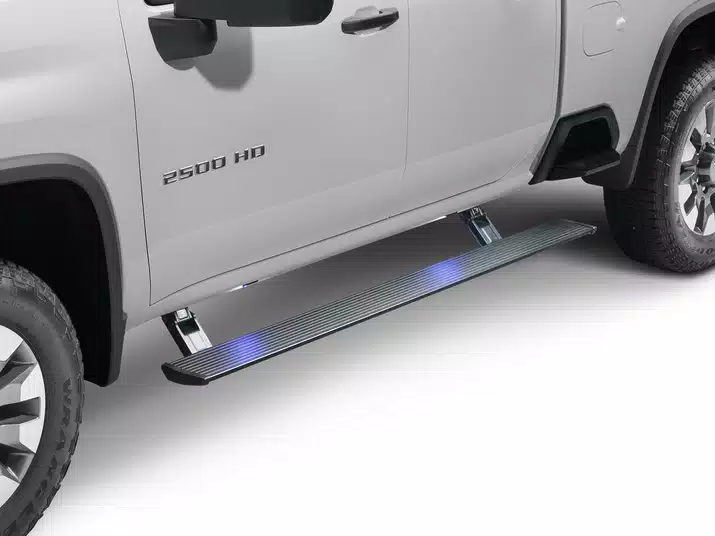
GM power running boards are one of those features that you do not think about much, until they stop working. Then, suddenly, every time you open the door, you are reminded of how much you rely on that little step dropping down. It is a convenience that makes getting in and out of a tall truck or SUV feel effortless. When it breaks, it turns a simple exit into a clumsy, high-step maneuver that makes you feel like you are climbing out of a cockpit.
But here is the thing: these systems are not magic. They are a combination of motors, sensors, wiring, and software. Like any other part of your vehicle, they wear out, get dirty, and sometimes just fail. The good news is that most of the time, the fix is not a trip to the dealership and a four-figure repair bill. Often, it is something you can handle yourself in an afternoon with basic tools.
In this guide, we are going to break down the most common GM power running board problems, why they happen, and exactly how to fix them. We will cover everything from simple cleaning to replacing the motor. By the time you finish reading, you will know more about this system than most dealership service writers, and you will be ready to tackle the issue head-on.
Why Skipping Maintenance Will Cost You
Let us get one thing straight right away. Power running boards live in the dirtiest environment on your entire vehicle. They are mounted under the doors, inches from the road. They get blasted with water, salt, mud, and gravel every single time you drive in bad weather. They are the first thing to freeze in the winter and the first thing to bake in the summer sun.
If you ignore them, they will fail. It is not a question of if, it is a question of when. But here is the silver lining: a little bit of preventative care goes a long way. Spending twenty minutes every few months cleaning and lubricating the moving parts can add years to the life of the system. Skipping that small effort, on the other hand, almost guarantees you will be replacing a motor or a wiring harness down the road.
Think of it like changing your oil. You do not wait for the engine to seize before you check the oil level, right? The same logic applies to your running boards. They need routine attention to keep functioning. The cost of a can of silicone spray and a few rags is nothing compared to the cost of a new motor.
Symptoms of Running Board Malfunctions
Your truck is trying to tell you something is wrong. You just have to listen. The symptoms of a failing power running board system are usually pretty obvious, but they can also be subtle. Here is what you need to watch out for.
The Board Does Not Move At All
This is the most obvious failure. You open the door, and the step just stays tucked up under the rocker panel. Nothing happens. This is a complete failure of the system, and it can be caused by a few different things.
First, check the fuse. It sounds simple, but you would be surprised how many people skip this step. A blown fuse is a ten-dollar fix that takes five minutes. If the fuse is good, the next suspect is the motor. If the motor is dead, the board is not going anywhere. Finally, it could be a wiring issue. A broken wire or a corroded connector can interrupt power to the motor entirely.
The Board Extends or Retracts Slowly
If your step is moving but it is taking its sweet time, you have a different problem. A slow-moving board is usually a sign of resistance. The motor is working, but something is fighting it. This is often caused by a build-up of dirt and grime on the pivot points, or a lack of lubrication. It can also be a sign of a weak battery. If the vehicle battery is low, the motor might not be getting enough voltage to operate at full speed.
You Hear Grinding or Clicking Noises
Power running boards should be quiet. If you hear a grinding, clicking, or whirring sound that is louder than usual, something is wrong. Grinding usually means metal-on-metal contact. This could be a worn gear inside the motor, or it could be a bracket that has come loose and is rubbing against the frame. Clicking is often a sign of a failing relay or a motor that is struggling to engage.
The Board Is Stuck In the Extended Position
This is arguably the most annoying problem. The step is down, and it will not go back up. You have to manually push it up, or you just leave it hanging down. This is a serious issue because the board is exposed to damage when it is down. It is also a huge aerodynamic drag on the highway. This usually points to a sensor issue or a problem with the control module. The module thinks the door is still open, so it keeps the board extended.
Intermittent Operation
Sometimes it works, sometimes it does not. This is the most frustrating symptom because it is hard to diagnose. Intermittent operation is almost always an electrical issue. It could be a loose connection, a wire that is frayed and shorting out, or a sensor that is failing intermittently. The board might work fine for a week, then refuse to move for a day, then work again. This is the symptom that sends most people to the dealership because it is so hard to track down.
Common Running Board Problems and Their Root Causes
Now that we have covered the symptoms, let us talk about the root causes. Understanding why these parts fail is the first step to fixing them correctly. If you just throw parts at the problem without understanding the cause, you will likely end up with the same issue a few months later.
Corrosion and Rust: The Silent Killers
Corrosion is the number one killer of power running boards. If you live in the rust belt or anywhere that uses road salt in the winter, your running boards are under constant attack. The salt gets into the joints, the wiring connectors, and the motor housing. It eats away at metal and creates an insulating layer on electrical contacts.
The result is a board that sticks, a motor that burns out, or a sensor that gives false readings. You might not see the corrosion at first. It hides inside the pivot points and inside the plastic connectors. But it is there, slowly destroying the system.
The fix is prevention. You need to be aggressive about cleaning the underside of your truck, especially during the winter months. A simple garden hose can wash away a lot of the salt before it has a chance to do damage. You should also consider applying a corrosion inhibitor to the electrical connectors.
Inadequate Lubrication: The Friction Problem
Friction is the enemy of any moving part. Power running boards have several pivot points and sliding mechanisms. These need to move freely for the motor to do its job efficiently. When lubrication dries up, the motor has to work harder to move the board. This extra strain generates heat and wears out the motor brushes prematurely.
Think about a door hinge that squeaks. You do not replace the hinge; you oil it. The same principle applies here. The running board assembly has grease fittings or points where lubricant needs to be applied. Over time, that grease washes out or dries up. If you do not replace it, the system will fail.
Here is a quick tip: use a silicone-based lubricant, not a petroleum-based one. Silicone does not attract dirt as much as grease, and it is safe on the plastic and rubber components. WD-40 is not a lubricant; it is a solvent. It will clean the parts, but it will not provide lasting lubrication.
Motor Failure: The Heart of the System
The motor is the muscle that moves the board. It is a small, electric motor that is mounted inside the running board assembly. It is sealed to keep out water and dirt, but seals fail over time. When water gets in, it can short-circuit the motor. When dirt gets in, it can wear out the brushes and the bearings.
Motor failure is often the end result of the other issues on this list. A motor that has been struggling against corrosion and friction for years is going to burn out eventually. Replacing the motor is a straightforward job, but it is not cheap. The part itself can cost a few hundred dollars. That is why prevention is so important.
Disconnected or Damaged Wiring
The electrical system is the nervous system of the running boards. It carries signals from the door sensors to the control module, and power from the battery to the motor. This wiring is routed under the vehicle, where it is exposed to the elements. It can be damaged by road debris, by heat from the exhaust, or by rodents chewing on it.
Corrosion in the connectors is a huge problem. The connectors are usually located near the frame, where they are exposed to water and salt. A corroded pin can cause a high-resistance connection, which means the motor does not get enough power to operate. It can also cause a complete open circuit, which means no power at all.
Faulty Sensors or Switches
Sensors tell the control module when the door is open or closed. If a sensor fails, the module does not know to extend the board. These sensors are usually simple magnetic reed switches or hall-effect sensors. They are mounted in the door latch mechanism or on the hinge.
These sensors can fail for the same reasons as everything else: corrosion, dirt, and wear. They can also be knocked out of alignment if the door hinge is damaged or if the door sags. A misaligned sensor will give the module incorrect information, causing the board to behave erratically.
How to Diagnose GM Power Running Board Problems Like a Pro
Before you start replacing parts, you need to diagnose the issue properly. Guessing is expensive. Here is a systematic approach that will help you pinpoint the problem quickly.
Start with the Basics: Fuses and Relays
Go to your fuse box and find the fuse for the running boards. It should be labeled in the owner’s manual. Pull the fuse and inspect it. If the metal strip inside is broken, replace it. If it blows again immediately, you have a short circuit somewhere in the system.
You should also check the relay. The relay is an electrically operated switch. You can test it by swapping it with an identical relay from another circuit. If the running boards start working, you know the relay was bad.
Listen to the Module: Use a Scan Tool
Modern GM trucks have a body control module (BCM) that controls the power running boards. The BCM stores diagnostic trouble codes (DTCs) when it detects a problem. You can read these codes with an OBD-II scanner. There are many affordable scanners on the market that can read these codes.
If you see a code like B1A00 or C0710, that will point you in the right direction. The code will tell you if the issue is a faulty sensor, a short in the motor circuit, or a problem with the module itself. Writing down the codes and doing a quick search can save you hours of guesswork.
Inspect the Wiring Visually
Get under the truck and look at the wiring. Follow the harness from the frame to the running board motor. Look for any signs of damage. Are the wires chafed? Are the connectors corroded? Are the wires melted from heat? A visual inspection can often reveal the problem instantly.
Pay special attention to the area where the wiring passes through the door jamb. This is a high-flex area, and the wires can break inside the insulation over time. You might not see the break, but you can feel for it by bending the wire. If the board works when you wiggle the wire, you have found your problem.
Test the Motor Directly
If you have power at the connector but the motor does not run, the motor is bad. You can test the motor by applying 12 volts directly from the battery. If the motor does not spin, replace it. If it spins, the problem is upstream.
You can also check the resistance of the motor with a multimeter. A good motor should have low resistance, usually a few ohms. If you read infinite resistance, the motor is open and needs to be replaced.
Professional Repair vs. DIY: What Is the Right Call?
You have two paths forward: call a professional or do it yourself. There is no single right answer. It depends on your skill level, your tools, and your budget. Let us look at both options honestly.
When to Call a Professional
If you are not comfortable working with electrical systems, call a pro. A misdiagnosis can cost you more than the repair itself. Dealerships have specialized diagnostic equipment that can test the control module and the network communication. Independent shops that specialize in electrical work are also a good option.
If the problem is inside the control module, you are not going to fix that with a wrench. The module might need to be reprogrammed, which requires proprietary software. This is a job for the dealer or a specialized shop. The cost of a professional repair is justified when you consider the complexity of these systems.
Another reason to call a pro is if you do not have the tools. You need a multimeter, a scan tool, and a good set of sockets to work on this system. If you have to buy all those tools, the DIY route might not save you any money.
When DIY Makes Sense
If the problem is mechanical, DIY makes a lot of sense. Replacing a motor, cleaning a connector, or lubricating the pivot points is not rocket science. These are jobs that require basic hand tools and a little bit of patience. The parts are usually available online or at your local auto parts store.
DIY also makes sense if you have already diagnosed the problem. If you know the motor is dead, you can just buy a new one and swap it out. You do not need a mechanic to do that for you. The same goes for replacing a corroded connector or repairing a broken wire.
Here is a piece of advice: if you go the DIY route, take pictures before you disassemble anything. This will help you remember how everything goes back together. It is also a good idea to label the wires if you are disconnecting them.
Step-by-Step Fixes for the Most Common Issues
Let us get into the meat of the matter. Here are the five most common fixes for GM power running board problems. These are the things that solve 90% of the issues you will encounter.
Fix #1: Clean and Lubricate the Moving Parts
This is the cheapest and easiest fix, and it solves a surprising number of problems. A board that is moving slowly, making noise, or sticking is often just dirty and dry.
Here is what you do:
- Support the board so it does not fall on you. Use a jack stand or a block of wood.
- Spray the pivot points and sliding tracks with a degreaser or brake cleaner. This will break up the old grease and dirt.
- Wipe away all the grime with a rag.
- Apply a generous amount of silicone spray or white lithium grease to all moving parts.
- Cycle the board a few times by opening and closing the door. This will work the lubricant into the joints.
- Wipe off any excess lubricant so it does not attract more dirt.
You should do this at least twice a year. If you live in a harsh climate, do it every season.
Fix #2: Repair or Replace Corroded Wiring and Connectors
Corrosion is the enemy. If you find green or white crusty stuff on the connectors, you need to deal with it. Here is how to clean it up.
First, disconnect the battery. You do not want to work on live circuits. Then, disconnect the corroded connector. Spray it with electrical contact cleaner. Use a small wire brush or a pick to scrape off the corrosion. If the pins are badly corroded, you might need to replace the connector entirely.
You can buy replacement connectors at most auto parts stores. They are usually sold as pigtails with a few inches of wire attached. You splice these into your existing harness and plug them in. Use heat-shrink tubing or electrical tape to protect the splices.
If you find a wire that is broken or chafed, cut out the damaged section and splice in a new piece of wire. Solder the connection and cover it with heat-shrink tubing. This is a permanent fix, not a temporary one.
Fix #3: Replace the Power Step Motor
If the motor is dead, you have to replace it. This is a mechanical job that requires some patience. The motor is usually bolted to the running board assembly. You will need to remove the board from the vehicle to access it.
Here is the general process:
- Support the running board with a jack stand.
- Remove the bolts that hold the board to the mounting brackets.
- Disconnect the electrical connector to the motor.
- Lower the board and place it on a workbench.
- Remove the bolts that hold the motor to the assembly.
- Install the new motor and bolt it in place.
- Reconnect the electrical connector.
- Reinstall the board on the vehicle.
This job can take a few hours. The hardest part is usually getting to the bolts that hold the motor. You might need to use extensions and swivel sockets to reach them.
Fix #4: Reset the Control Module
Sometimes the control module just gets confused. A simple reset can fix the issue. This is the electronic equivalent of turning it off and on again.
To reset the module, you need to disconnect the battery for a few minutes. This clears the memory of the BCM and forces it to reboot.
- Disconnect the negative battery cable.
- Wait 10 minutes. This ensures all the capacitors in the system are drained.
- Reconnect the battery cable.
- Open and close the door to test the running boards.
If the boards work after the reset, you are done. If they do not, the module itself might be faulty. In that case, you will need to have it replaced and programmed by a dealer.
Fix #5: Replace Faulty Sensors or Switches
If the module is not getting the signal that the door is open, the board will not extend. The door sensors are usually located in the latch mechanism. Replacing them is a bit fiddly because you have to work inside the door.
You will need to remove the door panel to access the latch. Once you have access, you can unplug the connector and remove the sensor. Install the new sensor and reassemble the door panel. This is a job that can be done in an hour or two.
Before you replace the sensor, make sure it is actually the problem. Use your scan tool to see if the BCM is reading the door as open or closed. If the reading does not change when you open the door, the sensor is bad.
Understanding the GM Bumper to Bumper Warranty
Before you spend any money on parts, check if your vehicle is still under warranty. GM offers a Bumper to Bumper Warranty on new vehicles. This covers the power running boards if they fail due to a defect in materials or workmanship.
The standard warranty is 3 years or 36,000 miles, whichever comes first. However, this can vary by model and state. Some states have different lemon laws and warranty regulations that can extend coverage. It is worth checking your owner’s manual or calling your dealer to confirm your coverage.
The warranty covers the cost of the parts and the labor. If your running boards fail during the warranty period, you should not have to pay anything out of pocket. This is the best-case scenario for you. It is also worth noting that the warranty covers the control module, the motors, and the wiring.
What it does not cover is damage from accidents, misuse, or lack of maintenance. If you hit a curb and bent the running board, that is on you. If you never cleaned the board and the motor burned out from dirt, the dealer might deny the claim. That is why regular maintenance is so important.
Aftermarket Solutions: What Are Your Options?
If your warranty has expired, or if you want a different style of running board, you might look at aftermarket options. There are plenty of companies that make power running boards for GM trucks. These can be a great alternative to the factory system.
Plug and Play Options
Many aftermarket running boards are designed to be plug and play. This means they use the existing wiring harness and connectors. You do not have to cut or splice any wires. This makes installation much easier. It also reduces the risk of electrical problems down the road.
These systems usually come with their own control module. The module taps into the OBD-II port or uses a signal from the door lock actuator. This allows the board to extend and retract automatically, just like the factory system.
The benefit of aftermarket is often cost. You can find quality aftermarket boards for less than the dealer charges for a factory replacement. You also have more options in terms of style. You can choose a sleek, low-profile design or a heavy-duty one with an anti-slip surface.
When you are shopping, look for reviews from other GM truck owners. See what they say about the ease of installation and the reliability. It is also a good idea to check if the manufacturer offers a warranty. A company that stands behind their product is a good sign.
Prevention: How to Avoid Future Problems
An ounce of prevention is worth a pound of cure. This old saying is absolutely true when it comes to power running boards. Here are the habits you need to develop to keep your boards working for years.
First, wash the underside of your truck regularly. Do not just wash the body. Get under there with a hose and spray off the salt and mud. This takes five minutes and it can save you hundreds of dollars.
Second, lubricate the moving parts at least twice a year. Do it in the spring and in the fall. This will keep the joints moving freely and prevent wear.
Third, inspect the wiring and connectors for damage. Look for frayed wires, corroded pins, and loose connections. Catch these issues early before they become a complete failure.
Fourth, keep an eye on your battery health. A weak battery can cause all sorts of electrical gremlins, including slow-running boards. If your battery is more than four years old, have it tested.
Finally, listen to your running boards. If you hear a new noise, investigate it. If the board moves slower than usual, find out why. Do not ignore the warning signs. Addressing a minor issue now is much cheaper than dealing with a major failure later.
Real-World Scenarios: What Would You Do?
Let us walk through a couple of real-world scenarios to see how this knowledge applies in practice.
Scenario one: You park your truck in the driveway. It rained last night. You open the door, and the running board extends, but it is making a terrible grinding noise. It sounds like metal scraping on metal. What do you do?
First, do not panic. The board is working, but something is rubbing. Get a flashlight and look at the pivot points. Is there rust? Is a bolt loose? Spray some lubricant on the joints and see if the noise goes away. If it does, you just saved yourself a trip to the mechanic. If the noise persists, you might have a worn bushing that needs replacing.
Scenario two: You are on a road trip. You stop for gas. You open the door, and the running board does not extend. You try the other door, and that board works fine. Now what?
Since only one side is failing, the problem is local to that side. It is not the battery or the main fuse. It is likely the motor, the wiring, or the sensor on that side. Since you are on a road trip, you might not have tools. But you can check the fuse. If the fuse is good, you might have to live with it until you get home. At least you know it is not going to drain your battery.
Scenario three: You come out to your truck in the morning and the board is hanging down. It did not retract last night. You push it up manually, and it stays up for a second, then slowly falls back down. What is going on?
This is a classic sign of a failing actuator or a problem with the controller. The board is not locking in the up position. This could be a mechanical issue with the locking mechanism, or it could be that the controller is not sending the retract signal. You will need to do some diagnostic work to figure out which one it is.
The Bottom Line on GM Power Running Board Problems
GM power running boards are a great feature, but they are not indestructible. They require attention and care. The good news is that most problems are fixable with basic tools and a little bit of knowledge.
Do not let a small issue turn into a big one. If your board is acting up, take the time to diagnose it. Start with the simple stuff: cleaning, lubrication, and checking the fuses. Move on to the more complex stuff only if you have to.
You have the skills to handle this. You just have to be willing to get your hands dirty. Your truck will thank you.
So, the next time you open your door and the step glides out smoothly, you will know exactly what it takes to keep it that way. And if it does not, you will know exactly what to do about it. Have you ever had to replace a power running board motor? What was the hardest part for you?